Buyer Fit Snapshot
| Best fit | Custom Poly Bags projects where brand print, material claims, artwork control, MOQ, and repeat-order consistency need to be specified before quoting. |
|---|---|
| Quote inputs | Share finished size, material target, print colors, finish, packing count, annual reorder estimate, ship-to region, and any compliance wording. |
| Proofing check | Approve dieline scale, logo placement, barcode or warning zones, color tolerance, closure strength, and carton packing before bulk production. |
| Main risk | Vague material claims, crowded artwork, missing packing details, or unclear freight terms can make a low unit price expensive after revisions. |
Fast answer: Custom Poly Bags: Film, Print, MOQ, and Carton Packing should be specified like a repeatable production item. The safest quote records material, print method, finish, artwork proof, packing count, and reorder notes in one written spec.
Production checks before approval
Compare the actual filled-product size with the drawing, then confirm tolerance on folds, seals, hang holes, label areas, and retail display edges. Reserve space for logos, QR codes, warning copy, and material claims before decorative graphics fill the panel.
Quote comparison points
Review material grade, print process, finish, sampling route, tooling charges, carton quantity, and freight assumptions side by side. A quote is only useful when the supplier can repeat the same color, closure quality, and packing count on the next order.
Why Custom Poly Bags Matter: A Surprisingly Big Packaging Decision
Custom Poly Bags how to choose sounds like a narrow procurement question, yet it reaches far beyond purchasing. I’ve watched it change freight bills, return rates, and brand perception more times than I can count. A bag that costs $0.12 to $0.28 per unit can still decide whether a shirt reaches a customer crease-free, whether a hardware part stays dry, and whether a retail buyer thinks your operation looks polished or rushed. That is a lot of responsibility for a sheet of polyethylene film, usually 1.5 mil to 3 mil thick. Honestly, I think packaging people deserve a little more credit than we get.
Companies that treat Custom Poly Bags how to choose as a real packaging decision usually save money twice: once on material waste and again on fewer damaged goods. I still remember a cosmetics brand I visited in Shenzhen where the team had been overbuying oversized bags by nearly 18%. They thought they were “being safe.” Instead, they were paying for extra film, extra air, and extra carton space. The fix was simple: resize the bag by 0.75 inches, adjust the seal line, and they cut shipping cube without touching the product itself. The supplier’s quote also dropped by roughly 9% after the carton count fell from 1,200 to 1,080 per pallet. It was one of those moments where everyone in the room had the same reaction: “Well, that’s annoyingly obvious now.”
Custom Poly Bags are polyethylene bags made to your size, thickness, closure, and print needs. They differ from stock bags because they are built around your product and your workflow, not the other way around. That matters in retail packaging, fulfillment, and branded packaging, where the unboxing moment can do some of the selling for you. It also matters in product packaging that has to survive abrasion, moisture, stacking, and sorting conveyor belts. A simple one-color bag ordered at 10,000 units from a plant in Dongguan or Suzhou may cost less than a fully printed short run from Los Angeles, but the right choice depends on what the product must survive between pack-out and delivery.
People often make the same mistake: they assume the bag is only a container. It is also a cost control tool. The wrong bag can tear at the seam, create wrinkled presentation, force manual rebagging, or trigger returns when the item arrives scuffed. I’ve seen a batch of apparel bags fail because the film was too thin for the zipper pull, and the customer service team logged 47 complaints in 11 days. The bags looked fine in a sample photo. On the packing line, they split at the corner after three days. There is nothing quite like discovering your “approved” packaging has the structural integrity of a sad sandwich bag.
If you are working through Custom Poly Bags how to choose, the real question is not just “What size do I need?” It is “What does the bag need to do?” Fit, film thickness, closure type, print method, cost, and lead time all matter. Get those six pieces right, and the packaging works with your operation instead of fighting it. In practice, that often means comparing a 2 mil flat bag against a 2.5 mil zipper bag, or a 9 x 12 inch format against a 10 x 13 inch one, before you ever ask for artwork.
How Custom Poly Bags Work: Materials, Formats, and Printing
Most custom poly bags start with polyethylene film, usually low-density polyethylene, high-density polyethylene, or a blend designed for clarity, softness, or strength. The film thickness is often measured in mils, where 1 mil equals 0.001 inch. Many buyers talk in gauge, which can cause confusion because suppliers sometimes use gauge loosely. I always ask for the spec in mils and confirm the tolerance in writing. That prevents the classic “we thought it was 2 mil, you shipped 1.75” argument later. In quotes from factories in Xiamen, Penang, or Chicago, I also request the acceptable range on both thickness and seal width, because a 0.25 mil swing can matter once you pack 20,000 units.
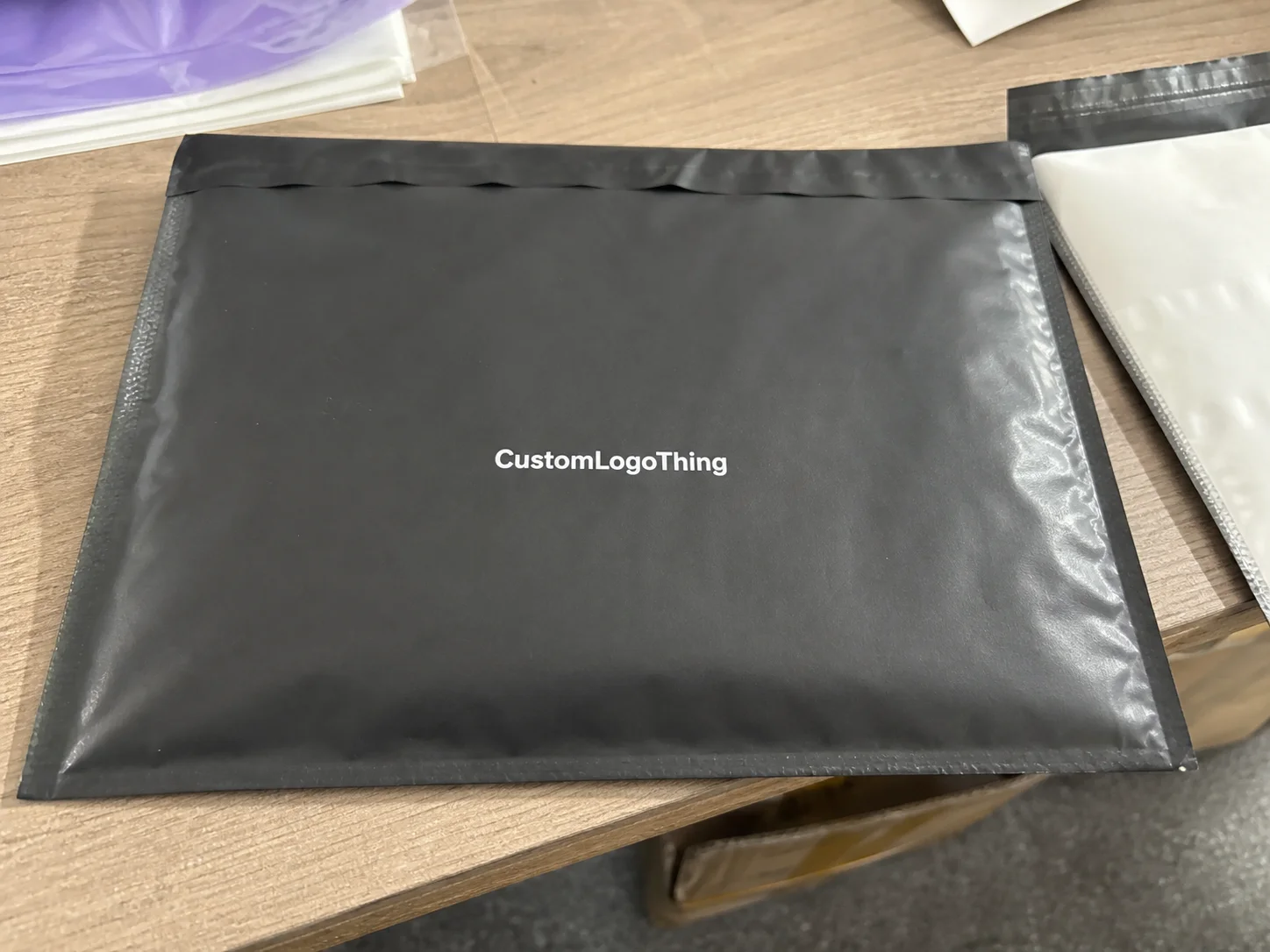
The structure matters as much as the material. Flat poly bags are the simplest: open on one side, sealed on three. Gusseted bags add depth for bulkier items. Wicketed bags come stacked on a wire wicket, which speeds packing on a line that can run 1,000+ units per shift. Resealable zipper bags help with repeat-opening retail items. Mailer-style poly bags are built to move through shipping networks, especially when paired with a self-seal adhesive strip. If you already use Custom Poly Mailers, the same logic applies: the format should match the task, not just the design. A 12 x 15.5 inch mailer can work beautifully for lightweight apparel, while a 14 x 18 inch gusseted bag may be better for folded blankets or boxed kits.
Printing is where custom poly bags move from plain utility to brand asset. Flexographic printing is common for higher quantities because it is efficient on repeat runs and handles spot colors well. Digital printing can make sense for short runs or complex graphics, though the price per unit usually reflects that flexibility. Some clients only need one-color logos and a size code. Others want a full-front graphic with SKU information and handling instructions. Both are valid. Neither should be chosen by habit. A one-color flexo bag ordered at 25,000 pieces can land near $0.15 per unit in some programs, while a short-run digitally printed version may come in closer to $0.38 to $0.65 per unit depending on size and finish.
I visited a contract packer in Ohio who ran three different bag formats on the same line: flat bags for accessories, zipper bags for sampler kits, and wicketed bags for garments. Their packers could tell me within 10 seconds which format slowed them down. The wicketed option won for speed, but only after they changed bag length by 0.5 inch and reduced static cling. Small adjustment. Big effect. The production manager in Columbus said the revised spec cut line stops from six per shift to two, which mattered more than the design render ever could. It was also the kind of place where everyone had a story about one “tiny” spec change that saved the entire line from daily irritation.
Printing method and bag structure also affect storage and shipping. A thicker bag uses more resin and may cost more to store in cartons, but it can reduce damage. A clearer bag can improve shelf appeal, but it may show scuffs faster. A resealable closure is great for retail packaging, yet it can add labor if your line is built for heat seals. That is why custom poly Bags How to Choose is not a purely creative exercise. It is production planning, and the difference between a 1.5 mil and 3 mil film can be the difference between a clean dock receipt and a pile of rejected cartons in Atlanta, Dallas, or Rotterdam.
For background on packaging materials and formats, I often reference trade associations like the Institute of Packaging Professionals. Their educational resources help buyers understand terminology before they start requesting quotes, especially when comparing LDPE, HDPE, and co-extruded film specs across suppliers in the U.S., Mexico, and Southeast Asia.
Custom Poly Bags How to Choose the Right Specs
When clients ask me about custom poly bags how to choose, I start with product dimensions. Not the box dimensions. Not the carton's outer size. The actual product, measured at its widest points, plus any inserts, hang tags, tissue, or folded edges. A folded sweater needs different clearance than a flat brochure. A jagged metal part needs different clearance than a silicone accessory. If the bag is too tight, sealing becomes awkward. If it is too loose, the product moves around and looks cheap. I remember one buyer insisting the bag “technically fit” because the product slid in if you tilted it just so. Sure. And if you shook the box like a maraca, it also made noise.
Size selection should include a realistic allowance for insertion and sealing. For example, a 9 x 12 inch shirt may work better in a 10 x 13 inch bag if you want room for easy loading and a clean top seal. In one factory meeting in Cleveland, a client insisted on matching the exact product footprint. The packing line hated it. Operators spent extra seconds flattening each item, and the rework cost exceeded the material savings. The corrected bag was only 1 inch larger in each direction, but the labor win was obvious, saving nearly 14 seconds per 20 units on a manual bench line.
Thickness is the next major decision. A 1.25 mil film may be fine for a lightweight T-shirt, but a 2.5 mil or 3 mil film can be the safer option for sharp edges, heavier hardware, or shipping conditions where bags rub against corrugated cartons. If you are shipping only within a store or warehouse, a lighter film may be enough. If the bag will face parcel networks and multiple handoffs, I usually advise a heavier spec. ASTM and ISTA packaging testing standards exist for a reason: transit is rougher than most teams imagine. The ISTA site is a good reference if you want to understand how distribution testing maps to packaging risk. In one drop test I reviewed in Jersey City, a 1.5 mil bag failed after the second corner drop while a 2.75 mil bag held through eight impacts.
Closure choice changes both user experience and operational speed. Open-top bags are simple and cheap. Heat-seal bags create a tamper-evident finish and a neat look. Zip closures are convenient for repeat use and retail packaging. Adhesive strip bags speed up fulfillment because the operator peels and seals in one motion. Self-seal options are common in e-commerce and sample kits. The right closure depends on whether your team values speed, tamper resistance, reusability, or presentation. A warehouse in Phoenix may prefer a 2.0 mil adhesive strip bag for 600 orders a day, while a boutique in Austin might pay extra for a zipper closure because customers reuse it at home.
Printing and branding deserve equal attention. A logo placed too close to the edge can get distorted in sealing. Too much ink on thin film can make the bag feel stiff or hide the product. I’ve seen brands push full-coverage artwork onto a small pouch and then wonder why the per-unit cost jumped. Every additional color, plate, or pass adds cost. Simple can still look premium if the typography is clean and the film is the right finish. A one-color matte-clarity bag with a 2.25 inch logo often looks sharper than a noisy four-color layout on a flimsy 1.25 mil film.
Here’s a practical way to think about custom poly bags how to choose: match the bag to the product risk. If the item is soft, low-value, and sold mainly by the carton, a plain bag may be enough. If the product is photographed, displayed, or handed to end customers, branded packaging often earns its keep through presentation and trust. That is especially true for retail packaging where the first tactile impression can be stronger than the printed ad. A buyer in Miami once told me a $0.04 increase per bag was justified because returns on wrinkled apparel dropped by 6.2% in the first quarter.
| Bag Type | Best For | Typical Thickness | Workflow Impact | Branding Value |
|---|---|---|---|---|
| Flat poly bag | Apparel, inserts, lightweight items | 1.25–2 mil | Fast manual packing | Moderate |
| Gusseted bag | Bulky textiles, boxed products | 1.5–3 mil | More room, less compression | Moderate to high |
| Wicketed bag | High-speed packing lines | 1.25–2.5 mil | Fastest line speed | Moderate |
| Zipper bag | Retail goods, samples, reusable storage | 2–4 mil | Slower than open-top | High |
| Mailer-style poly bag | E-commerce shipments | 2–3.5 mil | Good for parcel shipping | High |
Cost and Pricing: What Drives the Price of Custom Poly Bags
Price on custom poly bags is rarely just “price.” It is a stack of variables: size, thickness, resin grade, closure type, print colors, order quantity, and packaging format. A 6 x 9 inch bag in 1.5 mil film with a one-color logo is a different animal from a 14 x 18 inch zipper bag with full-bleed graphics and a hang hole. Treat them as comparable, and you will misread the quote. I’ve watched smart teams do it anyway, then act shocked when the math refuses to cooperate. In one comparison I reviewed from suppliers in Guangzhou and Louisville, the same bag spec ranged from $0.09 to $0.21 per unit only because of print setup and carton configuration.
On a recent supplier call, I reviewed two quotes for the same apparel line. One looked cheaper by 11% at first glance. Then we added plates, freight, and a minimum carton quantity that would have forced three extra months of storage. The “cheaper” option became more expensive by the time the product hit the warehouse. That is why I always separate unit price from total landed cost. A job that starts at $0.13 per unit for 20,000 pieces can finish closer to $0.19 once you add a $320 plate charge and $180 inland freight from the port.
Unit price is the cost per bag. Total landed cost includes freight, tooling, setup, plates or cylinders, and sometimes warehousing. If you order 5,000 pieces, a unit price of $0.18 may be acceptable. If the same job carries a $280 setup fee, your effective cost rises quickly. At 25,000 pieces, the setup is diluted. At 100,000, inventory risk becomes the issue. Bigger orders do lower the per-unit cost, but only if you can sell or use the stock before the design changes. A 5,000-piece run in Newark can look expensive beside a 50,000-piece run in Charlotte, but the smaller run may be the smarter move if your promo calendar changes every 90 days.
Material grade matters too. Virgin polyethylene may offer better clarity and consistency than a recycled blend, while recycled content can support sustainability targets and sometimes align with brand positioning. Not every buyer needs recycled content. Not every buyer should avoid it. The right choice depends on the product, the print quality needed, and the expectations of your retail or wholesale customer. I’ve seen recycled-content film priced about 6% to 14% higher in some North American programs, though the tradeoff can make sense if your retail partners ask for ESG documentation.
If you are comparing custom poly bags how to choose from a cost perspective, this table helps narrow the decision:
| Cost Driver | Low-Cost Choice | Higher-Cost Choice | What You Gain |
|---|---|---|---|
| Thickness | 1.25–1.5 mil | 2.5–4 mil | More puncture resistance |
| Printing | 1-color logo | 4-color process or full coverage | Stronger visual branding |
| Closure | Open-top | Zip or adhesive seal | Better convenience and security |
| Volume | Small MOQs | Higher quantities | Lower unit cost, more inventory |
| Format | Flat bag | Wicketed or mailer-style | Faster packing or shipping performance |
Many buyers overfocus on the print and underfocus on the spec. A bag that looks nice but splits in transit is not a bargain. A plain bag that fits perfectly and protects the product may be exactly the right answer for a high-volume operation. The trick is knowing whether you are buying appearance, protection, or both. If the customer never sees the bag, spending an extra $0.03 on extra ink may be less valuable than upgrading from 1.5 mil to 2.25 mil film.
There are also cost savings hiding in standardization. If you can use one bag size across three SKUs instead of three separate sizes, your purchasing and inventory complexity drops. That can make a bigger financial impact than shaving one cent off a printed run. I have seen a fulfillment center reduce SKUs by 22% simply by standardizing on two bag sizes and one closure style. Fewer mistakes. Faster reordering. Less dead stock. Less “Why is this bag in aisle four?” energy, which is not a line item but probably should be.
Step-by-Step Process and Timeline for Ordering Custom Poly Bags
The ordering process for custom poly bags how to choose usually begins with a product review. Measure the item carefully, note whether it is folded, boxed, or loose, and record any special conditions such as sharp edges, moisture sensitivity, or heat sealing. If the product is apparel, I want to know if it is compressed in transit. If it is hardware, I want to know if the corners are machined or stamped. Those details change the spec. A bag that works for a 180-gram tee in Portland may fail for a 2.4-pound accessory kit in Minneapolis.
Next comes the quote request. The better your input, the better the quote. A useful RFQ should include finished bag dimensions, desired thickness in mils, closure type, print colors, artwork format, estimated annual volume, and target delivery date. If you already know whether you need packaging for retail packaging or shipping, say so. It affects the material choice and the print recommendation. I also ask buyers to note whether they need cartons of 100, 250, or 500 units, because carton count can affect storage and picking costs in a warehouse in Nashville or Toronto.
A realistic production timeline depends on the print method and how quickly artwork is approved. A simple one-color job on an existing film structure might move in 10 to 15 business days after proof approval. A more complex custom printed box program can take longer, but for poly bags the usual delays come from artwork revisions, plate setup, and shipping distance. If the supplier has material in stock and the artwork is final, things move faster. If you keep changing the logo size by 3 mm every other day, the schedule slips. I say that with affection, but only just. From proof approval to dock, many programs land in the 12 to 15 business day range, while air freight from a plant in Shenzhen to Chicago can shave transit to 3 to 5 days if you are willing to pay the premium.
One of my clients learned this the hard way during a product launch. They approved the first proof, then changed the website URL on the second proof, then realized the QR code was too small on the third. The order still shipped, but the launch box had already moved. That cost them a week of sales. The lesson was brutal and simple: align packaging decisions with the launch calendar before placing the order. Their replacement run cost an extra $240 in rush fees and a lost weekend of conversions.
In practical terms, the sequence looks like this:
- Measure the product and define the use case.
- Choose bag format, thickness, and closure.
- Request a quote from a supplier with the correct spec sheet.
- Review artwork and request a proof.
- Approve the final proof quickly.
- Move into production and confirm transit timing.
- Receive, inspect, and document the final spec for reorders.
That last step gets ignored too often. A signed spec sheet prevents future confusion. It also helps purchasing teams compare apples to apples when they reorder six months later. If you need other packaging lines too, you can keep the spec alongside Custom Packaging Products so your team has one place to reference sizing, material, and print notes. A file folder in Detroit or a shared drive in London works just as well as long as the dimensions, resin type, and print version are written down.
For sustainability and end-of-life considerations, the EPA’s packaging and waste resources can be useful, especially if you are balancing recycled content and material reduction goals. The EPA recycling guidance is a solid starting point for understanding disposal and recycling realities, though local programs vary by municipality. A warehouse in San Diego may accept a different film stream than one in Montreal, so local rules matter more than assumptions.
Common Mistakes When Choosing Custom Poly Bags
The most expensive mistake is usually ordering the wrong size. I’ve seen buyers choose a bag based on the product’s “flat” dimension, then discover that seams, folds, and inserts create a much thicker profile. The result is a bag that balloons, looks sloppy, or tears during insertion. A bag that is 1 inch too short can slow a packing line by seconds per unit. Multiplied by 10,000 units, that is a real labor cost. At $18 per hour, even a 4-second delay per unit can add more than $200 in labor on a single run.
Underestimating thickness is another trap. Some buyers use the same mil spec for everything. That works until a product with sharp corners starts cutting through the film. If your item has clips, metal edges, or stiff plastic components, test the bag under real handling conditions. A desktop sample is not enough. I’ve watched a sample pass a visual review and fail after 30 minutes of stacking in a hot warehouse in Houston, where the film softened and the seam began to creep.
Closure mistakes are common too. A self-seal strip may be ideal for a small team, but if your line is built for high-speed packing, that extra peel step can reduce throughput. Conversely, a heat seal can look beautiful but frustrate customers if they need repeated access. The closure should match the workflow all the way from packing to opening. A subscription kit packed in Raleigh may need resealability; a tamper-evident beauty sample sent from Seattle may need a heat seal and a tear notch.
Branding can be overdone. Too much artwork on a small surface makes text hard to read and can inflate the price because of color count or setup complexity. A crisp logo, one product line message, and a clean website line often outperform busy graphics. Good packaging design respects the bag’s real estate. It doesn’t fight it. A 2-inch logo on a 10 x 14 inch bag usually reads better than cramming six lines of copy into the same space.
Buying on unit price alone is another classic error. A quote that is $0.02 cheaper can still fail if the bag arrives too late, tears in transit, or lacks the documentation your quality team needs. Compliance and consistency matter. If you are sourcing for retail packaging or regulated categories, ask the supplier about material specs, tolerances, and test references. ASTM-style test language is useful, but only if your supplier can explain what was actually tested. I ask for the exact film spec, the seal width, and the approved tolerance before I even look at the invoice.
Red flags I watch for
When a supplier is vague about mil thickness, unwilling to confirm lead time in writing, or can’t explain their print limitations, I slow the conversation down. A good partner can tell you what happens to registration on thin film, what the minimum line weight is, and whether the artwork needs traps or bleeds. If the answers sound fuzzy, the production result may be fuzzy too. A factory in Ho Chi Minh City that can quote a 2 mil print tolerance and a 13 business day turnaround is telling you more than one that simply says “no problem.”
Also watch the sample. Is the seal clean? Are the edges straight? Is the print centered within 1/8 inch? Does the zipper close without snagging? These little details often predict how the job will behave at scale. One sample won’t tell you everything, but it can tell you enough to avoid a headache. If you want a very basic benchmark, I’d rather see a sample with a centered logo, a straight bottom seal, and a consistent 0.25-inch seal band than a flashy proof with sloppy finishing.
Expert Tips for Better Fit, Better Branding, and Better Results
I always recommend samples or prototypes before a large run. The sample should be tested with real product, not just held up beside a ruler. A 12 x 15 inch bag might sound correct, but when you slide in a folded garment and a hang tag, the top seal may become awkward. Testing with actual products surfaces those issues early, when the fix is still cheap. A sample test in a warehouse in Indianapolis takes 20 minutes; a failed launch can cost a full week.
If you are comparing custom poly bags how to choose across multiple options, use a simple scorecard. Rank fit, durability, appearance, packing speed, and budget from 1 to 5. You will usually find that one option wins by a wide margin, while the others trade performance for cost. That trade-off is healthy. It makes the decision visible. A 5-point scorecard can reveal that a $0.17 bag saving 1.8 seconds per pack is actually cheaper than a $0.13 bag that causes rework.
There is also a strategic question: should you choose one versatile bag size or several SKU-specific sizes? If your assortment is stable and high volume, multiple sizes can reduce wasted space and improve presentation. If your catalog changes often, one or two versatile sizes can simplify procurement and storage. I’ve seen a startup in consumer electronics try to manage seven sizes too early. Their inventory spreadsheet became more complicated than the product line. They later cut it to three sizes and saved themselves from overbuying a slow-moving format. Their warehouse in Newark went from 41 pallet positions to 27, which mattered more than a slightly prettier mockup.
For branding, keep the artwork purposeful. Use a logo size that prints clearly at the bag’s actual dimensions, not on a mockup that was stretched on screen. Avoid tiny legal copy unless you truly need it on the bag. Consider whether the message should support package branding, product packaging, or retail packaging. Those are related, but not identical goals. A bag that serves a warehouse may need a different design than one that sits on a shelf. A 4-color retail pouch in Los Angeles may earn its keep; the same design on a bulk shipper in Cleveland may just add cost.
One of the best habits you can build is a packaging spec sheet. Include bag dimensions, film thickness, closure type, print colors, artwork version, approved supplier, carton count, and reorder notes. Add photos if the product is tricky. That document becomes priceless six months later, especially if the original buyer has moved on or the product line has expanded. It also helps teams compare custom poly bags with Custom Packaging Products like mailers, pouches, or branded inserts without reinventing the wheel each time. I prefer a one-page sheet with a revision date, such as 2025-08-14, so everyone knows which spec is current.
“The best packaging spec is the one a stranger can use correctly on the first try.” That’s a line I picked up from a plant manager in New Jersey, and honestly, I still think it is the cleanest definition of good packaging documentation.
If your products are being tested for transit durability, consider whether your packaging should be checked against ISTA protocols or similar internal drop and vibration standards. The point is not to over-engineer every bag. The point is to make sure the chosen bag survives the real route from pack-out to end user. A bag that survives a 36-inch drop, three conveyor transfers, and a 48-hour truck ride from Nashville to Boston has earned its place.
What to Do Next: Your Shortlist for the Right Custom Poly Bag
If you are still sorting through custom poly bags how to choose, start with the product in your hand. Measure it. Photograph it. Note the weight, the sharp edges, the folding method, and the shipping condition. Then decide whether the bag needs to protect, present, or both. That answer will narrow the field faster than any catalog ever will. A 10-minute audit with a tape measure and a phone camera can save a 10,000-piece mistake.
Next, gather 2 to 3 sample options and test them in the real packing environment. Compare them against your actual workflow: insertion speed, seal quality, appearance, and handling. If one option saves 2 seconds per pack, that can matter more than a fractional price difference. If one option looks better on shelf, that can support branding in a way a plain alternative never will. I would rather see a team test on a Tuesday afternoon in a warehouse in St. Louis than trust a mockup that was approved from a laptop screen.
Before you place the order, create a short checklist: size, thickness, closure type, print needs, budget, lead time, and reorder plan. That checklist makes custom poly bags how to choose much easier to repeat later. It also protects your team from memory-based buying, which is how specs drift and quality gets inconsistent. Include a target cost, such as $0.14 per unit for 10,000 pieces, and a timeline like 12-15 business days from proof approval so everyone knows the bar before production starts.
My final advice is simple. Do not treat the bag as an afterthought. A custom poly bag can reduce damage, improve workflow, and strengthen the customer’s first impression. Choose it with the same care you would give to custom printed boxes or any other visible part of the product experience. When the specification is right, the results are measurable. Fewer returns. Cleaner presentation. Less waste. On the right program, even a $0.03 increase in unit cost can be offset by fewer replacements and less labor at pack-out.
If you want the shortest possible version of the process, it is this: measure, test, compare, approve, and document. That is custom poly bags how to choose in five verbs. And if you get those five right, the rest tends to fall into place. A team in London, a warehouse in Houston, or a factory in Dongguan can all follow the same five-verb playbook and end up with a bag that actually does its job.
FAQs
How do I choose the right size for custom poly bags?
Measure the product at its widest points, then add enough room for easy insertion and sealing. If the item is folded, bulky, or paired with inserts, cards, or tissue, allow extra clearance so the bag does not pull tight at the seam. For example, a 9 x 12 inch shirt often fits better in a 10 x 13 inch bag, especially if you want a clean 0.5-inch top seal.
What thickness should I use when choosing custom poly bags?
Use lighter gauges for soft, low-risk items and heavier gauges for sharp, heavy, or high-value products. If the bag will be shipped, choose a thicker film than you would for in-store handling alone because parcel transit adds abrasion and compression. A 1.5 mil bag may work for apparel, while a 2.5 mil or 3 mil option is often safer for hardware, boxed kits, or anything with corners.
Are printed custom poly bags more expensive than plain ones?
Yes, printing usually adds setup and production costs, especially with multiple colors or full coverage. The value comes from branding, presentation, and a more professional unboxing or retail experience, particularly when the bag is part of your package branding strategy. In many quotes, a one-color print may add $0.02 to $0.05 per unit, while a four-color job can add much more depending on quantity and film type.
How long does it take to order custom poly bags?
Timing depends on artwork approval, print method, bag complexity, and production capacity. Simple orders move faster; custom shapes, special finishes, and revisions usually extend the timeline, so it helps to confirm lead time before you lock in a launch date. A typical run often takes 12-15 business days from proof approval, plus transit time that can range from 3 to 10 days depending on whether the bags ship from Chicago, Shenzhen, or another production hub.
What should I ask a supplier before buying custom poly bags?
Ask about minimum order quantity, lead time, available thicknesses, print limitations, and sample options. Also confirm whether pricing includes plates, freight, and any setup fees so you can compare quotes accurately and avoid surprises after approval. I also recommend asking for a written spec sheet with bag dimensions, film thickness in mils, seal width, and a sample photo or proof before production begins.