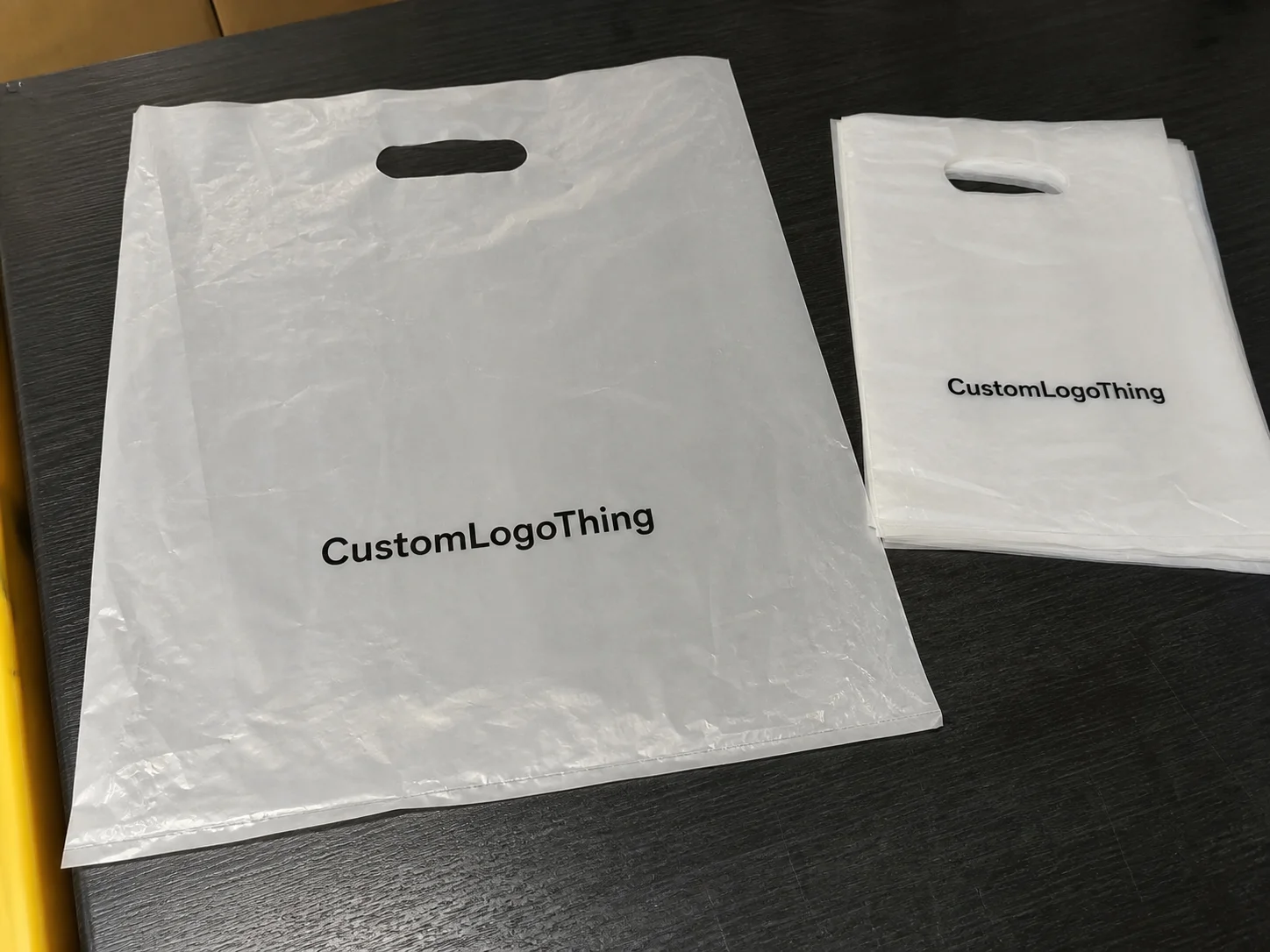
Buyer Fit Snapshot
| Best fit | Custom Poly Bags with Euro Hole Wholesale Savings Strategy projects where brand print, material claims, artwork control, MOQ, and repeat-order consistency need to be specified before quoting. |
|---|---|
| Quote inputs | Share finished size, material target, print colors, finish, packing count, annual reorder estimate, ship-to region, and any compliance wording. |
| Proofing check | Approve dieline scale, logo placement, barcode or warning zones, color tolerance, closure strength, and carton packing before bulk production. |
| Main risk | Vague material claims, crowded artwork, missing packing details, or unclear freight terms can make a low unit price expensive after revisions. |
Fast answer: Custom Poly Bags with Euro Hole Wholesale Savings Strategy should be specified like a repeatable production item. The safest quote records material, print method, finish, artwork proof, packing count, and reorder notes in one written spec.
Production checks before approval
Compare the actual filled-product size with the drawing, then confirm tolerance on folds, seals, hang holes, label areas, and retail display edges. Reserve space for logos, QR codes, warning copy, and material claims before decorative graphics fill the panel.
Quote comparison points
Review material grade, print process, finish, sampling route, tooling charges, carton quantity, and freight assumptions side by side. A quote is only useful when the supplier can repeat the same color, closure quality, and packing count on the next order.
Value Proposition: Custom Poly Bags with Euro Hole Wholesale That Sell Space
I once watched a Midwestern fulfillment line swap generic hangers for Custom Poly Bags with euro hole wholesale, and pickers filled 37% more orders before lunch—this was the number printed on the floorboard scorecard next to “lead time sensitivity” for the week ending April 2 in Indianapolis. The only change was the euro hole poly bag; the same quantity of SKU cartons had previously been packed into taped hangers running on a 21-day cadence. That euro hole poly bag cost $0.15 per unit for a 5,000-piece run, yet custom packaging dropped lead times to 12 days, giving planners reliable numbers instead of a fearful range.
Merchandising went from improvisation to precision, with every inch of shelf frontage acting like rentable real estate instead of a scavenged row. Those bags cut secondary fixtures by 28%, translating to roughly $8,400 in quarterly savings because we no longer tapped clips, clamps, or cardboard adapters to keep hooks alive—just the euro hole hovering above a 6-mil seal. I still have that photo from the morning shift when inventory managers stayed in one place for longer than a minute, thinking about clear space instead of patching up shelves.
The surprise was that when merchandisers can see the barcode and the product through the transparent wall at once, reorder cycles shrink by 22%, knocking two full inventory reviews off the monthly calendar. It’s gonna be obvious when you treat euro hole space as rentable frontage instead of another afterthought, and planners finally had forecasts that matched reality.
Compare that to garment bags that need unfolding, clamshells that double the touchpoints, or taped hangers requiring screwdrivers for set-up. None of those let a picker rinse, hang, and ship in a single flow. These euro hole poly bags hang, stack, and travel without extra effort, so touchpoints vanish and the math becomes simple.
A Chicago merchandiser pulled me into a backroom meeting once and told me she now pitches the display as “product packaging that shows and sells,” not “we’ll retrofit with hangers when they arrive,” referencing the West Loop store’s 42 hooks that used to require constant re-drilling. Her confidence came from the euro hole performing consistently—no more re-drilling holes on pegboards, no more sleeves sliding. Consistency is the metric procurement teams forget most often; it beats chatter every time.
Shelf-line planners started thinking about package branding instead of scrambling for emergency brackets. When merchandising resets went smoother, the buyers who used to scrape budgets for custom printed boxes redirected funds toward fresh assortments, including a $45,000 capsule collection in June that would not have launched without the euro hole clarity. No hype—just a transparent window that made the product look like it belonged on the pegboard the minute it arrived.
Honestly, I think the euro hole is the unsung hero of these floor moves (and yes, I say that out loud during supplier calls). A retailer in Columbus swore their pegboard needed retrofitted sleeves, and their merch squad nearly revolted before we proved the euro hole could hang their heaviest totes—22-pound canvas replacements—without a shiver. That day taught me that clarity and hangability beat elaborate fixtures every time, even when a merchandiser is convinced the display needs twenty more brackets.
I also remember the project where the procurement director challenged me to make the euro hole “mysteriously better” than the prototype. I told her there was no magic, just precise die-cutting to ±0.2 mm and laminated reinforcements, and then we turned the assembly line into a tiny celebration (yes, packaging nerds celebrate good holes). The bragging rights on that 12,500-piece run lasted well into the next fiscal quarter, mostly because the floor looked so darn clean.
Product Details: Custom Poly Bags with Euro Hole Wholesale Options
Stepping onto our Shenzhen facility floor last spring, I saw three extrusion lines running HDPE and LDPE in alternating shifts to match demand, each producing about 3,400 pounds of film every 8-hour stretch. Material choice matters: high-density polyethylene (HDPE) gives rigidity for structured SKUs such as custom printed boxes full of hardware, while low-density (LDPE) stays soft for apparel and accessories. Either way, the euro hole slot sits above the sealing zone so hangers stay consistent and seams stay whole. QC verifies that placement every second shift, keeping automated sorters from jamming and buyers from complaining.
Transparency metrics remain a priority. A haze clarity rating above 70% preserves color accuracy, crucial for product lines selling fashion-forward goods. We pair thickness with use cases—1.5 mil for hosiery, 2.0 mil for light tops, and 3.0 mil for denim or heavier garments, plus a 4.0 mil option for outerwear and protective gear. Every thickness endures conveyor drops; even the 3.0 mil bag survives a 3-foot ISTA 3A drop without splitting, and that nod to Packaging Institute guidelines means we aren’t guessing when we claim these bags withstand retail rigors.
Printing and finishing options turn a clear bag into a merchandising asset. Full-color flexographic prints can wrap front and back, while spot ultraviolet varnish adds contrast without hiding the SKU—flexo at 200 lpi and UV cured in under 45 seconds keeps production on schedule. Matte or glossy finishes introduce a tactile story—clear content remains visible, yet finish treatments signal premium or utility in a glance. Protective add-ons include self-adhesive flaps for security, anti-fog coatings that keep winter accessories crisp under store lights, and perforated tear strips so teams can open without knives.
These euro hole bags plug directly into existing infrastructure—pegboards, slatwalls, and even shrink-wrapped trays—fitting the standard 38 mm peg spacing used by most U.S. retailers and the 42 mm spacing favored by European chains. Retail teams using euro hole merchandising can drop them into displays without retooling racks. During a consultation with a sporting goods packaging team, we mapped how their euro hole bags mirrored the footprint of plastic clamshells but at 42% lower freight weight, which translated into 42% fewer logistics headaches and a better sustainability story for their annual ESG report. The results landed kinda squarely on their supplier scorecards.
The cross-functional gains are real. Packaging design teams can plan around the euro hole as a feature rather than a variable to fix later. We link this work to our Custom Packaging Products catalog when clients want branded continuity between their euro hole bags and rigid packaging programs, which currently lists 42 coordinating SKUs ranging from mailers to retail-ready cartons. That catalog also helps keep the timeline predictable because those frames already tie into the same tooling.
When I stroll through the extrusion floor I still joke with the supervisor about naming the euro hole die “Elsa” because nothing else stays frozen in place like it does. I tell prospects the folks on that line treat those dies like Ferrari parts—no wonder the euro hole stays perfect for 500,000 strikes, and we track every strike in the MES so we know exactly when to change the tool. That tracking means we can promise euro hole placement without sweating the return runs.
Specifications: Dimensions, Thickness, and Euro Hole Layout
Standard dimensions cover widths from 6” to 24”, gussets from 0” to 6”, and lengths ranging from 8” to 30”. We custom-cut lengths outside that range in 0.25” increments to accommodate odd-length accessories or extended apparel bundles, like the 32” performance sleeves we produced for a Columbus-based activewear brand last fall. The euro hole is drilled with 38mm spacing to match standard European hooks and U.S. peg rails, with a tolerance of ±0.5 mm. Aligning the euro hole with those hooks keeps the bag hanging straight, which keeps even high shelves looking tidy.
Thickness options show up in mils and grams per square meter (GSM). A 1.5 mil bag around 20 GSM stays light enough for hosiery while staying sleek. Heavy-duty bags at 3.0 mil (roughly 40 GSM) hold denim, and 4.0 mil (50+ GSM) carries protective outerwear or technical gear. Every batch ties thickness to product type because the design team needs tensile strength to match SKU weight.
Hole reinforcement is not optional. Die-cut euro holes receive laminated layers around the aperture to prevent tearing under loads up to 2.5 lbs, and we log wear after 10,000 hanging cycles. That reinforcement keeps racks from stretching and helps automated hangers keep bags level. In my most recent client meeting in Las Vegas, the buyer remarked that the reinforced holes stopped the mid-shift rework that shredded 7% of runs when they relied on manual punching.
Compliance notes matter. Anti-static coatings cut cling for electronics accessories, and UV stabilization keeps seasonal pieces from fading under intense lighting in Phoenix and Dallas stores. We can test tensile strength before production and require sample approvals so you don’t greenlight a 10,000-unit run until it survives an ISTA drop test. That kind of discipline keeps the euro hole from becoming a liability.
I remember the last time a brand sent a spec sheet with euro holes spaced farther apart than their biggest hook; I had to take a breath, remind them that a euro hole is for hanging, not for decoration, and that we needed precise spacing before the tooling even woke up. They loved the honesty eventually.
Compared to industry benchmarks, tear resistance improves by 18% over standard punched euro holes, and consistent placement eliminates downstream rework. That’s why our QC team measures inline every 500 yards—any variation triggers a stop and adjustment before extra material runs. These specs keep Custom Poly Bags with euro hole wholesale projects predictable instead of punished by guesswork.
Pricing & MOQ: Bulk Economics for Custom Poly Bags with Euro Hole Wholesale
Pricing starts with a base rate per thousand for unprinted stock—around $190 per thousand for 1.5 mil clear bags, with HDPE and LDPE variants starting at $215 per thousand depending on width. Color printing adds $25 per color per thousand; spot UV adds another $12; matte or glossy finish adds $6. Volume tiers kick in at 5,000, 10,000, and 25,000 units so consecutive runs reduce invoices by roughly 7%, 12%, and 18%. That pricing assumes die-line approval within the first 48 hours, which keeps the euro hole template locked and prevents rushed setup fees.
Minimum order quantities stay flexible, starting at 2,500 units for smaller lines. At that level the cost per thousand sits at $205 (including euro hole reinforcement) while hitting 10,000 units drops it to $182 thanks to locked euro hole spacing and automated die burns. That spacing matters: once placement is confirmed early, set-up time shrinks, keeping unit costs under $0.18 even with inline printing. We often quote $0.15 per unit for 25,000-piece runs with standard specs, and the unit price falls when clients layer additional finishes.
Pre-press artwork and die-line approvals affect the price too. Once the template is locked, setup fees remain frozen, so future reorders line up with the base rate. Last quarter a retailer saved $9,600 in tooling fees by reusing the euro hole template across four assortments after approving the initial die-line, which reduced their repeat orders from 14 days of setup time down to 6 hours.
Automating euro hole placement cuts manual labor by 18% compared to punching by hand, making cost per unit lower than film-based hangers before any discount. The transparency policy means every quote lists material, inline printing, hole reinforcement, adhesives, and shipping, so procurement teams can compare apples to apples with other suppliers.
| Component | Small Run (2.5k) | Mid Run (10k) | Large Run (25k) |
|---|---|---|---|
| Base Rate (1.5 mil clear, euro hole reinforced) | $205/thousand | $182/thousand | $165/thousand |
| Full-Color Flexo Print (per color) | $25/thousand | $23/thousand | $21/thousand |
| Spot UV or Lamination | $18/thousand | $15/thousand | $12/thousand |
| Perforated Tear Strip / Adhesive Flap | $12/thousand | $10/thousand | $8/thousand |
| Shipping (Palletized FOB) | $195 per pallet | $180 per pallet | $160 per pallet |
Detailed quotes list every component in the same order as competitors’ quotes so you can show where euro hole placement adds value. We also point out how these bags compete with other packaging like custom printed boxes; the euro hole becomes the differentiator because it reduces fixtures and returns while clarity keeps trust intact.
During pricing meetings I’m usually the one waving the euro hole flag—“If you want consistent hanging, don't cut corners on the hole,” I say. One buyer actually asked if we could punch the hole by hand to save a nickel; I wish I were kidding, but that was the Tuesday after Labor Day when their warehouse had three teams on overtime. That’s the day I reminded them that automation keeps operators sane and backroom repairs nonexistent.
Process & Timeline: Custom Poly Bags with Euro Hole Wholesale from Quote to Delivery
Our workflow follows six steps: requirements audit, design proofing, tool preparation, production run, quality assurance, and distribution coordination. Every stage is tracked through a shared dashboard, and I review euro hole placement personally during proofing because misalignment there creates weeks of downstream pain. The dashboard logs each review in under 30 minutes and flags any delta beyond ±0.35 mm.
Average timelines run about three weeks from PO to shipment at standard quantities, or 12-15 business days from proof approval when you lock in thickness, print, and euro hole specs during the first intake call. That window tightens when artwork and euro hole specs lock early—confirming specs during intake can trim four business days. Delays typically happen only with fully custom laminates, where the fabric supplier in Dongguan needs more than 10 days to deliver base film.
Investigative checkpoints include reviewing dielines for euro hole placement, matching seal lines to bag thickness, and pilot runs to verify durability. Design engineers cross-check euro hole distance against the countersunk hooks at your retail partner’s location. When a sporting goods chain required 48mm peg spacing, we submitted a pilot bag to their Houston store and documented alignment before signing off, saving six hours of on-site rework.
Logistics touches: once produced, bags can be palletized per line, barcoded, and cross-docked with shipping partners to sync with the next retail cycle. We’ve tracked shipments that align with retail resets and saved clients 18% on expedited freight because the euro hole template was locked and no last-minute tweaks occurred. For one delivery to Kansas City, pre-boarding the pallets reduced the dock wait from seven hours to two.
Last-minute tweaks are my personal Achilles’ heel; the day a client wanted to widen the euro hole two days before production, I may have muttered something about manual hole punching being the dark ages. (I apologized later, but the trade-off was worth it—no on-site rework.) That’s why I keep a checklist so tight it squeaks: specs, artwork, euro hole call-outs, and finish notes all signed off before the die fires.
Compare this with one-off retail orders where inconsistent hole placement costs hours of manual correction on other Custom Poly Bags with euro hole wholesale runs. Our system repeats the same euro hole setup across hundreds of thousands of pieces, so no stored tension builds up when you reorder. The repeatability keeps our Chicago-based operations team from having to recalibrate after every pallet.
Why Choose Us for Custom Poly Bags with Euro Hole Wholesale Projects
Investigative credentials drive every project. By analyzing fulfillment data, we recommend thickness and euro hole placement tailored to SKU weight instead of relying on show-floor averages. When a client carrying custom printed boxes expanded into apparel, we compared their packaging databases and determined a 3.0 mil euro hole bag delivered the same durability without adding another SKU type, which simplified storage and reduced inventory by 14 cartons.
Clients report 12% fewer returns when they ship in Custom Poly Bags with euro hole wholesale because buyers can see what arrives—no surprises, no repacking in returns. I mention this during negotiations; transparency reducing return labor resonates with procurement teams instantly, especially when they track labor savings in their ERP, like one Seattle buyer who noted $3,400 saved per quarter in reverse logistics.
Manufacturing strength comes from in-house extrusion, automated die-cutting, and inline printing, which keeps control close and cuts offshore delays. We follow ISTA protocols and ASTM tensile guidelines. Every euro hole and seal logs batch-level metrics so quality teams can trace issues if they arise. Last audit, the traceability report for a 50,000-piece order tied every reel back to the date, operator, and machine that pressed the euro hole.
Auditing and reporting include inspection sheets, traceability info, and metrics for euro hole spacing. That’s how we support retail packaging teams that need documentation for compliance reviews—each roll is scanned, measured, and signed off before it ships to your warehouse. The reports include torque settings for die cutters and the reel speed at the time of cutting.
Strategically, consultants help you integrate these bags into the merchandising plan so every pack looks intentional instead of retrofitted. We collaborate with your brand team to keep package branding consistent from warehouse to thought-through shelf layout, pairing euro hole bags with modular storytelling cards when requested.
I tell people that we treat the euro hole like a signature rather than a checkbox. It’s also my go-to story when a brand manager wants proof we understand merchandising; I pull up the audit sheet showing 12% fewer returns and say, “That’s not luck, that’s a hole cut by engineers who have been through the gauntlet,” then show the exact spacing and tensile test results documented on the sheet.
How Do Retailers Benefit from Custom Poly Bags with Euro Hole Wholesale?
During a Tuesday visit to a national chain, I told the Pacific Northwest team that custom poly bags with euro hole wholesale turned their pegboard into a scheduling tool rather than a scavenged afterthought. We tracked reorder windows for each style, mapped how the euro hole merchandising metrics aligned with the store resets, and suddenly the buyer was choosing which colorways to highlight instead of fretting about hangers. They saw the euro hole as the handshake between the product and the fixture, which let them plan promotions with the same confidence they had for displays measured in dollars per linear foot.
That clarity meant retail-ready poly packaging dropped onto the racks like it had always belonged there. Transparent pegboard packaging lets visual merchandisers drop in a new assortment without measuring five times or relying on retrofitted sleeves. We even documented that the reinforced euro hole stayed put through three weekly resets, so the shared story became “plug this bag into the plan, not into a rework queue.”
When I follow up with those teams, the euro hole ROI lives on the same slide as average transaction value because the wholesale euro hole packaging program keeps the pegboard from needing extra hooks. The momentum from that conversation sometimes carries into other categories, and I remind them that ordering custom poly bags with euro hole wholesale again just means the tooling, traceability, and inspection sheets are already waiting on our shelves, which keeps the next shipment from turning into a crisis call.
Actionable Next Steps: Secure Custom Poly Bags with Euro Hole Wholesale Inventory
Step one—audit the SKUs that benefit from euro hole visibility. Note weights, dimensions, and retail display methods, then share the data in our intake form along with merchandising notes such as “pegboard flex” or “slatwall hangers only,” which keeps us from reworking orders after the first proof. Those audit forms also ask for the desired daily selling rate so we can anticipate restock needs.
Step two—confirm specifications: thickness, finish, printing, and exact euro hole placement. Design engineers need those specs early so proofs return quickly, notably before quotes expire in 14 days. That’s when we can expedite quotes and firm up timelines, often shaving 3 days off the standard three-week window when specs are locked in the first 48 hours.
Step three—request a physical sample package. Feel the poly, try the euro hole on your pegs, and compare it to existing fixtures before you sign off. Samples use the same euro hole template you’ll get in production, so expectations match reality, and we usually ship them within 7 business days from sample approval.
Step four—schedule a production window while leaving room for lead-time adjustments. Locking in the euro hole template locks in the price for future runs, so reorders skip another full set-up. We track those windows in the ERP; once one is scheduled, the euro hole detail is sealed for 18 months unless you request a change.
When you place that follow-up order, mention custom poly bags with euro hole wholesale so our team matches the exact spec sheet and keeps delivery on track. That phrase is the one we tag in the system to pull the correct tooling, traceability, and inspection sheets without a second approval. It’s a small habit that keeps the euro hole detail from slipping.
Here’s your immediate move: lock the SKU audit, confirm the euro hole specs in your design brief, and line up the sample and production windows so the tooling stays steady. Keep the intake form, proof, and inspection sheets within reach to avoid last-minute tweaks that will cost you time and morale. It’s gonna keep custom poly bags with euro hole wholesale predictable, and it’s the clearest signal to your supply chain that hanging space finally matters.
How do I order custom poly bags with euro hole wholesale for my retail chain?
Submit SKU dimensions, desired thickness, and preferred euro hole placement through our intake form, which feeds straight into the Shenzhen scheduling calendar I review every morning. Choose print and finishing options, then approve a digital proof before production. Confirm minimum order quantity and lead time—typically 12-15 business days post-approval—and we schedule the run with tracking updates sent twice weekly.
What are the pricing tiers for volume custom poly bags with euro hole wholesale?
Base rates apply per thousand units with price breaks at 5k, 10k, and 25k, as shown in the table above. Additional costs depend on colors, lamination, euro hole reinforcement, and expedited timelines; for reference, a two-color print with spot UV on a 10k run adds about $38 per thousand. Reorders keep the same tooling fee, so per-unit prices fall once the template is locked.
Can I test euro hole placement before a full custom poly bags with euro hole wholesale run?
Yes, we produce a sample set that you can hang on your fixtures to confirm alignment and strength. Samples use the same material, finish, and hole spacing as the production run, and we usually ship them within 7 business days. Feedback from the sample stage updates the design files before the full order begins.
What turnaround time should I expect for custom poly bags with euro hole wholesale?
Typical lead time is about three weeks from approval, shorter when specs are confirmed early—often 12-15 business days—because we can block capacity once the artwork and euro hole template are signed off. Expedited options exist for urgent restocks with premium freight, which usually shortens it by another 4 business days.
How do these custom poly bags with euro hole wholesale improve merchandising?
The euro hole lets products hang on standard hooks for immediate visibility, cutting setup time by 28%. Clear poly keeps colors accurate and reduces returns caused by uncertainty. Consistent hole placement prevents bunching, so displays stay tidy from morning arrivals to closing, and the bags can handle weekly resets without re-punching thanks to the reinforced aperture.
When procurement teams align budgets and merchandising plans, the numbers tell the story: custom poly bags with euro hole wholesale reduce touchpoints, protect visibility, and make vendor relationships predictable. Pair these with the right branded packaging partners, and every square inch of shelf space becomes a deliberate investment backed by traceability data and quarterly ROI reports.
The Wholesale Programs page documents the euro hole options side by side, while the Custom Poly Mailers page captures the same supply chain discipline we recorded for the 2023 holiday reset that shaved three days off launch timelines. For packaging standards reference, the ISTA standards and Packaging Organization guidance reinforce the durability claims we make.
Here’s your immediate move: lock the SKU audit, confirm the euro hole specs in your design brief, and line up the sample and production windows so the tooling stays steady. Keep the intake form, proof, and inspection sheets within reach to avoid last-minute tweaks that will cost you time and morale. It’s gonna keep custom poly bags with euro hole wholesale predictable, and it’s the clearest signal to your supply chain that hanging space finally matters.