Buyer Fit Snapshot
| Best fit | Custom Poly Mailers for Jewelry projects where brand print, material claims, artwork control, MOQ, and repeat-order consistency need to be specified before quoting. |
|---|---|
| Quote inputs | Share finished size, material target, print colors, finish, packing count, annual reorder estimate, ship-to region, and any compliance wording. |
| Proofing check | Approve dieline scale, logo placement, barcode or warning zones, color tolerance, closure strength, and carton packing before bulk production. |
| Main risk | Vague material claims, crowded artwork, missing packing details, or unclear freight terms can make a low unit price expensive after revisions. |
Fast answer: Custom Poly Mailers for Jewelry: Film, Print, MOQ, and Carton Packing should be specified like a repeatable production item. The safest quote records material, print method, finish, artwork proof, packing count, and reorder notes in one written spec.
Production checks before approval
Compare the actual filled-product size with the drawing, then confirm tolerance on folds, seals, hang holes, label areas, and retail display edges. Reserve space for logos, QR codes, warning copy, and material claims before decorative graphics fill the panel.
Quote comparison points
Review material grade, print process, finish, sampling route, tooling charges, carton quantity, and freight assumptions side by side. A quote is only useful when the supplier can repeat the same color, closure quality, and packing count on the next order.
A necklace can weigh less than a postage stamp, yet Custom Poly Mailers for jewelry still carry most of the first-impression burden. If the outer pack feels flimsy, the customer may assume the product inside is flimsy too, which is why packaging decisions start mattering long before the seal is peeled open.
That tension is what gives this category its value. Jewelry ships small, but expectations are not small at all, and the right mailer can support trust, reduce waste, and sharpen brand identity without making fulfillment feel like a circus.
For many sellers, Custom Poly Mailers for jewelry sit in a useful middle ground between plain shipping bags and more expensive retail packaging. They protect lightweight orders, hold branded packaging together visually, and keep the presentation consistent across subscription refills, accessory orders, and direct-to-consumer shipments that do not need a rigid carton.
What follows is the practical side of the decision: how these mailers function, what affects fit and print quality, where the pricing really moves, and which mistakes show up most often in production and fulfillment.
Custom Poly Mailers for Jewelry: Why Small Packages Drive Big Perception
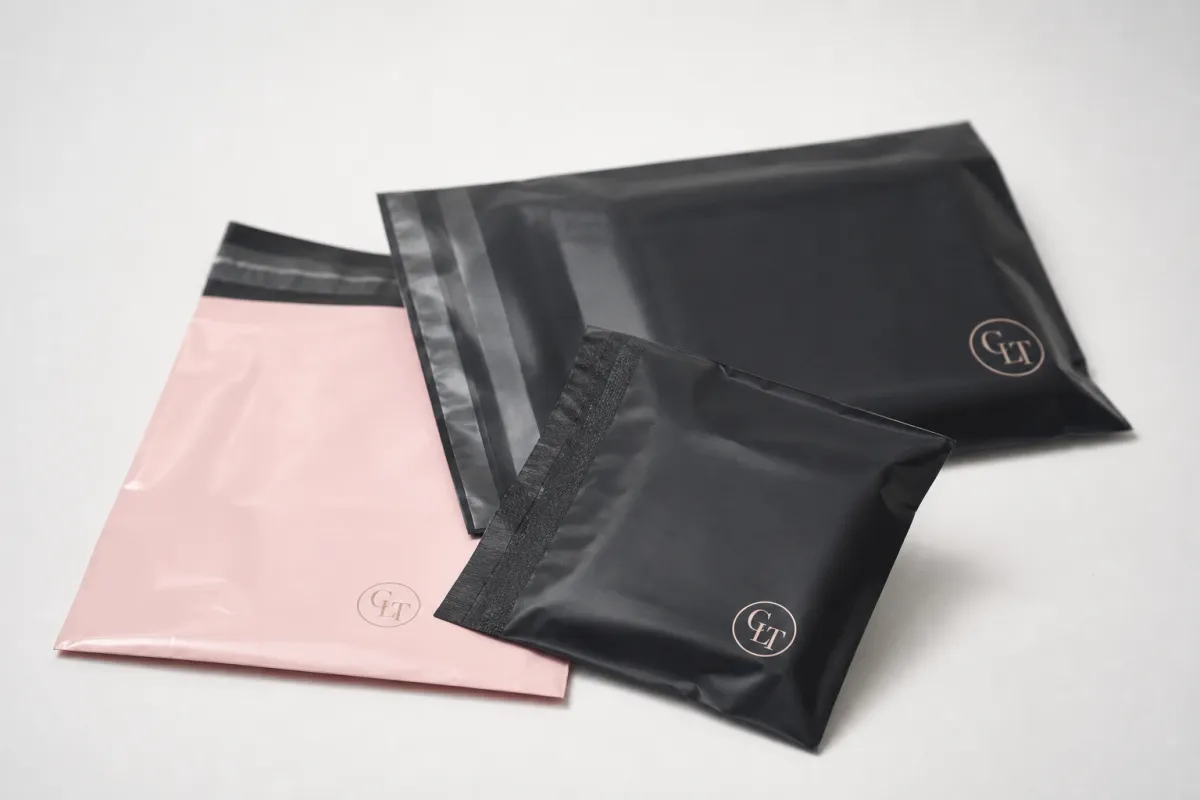
From a packaging buyer's point of view, Custom Poly Mailers for jewelry are not just a shipping choice. They act as a first impression device. The parcel may contain a bracelet pouch, a velvet ring box, or a flat carded earring set, but the customer sees the mailer first, and that surface tells a story about value before the seal is broken.
That story matters because jewelry is a high-emotion category. Even when the product cost is modest, the order often represents a gift, a milestone, or a repeat purchase tied to a brand promise. A weak seal, crooked print, or dull finish can make the parcel feel generic. A clean, well-sized mailer can do the opposite: it suggests care, order, and consistency.
Custom poly mailers for jewelry are usually chosen for lightweight shipments where the outer package does not need crush resistance. That includes:
- single-piece DTC orders with a small jewelry box inside
- subscription refill packs and membership shipments
- accessory orders such as pouches, cloths, or charms
- flat items that already have inner protection
The practical appeal is simple. Poly film is light, moisture-resistant, and easy to seal. In a line that is processing dozens or hundreds of orders a day, that efficiency adds up. The branding benefit is equally real. A one-color logo on a matte white or soft black mailer can make even a small parcel look intentional, which is useful package branding when the order is too small for a full box.
There is a hidden tension here as well. Jewelry is often light enough that the packaging weighs almost as much as the product, but the brand risk is still high. Scuffs on the print, a too-large mailer that allows the contents to slide, or a weak adhesive strip that opens in transit can quickly erase the premium feeling that a seller worked to create. That is why custom poly mailers for jewelry deserve the same level of thought as more obvious product packaging decisions.
A good outer mailer does not try to replace the jewelry box. It protects the box, frames the brand, and makes the whole order feel deliberate.
For brands that already invest in custom printed boxes or carefully designed inserts, the mailer becomes the outer layer of a wider presentation system. For leaner operations, it can be the main branding moment. Either way, the result should feel like part of the same retail packaging family, not a random shipping afterthought.
How Custom Poly Mailers for Jewelry Work in Real Shipping
Custom poly mailers for jewelry have a straightforward structure: a polyethylene film body, a closure strip or adhesive seal, and optional printed artwork that turns a plain sleeve into branded packaging. The film can be clear, opaque, or colored, and thickness usually ranges from about 2.0 mil for lighter use to 3.0 mil or more for better durability. That extra thickness does not make the mailer crush-proof, but it does improve handling confidence.
The mailer usually functions as an outer protective layer rather than the full packaging system. Jewelry pieces may first go into a pouch, microfiber bag, tuck box, or card insert. Then the packed item is slipped into the mailer, sealed, labeled, and sent through manual or automated fulfillment. That sequence matters, because the mailer is doing a different job than the inner pack. It keeps dust, moisture, and light abrasion away from the finished presentation while helping the parcel survive sorting and last-mile handling.
In practice, custom poly mailers for jewelry work best when the inner packaging is already stable. A necklace in a soft pouch, for example, can travel very well inside an opaque mailer. A loose chain without an internal restraint is a different story. The outer mailer will not stop tangling, and it will not absorb much impact. That is why brands often pair mailers with a small box or a secure insert when the product is more delicate or when the perceived value has to feel higher.
For fulfillment teams, the outer bag also affects speed. Poly mailers are lighter than corrugated cartons, they fold flat in storage, and they are easy to stock in multiple sizes. That makes them attractive for brands that want efficiency without sacrificing a branded unboxing moment. The better the fit, the faster the line usually moves. Too much extra room means more movement inside the parcel. Too little room can stress the seal or distort the printed area.
Custom poly mailers for jewelry are especially useful when moisture resistance matters. A shipment may travel through humid climates, wet delivery conditions, or long distribution routes. Poly film adds a simple barrier against splashes and damp handling. That is a quiet but valuable benefit, especially for finished metal components, fabric pouches, or paper-based inserts that should arrive clean.
For brands that care about transit performance, it helps to think beyond aesthetics. Packaging testing groups such as the International Safe Transit Association provide guidance that can inform parcel selection and ship-ready design, especially when a seller wants the outer package to hold up under vibration, drop, and compression exposure. Jewelry mailers do not need to pass every heavy-duty test a carton might face, but the mindset is useful: know the route, know the risk, and size the pack to the journey.
If the order mix includes paper inserts, thank-you cards, or tissue-wrapped items, brands often coordinate the whole system with a broader packaging design plan. That is where custom poly mailers for jewelry become part of a larger package branding strategy instead of a standalone shipping item. The outer mailer, the insert card, and even the inner box should feel like they belong to the same visual language.
Key Factors That Shape Quality, Fit, and Branding
When buyers compare custom poly mailers for jewelry, the first mistake is often thinking only about the logo. The more useful question is whether the mailer actually fits the packed order, survives handling, and reinforces the price point the brand wants to signal. That means size, film thickness, opacity, seal strength, and print style all matter at once.
Sizing that prevents shifting
The best fit is usually snug without being cramped. A mailer that is too large allows a jewelry box or pouch to drift during transit, which can scuff the print or make the parcel look half-empty. A mailer that is too small can wrinkle the contents, strain the closure, or make the final seal unreliable. For that reason, packaging teams should measure the fully packed item, not the bare jewelry piece.
A practical sizing habit is to map finished dimensions by product type. For example, an earring card pack might need one size, while a bracelet box needs another. That simple matrix saves rework and keeps the fulfillment team from improvising under pressure. It is one of the easiest ways to make custom poly mailers for jewelry perform better.
Material choices that fit the order
Standard polyethylene works well for most light shipments. Thicker film improves tear resistance and makes the package feel more substantial in hand. Opaque finishes are helpful when privacy matters or when the brand wants a clean reveal. A matte black mailer, for instance, can feel more premium than a glossy clear sleeve, even before the print is added. If the order needs a softer, more upscale impression, matte often reads better than shine.
Some brands also consider recycled-content options or materials that fit a wider sustainability story. If a jewelry line is already using paper inserts or custom printed boxes, it may make sense to coordinate the full pack so the outer bag, inner box, and paper components follow the same sourcing logic. The Forest Stewardship Council is one reference point for paper-based components when teams want responsibly sourced inserts or cartons to align with the outer shipment.
Print and finish that do more than decorate
Branding choices should support legibility first. A clean one-color logo, a high-contrast mark, or a small repeat pattern can be enough to make custom poly mailers for jewelry look distinctive without overwhelming the surface. Full-bleed art can work too, but it usually raises cost and demands stronger proofing discipline.
Soft-touch matte, metallic ink, and color blocking can all elevate perceived value. The catch is that small parcels are unforgiving. A print that looks beautiful in a mockup can feel crowded on a narrow mailer if the logo is too close to the seal area or the barcode zone. That is why production teams should review exact artwork placement, not just approve a screen image.
In jewelry shipping, small details carry outsized weight:
- Seal strength should hold through normal parcel handling.
- Opacity should match the privacy level the brand wants.
- Label compatibility should allow barcodes and shipping labels to adhere cleanly.
- Tear resistance should be adequate for stacked or bagged parcels.
That is where a packaging buyer earns their keep. The best custom poly mailers for jewelry are not just attractive. They are easy to run, easy to seal, and easy to repeat at scale. Beauty matters, but operational simplicity is what keeps beauty from turning into cost.
| Mailer option | Typical use | Common thickness | Branding style | Estimated unit price at 5,000 pieces |
|---|---|---|---|---|
| Standard white poly mailer | Light jewelry orders, pouch shipments | 2.0-2.5 mil | One-color logo or small repeat print | $0.14-$0.22 |
| Opaque matte custom mailer | Higher perceived value, privacy-focused shipments | 2.5-3.0 mil | High-contrast logo, matte finish | $0.18-$0.30 |
| Thicker premium mailer | Heavier handling routes, stronger feel | 3.0-3.5 mil | Fuller print coverage, specialty ink | $0.24-$0.38 |
| Recycled-content style | Eco-positioned brands, coordinated packaging | Varies by formulation | Simple branding, sustainability messaging | $0.22-$0.40 |
The prices above are illustrative, not fixed. Print coverage, film source, and freight can move the number quickly. Still, the table shows the core tradeoff: the more polished and specialized the mailer, the more the unit price tends to rise. That is normal. The real question is whether the increase supports the customer experience and the margin structure.
Process and Timeline: From Artwork to Production Steps
Ordering custom poly mailers for jewelry is usually straightforward, but only if the buyer treats it like a production project rather than a shopping cart item. The process generally starts with a quote request, then moves into specification review, artwork submission, proofing, sample approval if needed, and finally production and shipping. Each stage can add time, and the slowest projects usually involve late changes rather than complex printing.
A practical timeline often looks like this:
- Confirm size, thickness, and quantity.
- Send logo files or artwork in vector format.
- Review a proof for placement, color, and seal orientation.
- Approve a sample or digital mockup.
- Move into production and freight planning.
For many straightforward orders, production can land around 12-15 business days after proof approval. If the mailer needs a new size, multiple print colors, or a full-coverage design, the schedule can stretch longer. Shipping transit adds another layer, especially if the order is crossing regions or oceans. That is why launch calendars should be built backward from the date the packaging must be on site, not from the day the artwork starts.
Custom poly mailers for jewelry are especially sensitive to proof quality. The proof should show exact dimensions, logo placement, barcode-safe zones, and the side of the seal. If the mailer is printed on both sides, the buyer should confirm how each face appears when the package sits in a shipping bin or when the courier scans it. These are small choices, but they shape the final experience.
Artwork readiness can speed everything up. Vector logos, spot color references, and clean brand assets reduce revision loops. Low-resolution images, unclear color references, or shifted file dimensions do the opposite. A buyer who sends final assets early usually sees fewer delays. A buyer who keeps adjusting the logo size after the proof is approved usually loses time and often pays for extra prepress work.
There is also a broader packaging context here. If the jewelry line is rolling out a larger brand refresh, the mailer may need to coordinate with inserts, tissue, or retail packaging used in stores and gift orders. That coordination is easier when the team treats the mailer as one element in a family of packaging decisions rather than a one-off procurement item.
For brands that sell across multiple channels, the order window should also account for seasonality. Holiday launches, subscription resets, and collection drops tend to compress timelines. The safest approach is to build a buffer of a few weeks, especially when the order involves custom poly mailers for jewelry plus other printed components. A delay in one piece can stall the entire shipment plan.
If the packaging mix includes shipping bags, cartons, and inserts, a broader sourcing review can help. Explore options in Custom Packaging Products and compare them against Custom Poly Mailers so the outer shipper and the inner presentation stay aligned.
Cost, Pricing, MOQ, and Quote Variables to Watch
Pricing for custom poly mailers for jewelry is shaped by several moving parts, and the cheapest quote is not always the best value. Quantity is the strongest lever. After that come thickness, print coverage, number of colors, finish, size, tooling, and freight. A small shift in any one of those can move unit cost more than buyers expect.
Most suppliers also work with a minimum order quantity, or MOQ. For a jewelry brand, that can feel restrictive if the business is small, but MOQs exist because setup time, plates, and print runs carry fixed costs. In plain terms, a 500-piece order is hard to price like a 5,000-piece order. The math simply does not work the same way.
Here is a realistic way to think about the price structure for custom poly mailers for jewelry:
- One-color logo on a standard mailer: usually the lowest cost path.
- Full-wrap or multi-color artwork: higher print complexity, higher setup pressure.
- Special finishes such as matte, metallic, or soft-touch: premium feel, premium cost.
- Custom sizing: useful, but often more expensive than stock dimensions.
The hidden comparison many buyers miss is total cost of ownership. A mailer that arrives cheaper on paper but tears in shipping, prints poorly, or looks off-brand can create replacement shipments, customer service tickets, and negative reviews. Those costs are harder to see in the quote stage, but they often exceed the savings from the lower unit price. That is especially true for custom poly mailers for jewelry, where the outer pack can influence perceived value immediately.
A good quote should separate the base product, print setup, tooling if applicable, freight, sample cost, and any rush fee. That breakdown makes apples-to-apples comparison possible. If one supplier gives a single all-in number and another itemizes the pieces, the second quote is usually easier to evaluate. Transparent pricing is not a luxury. It is a time-saver.
For teams that also use paper inserts or box components, sustainable sourcing can become part of the cost conversation too. An order that mixes poly mailers with paper-based inserts or gift cards may warrant FSC-aligned materials on the paper side, while the poly side focuses on durability and print efficiency. That is where packaging planning becomes more strategic than transactional.
On the industry side, buyers sometimes reference standards for performance rather than price alone. Testing frameworks from organizations like ISTA help teams think about how a parcel behaves under actual distribution stress, which is useful when a jewelry order includes fragile inner packaging or a premium presentation box. The mailer itself is not the only variable. The full pack matters.
| Quote factor | Lower-cost choice | Higher-cost choice | Why it changes price |
|---|---|---|---|
| Quantity | 500-1,000 units | 5,000+ units | Setup cost spreads over more pieces |
| Print coverage | Small logo print | Full-bleed artwork | More ink, more press time, more proofing |
| Material | Standard film | Thicker or recycled-content film | Raw material and handling differences |
| Size | Common stock dimensions | Custom dimensions | Special tooling or custom film runs |
If a brand is serious about margin, it should request at least three quotes and compare them using the same specs. That means same size, same thickness, same print layout, same quantity, and same delivery terms. Otherwise, the comparison is not real. With custom poly mailers for jewelry, the cheapest-looking quote can become the most expensive one once revisions, freight, and reorders are added in.
Common Mistakes When Ordering Custom Poly Mailers for Jewelry
Custom poly mailers for jewelry fail most often for boring reasons, not dramatic ones. The biggest problems are fit, artwork, and assumptions about how the mailer will be used. Once you see those patterns, they become easy to avoid.
One of the most common errors is sizing the mailer to the jewelry piece instead of the packed item. A ring may be tiny, but the finished order might include a box, tissue, insert card, and gift note. That extra material changes the dimensions fast. If the mailer is based on the bare product, the result is often a stressed seal, a wrinkled package, or a shipment that simply looks underfed.
Another common issue is weak print planning. A blurry logo, a low-contrast color choice, or artwork placed too close to the edge can make a premium brand look rushed. That is especially noticeable in custom poly mailers for jewelry, where the surface area is limited and every visual decision is magnified. Good packaging design is not just about looking nice in a mockup. It has to work on a conveyor, in a delivery truck, and under fluorescent light at the customer’s door.
Some buyers also treat every jewelry order the same. They should not. Earrings, necklaces, bracelets, and subscription packs create different packing needs. A chain may need anti-tangle restraint. Earrings may ship well on a card inside a sleeve. A bracelet box may need more room and a slightly stronger seal. A one-size-fits-all approach creates waste, and it often forces the fulfillment team to improvise.
It also helps to avoid approving a design before confirming the operational details. Does the mailer accept labels cleanly? Is the seal wide enough? Does the print area stay clear of the adhesive edge? Can the package still close neatly after the jewelry box is inserted? These questions sound small. They are not. They determine whether the order feels polished or clumsy.
Here are the mistakes packaging teams mention most often when talking about custom poly mailers for jewelry:
- choosing a size without measuring the fully packed item
- prioritizing artwork before seal strength
- ignoring how labels and barcodes will sit on the surface
- using the same mailer for all jewelry categories
- skipping samples and relying on a digital proof alone
There is also a branding mistake that shows up quietly: ordering a mailer that does not match the rest of the system. If the brand uses natural paper inserts, elegant custom printed boxes, or soft premium tissue, a loud or flimsy outer bag can break the visual rhythm. The customer may never name the problem, but they will feel it. Packaging works that way.
The fix is simple enough. Treat the mailer as one part of the whole order experience, not as a shipping consumable that exists in isolation. That mindset improves both cost control and brand consistency, which is exactly what strong product packaging should do.
Expert Tips and Next Steps for Better Orders
If you want custom poly mailers for jewelry to do their job well, start with samples. Not a generic sample. A sample filled with the actual jewelry pack you intend to ship. That is the only honest way to test fit, seal strength, label placement, and unboxing feel at the same time. Paper specs tell one story. Real packed product tells another.
A simple packaging matrix can save time and money. List each product type, the finished packed dimensions, the recommended mailer size, the inner protection used, and the ideal seal orientation. Even a basic spreadsheet can remove guesswork from fulfillment. For a small team, that means fewer errors. For a larger team, it means faster training and fewer exceptions.
Custom poly mailers for jewelry should also be judged after handling, not just before it. Ask someone to carry the package, slide a label on it, stack it with other parcels, and open it after a few minutes of transit abuse. Does the logo still look crisp? Does the surface scuff too easily? Does the closure feel secure? Those checks are practical, and they reveal weak points quickly.
It is usually smart to compare at least three suppliers. Do not compare only unit price. Compare proofing support, lead time, reorder consistency, and whether the supplier asks thoughtful questions about the packed product. The best packaging partner is not always the cheapest. It is the one that catches mistakes before they become inventory sitting in a warehouse.
If the jewelry line also sells gift bundles, seasonal sets, or store-ready assortments, think about how the mailer fits into the wider branded packaging system. A clean outer bag, a tasteful insert, and a consistent box style can make the whole order feel more deliberate. That is where package branding becomes a business asset, not just a visual preference.
For most teams, the next steps are clear: confirm dimensions, gather artwork, request a sample, review the quote line by line, and lock the production window before the launch date gets close. Do that well, and custom poly mailers for jewelry become more than a shipping sleeve. They become a reliable, repeatable part of the customer experience.
And if the goal is to balance presentation, Cost, and Production control, the best results usually come from treating custom poly mailers for jewelry as a planned packaging decision, not a last-minute shipping fix.
Frequently Asked Questions
Are custom poly mailers for jewelry strong enough for everyday shipping?
Yes, if the jewelry is already packed in a pouch, box, or insert and the mailer is sized correctly for the finished pack. They are a strong fit for lightweight orders, clean presentation, and moisture resistance, but they are not a substitute for crush protection when the product needs it. For delicate or high-value pieces, pair the mailer with inner cushioning or a rigid jewelry box.
What size should I choose for custom poly mailers for jewelry?
Measure the fully packed item, not just the jewelry piece, because the box, tissue, card, and insert all change the final dimensions. Leave enough room for a clean seal and label placement without so much extra space that the item shifts during transit. If the catalog includes multiple jewelry formats, build a size chart by product type instead of trying to force one mailer size to fit everything.
How long do custom poly mailers for jewelry usually take to produce?
Production time depends on artwork approval, quantity, print complexity, and whether samples or revised proofs are needed. The fastest orders are the ones that arrive with final artwork and clear specs already prepared. Add buffer time if the launch date matters, because shipping and proof revisions can extend the schedule more than buyers expect.
What affects the price of custom poly mailers for jewelry the most?
Quantity, material thickness, print coverage, number of colors, and special finish are usually the biggest drivers. Unit cost generally drops as order volume rises, but only if the design and size stay consistent. Freight, setup, and sample charges can change the total, so buyers should review a full quote instead of comparing product price alone.
Can custom poly mailers for jewelry replace jewelry boxes?
Sometimes, yes, for low-profile or accessory orders where the customer experience does not require a rigid box. For premium pieces, heirloom items, or gift purchases, a box inside the mailer usually creates a stronger perceived value. A good rule is to match the packaging format to the product price point and the brand promise.
For jewelry sellers that want a clean balance of protection, branding, and cost control, custom poly mailers for jewelry remain one of the most practical tools in the packaging lineup. The right choice supports the shipment, protects the presentation, and keeps the brand message consistent from warehouse to doorstep. The takeaway is simple: measure the finished pack, approve a real sample, and size the mailer to the journey, not just the product.

