Custom Poly Plastic Bags for clothes do more than keep a folded garment together. They shape the first impression, keep dust off the fabric, and give a retail or warehouse team a cleaner way to handle product without adding much cost to the unit. In practice, a well-made bag can make the same shirt look finished, organized, and more valuable before anyone even touches the fabric.
That matters because apparel packaging is judged quickly. A buyer sees a clear, fitted bag and reads control. A bag that is oversized, cloudy, or awkwardly sealed reads as rushed. The difference rarely comes from a huge budget swing. It is usually the result of choosing the right film gauge, dimensions, closure style, and print treatment for the actual garment.
For brands building branded packaging, the bag sits in the same decision family as custom printed boxes, hang tags, and retail packaging inserts. The spec has to serve the garment, the packing line, and the customer experience at once. If you are comparing options, the pages for Custom Packaging Products and Custom Poly Mailers can help frame the rest of the packaging stack.
Why custom poly plastic bags for clothes change the first impression
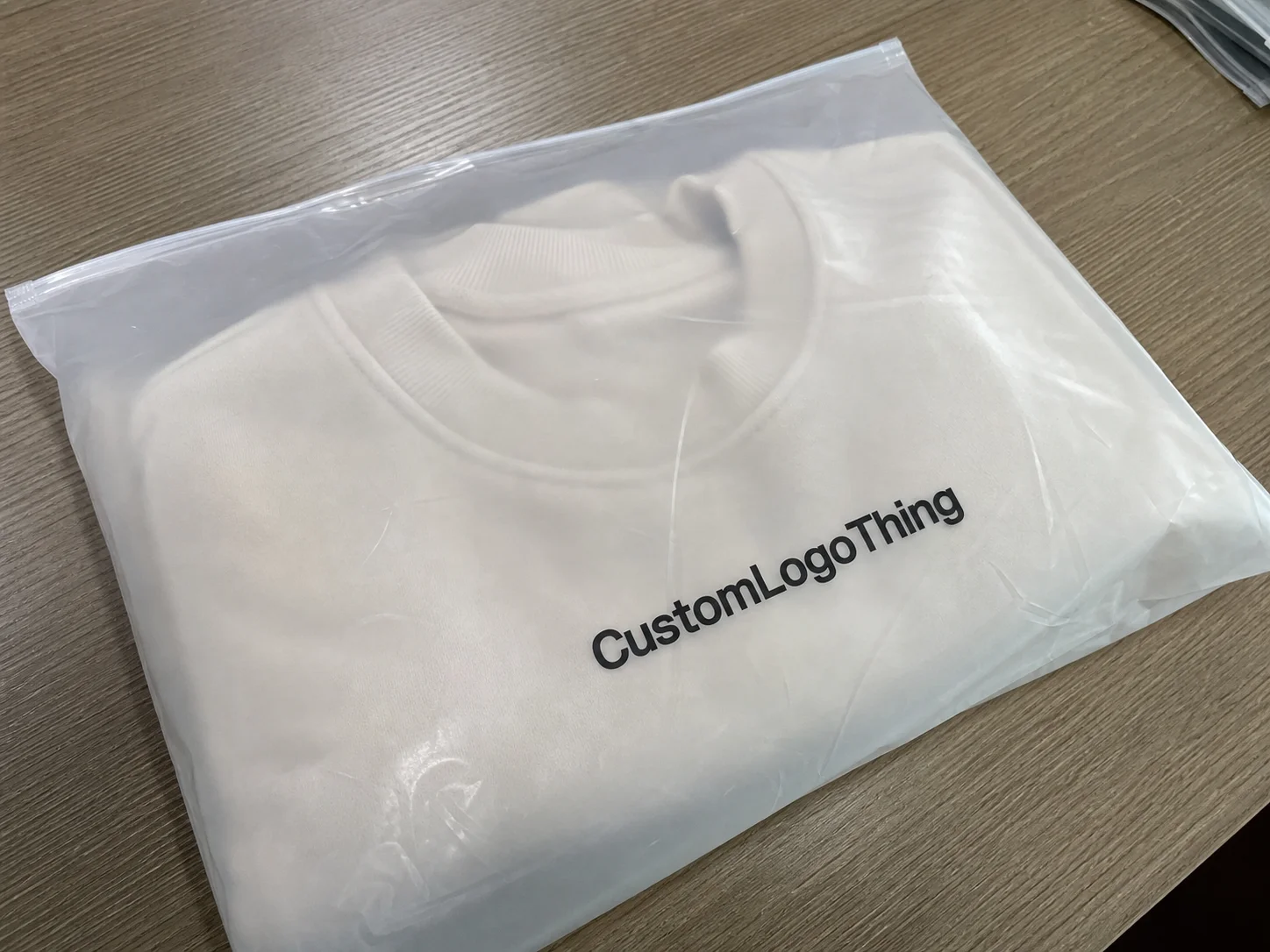
A folded shirt on a shelf can look premium or unfinished before the customer checks the size label. That is the real role of custom poly plastic bags for clothes: they give the product a visual boundary. Clear film keeps the garment visible, while also removing dust, scuffing, and casual handling that make apparel look tired before it reaches the sales floor or fulfillment cart.
There is a practical side to this that buyers sometimes underestimate. A well-sized poly bag can raise the perceived value of a $28 tee or a $90 knit without forcing the brand into a heavier box, foam insert, or more expensive outer shipper. That is why this format stays common in both retail packaging and warehouse prep. It is light, quick, and cheap relative to the impression it creates.
There is also a handling benefit. Bagged garments stack more cleanly in cartons, sort more predictably, and usually stay cleaner during pick-and-pack. For teams moving volume, that can mean fewer reworks and less time spent straightening product. Good packaging design does not just look neat; it reduces friction on the line.
A clean bag spec rarely gets praise from the end customer, and that is usually a good sign. The packaging has done its job without shouting over the product.
This article stays focused on the decisions that matter most: film performance, size selection, closure choice, pricing, production flow, and the common mistakes that create waste. If you are buying custom poly plastic bags for clothes for the first time, or replacing a bag that has been failing in storage or shipping, the goal is to give you a tighter spec before you request samples.
Film gauge, size, and clarity: the specs that shape performance
Film gauge is one of the first choices, and also one of the easiest places to overspend. Thicker film gives more body, better puncture resistance, and a less flimsy feel in hand. But heavier is not automatically better. A lightweight tee in an overbuilt bag can look stiff and waste material, while a hoodie or jacket in a too-thin bag can split at the seam or feel fragile during carton packing.
For folded apparel, it helps to think in use case rather than a single universal thickness. A lightweight shirt bag may sit in a lower gauge range, while knits, fleece, or layered garments usually need more structure. If the bags travel through dense cartons, get stacked on top of one another, or run through high-speed fulfillment, that extra body matters more than it would on a simple retail hanger fold.
Size matters just as much as gauge. A bag should follow the folded garment footprint, not just clear it by a wide margin. Too much extra space creates puffiness, makes cartons harder to stack, and gives the impression that the product inside is smaller than it really is. Too little room causes corners to buckle and makes loading slower. The right fit usually leaves enough room for a clean fold, the closure, and a little movement without trapping excess air.
Clarity is the other key spec. High-clarity film works well for retail packaging because it keeps the garment visible and supports package branding with minimal print. A softer finish or slightly lower gloss can make sense for warehouse use, where the goal is less about shelf sparkle and more about clean handling and better readability of size markings or barcodes. If you print on the bag, clarity also affects how crisp the logo looks against the substrate.
Closure style changes both protection and labor. An adhesive strip speeds up packing, especially on repeat assortments. A heat seal can feel more finished and secure, but it adds equipment and process control. An open top with a fold-over is simple and inexpensive, though it gives less tamper resistance. The right choice depends on whether the bag is sitting in a store, going straight into a carton, or moving through a distribution center.
For buyers comparing product packaging formats, here is a practical way to think about the tradeoff:
| Option | Typical use | Common price range | Main benefit |
|---|---|---|---|
| Clear bag, lower gauge, no print | Basic folded tees, lounge tops | $0.06-$0.14 per unit at higher volume | Lowest material cost, fast packing |
| Printed clear bag, standard gauge | Retail packaging for shirts, knits | $0.12-$0.28 per unit depending on size and print coverage | Better brand presence and shelf presentation |
| Heavier film, printed, with adhesive closure | Fleeces, sweatshirts, heavier apparel | $0.18-$0.40 per unit | More protection and cleaner presentation |
Those numbers are directional, not a quote. Quantity, color count, and setup details can move them quickly. But they are useful because they show how the bag spec itself shapes the spend before anyone talks about freight or cartons.
Production process and timeline: from artwork approval to cartons on the dock
The cleanest orders usually follow the same path. First comes the quote request, then dimension and film confirmation, then artwork approval. If the order is truly custom, there may be a sample stage before the main run. After that, the factory prints or extrudes, converts the film into bags, checks the pack count, and ships cartons to the destination. That sequence sounds simple, but time is usually lost in the handoffs, not the machine work.
Artwork revision is the biggest schedule trap. A small logo shift, a changed warning line, or a barcode that does not scan well can create another proof round. Color matching can also extend the timeline if the brand wants a very specific shade on transparent film. On a bag, ink behaves differently than it does on a carton or label, so the proof has to be evaluated on the actual substrate, not on a screen alone.
For repeat orders, lead time is often shorter because the spec is already locked. For a first run, especially one with specialty print or unusual dimensions, it is safer to assume extra time for proofing and approval. Buyers sometimes forget that freight matters too. A production schedule can look fine and still miss the receiving date if the carton count is high, the destination is far, or the shipping method is slower than expected.
A practical planning habit saves trouble here: work backward from the date the goods must be on the dock or in the warehouse, then add a buffer for artwork approval and transit. That buffer is not padding; it is how you protect the launch plan from the two things that most often slip, which are proofs and transportation.
If packaging is part of a broader rollout, the same discipline applies across the rest of the program. Whether the order includes Custom Packaging Products or a mix of bags and other printed packaging, keep the approval chain short. The fewer people who need to “just take one more look,” the more predictable the schedule becomes.
From a standards perspective, test methods matter if the bag will be shipped under stress. For transport and handling, the ISTA framework is often referenced for distribution testing, and that is useful even for lightweight apparel packaging because it keeps the conversation grounded in real handling conditions rather than guesswork.
Cost, pricing, MOQ, and quote factors that move the number
Several inputs drive cost more than anything else: bag size, film gauge, print coverage, number of colors, closure style, and order quantity. The order can look similar from one line item to the next, but a small change in one of those variables can swing the unit price enough to matter at scale. A larger bag uses more resin. More print coverage uses more ink and setup. A special closure adds labor or materials.
MOQ affects pricing because setup costs are spread across the run. A 1,000-piece order and a 10,000-piece order may use the same art, but the larger run usually lowers the price per bag. The catch is storage. A very low unit price is not a win if the buyer ends up carrying excess inventory for months or tying up cash in a spec that changes before the run is used up.
Good quote comparisons should include the full landed cost. Ask whether plates, setup, proofing, cartons, and freight are included. Some suppliers quote a clean unit price and then add handling or packaging charges later. That makes the number look better up front, but it is not useful if you are comparing bids against a real budget.
A useful rule of thumb: ask for at least two quantity breaks. One should show the entry point, and the other should show the level where savings start to flatten. That makes it easier to decide whether it is smarter to buy a smaller batch now or commit to a larger run that gives a better unit cost but takes more warehouse space.
| Quantity | Typical order pattern | What usually changes | Buyer takeaway |
|---|---|---|---|
| 2,500 pieces | Test run or seasonal need | Higher setup burden per unit | Best for proofing a new spec |
| 5,000 pieces | Common production starter | Better unit price than a test run | Balanced for many apparel programs |
| 10,000 pieces | Stable SKU or repeat item | Lower unit cost, more inventory on hand | Good if the spec will stay unchanged |
Cost is also influenced by the packaging format around the bag. If the apparel is already going into custom printed boxes, the bag may not need heavy branding. If the bag is the primary retail package, the print and finish become more important. That is where package branding and product packaging need to work together instead of competing for attention.
Common mistakes that make apparel bags fail in storage or shipping
The most common mistake is ordering a bag that is too large. Oversized bags trap air, shift around in cartons, and make the package look sloppy. They also take up more space than necessary, which can affect how many units fit in a carton or on a shelf. A bag should protect the item, not make it float.
Another mistake is overprinting clear film. Heavy coverage can make the bag look darker than intended and reduce the visibility that makes clear apparel packaging useful in the first place. It also changes the visual weight of the package. A modest logo, a size mark, and a small set of instructions often look more polished than a bag covered edge to edge in ink.
Bad closure choice causes real problems. A weak adhesive strip can lift in transit. A heat seal that is not consistent can create split seams or uneven edges. An open-top bag may be fine for internal handling, but it is usually a poor choice for shipping if the product needs more protection. If the packing team has to slow down to fight the closure, the spec is wrong for the line.
Storage conditions matter more than many buyers expect. Heat can distort film. Heavy cartons stacked on poor pallets can compress the bags. Mixing bag specs across SKUs creates confusion and waste because the packing team has to stop and verify dimensions repeatedly. That kind of error is boring, but it is expensive.
- Do not mix multiple bag sizes on the same pick face unless the labels are obvious.
- Do not assume a clear film will stay crystal clear if it is stored in hot, humid conditions.
- Do not change closure style without checking the packing line speed and the sealed edge quality.
- Do not approve a proof if the logo obscures the garment more than it helps it.
There is also a brand risk here. A bad bag can make a well-made garment look cheap. That is why packaging design should be judged with the actual product inside, not as a standalone graphic exercise. If you want the bag to support retail packaging, it has to read cleanly in the real conditions the buyer will see.
Branding details, sealing methods, and handling tips that improve results
Good branding on a poly bag is usually restrained. A small logo, a size callout, and a clean warning line can look more premium than a wall of graphics. The reason is simple: the garment should remain the star. If the bag becomes the loudest thing in the package, the apparel loses visual authority.
Placement matters. Logos should sit where they are visible without covering the fold. Barcodes need enough contrast to scan reliably. Size indicators should be readable at a glance, especially on stock kept in bins or moving through replenishment. If the bag carries compliance text, leave enough margin so the copy does not crowd the seal or the edge.
Sealing methods should match the workflow. Adhesive closures help when speed matters and the packing team needs consistency. Heat seals are better when the brand wants a more finished look or more control over tamper resistance. Fold-over bags work well for internal distribution and lighter handling, but they are not ideal when the product will be handled many times before reaching the customer.
Different garments call for different treatment. Tees and lightweight tops usually benefit from a simpler, clearer bag with modest print. Knits and loungewear often need more film body because the fabric is bulkier and more prone to compression. Dress shirts want crisp presentation and a neat edge. Lightweight outerwear may need more room and a stronger closure so the bag does not split at stress points.
From a buyer’s point of view, the best bag spec is the one that fits the actual processing flow. If the item is folded, bagged, boxed, and shipped within one facility, efficiency matters more than flashy graphics. If the bag will be seen on a rack or shelf, clarity and print precision matter more. In either case, the spec should support the garment instead of fighting it.
It also helps to think in systems. A branded apparel program often combines bags, labels, hangtags, tissue, and sometimes Custom Poly Mailers for direct shipment. That is where package branding becomes coherent instead of scattered. The more those pieces agree on tone and function, the more finished the product line looks.
For sustainability questions, buyers often ask about paper components or recycled content in the broader packaging mix. The FSC framework is relevant when paper-based pieces are part of the system, even if the bag itself is poly. It is useful to separate material decisions cleanly instead of assuming one label covers everything.
Next steps: how to build a clean bag spec before you request samples
Start with the garment facts. Measure the folded dimensions, note the fabric weight, decide whether the item needs a hanger hole or vent holes, and map out how it will be shipped or displayed. Those are the non-negotiables. A bag spec built without those measurements usually becomes guesswork, and guesswork is expensive once the order reaches production.
Then rank the priorities. Some brands want presentation first. Others care more about packing speed. Some need maximum protection because the goods move through long transit or dense warehouse handling. Say that plainly before you quote, because it keeps the specification from drifting as people add opinions. The best custom poly plastic bags for clothes are usually the ones that solve one or two priorities very well instead of trying to be everything at once.
Request samples that compare real options, not just one version with a small tweak. Two thicknesses, two closure styles, or two clarity levels will tell you more than a single proof ever will. Put the sample on the actual folded garment and check the fit from the side and front. Look at how it stacks in a carton. That is the point where a spec either holds up or falls apart.
Before you place the order, confirm the print copy, carton pack, target quantity, and delivery timing. If you want the quote process to move cleanly, send all the basics in one pass. That includes dimensions, film preference, print colors, and whether the order is a repeat or a first run. Clear inputs save time on both sides and reduce the number of revisions needed before production starts.
Strong apparel packaging is rarely dramatic. It is usually precise, repeatable, and easy to handle. Get the film, size, seal, and branding aligned, and custom poly plastic bags for clothes will do exactly what they should: protect the garment, sharpen the presentation, and keep the program efficient from packing table to shelf.
What thickness works best for custom poly plastic bags for clothes?
Lightweight folded apparel often works well in a lower gauge, while heavier knits, hoodies, and jackets usually need more body and puncture resistance. The right choice depends on handling, stacking, and shipping conditions, not on forcing every SKU into the same film spec.
Do poly bags for clothing need ventilation holes?
Vent holes help air escape during packing and can reduce puffiness inside tightly packed cartons. They are most useful when products are machine-packed, folded tightly, or stored for longer periods before use.
How do I keep printed clothing bags looking clear instead of cloudy?
Use a film with good clarity and avoid unnecessary ink coverage across the viewing area. It also helps to ask for a proof on the actual substrate so you can see how transparency, logo color, and white ink interact in real light.
What drives unit cost the most on custom apparel poly bags?
Size, film gauge, print colors, and quantity usually have the biggest effect on price. Setup, packaging format, and freight can also matter, so quote comparisons should always include the full landed cost instead of only the unit price.
How long does production usually take for custom poly plastic bags for clothes?
Lead time depends on artwork approval, quantity, and whether the order uses standard specs or a fully custom build. Repeat orders can move faster, while first runs usually need extra time for proofing and approval before production starts.


