Custom polypropylene bags are a practical buy when the job is to carry product, show a brand clearly, and stay inside a budget that still works after freight, packing, and handling are included. The category is broad enough to cover retail handouts, grocery bags, trade show giveaways, and reusable shopping bags, but the decision usually comes down to the same few variables: material, size, print method, handle construction, and how the bag will be used.
These bags also fit well into a broader packaging program. If the order needs to align with cartons, labels, or inserts, the bag can sit inside a larger system rather than functioning as a one-off promo item. That is where the value tends to improve: the bag keeps the brand visible, while the spec stays controlled enough to avoid waste. If the broader program includes Custom Packaging Products, the bag can be planned alongside the rest of the package architecture.
The main risk is treating the quote as if it only depends on artwork and quantity. A useful spec has to account for the actual load, the expected reuse cycle, the seam construction, the finish, and the packing format. If those choices are vague, the quote will be vague too.
Why custom polypropylene bags punch above their weight
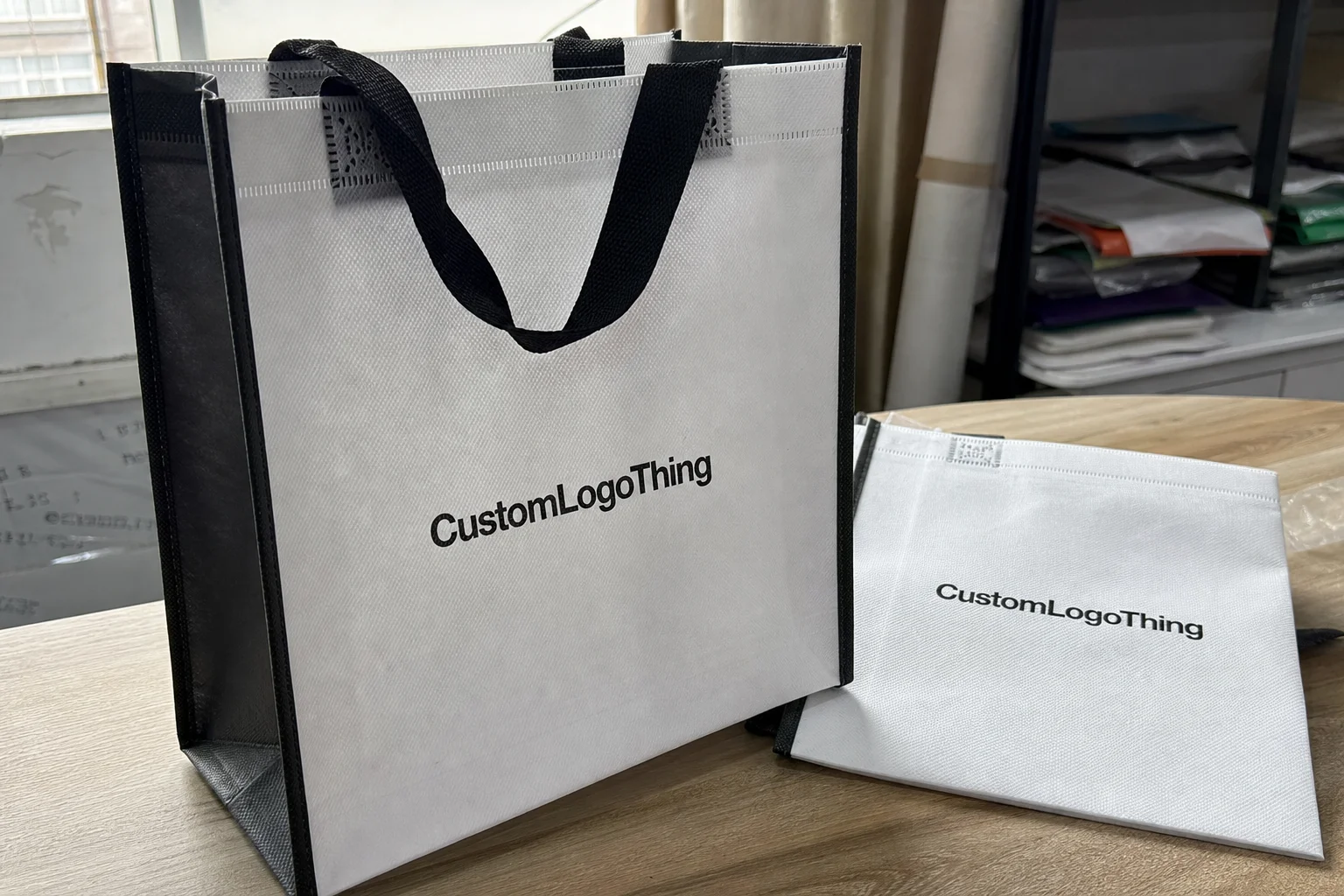
Polypropylene sits in a useful middle ground. It is lighter and cheaper than many textile-style bags, but more structured and reusable than a disposable film carrier. That makes it a sensible option when the bag needs to feel intentional without turning into a high-cost accessory.
There are two common constructions. Woven polypropylene uses interlaced tape and usually feels stronger and stiffer. Non-woven polypropylene is bonded rather than woven, so it has a softer hand and a more flexible drape. Neither is universally better. Woven is usually better for heavier loads and longer reuse. Non-woven is often better for giveaways, light retail use, and programs that need a clean look at a lower unit cost.
Branding is another reason the format works. The face area is large enough for a logo, message, or pattern, and the surface can support simple or more detailed decoration depending on the build. That is useful for stores, events, membership programs, and grocery use, where the bag keeps moving through public spaces after the original transaction is over.
The best results usually come from defining the use case first. What goes inside? How heavy is it? Will the bag be reused weekly or carried once? Those answers matter more than the mockup. A bag that is overspecified wastes money. A bag that is underbuilt fails quickly and costs more in replacements than it saved upfront.
How custom polypropylene bags are made and printed
The production path is straightforward. The polypropylene is converted into panels, the panels are cut to size, seams are formed, handles are attached, and any gussets or reinforcement are added before decoration and packing. More complex builds, such as laminated woven bags, add extra steps, which increases both lead time and cost.
Printing method matters more than many buyers expect. Flexographic printing works well for larger runs and simpler graphics with limited colors. Screen printing is a strong fit for bold logos and straightforward branding. Laminated constructions can support richer graphics and a more polished appearance when the program calls for it.
Proofing is where avoidable mistakes show up early. Artwork should be checked against the actual bag geometry, not just a flat file. Safe zones, seam intersections, handle clearance, and gusset wrap all affect how the design lands in production. A centered logo on a PDF can look slightly off once it crosses a stitched edge or folds around a side panel.
Finish changes the perception of the bag quickly. Matte reads softer and hides marks better. Gloss gives stronger contrast and a more vivid look. Lamination can improve scuff resistance and elevate presentation, but it also adds cost and can change how the bag folds. If the bag has to sit beside Custom Printed Boxes or other branded packaging, the finish should feel consistent with the rest of the system.
Quality control should be specific, not generic. Check seam consistency, print registration, handle attachment strength, and color tolerance before the run is packed. If the bags will be distributed through a shipping or retail network, transit durability matters too. Strong seams and stable folding reduce damage and returns.
Material choices, GSM, and finish details that change performance
GSM is a useful shorthand for material weight, but it is not the whole spec. Higher GSM usually means a heavier, stiffer bag, though not always a better one. A lighter non-woven tote can work fine for a handout or event kit. A heavier woven or laminated build makes more sense when the bag has to carry dense items or survive frequent reuse.
The load matters more than the headline weight. Flat product is easy. Boxes, bottles, or items with sharp edges put more stress on seams and corners. If the bag is meant for packaged food, books, sample kits, or boxed retail goods, the construction should match the shape and not just the pounds on paper. Many failures come from stress concentration, not from total weight alone.
Handle style changes usability and durability. Die-cut handles give a neat, simple look and are common on promotional bags. Web or stitched handles spread the load better and are usually more comfortable when the bag is full. Reinforced attachment points are worth paying for when reuse matters. Saving a little on handles and then losing the bag to a tear is a poor trade.
Gussets also matter. Bottom gussets improve capacity and help the bag stand better. Side gussets make loading easier and improve fit for boxy products. If the bags are being packed at volume, a gusset can improve both presentation and handling.
| Bag Style | Typical Use | Typical MOQ | Typical Unit Price at 5,000 Units | What It Does Well |
|---|---|---|---|---|
| Non-woven polypropylene | Retail handouts, events, welcome kits | 500-1,000 | $0.35-$0.85 | Lightweight feel, flexible branding, good value |
| Woven polypropylene | Grocery carryout, heavier reusable use | 1,000-3,000 | $0.55-$1.10 | Stronger structure, better load support, longer life |
| Laminated woven polypropylene | Premium retail, high-coverage graphics | 2,000-5,000 | $0.80-$1.75 | Sharper print, richer color, more polished presentation |
Those numbers are a working range, not a promise. Size, print count, handle style, seam complexity, fold format, and freight all move the price. Bigger bags use more Material and Print area. Better finish adds conversion steps. Higher volume lowers the unit price because setup gets spread across more pieces.
Water resistance, easy-clean surfaces, and UV tolerance are worth asking about for grocery, outdoor, or market use. For a simple retail tote that is likely to be reused only occasionally, those features may not justify the added cost. For a bag that is meant to stay in circulation, they often do.
Cost, pricing, and MOQ: what actually drives the quote
Most price changes come from a short list of inputs. Material grade is one. Woven, non-woven, and laminated constructions have different conversion costs and different resin demand. Finished size is another, because larger panels require more material and more print coverage. Print colors, handle construction, and packing format also matter. Freight can move the final number more than buyers expect because bags are bulky.
MOQ exists because setup costs do not shrink linearly. Cutting, printing, color matching, and finishing all take time whether the order is 1,000 or 10,000 pieces. Small orders carry more setup cost per unit, which is why the per-bag price on a low-volume run can look high. That is not arbitrary; it is the cost of setting up the job.
The cheapest quote is not the best quote if it comes with weak seams, print drift, or inconsistent dimensions. Replacements and labor erase a bargain quickly. Compare quotes only when the specifications are truly the same. If one supplier is pricing a lighter GSM, a simpler handle, or fewer print colors, the comparison is not valid.
There are a few straightforward ways to reduce cost without damaging the result. Simplify the artwork. Reduce the number of print colors. Use a standard size when it fits the product. Avoid unnecessary finishes. Keep the packing format simple if the bags are not meant for retail display. Those changes usually save more than pushing harder on price alone.
It also helps to look at the full packaging stack. If the bag is part of a larger branded order, align it with other components such as Custom Poly Mailers so the customer sees one consistent experience instead of disconnected pieces. That alignment can also reduce duplicated setup decisions.
Production steps and timeline: from artwork to delivery
The cleanest orders follow the same sequence. First, confirm the spec: size, construction, material weight, handle style, quantity, print colors, and intended use. Next, check the artwork against the real bag geometry. Then review a proof or sample. Production starts after approval. Inspection, packing, and shipment follow after that.
Most delays happen before production starts. Missing dimensions, unclear artwork, and slow proof approvals usually cost more time than the run itself. A buyer who sends a complete spec sheet gets a cleaner quote and a faster path through approval. A vague request tends to create extra back-and-forth.
Simple bags move faster. A one-color non-woven tote with a standard handle is easier to produce than a laminated woven bag with multiple print areas, reinforced seams, and a custom fold. More complexity means more checkpoints and more opportunity for correction.
Lead time also depends on plant load. The factory may have material on hand but still be waiting for a press slot or finishing window. Approval timing matters because a proof sitting in someone’s inbox can slip the schedule even when production is ready. The fastest way to keep the order on track is to review the proof quickly and send changes clearly.
Packing deserves attention too. Carton count, carton dimensions, stack height, and pallet configuration all affect damage risk and receiving labor. If the bags are going to multiple stores or distribution points, clear carton labels and consistent pack counts make the receiving process much easier.
A realistic timeline should be broken into stages, not just a total number. That makes it easier to see where delays can happen and where the buyer needs to respond. Simpler orders can move quickly once proofing is complete. Larger or more finished orders take longer because they require more setup and more QC checkpoints.
Common mistakes when ordering reusable polypropylene bags
The first mistake is choosing the bag by appearance alone. A mockup can look clean while the actual bag is too small, too light, or awkward for the product. If the bag is supposed to carry groceries, sample boxes, or multiple purchases, the construction has to support that use.
The second mistake is ignoring artwork constraints. Safe zones, seam placement, bleed, and handle clearance all matter. A logo that looks centered on screen can end up slightly off once it wraps around a gusset or sits near a stitched edge. That is one of the most common avoidable problems in bag orders.
The third mistake is underbuilding for the load. A lighter bag can save a little money, but if the seams stretch or the handles bite into the material after only a few uses, the savings disappear. If the bag is reusable, it should feel reusable.
The fourth mistake is comparing quotes that are not truly equivalent. Different GSM, different finish, different handle, different freight basis. That is not an apples-to-apples comparison.
The fifth mistake is skipping the proof or sample review because the art looks fine on screen. A sample shows texture, stiffness, handle comfort, fold behavior, and seam quality in a way a PDF never can. Buyers who order bags regularly know this. Newer buyers often learn it after one bad run.
- Match the bag to the actual load, not just the look.
- Check handle comfort with real contents inside.
- Confirm seam placement before final art approval.
- Compare landed cost, not only ex-factory pricing.
- Review a sample whenever the bag carries real brand value.
Good bag programs usually rely on restraint: enough structure to do the job, enough branding to look intentional, and enough process control to keep the run on spec. That is where polypropylene performs best.
Next steps for samples, specs, and a faster quote
If you want a clean quote on custom polypropylene bags, start with the basics. Send the finished size, quantity, intended use, expected load weight, print colors, handle style, and any finish requirements. The more precise the input, the more useful the quote. Vague requests usually produce vague pricing.
Ask for a sample when the bag carries a premium product, repeated customer use, or heavier contents. The sample shows what the proof cannot: texture, stiffness, handle feel, fold behavior, and seam quality. If the bag is part of a larger packaging program, make sure its color and finish sit comfortably beside the rest of the system.
Before approving production, confirm the proof, timeline, carton count, packing format, and delivery terms. That may sound routine because it is. Routine is useful here. It keeps the order from drifting off spec halfway through the run.
The goal is not to make the bag impressive for its own sake. It is to make a bag that carries well, prints clearly, fits the budget, and arrives without surprises. When the spec is disciplined, the order is easier to buy and easier to receive.
What are custom polypropylene bags best used for?
They are commonly used for retail purchases, grocery carryout, event giveaways, membership kits, and branded handout programs. They work well when the bag needs to be reusable, printable, and cost-effective without feeling flimsy.
How long do custom polypropylene bags usually last?
That depends on GSM, seam strength, handle style, load weight, and how often the bag is reused. A well-specified bag can last through many trips. A light build used beyond its intended purpose will wear out sooner.
What affects the price of custom polypropylene bags most?
Material grade, size, print colors, lamination, handle construction, quantity, and freight have the biggest impact. Quotes should always be compared against the same specification, or the comparison is meaningless.
Can custom polypropylene bags be printed in full color?
Yes. Full-color branding is possible, especially with laminated constructions or print methods suited to higher-coverage artwork. The design, finish, and production timeline should be checked early so the print method matches the artwork.
What should I check before approving custom polypropylene bags?
Confirm the dimensions, material weight, handle style, print placement, color match, seam details, packing format, and delivery schedule. Review the proof or sample before production starts. That is the fastest way to avoid expensive corrections later.