Buyer Fit Snapshot
| Best fit | Custom Pouches With Zip Seal projects where brand print, material claims, artwork control, MOQ, and repeat-order consistency need to be specified before quoting. |
|---|---|
| Quote inputs | Share finished size, material target, print colors, finish, packing count, annual reorder estimate, ship-to region, and any compliance wording. |
| Proofing check | Approve dieline scale, logo placement, barcode or warning zones, color tolerance, closure strength, and carton packing before bulk production. |
| Main risk | Vague material claims, crowded artwork, missing packing details, or unclear freight terms can make a low unit price expensive after revisions. |
Fast answer: Custom Pouches With Zip Seal: Sourcing, Cost, and Fit should be specified like a repeatable production item. The safest quote records material, print method, finish, artwork proof, packing count, and reorder notes in one written spec.
Production checks before approval
Compare the actual filled-product size with the drawing, then confirm tolerance on folds, seals, hang holes, label areas, and retail display edges. Reserve space for logos, QR codes, warning copy, and material claims before decorative graphics fill the panel.
Quote comparison points
Review material grade, print process, finish, sampling route, tooling charges, carton quantity, and freight assumptions side by side. A quote is only useful when the supplier can repeat the same color, closure quality, and packing count on the next order.
A pouch can look plain on a shelf and still carry a lot of weight in the hand. The zipper often decides whether a customer trusts it after the first open, or tosses it aside and never comes back. That is the real appeal of custom pouches with zip seal: branding, barrier protection, and repeat-open convenience are packed into one format that has to behave in a store, in transit, and on a pantry shelf.
For brands sourcing custom pouches with zip seal, design is usually the first conversation. It should not be the last. Fit, shelf life, seal integrity, and line performance are the questions that determine whether the final package earns its keep. A pouch can look sharp in a mockup and still fail once heat, weight, oil, dust, and handling enter the picture. Coffee that loses aroma, supplements that leak fine powder, and snacks that go soft all tell the same story: the wrong spec costs more than the right one.
I have seen teams fall in love with a render, then spend three rounds fixing problems that should have been caught in the first sample. That is not a design failure so much as a process failure. Good packaging is a chain of small decisions, and one weak link is enough to kink the whole run.
What Custom Pouches With Zip Seal Are and Why They Sell
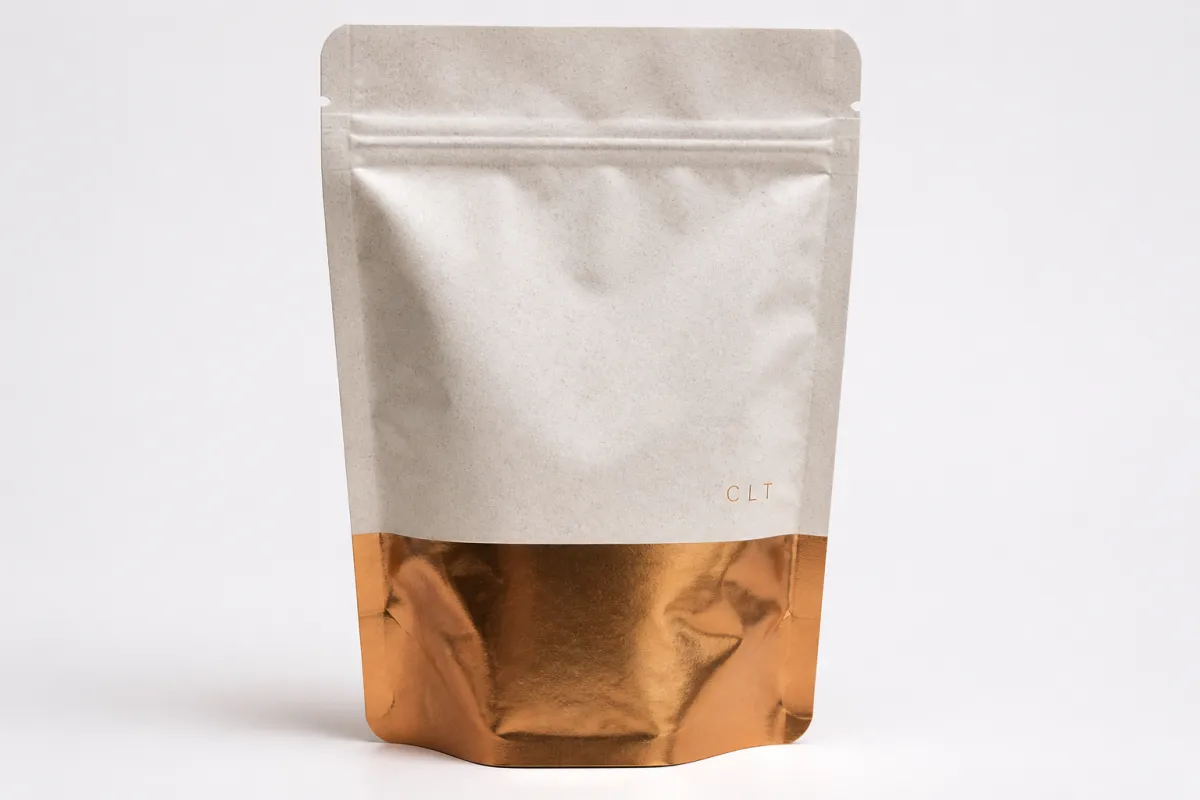
Custom pouches with zip seal are flexible packages built to a product-specific size, printed with brand artwork, and finished with a reclosable zipper so the pouch can be opened and closed many times. The custom part matters more than many buyers expect. A stock pouch gives you a fixed size and a fixed structure, which can work for a temporary run, but it forces the product to fit the package instead of the package supporting the product. With a true custom build, the pouch width, height, gusset style, film structure, print coverage, barrier level, and zipper style are all selected around how the product actually behaves.
That difference shows up fast on shelf. A roasted coffee pouch may need a high-barrier structure with a degassing valve and a zipper that closes with confidence but does not fight the user. A pouch for gummies or pet treats may need strong aroma retention and a closure that still works after repeated use with slightly oily fingers. Powdered products often need a zipper that resists clogging from fines, while fragile snacks need enough headspace and seal reliability to avoid being crushed. In each case, custom pouches with zip seal are not just containers; they are part of the product experience.
Packaging buyers choose this format for a simple reason: it solves freshness, convenience, and presentation in one move. It also gives stronger package branding than plain stock options, especially when the pouch is the primary retail package. A well-designed pouch can carry the same visual authority as Custom Packaging Products like cartons or folding sleeves, while using less material and taking up less shipping space. That is one reason custom pouches with zip seal appear so often in snacks, coffee, supplements, pet treats, and specialty foods.
There is a resale benefit too. A customer who can reseal the pack cleanly is more likely to keep using it, and that repeated use quietly reinforces the brand every time the pouch comes out of a cupboard or bag. A zipper that feels flimsy or awkward can make a strong product feel cheap. A zipper that closes with a crisp, reliable press does the opposite. It gives the whole package a more deliberate feel.
A good pouch does not just hold product; it manages oxygen, moisture, handling, and the customer’s confidence every time it is reopened.
The best custom pouches with zip seal behave like a system. Film selection, seal strength, zipper compatibility, and filling method all have to work together. Miss one piece, and the package starts to show strain in real use.
How Custom Pouches With Zip Seal Work in Production
Custom pouches with zip seal are built from several layers, and each one serves a specific purpose. The outer layer usually carries the print and gives the package its visual identity. Under that sits a functional barrier layer, or several layers working together, to control oxygen, moisture, aroma, grease, or light. The innermost sealant layer allows the pouch to heat-seal shut after filling. The zipper is converted into the pouch structure and then closed again by the co-packer or filling line once product goes in.
The zipper is not added casually. It has to line up with the pouch geometry, survive handling, and still open and close cleanly after final sealing. Press-to-close zippers are common because they are familiar and cost-effective, but there are also child-resistant closures, tamper-evident options, and styles designed for easier opening with limited hand strength. The right choice depends on the product, the customer, and how often the pouch will be opened. Someone opening coffee once a day has a different need than someone grabbing a snack pouch several times in one afternoon.
Materials behave differently under pressure and heat. A laminate that looks perfect in a flat sample can wrinkle, stretch, or seal too aggressively once it reaches equipment. Registration, zipper placement, and seal window control become critical very quickly. If the zipper sits too close to the top seal, the pouch may misclose. If the material is too soft, the seal bars may distort the film. If the barrier structure is too stiff, the pouch may resist clean forming in the shoulders or gussets.
Prototype testing earns its place here. A buyer can approve dimensions and artwork on paper, but custom pouches with zip seal need to be tested under real fill conditions. Product changes everything. Dust from powder can interfere with sealing. Oil on snack surfaces can affect closure feel. Rounded or irregular solids can press against the zipper and make resealing awkward. A filled prototype tells you far more than a polished PDF ever will.
Packaging teams often miss one important point: a pouch is not only a graphics surface like some custom printed boxes are. It is a functional structure with seal zones, fold lines, and user interaction points. The artwork has to respect the machine, and the machine has to respect the product. The strongest custom pouches with zip seal do both.
Closure style is only one part of the build. Two pouches can both use a zipper and still perform very differently because the barrier film, sealant layer, and print construction are not the same. That is why spec sheets matter and why a supplier’s questions should be taken seriously. If a vendor does not ask how the product flows, how the line runs, or what the pouch needs to protect against, the quote is probably too shallow.
Cost, Pricing, and MOQ for Custom Pouches With Zip Seal
Pricing for custom pouches with zip seal is shaped by a handful of concrete drivers: pouch size, film construction, print coverage, zipper type, barrier requirement, and order quantity. A larger pouch uses more material. A higher-barrier laminate usually costs more than a simpler structure. Full-coverage printing with multiple colors adds setup and press time. Child-resistant or tamper-evident zippers are usually more expensive than standard press-to-close options. As volume rises, the unit cost usually falls because setup is spread across more pieces.
MOQ is where many first-time buyers get a surprise. Some suppliers support smaller runs, but the per-unit price often climbs because prepress, conversion, and inspection costs are absorbed across fewer pouches. For a brand testing a new product, that may still be worth it if it keeps inventory risk under control. For a larger retail program, a higher MOQ can make more sense if the pouch protects shelf life better, looks stronger on shelf, and reduces spoilage or returns.
Below is a practical pricing view for custom pouches with zip seal. These are planning ranges for mid-volume orders and should be treated as directional, not fixed quotes.
| Option | Typical Use | Approx. MOQ | Typical Unit Cost at 5,000 | Notes |
|---|---|---|---|---|
| Simple printed pouch with standard zipper | Snacks, dry mixes, low-moisture products | 3,000-5,000 | $0.18-$0.28 | A solid starting point for straightforward product packaging |
| High-barrier pouch with standard zipper | Coffee, supplements, aroma-sensitive goods | 5,000-10,000 | $0.22-$0.38 | Better oxygen and moisture protection, often the safer retail packaging choice |
| Matte finish, window, and zipper | Premium snacks, pet treats, specialty foods | 5,000-10,000 | $0.24-$0.42 | Window and finish add appeal, but also add print and converting complexity |
| Coffee pouch with valve and zipper | Roasted coffee and related blends | 10,000+ | $0.30-$0.55 | Degassing valve and barrier structure raise both cost and performance |
| Child-resistant or specialty closure pouch | Regulated or sensitive products | 10,000+ | $0.35-$0.65 | More testing, more parts, and tighter quality control |
Special finishes can move the number quickly. Matte lamination, soft-touch coatings, spot gloss, clear windows, metallic effects, and gusseted formats all add steps. A pouch That Feels Premium in the hand may justify the extra cost if the brand sells on presentation. A product that competes mostly on price may need a leaner build to protect margin. That tradeoff sits at the center of smart packaging design.
Many buyers miss what the quote actually includes. A fair comparison should ask whether the price covers plate charges, artwork prep, freight, sample runs, zipper upgrades, and any extra seal or barrier features. A low unit price can look far less attractive once those pieces are added. For that reason, compare complete quotes for custom pouches with zip seal, not just the headline per-piece number. If you are reviewing suppliers, start with the specifications on our Custom Packaging Products page and build the quote around the real product conditions.
A slightly higher unit price can still be the better decision if the pouch saves product loss or extends shelf life. Better barrier film can keep coffee from staling. Better zipper performance can reduce customer complaints. Those effects change the cost picture in a hurry. I have watched a penny or two per pouch look expensive in procurement and then disappear once spoilage, returns, and rework are counted honestly. That math gets kinda persuasive once it is laid out.
Production Process and Lead Time for Custom Pouches With Zip Seal
The production path for custom pouches with zip seal usually starts with a brief: product type, fill weight, dimensions, barrier needs, zipper preference, and target launch date. From there, the supplier reviews artwork, confirms the structure, and prepares a proof or die-line. Once the proof is approved, film production begins. Converting turns the film into finished pouches. Quality inspection catches defects before shipment. The path looks linear on paper, though timing can shift at several points.
Artwork revisions are the biggest source of delay, especially when the design has small type, tight barcodes, or multiple SKUs. Color matching can slow things down too, because flexible film does not always print the same way cardboard or paper does. That is one reason branded packaging teams should review physical proofs, not just files on a screen. A blue that looks calm on a monitor can print more violet on film, and a fine barcode can disappear if the safe zone is too tight.
Samples deserve real attention. A flat sample helps validate size and artwork placement, but a filled sample is far more useful because it shows how the pouch behaves under load. For custom pouches with zip seal, the sample phase may take anywhere from a few business days to a few weeks depending on structure complexity, valve requirements, and current line capacity. Once approved, production often falls into a range of roughly 12 to 25 business days for many jobs, then transit time is added on top of that. Complex builds or multi-SKU programs can run longer.
Buyers often underestimate the fill line. The machine that fills the pouch can become the bottleneck, not the pouch itself. If the zipper is too stiff, the crew may struggle to open and close it. If the material is too slippery, the pouch may not stage well on the machine. If the top seal window is too narrow, the sealing head has less room for error. Custom pouches with zip seal have to work with packaging equipment as much as with the shelf.
Quality standards matter here as well. Drop testing, seal integrity checks, and transport simulation often follow recognized protocols such as those from ISTA. For fiber-based components or mixed-material program decisions, some teams also look at sourcing standards from FSC if sustainability claims are part of the package story. Not every pouch program needs those certifications, but the mindset is useful: test the package against how it will actually be handled, shipped, and opened. Also, a quick disclaimer from experience: sustainability claims vary by region and material mix, so the label on a spec sheet should never substitute for a real compliance check.
Lead time planning should also account for inventory buffers. If the launch depends on a retailer reset, a trade show, or a seasonal window, do not schedule to the last possible day. Leave room for a proof correction, a sample adjustment, or a freight delay. With custom pouches with zip seal, a little extra time is usually cheaper than a rushed reprint.
The cleanest schedules usually come from simple decisions made early. Pick the product, settle the dimensions, confirm the zipper style, and approve the artwork with enough breathing room. That short sequence prevents most timeline headaches before they start. It also keeps everyone honest about what the pouch is supposed to do, which sounds basic until a launch is hanging by a thread.
Key Factors That Shape Performance and Shelf Life
The product should drive the pouch, not the other way around. That sounds obvious, yet it is where many packaging programs drift off course. A greasy snack, a moisture-sensitive powder, an oxygen-sensitive coffee, and a fragile dried fruit blend each demand different levels of protection. Custom pouches with zip seal are flexible enough to serve all of them, but only if the structure matches the chemistry and the handling reality of the product inside.
Barrier selection is the first serious decision point. A basic PE-based or PET/PE structure may be enough for dry goods with shorter shelf-life expectations. A stronger laminate, such as PET/AL/PE or another higher-barrier build, may be needed for coffee, nutritional powders, or products where aroma retention matters. Some teams choose mono-material structures for recyclability goals, but that decision still has to meet the functional requirements. Sustainable packaging is only useful if it protects the product well enough to stay in the market.
Size and fill volume matter more than many teams expect. If the pouch is too small, the product may crush the zipper or leave too little room for sealing. If the pouch is too large, the package can look underfilled, waste material, and weaken the shelf silhouette. A better approach is to map fill weight against product density and then add enough room for top sealing and customer reseal behavior. Custom pouches with zip seal work best when the proportions look intentional in the hand and on shelf.
Aesthetic choices can help function, or get in its way. Matte film often feels premium, but it may hide fingerprints less well than gloss. Gloss can pop under retail lighting, yet it may show scuffs more easily. A clear window can help shoppers see the product, but if it sits badly it can clutter the graphics and weaken the brand block. Tear notches, hang holes, bottom gussets, and side gussets all affect how the pouch behaves in display and in use. Retail packaging and package branding become one decision here.
Form and line efficiency trade places quickly in the real world. A feature that slows the pack-out line can cost more than it appears to on paper. If a zipper needs extra opening force, if a valve complicates conversion, or if a special finish extends lead time, the question becomes whether the added brand value offsets the operational cost. That is the buyer’s real job. The strongest custom pouches with zip seal balance shelf appeal, price, and fill-line speed instead of chasing every possible feature at once.
A practical rule of thumb holds up well. If the product is fragile, aromatic, or moisture-sensitive, spend on barrier and seal performance first. If the product is fiercely competitive on shelf, spend more on visual impact and tactile finish. If the product is sold mostly online, protect shipping durability and repeated opening. No single pouch spec wins every time, which is why the same format can serve snacks, supplements, pet treats, and coffee so well.
One more thing from the plant floor: customers rarely forgive a package that feels great in the hand but fails in the cupboard after a week. The shelf may win the sale, but the kitchen decides whether the brand gets a second purchase. That second purchase is where packaging earns its keep.
Common Mistakes When Buying Custom Pouches With Zip Seal
The most common mistake is ordering before confirming the actual fill weight, product density, and pouch dimensions. A mockup can look perfect on screen and still fail once the product is added. If the pouch is too narrow, the zipper area gets crowded. If it is too tall, the shelf profile can feel awkward. If it is too short, the top seal may have less room than the machine needs. With custom pouches with zip seal, real measurements beat assumptions every time.
Another frequent miss is choosing a zipper style without testing user feel. A zipper can be technically functional and still frustrate the customer. If it opens too stiffly, older users may struggle. If it closes too loosely, reseal confidence drops. If it clogs with powder or product crumbs, the customer may stop using it after a few openings. That is why a sample filled with actual product matters so much. For custom pouches with zip seal, the reseal experience is part of the brand promise.
Artwork and prepress create trouble as well. Buyers sometimes leave too little room for bleed, safe zones, barcode placement, or regulatory copy. Flexible film can distort slightly during conversion and sealing, so artwork needs breathing room. A logo placed too close to a zipper line or a date code placed too close to a seal can create avoidable rework. Clear communication from the supplier saves time and money here.
Line compatibility is just as easy to overlook. A pouch may be beautiful, but if the fill line cannot open the zipper cleanly, the whole program slows down. Seal temperatures, dwell times, and pressure settings all matter. Dusty powders, oily ingredients, and irregular solids can change sealing behavior. If the supplier has not asked about machine speed or sealing method, the quote may be too generic. Custom pouches with zip seal should be matched to the equipment, not just the artwork.
Small test quantities can also cost more later. If you buy only enough to cover a short window, you may miss how the pouch behaves after transport, retail handling, and repeated home use. A stronger test plan includes drop checks, shelf display checks, and a small real-world pilot. That reduces the odds of reordering under pressure and paying extra freight just to recover a launch.
There is one more trap worth calling out. Some buyers compare only the pouch price and ignore the cost of the failure mode. A two-cent savings is not a saving if the zipper jams, the barrier is wrong, or the pouch arrives with artwork misregistered. That is not a theoretical risk; it is the part of the job people usually only see after a pallet is already in the warehouse.
The cheapest pouch is not the lowest-number quote; it is the one that performs without surprise once product is inside and the customer starts using it.
Experienced buyers push for samples, line checks, and clear spec sheets for good reason. Those steps are not bureaucracy. They separate a nice-looking package from one that keeps working after it leaves the warehouse.
Expert Tips and Next Steps for Sourcing Better Pouches
If you want cleaner quotes and fewer surprises, start with a one-page spec sheet. Keep it tight: product type, fill weight, target dimensions, zipper preference, barrier needs, artwork format, and launch date. For custom pouches with zip seal, that single page does more to reduce confusion than a long email thread ever will.
Ask for at least two or three quote scenarios. One should be your baseline build, one should be a higher-barrier or premium finish option, and one should be a cost-conscious alternative. That comparison shows where the money is going. Sometimes the higher-barrier option adds only a modest amount per unit and gives a much better shelf-life story. Other times the premium finish is too much for the product. You do not know until the numbers sit side by side.
Use samples the way they are meant to be used: with real product. Fill the pouch, close the zipper, drop it, set it on shelf, open it several times, and look at how the closure behaves after the second or third use. That simple test reveals a lot about opening force, reseal feel, and how well the pouch stands up in everyday handling. Custom pouches with zip seal should pass that test before anyone orders a large run.
It also helps to build a supplier comparison checklist. You are not only comparing price; you are comparing communication speed, proof accuracy, consistency, and the supplier’s willingness to explain tradeoffs clearly. A supplier who can tell you why a 3.5 mil build works better than a thinner one for your product is bringing more value than a supplier who simply sends the lowest number. That same logic applies across product packaging, from flexible pouches to cartons and retail packs.
Here are a few practical questions to ask before you commit:
- Does the pouch size leave proper room for fill, zipper, and top seal?
- Is the zipper style easy for the end user to open and close?
- Does the structure protect against moisture, oxygen, light, or grease as needed?
- Are artwork, freight, setup, and samples included in the quote?
- Has the pouch been tested with the actual filling method and product?
If your brand is building a larger packaging system, keep the pouch aligned with the rest of the line. The graphics language on Custom Packaging Products should feel consistent, whether the product lives in a pouch, a carton, or another retail format. Customers read that consistency as professionalism, even when they cannot explain why. Good package branding often works that way.
My practical view is simple: custom pouches with zip seal are easiest to source when the product, the line, and the brand goals are defined before quoting starts. Do that, and you get better sizing, cleaner pricing, more reliable lead times, and a package that feels good in the hand as well as on shelf. Skip that work, and the cost shows up later as reprints, delays, or a pouch that never quite fits the job.
The cleanest next step is not another round of mood boards. It is a measured spec, a filled sample, and a direct test of how the pouch opens, seals, and holds up after repeated use. Get those three pieces right and the rest of the sourcing conversation gets a lot easier. Gonna save yourself a headache, too.
What products are best for custom pouches with zip seal?
Custom pouches with zip seal are especially useful for products that are opened and closed repeatedly, such as coffee, snacks, pet treats, powders, and supplements. They work well when freshness, portion control, and easy access matter more than a one-time seal only. They also help brands that want retail packaging with a more premium, practical feel.
How do I choose the right zipper for custom pouches with zip seal?
Match the zipper to the customer experience you want. Press-to-close zippers are familiar, child-resistant styles serve regulated products, and tamper-evident features can help with trust. If the fill is dusty, oily, or irregular, test the zipper with real product rather than empty samples, because the fill changes how custom pouches with zip seal close in the hand.
What affects the price of custom pouches with zip seal most?
Size, material structure, print complexity, zipper type, and order quantity are usually the biggest cost drivers for custom pouches with zip seal. Special features like windows, matte finishes, valves, and higher-barrier films can increase price and sometimes lead time. Freight, artwork prep, and setup charges also matter, so compare complete quotes rather than unit price alone.
How long does it usually take to make custom pouches with zip seal?
Timing depends on artwork approval, sampling, production scheduling, and shipping distance, so there is no single fixed answer. Simple jobs move faster, while complex builds with special finishes, multiple SKUs, or advanced barrier structures usually take longer. The safest approach is to ask for a full timeline that includes proofing, manufacturing, and transit before you commit to a launch date for custom pouches with zip seal.
What should I send to get an accurate quote for custom pouches with zip seal?
Send product type, fill weight, pouch dimensions, zipper preference, barrier needs, and estimated order quantity. Include artwork files or at least a rough design direction, because layout and print coverage can affect pricing. If you have them, share machine specs, sample requests, and your target timeline so the quote reflects real production conditions for custom pouches with zip seal.

