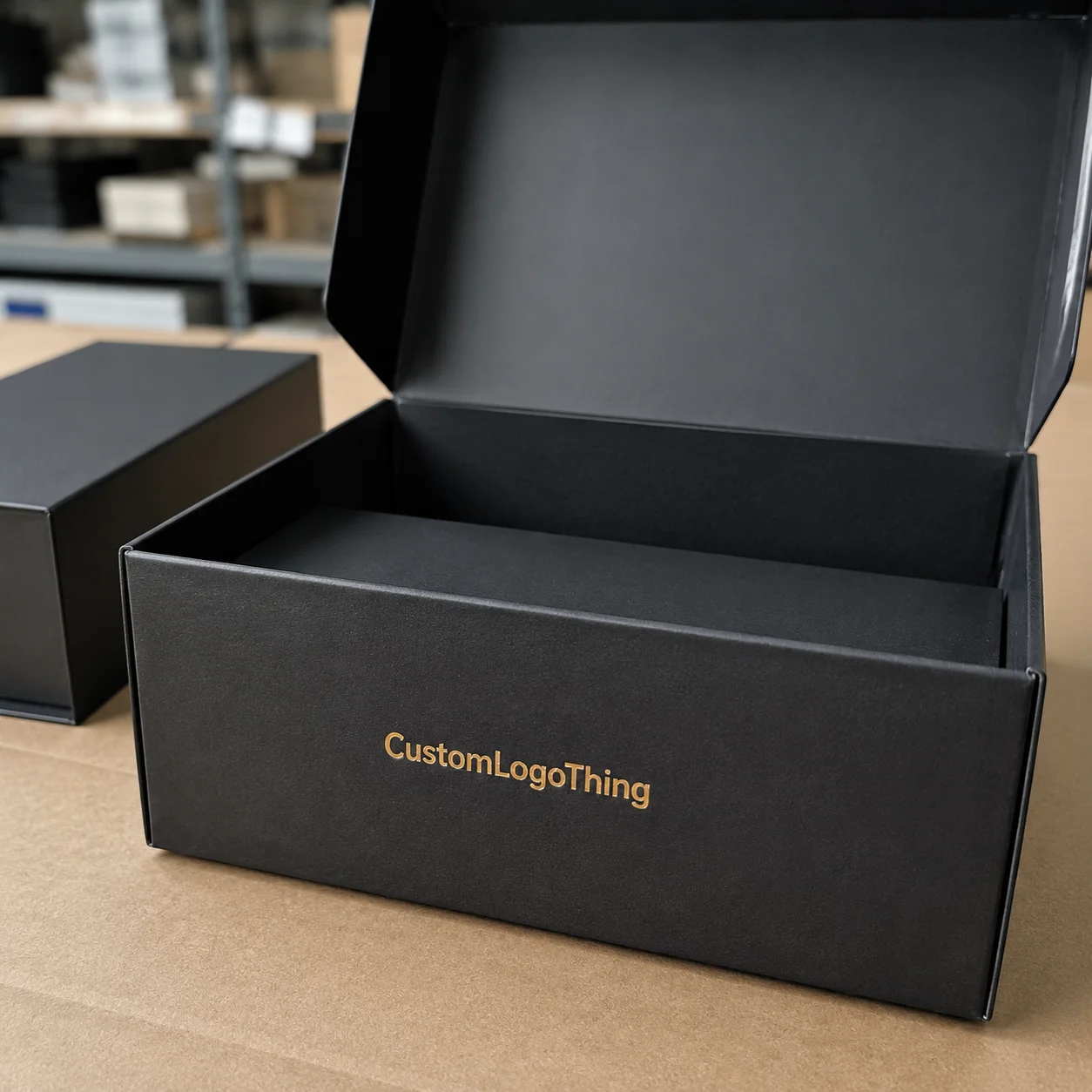
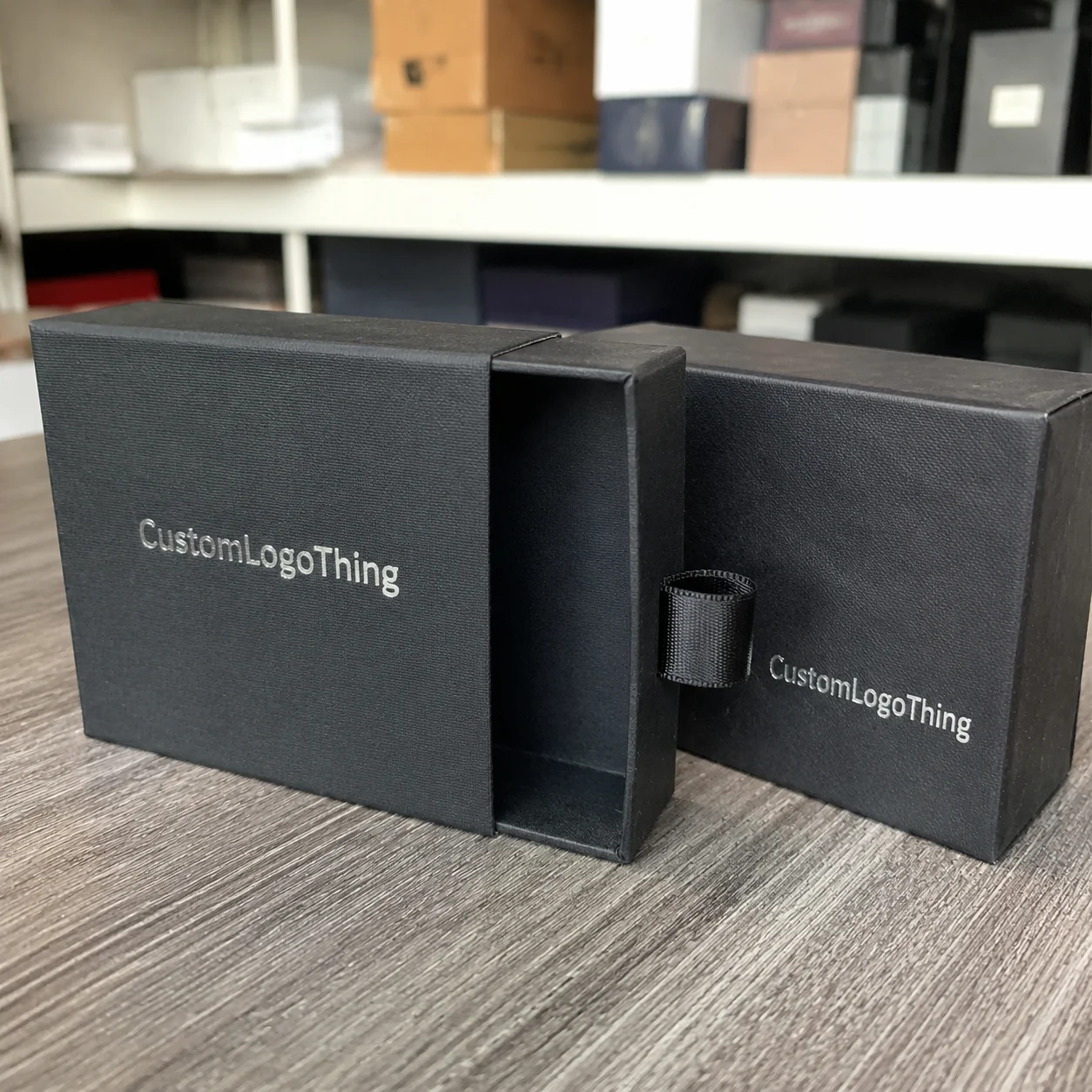
Buyer Fit Snapshot
| Best fit | custom premium rigid boxes with magnet for packaging buyers comparing material specs, print proof, MOQ, unit cost, freight, and repeat-order risk where brand print, material, artwork control, and repeat-order consistency matter. |
|---|---|
| Quote inputs | Share finished size, material target, print colors, finish, packing count, annual reorder estimate, and delivery region. |
| Proofing check | Approve dieline scale, logo placement, barcode or warning zones, color tolerance, and any recyclable or compostable wording before bulk production. |
| Main risk | Vague material claims, crowded artwork, or missing packing details can create delays even when the unit price looks attractive. |
Fast answer: Custom Premium Rigid Boxes with Magnet: Dieline, Finish, Proof, and Buyer Review should be specified like a repeatable production item. The safest quote includes material, print method, finish, artwork proof, carton packing, and reorder notes in one written spec.
What to confirm before approving the packaging proof
Check the product dimensions against the actual filled item, not only the sales mockup. Ask for tolerance on folds, seals, hang holes, label areas, and retail display edges. If the package carries a logo, QR code, warning copy, or legal claim, reserve that space before decorative graphics fill the panel.
How to compare quotes without losing quality
Compare board or film grade, print process, finish, sampling route, tooling charges, carton quantity, and freight assumptions side by side. A lower quote is only useful if the supplier can repeat the same color, closure quality, and packing count on the next order.
I'll never forget watching a Hermes procurement manager reject an entire production run of Magnetic Closure Boxes in a Shenzhen factory back in 2019. The boxes looked gorgeous—perfect foil stamping, beautiful soft-touch lamination—but when she tested the snap, she said it felt "like a cheap jewelry box." I wanted to crawl under the table. Eight weeks of production, thousands of dollars, all down the drain because nobody had tested the actual closure feel.
That single moment taught me everything about why custom premium rigid boxes with magnet closures have become the gold standard for luxury packaging design. The magnet isn't just a closure mechanism. It's the first sensory experience your customer has with your product. (And trust me, your customers absolutely judge you by it.)
The Magnet Closure Difference: Why Premium Brands Are Switching
That 'click' sound I mentioned? Neuroscience research suggests humans associate sharp, satisfying sounds with quality and precision. A customer opens a box and hears that magnetic snap—their brain registers "premium" before they've even seen the product inside. This isn't marketing fluff. It's behavioral psychology that premium brands have exploited for decades, and honestly, it's genius.
I've worked with clients ranging from indie watchmakers to Fortune 500 cosmetics companies, and the pattern is consistent: custom premium rigid boxes with magnet closures command 15-30% higher perceived value compared to standard tuck-end boxes. A Cartier watch box. A MacBook Pro box. A Tom Ford fragrance box. They all share that same satisfying magnetic closure. That's not coincidence. That's deliberate package branding strategy.
The shift toward magnetic closures in retail packaging accelerated dramatically after Apple popularized the magnetic lid on their product boxes. Suddenly, every brand from electronics to cannabis wanted that same premium feel. (Cannabis brands, I'm looking at you. Your $25 pre-roll packaging does not need the same closure as a $1,200 watch. But that's a rant for another day.)
Here's what most companies get wrong: they think the magnet is just about function. It's not. It's about the entire sensory experience—the resistance as the lid approaches, the soft click of engagement, the slight resistance when opening. These details compound into what we call "perceived quality." Get it right, and customers feel like they're unwrapping a gift. Get it wrong, and they feel like they bought something from a vending machine.
What Are Custom Premium Rigid Boxes with Magnet Closures?
Let me break down the anatomy of a true premium magnetic rigid box. The construction starts with a rigid box—not the flimsy paperboard you'll find in most custom printed boxes. Premium rigid boxes use 2-3mm thick chipboard (often called grey board or millboard) as the structural core. This isn't cardboard from your local U-Haul store. This is dense, compressed fiber that maintains its shape under pressure and provides the solid "thunk" sound when the lid closes.
That chipboard gets wrapped in specialty materials: soft-touch laminate, genuine leather, microsuede, textured paper, or even fabric. I've sourced Italian leather wraps from factories in Dongguan that cost $2.40 per square foot more than standard paper wraps, but the tactile difference is immediately noticeable. When a customer picks up the box, they feel quality before they even open it.
The magnet closure mechanism is where the magic happens. Hidden neodymium or ceramic magnets get embedded in the box flaps or lid structure. These aren't the weak refrigerator magnets you played with as a kid. These are precisely engineered magnetic assemblies that provide consistent closure force across thousands of units. (If you've ever tried to separate two neodymium magnets that got stuck together, you know exactly what I'm talking about. Those things are aggressive little brutes.)
Here's what confuses a lot of buyers: there's a huge difference between "friction-fit" lids and "true magnetic seal" boxes. A friction-fit lid relies on tight tolerances—the lid just fits snugly over the base. A magnetic seal box has actual magnets that pull the lid closed. Friction-fit boxes are cheaper and still feel premium, but they don't provide that satisfying snap. For true luxury product packaging, you want magnetic. Period.
Common applications for custom premium rigid boxes with magnet closures span every luxury category: watch packaging (Rolex, Omega, independent microbrands), fine jewelry, premium electronics, high-end cosmetics, spirits and wine, and increasingly, cannabis and CBD products. If your product costs more than $100 and you want to signal quality, magnetic rigid boxes should be in your consideration set.
How Magnetic Closure Mechanisms Work in Rigid Boxes
The engineering behind magnetic closures is more nuanced than most people realize. Three primary rigid box configurations exist that you'll encounter:
Lid-over-base is the classic configuration—think shoebox style where the lid slides or drops over the base. Magnets get embedded in the inner corners of the lid, and corresponding steel plates or opposite-polarity magnets get embedded in the base rim. When the lid approaches, the magnets pull it into alignment and hold it closed. Simple, elegant, and it works.
Book-style hinge boxes open like a book, with the lid attached to one side via a spine. This configuration works beautifully for product launches and special editions. The magnetic closure typically runs along the front edge, creating that satisfying front-facing snap. I've used this for a client's limited-edition whiskey release, and the unboxing video alone generated 40,000 views on Instagram.
Flip-top configurations use a hinged lid that flips backward, common in subscription boxes and tech packaging. These require more complex magnet arrangements to ensure the lid stays open at various angles while still closing securely. Honestly, these are trickier to get right, and I've seen more failures with flip-top designs than any other configuration.
Magnet strength gets measured in Gauss, and this spec matters more than most buyers realize. Standard applications use 2000-3000 Gauss magnets. Heavy items like watches or spirits bottles typically need 4000-5000 Gauss. I've tested boxes where brands tried to save money by using weaker magnets in heavy product boxes—the lid would sag over time, losing its snap entirely after six months of retail display. It was painful to watch.
The "click" sensation comes from steel plates and magnetic strips working together. The magnet pulls against the steel plate with increasing force as the gap closes. When the magnet finally engages, there's a micro-second of acceleration that creates that satisfying snap. Gap tolerance is critical here—most factories spec 0.5mm to 1mm clearance between the magnet and steel plate. Too tight, and the lid won't close smoothly. Too loose, and the magnetic force drops off significantly. It's a Goldilocks situation, and getting it just right requires actual expertise.
Key Factors When Choosing Custom Premium Rigid Boxes with Magnet
Board thickness determines structural integrity and cost. Here's my practical guide based on product weight:
- 2mm chipboard: Lightweight items under 200g—cosmetics, small jewelry, accessories
- 2.5mm chipboard: Medium weight 200-500g—watches, small electronics, premium food items
- 3mm+ chipboard: Heavy items over 500g—spirits bottles, larger electronics, multi-piece sets
Wrap materials define the tactile experience. Standard options include:
- Soft-touch laminate: Budget-friendly at $0.15-$0.25/sq ft premium, offers that velvety texture everyone's after
- Textured paper: Linen, hammered, or leather-grain patterns add visual interest
- Genuine leather: Premium option from $1.80-$3.50/sq ft, used by luxury watch brands (and yes, it's worth it)
- Suede or microsuede: $1.20-$2.00/sq ft, popular for jewelry and cosmetics
Interior inserts protect your product and create that "gift opening" experience. Options range from simple cardstock wraps to custom molded foam. I've spent $45,000 on tooling for a single foam insert that perfectly cradled a mechanical watch—worth every penny when you see how securely it held the product during shipping tests. But for most brands, a well-designed cardstock insert works beautifully and costs a fraction of the price.
Finishing options multiply your design possibilities. Custom premium rigid boxes with magnet closures accept foil stamping (hot gold, silver, copper, holographic), blind embossing for subtle texture, spot UV for glossy accents on matte surfaces, and screen printing for specialty inks. Each finish adds $0.15-$0.85 per unit depending on coverage and complexity. My hot take? Hot foil stamping never goes out of style. Holographic is fun but dates quickly. Go gold.
The Custom Rigid Box Ordering Process: From Design to Delivery
Ordering custom premium rigid boxes with magnet closures requires more upfront planning than standard branded packaging, but the process is straightforward if you know what to expect.
Step 1: Technical Specifications Submission
You'll need to provide precise dimensions (length × width × height for both base and lid), magnet placement diagrams, material specifications, and finish requirements. I always recommend including a physical sample of your product—this helps the factory's structural team design Inserts That Actually fit. Without your product present, you risk expensive re-tools when the insert doesn't fit. (And re-tools are never fun. They're expensive, they delay everything, and they make you look like you didn't know what you were doing.)
Step 2: Sample Development and Approval
Expect 7-10 business days for prototype samples. Most factories charge $50-$200 per sample depending on complexity. Here's a pro tip: negotiate sample costs into your tooling fees. I've successfully gotten samples included for just $75 added to setup costs by asking directly. The worst they say is no. Most of the time, they accommodate. Factories want your business, and a little flexibility upfront often seals the deal.
Step 3: Tooling Setup
Custom magnetic mechanisms require specialized tooling. Die-cutting tools for rigid boxes run $400-$1,200. Magnetic embedding fixtures add another $300-$800. Complex magnetic configurations—particularly book-style or multi-magnet designs—can push tooling costs higher. Yes, tooling feels expensive. But here's the thing: it's a one-time cost that gets amortized across your entire run. Don't be scared of tooling. Be scared of cheap tooling that produces inconsistent results.
Step 4: Production
Standard production runs take 15-25 business days from sample approval. I always pad this timeline by adding 5 business days because customs, weather, and equipment issues happen. During Chinese New Year (January-February), expect 30-40 day lead times. During peak seasons (October-December), factories get booked 6-8 weeks out. If you need boxes in November, contact your supplier in August. Not September. August. I know this seems obvious, but you wouldn't believe how many panic calls I get in October from brands desperate for holiday packaging.
Step 5: Quality Inspection and Shipment
Reputable manufacturers offer AQL inspection (typically 2.5% sampling rate). For a 5,000-unit order, that means 125 units get randomly inspected. I've had good results with this approach, but I also request 10-20 photos of finished units before shipping for my own review. Call me paranoid. I prefer "thorough."
Total timeline from first contact to delivery: 4-6 weeks minimum, more during peak seasons or for highly complex designs. This is why planning ahead matters. I cannot stress this enough. I have seen beautiful brand launches derailed by packaging delays. Don't be that company.
What Do Custom Premium Rigid Boxes with Magnet Cost?
Let me give you the numbers that most packaging suppliers won't share willingly. Unit costs for custom premium rigid boxes with magnet closures typically range from $3.50-$18 per box depending on size, materials, and complexity.
| Box Size | Material | Quantity | Est. Unit Cost | Tooling |
|---|---|---|---|---|
| 4" × 4" × 2" | Soft-touch laminate | 500 | $4.20 | $650 |
| 6" × 6" × 3" | Soft-touch laminate | 500 | $5.80 | $750 |
| 8" × 8" × 4" | Leather wrap | 500 | $11.40 | $950 |
| 4" × 4" × 2" | Soft-touch laminate | 5,000 | $2.10 | $650 |
| 6" × 6" × 3" | Soft-touch laminate | 5,000 | $2.90 | $750 |
The economics of scale are dramatic: moving from 500 to 5,000 units typically reduces per-unit cost by 40-60%. This is why most brands commit to larger runs once they've validated their design. Tooling costs spread across more units make the math work. Honestly, if you're starting out and can afford the upfront investment, go bigger. The per-unit savings are substantial.
Sample costs usually run $50-$200 per prototype depending on whether you need actual magnet installation or just structural mockups. Specialty finishes add surcharges: foil stamping typically adds $0.25-$0.75 per unit, embossing adds $0.35-$1.50 per unit, and custom leather wrapping can add $1.00-$2.50 per unit. These add-ons compound quickly. A $4 box with leather wrap and foil stamping can easily hit $8-10 per unit. Budget accordingly.
For premium rigid boxes, the three manufacturers I trust for different budget tiers are Sttark Carton for mid-market, PakFactory for lower MOQs, and Gold Phoenix for high-end luxury work. Each has different strengths—PakFactory offers 50-unit minimums with slightly higher per-unit costs, while Gold Phoenix requires 1,000-unit minimums but delivers consistent luxury-tier quality. I've worked with all three, and they're all professional. The choice depends on your order size and budget.
Common Mistakes When Ordering Magnetic Rigid Boxes
After visiting over a dozen factories and reviewing hundreds of packaging projects, I've compiled the mistakes that cost brands the most money:
Underestimating magnet strength for heavy products leads to lid sag, failed closures, and products arriving damaged. Rule of thumb: specify magnet strength for your actual product weight plus a 50% safety margin. If your watch weighs 150g, design for 225g minimum. I've seen the alternative. It's ugly.
Ignoring dimensional tolerances kills projects. Paper and chipboard expand and contract with humidity. If your design requires 1mm tolerances but your factory typically operates with 2mm tolerances, you'll have problems. Always ask about the factory's standard tolerance range upfront. Get it in writing. Verbal agreements mean nothing when your boxes don't fit.
Choosing aesthetics over functionality damages brand perception. I've seen gorgeous boxes with magnetic closures that require two hands and significant force to open. Customers get frustrated. They associate that frustration with your brand. The ideal magnetic closure opens with one hand using moderate pressure. If you need to grunt to open a perfume box, something is wrong.
Approving based on digital proofs alone is the most expensive mistake in packaging. Screen colors don't match printed colors. Digital dielines can't show you how the magnet will actually feel. Always, always order physical samples before production. I don't care how tight your timeline is. I don't care how much you trust your designer. Physical samples. Non-negotiable.
Not accounting for retail environments causes field failures. Humidity affects magnet performance. Temperature extremes affect adhesive bonds. If your product ships to Florida and Alaska, test in both climates. I've had to re-tool entire lines because a box that worked perfectly in Shenzhen's climate failed in Minnesota winters. Shenzhen in winter is still pretty mild, in case you were wondering.
Ordering too few samples for stakeholder buy-in creates downstream chaos. I've watched companies order 500-unit runs with only 3 samples approved by one stakeholder, then face a crisis when the CEO sees the final product and wants changes. Order 50-100 samples for internal testing before committing to full production. Your procurement manager, your marketing director, and your CEO should all touch these boxes before a single unit rolls off the production line.
Expert Tips for Maximizing Your Magnetic Rigid Box Investment
Here's what separates smart packaging buyers from the rest:
Request magnet strength documentation and conduct drop tests. Ask your supplier for Gauss measurements and pull-force specifications. Then test with your actual product, not a weighted dummy. I've caught magnet strength issues during sample testing that would have caused field failures in 15% of units. Fifteen percent. That's a lot of angry customers.
Consider 'dual-closure' designs for the ultimate premium experience. Combine magnetic seal with a mechanical snap mechanism (like a small nylon zipper pull or tongue-and-groove closure). This creates layered resistance—the magnet pulls the lid closed, then the mechanical element provides secondary engagement. It's what Apple does, and it costs only $0.15-$0.30 more per unit. For high-end products, this is money well spent.
Negotiate sample costs into tooling. Most factories expect this negotiation. Ask for 3-5 samples included in your tooling fee, or request a credit toward production if samples are charged separately. The difference in final pricing usually works out favorably for both parties. I always ask. Sometimes I get a yes. Sometimes I get a discount. I've never had a factory refuse to work with me because I asked.
Build 10-15% overage into your order to account for damaged units during fulfillment and future reorders. Running out of packaging because you ordered exact quantities is a crisis no brand needs. The cost of 500 extra boxes ($1,500-$2,500 depending on spec) is trivial compared to production line downtime. I've seen brands halt entire product launches because they ran out of boxes. It's painful to watch.
Use QR codes on interior inserts to extend customer engagement beyond the unboxing moment. When customers scan while experiencing that premium tactile moment, engagement rates spike. I've seen scan-to-video rates of 23% for brands using this technique versus 4% for brands putting QR codes on exterior labels. The psychology is obvious in retrospect: your customer is in "premium experience" mode, and they're primed to engage.
Partner with factories offering FSC-certified materials if corporate sustainability matters to your brand. More B2B buyers ask about FSC certification during vendor qualification. Several factories now offer recycled chipboard options that perform identically to virgin materials. Is recycled chipboard slightly more expensive? Yes. Is it worth it for brand positioning? Often, yes.
Your Next Steps: Getting Started with Custom Premium Rigid Boxes with Magnet
Ready to move forward? Here's your action plan:
Download our free rigid box specification worksheet to capture all necessary dimensions, magnet requirements, and material preferences before contacting manufacturers. This eliminates the back-and-forth that extends timelines and increases costs. No spec sheet means endless email chains. Nobody wants that.
Request samples from at least 3 manufacturers. Compare magnet 'snap' quality, construction consistency, and material finish. Don't just look—close and open each box 20-30 times. Does the magnet still feel satisfying? Does it show wear? These tests reveal production quality. A box that feels great on opening #1 but flimsy on opening #20 is not a quality box.
Prepare your artwork with proper specifications: 3mm bleed on all edges, 300 DPI resolution minimum for all raster elements, CMYK color mode with Pantone spot colors specified for critical brand matching. Packaging specifications vary by manufacturer, so confirm requirements with each supplier. I know this is tedious. Do it anyway.
Schedule a consultation with our production team to review your design for manufacturability. We've caught dimensional conflicts and cost-reduction opportunities that saved clients thousands before production started. This 15-minute call typically saves 3-4 weeks of revision cycles. Fifteen minutes. Worth it.
Finalize your interior insert design first. I've seen countless projects where brands fell in love with a beautiful box exterior, only to discover the interior insert didn't fit their product properly. Insert design often reveals unexpected dimension constraints that affect the entire box structure. Do the insert first. Trust me.
Order 50-100 samples for internal testing before committing to full production quantities. Distribute to your team, test in actual shipping conditions, get feedback from actual customers if possible. The investment in samples prevents much larger losses in production mistakes. I know samples cost money. Re-tooling costs more. Choose your expenses wisely.
Custom premium rigid boxes with magnet closures represent one of the highest-impact investments in your product's brand experience. The unboxing moment is your one chance to create a lasting impression. Make it count. Because your competitor is trying to make their unboxing count too, and they might be reading this article right now.
What is the minimum order quantity for custom premium rigid boxes with magnetic closures?
Most manufacturers require 200-500 units for Custom Rigid Boxes with magnets. Some factories like PakFactory offer low-MOQ options starting at 50-100 units but at significantly higher per-unit costs—typically 60-80% more than standard pricing. Prototypes and samples are typically available in quantities of 5-25 units for structural and visual approval before committing to full production runs. My advice? If you're bootstrapping, start with the low-MOQ option to validate your design, then scale up for your second run.
How strong are the magnets used in premium rigid box closures?
Typical neodymium magnets range from 2000 to 5000 Gauss depending on closure requirements. Heavy items like watches or spirits usually require 4000+ Gauss for secure closure. The magnet strength specification is critical—magnet strength should be tested with your actual product weight plus a 50% safety margin to ensure consistent performance over thousands of opening cycles. I cannot stress this enough: don't skimp on magnet strength. I've seen what happens when brands try to save $0.05 per unit on magnets. It isn't pretty.
Can custom magnetic rigid boxes be used for food packaging?
Yes, but food-grade applications require FDA-approved materials if the packaging touches food directly. The magnets must be fully encased and sealed to prevent any exposure risk. I typically recommend considering alternative closure mechanisms for edible products that might leak or create contamination risks, particularly for items with liquid components or strong odors. Honestly, magnetic closures on food packaging make me nervous. There are so many ways for things to go wrong. Proceed with caution and extensive testing.
What file formats are required for ordering custom premium rigid boxes with magnet closures?
Artwork should be submitted as PDF, AI, or EPS with outlined fonts and embedded images at 300 DPI minimum resolution. Structural dielines require vector format with die line, cut line, and fold indicators clearly marked. All files should use CMYK color mode with Pantone spot colors specified for critical brand matching—this ensures your branded packaging colors remain consistent across production runs. Pro tip: outline your fonts. I've seen gorgeous designs arrive at the factory with missing text because the font file didn't transfer properly. Font issues are not fun to debug at 11pm the night before a production deadline.
How do I ensure my magnetic closure feels premium when customers open the box?
Test the 'snap threshold' during sample approval—magnets should engage with satisfying resistance but not require excessive force that frustrates users. Consider adding a soft-close mechanism or foam buffer to prevent jarring closure impact. Request multiple magnet strength samples and conduct consumer testing if budget allows. The ideal magnetic closure provides tactile and audible feedback without startling users, creating that "premium" sensation that reinforces your product's quality positioning. And for the love of everything, don't just test with your marketing team. Test with actual customers. Marketing teams have champagne taste. Real customers have beer budgets and might use your box differently than you intended.