Buyer Fit Snapshot
| Best fit | Custom Price Stickers for Retail projects where brand print, material claims, artwork control, MOQ, and repeat-order consistency need to be specified before quoting. |
|---|---|
| Quote inputs | Share finished size, material target, print colors, finish, packing count, annual reorder estimate, ship-to region, and any compliance wording. |
| Proofing check | Approve dieline scale, logo placement, barcode or warning zones, color tolerance, closure strength, and carton packing before bulk production. |
| Main risk | Vague material claims, crowded artwork, missing packing details, or unclear freight terms can make a low unit price expensive after revisions. |
Fast answer: Custom Price Stickers for Retail: Material, Adhesive, Artwork, and MOQ should be specified like a repeatable production item. The safest quote records material, print method, finish, artwork proof, packing count, and reorder notes in one written spec.
Production checks before approval
Compare the actual filled-product size with the drawing, then confirm tolerance on folds, seals, hang holes, label areas, and retail display edges. Reserve space for logos, QR codes, warning copy, and material claims before decorative graphics fill the panel.
Quote comparison points
Review material grade, print process, finish, sampling route, tooling charges, carton quantity, and freight assumptions side by side. A quote is only useful when the supplier can repeat the same color, closure quality, and packing count on the next order.
Custom price stickers for retail can change a shelf decision for pennies. A well-made label can replace a full packaging rerun, switch a promotion overnight, and keep pricing consistent across stores, regions, or SKU tiers without forcing the team to rebuild the whole pack.
Buyers usually care less about whether custom price stickers for retail are cheap and more about whether they stay readable and attached in real store conditions. A label that survives handling, lighting, refrigeration, and stock rotation saves more money than the print price suggests. From a packaging buyer's point of view, that is where the math gets interesting, and it is usually where the smarter decision shows up.
Custom price stickers for retail: why they change shelf decisions
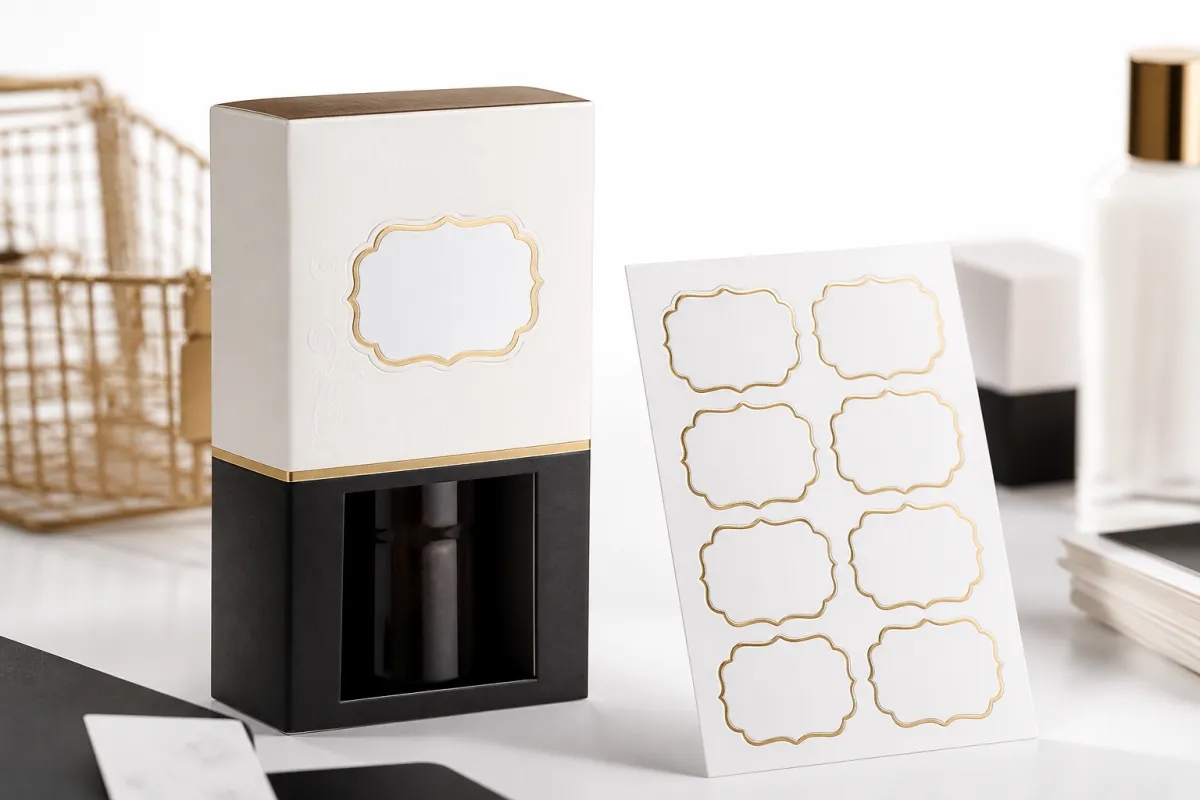
Picture a store that needs to move a seasonal bundle, test a price break, and mark two regional price points before the weekend. Reprinting the primary pack is slow and expensive. Custom price stickers for retail solve that problem with speed. They let the business change the shelf message without touching the original product packaging, which is exactly why they show up in supermarkets, specialty shops, pop-up assortments, liquor stores, farm markets, and multi-location chains.
The commercial value is concrete. A buyer who can update pricing in hours instead of weeks keeps promotions aligned with inventory, margin targets, and sales forecasts. That matters even more when one assortment contains multiple package sizes, mixed SKUs, or store-specific pricing. Custom price stickers for retail also cut down on cashier confusion and shelf-tag mistakes, both of which can turn into avoidable losses when markdowns are handled by hand. In practice, the label is doing three jobs at once: informing, differentiating, and protecting margin.
I have seen the weak point show up fast. If custom price stickers for retail are hard to read, too glossy under store lighting, or placed poorly on the pack, they can drag down the product instead of supporting it. Corners that lift, type that disappears on a busy background, or adhesive that fails on coated cartons all create hidden costs. A cheap print run is not cheap if the store team has to relabel half the shipment. That is where most of the waste usually shows up, and it is a real headache.
Most retail label failures are not print failures. They are adhesion and legibility failures.
The strongest custom price stickers for retail fit into the broader retail packaging system instead of fighting it. They should support package branding, and they should work alongside branded packaging, custom printed boxes, and the rest of the shelf presentation so the value signal feels deliberate. Buyers who treat the label as an afterthought usually pay for that decision in store labor, rework, and weak promotional clarity.
A good rule keeps the spec grounded: the sticker should make the product easier to buy. If a shopper has to squint, guess, or peel back a curled edge to understand the price, the job is not finished. Custom price stickers for retail work best when they make the decision faster, cleaner, and more confident. That is not flashy. It is profitable.
Custom price stickers for retail: materials, finishes, and adhesive choices
Material choice sets the tone. Paper stock is usually the lowest-cost option, and for many dry, short-life applications it is perfectly fine. Film stock costs more, but it brings better moisture resistance, more durable handling, and a cleaner look on premium retail packaging. Custom price stickers for retail often begin with a simple question: does this label need to survive a few days on a shelf, or a few weeks through shipping, stocking, and customer handling?
Finish matters more than many buyers expect. Matte finishes are easier to read under bright retail lighting and tend to feel more restrained on premium packs. Gloss finishes can sharpen color and make a promotion stand out, but they also reflect light. On a crowded shelf, that reflection can become a legibility problem. White facestocks give the strongest contrast for pricing and barcodes; clear facestocks can look polished on glass or high-end jars, but they need careful design because the background becomes part of the label. That is where packaging design discipline pays off.
Adhesive choice is where the job gets practical, fast. Permanent adhesives are the default for long-term identification, logistics, and pricing that should not be removed. Removable adhesives make sense for temporary promos, markdowns, seasonal events, and samples. Freezer-grade options help in cold-chain storage, while high-tack adhesives are better for textured or difficult surfaces. If a label is gonna live on a chilled bottle or a rough kraft pouch, the adhesive choice matters more than the artwork, plain and simple.
Custom price stickers for retail should never be chosen on price alone if the substrate is tricky. A jar, a coated carton, a flexible pouch, and a textured paper bag do not behave the same way, and that difference is often obvious only after the first shipment leaves the warehouse. A label that looks perfect on a proof can still fail on the actual package if the surface energy, temperature, or curvature is ignored.
For buyers who track sourcing, paper stock can also be selected with sustainability in mind. If your team wants FSC-certified paper options, that can be part of the conversation from the start; see FSC for the certification framework. The same care applies to layout and readability, which should be checked against practical packaging standards instead of personal taste. The guidance resources at packaging.org are useful when a brand wants better hierarchy, cleaner copy placement, and fewer design mistakes that hurt shelf performance.
Print and layout details matter just as much as stock. Custom price stickers for retail may need variable pricing fields, barcodes, QR codes, sequential numbering, and enough white space for the number to read at a distance. Round labels work for jars and lids. Squares fit cartons and bags. Rectangles often work best for shelf-edge use or products that need more copy. If a label must carry a price, SKU, batch code, and promo note, the safest move is to test the size before approving the die-line.
Some buyers also forget the role of color coverage. Heavy ink coverage can raise cost and extend drying time, especially on coated stocks. A simple one- or two-color label on a paper facestock may be all you need for fast-moving retail packaging. If the label is part of a larger campaign, then custom price stickers for retail can be matched to the same color logic as your Custom Labels & Tags so the shelf set looks coordinated instead of patched together.
Custom price stickers for retail pricing, MOQ, and quote basics
Pricing for custom price stickers for retail depends on more than size. The biggest drivers are material, adhesive, print coverage, quantity, finishing, and whether the label uses variable data. A simple one-color paper label ordered in quantity can be very economical. A film label with spot colors, barcodes, and a custom shape costs more because the job takes more setup, more inspection, and often more careful handling during finishing.
As a practical range, small-run custom price stickers for retail can land in the $0.06-$0.18 per unit range depending on size and complexity, while larger repeat runs often fall lower. A plain square paper label with permanent adhesive at 10,000 pieces will usually price very differently from a clear film label with removable adhesive and sequential numbering. That difference is normal. The important thing is to compare quotes on the same specification, not on a loose description like “price labels.”
MOQ is where expectations need to stay realistic. Many buyers can get custom price stickers for retail in smaller quantities, but the unit cost usually rises because setup is spread across fewer pieces. Once the order gets into a stable production quantity, the per-unit cost tends to improve and color consistency is easier to maintain. For recurring retail programs, that is one of the strongest arguments for standardizing sizes and materials across product lines.
| Option | Best use case | Typical unit cost impact | Notes |
|---|---|---|---|
| Paper, matte, permanent adhesive | Short-run pricing, shelf promotions, dry packs | Lowest | Good for simple custom price stickers for retail when moisture is not a concern |
| Paper, removable adhesive | Temporary markdowns and seasonal offers | Low to moderate | Useful when labels must be removed after the promotion ends |
| Film, gloss or satin | Premium packs, humid storage, handling-heavy items | Moderate to higher | Better durability and shelf presence for retail packaging |
| Clear film, custom die-cut | Glass jars, upscale products, package branding | Higher | Needs careful artwork so the price stays readable on the substrate |
| Variable data with barcode or sequential numbering | Multi-SKU programs, lot tracking, promos | Higher setup, sometimes lower unit pricing at scale | Best when the workflow is planned before proof approval |
Quotes should be clear enough that two vendors can be compared line by line. For custom price stickers for retail, that means asking for size, shape, stock, adhesive, quantity, color count, proofing method, shipping method, and any setup or plate charges. If one quote looks cheaper but hides rush fees, artwork corrections, or separate shipping, it is not actually cheaper. It is just incomplete.
A strong quote also answers a few operational questions. Is the artwork already print-ready? Will the buyer need a digital proof, a hard proof, or both? Are barcodes variable, or fixed? Does the order require carton labels, retail packaging labels, or a special sheet size for hand application? Those details affect timing and price more than many first-time buyers expect. They also explain why custom price stickers for retail can look simple on the surface and still vary widely in cost.
If your order is part of a larger product launch, standardizing the label spec can reduce costs across the line. The same buying logic that shapes custom price stickers for retail often applies to broader Custom Packaging Products programs, especially where the retailer wants matching label color, consistent typography, and clean package branding across multiple SKUs.
Custom price stickers for retail process and timeline
The process should be straightforward, and if it is not, that is usually a warning sign. A typical custom price stickers for retail job starts with a brief: dimensions, application surface, quantity, adhesive need, print colors, and target delivery date. From there, the printer reviews artwork, flags technical issues, sends a proof, and moves into print once the buyer approves. After printing, the labels are finished, inspected, packed, and shipped.
Timeline depends on how organized the buyer is. If the artwork is final and the specs are standard, many custom price stickers for retail jobs can move through proofing and production in about 5-10 business days after approval. If the job needs a custom die, variable data, unusual stock, or a specialty adhesive, 12-15 business days is a more realistic planning window. Rush work is possible in some cases, but only if everyone makes decisions quickly and the artwork is clean.
Fast orders are usually the ones with the fewest surprises. Clean dielines. Final copy. One decision-maker. No hidden edits after proof approval. Those three things matter more than people think. The fastest custom price stickers for retail orders are not necessarily the simplest designs; they are the designs with the least ambiguity. A printer can move quickly when the spec is settled and the file is ready.
Repeat orders also move faster. Once a buyer has already locked the substrate, adhesive, and size, the reorder can skip some of the back-and-forth. That is useful for monthly promotions, store resets, and rolling markdown programs. In a distribution setting, it also helps to align the label program with handling and transit expectations. The package may only be a label, but if it will travel through stacking, vibration, and abrasion, testing logic from ISTA is still relevant.
Shipping method changes the timeline too. Ground freight is often adequate for standard replenishment, but air freight may be justified if a promotion has a fixed launch window and the label is the thing holding the rollout together. That is a real commercial decision, not a vanity choice. If a price change has to hit 200 stores on the same morning, a missed shipment can create more cost than the label run itself. Custom price stickers for retail are small items with large operational consequences.
The proof stage is where delays are won or lost. A buyer who reviews the proof quickly, checks the price fields, confirms barcode contrast, and signs off without reopening the layout can save days. In a retail environment, days matter. Miss the reset window and you are not just late; you are out of alignment with inventory and sales planning. That is why a disciplined proof process belongs to retail packaging management, not just print management.
Choosing the right format for retail pricing labels
Different retail jobs need different formats. Shelf-edge pricing, clearance stickers, bundle offers, seasonal markdowns, and limited-edition launch labels all solve distinct problems. Custom price stickers for retail are most effective when the format matches the job. A shelf-edge label may need a long rectangle with a bold price and unit rate. A clearance sticker may need bright color and a simple message. A premium launch label might need a clear facestock to preserve the look of the bottle or carton underneath.
The application surface changes the spec. Coated cartons can handle many paper or film labels, but smooth coatings may require better adhesive control. Kraft bags often need stronger tack because the fibers are rougher and less uniform. Glass jars usually benefit from labels that balance adhesion and clean removal, especially if the product is seasonal or promotional. Flexible pouches can be more difficult because they bend, wrinkle, and sometimes carry condensation. Corrugated displays need labels that grip without curling at the edges. Custom price stickers for retail should be matched to the actual substrate, not a theoretical one.
There is a good reason experienced buyers insist on application testing. It is cheaper to discover an edge-lift problem on a sample run than on 18,000 units in a warehouse. If a label fails, the failure often spreads through the whole operation: relabeling labor, shipping delay, damaged presentation, and inconsistent shelf communication. That is why the right format saves money even if it is not the cheapest option on the quote sheet.
When a label program grows, it often needs to fit into a wider packaging system. The same artwork logic that shapes custom price stickers for retail can also support shelf signs, package seals, and a broader product packaging rollout. In a larger assortment, that consistency makes the entire retail packaging program look sharper. It also protects brand recognition when shoppers move between sizes, channels, and promotional periods.
Some brands also choose to connect the label line with seasonal printed cartons or custom printed boxes so the shelf message stays consistent across the full set. That is not about being fancy. It is about reducing friction. If the box, the sticker, and the shelf tag all tell the same story, store staff spend less time explaining the product and more time selling it. Custom price stickers for retail are small, but they can anchor the whole system.
One practical way to think about format is this: the label should answer the shopper's first question instantly. How much? What is the deal? Which version is this? If the answer takes more than a second to decode, the design needs work. The best custom price stickers for retail are often the simplest ones, but simple does not mean generic. It means the information hierarchy is clear, the adhesive is right, and the shape fits the pack.
Why choose us for custom price stickers for retail
Buyers do not need another supplier who says yes to everything. They need a partner who checks the spec, catches mistakes before print, and understands how retail packaging behaves on a shelf. That is the standard we aim for at Custom Logo Things. With custom price stickers for retail, the real value is proof accuracy, dependable color, and construction that holds up through storage, shipping, and store handling.
Support matters because the wrong answer is expensive. If a customer orders the wrong adhesive for a coated carton, the stickers may lift. If they choose a glossy stock for a price-heavy label, readability can suffer under store lights. If the barcode contrast is weak, scanning gets slower. Good guidance prevents those problems before they reach the store. That is why custom price stickers for retail should come with clear spec checks, not vague reassurance.
The cost of failure is larger than many teams expect. A cheap label that falls off in transit creates replacement labor. A label that is printed on the wrong stock can delay a promotion. A label that does not match the brand palette can make the whole set look off, even if the underlying product is strong. In commercial terms, those are not minor mistakes. They are direct hits to efficiency and package branding. For buyers comparing vendors, that should matter as much as unit price.
We also see a familiar pattern: the better the brief, the better the result. When a client sends the exact dimensions, substrate notes, quantity, and timing requirements, the job moves faster and the proof is cleaner. That is why custom price stickers for retail work best when the buyer treats them like a production item, not an afterthought. The label may be small, but the spec deserves the same discipline as any other retail packaging component.
Our approach is straightforward. If the order needs a material change, we say so. If the timeline looks tight, we say so. If a removable adhesive sounds risky for the surface, we say so. That kind of plain feedback saves time and protects margin. And if the job belongs in a broader packaging program, we can help align it with the rest of the line instead of treating it as a one-off print task.
That is the difference between buying labels and buying control. Custom price stickers for retail should make pricing easier to manage, not harder. When the label is built correctly, the store team notices the promotion, the shopper sees the offer, and the brand keeps its footing. That is a practical win, not a marketing claim.
Next steps for custom price stickers for retail orders
If you are planning custom price stickers for retail, start with the SKU audit. List the products, sizes, pricing formats, and where each label will be applied. Confirm the substrate first, because adhesive and finish depend on that surface. Then decide whether the labels are one-time or recurring, temporary or permanent, and whether they need a clean removable adhesive after the promotion ends.
For the fastest quote, send artwork files, dimensions, material preferences, quantity, and any compliance requirements in one package. If the job includes barcode data, sequential numbering, or multiple price tiers, include that information up front. The more complete the brief, the cleaner the proof. That is true for custom price stickers for retail, and it is true for almost every piece of retail packaging that has to be approved under a deadline.
Once the proof is approved, schedule the production run with the launch date in mind, not just the print date. Shipping time, store receiving schedules, and merchandising windows can easily change what feels like a short turnaround. Custom price stickers for retail are most effective when they arrive before the shelf reset, not during it. If the job is tied to a promotion, the timeline should include a small buffer for inspection and delivery.
In practical terms, the next move is simple: build the spec before you buy. Lock in the size, the adhesive, the stock, the print count, and the launch date, then compare quotes line by line instead of chasing the lowest number on the page. Custom price stickers for retail are one of the smallest purchases in the packaging budget, but they can have an outsized effect on how the offer reads in store. Get the adhesive, the size, and the layout right, and the sticker does exactly what it should do.
What size works best for custom price stickers for retail shelves and packaging?
The best size depends on how much information the label must carry, including price, SKU, barcode, and promo copy. Measure the application surface first, then leave enough margin so the sticker reads clearly and does not wrap, wrinkle, or lift at the edges. For small jars and cartons, a compact rectangle often works well. For shelf-edge programs, a longer format usually gives better room for the price hierarchy.
Are custom price stickers for retail removable after a promotion ends?
Yes, if you choose a removable adhesive designed for the substrate and the expected time on shelf. For coated cartons, glass, and certain films, test a sample first because removal behavior changes with surface texture, temperature, and storage time. A removable label that seems perfect on paper can behave differently on a chilled or curved surface, so a quick test run is worth the time.
What affects the pricing of custom price stickers for retail orders most?
Size, quantity, stock type, adhesive, finish, and whether the run uses variable data all affect cost. Setup complexity and shipping speed can also change the final quote, especially on small or rush orders. If the design has multiple price tiers or barcodes, those details should be included before the proof stage so the quote reflects the real scope.
What is the MOQ for custom price stickers for retail projects?
MOQ depends on the printer, material, and whether the job is a standard format or a custom converted run. Smaller quantities are often available, but the unit cost usually falls as the order size increases. Buyers who expect recurring promotions often save money by standardizing size and stock across several SKUs instead of treating each label as a one-off.
How long do custom price stickers for retail take to produce?
Timeline depends on proof approval, print method, finishing, and shipping distance. Jobs with ready artwork and standard specs move faster; custom shapes, special adhesives, and variable data usually add time. As a planning range, many straightforward jobs move in about 5-10 business days after approval, while more complex runs may need 12-15 business days or more.
Custom price stickers for retail are a small line item with a large operational footprint. Get the material right, the adhesive right, and the proof right, and the label supports the sale instead of slowing it down. The clearest takeaway is to treat the sticker like a production spec, not a quick add-on: confirm the substrate, Choose the Right adhesive, verify the artwork, and schedule the run around the actual store reset so the labels arrive ready to work.

