Buyer Fit Snapshot
| Best fit | custom print finishing on boxes for bold branding wins for packaging buyers comparing material specs, print proof, MOQ, unit cost, freight, and repeat-order risk where brand print, material, artwork control, and repeat-order consistency matter. |
|---|---|
| Quote inputs | Share finished size, material target, print colors, finish, packing count, annual reorder estimate, and delivery region. |
| Proofing check | Approve dieline scale, logo placement, barcode or warning zones, color tolerance, and any recyclable or compostable wording before bulk production. |
| Main risk | Vague material claims, crowded artwork, or missing packing details can create delays even when the unit price looks attractive. |
Fast answer: Custom Print Finishing on Boxes for Bold Branding Wins should be specified like a repeatable production item. The safest quote includes material, print method, finish, artwork proof, carton packing, and reorder notes in one written spec.
What to confirm before approving the packaging proof
Check the product dimensions against the actual filled item, not only the sales mockup. Ask for tolerance on folds, seals, hang holes, label areas, and retail display edges. If the package carries a logo, QR code, warning copy, or legal claim, reserve that space before decorative graphics fill the panel.
How to compare quotes without losing quality
Compare board or film grade, print process, finish, sampling route, tooling charges, carton quantity, and freight assumptions side by side. A lower quote is only useful if the supplier can repeat the same color, closure quality, and packing count on the next order.
Custom Print Finishing on Boxes for Bold Branding Wins
Two boxes can carry the same artwork and still feel like different products. The split often starts with custom print finishing on boxes: the coating, texture, sheen, and detail work that changes how a carton looks in the hand, under retail lights, and during unboxing. In practice, custom print finishing on boxes is one of the quickest ways to move packaging from printed to intentional, and that matters because buyers usually form a price judgment before they read a single word on the panel.
For packaging buyers, finish is not decoration sitting off to the side. It is part of package branding, part of packaging design, and part of how a product signals quality on shelf or at the front door. The right custom print finishing on boxes can make cosmetics feel more refined, electronics feel more technical, food gifts feel more giftable, and subscriptions feel worth the monthly renewal. The wrong one can flatten the design, raise costs without adding value, or create scuffing that makes a premium carton look tired before it reaches the customer.
That is why custom print finishing on boxes deserves a real decision framework. Not just gloss or matte. The better question is what the finish should do: protect the surface, sharpen contrast, create touch appeal, support retail packaging, or reinforce a specific brand position. Once those goals are clear, the rest of the process becomes a lot easier to manage.
Why Custom Print Finishing on Boxes Changes the First Impression
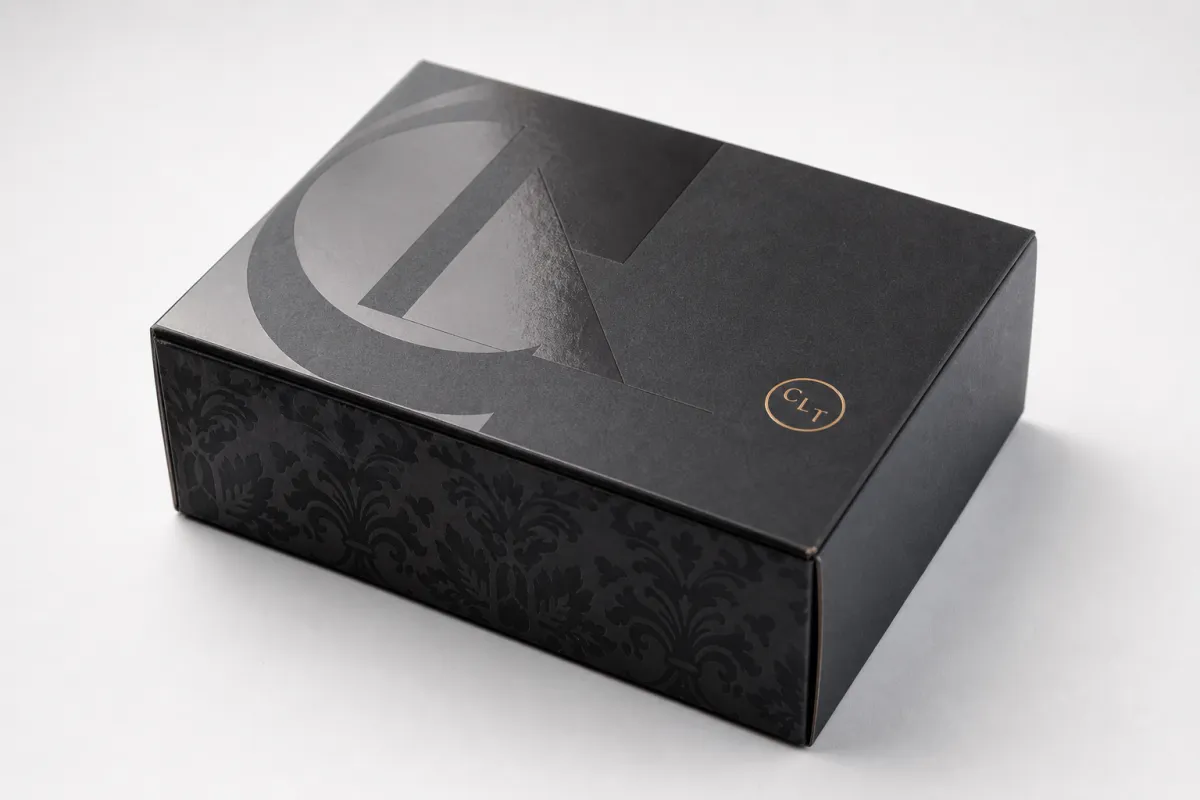
Picture two cartons on a desk. Same dieline. Same brand colors. Same illustration. One feels flat. The other catches the light, has a soft edge to the touch, and reads as more expensive before anyone opens it. That is the power of custom print finishing on boxes. The finish changes the physical conversation between the package and the buyer, and that conversation starts in the first few seconds.
There is a practical reason this works. People do not inspect packaging line by line. They notice contrast, surface feel, reflectivity, and weight of appearance. A matte finish can suggest restraint and control. A gloss finish can suggest energy and polish. Soft-touch lamination often signals calm luxury. Foil can pull attention from a distance. Embossing and debossing add depth that a camera can miss but fingers never do. That is why custom print finishing on boxes stays so closely tied to product packaging and shelf perception.
In press checks, I have seen a carton go from “fine” to “premium” just by swapping the surface treatment, even when the artwork stayed exactly the same. That shift is not magic; it is how people read material cues. A skincare box with heavy ink coverage and no finish discipline can look busy. The same carton with a controlled matte surface, a spot UV logo, and a clean foil accent can feel more deliberate. That changes how the brand is priced in the customer’s mind. In some categories, custom print finishing on boxes influences whether a product feels like a commodity or a gift.
The timing matters as much as the effect. Many buyers decide whether a package feels premium before they even read the copy. That means custom print finishing on boxes is doing brand work in the same moment it is doing material work. It is setting expectations for quality, care, and attention. For cosmetics, electronics, food gifts, and subscription packaging, that early read can shape the whole unboxing experience.
One thing brands sometimes miss: finish is not only about looking fancy. It also helps direct the eye. A reflective mark on an otherwise muted surface can guide attention to a logo, a product name, or a variant callout. A textured background can separate premium cues from dense regulatory copy. Good custom print finishing on boxes gives the design hierarchy some breathing room, which is especially useful in crowded categories.
For teams comparing options, it helps to think in terms of the box's job. Is it there to protect, to sell, to delight, or to do all three? The answer changes the finish. That is why the smartest packaging programs use custom print finishing on boxes as a strategic decision, not an afterthought. It influences perceived value, handling durability, and even the story a brand tells without saying a word.
First impressions can be measured in packaging terms. In retail and e-commerce alike, a carton that resists scuffs, fingerprints, and crushed edges tends to hold its brand signal longer. That is one reason custom print finishing on boxes deserves the same attention as color, typography, and structure.
How Custom Print Finishing on Boxes Works
At a basic level, custom print finishing on boxes happens after the artwork is printed and the ink is dry or cured. The finish is added as a final layer, or as a finishing pass, to change the look, feel, or durability of the box surface. The sequence matters. If the print is not ready, the finish will not behave the way it should. If the substrate is wrong, the finish can look uneven or wear too quickly.
Most production lines follow a familiar path: artwork preparation, proofing, printing, drying or curing, finishing, inspection, and then pack-out. On some jobs, the finishing pass is straightforward. On others, especially custom print finishing on boxes with foil, embossing, or spot UV, the process may involve separate tools, extra setup, and more than one press run. That is why a simple-looking carton can take more planning than expected.
Common finish methods include matte coating, gloss coating, varnish, lamination, soft-touch film, foil stamping, embossing, debossing, and spot UV. Each one does something slightly different. Matte reduces glare and often makes color feel more grounded. Gloss raises contrast and can make saturated artwork pop. Varnish is often used as a protective layer. Lamination adds a film over the print for extra durability. Soft-touch changes the tactile feel, which is why it is so often used in premium custom print finishing on boxes.
Some finishes are mostly decorative. Others carry real protection benefits. A laminate can help resist scuffing in distribution. A varnish can reduce abrasion. Spot UV can help preserve a logo area while still adding contrast. Foil can be purely visual, but on the right artwork it becomes a focal point that sharpens the whole package. That is one reason custom print finishing on boxes remains popular in branded packaging: the finish can do several jobs at once.
Substrate choice changes the outcome as well. Coated paperboard usually takes fine detail and crisp graphics very well. Kraft paperboard gives a warmer, more natural look, but some finishes will appear less bright or less reflective on it. Corrugated board behaves differently again because the fluting and liner structure affect flatness, pressure, and registration. Specialty stocks can be gorgeous, but they need testing. A finish that looks excellent on one material may feel too slick or too dull on another, which is why custom print finishing on boxes should always be matched to the board, not just the artwork.
Print method matters too. Offset printing still dominates many larger runs because it delivers tight detail and predictable color at scale. Digital printing can be a better fit for shorter runs, versioned packaging, or fast-turn projects. The finish must sit comfortably on top of either method. In some cases, the chosen coating or film will respond differently depending on ink chemistry and curing speed, so custom print finishing on boxes should be considered during prepress, not after approval.
Good printers test all of this. They may provide a plain proof, a coated proof, a material sample, or a short-run sample with the actual finish. That is not busywork. It is the only sane way to check color shift, registration accuracy, tactile feel, and whether the finish interferes with type, barcodes, or fine rules. For custom print finishing on boxes, proofing is where expensive surprises get caught early.
For supply chain and transit confidence, many packaging teams also look at distribution testing habits influenced by groups like ISTA. The packaging may not need certification in every case, but drop, vibration, and compression thinking matters. A beautiful finish is only useful if it survives the route to the customer.
If you are comparing formats, it can help to review the broader set of options in our Custom Packaging Products range, especially if you are balancing premium appearance against practical shipping needs.
Key Factors That Shape the Right Finish Choice
The best custom print finishing on boxes choice is rarely the flashiest one. It is the one that supports the brand story without fighting the structure, the artwork, or the budget. A luxury beauty line may want soft-touch lamination with a restrained foil mark. A high-tech accessory brand may want sharper gloss contrast. A natural food gift may be better served by a matte or satin finish that keeps the package honest and calm. The finish should match the voice of the product.
Durability is the next filter. Retail packaging that sits under fluorescent light and gets handled by shoppers all day faces different abuse than a DTC carton that rides through parcel networks. Custom print finishing on boxes for shipping-heavy programs often needs scuff resistance, fingerprint resistance, and decent moisture tolerance. On shelf, glare control might matter more. If the box is likely to be stacked, rubbed, or stored for weeks, protection becomes part of the value equation.
Design hierarchy should also guide the decision. Too many effects can make a carton feel noisy rather than premium. A spot UV logo on a matte field can be elegant. Add foil, embossing, metallic ink, and a second coating in the wrong places, and the box starts competing with itself. That is one of the most common mistakes in custom print finishing on boxes: the team tries to make every element special, and the result is no clear focal point.
Color response deserves more attention than it gets. Dark inks often look richer under matte or soft-touch. Bright brand colors can become more intense under gloss. Metallics can shift sharply depending on light angle, film choice, and substrate. Fine typography can lose legibility if the finish reflects too aggressively or if the coating softens the edges. For custom print finishing on boxes, the artwork cannot be separated from the surface it sits on.
Sustainability is a practical filter, not a slogan. Some finishes add weight, some add mixed materials, and some can complicate recycling pathways. If the package must align with a fiber-based recovery stream, teams often ask whether the finish is compatible with common recycling guidance. The EPA recycling guidance is a useful place to start when you are thinking about material recovery in the United States. Likewise, if the packaging spec needs to support responsible fiber sourcing, FSC-certified paperboard can matter. Finish decisions and substrate decisions belong in the same conversation.
A finish should earn its space. If it only looks impressive in a render, it probably costs too much for the value it adds.
There is also a category issue. Some products need a finish that feels tactile and collectible. Others need a finish that disappears into the brand architecture and lets the shape or information design do the talking. That is why custom print finishing on boxes is not a universal premium tool. It is a category-specific tool. The right answer for luxury fragrance is not automatically the right answer for electronics, subscription snacks, or medical device packaging.
For teams building out a packaging system across multiple SKUs, consistency matters. A premium hero product can use a more elaborate finish, while supporting SKUs may use a simpler coating with one focal accent. That keeps the brand family coherent without forcing every carton to carry the same production cost. It also helps package branding feel intentional instead of padded.
Material and certification questions should not be ignored either. If a client wants FSC alignment, that needs to be confirmed early. If the box must satisfy shipping expectations, the board caliper, compression resistance, and finish wear must be considered together. For many brands, custom print finishing on boxes is where aesthetics, compliance, and logistics intersect.
Finish Options at a Glance
| Finish | Best Use | Typical Added Cost per Unit | What It Delivers |
|---|---|---|---|
| Matte coating | Clean retail packaging, soft premium looks | $0.03-$0.06 at 5,000 units | Lower glare, calmer color, modest protection |
| Gloss coating | Bright graphics, bold shelf visibility | $0.04-$0.08 at 5,000 units | High contrast, stronger visual pop, decent scuff resistance |
| Soft-touch lamination | Luxury cosmetics, gifts, premium electronics | $0.10-$0.18 at 5,000 units | Tactile feel, muted sheen, upscale perception |
| Foil stamping | Logos, marks, limited edition accents | $0.12-$0.35 at 5,000 units | Metallic emphasis, strong focal point, setup/tooling cost |
| Embossing / debossing | Premium identity marks, texture-driven branding | $0.08-$0.20 at 5,000 units | Raised or recessed depth, tactile distinction |
| Spot UV | Selective highlight on matte surfaces | $0.07-$0.15 at 5,000 units | Contrast, sheen, subtle emphasis on key areas |
These ranges are directional, not fixed. Art coverage, box size, substrate, tooling, and quantity can move the numbers. Still, the table gives a useful starting point for custom print finishing on boxes because it shows where value often sits: a small increase per unit can create a noticeable jump in perceived quality, but only if the effect fits the brand.
Process and Timeline for Custom Print Finishing on Boxes
A clean production schedule starts with the brief. Before anyone prints or punches a dieline, the team should agree on box style, substrate, finish type, quantity, target launch date, and the role custom print finishing on boxes is expected to play. That brief becomes the reference point for every approval that follows.
The standard workflow is usually something like this:
- Confirm the structure and dieline.
- Prepare artwork with correct bleed, safe zones, and finish layers.
- Choose print method: offset printing for larger runs, digital printing for shorter or variable runs.
- Review proofs and material samples.
- Approve the finish, color, and registration.
- Produce the carton, apply the finish, inspect the run, and pack for shipment.
The speed of custom print finishing on boxes depends heavily on setup complexity. A simple matte-coated folding carton can move quickly once artwork is approved. Foil stamping or embossing usually adds tooling time. Spot UV can require extra make-ready. Multi-step combinations, especially when several finish types need to align precisely, add more time again. The machine may only run for a limited number of hours, but the setup and approval stages often control the schedule.
For a straightforward production, many brands can expect around 12-15 business days from final proof approval to completion. Add foil, embossing, or multiple coatings, and the timeline can move into the 15-25 business day range. If the run requires a special board, a new die, or a second sampling round, a longer window is sensible. That is not because custom print finishing on boxes is slow by nature; it is because each added layer creates a quality checkpoint.
Revisions matter more than most people admit. A late copy change, a barcode adjustment, or a small logo shift can push the schedule more than the actual finishing operation. That is why packaging planners should build buffer time for file corrections, substrate swaps, and color matching. In practice, custom print finishing on boxes rarely fails because the press is mysterious. It fails because the project arrived with too little room for change.
Shipping and launch coordination deserve their own calendar. If the marketing team needs product photography, influencer kits, warehouse intake, or seasonal display assembly, the box schedule should move backward from those dates. The difference between production complete and inventory in hand can be several days or more, depending on freight. Smart teams keep that gap in mind when planning custom print finishing on boxes.
It helps to ask the printer a very direct question: which parts of the schedule are fixed, and which are flexible? That forces everyone to separate machine time from human time. A press run may be efficient, but if approval waits, nothing moves. For custom print finishing on boxes, schedule discipline is as valuable as finish quality.
There is also a testing angle. Packaging teams that expect rough transit can use ISTA-style thinking to stress the pack before launch. Even a simple drop or vibration review can reveal whether a finish is prone to rub marks, corner wear, or cracking on folds. For programs with high return sensitivity or fragile inner products, that step pays for itself quickly.
One more practical point: do not forget the relationship between print method and finish order. Some finishes work better when the ink is fully cured. Others want a specific surface energy or film compatibility. Ask the supplier to explain the sequence in plain language. If the answer is vague, that is a warning sign. Custom print finishing on boxes should be repeatable, not experimental, unless you are intentionally doing a prototype run.
Cost and Pricing Factors for Custom Print Finishing on Boxes
Price is where many packaging conversations get murky. A glossy mockup may look affordable, then the quote arrives and the numbers jump. That is normal. Custom print finishing on boxes adds value, but it also adds setup, tooling, labor, and sometimes extra materials. If you want an honest comparison, you need to know what drives the bill.
The biggest cost variables are finish type, box size, print coverage, substrate, and quantity. A small carton with limited coverage and a basic matte coat may be relatively efficient. A larger carton with foil, embossing, and soft-touch film will carry more cost because the production steps are more labor-intensive. For custom print finishing on boxes, the surface area alone can change the equation fast.
Quantity is usually the lever that matters most. At lower volumes, setup costs are spread over fewer units, so unit price rises. At higher volumes, those setup costs get diluted. That is why a finish that looks expensive at 1,000 units may become reasonable at 5,000 or 10,000. Still, the curve is not linear. Some premium finishes have minimum order thresholds, and some require special tooling that does not make sense below a certain run size.
To make quotes easier to compare, ask for a line-item breakdown. The quote should separate printing, finishing, setup, tooling, shipping, and any remake charges. If one supplier includes a plate fee and another folds it into the unit price, the comparison is not clean. For custom print finishing on boxes, transparency matters more than a low headline number.
Here is a practical view of how pricing often behaves at a 5,000-unit order level:
- Basic matte or gloss coat: lower setup burden, usually the most economical finish layer.
- Soft-touch lamination: more expensive because of the film and application step, but often worth it for premium touch.
- Foil stamping: higher setup and tooling, especially if the area is large or the artwork is detailed.
- Embossing/debossing: can add die cost and press time, but the tactile result can justify the spend.
- Spot UV: moderate-to-high cost depending on registration and the number of highlighted zones.
For many brands, the real question is not whether custom print finishing on boxes costs more than plain board. Of course it does. The question is whether the added perception supports the margin. If the product sells at a premium and the finish helps close that gap visually and tactually, a $0.08 or $0.15 increase can be defensible. If the category is price-sensitive and the customer never notices the detail, that same spend may be wasted.
MOQ can be a hidden pressure point. A premium finish may require a larger minimum to stay economical. That does not automatically mean the project is too small, but it does mean the brand needs to plan inventory more carefully. If the run is for a seasonal product or a short promotional window, stock timing matters. The value of custom print finishing on boxes can disappear if extra units sit too long and force storage costs or markdown risk.
Another cost trap is comparing quotes that do not include the same scope. One vendor may quote board only. Another may quote board plus finishing plus packing. A third may omit shipping or sample revisions. That can make the cheapest quote look attractive until the extras appear. For custom print finishing on boxes, the safest approach is to compare like with like, line by line.
There is no universal right spend level. A subscription brand may choose a clean, protective matte finish and save money for fulfillment quality. A luxury gift brand may spend more on touch and texture because the unboxing itself drives repeat purchase. Both decisions can be smart. The correct answer depends on what the package is supposed to do.
Brands also sometimes overlook the price of failure. If the finish is too delicate and scratches in transit, the cost is not just reprints. It can include customer service, replacements, and weaker review scores. So the economics of custom print finishing on boxes should include returns, damage risk, and brand perception, not only the press quote.
Common Mistakes to Avoid With Box Finishes
The first mistake is choosing a finish because the mockup looks dramatic. Renders are useful, but they do not show how a surface behaves after stacking, rubbing, folding, and shipping. Custom print finishing on boxes needs to survive the real world, not just the screen. A finish that looks rich in a digital comp can look too reflective, too soft, or too busy once it hits paperboard.
The second mistake is overdesign. Three effects can sometimes work. Five usually do not. When foil, gloss, texture, and multiple color treatments fight for attention, the package loses hierarchy. The eye does not know where to land. For custom print finishing on boxes, restraint often looks more expensive than volume.
File-prep mistakes also create trouble. Thin line art may break in foil or embossing. Tiny type can fill in. A logo too close to the trim can disappear into the fold. Neglected bleed and safe zones become very expensive problems once the tools are made. Good production files are boring in the best way. They are easy to run. That is what you want from custom print finishing on boxes.
Another common issue is ignoring the production method. Some finishes are easier to apply on long runs than short ones. Others need perfect registration and are less forgiving on complex structures. A carton with unusual folds, windows, or tuck directions may create alignment challenges. If the supplier does not discuss those constraints early, the project may run late or need a simplified finish. That is one reason experienced buyers ask detailed questions before signing off on custom print finishing on boxes.
Budget surprises usually come from late changes. A revised logo, a switch from matte to soft-touch, a last-minute foil addition, or a substrate change can move the cost quickly. Sometimes the surprise is not the change itself. It is the fact that the revised spec no longer fits the original tooling or schedule. When teams keep the finish decision open too long, custom print finishing on boxes gets more expensive than it should.
There is also a trust issue. If a quote sounds dramatically cheaper than the others, ask what is missing. Is there no tooling? Is shipping excluded? Is the board different? Are the finishing steps simplified? Honest pricing is a sign the supplier understands the job. It also makes custom print finishing on boxes easier to manage over repeat orders.
Here is a simple rule that saves time: if the finish is intended to add premium value, it should be visible in the hand as well as in the design. If it only changes the render, reconsider it. That is often the difference between smart spending and decorative overspend in custom print finishing on boxes.
Brands working toward certified fiber sourcing should also check whether the finish choice supports their broader material goals. FSC paperboard can align well with many premium looks, but mixed-material finishes may still need review. This is not a reason to avoid finish. It is a reason to plan it properly. Packaging decisions work best when the brand looks at the entire system, not just the top layer.
Expert Tips and Next Steps for Custom Print Finishing on Boxes
If you want to make custom print finishing on boxes easier to approve, start with samples. Order at least three versions if budget allows: a plain board version, one version with the intended premium finish, and one version that prioritizes protection. Side-by-side samples make the tradeoffs obvious. The tactile difference is often more persuasive than a spreadsheet.
Write a finish spec sheet before you quote. Include substrate, finish type, target look, quantity, acceptable color shift, and any areas that must remain free of coating or foil. If the design uses digital printing for short-run customization or offset printing for larger volume, note that too. The more explicit the spec, the fewer assumptions the supplier has to make. For custom print finishing on boxes, clarity saves both time and money.
Test the box under real conditions. Stack it. Handle it with normal warehouse gloves and with bare hands. Put it under warm light and cool light. Open and close it several times. Send a sample through mail delivery if the carton is meant for e-commerce. A finish that looks beautiful in a studio can tell a different story after the first fingerprint or edge rub. That is normal. It is also why custom print finishing on boxes should be validated before a full run.
Ask for a sample quote at two or three quantity breaks, not one. The jump from 1,000 to 5,000 units can change the economics sharply. So can the jump from 5,000 to 10,000. If you are managing branded packaging for multiple SKUs, it is worth seeing where the unit curve flattens. That gives you room to plan inventory around the most efficient production window for custom print finishing on boxes.
One useful internal exercise is to compare a current plain carton against a proposed finish upgrade. Ask three questions: Does the finish improve perceived value? Does it survive handling better? Does it protect margin? If the answer is yes to at least two, the upgrade may be justified. If not, a simpler finish may be smarter. The goal is not maximum decoration. The goal is fit.
For many brands, the next step is also the simplest one: audit current packaging, shortlist two finish options, request sample quotes, and compare the finished carton against the plain version under real light and real handling. That process usually reveals whether custom print finishing on boxes is adding meaning or just adding cost. The best result is the one that supports brand perception, production reliability, and margin at the same time.
And that, honestly, is the point. Custom print finishing on boxes is not about piling on effects. It is about Choosing the Right surface language for the product, the channel, and the customer. Get that right, and the box does more than protect the item inside. It helps sell the idea of the brand itself.
Frequently Asked Questions
What is custom print finishing on boxes?
Custom print finishing on boxes is the set of post-print treatments used to change a carton's look, feel, or durability. Common examples include matte and gloss coatings, soft-touch lamination, foil stamping, embossing, debossing, varnish, and spot UV. The best choice depends on the product, the brand image, and how the box will be handled in storage, shipping, and retail.
How does custom print finishing on boxes affect unit cost?
Custom print finishing on boxes usually adds setup labor, tooling, and material cost, which raises the unit price at lower quantities. As volume increases, the added cost per box often drops because setup is spread across more units. The biggest drivers are finish complexity, substrate choice, order size, and whether the job needs multiple passes or special tooling.
Which finish is best for premium packaging boxes?
Soft-touch lamination, embossing, foil stamping, and spot UV are common premium signals in custom print finishing on boxes. The best option depends on whether the brand wants a muted matte feel, bright metallic contrast, or tactile depth. Luxury is not just shine; a restrained finish can feel more expensive than an overloaded design.
How long does custom print finishing on boxes usually take?
Timeline depends on artwork approval, sample approval, machine setup, and the finish type selected. Simple coatings usually move faster than foil, embossing, or multi-step combinations that need more tooling. A realistic schedule should include buffer time for revisions and freight, not only the production window for custom print finishing on boxes.
What should I ask for in a quote for box finishing?
Ask for a line-item quote that separates printing, finishing, setup, shipping, and any tooling charges. Confirm the MOQ, unit cost at each quantity break, and whether samples or revisions are included. Request substrate details and lead time so you can compare offers on the same basis for custom print finishing on boxes.

