Buyer Fit Snapshot
| Best fit | Custom Printed Carton Boxes Order projects where brand print, material claims, artwork control, MOQ, and repeat-order consistency need to be specified before quoting. |
|---|---|
| Quote inputs | Share finished size, material target, print colors, finish, packing count, annual reorder estimate, ship-to region, and any compliance wording. |
| Proofing check | Approve dieline scale, logo placement, barcode or warning zones, color tolerance, closure strength, and carton packing before bulk production. |
| Main risk | Vague material claims, crowded artwork, missing packing details, or unclear freight terms can make a low unit price expensive after revisions. |
Fast answer: Custom Printed Carton Boxes Order: Specs, Pricing, Steps should be specified like a repeatable production item. The safest quote records material, print method, finish, artwork proof, packing count, and reorder notes in one written spec.
Production checks before approval
Compare the actual filled-product size with the drawing, then confirm tolerance on folds, seals, hang holes, label areas, and retail display edges. Reserve space for logos, QR codes, warning copy, and material claims before decorative graphics fill the panel.
Quote comparison points
Review material grade, print process, finish, sampling route, tooling charges, carton quantity, and freight assumptions side by side. A quote is only useful when the supplier can repeat the same color, closure quality, and packing count on the next order.
A custom printed carton boxes order should do more than carry a logo. It has to protect the product, present the brand with care, and still move cleanly through the packing line, because a carton that looks polished on a mockup can start failing the moment stacking pressure, vibration, and corner impact show up in real transit.
Strong packaging is rarely built around graphics alone. Board grade, flute choice, fit, glue area, and print finish all pull in the same direction, and if one piece is weak, the cost shows up later as dents, returns, rework, or customer complaints that cut into margin. I have seen more than one beautiful carton turn into a headache simply because the structure was treated like an afterthought.
For Custom Logo Things, the practical goal stays simple: help you build branded packaging that looks good, packs efficiently, and arrives intact. If you are comparing Custom Printed Boxes for retail packaging, mailer use, or product packaging, the details below can help you request the right spec and avoid the usual trial-and-error cycle.
Why a custom printed carton boxes order can reduce damage and returns
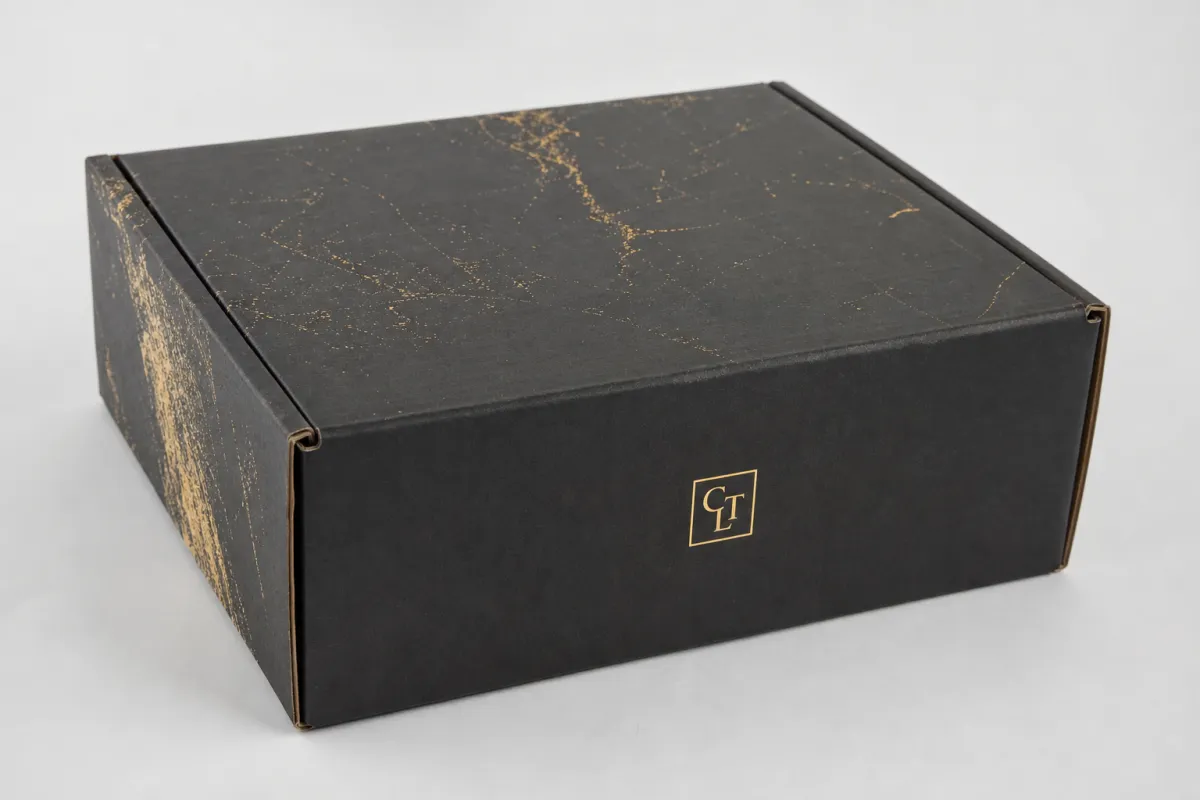
Picture a common shipping scenario. A product leaves the warehouse in a carton that looks strong enough, but the board is too light, the fit is loose, and the corners have too much unsupported air space. During transit, the box takes repeated vibration, gets stacked under other parcels, and absorbs a corner hit during sorting. By the time it reaches the buyer, the carton may still be sealed, yet the contents inside are no longer safe.
A well-planned custom printed carton boxes order pays for itself in that kind of situation. The box is not only a branded shell; it is a structural part of product safety. Match the size to the product, choose board thickness for the shipping route, and lay out the artwork around the real folds and seams, and the carton carries both jobs at once. It protects the product and carries the brand without forcing you to add extra outer packaging later.
From a packaging buyer’s perspective, weak cartons create hidden costs that are easy to miss on the first quote. A cheaper board may save a few cents per unit, but if it leads to 2% more damage claims, replacement shipments, warehouse rework, or negative reviews, the total cost climbs fast. In practice, the savings from a low-spec custom printed carton boxes order can disappear the first time a retail launch or subscription drop lands in a rough handling lane.
The presentation side matters too. Product packaging is often the first physical contact a buyer has with your brand. A clean print, crisp creases, and a box that opens predictably build confidence before the product is even touched. That matters especially for subscription kits, cosmetics, health products, electronics accessories, and small consumer goods, where package branding shapes the first impression as much as the item itself.
A carton should not force a choice between appearance and protection. In a good custom printed carton boxes order, the structure supports the product, and the print supports the sale.
Packaging standards help ground the conversation. If your product is moving through parcel networks, warehouse stacks, or retail distribution, testing methods from ISTA can help you think about vibration, compression, and drop risk in a more disciplined way. For paper sourcing, many buyers also ask about responsibly managed fiber and seek guidance from FSC when they want certified paperboard options. Those references do not replace a proper spec sheet, but they do keep the discussion tied to real performance and sourcing questions.
The biggest mistake is treating the carton like decoration. A custom printed carton boxes order should be specified like a working component: size, strength, closure method, coating, and print all have to fit the route the product will actually travel.
Once the packaging is built correctly, the gains show up in fewer replacements, faster packing, and more consistent customer feedback. That is why a custom printed carton boxes order is often one of the most practical investments a brand can make, especially when the same carton has to support product safety, shelf appeal, and efficient fulfillment at the same time.
Product details: carton styles, board grades, and print finishes
Buyers usually choose from a handful of carton styles, and the right one depends on the product, the shipping method, and how much visual finish the package needs to carry. A tuck-end folding carton is common for lightweight retail items because it is efficient, printable, and easy to display. A mailer-style carton gives a stronger unboxing experience and is often used for subscription kits, gifting, and direct-to-consumer product packaging. Heavier shipping cartons and corrugated setups make more sense when the item needs extra compression resistance or the parcel route is rougher. Many custom printed carton boxes order projects begin with one of these formats, then the structure is adjusted to the product size and opening style.
Board choice matters just as much as shape. SBS (solid bleached sulfate) is known for a bright, clean surface and is often chosen for premium retail packaging. CCNB (coated recycled board) is more economical and is common for everyday custom printed boxes where cost control matters. Kraft paperboard gives a natural, earthy look that works well for organic, handmade, or minimalist branded packaging. For more protective builds, corrugated structures such as E-flute or B-flute add stiffness and crush resistance, which helps with shipping cartons and mailer boxes. A custom printed carton boxes order should choose the board based on what the box must survive, not just how it looks on a mockup.
If sustainability is part of the brief, material sourcing becomes part of the spec as well. Recycled content, FSC-certified fiber, and right-sized structures can all help reduce waste, but the best choice still depends on the product. A lighter board is not automatically better, and a heavier board is not automatically wasteful. The real question is whether the carton performs for its intended use without being overbuilt. That tradeoff is where a lot of first-time buyers get tripped up, because the lightest option is not always the smartest option.
Print and finishing choices shape the final appearance and also affect handling. Common options include:
- CMYK process print for full-color artwork and photographic detail.
- Spot color printing for exact brand matches and cleaner, simpler layouts.
- Matte coating for a quieter, more restrained retail look.
- Gloss coating for brighter color and added surface pop.
- Varnish for a basic protective layer and a modest finish lift.
- Foil stamping for premium accents on logos, seals, or product names.
- Embossing or debossing to add tactile depth to the brand mark.
- Soft-touch lamination for a smoother feel and a more upscale presentation.
The finish should follow the use case. For retail packaging, the print surface has to hold color and read well under store lighting. For shipping cartons, the finish may need more scuff resistance. For subscription kits and e-commerce, the inside impression matters too, because the carton is part of the opening experience. A good custom printed carton boxes order does not throw every finish at the project; it chooses the minimum set that supports the product and the brand.
There are also practical limits. Foil, heavy coverage, and specialty coatings add cost and may slow production. That does not mean they should be avoided, only that they should be justified. If the carton is handled once by a retail customer, a premium finish may make sense. If it is traveling through long distribution chains, a tougher matte or varnished surface may be the better move. The right call depends on the product, the route, and the price point.
One practical rule keeps the design honest: choose the structure first, then the finish, then the artwork. If the box must lock securely, survive a carton pack-out, and still represent the brand clearly, the custom printed carton boxes order is built on function before decoration. That approach usually produces better custom printed boxes and fewer unpleasant surprises on the first production run.
Specifications that shape a custom printed carton boxes order
The product itself is the most important spec. Exact finished dimensions, product weight, and any insert or tray requirements determine the dieline more reliably than outside box size alone. If the item is irregular, fragile, or bundled with accessories, the carton has to be built around the real load path, not an estimate. In a custom printed carton boxes order, a few millimeters of guesswork can turn into loose movement, scuffed surfaces, or a box that refuses to close the way it should.
Structural details matter more than most first-time buyers expect. Locking tabs, dust flaps, glue areas, tear strips, hang tabs, windows, and interior folds all change the way the carton packs and prints. A simple-looking carton may still need precise fold allowances, and if the artwork is mapped without respecting those panels, the logo can land on a seam or a barcode can disappear into a flap. That is why the spec sheet needs to be tied to the dieline early in the custom printed carton boxes order process.
Artwork setup is another place where careful planning saves time. Bleed, safe area, panel mapping, barcode placement, and regulatory copy should be checked before proof approval. A standard bleed of a few millimeters is common, but the real point is making sure every printed element has room to survive trimming and folding. If you have legal copy, recycling marks, ingredient statements, or product claims, they need to remain legible after conversion, not just look clean in a flat mockup.
Here is a simple way to think about it: the flat design file is not the finished carton. The box has folds, cut lines, and tolerances, so a design that looks centered on the screen may shift once the carton is formed. A careful custom printed carton boxes order includes a digital proof built from the actual dieline so the buyer can see where each panel lands in the final structure.
Transit testing should also influence the spec. If the boxes are shipping through parcel carriers, going to wholesale distribution, or stacking in a warehouse for weeks, the carton should be judged against those conditions. Compression from pallet stacking, vibration from line haul, and impact from drops are not abstract concerns. They are the normal stress points that show whether the material choice and closure design are sufficient. If the product faces higher risk, ask for a structure that reflects it instead of trying to patch the problem with extra tape later.
For product launches, the packaging schedule should also account for insert development, sample fit testing, and any secondary packaging requirements. A bottle, jar, electronics accessory, or multi-piece kit can behave very differently once packed. The carton may fit on paper but still fail in the line because the insert holds too much tension or the closure tab is too tight. That is why the best custom printed carton boxes order projects include sample review before the full run. I have seen more than one launch get delayed because nobody checked the packed sample before approving the whole batch.
In practical terms, these are the details that should be on the spec sheet:
- Finished product dimensions and target internal carton size
- Product weight and any fragile components
- Insert, tray, or partition requirements
- Board grade and flute choice, if corrugated
- Closure style and any locking features
- Print coverage, color count, and finish selection
- Barcode, warning copy, and regulatory text placement
- Shipping method, warehouse conditions, and stacking expectations
When those items are clear, a custom printed carton boxes order becomes much easier to quote accurately and produce consistently. When they are missing, the carton ends up being designed by assumption, and assumptions are expensive in packaging.
Custom printed carton boxes order pricing, MOQ, and quote basics
Pricing for a custom printed carton boxes order is shaped by a handful of variables, and the biggest one is usually not the logo. Board type, box size, number of print colors, finish selection, and structural complexity all affect the final unit cost. Quantity matters too, because setup, plating, make-ready, and press changeover costs are spread across the run. The same box that looks inexpensive at 10,000 pieces can feel much pricier at 1,000 pieces simply because the fixed work is carried by fewer cartons.
MOQ, or minimum order quantity, is often misunderstood. It is not an arbitrary hurdle; it usually reflects how efficiently the job can be produced. Small runs can be perfectly workable, but they tend to carry a higher per-unit cost, especially when the carton needs a custom dieline, multiple colors, special finishing, or corrugated conversion. For straightforward folding cartons, a starting MOQ around 500 to 1,000 pieces can be realistic in some cases. For more complex structures or premium finishes, 1,500 to 3,000 pieces is often a more practical planning range. A custom printed carton boxes order with simple graphics and standard board will usually price better than one that combines heavy coverage, foil, and unusual folding geometry.
To get a useful quote, send the information that actually drives production:
- Finished carton dimensions or product dimensions
- Order quantity and any split-SKU requirements
- Product weight and fragility level
- Artwork file or brand assets
- Board preference or desired rigidity
- Finish preference, if any
- Shipping destination and target delivery window
A quote without dimensions and product weight is not much more than a placeholder. If the carton is too large, you waste board and freight. If it is too small, the product does not fit, and the run has to be changed. A serious custom printed carton boxes order should be priced from the real requirements, not from a guessed size range.
The table below gives a practical planning view of common options. These are not fixed prices, but they are the kind of ranges a packaging buyer might use to compare structures before requesting a formal quote. They are planning figures, not locked rates, because board markets, freight, and finishing demand can move them around.
| Carton type | Typical use | Common material | Planning price range per unit | Notes |
|---|---|---|---|---|
| Tuck-end folding carton | Retail packaging, light consumer goods | SBS or CCNB | $0.18-$0.45 at mid-volume | Best for clean shelf presentation and efficient print layouts |
| Mailer-style carton | E-commerce, subscription, gifting | E-flute corrugated | $0.35-$0.95 at mid-volume | Stronger structure, better unboxing value, more board usage |
| Premium folding carton with special finish | Cosmetics, accessories, branded kits | SBS or coated board | $0.28-$0.75 at mid-volume | Foil, embossing, or soft-touch can raise cost quickly |
| Heavy corrugated shipping carton | Protective shipper, wholesale distribution | B-flute, C-flute, or double-wall | $0.60-$1.50 at mid-volume | Higher strength, more suitable for rough handling and stacking |
Those numbers move with size, print coverage, board market conditions, and freight. A small carton with heavy artwork coverage can cost more than a larger plain one if the finishing is demanding. Likewise, a well-designed custom printed carton boxes order can reduce waste by using a standard board caliper and simplifying the structure without giving up protection.
There are a few cost-saving levers that tend to work without hurting the carton:
- Reduce the number of print colors if the artwork allows it.
- Choose a standard size rather than an oversized custom blank.
- Use a finish only where the customer will actually see it.
- Keep the structure simple if the product does not need extra locking features.
- Order a larger batch when the item has steady demand.
Where people get into trouble is trimming the carton too far. Saving a cent on board means very little if the product arrives damaged or the packing line slows down because the box is hard to assemble. A smart custom printed carton boxes order saves money by removing waste, not by stripping out the parts that keep the product safe.
Process, timeline, and proof approval for a custom printed carton boxes order
The production path is usually straightforward, but it works best when each step is handled in order. A typical custom printed carton boxes order starts with the inquiry, moves into requirements review, then dieline creation, artwork placement, proofing, production, finishing, packing, and shipment. If one of those steps is rushed or skipped, the project usually pays for it later in revisions or delays.
- Inquiry and brief review: share dimensions, quantity, product weight, and intended use.
- Dieline creation: the carton layout is built around the product and closure style.
- Artwork placement: brand assets are aligned to the actual panels and folds.
- Digital proof: the customer reviews the box as it will appear when printed and formed.
- Approval: the buyer confirms specs, colors, text, and quantity.
- Production: printing, converting, cutting, folding, and finishing begin.
- Final inspection and shipment: cartons are checked, packed, and sent out.
The longest delays are often not in the press room. They come from proof revisions, missing spec details, or changes to the artwork after the die has already been prepared. A custom printed carton boxes order with complete information can move much faster than one that keeps changing size, finish, or copy during approval.
Lead time depends on complexity, but a practical planning range is often 12 to 15 business days after proof approval for a straightforward carton, with more time needed for specialty finishes, difficult structures, or larger quantities. If the project includes corrugated construction, multi-step finishing, or multiple SKUs, the schedule can extend to 3 to 5 weeks. Freight time is separate, so a buyer with a launch date should build in buffer before the cartons are needed on the line.
Fast approval helps more than most people realize. If the proof gets reviewed in one cycle instead of three, the whole custom printed carton boxes order usually moves more cleanly. The opposite is true as well. When the spec is vague, the design team has to guess, the proof gets revised, and the production slot slips. Incomplete paperwork is one of the most common causes of delay in custom packaging.
Before signoff, check the following carefully:
- Finished dimensions and box style
- Board grade or material choice
- Print colors, finish, and coverage
- Barcode and legal copy placement
- Panel orientation and fold direction
- Quantity and shipment destination
If the project involves multiple SKUs, ask how the cartons will be grouped. Sometimes shared board and similar layout sizes can simplify production. Sometimes they cannot, and forcing them together creates more problems than it solves. A disciplined custom printed carton boxes order should be arranged around production reality, not just spreadsheet convenience.
One more point deserves attention: a digital proof is not the same thing as a live product sample. It is the best early check for layout, copy, and panel fit, but if the item is delicate or the insert is tight, a sample or pre-production mockup can save you from a costly mistake. In packaging, a little extra verification is usually cheaper than a rerun.
Why choose us for your custom printed carton boxes order
At Custom Logo Things, the conversation starts with practical questions, not hype. What does the product weigh? How will the carton travel? Does it need retail presence, shipping strength, or both? Those answers shape the structure far more accurately than a generic style request, and they help keep the custom printed carton boxes order aligned with real production conditions instead of assumptions.
That approach matters because overspecification is expensive. A carton does not need foil, soft-touch, and embossing just because those options are available. Sometimes a well-printed SBS carton with a sensible coating is the right answer. Other times a corrugated mailer gives the best mix of protection and presentation. The point is to match the design to the product risk, the budget, and the way the package will be handled.
Packaging buyers also value consistency, especially on reorder cycles. A carton that prints beautifully once but drifts in color or fit on the next run creates headaches across inventory, packing, and customer service. For that reason, a good custom printed carton boxes order includes clear specs that can be repeated without guessing. Repeatability is part of quality, not just an accounting detail.
Support around dielines and proofing also makes a real difference. If the panel map is unclear, if the barcode needs to shift, or if the artwork has to be adjusted for a fold, those corrections need to happen before production begins. A strong packaging partner reduces surprises by clarifying those points early and keeping the file set clean. That is the kind of help buyers expect from a team that knows custom printed boxes from the production side, not just from the sales side.
You can also compare product options through our Custom Packaging Products page if you are still narrowing down structure, or review our Wholesale Programs if your order volume is large enough that batch planning matters. If you want a quick answer to common packout and proofing questions, our FAQ is a useful place to start.
Quality control is another deciding factor. Cartons have to fold correctly, register cleanly, and hold up across the whole batch, not just the first few samples. If one pallet is crisp and the next is off by a few millimeters, the line slows down and the brand feels less polished. A careful custom printed carton boxes order keeps those inconsistencies in check by making sure the spec, proof, and production setup all match.
Here is a brief quote that captures the right mindset:
Good packaging does not call attention to itself for the wrong reasons. It simply fits, prints, protects, and repeats that result every time the order is run.
That is the standard we aim for. Useful advice, realistic material choices, and production that respects both appearance and function. When the carton is built the right way, the customer sees the brand, the warehouse sees a box that packs quickly, and the finance team sees fewer avoidable losses.
Next steps to finalize a custom printed carton boxes order
The fastest way to move forward is to gather the basics before asking for a quote. Start with product dimensions, product weight, quantity target, shipping destination, print coverage, and any finish preferences. If you already have a sample, send that too. A sample is often more useful than a long description because it shows how the product behaves in real packing conditions.
If the product is not final yet, a spec sheet is still enough to begin the discussion. The important thing is to be specific about the use case. Is this carton for shelf display, direct shipping, or retail packaging inside a shipper? Will it need inserts? Will it sit in a warehouse, travel by parcel carrier, or move on pallets? Those answers shape the carton design and help the custom printed carton boxes order stay realistic from the first round.
Once the structure is proposed, request a dieline and a digital proof before production. Then check every panel carefully. Look at the barcode, the warning copy, the brand mark, the fold direction, and the trim margins. If the artwork includes legal statements or regulatory text, verify that nothing important lands too close to a crease or cut line. That review step is small, but it prevents most avoidable mistakes.
If you are planning a launch, build in extra time for proof approval. The best case is a clean first review and a quick move into production. The slower case is a round of edits, a file correction, and a delay that pushes shipping back by several days. A well-prepared custom printed carton boxes order usually avoids that because the information is complete before the quote even goes out.
Use this simple checklist to stay on track:
- Finished product size and weight
- Carton style and protection level
- Artwork files or brand assets
- Desired print finish and coating
- Quantity and reorder expectations
- Delivery date and destination
- Any compliance or barcode requirements
When those details are ready, the rest of the process gets much easier. The dieline fits the product, the proof reflects the real carton, and the production run has a better chance of landing on time. For brands that care about both presentation and performance, that is the right way to approach a custom printed carton boxes order.
Start with clear specs, approve the proof quickly, and keep one person responsible for revisions. That combination gives the cleanest path to a custom printed carton boxes order that supports the product, the budget, and the timeline without unnecessary backtracking.
FAQ
What do I need to request a custom printed carton boxes order quote?
Provide finished box dimensions, product weight, order quantity, print coverage, and the shipping destination. Share artwork files or at least a logo, brand colors, and any mandatory copy so the quote reflects the real build. If you are unsure about the structure, ask for a recommendation based on product protection and packing method. A complete custom printed carton boxes order quote is much more accurate when the carton has been tied to a real product size instead of an estimate.
What is a practical MOQ for custom printed carton boxes orders?
MOQ depends on size, board type, and print method, but smaller quantities usually cost more per unit because setup is spread across fewer boxes. Standardized sizes and simpler print specs often make lower MOQs more feasible. If you need multiple SKUs, it can be more efficient to group them into one production run with shared materials or finish requirements. For many buyers, a custom printed carton boxes order becomes more economical once the run is large enough to reduce setup impact.
How long does a custom printed carton boxes order take after approval?
The schedule depends on artwork readiness, structural complexity, and finishing requirements. Most delays come from proof revisions or missing spec details, not the press run itself. Once the proof is approved, the remaining timeline usually covers production, finishing, quality checks, and shipment. A straightforward custom printed carton boxes order can move fairly quickly after approval, while a carton with specialty finishing or corrugated construction usually needs more time.
Can I use my own artwork for a custom printed carton boxes order?
Yes, as long as the file is supplied in the correct format and aligned to the approved dieline. Artwork should include bleed, safe zones, and properly placed text, barcodes, and legal copy. A production proof is still important because panel folds and cut lines can affect the final layout. For the smoothest custom printed carton boxes order, send artwork early and keep the revision history simple.
What should I check before approving production on a custom printed carton boxes order?
Confirm dimensions, board type, print colors, finish, and quantity before signoff. Review every panel for spelling, barcode placement, and any compliance text that must remain visible. Make sure the dieline matches the product fit and that the carton will pack and ship the way you expect. Once a custom printed carton boxes order goes into production, changes become much harder, so the proof review is the time to catch problems.

