Why custom printed grocery tote bags work at the shelf and on the street
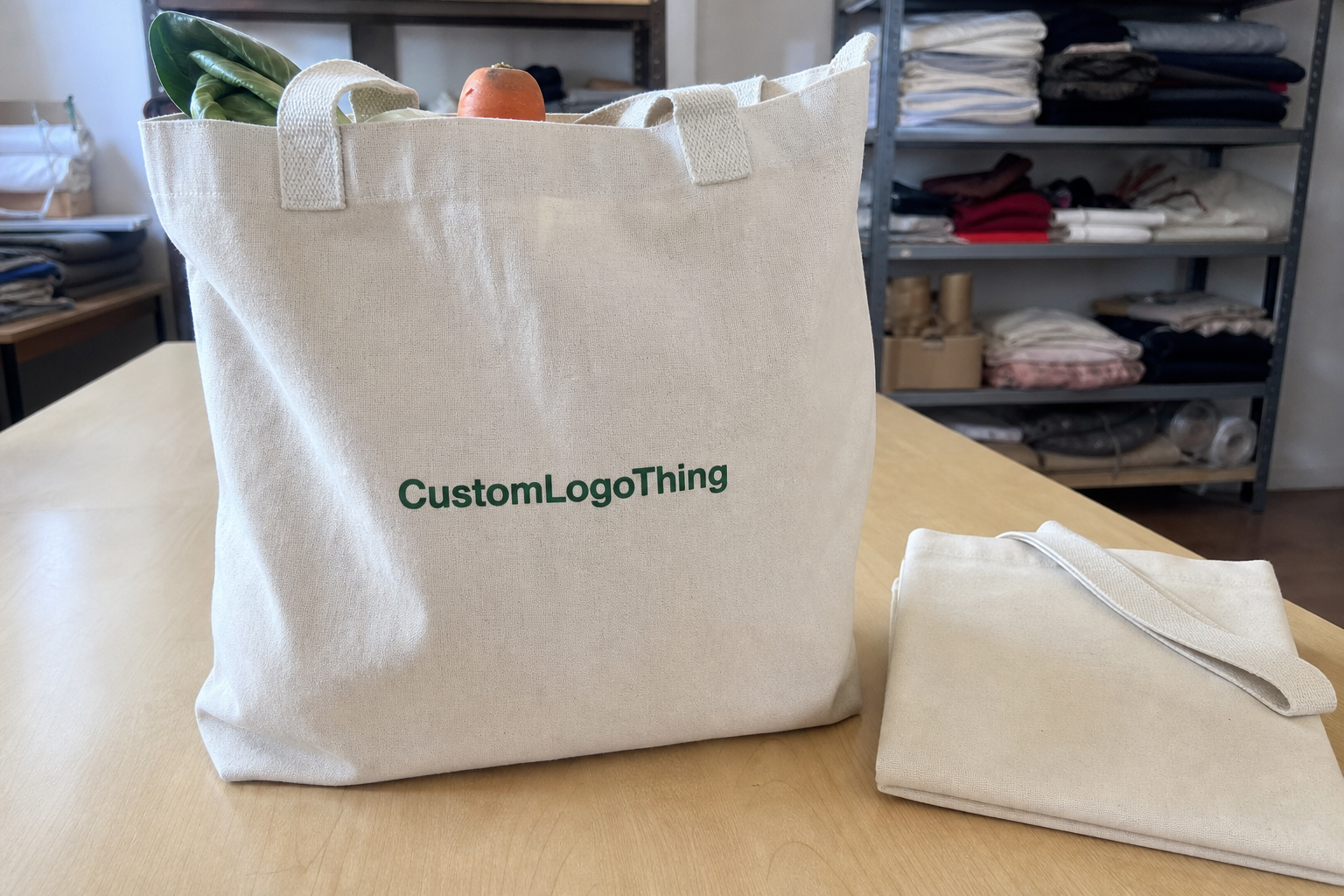
Custom Printed Grocery tote bags do more than move purchases from checkout to car trunk. They stay in circulation long enough to keep a brand visible during errands, school pickups, office stops, and a steady stream of everyday use. That repeated exposure is what makes them practical marketing pieces rather than disposable packaging with a logo on it.
For buyers, the appeal is simple: one tote can create many impressions without asking for more media spend. A customer may reuse the same bag for weeks, sometimes longer if the construction is solid and the handles are comfortable. The bag ends up seen by the person carrying it, family members, other shoppers, and anyone standing behind them in a line.
The category covers a wider range than many first-time buyers expect. Lightweight film bags still serve high-volume checkout programs, while woven polypropylene, nonwoven polypropylene, laminated builds, and heavier reusable shopping totes each solve a different problem. The best choice depends on carry weight, the expected number of uses, and how much structure the bag needs to hold its shape.
The most reliable tote is not always the most eye-catching sample on the table. A bag that folds flat, opens easily, and survives repeated trips is usually the one customers keep in the car. That matters because the tote only earns value if it keeps getting reused.
A good grocery tote does not depend on a loud design. It depends on the right material, a print method that suits the surface, and a size that matches how people actually shop.
That combination is where the real performance comes from. If any one of those pieces is off, the bag may still look fine on approval, but it will struggle in daily use.
How the printing process shapes the final look
Printing method affects the appearance of the bag as much as the artwork itself. A logo can start as clean vector art, then move into a plate, a screen, or a digital setup depending on the run size and material. Each path has its own strengths, limits, and cost structure.
For custom printed grocery tote bags, flexographic printing, screen printing, and digital printing are the most common options. Flexographic printing is a strong fit for film-based bags and larger runs because it runs quickly and delivers repeatable color. Screen printing is often chosen for thicker reusable bags, especially when the design uses one to three spot colors and the buyer wants a bold, high-contrast result. Digital printing is useful for shorter runs or artwork with more variation, although unit economics tend to rise quickly as quantities drop.
Color count is one of the first decisions that affects both price and finish. A single-color logo on a smooth film bag can look sharp and confident. Add several spot colors and the job may need more setup work, more proof review, and tighter registration control. Heavy ink coverage can also change how the surface feels, especially on textured nonwoven material where the ink sits into the fibers rather than on top of them.
The bag surface itself makes a visible difference. Glossy film tends to show sharper edges and stronger contrast. Matte film gives a softer presentation. Nonwoven material can blur very fine text, while woven constructions are durable and attractive but less forgiving if the design depends on thin lines or tiny type.
Before approving artwork, a buyer should confirm the file format, proof type, color target, and print area. Those basics prevent the most common production surprises.
- Vector files such as AI, EPS, or PDF are usually preferred.
- The proof should show placement, scale, and the final copy exactly as it will print.
- Pantone targets help when brand color needs to stay consistent across packaging.
- Handles, seams, and gussets can reduce usable print space, so the layout has to respect the bag structure.
A logo that looks balanced on a flat screen can shift once it is wrapped around a gusset or placed near a seam. The proof is the place to catch that problem, not after the run has started.
For teams comparing tote programs with other packaging formats, it can be helpful to review how the bag fits into the broader system of branded materials through Custom Packaging Products. Tote artwork should not be approved in isolation if it needs to match a larger retail package family.
Material choices, thickness, and printability
Material selection drives durability, print quality, and price at the same time. Lightweight film bags are usually the least expensive option and work well for short-term promotional use or high-volume checkout programs. Thicker reusable builds cost more, but they hold heavier loads and usually feel more substantial in the hand, which can improve perceived value.
Thickness or gauge changes how the bag behaves in printing and in use. A thin film can print cleanly, but it may stretch or wrinkle once loaded. A heavier gauge is more stable during printing, holds registration better, and survives repeated trips to the store. If the tote is expected to be used often, that extra strength usually earns its keep.
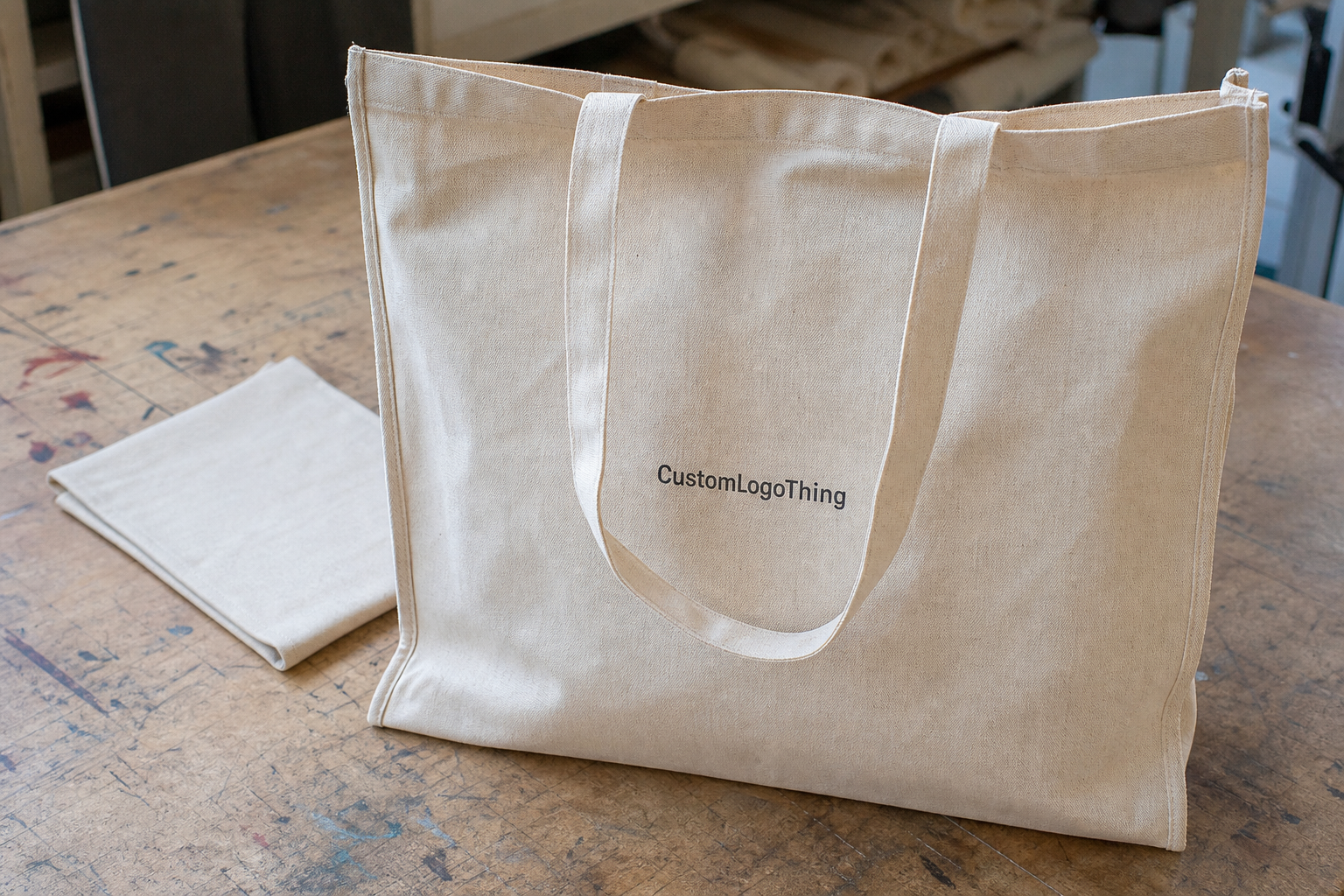
Handle construction matters just as much as the body material. Die-cut handles keep the silhouette simple and economical. Reinforced loop handles carry weight more comfortably. T-shirt style bags are familiar and efficient for many grocery programs, while box-bottom or gusseted reusable totes give more volume and a more structured shape when filled. Seam strength deserves close attention, because a bag that tears at the handle does not matter how good the front panel looked on day one.
Use case should determine the build, not the other way around:
- Produce: lightweight, easy to distribute, usually focused on volume and cost control.
- Checkout: medium-strength bags with readable branding and a comfortable carry.
- Promotions: stronger print visibility, with enough durability to stay in circulation.
- Club-store giveaways: heavier structures with firmer handles and a more premium feel.
- Community events: reusable bags that can hold samples, handouts, and mixed items without failing at the seam.
Not every program needs the thickest or most elaborate bag. A clean tote printed on the right material often feels more credible than an overbuilt version with too much decoration. The goal is fit and function, not excess.
If sustainability is part of the brief, buyers should ask for claims that can be documented. Recycled content should be tied to a clear specification, and any recovery or certification language should match the actual substrate. For broader reference on recycling and fiber standards, the EPA and FSC remain useful starting points: EPA recycling guidance and FSC standards.
Cost, pricing, and MOQ factors to compare before you quote
Pricing for custom printed grocery tote bags usually comes down to five variables: material type, bag size, print colors, printed sides, and total quantity. Once those are fixed, quotes are much easier to compare. If any one of them changes, the unit price can move more than many buyers expect.
MOQ matters because setup costs are spread across the run. A 5,000-piece order will usually carry a different unit price than a 20,000-piece order, even if the design is identical. Larger quantities lower unit cost because plate charges, screens, and setup labor are divided across more bags. That does not automatically make the bigger order the better decision. It only means the buyer has to balance unit savings against storage space, demand, and the risk of holding too much inventory.
Setup fees are easy to overlook. Depending on the print method, there may be plate costs, screen charges, prepress fees, or conversion setup. Freight can also change the total in a meaningful way, especially when the bags are bulky or the shipment is split across cartons. Some suppliers include packaging in the quote, while others separate it. Those differences need to be lined up before comparing pricing.
| Bag Type | Typical Use | Relative Unit Cost | Print Quality | Durability |
|---|---|---|---|---|
| Lightweight film tote | High-volume checkout or giveaway use | $ | Good on simple logos | Low to moderate |
| Nonwoven reusable tote | Retail promotions and frequent reuse | $$ | Good for bold, simple artwork | Moderate to high |
| Woven or laminated reusable tote | Premium retail, heavier loads, longer life | $$$ | Strong on larger logos and spot colors | High |
| Custom box-style shopping tote | Premium merchandising and repeated use | $$$ | Best with disciplined, high-contrast art | High |
There are practical ways to reduce cost without weakening the bag. Simplifying artwork from four colors to one or two can lower setup and improve clarity. Standardizing a single size across multiple campaigns makes planning easier and can improve reorder efficiency. If the logo reads clearly in a single strong color, there is usually no reason to force a more complex layout simply because the panel has room.
Higher pricing can still make sense when the bag has a longer job to do. A tote that needs to carry heavier groceries, fit a more premium retail setting, or stay in circulation for months may justify the extra material and stronger construction. A low-cost bag that fails early often costs more in the end because it cuts short the exposure the buyer was paying for.
Practical rule: if one quote is dramatically lower than the rest, ask what changed in the spec. Most price gaps come from material thickness, print coverage, or omitted setup costs.
Process and timeline: from artwork to delivery
The production sequence is straightforward, but the order of operations matters. A typical job moves through specification review, artwork prep, proof approval, printing, converting, packing, and shipment. Each step has its own timing risk, and most delays can be avoided if the buyer submits complete information early.
Lead time depends on several practical variables: whether the file is already print-ready, how many proof rounds are needed, whether the material is in stock, and how much color matching the job requires. A simple order with clean vector art and a standard bag size can move faster than a more complex program with multiple colors and custom packaging requirements. Business-day timing matters more than calendar-day timing once proofing and freight are included.
The smoothest way to keep the schedule on track is to lock the basics before the quote turns into production.
- Send vector artwork early.
- Confirm bag dimensions and handle style before proofing.
- Approve print placement with all copy checked carefully.
- Verify color count and any Pantone targets.
- Confirm freight method before production begins.
After approval, the job moves into production. If the file is clean and the material is available, the shop can usually keep moving without much back-and-forth. Rush orders are sometimes possible, but only when there are fewer changes, the substrate is on hand, and approvals happen quickly. If any of those pieces are missing, the schedule tightens fast.
For a seasonal promotion, it helps to work backward from the event date and build in time for proof review. A delay of a few business days can affect freight, inventory allocation, and the chance to correct a small but important placement issue before printing begins.
For recurring store programs, a spec sheet is worth keeping on file. The more stable the size, material, and print setup, the easier it is to reorder without rebuilding the job from scratch each time.
Common mistakes that raise cost or weaken performance
One of the fastest ways to waste money is to choose a bag that is too thin for the load. The print may look clean on the proof, but if the handles stretch, the seams split, or the panel distorts under real groceries, the tote stops doing its job. A weak bag also makes the branding feel unreliable, which defeats the purpose of printing it in the first place.
Artwork is the other frequent trouble spot. Tiny type, low-contrast colors, and busy layouts may work on a monitor but fall apart on a flexible bag surface. The more textured the material, the more those decisions matter. If the message cannot be read from several feet away, it is probably too detailed for a grocery tote.
Buyers also overlook ergonomics. Handle length, hand opening, and gusset depth all affect whether the bag feels easy to carry. If the tote is awkward in use, customers are less likely to reuse it, and the program loses the exposure it was meant to create.
Proof approval can go wrong if the layout is not checked in real context. If the bag needs a barcode, compliance copy, recycled-content text, or retailer-specific labeling, those elements should be confirmed before production begins. That matters especially in regulated settings or when a retailer has strict packaging rules.
Overdesign can raise cost without improving performance. Filling every inch with artwork adds printing complexity and often makes the bag harder to read. A tote usually performs better with one strong logo placement, disciplined typography, and enough quiet space for the brand to stand out.
Useful check: if the bag has to do more than carry groceries, make sure the layout still works when it is folded, hung, or stuffed into a cart. The flat proof does not show that strain, but the finished bag will.
Expert tips for stronger branding and better reuse
Simpler branding usually travels farther. Keep the front panel clear enough that the logo can be read quickly from a few steps away. In a parking lot or checkout lane, people notice shape, contrast, and legibility long before they read a supporting line.
One disciplined brand color often works better than a crowded palette. That does not mean the bag should feel plain. It means the design needs hierarchy: logo first, supporting message second, everything else only if it helps the tote feel more useful or more credible. The same logic applies to other retail packaging, but it is especially true for custom printed grocery tote bags because they are seen in motion.
Reuse is the real multiplier. A bag that feels sturdy and carries well gets used again. A bag that tears or looks flimsy gets tossed into a drawer, or worse, discarded after a few trips. If the goal is more impressions, attention should go to handle comfort, seam strength, and load rating as much as to the print file.
The shopping context should guide the spec. A customer making a quick produce stop needs a different tote than someone loading groceries for a family of four. Store format matters too. A premium neighborhood market, a discount grocer, and a campus event all have different expectations for size, material, and visual tone. The best tote fits the setting instead of fighting it.
For high-visibility programs, a sample or preproduction mockup is worth requesting. One additional review step can reveal a color shift, a placement issue, or a size problem before a large order is committed. That small check is usually cheaper than reprinting a run that misses the mark.
The strongest tote programs are usually restrained on paper and convincing in use. They carry real weight, show the brand clearly, and last long enough to matter.
Next steps: spec the right bag, verify the proof, and place the order
The next decision is simple enough to state and detailed enough to get wrong: lock the size and material, choose the print method, and set the target quantity. Those three choices shape almost everything that follows, including cost, timeline, and how the bag performs once it reaches a customer’s hands. If those details are vague, the quote will be vague too.
Before requesting pricing for custom printed grocery tote bags, gather the artwork, estimate demand across the promo window or replenishment cycle, and compare quotes using the same bag specification. A quote that looks lower on paper but changes the material, print area, or finish is not the same product.
Ask for a proof that confirms dimensions, ink count, copy placement, and any special notes tied to your brand or retailer. If the order supports a launch or seasonal push, confirm the timeline, freight method, and reorder expectations so the first order can serve as the template for the next one.
The strongest programs balance cost, durability, and print clarity without making the bag harder to use. That is the standard that matters. If the tote carries well, looks right, and lasts long enough to earn repeated use, the branding does its work.
Custom printed grocery tote bags perform best when the spec is honest, the print is legible, and the bag is built for the loads it will actually carry.
What materials are best for custom printed grocery tote bags?
Choose the material based on load, reuse expectations, and print quality. Lightweight film works for low-cost, high-volume use, while thicker or reinforced constructions are better for heavier groceries and repeated carrying. Texture and finish also matter because they affect how crisp the print appears.
How is pricing for custom printed grocery tote bags calculated?
Pricing usually depends on material, bag size, print colors, sides printed, and order quantity. Setup fees, screens or plates, freight, and special packaging can change the total quote. Higher quantities often reduce unit cost, so compare quotes using identical specs.
What is the typical lead time for printed grocery tote bags?
Lead time depends on proof approval, artwork readiness, material availability, and production quantity. Simple orders can move faster when the file is print-ready and specifications are confirmed early. Rush options may exist, but they usually require fewer changes and tighter approval timing.
What artwork works best on grocery tote printing?
Bold logos, high-contrast text, and clean shapes print more reliably than fine detail. Vector files are preferred because they scale cleanly and help preserve sharp edges. It helps to keep the design readable from a distance and avoid overcrowding the panel.
How do I choose the right MOQ for custom printed grocery tote bags?
Start with your actual usage window: a promo, a store rollout, or recurring replenishment. A higher MOQ can lower unit cost, but only if the inventory will be used before it becomes outdated. If the bag is for a short campaign, balance savings against storage and reorder flexibility.