Buyer Fit Snapshot
| Best fit | custom printed kraft sleeves for packaging buyers comparing material specs, print proof, MOQ, unit cost, freight, and repeat-order risk where brand print, material, artwork control, and repeat-order consistency matter. |
|---|---|
| Quote inputs | Share finished size, material target, print colors, finish, packing count, annual reorder estimate, and delivery region. |
| Proofing check | Approve dieline scale, logo placement, barcode or warning zones, color tolerance, and any recyclable or compostable wording before bulk production. |
| Main risk | Vague material claims, crowded artwork, or missing packing details can create delays even when the unit price looks attractive. |
Fast answer: Custom Printed Kraft Sleeves: How They Work and Cost should be specified like a repeatable production item. The safest quote includes material, print method, finish, artwork proof, carton packing, and reorder notes in one written spec.
What to confirm before approving the packaging proof
Check the product dimensions against the actual filled item, not only the sales mockup. Ask for tolerance on folds, seals, hang holes, label areas, and retail display edges. If the package carries a logo, QR code, warning copy, or legal claim, reserve that space before decorative graphics fill the panel.
How to compare quotes without losing quality
Compare board or film grade, print process, finish, sampling route, tooling charges, carton quantity, and freight assumptions side by side. A lower quote is only useful if the supplier can repeat the same color, closure quality, and packing count on the next order.
Custom Printed Kraft Sleeves: How They Work and What They Really Cost
Custom printed kraft sleeves can turn a plain carton into packaging that feels finished, deliberate, and ready for a shelf or shipping bench. That is why they stay in so many packaging programs: they add branding and information without forcing a full box redesign, and that can be the smarter spend for product packaging, retail packaging, and changing seasonal runs. If the base box already does its job, a sleeve gives you a cleaner way to update the outside story without touching the structure underneath.
From a buyer's point of view, the appeal is simple. Custom printed kraft sleeves let you change the presentation without rebuilding the whole package. A launch can move faster, a promo can be tested in smaller quantities, and a seasonal refresh does not have to drag the whole carton spec along with it. The box still has to be sized correctly and built well, though. A sleeve is a finishing layer, not a cure for weak board or sloppy dimensions, and that mistake shows up pretty quickly in real handling.
Used with intention, custom printed kraft sleeves can carry logos, product claims, barcodes, opening cues, ingredient panels, and even tamper signals if the layout is planned carefully. Used carelessly, they turn into a paper band that slows fulfillment and creates one more thing for the warehouse team to work around. The better question is not whether you need one. It is what job the sleeve is supposed to do in the pack, in storage, and in the customer's hands.
What Custom Printed Kraft Sleeves Actually Do
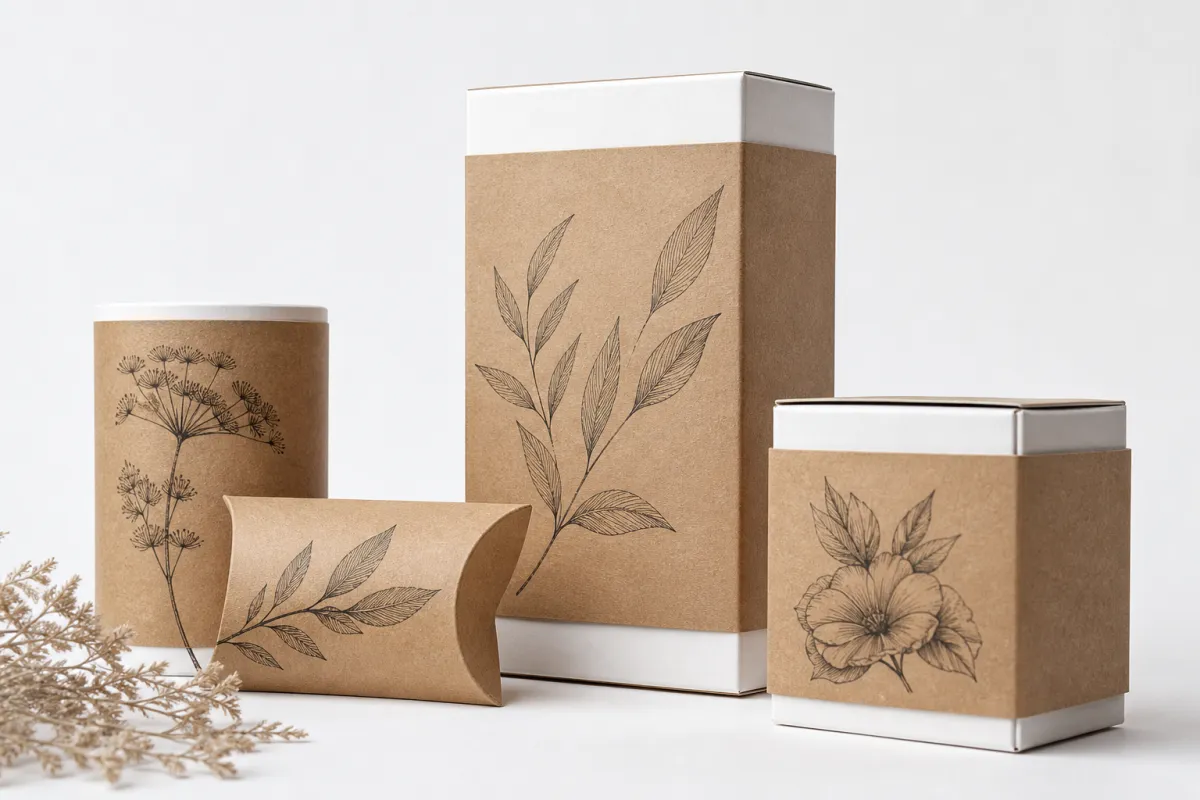
Custom printed kraft sleeves are printed wraps or bands that slide over a box, mailer, tray, or rigid package to add visual impact and useful information. They show up across branded packaging because they make the package feel more complete than a blank carton, while avoiding the cost and lead-time burden of a fully custom printed box. That makes them useful for brands that want a more polished presentation without tying up cash in a brand-new structure.
The best sleeves do more than one thing. They improve package branding, they support product information, and they can carry scannable codes, QR links, instructions, promotional copy, or flavor notes. They also work well when the underlying package changes from one run to the next. If your tray, insert, or shipping box stays mostly the same, a sleeve gives you room to update the message without retooling the whole format. That flexibility is one of the main reasons buyers keep coming back to the format.
There is a logistics angle too. Custom printed kraft sleeves let you keep a base box in inventory and swap the outer message by SKU, season, or campaign. That can reduce the need to stock several carton versions at once, which matters more in practice than people expect. I have seen teams cut dead inventory just by moving from multiple printed cartons to a single base box with several sleeve versions. It was not glamorous, but it saved real money and made forecasting less painful.
Where sleeves usually fit best:
- Seasonal retail packaging that changes by quarter or promotion.
- Shipping programs where the outer box stays consistent but the message shifts.
- Subscriptions and kitting jobs that need fast branding with low setup friction.
- Product launches that need a premium look without a full carton redesign.
What sleeves are not: a fix for bad box sizing, crushed corners, or poor fulfillment habits. If the base carton is flimsy or too loose, the sleeve will expose that problem instead of hiding it. A well-made sleeve pairs with a stable underlying structure. That is the real value of the format. If the package is already a mess, the sleeve is just gonna make the mess more visible.
"A sleeve should finish the package, not rescue it. If the base box is wrong, the sleeve just makes the mistake easier to see."
For sourcing and sustainability checks, it helps to confirm whether the paperstock needs FSC documentation or whether the shipping program should be tested to ISTA methods for transit performance. If your buyer cares about fiber source, the FSC program at fsc.org is still the standard reference for chain-of-custody claims. That does not make every claim perfect, but it does give you a cleaner paper trail.
One more practical point: sleeves can be designed as decoration or as a functional layer. Decoration-only sleeves are carrying the message and that is it. Functional sleeves help with scannability, opening cues, tamper evidence, and fulfillment speed. The more tasks a sleeve has, the more carefully you need to plan fold lines, safe zones, and closure style. Good packaging design earns its keep in those details, not in a flashy mockup.
How Custom Printed Kraft Sleeves Are Made and Applied
The production path for custom printed kraft sleeves looks simple on a quote sheet and a little more demanding once the job starts moving. It usually begins with artwork setup, then moves into kraft stock selection, printing, die cutting, scoring, and finishing before shipment. The exact order depends on the supplier's equipment and print method, but the basic workflow stays the same: get the image onto the board, cut the shape accurately, and make sure the finished sleeve fits the package it is supposed to wrap.
Print method changes the outcome more than many buyers expect. Digital printing is usually the better match for short runs, tight timing, and frequent artwork changes. Offset printing gives stronger color control and steadier consistency at larger volumes. Flexo can make sense for simpler graphics and lower unit economics, especially when the design does not rely on gradients or very fine detail. For custom printed kraft sleeves, the right method depends on quantity, ink coverage, and how strict the brand color tolerance really is.
| Printing method | Typical MOQ | Unit price range | Setup cost | Best for | Main tradeoff |
|---|---|---|---|---|---|
| Digital | 100-1,000 | $0.65-$1.80 | $0-$150 | Short runs, promos, fast artwork changes | Higher cost per unit at scale |
| Offset | 1,000-10,000+ | $0.18-$0.55 | $250-$750 | Brand color control, repeat orders, retail launches | Longer setup and proof cycle |
| Flexo | 5,000+ | $0.12-$0.40 | $200-$600 | Simple graphics, large repeats, cost-sensitive runs | Less detail and fewer visual effects |
Sizing is where sleeves are won or lost. Width, wrap length, overlap, glue area, and fit tolerance all affect the finished result. A sleeve that looks perfect when flat can still slide, buckle, or tear if the overlap is wrong or the board is too stiff for the way the team handles it. I have seen custom printed kraft sleeves fail because the buyer measured the inside box size instead of the outside dimensions. That is a classic expensive mistake, and it happens more often than people admit.
Application methods matter as much as print choice. Some sleeves are wrapped by hand in the warehouse, which works fine for lower volume or premium retail packaging. Others use semi-automated banding or simple lock-tab closures to speed the line. Adhesive can be used too, but then you need to think about waste, openability, and whether the pack still feels easy for the customer. For shipping workflows, the sleeve should be designed around the packing line, not just the mockup. That point gets ignored all the time, then everybody wonders why the run feels slower than expected.
If your operation moves quickly, test the sleeve with the people who will actually use it. A design that looks clean on a screen can be irritating in real handling. The placement may require extra turns, the barcode may sit too close to a fold, or the sleeve may need too much alignment for a busy line. Good custom printed kraft sleeves are built for how people work, not just how they photograph.
Custom Printed Kraft Sleeves Cost, MOQ, and Timeline
Cost for custom printed kraft sleeves comes down to a few real drivers: size, board weight, print coverage, number of colors, finishing, structural complexity, and order quantity. That is the honest version. The simplified version is "bigger order, lower unit cost." True, but incomplete. A small one-color sleeve on a standard size can be cheaper than a heavily printed sleeve with special folds, even if the order quantity is similar. That is why quoting by feel gets messy fast.
As a practical range, simple one-color sleeves in larger quantities often land far below full-bleed, multi-color, short-run jobs with premium finishes. If you are talking about 5,000 pieces or more, a straightforward kraft sleeve might land somewhere around $0.18-$0.40 per unit depending on the print method and construction. Small digital runs can land around $0.65-$1.80 per unit, especially if artwork changes or the size is unusual. For buyers comparing custom printed kraft sleeves against custom printed boxes, the sleeve usually wins on entry price, though not always on labor if the format is awkward to apply.
MOQ behavior is another place where buyers get surprised. Some suppliers can run low minimums with digital print, but the cost climbs quickly when you split artwork across too many SKUs or sizes. If you need six sleeve versions instead of one, the economics shift fast. Inventory, proofing, and setup overhead get spread across more pieces. You end up paying for complexity, not just print.
Timeline often matters more than unit price. A realistic schedule usually includes artwork setup, proofing, production, cutting, and shipping. Many buyers assume the print run itself is the whole timeline. It is not. If the size needs revision or the file needs cleanup, a "simple" sleeve can still move slowly. For most custom printed kraft sleeves, plan for 10-15 business days after proof approval for standard work, and longer if you need die changes, multiple revisions, or special finishing.
Hidden costs are where a quote can look attractive and still miss the budget:
- Rush fees when the launch date moves up.
- Sample or prototype charges before production.
- Shipping cartons and freight for the finished sleeves.
- Storage if you order enough to get a price break.
- Labor time on the fulfillment line, which can outweigh print savings.
For a purchasing team, the right comparison is not just print cost. It is total package cost: sleeve price, labor time, rework risk, storage, and how the sleeve changes the customer experience. That is the cleaner way to judge custom printed kraft sleeves against other forms of product packaging.
Quick pricing reality check
If you only need a branded look for a seasonal drop, a short-run digital sleeve can be a sensible choice. If you need a long-running retail program with stable artwork, offset or flexo may cut unit cost enough to matter. If the team is still deciding between sleeves and custom printed boxes, ask for both quotes at the same quantity. The spread usually tells the story better than any sales pitch.
For buyers who want to compare different structures, the cleanest starting point is usually a quote set from Custom Packaging Products that shows the sleeve, the base carton, and the fully custom carton side by side. Nothing fancy. Just numbers and handling time.
Step-by-Step: Ordering Custom Printed Kraft Sleeves Without Guesswork
Start with the package, not the artwork. Measure the exact outer dimensions of the box, tray, or mailer the sleeve will wrap. Use finished dimensions, not internal dimensions. That distinction matters because custom printed kraft sleeves need to fit around what the customer sees and what the packer handles. Skip that step and the whole quote rests on a false starting point.
Next, decide what the sleeve is supposed to do. Is it branding only? Is it carrying product information? Is it acting as a seasonal wrapper? Is it meant to add tamper evidence or a shipping cue? The answer changes the layout, the stock choice, and the print method. A sleeve that only needs a logo has a very different job from a sleeve carrying barcodes, regulatory copy, or a full panel of retail packaging information.
Then build the artwork around the dieline, not the other way around. Leave safe margins near folds, closure points, and barcode zones. If you need a scannable code, keep it clear, high contrast, and away from seams. If the sleeve is carrying package branding, use the most visible panel for the logo and keep less important copy out of the main visual field. A cramped file is a common problem in custom printed kraft sleeves, and it usually shows up only after the proof looks fine but the final piece feels crowded.
Request a proof before you approve the run. A digital proof helps, but a physical sample is better if the fit is tight or the sleeve will be handled in a real packing line. Check color, alignment, fold behavior, and whether the sleeve feels easy to assemble. A design that looks sharp when flat can still misbehave in a warehouse. That is normal production life, not a one-off accident.
Pilot the sleeve on the line before scaling. Even a small test batch can tell you whether the format saves time or burns it. Watch for three things: how long each unit takes to apply, whether workers need both hands in an awkward way, and whether the sleeve shifts during packing or transit. If the pilot is clean, great. If not, fix it while the order is still small.
Here is the practical ordering sequence I would use for custom printed kraft sleeves:
- Measure the actual package and confirm the outer dimensions.
- Set the goal: branding, product info, promotion, or logistics.
- Choose the stock weight and print method based on quantity and feel.
- Build the file on the dieline with safe zones and barcode clearance.
- Approve a proof and test it on the real box.
- Run a small pilot batch before full production.
That process sounds basic because it is. The money is in getting the basics right. For teams ordering custom printed kraft sleeves for the first time, that discipline usually saves more than any last-minute design trick. I have watched a first run go sideways because someone skipped the sample step to save a few days, then spent twice that time fixing a fit problem after the sleeves were already printed. Nobody feels clever in that moment.
Common Mistakes With Custom Printed Kraft Sleeves That Waste Money
The first mistake is bad measurements. It sounds boring because it is boring, and yet it is the most expensive mistake in custom printed kraft sleeves. Buyers measure the wrong side of the box, forget to account for overlap, or assume a generic sleeve will fit every carton size. Then the run arrives and the sleeve slips, wrinkles, or crushes a corner. That is how a simple piece of packaging turns into reprint waste.
The second mistake is overdesigning the print area. People cram too many messages onto a sleeve because they think more information equals better branding. Usually it equals clutter. A crowded sleeve is harder to read from the shelf and harder to process on the packing bench. Good packaging design knows when to stop. If the print job is trying to do the work of a brochure, a label, and a sales sheet all at once, the sleeve is carrying too much weight.
Third, buyers often ignore the application method. If the sleeve takes too long to apply, the warehouse team will find a way to tell you. Sometimes that means slower packing. Sometimes that means damaged sleeves. Sometimes that means the format quietly gets dropped after a month because it costs too much labor. Custom printed kraft sleeves need to fit the human workflow, not just the carton geometry.
Fourth, people order too many variants too early. It is tempting to create one sleeve per flavor, region, campaign, or retail channel. Sometimes that is necessary. Often it is just inventory bloat. More versions mean more storage, more proofing, more setup, and a higher chance that one obsolete design gets stuck on a shelf. That hurts unit economics and creates avoidable waste.
Fifth, buyers skip proof checks for color, barcode placement, and fold lines. Then a problem shows up after production is done, not before. Once the sleeves are printed, you are paying for someone else's mistake. A few minutes of proof review can save a lot of expensive embarrassment. For custom printed kraft sleeves, a clean proof process is part of the job.
There is also a subtler mistake: treating sleeves like they are always cheaper than custom printed boxes. Sometimes they are. Sometimes the added labor, the extra SKUs, and the storage overhead erase the savings. That is why the total system matters. If your team packs five thousand units a month, a sleeve may be the right fit. If your volume is much higher and the artwork never changes, a full carton could be simpler in the long run.
One practical rule works better than most rules: if the sleeve starts creating more operational friction than visual improvement, stop and compare alternatives. That comparison should include branded packaging, plain cartons, and a sleeve plus base box combo. No heroics. Just a realistic cost and handling review.
Expert Tips for Better Fit, Print Quality, and Shipping Efficiency
Pick the board weight based on the job, not on what sounds premium in a sales email. Lighter stock works for simple wraps, promos, and lower-stress shipping. Heavier stock adds stiffness and can feel more substantial, which helps in retail packaging, but it also raises material cost and can make folding less forgiving. For custom printed kraft sleeves, the sweet spot is often lighter than people expect if the sleeve is mostly visual and not structural.
Keep the critical copy in the safest zones. That means away from folds, seams, and closure areas. Leave breathing room around logos and codes. If the sleeve needs to be readable at a glance, give it that chance. Tight layouts can look clever on screen and sloppy on paper. Clean margins are not wasted space. They are what make the design feel deliberate.
Ask for a sample on the real box or shipper, not just a flat proof. Flat proofs help, but fit lives in three dimensions. A lot of custom printed kraft sleeves get approved too early because the team assumes the flat sheet tells the whole story. The sample shows whether the sleeve sits properly, whether the overlap is comfortable, and whether it survives normal handling without tearing at the score line. That is the test that matters.
Design for the fulfillment team. One clear orientation is better than a clever rotation trick. Easy-to-read placement is better than a hidden message nobody notices. Minimal handling steps usually beat a fussy layout every time. If a sleeve adds more than a few seconds to each pack, the savings can disappear quickly. That is labor math, not packaging theory.
Color consistency matters too, especially for repeat orders. If branding is important, lock in your color targets and paper texture early. Otherwise, a reorder can drift from the first run and weaken the package branding you were trying to protect. That is one reason buyers keep good specs on file for custom printed kraft sleeves; it makes repeat work more predictable and a lot less stressful.
A few practical details worth asking for on the quote:
- Paper weight in gsm or pt.
- Print method and maximum color count.
- Die line or cut tolerance.
- Overrun or underrun allowance.
- Lead time by production stage, not just a single date.
If you want a sourcing benchmark, the materials side of packaging is covered well by industry groups like the Institute of Packaging Professionals, which is a useful place to sanity-check terminology and best practices. That kind of reference keeps a sleeve quote grounded in reality instead of presentation fluff.
Used with discipline, custom printed kraft sleeves can make product packaging feel more polished, improve workflow, and support a cleaner customer experience. Used casually, they turn into another line on the budget. The difference is usually not the printer. It is the planning.
Next Steps for Ordering Custom Printed Kraft Sleeves
If you are ready to quote custom printed kraft sleeves, start with a short internal checklist: package dimensions, artwork goals, target quantity, budget range, and launch date. That handful of facts gets you a much tighter estimate than a vague request for "a sleeve quote." Suppliers can work with vague, sure. They just cannot work accurately with it.
Gather one finished sample or mockup of the package the sleeve will wrap. If the base pack already exists, send it. If it does not, send the best dimensional mockup you have. That lets the supplier spot fit issues early and quote more honestly. It also makes it easier to compare custom printed kraft sleeves against other options in the same workflow, like plain cartons or full custom printed boxes.
Ask for three things in every quote: unit price at multiple quantities, lead time by production stage, and any setup or shipping charges. If a quote only gives you one number, you do not really have a quote. You have a guess with a logo on it. The better comparison is not just price per unit; it is total landed cost plus labor.
If the sleeve will touch a live shipping or retail workflow, start with a pilot run. Test the fit, timing, and handling before you scale. That small batch can reveal whether the sleeve is helping or quietly draining margin. From a packaging buyer's point of view, that is the smartest money you can spend on custom printed kraft sleeves.
Then compare three scenarios side by side: a plain box, a sleeved box, and a full custom carton. Look at cost, handling, inventory, and brand impact. Choose the option that protects margin without making the package feel cheap. That is usually where sleeves win. They offer a clean middle ground between plain utility and overbuilt custom packaging, and they do it without forcing you to spend on a carton you do not actually need. If you want the short version, custom printed kraft sleeves are most valuable when they solve a branding or logistics problem without creating a new operational headache. So the practical takeaway is this: measure the finished pack, test one sample on the real line, and only then lock the artwork, because that order will save you far more money than trying to polish the design first.
How much do custom printed kraft sleeves usually cost per unit?
Price drops as quantity rises, but the real drivers are print complexity, stock weight, and whether you need one color or full coverage. Simple short-run custom printed kraft sleeves can be inexpensive enough for promotions, while heavily printed or oversized sleeves climb quickly in unit cost. Ask for tiered quotes at several volumes so you can see where the break point actually is.
What size should custom printed kraft sleeves be for my box?
Measure the finished outer dimensions of the actual box or tray, not the internal size. Then account for overlap, closure method, and any allowance needed so the sleeve stays snug without crushing corners. Always test the final size on a real sample before approving production, especially for custom printed kraft sleeves that need to fit a tight retail or shipping format.
How long do custom printed kraft sleeves take to produce?
Timing usually includes artwork setup, proofing, production, and shipping, so the full cycle is longer than the print run itself. Digital short runs move faster; larger offset or complex jobs take longer, especially if die cutting or custom finishing is involved. Build in extra time if you need revisions or want a sample before mass production.
Can custom printed kraft sleeves include barcodes or shipping labels?
Yes, but the layout has to leave a clean, scannable zone and enough contrast for reliable reading. Keep barcodes away from folds, seams, and closure points so they do not wrinkle or disappear in handling. If the sleeve is doing logistics work, test it with your actual scanning process before launch.
What is the best paper weight for custom printed kraft sleeves?
Lighter stock works for simple promotional wraps and lower-cost shipping applications. Heavier stock feels more premium and holds structure better, but it raises material cost and can make folding harder. Choose the weight based on handling, durability, and the look you want to project.

