Custom Printed Mailer Boxes No Minimum: Order Smart
A small brand needs 37 launch boxes. Not 1,000. Not even 250. That awkward, specific number explains why custom printed mailer boxes no minimum has become a serious search phrase for ecommerce founders, Etsy sellers, subscription-box testers, event teams, and marketers trying to avoid a storeroom full of packaging with last season’s logo on it.
Packaging used to punish small orders. A press had to be set up, plates made, board ordered, operators scheduled, spoilage absorbed, and cutting tools aligned before one usable box came off the line. Those economics have not disappeared. They still sit underneath every quote. What changed is the production path: digital printing, standard dielines, online proofing, and short-run batching have made small custom mailer orders realistic.
That does not make them automatically cheap. It makes them useful. A no-minimum order lets you test fit, artwork, customer reaction, and shipping performance before turning packaging into inventory.
What Custom Printed Mailer Boxes No Minimum Really Means
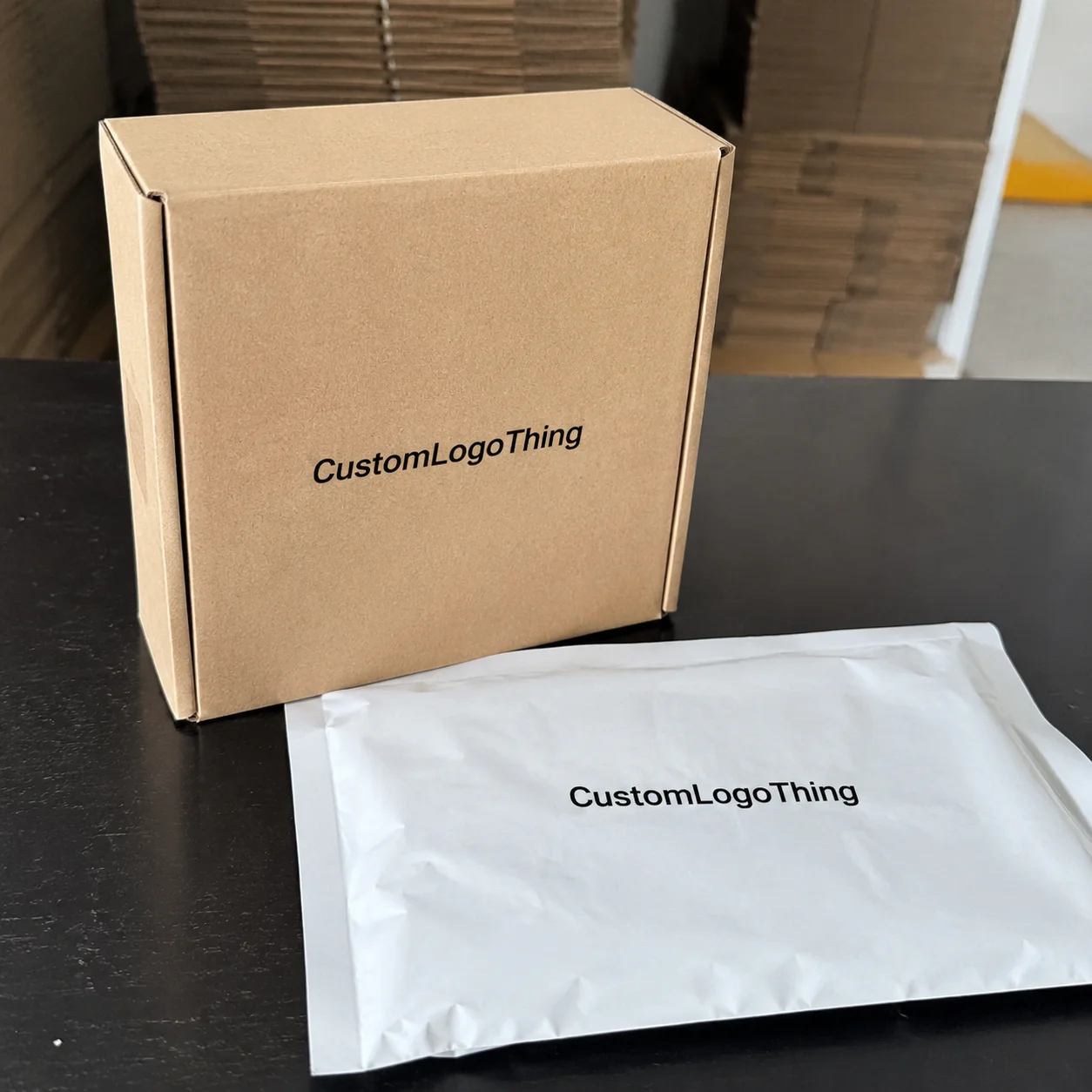
Custom printed mailer boxes no minimum means a supplier will accept a very low-quantity order for printed mailer boxes. Sometimes that starting point is one box. More often it is 5, 10, or 25 pieces, depending on the box style, board, print method, finishing, and whether the supplier is using a standard production template.
The phrase “mailer box” needs a little precision. Most buyers are talking about folding corrugated or paperboard boxes used for ecommerce shipping, product samples, gifting, launch kits, subscriptions, and presentation. Common styles include roll-end front tuck mailers, literature mailers, tab-lock mailers, small product shippers, and gift-style mailers. E-flute corrugated board is common because it is thin enough to fold cleanly and rigid enough for many lightweight shipments.
No minimum does not mean no production cost. That is the first quote trap.
A supplier may allow one printed box but still charge for artwork review, dieline preparation, proofing, prepress checks, packing, waste, and shipping. That is not necessarily padding. A box still has to be printed, cut, creased, folded flat, inspected, packed, and shipped whether the order is one unit or one thousand.
The strongest use cases are narrow and practical: product-launch testing, influencer kits, trade-show samples, corporate onboarding gifts, subscription pilots, ecommerce rebrands, seasonal promotions, photo-shoot packaging, and limited drops. A candle maker might test holiday packaging without buying a pallet. A skincare startup might compare three lid designs before choosing one for a larger run. A marketing team might need 40 branded boxes for a sales campaign that will never repeat.
Buyer reality check: no-minimum packaging is usually risk-controlled packaging, not bargain packaging. You pay more per box so you do not overbuy the wrong box.
That distinction should shape the order. The useful questions are direct: what is included, what costs extra, what affects lead time, and which design choices are making the quote climb?
How No-Minimum Mailer Box Printing Works Behind the Scenes
Before your order reaches production, the supplier is already balancing four costs: material waste, machine setup, file handling, and labor. Small runs do not remove those costs. They concentrate them. With 25 boxes, every file check and every spoiled sheet hits the unit price harder than it would on 2,500 boxes.
Digital printing is the main reason no-minimum Custom Mailer Boxes can exist at scale. It avoids the printing plates used in flexographic production and reduces some of the make-ready time associated with offset lithography. For prototypes, variable artwork, short campaigns, and designs likely to change, digital is often the practical route.
Flexographic printing still has a place. It can be efficient for larger corrugated runs, especially simple one- or two-color artwork. Offset can produce very sharp results on coated paperboard or litho-laminated corrugated, but its setup costs generally favor higher quantities. Digital sits where many small buyers live: lower upfront commitment, acceptable-to-strong color range, and faster small-batch output.
Material changes the result as much as the print method. Kraft corrugated board gives a natural, recycled look, but it mutes bright colors and softens contrast. White corrugated board gives cleaner color. Coated stocks can sharpen photography and small type. E-flute is common for lightweight mailer boxes; B-flute or thicker structures may make sense when stacking strength or compression resistance matters more than a slim profile.
Some suppliers batch similar jobs together to reduce waste and setup time. That can keep small-run pricing under control, but it may limit size choices, board colors, coatings, or turnaround windows. A standard white E-flute mailer with outside printing will usually move faster than an unusual structure with full interior print and specialty coating.
Think of a single custom mailer less like a blank shipping carton and more like a small engineered print project. The artwork has to land on the correct panels. The creases have to fold cleanly. The locking tabs have to work. The box still has to survive handling.
Pricing, Unit Cost, and Quote Factors to Check First
The quote for custom printed mailer boxes no minimum is shaped by more than quantity. Size is usually the first driver because board area affects material cost, print time, packing weight, and freight. A 6 x 4 x 2 inch mailer and a 12 x 10 x 4 inch mailer may both be “small runs,” but they do not use the same amount of board or ship at the same dimensional weight.
Board grade comes next. A lightweight E-flute mailer may suit socks, stationery, cosmetics, small accessories, and promotional kits. Heavier products may need stronger corrugated board, a better-locking structure, or an insert. If the product is fragile or sold through ecommerce, ask whether the supplier recommends testing against methods from groups such as the International Safe Transit Association.
Print coverage can change pricing fast. A one-color logo on the lid is simple. Full-bleed dark ink across every exterior panel uses more ink, may show scuffing more easily, and can slow production. Interior printing, metallic effects, spot UV, embossing, soft-touch coatings, inserts, and specialty closures all add steps. On a run of 25, those steps are expensive per box.
| Quote Factor | Why It Changes Cost | Buyer-Smart Check |
|---|---|---|
| Quantity | Fixed setup work spreads across more units as volume rises. | Ask for 25, 100, and 250 unit quotes to see the price curve. |
| Box Size | Larger boxes use more board and often cost more to ship. | Measure the product plus padding before choosing dimensions. |
| Print Coverage | Heavy ink, full bleed, and interior print increase production time. | Compare a lid-only design against full exterior artwork. |
| Material | Kraft, white corrugated, coated paperboard, and heavier grades price differently. | Match material to transit stress and brand expectations. |
| Shipping | Boxes ship flat but still create dimensional weight. | Compare total landed cost, not only unit price. |
Unit cost usually drops as quantity rises, even with a no-minimum order. A file still gets checked. A proof still gets generated. Operators still run and pack the job. The difference is that 250 boxes can absorb that work more efficiently than 10.
A practical comparison starts with total landed cost. Include shipping, dieline help, proofing, rush fees, samples, coatings, inserts, and storage. If you order extra boxes only to lower the unit price, count the cost of storing them and the risk of a design change. Dead inventory is expensive. It just sits quietly.
The cheapest printed mailer can become costly if it crushes in transit, arrives after the campaign date, or makes a premium product feel underbuilt. Packaging is protection, presentation, and workflow in one folded object.
Process and Timeline: From Artwork to Delivered Boxes
A typical small mailer-box order follows a predictable path: choose the style, confirm dimensions, request or download the dieline, place artwork, submit files, review the proof, approve production, and receive shipment. On paper, that is clean. In practice, most delays happen before production starts.
Artwork is the usual cause. Missing bleed. Low-resolution images. RGB files submitted for print. Logos too close to folds. QR codes crossing a crease. Text placed on a tuck flap that disappears after assembly. These are tiny screen problems and expensive production problems.
Production time and delivery time are not the same. A quoted five-business-day production window may begin only after proof approval. It may exclude file review, proof revisions, weekends, holidays, and transit. Ask what starts the clock: upload, payment, dieline confirmation, proof approval, or production release.
Rush service can help, but it cannot repair messy inputs. Confirm cut-off times, business days versus calendar days, and whether rush service limits proofing, material options, or finishing choices. The fastest custom box is usually the boring one: standard dimensions, approved artwork, common board, no last-minute color debate.
If fit or presentation matters, order a physical sample before scaling. This is especially sensible for fragile items, premium cosmetics, subscription boxes, food-safe secondary packaging, launch campaigns, or products meant to be photographed by customers. A digital proof confirms placement. A physical sample tells you whether the product shifts, rattles, dents the corners, or looks lost inside the box.
For sustainability claims, be exact. If you want responsibly sourced paperboard, ask about FSC-certified options and documentation through the Forest Stewardship Council. If recyclability matters, confirm coatings, labels, adhesives, lamination, and mixed materials. A recyclable board can become harder to process after certain finishes are added.
Step-by-Step Guide to Ordering a Small Custom Box Run
Small runs reward preparation. The point is not to build the most elaborate box possible. The point is to learn quickly without wasting cash.
- Measure the product and padding. Start with the actual product, then add tissue, crinkle paper, molded pulp, foam, dividers, or any protective layer. Internal dimensions should stop the item from sliding without creating a cavern of empty space.
- Define the job of the box. Is it a shipping container, an unboxing moment, a retail sample, an influencer kit, or a structural fit test? A box built for carrier handling has different priorities than one handed out at a trade show.
- Select the substrate and finish. Kraft board supports an earthy look. White board supports stronger color. Coatings can improve scuff resistance or tactile feel, but they add cost and may affect recyclability. Match the board to handling conditions, product weight, and price point.
- Use the supplier’s dieline. Do not design from a screenshot or generic template unless the supplier confirms it matches their cutting tool. Keep logos, legal copy, QR codes, and critical visuals away from folds, flaps, glue areas, and cut lines.
- Review the proof carefully. Check dimensions, panel orientation, spelling, barcode placement, bleed, safe zones, exterior print areas, interior print areas, and color expectations. Rotate the dieline mentally. Many proof mistakes happen because the box is viewed flat, not assembled.
- Order a pilot quantity. Inspect the boxes on arrival. Pack one. Shake it gently. Ship one to yourself if ecommerce is involved. Then scale after confirming fit, print quality, packing speed, damage rate, and customer response.
If you sell several product types, build a simple sizing matrix. One mailer for small items, one for medium bundles, and one for gift kits can reduce complexity. Too many sizes slow packing, increase ordering errors, and dilute brand consistency.
Custom Logo Things offers several packaging paths beyond mailer boxes, so it helps to compare structures through Custom Packaging Products before locking the dieline. If the product does not need a rigid box, flexible options such as Custom Poly Mailers may be better for apparel, soft goods, and lightweight accessories.
Common Mistakes That Make Small Mailer Box Orders Expensive
Oversizing is the quiet budget killer. A box one or two inches too large uses more material, may increase dimensional shipping weight, requires more void fill, and gives the product room to move. Movement causes dents, scuffs, broken seals, and complaints that look like product issues but started with packaging fit.
Designing before confirming the dieline is another expensive habit. A nice mockup is not production artwork. If the template is wrong, panels may not align, fold lines may cut through text, or the proof may need to be rebuilt. On a small run, that rework can feel wildly out of proportion to the order size.
Color expectations also create friction. Screen color is not print color. RGB mockups can look brighter than CMYK output, and digital ink on kraft corrugated will not behave like ink on coated white paper. If brand color accuracy matters, provide Pantone references where available and ask what the print process can realistically match.
Over-customization is tempting. Interior print, spot finishes, custom inserts, sleeve wraps, foil, embossing, and unusual structures can all be useful. On a tiny run, though, they may consume the testing budget before you know whether customers care. Many early brands would learn more from three simple packaging variations than from one overbuilt concept.
Skipping transit testing is another avoidable risk. A branded mailer that dents, opens, or crushes can damage both the product and the customer’s trust. If you ship direct to consumers, test at least one packed box through your normal carrier route. For heavier or fragile products, ask whether the structure has been tested against relevant ASTM or ISTA-style procedures.
Rushing without file readiness rarely saves time. Proof corrections still exist. Production queues still exist. Freight delays still exist. A rushed order with unfinished art can move slower than a standard order with clean files.
Expert Tips for Better Print Quality and Brand Impact
Design for the material, not just the screen. Kraft board mutes color and makes subtle pastel artwork harder to read. White board brightens color and improves contrast. Corrugated texture can soften fine lines, tiny serif type, and detailed illustrations. If your logo depends on hairline strokes, enlarge it or simplify the artwork.
Use fewer, stronger brand elements on small boxes. A clear logo, one memorable message, clean contrast, and a useful QR code will usually outperform a crowded layout. The QR code should lead somewhere specific: a setup video, care guide, reorder page, loyalty offer, or campaign landing page. A generic homepage is not much of a reward for scanning.
Structural fit often matters more than decoration. A snug product inside a plain box can feel more premium than a beautifully printed box packed with loose void fill. Fit affects perceived quality, packing speed, damage rate, and unboxing photos. The customer may not know the board grade, but they notice if the product rattles.
For testing, build a small packaging matrix. Try two lid designs and one interior message. Or compare kraft versus white board with the same artwork. If you are ordering custom printed mailer boxes with no minimum for a launch, treat the run as research. Track unboxing photos, repeat purchase rates, support complaints, packing time, and damage claims.
Save every production detail after approval: final dieline, proof PDF, board spec, coating, color notes, supplier quote, order quantity, and delivery timing. Reorders become cleaner when you are not reconstructing decisions from scattered emails. Vendor comparisons also become fairer because each supplier can quote the same structure and print requirements.
If you need answers to basic ordering questions, the Custom Logo Things FAQ can help before you send artwork or request pricing.
Next Steps Before You Place Your Mailer Box Order
Before requesting pricing, gather the core details: product dimensions, packed weight, target quantity, box style, board color, print areas, finish preferences, budget range, and delivery deadline. A specific brief gets a better quote. “Small white mailer, outside lid print, 100 units, product weighs 12 ounces, needed in three weeks” is far more useful than “How much for custom boxes?”
Ask for multiple quantities. For a first serious quote, 25, 100, and 250 units usually reveal the price curve. The goal is not automatically to buy the largest tier. The goal is to see where the unit cost drops meaningfully without forcing you into excess inventory. Sometimes the jump from 25 to 100 is dramatic. Sometimes it is not enough to justify the cash tied up in boxes.
If fit matters, send photos, measurements, or a product sample if the supplier accepts one. Accurate sizing can reduce returns, damage, and unnecessary packing material. It can also prevent a common mistake: designing a beautiful mailer around dimensions that do not match the packed product.
Ask three direct questions before approving production:
- What is included in proofing? Confirm whether you receive a digital proof, physical sample, dieline check, or color guidance.
- What can delay production? Listen for artwork issues, specialty finishes, nonstandard sizing, proof revisions, and payment timing.
- What happens if printed boxes arrive with defects? Ask about photos, claim windows, reprint policy, and acceptable production tolerance.
A pilot run gives you evidence instead of guesses. You can test pack speed, shipping durability, customer reaction, print quality, and whether the box feels aligned with the product price. Then the next order becomes cleaner.
Used well, custom printed mailer boxes no minimum are not a shortcut around packaging discipline. They are a practical way to test branded packaging, improve product-packaging decisions, and commit to scale only after the box has proven itself.
Frequently Asked Questions
Can I really order custom printed mailer boxes with no minimum?
Yes. Many digital-print packaging suppliers allow very low quantities, including sample runs or single-box orders. The tradeoff is usually higher unit cost because artwork setup, proofing, printing, and handling are spread across fewer boxes. Confirm whether no minimum also means no setup fee, because those are separate issues.
Are no-minimum custom mailer boxes good for ecommerce startups?
They are useful for testing product fit, brand presentation, shipping durability, and customer response before buying bulk packaging. Startups can avoid tying up cash in hundreds of boxes that may become obsolete after a rebrand, product change, or size adjustment. A pilot run is especially smart for subscription boxes, launch kits, limited drops, and influencer mailers.
Why do custom printed mailer boxes cost more in small quantities?
Small orders still require file checks, dieline setup, proofing, machine time, labor, materials, and packing. Larger runs spread those fixed costs across more units, so the per-box price usually drops as quantity increases. Digital printing reduces setup costs compared with plate-based methods, but it does not eliminate production labor.
How long does a no-minimum custom box order usually take?
Timeline depends on artwork readiness, proof approval speed, box complexity, print method, production queue, and shipping method. Ask whether the quoted timeline includes proofing and transit, not just production days. Standard sizes with approved artwork typically move faster than custom structures, specialty finishes, or revised artwork files.
What files do I need for custom printed mailer boxes no MOQ?
Most suppliers prefer vector artwork in formats such as AI, EPS, or press-ready PDF placed on the correct dieline. Include outlined fonts, embedded images, proper bleed, safe zones, and clear notes for exterior and interior print panels. If you only have a logo file, ask whether the supplier offers dieline setup or design assistance before ordering.