Buyer Fit Snapshot
| Best fit | Custom Printed Pouches Wholesale for Packaging Buyers projects where brand print, material claims, artwork control, MOQ, and repeat-order consistency need to be specified before quoting. |
|---|---|
| Quote inputs | Share finished size, material target, print colors, finish, packing count, annual reorder estimate, ship-to region, and any compliance wording. |
| Proofing check | Approve dieline scale, logo placement, barcode or warning zones, color tolerance, closure strength, and carton packing before bulk production. |
| Main risk | Vague material claims, crowded artwork, missing packing details, or unclear freight terms can make a low unit price expensive after revisions. |
Fast answer: Custom Printed Pouches Wholesale for Packaging Buyers should be specified like a repeatable production item. The safest quote records material, print method, finish, artwork proof, packing count, and reorder notes in one written spec.
Production checks before approval
Compare the actual filled-product size with the drawing, then confirm tolerance on folds, seals, hang holes, label areas, and retail display edges. Reserve space for logos, QR codes, warning copy, and material claims before decorative graphics fill the panel.
Quote comparison points
Review material grade, print process, finish, sampling route, tooling charges, carton quantity, and freight assumptions side by side. A quote is only useful when the supplier can repeat the same color, closure quality, and packing count on the next order.
For packaging buyers, custom printed pouches wholesale is not a vanity buy. It is a cost decision, a shelf decision, and usually a damage-control decision too. In snacks, supplements, coffee, pet treats, and cosmetics, the pouch is often the first thing a buyer sees and the last thing a consumer remembers. That is a lot of pressure for one piece of film.
The economics are pretty simple. Custom printed pouches wholesale lowers unit cost, keeps branding consistent across a run, and cuts out extra labels or inserts that do not really earn their keep. That matters whether the product ships to retail, goes out through ecommerce, or does both. Buyers who understand material, print method, and barrier needs before they request a quote usually end up with cleaner pricing and fewer headaches.
I have watched more than one team get tripped up by a pouch that looked great on screen and then fell apart in production. Pretty is nice. A seal that holds is better. The job is to protect the product, keep the brand sharp, and not blow up margin while you are at it. This piece breaks down what to confirm before ordering custom printed pouches wholesale, where the pricing comes from, and how to compare suppliers without guessing.
Why Custom Printed Pouches Wholesale Wins Shelf Space
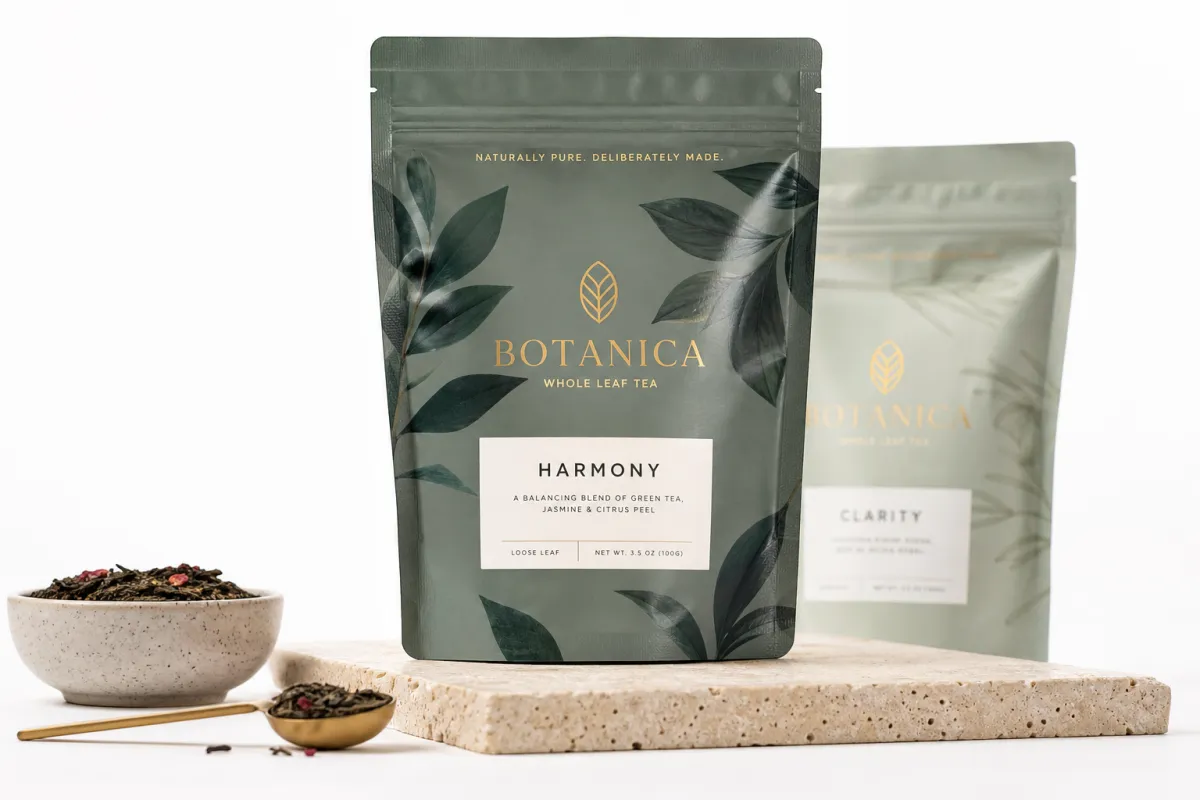
In crowded categories, shelf space gets earned one visual cue at a time. A pouch has to work fast. It gets maybe three seconds to signal quality, product type, and brand personality before the shopper moves on. Custom printed pouches wholesale helps brands show up with full-color graphics, shaped panels, and barrier performance that supports the product behind the print.
The wholesale model changes the math in a good way. A small branded run can get expensive fast once setup fees, plate charges, and specialty finishing show up. Custom printed pouches wholesale spreads those costs over a larger quantity, which is why established SKUs and repeat replenishment orders usually make the most sense. The savings show up in landed cost, not just on the first quote.
Shipping efficiency is another reason buyers keep moving toward pouch formats. Compared with rigid containers, pouches usually weigh less, take up less pallet space, and lower freight cost per unit. For ecommerce, that can mean less dimensional waste and fewer crushed cartons. For retail, it often means easier shelf facings and faster replenishment. Nobody likes paying to ship air.
Custom printed pouches wholesale shows up in food, supplements, cosmetics, and pet products because it solves several problems at once. Moisture-sensitive snacks need protection. Coffee needs aroma control. Powders need clean seals and a fill line that does not turn into a drama. Lotions and bath salts need packaging that looks polished without turning production into a science project. That combination of protection and presentation is why the format keeps winning.
One thing buyers overlook: a pouch can carry a lot of information without looking crowded if the panel layout is handled well. Artwork can replace separate labels, shrink sleeves, and insert cards. That cuts touchpoints and keeps the brand system cleaner across a product family. In a category where small details matter, custom printed pouches wholesale can do the work of several packaging components at once.
Before anyone asks for a quote, four details should already be locked in: material, size, print method, and closure style. Order quantity matters too, because run size changes the economics. Get those right, and custom printed pouches wholesale becomes a controlled buying decision instead of a guessing game.
Custom Printed Pouches Wholesale Product Details
The first decision is pouch format. Stand-up pouches are the most common because they display well and keep their shape on shelf. Flat pouches are often used for samples, single-serve items, or lightweight products. Gusseted pouches work well for products that need more capacity, while spouted pouches fit liquids or semi-liquids. Custom printed pouches wholesale can cover all of these formats, but the right choice depends on fill weight and how the product moves through the supply chain.
- Stand-up pouches: Strong retail presence, good for snacks, coffee, pet treats, and supplements.
- Flat pouches: Useful for sachets, samples, wipes, and lightweight items.
- Zipper pouches: Built for resealability and repeat use after opening.
- Spouted pouches: Better for sauces, liquids, and pourable formulas.
- Gusseted formats: Often chosen for bulkier items and products with more volume.
Customization goes beyond graphics. Buyers can choose matte or gloss finishes, clear windows, hang holes, tear notches, child-resistant features, one-way degassing valves, and different zipper styles. Those details change both convenience and perceived value. With custom printed pouches wholesale, the structure should match the channel. A pouch built for warehouse shipping is not always the pouch that belongs in a retail display.
Matte finishes usually signal a more restrained, premium look. Gloss can feel sharper and more saturated under retail lighting. Clear windows can help food products move by showing the product itself, but they also reduce printable area. Buyers should think through the tradeoff between branding space and product visibility before they lock the custom printed pouches wholesale artwork.
Panel layout matters more than many teams expect. The front panel has to carry the heavy lifting, while the back panel usually holds compliance copy, ingredient details, barcodes, and instructions. Gusset panels can carry extra branding or practical information if the artwork is built for it. Strong packaging design does not treat the pouch like a flat rectangle. It treats every panel as usable space.
For brands comparing pouches with Custom Printed Boxes, the biggest difference is flexibility. Boxes can create a more structured unboxing moment, while pouches usually win on shipping efficiency, barrier options, and filling speed. Custom printed pouches wholesale is often the smarter choice when the product needs protection and the order volume justifies a repeatable format.
A pouch should never be chosen on looks alone. If the seal fails, the print does not matter.
If the product is going onto a shelf, the useful question is not “Does it look good?” It is “Will it stay clean, sealed, and legible after handling?” That is where custom printed pouches wholesale earns its place. The format can support branded packaging that looks polished and still does real work in the supply chain.
Materials, Barrier Options, and Print Specifications
Material choice shapes performance and cost more than nearly any visual detail. Common structures include PET, PE, matte films, foil laminates, kraft-look laminates, and recyclable structures where the product and filling line allow them. Custom printed pouches wholesale should start with the product's needs, not a favorite finish. A dry snack, an oily coffee blend, and a moisture-sensitive powder do not ask the same thing from a pouch.
Barrier performance sits at the center of the buying decision. Moisture barrier helps protect texture and shelf life. Oxygen barrier matters for freshness and oxidation control. Light barrier can preserve color, flavor, and active ingredients. Aroma retention is essential for coffee, tea, and certain botanical products. When buyers compare custom printed pouches wholesale quotes, they should ask what the structure does, not just what it is called.
Size matters too. Width, height, bottom gusset, seal placement, and fill volume all shape the final fit. A pouch can be printable and still be awkward in production if the dimensions do not match the filling line. For custom printed pouches wholesale, a clean spec sheet beats vague notes every time.
Printing method matters as well. Digital printing can help with shorter runs or SKU-heavy programs, while flexographic printing usually fits larger quantities with stable artwork. CMYK is common for full-color imagery; spot colors can improve brand consistency for logos and specific identity colors. Color matching always depends on the substrate, ink system, and finish. That is normal. It is also why proofing deserves time.
For technical buyers, oxygen transmission rate and water vapor transmission rate are useful benchmarks. ASTM methods such as ASTM D3985 and ASTM F1249 are often referenced in barrier discussions, especially when shelf life matters. For transit performance, ISTA test methods are a practical reference point if the product will ship through parcel networks or undergo distribution testing. Custom printed pouches wholesale works best when the material spec is tied to a real use case instead of a generic preference.
Durability should be part of the quote conversation too. Thicker structures, stronger heat seals, and more stable laminations can raise cost, but they may also reduce failures during filling, shipping, and customer handling. That tradeoff deserves an explicit look. A cheap pouch that splits at the seal is not cheap. It is a rework bill in disguise.
- For dry goods: PET/PE structures often balance clarity, print quality, and cost.
- For aroma-sensitive products: Foil or high-barrier laminates are often safer.
- For sustainability goals: Recyclable or reduced-material structures may be available, depending on the product and filling line.
- For premium branding: Matte finishes and tactile effects can improve shelf appeal.
The cleanest way to think about custom printed pouches wholesale is as one decision set: barrier, print, and line compatibility. That is how buyers avoid the common mistake of approving a sharp-looking pouch that turns into a production problem later.
Custom Printed Pouches Wholesale Pricing and MOQ
Pricing in custom printed pouches wholesale depends on more variables than most first-time buyers expect. Material construction, print coverage, pouch size, special finishes, and whether the product uses stock dimensions or a fully custom size all move the number. A plain printed pouch with limited color coverage costs differently than a high-coverage premium pouch with a matte surface, metallic accents, and a zipper.
The biggest driver is usually order size. Larger runs lower the unit price because setup costs get spread across more pieces. That logic applies to plates, prepress, and production handling. Smaller orders can still make sense, especially for test launches, but the Price Per Unit will usually be higher. That is normal economics, not a supplier trick. Buyers comparing custom printed pouches wholesale should check multiple quantity tiers before they decide.
MOQ can swing a lot. Some jobs may start at a few hundred units for digital runs or stock structures, while custom constructions can require a few thousand or more. If a supplier quotes a low entry number, ask what changes at the next quantity tier. Often the gap between 1,000 and 5,000 pieces is where the best savings appear for custom printed pouches wholesale programs.
A serious comparison needs more than the base unit price. Ask for the setup fee, artwork adjustments, shipping, optional features, and any charge for special packaging design work. A quote that looks attractive on the first line may not hold up once zippers, valves, or finishing upgrades are added. Custom printed pouches wholesale should always be reviewed as a landed-cost purchase.
| Order Profile | Typical Unit Range | Best Fit | Pricing Notes |
|---|---|---|---|
| Short test run | $0.35-$0.90 | New product launch, sampling, small SKU test | Higher unit cost, lower inventory risk, often digital print |
| Mid-volume wholesale | $0.18-$0.45 | Repeat SKUs, regional programs, seasonal demand | Usually the sweet spot for custom printed pouches wholesale |
| High-volume run | $0.12-$0.30 | Established products with stable artwork | Setup costs are spread across more units, which lowers landed cost |
| Premium structure with extras | $0.28-$0.65+ | Luxury brands, specialty barrier needs, enhanced retail packaging | Matte finish, zipper, valve, or window can raise the price quickly |
Those numbers are broad by design, because custom printed pouches wholesale changes with print coverage, size, and material choice. Still, they give buyers a workable frame for budgeting. If a quote looks far below the ranges above, check what is missing. If it looks far above them, ask which performance feature or finishing step is driving the premium.
Shipping deserves attention too. Freight can swing the landed price enough to change the economics of a purchase order, especially for large cartons or international deliveries. For recurring programs, a buyer should calculate the true per-unit cost after freight, artwork, setup, and any extra inspection or compliance work. That is the only honest way to compare custom printed pouches wholesale proposals.
A low headline price is not a win if it hides a heavier freight bill, a weak seal, or a design change fee.
The smartest wholesale purchases balance near-term cash flow with repeat-order savings. For a stable SKU, a larger buy can create meaningful cost relief. For a trial product, smaller custom printed pouches wholesale runs may be the safer move until the market response is clear.
Production Process and Timeline for Custom Printed Pouches Wholesale
The process usually starts with an inquiry that includes size, product type, quantity, and artwork. From there, the supplier reviews the build, checks whether the structure fits the product, and returns a quote. For custom printed pouches wholesale, the fastest jobs are the ones where the buyer has already defined the pouch style, closure, and print expectations.
Artwork approval is where many delays begin. Buyers who send partial files, low-resolution logos, or unconfirmed copy tend to lose time in revisions. Final or near-final files reduce back-and-forth. A good proof should show panel layout, bleed, barcode placement, and any legal or compliance copy. The more complete the file package, the smoother custom printed pouches wholesale production tends to be.
Typical timelines depend on the print method and complexity. A standard run might move from proof approval to production in roughly 12-20 business days, with transit added on top. Custom sizes, special laminates, and feature-heavy pouches can extend that. Rush orders may be possible in some cases, but compressed timelines can limit material choices or add cost. That tradeoff should be clear before a buyer commits to custom printed pouches wholesale.
Quality checks should happen before shipment, not after arrival. Buyers should ask how the supplier confirms print registration, seal integrity, and dimensional accuracy. If the order will face distribution stress, a transit review or sample test based on ISTA-style handling is worth discussing. Good custom printed pouches wholesale programs treat quality as a process, not a promise.
Here is the sequence that tends to save the most time:
- Confirm product type, fill weight, and shelf-life needs.
- Select pouch format, material, and closure style.
- Send artwork, logos, and compliance text in usable files.
- Review the proof line by line before approval.
- Ask for production start, transit estimate, and reprint policy.
That sequence is especially useful for buyers managing multiple SKUs or seasonal launches. A launch calendar can fall apart quickly if the proof cycle drags. In practice, custom printed pouches wholesale is easiest to manage when the buyer owns the calendar and the file set early.
One more practical point: ask how the supplier handles changes after approval. Even small artwork edits can shift the schedule. A documented reprint policy is worth having in writing, especially for high-value or compliance-sensitive product packaging. Buyers who treat custom printed pouches wholesale like a controlled production program usually get fewer surprises.
Why Buyers Choose Us for Custom Printed Pouches Wholesale
Buyers do not come back to a packaging partner because the brochure looked nice. They come back because the supplier makes quoting clearer, proofs cleaner, and production easier to manage. That is the real advantage of a strong custom printed pouches wholesale partner: less ambiguity and fewer expensive corrections. In packaging, clarity has value.
At Custom Logo Things, the focus is on helping buyers make a cleaner decision before the order is placed. That means checking structure, print requirements, barrier needs, and sealing details early. It also means being honest when a pouch format is not the right fit for the product. A supplier that keeps a buyer away from a bad spec is worth more than a supplier that says yes to everything.
There is a difference between a commodity vendor and a packaging partner. A commodity vendor pushes units. A better partner helps prevent sizing mistakes, off-color graphics, weak seals, and performance gaps. That difference shows up sharply in custom printed pouches wholesale because the order usually blends branding, engineering, and margin control in one purchase.
Reliable wholesale support also depends on response time. Buyers need answers on artwork, dimensions, closure options, and pricing tiers without a week of silence. A responsive team keeps projects moving and helps purchasing teams compare options faster. For repeat programs, that kind of communication can matter as much as unit price in custom printed pouches wholesale.
Buyers comparing suppliers should ask questions that reveal process maturity:
- How is artwork reviewed before production?
- Which barrier structure is recommended for the product?
- What is included in the quote and what is extra?
- How are defects or print issues handled?
- Can the supplier support future SKU expansions across branded packaging lines?
That last point matters. Many brands start with pouches, then extend the visual system into custom printed boxes or other product packaging. A supplier who understands package branding at the system level can help keep the look consistent across channels. That consistency often matters more than a slightly lower first order price.
For teams managing retail packaging and ecommerce packaging at the same time, one supplier relationship can reduce friction. A well-run custom printed pouches wholesale program should make replenishment simple, not tangled. It should also protect the brand from the usual production errors by checking the details before ink ever hits film.
Buyers often ask about sustainability too. Recyclable structures and reduced-material builds can be part of the conversation where product compatibility allows. The point is not to force a label. The point is to make an informed tradeoff. Good custom printed pouches wholesale sourcing respects both performance and sourcing goals.
For related sourcing support, the team can also help buyers review broader Wholesale Programs and compare pouch work against other Custom Packaging Products available for their line.
Next Steps to Order Custom Printed Pouches Wholesale
The fastest way to move an order forward is to arrive with four decisions already made: pouch style, product type, fill weight, and artwork status. If those are defined, custom printed pouches wholesale quotes become much cleaner. If they are not, the quote will be slower and the pricing will be less precise.
Start with the practical basics. Measure the product, estimate the fill volume, and decide whether the pouch needs a zipper, hang hole, window, valve, or spout. Then think about the channel. A retail launch may need stronger shelf impact, while a fulfillment-only program may care more about cost and shipping efficiency. custom printed pouches wholesale works best when the structure reflects the channel, not just the design concept.
If the product is moisture-sensitive, aromatic, oily, or intended for a longer shelf life, request a structure recommendation before final approval. That is especially useful for coffee, herbal supplements, powders, and specialty foods. Asking early keeps the order from turning into a packaging redesign halfway through the run. In custom printed pouches wholesale, preventing a mismatch costs less than fixing one.
It also helps to compare two versions of the job: one optimized for the lowest unit cost and one optimized for performance. That comparison often exposes whether a premium feature is actually necessary or just attractive. Buyers who run that analysis usually make better sourcing calls because they can see the tradeoff instead of guessing through the quote.
A useful quote request usually includes:
- Exact pouch dimensions or target fill weight
- Quantity target and any future repeat volume
- Material preference or barrier requirement
- Print coverage, finish, and feature list
- Artwork files, barcode data, and compliance copy
That is the short path. It does not waste time, and it gives the supplier enough information to quote accurately. For a buyer comparing custom printed pouches wholesale options, better input almost always leads to better pricing and fewer production surprises.
One last point: do not treat the approval step as a formality. Read the proof carefully. Check spelling, barcode placement, panel orientation, seal areas, and legal text. A ten-minute proof review can prevent a costly reprint. In a market where margins are tight, that is real money.
When the spec is clear and the quantity is set, custom printed pouches wholesale becomes one of the most practical packaging buys a brand can make. It protects the product, supports branding, and usually offers a better cost structure than many rigid alternatives. For the right item, it is a highly rational purchase.
My final rule is simple: lock the pouch format, barrier, and artwork before you ask for quotes. If those three are fuzzy, the pricing will be fuzzy too. If they are solid, custom printed pouches wholesale turns into a straightforward buying decision instead of a slow-motion mess.
If you are ready to move, define the spec, confirm the quantity, and send complete files with the request. That is how custom printed pouches wholesale orders stay on schedule and stay inside budget.
FAQ
What is the minimum order for custom printed pouches wholesale?
MOQ depends on pouch style, print method, and material selection, but wholesale orders usually start at a few hundred to a few thousand units. Custom printed pouches wholesale with specialty structures or premium finishes may require higher minimums than stock-size options. Ask for pricing at several quantity tiers so you can compare a test run against full production.
How much do custom printed pouches wholesale cost per unit?
Unit cost is driven by size, material, print coverage, closure type, and total quantity. Larger runs usually reduce the per-unit price because setup costs are spread across more pouches. A fair comparison for custom printed pouches wholesale should include shipping, artwork, and any add-on features, not just the base price.
How long does production take for wholesale printed pouches?
Timeline depends on proof approval, material availability, print method, and order complexity. Artwork review and final sign-off are often the biggest variables before production starts. Buyers should confirm both production time and transit time when planning a launch or restock for custom printed pouches wholesale.
Which materials are best for custom printed pouches wholesale?
The best structure depends on the product. Barrier films help with moisture-sensitive goods, foil laminates help with aroma protection, and recyclable options can work where compatibility allows. Food, supplements, coffee, and cosmetics each have different protection needs, so custom printed pouches wholesale should be matched to shelf life, storage conditions, and filling method.
Can I get help with artwork for custom printed pouches wholesale orders?
Yes, most suppliers can review dielines, confirm panel layout, and flag file issues before printing starts. Buyers should provide logo files, copy, barcode details, and compliance text in final or near-final form. A clean proof process reduces color issues, layout errors, and delays in custom printed pouches wholesale production.

