Buyer Fit Snapshot
| Best fit | Custom Printed Shipping Labels Order projects where brand print, material claims, artwork control, MOQ, and repeat-order consistency need to be specified before quoting. |
|---|---|
| Quote inputs | Share finished size, material target, print colors, finish, packing count, annual reorder estimate, ship-to region, and any compliance wording. |
| Proofing check | Approve dieline scale, logo placement, barcode or warning zones, color tolerance, closure strength, and carton packing before bulk production. |
| Main risk | Vague material claims, crowded artwork, missing packing details, or unclear freight terms can make a low unit price expensive after revisions. |
Fast answer: Custom Printed Shipping Labels Order: Pricing, Specs, Process should be specified like a repeatable production item. The safest quote records material, print method, finish, artwork proof, packing count, and reorder notes in one written spec.
Production checks before approval
Compare the actual filled-product size with the drawing, then confirm tolerance on folds, seals, hang holes, label areas, and retail display edges. Reserve space for logos, QR codes, warning copy, and material claims before decorative graphics fill the panel.
Quote comparison points
Review material grade, print process, finish, sampling route, tooling charges, carton quantity, and freight assumptions side by side. A quote is only useful when the supplier can repeat the same color, closure quality, and packing count on the next order.
Why a custom printed shipping labels order pays off
The first time I watched a pallet of cartons get relabeled by hand, I knew somebody had made an expensive label mistake. We were at a Shenzhen packing line in Guangdong, and the wrong stock had been used for a Custom Printed Shipping Labels order tied to a retail launch of 18,000 units. The adhesive failed on slightly dusty cartons, labels curled at the corners after 20 minutes on the dock, and six workers spent half a shift peeling, reapplying, and cursing under fluorescent lights. That little error cost more than the labels themselves, which is usually how these stories go. I remember thinking, very honestly, that the labels had managed to become the most expensive part of the whole launch, which is a special kind of absurdity when the original piece price was only $0.04 per unit on a 5,000-piece run.
A custom printed shipping labels order is not just decoration. It helps shipments look professional the moment a box leaves your dock, and it cuts down on misreads in order fulfillment because the label format is consistent across every parcel. I’ve seen warehouse teams in Dongguan and Suzhou move faster when the shipping label, return label, and bin label all follow one visual system built around a 4" x 6" layout. Fewer mistakes. Less backtracking. Fewer “whose box is this?” conversations that waste 20 minutes each time. And yes, I’ve been in that conversation more than once, which is not a badge of honor I’d put on a business card.
If you run ecommerce shipping, branded packaging matters more than people admit. A clean label with your logo, SKU, or handling note does three jobs at once: it reinforces package branding, supports sorting, and makes the parcel look intentional instead of slapped together in a rush. Plain white labels can work, sure. But a custom printed shipping labels order gives you more control over layout, barcode placement, and warning text. That matters when your team is packing 300 orders before lunch on a Tuesday and the outbound lane is moving through a 12-hour shift. Honestly, I think that extra control is the whole point—because nobody wants a beautiful box carrying a label that looks like it was designed during a coffee spill.
Too many buyers treat labels like a commodity until the first failure. Then suddenly the adhesive, liner, and print method matter a lot. One bad label can trigger rework, delays, and customer complaints. If a customer receives a box with a peeled corner or a smeared barcode, they do not blame the label vendor. They blame your brand. That is the reality of product packaging and order fulfillment, whether the carton left a warehouse in Shenzhen or a 3PL in Dallas.
Here’s where a custom printed shipping labels order earns its keep:
- Shipping cartons that need brand recognition and clean carrier scanning.
- Mailers where the label has to stick through friction and flexing.
- Warehouse bins for faster picking and fewer SKU mix-ups.
- Subscription boxes that need a polished first touch.
- Return labels with clear instructions and a professional look.
- Fragile or item-specific warnings for glass, cosmetics, cold-chain products, or electronics.
I’ve also seen brands use the same system across Custom Labels & Tags, Custom Poly Mailers, and Custom Shipping Boxes so the whole shipment looks coordinated from the first scan to the final unboxing. That’s not vanity. That’s package branding done with a purpose. A consistent label system can reduce packing friction by a few seconds per order, and over 10,000 shipments, those seconds stop being cute very quickly. I can tell you from experience, the stopwatch does not care about anyone’s excuses.
Custom printed shipping labels order options and product details
A custom printed shipping labels order starts with the material, and this is where a lot of buyers guess instead of asking questions. Bad move. I’ve stood in factories in Dongguan and Xiamen where paper labels were specified for cold, humid transit, then everyone acted surprised when the labels failed on arrival. That’s not bad luck. That’s bad specing. I still remember one line in particular where the operator held up a curled label like it had personally insulted him. Fair reaction, honestly.
There are several practical label types, and each one fits a different shipping environment, whether the run is 2,000 labels or 200,000:
- Direct thermal labels for short-life shipping labels and thermal printer workflows.
- Thermal transfer labels when you need better durability and sharper barcodes.
- Paper labels for dry, indoor carton application where cost control matters.
- BOPP or synthetic labels for waterproof, tear-resistant performance.
- Removable labels when you need clean peel-off later.
- Permanent adhesive labels for cartons, mailers, and long transit.
- Freezer-grade labels for cold-chain and refrigerated goods.
For a standard ecommerce shipping run, paper labels are usually the lowest-cost path. For humid warehouses or cold-chain shipments, synthetic stock is often the better answer. A custom printed shipping labels order for frozen food in a -18°C storage room or skincare packed against chilled gel bricks should be evaluated very differently than one for a dry apparel box in a 22°C warehouse. The carton surface, temperature swing, and transit length all matter. If a label is going to travel through a sweaty dock in July, then hop onto a cold truck, I’m not betting my reputation on bargain paper stock.
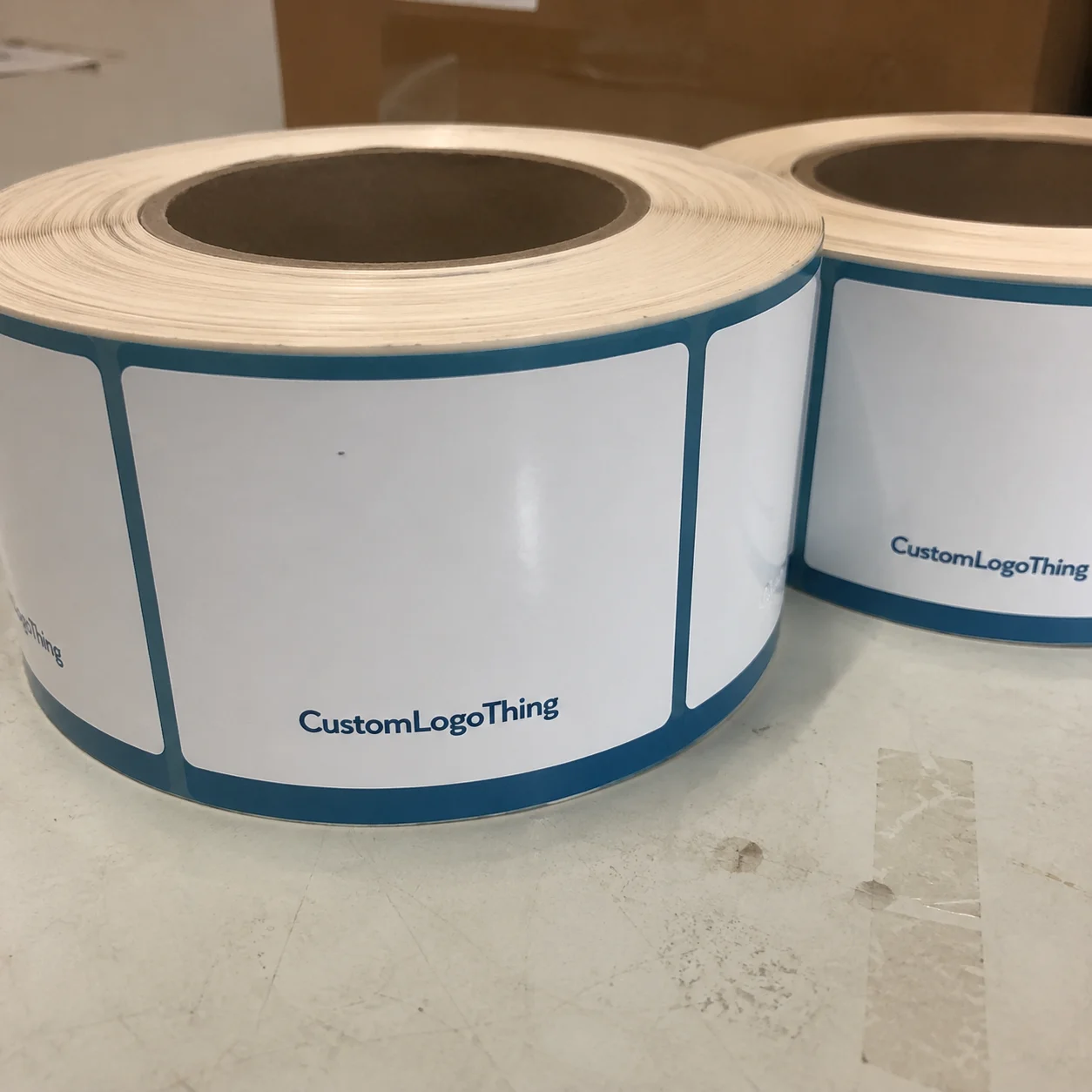
Rolls versus sheets also matter more than most people expect. If your team uses Zebra GK420d, Brother QL series, or similar desktop thermal printers, roll format is usually the cleanest fit. Center core size, roll diameter, and winding direction affect compatibility. I’ve had buyers send me a “standard label” request, then discover their printer only accepts 1-inch cores with outside wound rolls and a maximum outside diameter of 5 inches. That is not a design issue. That is a workflow issue waiting to happen. And yes, it happens more than it should, which is a deeply annoying little hobby of the packaging trade.
For higher-volume order fulfillment, a custom printed shipping labels order in rolls often improves packing speed because the operator can keep moving without peeling sheet labels one by one. Sheets can make sense for short, manual jobs, but on a busy line, rolls generally win. In one plant visit in Ningbo, I timed a team applying 1,000 carton labels. Roll-fed labels shaved about 14 minutes off the run versus sheets, and that was with a crew that already knew the layout. That sounds small until you do it every day, and then it starts feeling like you’ve been quietly robbed by your own workflow.
Print style matters too. You can go with black-only variable data for barcodes and addresses, or full-color branding for a more polished look. Matte finishes tend to help barcode readability. Gloss can look nice, but if the label scanner hesitates even once, the “nice” finish becomes a problem. A custom printed shipping labels order should balance branding and function, not pretend one replaces the other. I’m firmly in the camp that says a label should do its job before it auditions for a magazine cover.
Here’s a simple comparison table I use when buyers are deciding on a custom printed shipping labels order:
| Label Type | Best Use | Typical Cost Range | Notes |
|---|---|---|---|
| Paper direct thermal | Dry ecommerce shipping | $0.01–$0.03/unit at volume | Lowest cost, shorter durability |
| Thermal transfer paper | Longer transit, clearer barcodes | $0.02–$0.05/unit at volume | Needs ribbon, better print life |
| BOPP synthetic | Moisture, abrasion, cold storage | $0.04–$0.10/unit at volume | More durable, higher material cost |
| Removable stock | Retail returns, temporary labeling | $0.03–$0.08/unit at volume | Lower tack, surface dependent |
One supplier in Guangdong once tried to save a client money by swapping in a lighter liner on a custom printed shipping labels order. On paper, it looked fine. In production, the roll tracking went sideways in the applicator, and the client’s line crew was stopping every 30 minutes. Cheap components are not cheap if they interrupt throughput. I learned that lesson standing beside a hot-melt cartoner with a guy named Liu who looked personally offended by the bad spec. I still laugh a little when I think about it, mostly because the alternative is to grit my teeth.
If you want consistency, ask for the exact adhesive type, liner weight, and print method before approving the job. A common specification for a carton label might include a 60gsm facestock, 80gsm glassine liner, and a permanent acrylic adhesive tested at 5°C to 40°C. That’s the kind of detail that keeps your branded packaging looking tight across thousands of shipments. And if you need broader packaging support beyond labels, you can also review Custom Packaging Products to match cartons, mailers, and inserts with the same visual standard.
Specifications that matter before you order
A custom printed shipping labels order only works well if the specs are clear before production starts. This is where I see avoidable mistakes every month. Someone approves the art, but nobody confirms the adhesive, the label size, or whether the barcode needs a quiet zone. Then the labels arrive, and the carrier scanner hates them. Everyone acts shocked. I do not. I’ve got a pretty good track record of being annoyingly correct about the things that were skipped in the email thread.
Before you place a custom printed shipping labels order, lock down these specs:
- Size — 4" x 6", 2" x 3", or custom die-cut dimensions.
- Shape — rectangle, square, circle, oval, or specialty cut.
- Material — paper, thermal, BOPP, freezer-grade, or removable stock.
- Adhesive strength — permanent, high-tack, low-tack, or repositionable.
- Print method — digital, flexographic, or thermal-compatible.
- Wound direction — top wound or bottom wound for printer fit.
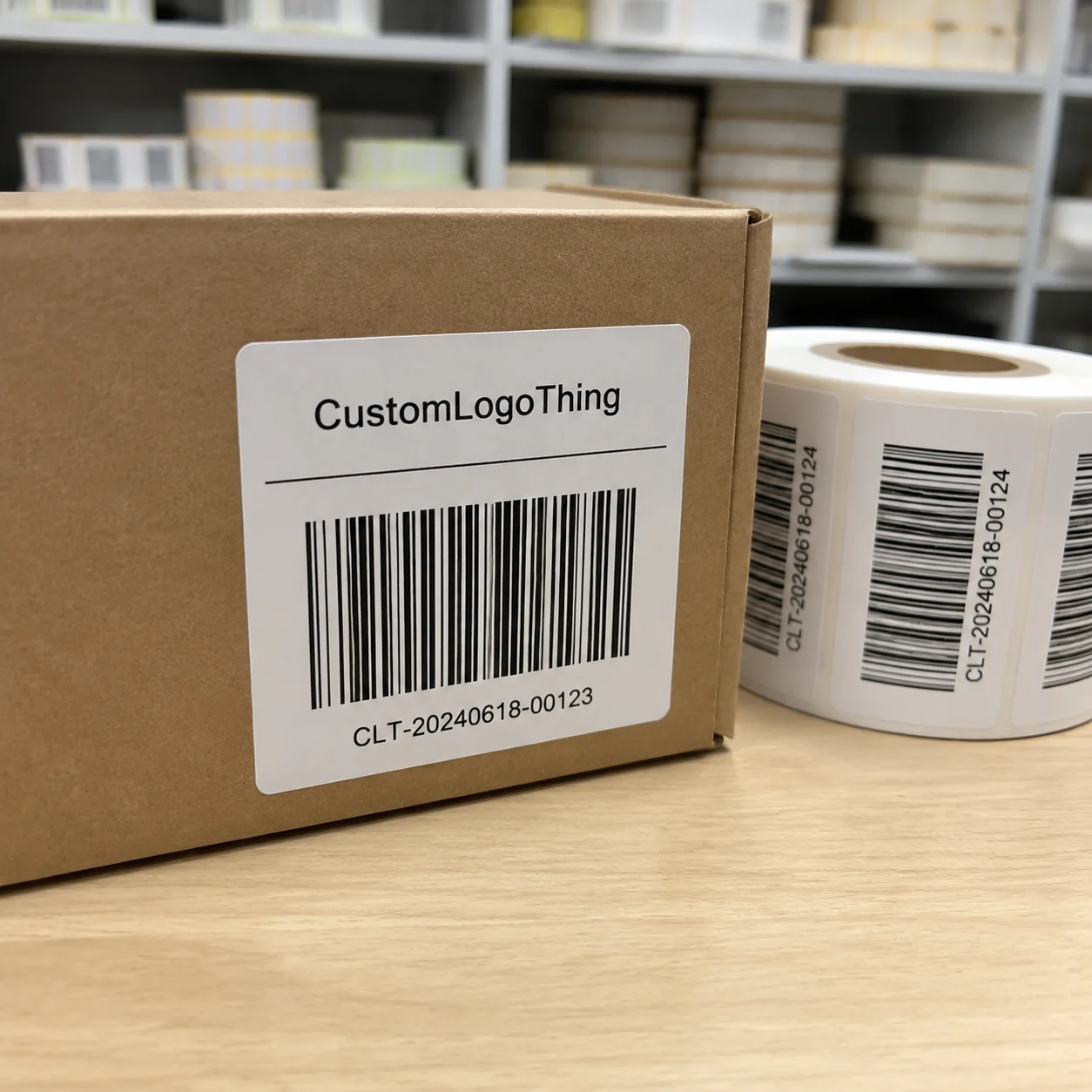
Barcode scannability deserves its own conversation. Use strong contrast. Keep a proper quiet zone. Avoid glossy finishes over the barcode area if you want reliable scanning. I’ve seen a gorgeous label fail because the carrier code reflected just enough light to create read errors at the dock in Hangzhou. A custom printed shipping labels order can look polished and still be operationally smart. That is the goal. Looks nice, scans better, doesn’t make the dock crew sigh—that’s a win.
File prep matters too. Send vector artwork when possible, ideally as AI, PDF, or EPS files with text outlined. Provide Pantone references if your brand color must match across packaging design elements. If the job includes variable data, define the field positions early so the addresses, tracking numbers, or SKU codes sit inside safe margins. A little prepress discipline saves a lot of rework. I’d rather spend 20 minutes fixing a proof than 2 days arguing over 50,000 labels that printed wrong. That kind of argument ages everyone ten years.
For compliance and environmental requests, be precise. If you want recycled content, ask for the percentage, such as 30% or 50% post-consumer fiber. If labels need to survive outdoor exposure, specify the temperature range, like -10°C to 45°C. If they will sit in cold storage, mention the dwell time, such as 72 hours at 4°C or 30 days in a freezer. A good custom printed shipping labels order should be built around actual use conditions, not a vague “we need them durable.” Durable for what? Two days in a dry warehouse? Three weeks in a freezer? Big difference.
Here’s a decision checkpoint I use:
If the label will touch moisture, friction, refrigeration, or rough carton surfaces, paper labels are usually the wrong bet. They might save a few cents, then cost you more in rework and complaints.
For brands working on retail packaging or custom printed boxes, I often recommend keeping the label artwork aligned with the broader package branding system. That means matching type size, logo placement, and warning labels so the customer doesn’t feel like the shipment was assembled by three unrelated departments and a fire drill.
One more authority note: if you’re testing labels for transit durability, look at packaging and transport standards from organizations like ISTA and material guidance from the EPA. Those references will not pick your label stock for you, but they do help frame performance expectations in a way buyers, ops teams, and quality managers can all understand.
Custom printed shipping labels order pricing and MOQ
Let’s talk money. A custom printed shipping labels order has real cost drivers, and pretending otherwise helps nobody. The final price depends on size, material, adhesive, print colors, finish, roll count, and whether the job includes variable data. A simple 4" x 6" paper label is not priced the same as a freezer-grade BOPP label with a custom die and full-color branding. If someone quotes them as if they are the same, I’d question the quote. Loudly, if I’m being honest.
In real terms, paper labels are usually cheaper than synthetic labels. Specialty adhesives cost more than standard permanent adhesive. A full-color label with a custom shape will cost more than a one-color rectangle. If you need barcodes, sequential numbering, or changing shipment data, the setup can be more involved. A custom printed shipping labels order should be priced against the actual spec, not a fantasy version of it. I’ve seen pricing discussions go sideways because someone compared a basic stock label to a branded synthetic label and called the difference “too much.” That comparison is how you end up hating spreadsheets.
MOQ matters because setup costs have to be spread across the run. Smaller orders almost always cost more per label. Larger quantities bring the unit cost down, but now you have storage planning to think about. I’ve watched buyers order 25,000 labels because the price per piece looked beautiful, then store them in a humid back room next to corrugated cartons. Six months later, the adhesive started to age poorly. Cheap unit pricing does not help if the labels degrade before use.
Here’s the practical pricing logic I give clients for a custom printed shipping labels order:
- Paper, one-color, standard adhesive: lowest entry cost.
- Synthetic, one-color, permanent adhesive: mid-range cost with better durability.
- Full-color, custom die-cut, specialty adhesive: higher cost, stronger branding impact.
- Variable-data or serialized labels: added setup and proofing complexity.
Digital printing often helps with short runs because it avoids some of the tooling expense associated with flexographic jobs. Flexo can be more economical on larger volumes, especially when artwork stays stable. If a client needs a trial custom printed shipping labels order of 2,000 pieces, digital is usually the cleaner fit. If they need 100,000 labels with the same artwork and a stable spec, flexo can be the smarter move. Context matters. Always. I know that sounds like a line a consultant would say while gesturing at a slide deck, but in labels it’s just plain true.
To keep costs under control, I usually recommend three things: standardize sizes, consolidate SKUs where possible, and keep artwork simple. You do not need six shades of blue on a shipping label. You need scannability, brand recognition, and a label that survives the trip. Saving $0.002 on ink is pointless if your warehouse team spends 40 extra minutes sorting mixed formats.
Here’s a practical cost comparison for a typical custom printed shipping labels order:
| Order Type | MOQ | Estimated Unit Cost | Setup Notes |
|---|---|---|---|
| Digital paper labels | 500–2,000 pcs | $0.03–$0.08 | Lower setup, faster proofing |
| Digital synthetic labels | 1,000–3,000 pcs | $0.06–$0.15 | Better for moisture or abrasion |
| Flexo paper labels | 5,000–10,000 pcs | $0.01–$0.04 | Plate setup may apply |
| Flexo synthetic labels | 10,000+ pcs | $0.04–$0.12 | Better for repeat programs |
Some buyers want the lowest MOQ they can find. Others want the best price spread over a bigger run. Both are valid. The key is matching the custom printed shipping labels order to your inventory turnover. If you ship 300 orders a week, 50,000 labels may sit too long. If you ship 20,000 orders a month, a small run may just mean repeating the same setup charge later. That math needs to be honest.
And yes, setup fees can exist. Die-cut tooling, plate setup for flexo, and proofing can all affect the quote. That is normal. Anyone claiming “no setup ever” is usually hiding the cost somewhere else. I prefer clean line items and fewer surprises. My factories and suppliers know that, and frankly it saves everyone time.
How to place a custom printed shipping labels order
The cleanest custom printed shipping labels order process is boring in the best way. No drama. No missing art files. No mystery dimensions. I’ve run enough packaging programs to know that the jobs with the fewest surprises are the ones where the buyer gives complete information up front. Fancy? No. Effective? Very. And a little rare, which I suppose makes it feel nicer than it should.
Here’s the order workflow I recommend:
- Request a quote with quantity, size, material, and printer compatibility.
- Confirm the specs including adhesive, finish, winding, and barcode requirements.
- Submit artwork in vector format if possible.
- Review the proof for text, colors, barcode placement, and dimensions.
- Approve production only after confirming all variables.
- Ship and inspect the finished labels on arrival.
Timeline depends on the job. Digital short runs are typically faster because they skip some setup steps. Flexographic runs and custom dies usually take longer. In my experience, a straightforward custom printed shipping labels order can move in 12 to 15 business days from proof approval if the spec is simple and the artwork is ready. More complex jobs can take 15 to 20 business days, especially if special stock or testing is involved. If someone promises everything overnight, I’d ask what they are skipping. Usually the answer is “something important.”
Proofing is where a lot of problems get caught. A digital proof shows layout, text, and relative position. A physical sample is better if scannability, adhesive performance, or finish quality matters. I once had a client approve a beautiful proof for a custom printed shipping labels order without checking the barcode contrast. The first batch scanned poorly at the carrier dock. We fixed it, but not before two days of unnecessary noise. That kind of mistake is avoidable, which is why I get a little stubborn about proof review.
Communication discipline matters too. Pick one point of contact. Set an approval deadline. Tell the supplier when your launch date is real and when it is “marketing real,” which is often a different species. The biggest delays usually come from artwork changes, missing dimensions, or indecision over finish. Not from the factory itself. Usually. Sometimes the factory just wants an answer and the inbox is doing its best to behave like a maze.
Build your ordering calendar around inventory, not panic. If your labels are tied to a product launch, peak season, or retail reset, order early. A custom printed shipping labels order placed after you run out of labels is not a plan. That is a crisis with paperwork.
For buyers who want packaging to feel coherent, I often align labels with broader branded packaging assets like Custom Shipping Boxes or a coordinated mailer system. That keeps the shipment consistent from outer carton to insert card. It also makes the product packaging feel more intentional, which is exactly what customers notice when they unbox it.
One factory-floor memory sticks with me. We were checking a pack-out line in Ningbo where labels were applied after boxing. The team had no issue with the label design itself, but the roll direction was wrong for the applicator. They had to stop, reload, and rethread the machine. Ten minutes lost, then twenty, then the supervisor got involved. A custom printed shipping labels order is never just about ink on adhesive. It’s about fit, flow, and how the line actually runs. That day taught me that “almost right” is one of the most expensive phrases in packaging.
Why choose Custom Logo Things for custom printed shipping labels
I like practical suppliers. The kind that answer the spec question before they answer the sales pitch. That is how I approach a custom printed shipping labels order at Custom Logo Things. We are not here to toss a generic quote over the wall and disappear. We help match adhesive, stock, print method, and format to the actual shipping environment, whether the production is running in Shenzhen, Dongguan, or a partner plant in Ningbo.
In my experience, good label sourcing starts with asking the right questions: Is the carton corrugated or coated? Will the parcel sit in a warm truck for 8 hours? Is the label being scanned by a warehouse crew, a carrier, or both? Is the finish supposed to support retail packaging aesthetics or pure logistics? Those details change the answer. A custom printed shipping labels order for a chilled supplement box is not the same as one for apparel in a poly mailer. I’ve seen teams try to force one spec onto everything, and it usually ends with someone saying, “Why is this peeling?” in a tone that suggests regret.
I’ve spent enough time in supplier negotiations to know where the hidden costs show up. One vendor quotes a great piece price, then quietly adds poor-quality liner, inconsistent slitting, or weak adhesive that fails on dusty cartons. Another vendor overbuilds the spec and charges for durability you do not need. The right partner helps you land in the middle: enough performance, no fluff, no excuses.
Our production oversight focuses on the basics that actually protect your order:
- Adhesion testing for carton surfaces and temperature conditions.
- Barcode checks for contrast and scan reliability.
- Color verification against approved artwork or Pantone targets.
- Pack-out inspection to catch roll direction, cutting, or count issues.
A custom printed shipping labels order should not be a guessing game. If you need cost tradeoffs, I will tell you where to save. If paper stock is enough, I’ll say so. If synthetic is required, I’ll say that too. I’d rather lose a weak sale than ship a label that peels off in transit and creates a customer service headache later. That might sound blunt, but labels don’t get to be theoretical once they hit a dock.
If you want to review related packaging categories while you plan the label program, our Custom Packaging Products page gives a broader view of what can be coordinated across your shipping and retail packaging program. That matters when package branding needs to feel consistent from warehouse to doorstep.
For companies that care about standards, I also like pointing buyers to FSC if paper sourcing matters in their packaging design decisions. Not every label run needs certified stock, but for brands with sustainability targets, it is a smart conversation to have early instead of after the quote is approved.
At Custom Logo Things, I think the best service is simple: fast answers, realistic timelines, and specs that make sense on the factory floor. That is what keeps a custom printed shipping labels order from turning into a rework story.
Next steps to place your custom printed shipping labels order
If you’re ready to move forward, make the custom printed shipping labels order easy by preparing a complete spec sheet before you request pricing. I’m talking about the numbers that matter: label size, material preference, quantity, printer type, artwork file format, and the shipping environment. If you know the boxes will be handled in humid conditions or cold storage, say that up front. If the label must be removable, say that too.
It helps to request two quotes when you’re unsure. One should match your target spec. The other should offer a cost-saving alternate so you can compare apples to apples instead of comparing a premium synthetic label to a basic paper one and pretending that is useful. A smart custom printed shipping labels order decision comes from comparing equivalent options with transparent differences.
Before you approve production, gather these operational details:
- Carton material — corrugated, coated, or mailer surface.
- Temperature exposure — ambient, refrigerated, frozen, or outdoor transit.
- Barcode requirements — static, sequential, or variable data.
- Removal needs — permanent or peel-off later.
- Printer compatibility — roll size, core size, and wound direction.
Then move in this order: send specs, review proof, approve sample if needed, and lock in production before inventory gets tight. That is how you keep order fulfillment steady and avoid emergency buys that cost more for zero reason. A late custom printed shipping labels order is often the expensive one, not the well-planned one.
My honest advice? Treat labels like part of the packaging system, not an afterthought. A label sits alongside your custom printed boxes, mailers, inserts, and retail packaging. It affects how the shipment looks, how it scans, and how fast your team can pack. If the spec is clean, the result is clean. If the spec is fuzzy, you get a mess with an invoice.
Send the details, ask the hard questions, and make the custom printed shipping labels order work for your operation instead of against it. That’s the whole point. Simple spec. Honest pricing. Labels that stay put.
FAQ
How do I start a custom printed shipping labels order?
Start with label size, material, adhesive type, quantity, and whether you need rolls or sheets. Send your artwork file and note if the labels must work with a thermal printer or include barcodes. Ask for a proof before production, especially if scannability or adhesion matters. A little prep here saves a lot of “why is this roll not working?” later.
What is the minimum order for custom printed shipping labels?
MOQ depends on material and print method, but digital runs can be much lower than flexo jobs. Specialty materials and custom dies usually raise the minimum because setup costs are higher. For example, a short-run digital job might start at 500 pieces, while a flexographic synthetic run may make more sense at 10,000 pieces or more. If you only need a test run, ask for a short-run option before committing to a larger quantity.
How much does a custom printed shipping labels order cost?
Price is driven by label size, stock, adhesive, print colors, finish, and total quantity. Paper labels are usually cheaper than waterproof synthetic labels, and a 4" x 6" paper label can be far less expensive than a custom die-cut BOPP version. For a 5,000-piece run, a simple paper label may land near $0.03 to $0.05 per unit, while a synthetic label with stronger adhesive may be closer to $0.06 to $0.15 per unit. The cheapest label is not the cheapest decision if it peels off in transit.
How long does production take for custom printed shipping labels?
Timeline depends on whether the job is digital, flexographic, or requires a custom die. Proof approval and artwork readiness are the biggest factors in avoiding delays. A straightforward run is typically 12-15 business days from proof approval, while jobs with special stock, testing, or complex die-cut shapes can take 15-20 business days. If you need labels for a launch or peak shipping period, build in extra time.
What file do I need for custom printed shipping labels?
Vector artwork is best for logos and clean text. Include Pantone colors if brand accuracy matters and keep barcodes high-contrast. Leave safe margins and provide variable data fields if the labels will change by shipment. AI, PDF, or EPS files are usually the cleanest starting point for a custom printed shipping labels order.