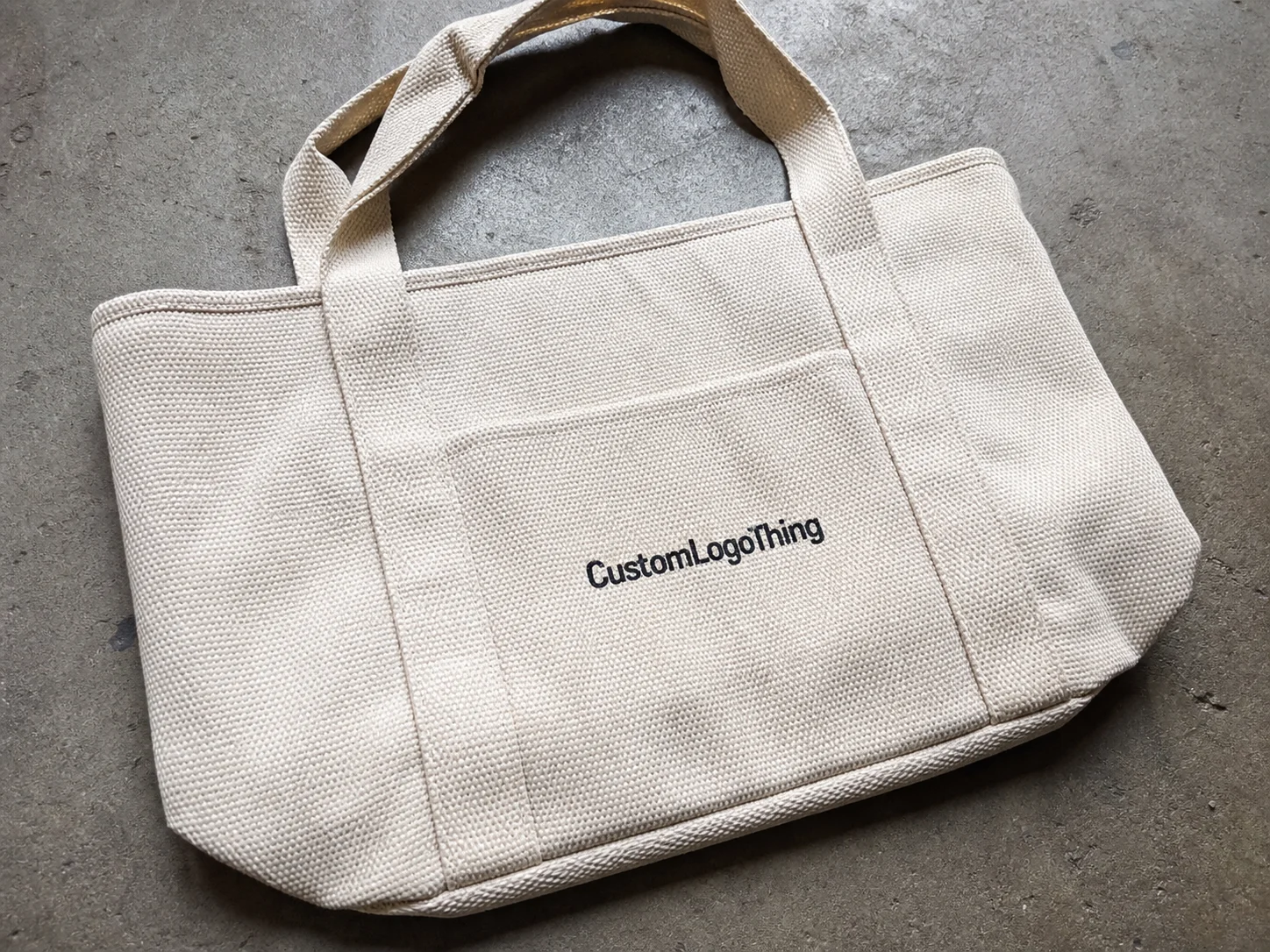
If you need custom printed tote Bags No Minimum, the real question is usually not whether a supplier can do a small run. It is whether the order spec is tight enough to keep the final bags useful, on brand, and priced within reason. Small quantities are common for pop-ups, launch events, retail test runs, nonprofit campaigns, and seasonal promotions. The logic is straightforward: you protect cash, avoid excess inventory, and learn what actually works before committing to a larger buy.
That flexibility has a cost. A no-minimum order almost always carries more unit overhead because the fixed parts of the job - setup, proofing, print preparation, handling, and shipping - are spread across fewer bags. The bag itself is only part of the bill. Once you understand that, the pricing starts to make sense, even when it still feels steep compared with bulk production.
There is another reason buyers keep coming back to small runs. Tote bags are visible inventory. If the print is weak, the fabric feels cheap, or the proportions are awkward, those defects show up in public. A small order lets you find that out on 40 bags instead of 4,000. That is a useful failure mode.
The cheapest tote is not the one with the lowest quoted line item. It is the one that still looks right after a customer carries it, stuffs it with purchases, and uses it again.
Custom Printed Tote Bags No Minimum: What Small Orders Really Change
A small tote order changes the economics more than the product category. With custom printed tote bags no minimum, you are paying for the work behind the bag as much as the bag itself. That includes artwork review, file cleanup, press setup or digital preparation, ink matching, finishing, folding, packing, and shipment. The fewer pieces you buy, the more visible each of those fixed costs becomes.
That does not make small orders a bad deal. It makes them a different deal. For a boutique opening, sample kit, farmers market, or conference giveaway, the goal is not to minimize per-unit cost at all costs. The goal is to get a bag that supports the event and does not leave you with a closet full of extras.
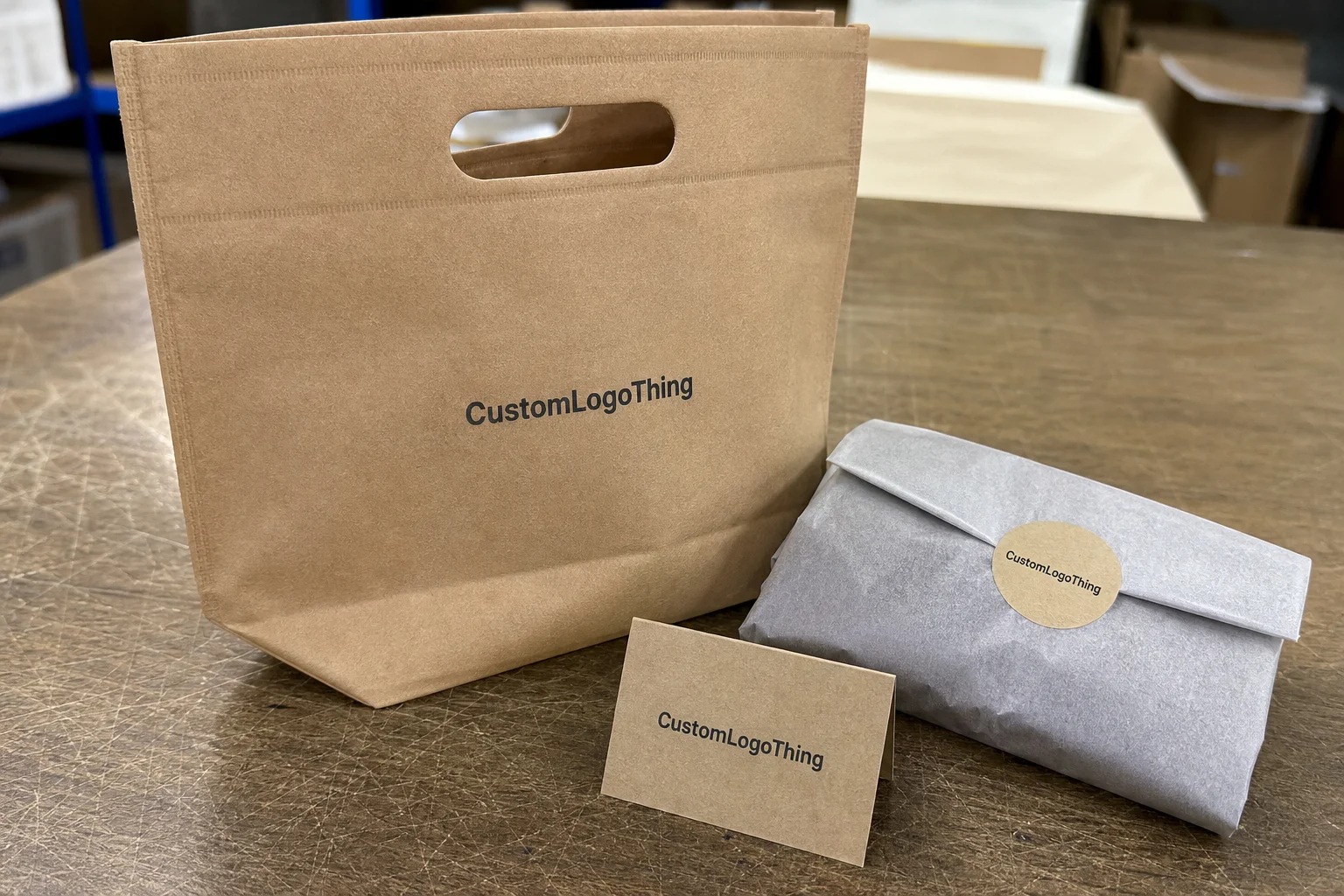
Small orders also make iteration easier. You can test one design, then revise the placement, print color, or material before scaling. That matters for brands that are still refining packaging standards or trying to align totes with other branded packaging elements such as tissue, stickers, or mailers. A tote is often the first tactile item customers take home, so it should fit the rest of the system instead of fighting it.
There is a practical limit to how much detail a small-run tote should carry. Fine lines, tiny type, subtle gradients, and low-contrast artwork are the first things to fail when they move from screen to fabric. The sample may look polished in a PDF and look muddy on cotton. That is not a production mystery. It is a reminder that fabric is not paper.
For buyers evaluating custom printed tote bags no minimum, the best results usually come from disciplined specs: one clear logo placement, a readable color palette, and a material that matches the use case. If the tote is meant to carry premium retail items, the construction should feel intentional. If it is a giveaway, the print should still survive regular handling. Cheap-looking packaging signals cheap-looking judgment, even when the product inside is not cheap at all.
Order Process and Turnaround: From Quote to Delivery
The quoting process is only efficient if the buyer sends usable information. A good request includes tote style, size, material, print location, artwork file, quantity, color count, delivery address, and deadline. If any of those are vague, the quote will be vague too. That is usually where friction starts.
A typical workflow looks like this: quote request, spec review, artwork check, proof, approval, production, packing, and shipping. The slowest step is often not manufacturing. It is the revision loop. One clean proof approval is faster than three rounds of “move the logo a little higher” or “can we make the text smaller?”
For simple graphics on standard stock bags, a digital proof is often enough. A physical sample becomes more important when texture, handle length, bag structure, or color matching are part of the buying decision. That is especially true for retail packaging, where the tote is not just a carrier but part of the product presentation.
Turnaround depends on inventory, decoration method, and how quickly approvals come back. For a small order, a realistic range is often 10 to 15 business days after proof approval if the bag is in stock and the artwork is straightforward. Rush production can move faster, but it usually narrows the material options and leaves less room for color matching or finishing adjustments. Fast is useful only when the result still works.
One detail buyers often overlook is the difference between production time and in-hand time. A supplier saying “ship in seven days” does not mean your order arrives in seven days. Transit, packing method, and order complexity still matter. If the bags are needed for a specific event, build in buffer time and say the deadline clearly: event date, in-hand date, and ship-to location. That removes ambiguity immediately.
If the order is part of a broader packaging program, ask whether the supplier can coordinate Custom Packaging Products with the tote run. Matching insert cards, hang tags, or custom printed boxes can simplify the launch schedule and reduce branding mismatches. It is easier to align artwork once than to chase color consistency across three separate vendors.
Pricing, MOQ, and Unit Cost: Why Small Orders Feel Expensive
The main cost drivers are predictable: setup, decoration method, bag material, and shipping. With custom printed tote bags no minimum, setup costs are spread across a smaller quantity, so the unit price climbs fast. A 25-piece order can look dramatically more expensive per bag than a 250-piece order even if the design is identical. That is not a markup mystery. It is simple cost allocation.
Most small-run pricing falls into a few patterns. A basic one-color screen print on a nonwoven tote is usually the most economical route. A cotton or canvas tote with full-color decoration costs more because the substrate itself is more expensive and the print process often takes longer. Multiple print locations increase labor, registration checks, and setup time. Every additional variable gives the price somewhere to go.
| Order Type | Typical Cost Behavior | Best Use Case |
|---|---|---|
| 1-color screen print on nonwoven tote | Lowest setup burden, efficient at modest volume | Events, giveaways, short promotions |
| Full-color digital print on cotton or canvas | Higher decoration cost, stronger for detailed art | Retail packaging, launches, premium branding |
| Multiple imprint locations | More labor and more quality checks | Campaigns that need visibility from both sides |
Roughly speaking, a simple small-run tote can land around $1.20 to $3.50 per unit, depending on material, bag size, and print complexity. Premium cotton or canvas with more detailed decoration can move into the $3.50 to $8.00 range or higher for very small quantities. Those numbers are not promises. They are the kind of ranges buyers should expect before they see a real spec sheet.
Hidden charges are where small orders become frustrating. Proof revisions after approval, specialty inks, special packaging, split shipments, and rush handling all add cost. A quote that looks low at first glance can easily drift upward if those pieces are not spelled out. Ask for a line-item breakdown. Bag, print, setup, proof, shipping. If a supplier cannot separate those pieces, the final price is harder to trust.
Sometimes a slightly higher quantity gives a better overall result. If moving from 50 to 100 bags cuts the unit cost by 30% or 40% and the campaign will actually use them, the higher order may be the smarter move. The better decision is not always the smallest order. It is the order that fits demand without leaving excess inventory behind.
Minimum order quantity still matters, even in no-minimum conversations. Some vendors waive the minimum on stock totes but still require a practical floor on decoration or shipping. Others will print any quantity but charge for setup in a way that makes very tiny runs uneconomical. Buyers should treat “no minimum” as a useful capability, not as a guarantee of low cost.
Choosing the Right Tote Style, Material, and Print Method
Bag selection changes how the brand reads. Cotton feels softer and more retail-oriented. Canvas is heavier, sturdier, and usually reads as more durable. Nonwoven polypropylene is lightweight and practical for giveaways or short-term event use. Recycled blends can support sustainability messaging, but the actual hand feel and visual finish depend on the fiber mix and construction. A bag that is meant to sit beside premium merchandise should not feel like an afterthought.
Handle length matters more than people expect. Short handles are better for hand carry. Long handles work better over the shoulder, which is useful at trade shows or markets where the customer is already carrying samples or purchases. Gusset depth matters too. A flat tote can look neat but may not hold boxed products well. A gusseted tote carries more volume and usually behaves better in real use.
Print method should follow the artwork, not the other way around. Screen printing is efficient for simple logos, solid spot colors, and clean shapes. Digital printing handles multi-color artwork, fine detail, and gradients better on small runs. Heat transfer can fill the gap for certain tiny orders or complex art, but durability varies by substrate and use. No single method wins every time. The right method is the one that suits the material and the design without forcing either one.
Quality control is not abstract on tote bags. Check the stitch density, seam reinforcement, handle attachment, print alignment, color consistency, and rub resistance. If the bags are meant for heavier retail loads, ask about weight capacity or at least how the seams are finished. A bag that stretches, tears, or sheds print after a few uses damages the packaging program more than an off-brand mailer ever could.
For custom printed tote bags no minimum aimed at retail packaging, one strong logo often works better than a crowded layout. The bag should support the product, not compete with it. A well-built cotton tote with a single crisp mark can outperform a more elaborate design on a flimsy substrate because the customer experiences quality before they read the art.
Common Mistakes That Blow Up Small Tote Orders
The biggest mistake is cramming too much detail into too little space. Small text, thin rules, and delicate gradients can disappear on fabric, especially on textured materials. A logo that looks elegant on screen may print poorly if it depends on fine linework. Simplify before production, not after.
Weak contrast causes a different kind of failure. Light gray ink on an off-white tote or a muted logo on a natural canvas bag can disappear under store lighting and in real use. The proof should make that risk visible. If it does not, ask for a darker variant or a different bag color. Mockups often flatter weak design decisions.
Another common issue is choosing a bag from a polished product photo without checking the construction details. Look for stitch quality, gusset depth, material weight, and handle reinforcement. A tote that cannot carry the intended load is not a branding asset. It is a customer complaint waiting to happen.
Skipping proof approval is risky even on tiny orders. A typo, wrong placement, off-center logo, or color shift becomes expensive the moment production starts. Small runs leave less room to absorb mistakes, which makes proofing more important, not less. Approval exists for a reason.
Late quantity changes create another set of problems. Dropping a run from 100 to 40 after pricing has been built can reset the economics, and sometimes the lead time, too. Production planning works best when the order is stable. The smaller the run, the less margin there is for back-and-forth.
Packaging buyers sometimes forget to ask how the tote will travel. If the bags are going into a broader distribution chain, it is reasonable to ask about distribution risk and testing references such as ISTA methods. If paper components are part of the program, material sourcing guidance from FSC can help keep the larger packaging story consistent. Those references are not required for every tote order, but they become useful when the bag is one piece of a larger packaging system.
Expert Tips for Cleaner Artwork, Lower Waste, and Better Margins
Keep the artwork simple enough for the print method to execute cleanly. One strong logo placement, good contrast, and readable spacing usually beat a crowded layout. In practice, a clean mark on the front panel often gives better results than decorating every surface just because the space exists.
Use a consistent spec sheet for every reorder. Include dimensions, bag type, material, handle style, print area, color references, artwork notes, and delivery details. That makes quotes cleaner and reduces the chance that a later order drifts away from the original intent. It also helps when the tote needs to coordinate with other branded packaging elements like mailers, tissue, or inserts.
Ask for quotes that separate the bag cost, decoration cost, setup cost, and shipping. That is the only way to compare vendors on equal terms. A single lump sum hides where the money is going, and a hidden cost structure makes future reordering harder to manage.
Waste falls when you order around actual demand rather than aspirational demand. If a seasonal event needs 60 bags, ordering 300 because the price breaks look nice does not make the order smarter. It just moves risk into storage. A slightly higher unit price is often cheaper than dead stock.
For buyers building a broader packaging design system, totes should sit comfortably beside the rest of the kit. Matching weight, finish, and color palette matters more than adding extra decoration. A tote, a box, and a label can feel like one system if the materials are chosen carefully. They can also feel unrelated if the specifications were set in isolation.
Ask one blunt question before approving the run: will this still look good after a customer carries it across town and uses it twice more? If the answer is uncertain, the design is probably overworked.
Testing three options can reveal more than debating one. A basic version, a mid-tier version, and a premium version usually expose the real tradeoff immediately. Sometimes the better bag is not the cheapest one. Sometimes it is the one that matches the perceived value of the product inside without overreaching.
Next Steps: How to Request a Quote Without Guesswork
Before requesting pricing, gather the minimum inputs: tote style, size, material, print area, artwork file, quantity, deadline, and shipping location. The more complete the brief, the more useful the quote. That matters especially for custom printed tote bags no minimum, because small specification changes can move the price more than buyers expect.
Then ask for a few options rather than one quote. One can be the lowest-cost practical version. Another can use better material or a cleaner print method. A third can be a premium option if the tote is part of a retail packaging moment instead of a basic giveaway. Comparing those side by side is often more revealing than reviewing a single number.
Confirm the proof format, turnaround, shipping method, and change-order rules before approval. If the event date is fixed, say so plainly. If the artwork is still being refined, say that too. Production gets easier when the timeline is real, not aspirational.
The core decision is simple. For testing, short campaigns, and event use, custom printed tote bags no minimum can be the right choice because they reduce inventory risk and keep the order manageable. If the bag proves its value, a larger follow-up run usually lowers the unit cost without changing the design logic. That is the cleanest path from experiment to standard packaging.
For related packaging needs, review the Custom Packaging Products catalog and the FAQ if you need quick reference points before requesting a quote.
Can I order custom printed tote bags no minimum for a one-time event?
Yes. One-time events are one of the most common reasons buyers look for custom printed tote bags no minimum. Launches, pop-ups, trade shows, community events, and seasonal activations all fit this model. The tradeoff is higher unit cost than a larger run, but that is often acceptable when the bags are only needed once.
What affects the price of custom printed tote bags no minimum most?
Setup, print method, material, and shipping usually matter more than quantity alone. Artwork complexity can push the price up quickly, especially with multiple colors, fine detail, or several imprint locations. Rush timing and special finishing also add cost faster than most buyers expect.
How fast can I get custom printed tote bags no minimum produced?
If the tote is in stock and the artwork is approved quickly, many small orders can move in about 10 to 15 business days after proof approval. Rush jobs may be possible, but faster schedules usually limit material choices and print flexibility. Transit time still needs to be added on top of production.
What artwork files should I send for small tote bag orders?
Vector files are best for logos, line art, and text-heavy designs. High-resolution raster files can work if they are large enough and sharp. It also helps to send exact color references, placement notes, and any text that needs careful checking before production starts.
Are custom printed tote bags no minimum good for retail packaging?
Yes, especially for boutiques, pop-ups, and gift packaging. The key is matching the material and print method to the product value and customer experience. If the tote will carry heavier items, confirm the construction before ordering so the bag performs as well as it looks.