Buyer Fit Snapshot
| Best fit | custom product packaging for boutique brands buyer review for packaging buyers comparing material specs, print proof, MOQ, unit cost, freight, and repeat-order risk where brand print, material, artwork control, and repeat-order consistency matter. |
|---|---|
| Quote inputs | Share finished size, material target, print colors, finish, packing count, annual reorder estimate, and delivery region. |
| Proofing check | Approve dieline scale, logo placement, barcode or warning zones, color tolerance, and any recyclable or compostable wording before bulk production. |
| Main risk | Vague material claims, crowded artwork, or missing packing details can create delays even when the unit price looks attractive. |
Fast answer: Custom Product Packaging for Boutique Brands Buyer Review: Dieline, Finish, Proof, and Buyer Review should be specified like a repeatable production item. The safest quote includes material, print method, finish, artwork proof, carton packing, and reorder notes in one written spec.
What to confirm before approving the packaging proof
Check the product dimensions against the actual filled item, not only the sales mockup. Ask for tolerance on folds, seals, hang holes, label areas, and retail display edges. If the package carries a logo, QR code, warning copy, or legal claim, reserve that space before decorative graphics fill the panel.
How to compare quotes without losing quality
Compare board or film grade, print process, finish, sampling route, tooling charges, carton quantity, and freight assumptions side by side. A lower quote is only useful if the supplier can repeat the same color, closure quality, and packing count on the next order.
Custom Product Packaging for Boutique Brands That Converts
One unboxing moment can make a buyer smile, hesitate, or close the tab. I have seen all three happen off the same product, just because the package felt wrong. A boutique skincare jar in a plain mailer can read like a bargain-bin holdover. Put that same jar in custom product Packaging for Boutique brands, and it suddenly feels chosen, not shipped.
That is why Custom Product Packaging for Boutique brands is not decorative fluff. It is a business tool. If you sell candles, tea, jewelry, supplements, or apparel accents, packaging affects whether the product feels premium, arrives intact, and stays memorable in a crowded market. Ignore that, and the box starts doing the opposite of what you paid for.
If you are building, scaling, or relaunching a direct-to-consumer brand, the useful questions are blunt: what should you use, what should you skip, and where does the money actually go? The short answer is that custom product Packaging for Boutique Brands affects both profit and trust, and those two outcomes are tangled up together whether anyone likes it or not.
What Custom Product Packaging for Boutique Brands Really Means
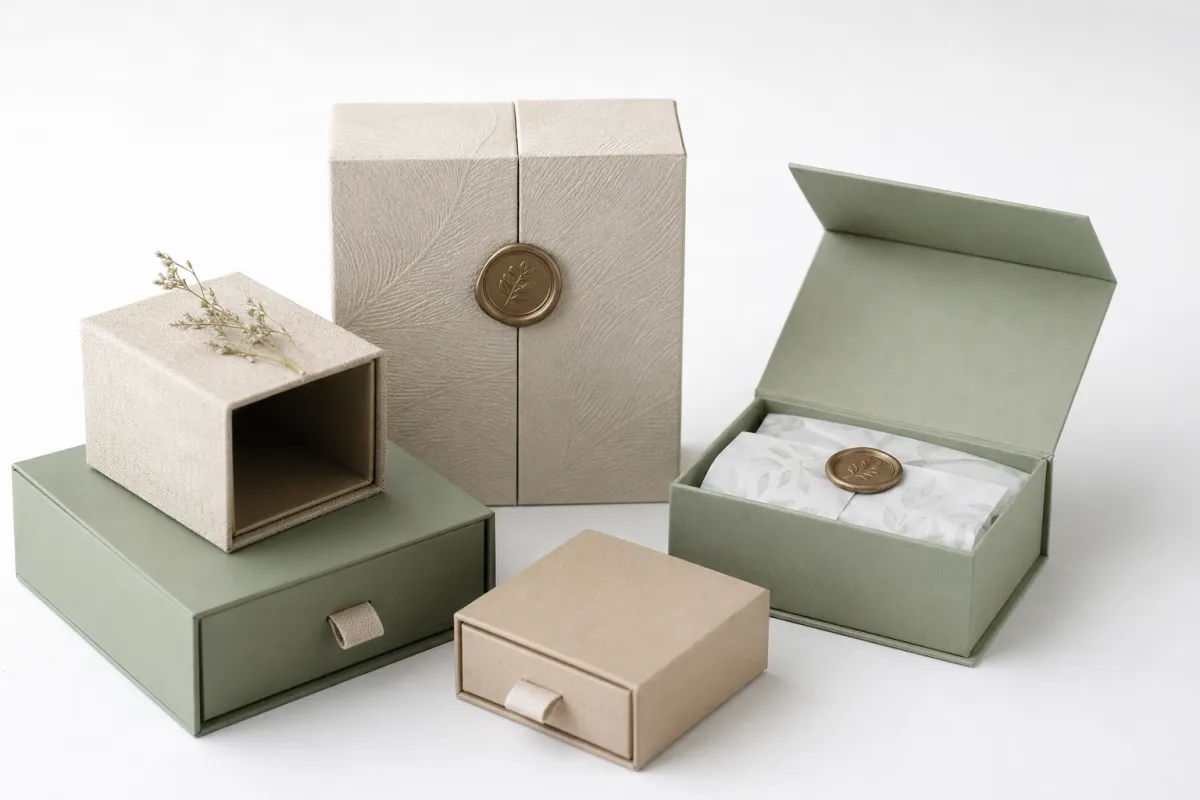
A lot of teams start with a design brief, hand it to a printer, then act shocked when the result feels off. That workflow is how money gets set on fire. custom product packaging for boutique brands has to be treated as a full system, from first look to final delivery.
That system is not only the outer box. It includes carton structure, die-cut inserts, labels, tissue, tape, ribbons, protective void fill, sealant, shrink sleeves, and the shipping layer around all of it. If one part fails, the customer feels it. If the whole stack works together, the brand story lands before the product is even touched.
Custom product packaging for boutique brands is also a packaging architecture decision. The package structure has to support the product line you sell, not just the first SKU in the campaign. If you ignore this, each new item becomes a new packaging project and your team burns hours on avoidable variation. I keep seeing brands redesign the same family of boxes because nobody set the system up properly the first time.
Why this is usually misunderstood
Most people picture packaging as art direction plus logo placement. That is the easy part, and often the least useful part. I see brands overspend on graphics while underspending on structure. A rigid tray that holds a candle in place, a vented fold that keeps creams stable, or a tamper-evident closure can do more for perceived quality than a rainbow of finishes ever will.
For many founders, custom product packaging for boutique brands works like a quiet sales rep. It frames the product before shipping, sets the price expectation, and signals care without saying a word. That is harder to fake than a glossy render.
Consistency across channels matters too. If your unboxing experience shifts from batch to batch, customers notice. They may not know the terms spec, flange depth, or void ratio, but they know when the package feels random. A candle can look premium one week and sloppy the next based on the package alone. That kind of drift chips away at trust fast.
A boutique brand moving 300 to 2,000 units a month often has more room to create memorable package moments than a high-volume brand, because every parcel can be intentional. Repeat buyers remember details. custom product packaging for boutique brands gives you a way to make that memory repeat instead of fade.
The first practical rule is simple: every piece should protect the product, support the brand, and scale without turning operations into a mess. That balance is what turns packaging into a commercial decision instead of a styling afterthought.
Thinking of your product line as packaging architecture helps teams avoid expensive redesign loops. Selling a 90 ml scent jar and a 200 ml jar? Build one master structure family with sleeves that change height. Selling jewelry in two variants? Use one rigid insert footprint with modular compartments. That logic cuts complexity and saves tooling costs.
If you are after custom product packaging for boutique brands, you can browse structure ideas in the catalog-style options under Custom Packaging Products. But do not start there. Start with dimensions, fragility, and the customer touchpoint sequence. Then choose a format that fits the job.
“A lot of complaints disappear before the printer gets involved if someone checks closure strength, tray depth, and whether the shipping label has room for a scannable barcode on the first pass.”
How Custom Product Packaging for Boutique Brands Works
Here is the order that keeps projects sane:
- Brand brief and product constraints
- Structure selection and dieline
- Material and finish decision
- Artwork and prepress setup
- Sampling and fit testing
- Proof approval
- Production and freight planning
- Delivery and post-launch performance tracking
custom product packaging for boutique brands should begin with a tight brief. Final product dimensions in millimeters. Stack height limits. Shelf life. Any child-safety issues. Label claims. Legal text fields. The people handling fulfillment matter too. So does whoever checks returns. Vague inputs create expensive packaging later. If a team skips this step, they end up guessing, and guessing is not a workflow.
When teams include fulfillment packaging requirements up front, they avoid many late surprises. Fulfillment is where your design either behaves or falls apart. The print and design world can look beautiful; logistics reality can still fail fast. I have watched gorgeous boxes collapse the moment they met a conveyor belt. Not cute.
Stock packaging with custom labels vs. full custom structures
Stock packaging with custom labels is usually the faster and cheaper route for first launches. Think pre-made folding cartons or standard mailers where the exterior branding changes, but the base structure stays put. That can still look polished at a low minimum order quantity. custom product packaging for boutique brands still works with stock forms if the fit and message stay locked.
Full custom packaging is different. The structure is built around the actual product size and the brand’s use case. Unique die-lines, custom inserts, and specific tooling usually come with it.
The practical split shows up in cost, control, and timing. Stock solutions often fit into 1,000 to 3,000 unit bands with lower entry spend. Fully custom structures can push minimums up, especially with rigid formats. Full custom also gives you control over the unboxing sequence. For higher-margin launches, that control is often worth the extra effort.
Channel-specific behavior
Retail packaging and retail packaging behavior are not the same as subscription fulfillment. Retail wants shelf visibility and quick scanning at checkout. If the unit sits in a store for weeks, outer graphics carry more weight than extra cushion. For direct-to-consumer shipping, transit shock, humidity drift, and corner resistance matter more than dramatic artwork.
Subscription models need repeat efficiency. Gift cards and refill packs work best with standardized outer dimensions because fulfillment systems sort by size. Gift and event runs can lean into decorative outer layers, but they need stronger transit planning. A gift-ready finish that looks beautiful at the door can still fail if the edges collapse in transport.
Design constraints that actually matter
Creative gets exciting until the technical limits show up. Common constraints include:
- Print bleed of 3 mm to 5 mm depending on the converter, with safe zones inside the trim area.
- Fold lines and creases that need extra panel tolerance to avoid micro-cracking.
- Panel strength thresholds: thin fluting can buckle when cartons move through belt systems.
- Transit durability, often checked against ISTA profiles and ASTM methods such as ASTM D4169 drop and vibration logic.
- Barcode placement that stays readable after tape, moisture, and crease stress.
The strongest teams run a packaging design process with two approvals: creative sign-off and technical sign-off. A beautiful matte finish means very little if it blocks machine readability or chips under humidity. The opposite problem is common too: a tough mailer with awful typography survives shipping and fails the instant a customer sees it. Both sides matter.
File readiness speeds things up more than people expect. Layered artwork, CMYK profiles, embedded fonts, and clean proofs can shave days off a project. Sloppy exports sent at the deadline do the opposite. Most delays happen before press, not on press.
custom product packaging for boutique brands works when brand story, physical protection, and repeatable production all line up. Miss one and you get margin bleed, avoidable returns, and reviews that say “cute but disappointing.” That is a brutal sentence to recover from.
Can custom product packaging for boutique brands increase conversion?
Yes. In practical terms, yes. Not because of one fancy effect, but because buyers make faster quality judgments in the first few seconds. If your custom product packaging for boutique brands feels engineered and consistent, your click-to-cart momentum rises and your return-rate pressure usually drops.
Conversion does not come from decoration alone. It comes from trust signals that stack up correctly: clean graphics, stable structure, and a product packaging sequence that feels intentional. Buyers are not buying a box; they are buying the outcome their wallet is expecting. That sounds obvious, but a lot of brands miss it and then wonder why the package looks nice but sells like it is tired.
For a low-to-mid volume founder, the winning move is to make one package format do more work. That is where custom product packaging for boutique brands acts like a growth driver instead of a random expense.
Key Factors That Change Fit, Feel, and Shelf Appeal
Small brands usually fail on packaging because they optimize one thing and ignore the rest. The right package starts with fit. Then feel. Then recognition. Then compliance. Then cost. That order is not glamorous. It is also the order that saves you from avoidable mistakes.
Fit and product physics
Start with product size and fragility. A glass jar, a tube, and a rigid pendant set cannot share the same interior geometry. Measure the final packed dimensions after the lid, stopper, sleeve, or insert is in place. Add a tolerance range, usually 2 to 5 mm per axis, based on fill variation and assembly drift. If the numbers are off by even one size, the tray rattles, scrapes, or cracks the contents instead of holding them.
Weight is the quiet variable that ruins plans. A 500 g skincare kit in corrugated can feel solid, while a 1.8 kg item in the same construction can deform corners over long routes. Heavier runs often need 5-ply options or reinforced double-wall segments only where needed. Overbuilding every wall is expensive and unnecessary. It adds cost, weight, and freight spend.
For custom product packaging for boutique brands, this is where a lot of people quietly lose money: they pick a structure by mood, not by physics. Your package should work before it looks good. Nice-looking failure is still failure.
Material behavior and feel
- Corrugated board: strong and forgiving, usually a solid fit for shipping loads and direct-to-consumer parcels; 3-ply and 5-ply options let you tune stiffness.
- Folding cartons: lower visual depth, but fast for lightweight retail goods, especially 300 gsm to 450 gsm C1S stock with controlled coating.
- Rigid boxes: strong for premium presentation and reuse when the SKU is low frequency and high margin.
- Kraft paper systems: craft-heavy and natural in feel, though color control needs stronger prepress to keep tones clean.
- Molded inserts: support-heavy products, especially glass and ceramics. Common choices include EPE foam, molded pulp, or paper honeycomb trays.
- Protective mailers: cost-efficient for lightweight, less fragile products when paired with corner guards and envelope inserts.
None of these is premium by default. Foil on a weak substrate still looks weak. Matte lamination on the wrong stock can look rough. Soft-touch coatings can read as expensive, then warp if the board is too thin.
For many boutique founders, custom product packaging for boutique brands is not about always using premium inputs. It is about using the right packaging material for the actual risk and customer promise. A good-looking material choice that fails in transit is just a more expensive mistake.
Finishes and visual signals
Finish choice changes perceived value faster than most founders want to admit. Foil embossing adds depth at first glance. Spot UV can isolate a logo or mark. Soft-touch lamination reduces glare and adds a tactile layer. Specialty inks can make color feel richer, but they also demand tighter batch control. From a budget standpoint, one finish used consistently beats four random effects fighting each other.
Most boutique founders ask for “everything glossy and metallic.” That usually means the design is doing too much. One strong foil line on the logo, one emboss texture near the opening, and disciplined typography can carry the entire package. Customers remember contrast and restraint faster than clutter. A package that reads from six feet away usually has hierarchy, not noise.
Use premium packaging details sparingly and consistently. That is where custom product packaging for boutique brands creates luxury cues without blowing the budget wide open.
Sustainability and right-sizing
custom product packaging for boutique brands does not need extra paper just to claim sustainability. In a lot of cases, right-sizing matters more than swapping materials. If a 6-inch product ships in a 10-inch mailer, freight cost rises and the package looks careless. Customers notice that. They might not say it politely, but they notice.
Use recycled content where it helps the product and the brand story. Keep an eye on the trade-offs. Recycled board with 30% post-consumer content is common. 100% recycled content can sound impressive and still struggle with moisture resistance in humid regions. FSC claims help buyers in eco-aware segments, but a mark without discipline is just ink. If FSC is part of your positioning, ask for chain-of-custody documentation and keep the claim trail clean.
One of the highest-leverage changes I recommend is reducing void fill and empty volume. You improve sustainability and lower the dimensional weight without compromising brand feel. That is good packaging optimization in a practical, measurable way.
Shelf presence and brand recognition
Color consistency, typography, and logo placement are the three fastest recognition cues. Across 100 SKUs, keep close to one primary color family and one secondary tone. If the package shifts from blue to green to beige every season, shoppers stop recognizing the line. Slow, controlled change performs better than constant reinvention.
Recognition often comes down to distance. Can a buyer identify your brand in 1.5 seconds from 6 to 10 feet away? If not, your package branding is diluted. Strong package branding does not require loud decoration. A controlled panel structure and repeatable icon hierarchy can do the job without shouting.
For product photography, a matte interior paired with a strong opening cue can raise perceived quality more than high gloss across the whole box. The inside of the package now lives in the conversion path, especially in unboxing video. Ignore that at your own expense.
That is why teams focused on custom product packaging for boutique brands should think like both designers and operators. The store shelf judges speed, and the first touch inside a package judges quality. Those are different jobs, and one package has to do both.
Custom Product Packaging for Boutique Brands: Cost and Pricing
If pricing is the first question you ask, here is the answer that matters: custom product packaging for boutique brands is not one line item. It is a system of fixed and variable costs. Unit economics tell part of the story. Total landed cost tells the truth.
What drives cost, one layer at a time
- Material class and grade (uncoated vs coated, paper gsm, board flute, and inserts)
- Structure (simple flat carton, insert included, full rigid architecture)
- Print complexity (single color, 2-4 color, spot colors, gradient, Pantone)
- Finishing (foiling, die-cut edges, soft-touch, UV, embossing)
- Sampling rounds and proofing
- Order quantity and setup amortization
- Freight class and dimensional weight
A practical benchmark: a simple printed mailer with minimal setup can sit near $0.18-$0.28 per unit for 5,000 pieces when coverage stays limited and the material is standard. A fully Custom Rigid Box with a premium finish can land around $1.80-$3.60 per unit for 500 pieces, depending on finish and insert complexity.
The pattern is predictable. Higher setup and lower MOQ push per-unit costs up fast. As volume grows, unit cost falls, but total spend rises because you are buying more stock, storing more finished goods, and tying up cash in inventory. That is why volume planning and cash planning should sit in the same meeting.
When teams run the numbers for custom product packaging for boutique brands, they get more strategic if they compare format families instead of chasing the cheapest quote. A stock carton can be a launch winner. A custom rigid family can be your growth anchor. I usually push founders to price the next six months, not just the first order. That keeps everyone honest.
MOQ reality for boutique teams
| Package type | Typical material | Typical unit cost range | MOQ range | Lead-time range |
|---|---|---|---|---|
| Stock carton + custom label | Standard folding carton | $0.20 - $0.60 | 500 - 2,000 | 10 - 15 business days |
| Custom structure, no specialty finish | 350gsm C1S / light corrugated | $0.90 - $1.80 | 300 - 1,200 | 14 - 22 business days |
| Rigid box with insert | 2-4 mm rigid board + molded insert | $2.10 - $3.80 | 150 - 800 | 20 - 35 business days |
| Multi-component premium set | Hybrid corrugated + coated insets | $3.20 - $6.50 | 200 - 600 | 25 - 40 business days |
Those numbers are directional, not promises, and geography changes them. Art complexity does too. So does press color count. Still, the ranges are useful for planning conversations with founders and finance teams.
A common mistake is chasing the lowest quoted unit price and ignoring the costs that hide behind it. Those hidden costs include:
- Artwork correction and extra proof rounds
- Die-making charges and tooling refresh
- Freight surcharges for odd-size cartons
- Storage shrinkage from out-of-season colorways
- Waste from over-ordering insert sizes after product updates
Because of that, evaluate landed cost per order instead of unit cost alone. A simple planning model looks like this:
Landed cost per order = unit packaging cost x units shipped + proofing amortization + inbound freight + outbound freight + storage + handling + return-adjusted damage reserve.
If your average shipping run is 100 parcels per day, a 20-cent improvement in landed cost can create real savings. If annual damage claims fall by even 1%, support pressure drops too. The finance team cares. So does customer service. Packaging touches both.
For Custom Printed Boxes with controlled inventory turns, the win is often less obvious: fewer returns from shipping stress, better perceived value, and fewer questions about authenticity.
In many custom product packaging for boutique brands programs, the most useful metric is the cost-to-value ratio over 90 days, not first-piece cost. That is where brand consistency pays for itself.
Packaging Process and Timeline: From Brief to Delivery
Most boutique teams underestimate timing because creative decisions eat calendar space faster than expected. A realistic timeline is not a single number. It is a chain. Break one link and the rest stretches.
- Discovery and brief (2-4 business days): finalize dimensions, product count, legal text, and target markets.
- Creative direction and structure selection (5-8 business days): select carton shape, insert logic, close style, graphics, and finish hierarchy.
- Dieline approval (3-4 business days): confirm layout and clearance with a technical review.
- Prototype sample (5-10 business days): make one or more physical proofs and verify fit, print tone, and durability.
- Revisions and final sign-off (2-6 business days): lock files only after physical proof acceptance.
- Production and quality checks (8-20 business days): print and assemble in sequence with periodic inspections.
- Freight and delivery (3-8 business days): freight mode based on urgency and destination mix.
custom product packaging for boutique brands follows this rhythm when done well: good planning, fast iteration, and no surprises after lock. If any phase drags, the shipping forecast collapses.
Simple printed mailers can move in 12 to 18 business days from approved proof to pallet-ready when revisions are off the table. Rigid or multi-component systems, especially with inserts, specialty inks, and embossing, often take 24 to 45 business days for the first full run. Build buffer time or enjoy chaos.
Buffer logic matters. Most teams schedule: 10-15% extra for proof errors, 1-2 weeks for supplier backlogs, 1 week for shipping volatility, and up to 20% rework when product dimensions change mid-cycle.
If the product launch keeps moving and the packaging stays frozen, something is off. Set a freeze date for dimensions and legal copy before design lock. I see teams miss this constantly. Then labels get redesigned three times, inserts get remade, and the first launch ships with a mismatch that sounds minor until you multiply it across a 2,000-unit release.
What to prepare before you start
- Final product dimensions with tolerance bands.
- Any barcode requirement, including GS1 placement and scan-safe zone.
- Regulatory and compliance copy for ingredients, allergens, and usage warnings.
- Finish map: matte, gloss, foil, soft-touch, and where each appears.
- Annual and seasonal volume expectation to avoid repeated tooling.
Use a simple version-control system for files. If the brand team changes a logo color on Friday night, the print team should not discover it on Monday morning. Revision labels save money. They also save everyone from pretending they enjoy chaos.
In many projects, Case Studies show that launch speed improves once teams accept a blunt rule: package content and dimensions must be agreed before the next phase begins. For custom product packaging for boutique brands, this is less about bureaucracy and more about protecting the launch window. It is the boring part that keeps the interesting part from turning into a mess.
Common Mistakes Boutique Brands Make With Packaging
There is a familiar postmortem pattern: teams design for photos, then meet reality. Designing for social-first appeal is fine until it breaks shipping and handling. A package that survives camera light but not conveyor stress is a bad business choice.
Top mistakes, and the impact
- Designing for appearance before transit performance: cracked inserts, damaged corners, and avoidable customer service work follow fast. A package can look premium and still fail in transit.
- Oversizing containers: too much empty space means extra filler, higher shipping weight, and a higher dimensional charge. Add an inch per side and costs jump faster than expected.
- Over-embellished one-off SKUs: thirty-two-color proofs across ten SKUs create design debt and inventory confusion. Simple systems scale better.
- Inconsistent files and color drift: when print campaigns change color values by hand, brand color shifts become obvious and recognition drops. Keep one style guide and one approved output profile.
- Last-minute artwork changes: rarely free, usually painful. They trigger file rechecks, press resets, and sometimes full sample reruns.
- Under-testing fragile contents: moisture, heat, and vibration can destroy product claims faster than any design mistake.
- Misaligned SKU strategy: too many package variants often raise storage errors by 2 to 3 times in small operations, especially when staff jump between seasonal and evergreen SKUs.
One thing I tell teams over and over: inventory simplicity is a retention strategy. If staff can grab the wrong version in the dark at 2 AM fulfillment time, that becomes a shipping delay and a bad review. Then the bad review becomes a discount code, and the margin gets squeezed from both ends.
For custom product packaging for boutique brands, consistency is not aesthetic rigidity. It is operational clarity. Brands can evolve. custom product packaging for boutique brands logic should stay modular and controlled.
Do not confuse experimentation with chaos. Good experimentation is still built on a stable template. Bad experimentation starts from scratch every other week. That is how teams end up with four box styles, six labels, and no one sure which one is current.
“If the customer opens your package and gets the same experience almost every time, they start trusting the promises you make outside the box.”
Expert Tips and Next Steps for Custom Product Packaging for Boutique Brands
Here is the shift from reactive to strategic. A disciplined rollout usually beats an expensive perfect one. Fancy is overrated if the system falls apart after the first replenishment.
Start with one hero format
One hero format can support expansion. Lock one outer carton structure and one inner insert family first. Start with the highest-margin SKU, even if it is not the highest-volume SKU. That gives you a repeatable baseline for cost control and quality standards.
Once the hero format is stable, add variations: size tweaks, sleeve options, or one alternate finish. Do not start with a pile of unrelated formats. It works like modular furniture. A stable frame can carry many looks without new tooling every quarter.
Pick two signature details, not ten
Choose one or two details that become recognizable markers. Maybe it is a custom closure, a distinctive insert color, or one tactile finish. Ten signature elements is how quality control gets muddy. A cleaner formula works better: 1 dominant visual cue + 1 tactile cue + controlled color family.
Use that formula for the first 3 to 6 months. Then test conversion signals such as repeat orders, return rates, and customer feedback for each cue. That keeps custom product packaging for boutique brands tied to profit, not vanity.
If this still feels abstract, begin with a simple decision tree for custom product packaging for boutique brands. Ask three questions: Can it protect? Can it scan? Can it scale? If the answer is no, you are still in prototype mode.
Sample in real environments
Digital proofs help, but packaging color and texture shift under different light. Compare samples under daylight, warm office light, and retail spot lighting. A warm matte that feels rich in daylight can look flat in a store. A high-contrast spot color can pop in phone photos and fade on the shelf.
Use a side-by-side rack before locking in the design. I usually compare 6 to 10 variants on real shelves with a consistent distance test. If the team cannot spot the brand difference at 10 feet, the system needs simplification.
In this context, the phrase custom product packaging for boutique brands becomes a quality discipline, not a slogan. A clean mock-up process is worth more than three meetings with mood boards. It also keeps everyone from falling in love with a concept that dies the minute it hits production.
Simple framework to act this week
- Audit current packaging: document top complaints, average transit damage, return reasons, and SKU-level fulfillment times.
- Define budget per order: decide your maximum landed cost before design begins.
- Request physical samples: test at least one shipping mock and one shelf mock.
- Run fit and stress checks: fill ratio, corner impact, barcode readability, moisture exposure.
If that feels like too much, cut the scope. Test one format for one flagship SKU before broad rollout. A lot of small brands overpay in silence because they try to solve everything at once.
Keep an eye on material standards and claims too. If a supplier mentions sustainability, verify that the claims match certification standards and material specs. Packaging.org and similar institutions publish guidance that helps separate useful data from marketing noise.
For founders asking where to begin, this is still simple: align product reality, customer expectation, and supplier capability. Do that, and custom product packaging for boutique brands starts paying dividends within one cycle. No magic. Just a package that stops working against you.
Conclusion: Using Custom Product Packaging for Boutique Brands for Growth
If there is one takeaway, it is this: custom product packaging for boutique brands is an execution discipline disguised as design. It can protect margin, lift perceived quality, and reduce return rates when it is handled like a system instead of a launch-day mood board. A strong packaging system does not need extra complexity. It needs clarity, repeatability, and discipline.
Think of every parcel as a conversion point that also carries risk. You want the package to signal confidence while reducing post-purchase friction. In that sense, packaging is both product packaging and brand architecture. Done well, it supports premium pricing, keeps customers coming back, and gives operations a calmer pace.
So yes, custom product packaging for boutique brands is not just about looking good. It is about how often your promised value survives shipping, storage, and the hands that open it. That is where repeat purchase habits form, and that is where boutique brands build durable growth without pretending the box is just a box.
The practical takeaway is pretty simple: lock the structure around the product first, then layer in the brand details, then test the package in real shipping conditions before you order volume. If the package works in transit, scans cleanly, and feels intentional on arrival, you are on the right track. If it fails any of those three, fix that before you chase prettier graphics.
FAQs
How much does custom product packaging for boutique brands usually cost?
Costs depend on structure, print method, and finishing. A simple printed mailer can cost much less than a rigid format with inserts and premium effects. Many teams see the cost of custom product packaging for boutique brands move in one direction: lower for stock formats, higher for engineered custom structures. The number to watch is landed cost per order because freight, samples, storage, and handling losses can erase unit-level savings fast.
What is the minimum order quantity for boutique custom packaging?
MOQ depends on the converter, the design complexity, and whether tooling is needed. Label-based solutions on stock structures often allow lower starts, while fully custom custom printed boxes often need larger committed runs to keep unit costs practical. A clean way to start is one core size, then prove demand before expanding to multiple formats.
How long does custom product packaging take from design to delivery?
Simple options can move in roughly two to three weeks when files are ready and approvals are quick. Multi-component packages, inserts, and premium finishes often take longer, especially with two or three proof cycles. Timelines get safer when dimensions, artwork, and sign-off dates are fixed early and when buffer time is built in for freight and revisions.
Which materials work best for boutique brands?
For lighter retail goods, folding cartons and kraft-based systems are often efficient. For fragile or premium-positioned goods, corrugated protection plus protective inserts is usually the better foundation. For prestige launches, rigid options deliver the strongest first impression, but they usually cost more and need tighter quality control. Your choice should follow product fragility and customer experience goals, not trend pressure.
How can boutique brands make packaging feel premium without overspending?
Pick one visual marker and make it excellent. A single signature closure, a controlled insert color, or one premium finish is often enough. Right-size everything to reduce filler and dimensional weight. Spend where customers feel the impact: first outside look, first reveal, and protection that prevents transit damage. That is more effective than piling on decorative extras that nobody notices at checkout.

