A custom promotional hats order checklist keeps a bulk order from wandering off course. That sounds plain, yet the failure points are usually hidden until the hat is already in motion: the crown sits too shallow, the closure misses the audience, or the decoration method fights the panel layout. I have watched buyers get fixated on the logo proof and ignore the object that will actually be worn. A strong custom promotional hats order checklist cuts through that blur and turns a risky quote into a sequence you can actually manage.
The order should begin with use, not decoration. A giveaway cap for a two-day event, a uniform hat for field crews, a retail merch piece for a product drop, and a sponsor hat for a golf tournament each behave differently once they are worn, packed, and shipped. That is why a custom promotional hats order checklist needs to cover audience, fit, artwork, quantity, timing, and packaging in that order. If you are comparing hat programs beside Custom Packaging Products or building a broader campaign through Wholesale Programs, the same disciplined spec review pays off every time.
I have seen a 1,000-piece cap run sail through proofing in less than a day and still come back wrong for the audience because nobody asked who would wear it. The logo was fine. The hat was not. That mismatch is why the checklist matters so much more than the mockup alone.
Custom Promotional Hats Order Checklist: Start With the Use Case
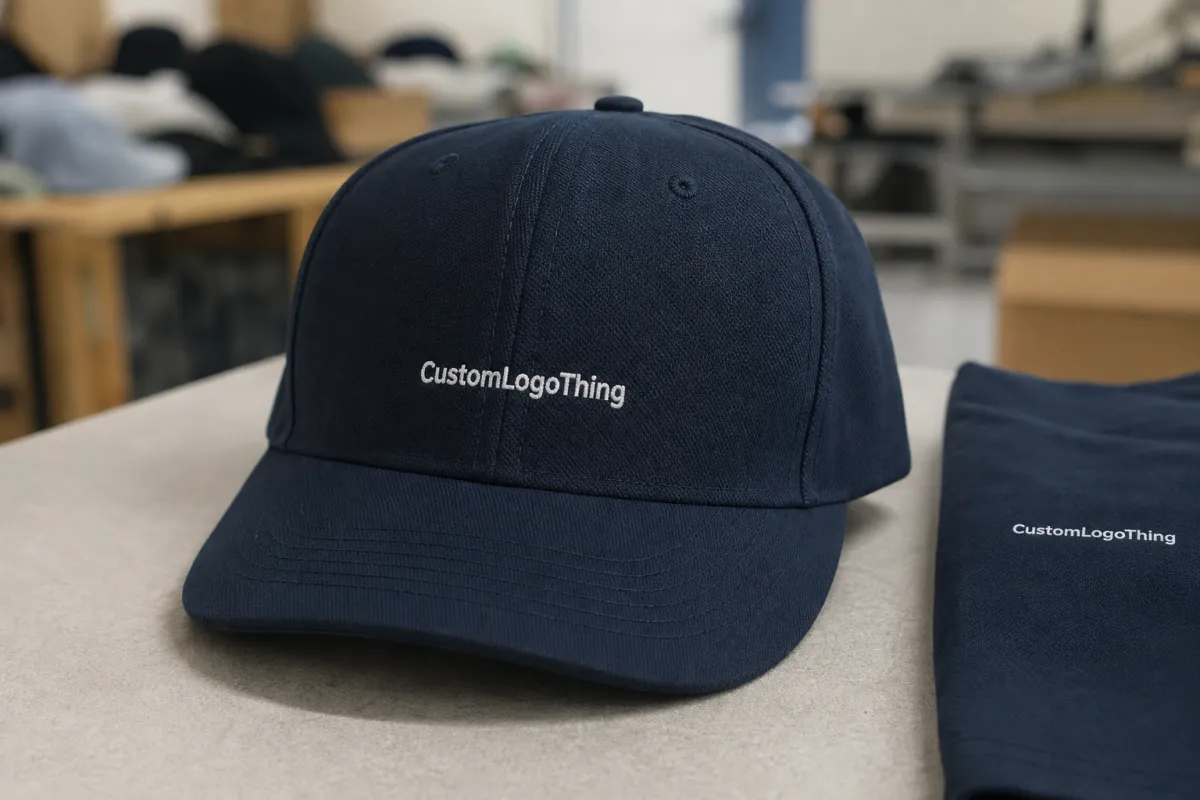
The first mistake is easy to spot. A buyer approves a front-panel mockup, signs off on the artwork, and only then asks how the hat will be worn. That is backward. A custom promotional hats order checklist should begin with the use case because the use case sets the crown shape, closure, fabric, and decoration limits. A 5-panel cap for a festival crew does not need the same spec as a structured six-panel hat for a sales team, and neither should be treated like a fashion retail item without checking the fit.
I usually divide hat orders into four working categories. Event giveaways need broad appeal, forgiving sizing, and easy carton packing. Employee uniforms need repeatable fit and decoration that stays sharp through heavy wear. Retail promos need stronger presentation and better hand feel because the hat becomes part of the product itself. Sponsor merch needs visibility, tone, and a shape that photographs well in use. A custom promotional hats order checklist helps the buyer match the hat to the job instead of forcing the job to fit the hat.
One hidden decision creates more regret than almost any other: a hat that looks excellent flat on a proof can feel too shallow, too tall, or too stiff on a real head. Crown depth drives that problem. A shallow low-profile cap may look modern, but on some wearers it rides too high and leaves the forehead exposed. A deeper crown feels more secure, though it can look bulky on the wrong head shape. The custom promotional hats order checklist should surface that conversation early, before the order is locked to a style that fits the artwork but not the people.
A hat is a wearable product, not a print sheet. If the fit is wrong, the logo does not rescue it.
Document who will wear the hats, how often they will be worn, and where they will be used. That seems basic, yet it changes the buying decision fast. A warehouse team working in heat may need mesh back panels or performance fabric. A retail fan item may need a cleaner front panel and a tighter stitch finish. A golf outing may favor a curved brim and snap closure, while a younger streetwear audience may prefer a flat brim or a vintage wash. Used well, a custom promotional hats order checklist turns style selection into a business decision instead of a guess.
If the hats are going to live in a warehouse, a distribution center, or an outdoor crew kit, comfort stops being a soft benefit. It becomes the thing people are gonna notice on day three, when the novelty has worn off and the hat is either easy to live with or not. That is why use case belongs at the top of the list.
The next question is what the order needs to do for the brand. Is the goal recognition, staff consistency, premium perceived value, or repeat wear? That answer changes the spec. If the hats are meant to feel retail-ready, the build may need a woven label, a clean back seam, and a better sweatband. If the goal is fast event distribution, packability, carton count, and unit cost usually matter more. A practical custom promotional hats order checklist keeps the buyer focused on comfort, visibility, packing efficiency, and total landed cost rather than the style name on the quote.
One efficient way to frame the request is to write the use case in one sentence before asking for pricing. For example: "Need 500 black structured caps for warehouse supervisors, embroidered front logo, wearable all day, delivered before onboarding week." That single line gives the supplier enough context to recommend a usable hat instead of a generic one. The custom promotional hats order checklist is strongest when it reads like a short spec sheet, not a wish list.
- Event giveaways: prioritize low minimums, simple decoration, and broad fit.
- Employee uniforms: prioritize comfort, repeatable sizing, and durable branding.
- Retail promos: prioritize finish quality, stitch detail, and premium presentation.
- Sponsor merch: prioritize visibility, photo readiness, and clean logo placement.
Style, Fit, and Decoration Details That Change the Final Hat
After the use case is clear, the custom promotional hats order checklist should move into style selection. Buyers usually compare five core options first: structured baseball caps, unstructured dad hats, trucker caps, snapbacks, and performance styles. Each carries a different feel, and that feeling matters as much as the logo. Structured caps keep a cleaner shape and pair well with heavier front embroidery. Unstructured dad hats sit softer, read more casual, and often feel easier for daily wear. Trucker caps bring breathability through mesh panels. Snapbacks deliver a streetwear look with a flat brim and adjustable plastic closure. Performance hats use lighter, faster-drying fabrics and suit active use better than a traditional twill build.
Fit variables can change approval even when the artwork stays the same. Crown depth tells you how tall the hat sits on the head. Brim curve changes the visual profile and the way the cap shades the face. Panel count affects seam placement and front real estate. Closure type changes the sizing range. A hook-and-loop strap is simple but reads more casual; a leather or leatherette strap can lift perceived value; a snap closure is practical and common; fitted sizing is cleaner but less forgiving. A custom promotional hats order checklist should ask for those details because they shape how the hat looks on different head sizes and how many people will actually wear it.
Decoration method is where buyers can overreach. Embroidery remains the default for a reason: it adds texture, lasts well, and looks strong on most structured caps. Flat or 3D puff embroidery can add depth if the logo is bold and the panel area is large enough. Patches work well when the artwork has fine detail or multiple colors that are hard to stitch cleanly. Woven labels handle small type better than embroidery. Screen print or heat transfer can work on some styles, but the decoration has to fit the fabric and the expected wear. If you are using a custom promotional hats order checklist, make the decoration method part of the technical spec instead of a style afterthought.
Decoration placement deserves a real check too. Front center is the most common location, but the available height depends on the crown and seam layout. Side placements can handle secondary branding, though seam lines may interrupt the design. Back placements need to respect the closure opening, especially on snapbacks and strapbacks. A logo that looks balanced on a wide front panel can collapse on a low-profile cap if it is not resized. The custom promotional hats order checklist should require artwork scaled to the actual panel dimensions rather than a generic template.
A patch can look kinda premium in proof and still read flat if the border is too thick or the color contrast is off. That is not a failure of the idea; it is a mismatch between the decoration and the hat body. The same logo can look elegant on a brushed cotton cap and clumsy on a shiny performance fabric if the finishes do not agree.
Here is a simple comparison buyers can use before they Request a Quote. The numbers are broad planning ranges, not promises, because blank quality, quantity, and decoration complexity all change the result.
| Hat style | Best fit for | Typical MOQ | Common decoration fit | Rough unit range at 500 pcs |
|---|---|---|---|---|
| Structured baseball cap | Uniforms, giveaways, brand programs | 100-144 | Embroidery, patch, small woven label | $4.25-$8.50 |
| Unstructured dad hat | Casual retail, lifestyle promos | 100-150 | Flat embroidery, woven patch, subtle branding | $5.10-$9.20 |
| Trucker cap | Event giveaways, outdoor branding | 144-250 | Embroidered front, patch on foam or twill | $3.90-$7.80 |
| Snapback | Streetwear promos, premium merch | 100-144 | Bold embroidery, 3D puff, woven patch | $5.75-$10.50 |
| Performance cap | Sports, field teams, active wear | 100-200 | Light embroidery, heat transfer, small patch | $5.50-$11.00 |
These ranges help buyers avoid false comparisons. A low-profile dad hat with dense embroidery can cost more than a basic structured cap if the stitch count and garment quality go up. That is why the custom promotional hats order checklist needs to capture the full spec, not just the silhouette. If the logo is small and detailed, a woven patch may be cleaner than forced embroidery. If the brand mark needs a bold tactile presence, 3D puff may be the right call. If the audience will wear the hats outdoors in heat, mesh and moisture management matter more than a deep heavy front panel.
Front-panel height is another detail that gets missed. A tall panel gives more room for decoration, but not every buyer wants that shape. On smaller heads, a tall crown can feel oversized. On larger heads, a shallow cap can look cramped. For that reason, a good custom promotional hats order checklist includes both decoration and fit. That small step protects the brand from a hat that photographs well but disappoints in wear.
For broader branding programs, the same logic applies to packaging design and package branding. If the hats are part of a merch bundle, or if they ship with inserts, labels, or custom printed boxes, then the hat spec and the product packaging spec should be built together. That prevents mismatched presentation later. A cap with premium embroidery but flimsy retail packaging looks unfinished; a simple cap with thoughtful branded packaging can feel more polished than the raw hat alone. From a buyer's point of view, the entire presentation has to support the same story.
Custom Promotional Hats Order Checklist for Pricing, MOQ, and Quote Review
Pricing gets easier to judge once the spec is clear. A custom promotional hats order checklist should force the quote to show what drives unit cost: the blank hat quality, the decoration method, the number of stitch colors, the patch construction, and any special packing or labeling. A simple one-color embroidery on a stock cap is usually the lowest-complexity route. Add a woven patch, custom thread matching, individual polybagging, or retail labeling, and the price moves quickly. That does not mean the higher spec is wrong; it just means the buyer needs to know why the price changed.
MOQ is another area where buyers waste time. Some styles can run at 48 or 100 pieces if the blank is in stock and the decoration is straightforward. Others need 144, 250, or more because of the way the cap is sourced, sewn, or decorated. Custom colors, specialty patches, and complex embroidery can raise the minimum. A custom promotional hats order checklist should ask the supplier to confirm MOQ early, because choosing a style that is too expensive for the target quantity is one of the easiest ways to blow the budget.
Use a quote review that captures the same variables on every line. The important items are blank style, fabric, color, closure, decoration location, decoration size, stitch count or patch type, setup charges, digitizing charges, shipping assumptions, packing method, and whether samples are included. If one supplier includes freight and another does not, the lower number is meaningless. A solid custom promotional hats order checklist keeps the comparison honest.
Hidden charges deserve their own check. Low headline pricing often leaves out digitizing, patch tooling, freight, split shipments, rush service, or preproduction samples. I have seen orders look safe at quote stage and then climb after proof because the buyer assumed every item was included. The fix is plain: ask the supplier to spell out what is included and what is not. The custom promotional hats order checklist should treat those extras as part of the landed cost, not a surprise later.
Below is a practical pricing lens for buyers comparing hat programs. These figures are broad and depend on decoration coverage, but they help frame the conversation.
| Program type | Typical quantity | Common inclusions | Planning range per unit | Best use case |
|---|---|---|---|---|
| Basic stock cap with one-color embroidery | 100-250 | Blank hat, digitizing, front logo | $4.50-$7.50 | Internal teams, giveaways |
| Structured cap with multi-color embroidery | 250-500 | Blank hat, digitizing, thread matching | $5.75-$9.50 | Brand campaigns, events |
| Patch program | 250-1000 | Blank hat, patch build, application | $6.50-$11.50 | Retail-style merch, premium promos |
| Performance or specialty fabric cap | 100-500 | Technical fabric, low-profile fit, custom decoration | $7.00-$13.00 | Outdoor staff, sports, active use |
Compare those numbers only after the assumptions match. If one quote uses a 5-panel trucker and another uses a structured cotton twill cap, the fabrics, paneling, and closure specs are not equivalent. The same is true for decoration size. A 3-inch logo and a 4.5-inch logo are not interchangeable, especially if the design has fine detail. The custom promotional hats order checklist should force each supplier to quote the same hat, the same decoration, the same quantity, and the same ship-to location.
The commercial side matters too. A buyer often looks at price per piece and ignores the total campaign impact. If the hats are being bundled with shirts, notebooks, or inserts, then packaging and freight can matter more than a few cents on the blank cap. That is where product packaging thinking helps. If the order needs branded packaging, custom printed boxes, or retail packaging cues for a launch, it can make sense to spec the presentation first and the hat second. The best custom promotional hats order checklist keeps those moving parts aligned so the final landed cost still makes sense.
For sustainability-minded programs, you can also ask whether any paper components are FSC-certified. If hang tags, inserts, or carton labels are part of the order, the FSC standard can support responsible sourcing. For transit planning, the International Safe Transit Association publishes useful testing guidance at ISTA, which matters if the hats must survive multi-stop shipping or direct-to-location distribution. Those are not hat-specific standards, but they matter once the order includes outer cartons, inserts, or retail-ready packing. A well-run custom promotional hats order checklist does not stop at the cap itself.
Process and Timeline: From Art File to Delivery
The fastest way to lose time is to treat approval as one moment instead of a chain. A good custom promotional hats order checklist maps the route from quote to delivery in plain steps: request quote, confirm style, submit artwork, receive proof, approve mockup or sample, start production, then pack and ship. Each step has a different risk. Quote delay usually points to a spec problem. Proof delay usually points to an artwork problem. Production delay often comes from revision requests or queue pressure. Shipping delay usually ties back to destination details or transit assumptions.
Most schedule slips happen in a few predictable places. Artwork is the first. Buyers send a logo in the wrong format, or they send a low-resolution image and expect the decorator to redraw it for free. Proof approval is the second. Someone needs to sign off, but the person with the final say is out of office. Post-proof change requests are the third. Once the production queue is set, even a small shift in logo size or thread color can create a domino effect. A custom promotional hats order checklist should identify the approver, the backup approver, and the approval deadline before anything is scheduled.
Lead times vary, but embroidery and patch orders usually take longer than simple stock reorders. A straightforward embroidered cap might move in 12-15 business days after proof approval, depending on the queue and the supply situation. Patch programs can take longer, especially if the patch is custom constructed, color-matched, or applied after a separate manufacturing step. If the order is tied to a launch event or employee onboarding date, build in transit time and a buffer for a revised proof. The custom promotional hats order checklist should leave room for one correction round.
Shipping assumptions matter more than many buyers expect. The same order can feel late or early depending on whether it is moving to one warehouse, multiple branch locations, or a single event venue. Ask whether cartons will be packed by size, by color, or by department. Ask whether the shipper can label cartons for easy distribution on arrival. If the hats are part of a larger merchandise kit, then the ship date has to coordinate with the rest of the shipment. A custom promotional hats order checklist should confirm destination, transit method, and delivery buffer early enough to still be useful.
For buyers who care about freight performance, carton testing is not a vanity item. If a program is shipping to multiple stores or offices, ask whether the shipper uses transit-safe packaging methods that line up with common ISTA test logic. That does not mean every order needs lab validation, but it does mean the outer carton should be sized and packed with transit in mind. If you are also dealing with broader branded packaging or retail packaging programs, consistency across the whole merch kit matters. A clean custom promotional hats order checklist reduces the number of ways a shipment can go wrong.
One useful habit is to request the proof with all critical data visible: hat style, color, decoration placement, thread or patch colors, and quantity. If the order includes custom printed boxes or insert cards for a merch bundle, ask that those items appear in the proof set too. That helps procurement, marketing, and fulfillment stay in sync. It also protects package branding from drifting between departments. The custom promotional hats order checklist should be the document everyone is looking at, not the one everyone assumes someone else has seen.
Materials, Construction, and Quality Checks for Bulk Hat Orders
Materials decide how a hat feels on day one and how it behaves after repeated wear. Cotton twill is a common choice because it has a familiar hand feel and takes embroidery well. Polyester blends often hold color better and resist wrinkles more effectively. Mesh back panels add breathability, which is useful in warm environments or outdoor programs. Performance fabrics dry faster and can feel lighter, although the surface may not take heavy decoration as cleanly as a traditional twill build. A custom promotional hats order checklist should record the material type because material and decoration method have to work together.
Construction details matter just as much. Panel stitching affects shape retention. A reinforced sweatband affects comfort and how the hat ages over time. Visor stiffness determines whether the cap holds a neat line or begins to curl under pressure. Seam reinforcement near the crown and brim can make a budget hat feel sturdier. If the order is supposed to read as premium, those small construction cues are not small at all. A custom promotional hats order checklist should capture them because they influence the perceived value of the whole program.
From a quality standpoint, I like to review the decoration through three questions: Is the logo centered? Is the color close enough to the brand standard? And is the edge finish clean at the stitch or patch boundary? A thread color that is near but not quite right can still pass on a rough mockup, but it may look off in natural light. A patch with ragged borders may be acceptable on a freebie, yet it weakens a retail-style item. The custom promotional hats order checklist needs that quality lens before production starts, not after the carton is already on the dock.
For bulk orders, add a simple receiving check when the shipment lands. Confirm carton count, size mix, decoration accuracy, and any special packing instructions. If the hats were supposed to be folded a certain way, bagged individually, or labeled by department, inspect that on arrival. If there is a mix of colors or sizes, verify that it matches the packing list. A custom promotional hats order checklist is not just a pre-order tool; it can also become a receiving checklist for the warehouse or event team.
Here is a practical list of checkpoints that help protect the order:
- Fabric: confirm cotton twill, polyester blend, mesh, or performance textile before pricing is finalized.
- Seams: check panel stitching and reinforcement near the crown and brim.
- Sweatband: verify material, width, and comfort finish.
- Visor: confirm curve, stiffness, and top-stitch quality.
- Decoration: review color match, placement, edge finish, and size.
- Packing: confirm carton count, bagging, labeling, and size split.
Quality standards can help here too. If the buyer wants to compare textile durability, ASTM methods such as ASTM fabric testing references can provide a language for abrasion or tensile discussions, even if the supplier is not certifying every hat to a lab standard. That is especially useful for uniform programs where the product will get repeated wear. I would not overcomplicate a simple promo order with a lab stack, but I would absolutely use the language if the order is meant to survive real daily use. That is exactly the kind of practical filter a custom promotional hats order checklist should encourage.
There is a packaging side to quality too. If the hats ship with hang tags, belly bands, insert cards, or other branded packaging components, the materials should support the same quality level as the hat itself. Thin paper stock can cheapen a premium cap. Overbuilt packaging can inflate freight and add waste. The balance matters. Good package branding is not about adding more components; it is about choosing the right ones. A strong custom promotional hats order checklist keeps those decisions grounded in how the end user will actually receive the product.
Artwork, Sampling, and Approval Steps Before Production
Artwork is where many orders become more expensive than they should be. The cleanest file to send is vector artwork, usually in AI, EPS, or a clean PDF with outlined fonts. That gives the decoration team a crisp starting point and reduces redraw time. If vector is not available, send the highest-resolution version you have and add brand color references. A custom promotional hats order checklist should make artwork format an early requirement because clean files save time, reduce proof cycles, and improve accuracy.
Buyers need to distinguish between two approval paths: virtual proof and physical sample. A virtual proof is fast, inexpensive, and usually enough for straightforward embroidery on a stock cap. A physical sample takes longer and costs more, but it can be worth it if the decoration is complex, the logo has fine detail, or the program carries real risk. If the order is tied to a launch, a dealer event, or a retail rollout, the extra sample cost can be cheaper than fixing a bad production run. A custom promotional hats order checklist should ask which approval path fits the job before the order is launched.
The best proof checks are not glamorous. They are specific. Check logo size against the actual front panel. Check placement relative to seam lines and closure. Check thread or print color against the brand standard. Check spelling on every word, especially if there is a tagline or website line. Check hat color contrast so the logo does not disappear on a dark cap or shout too loudly on a light one. A custom promotional hats order checklist should keep those checks visible so the buyer can approve with confidence instead of scanning too quickly.
Approval is a business decision, and changes after approval can cost real money. If the buyer revises logo placement, switches thread colors, or changes patch borders after sign-off, the supplier may need a new setup or a new proof cycle. That can add days or even a week to the timeline. The custom promotional hats order checklist should identify who can approve, what counts as final approval, and whether revisions after sign-off create additional charges.
Documentation matters more than people think. Keep all approvals in one thread or one project file so procurement, marketing, and the supplier stay aligned. If one person approved a black cap while another thought the order was navy, the problem is not the factory; it is the process. A custom promotional hats order checklist is most useful when it becomes the shared record of truth.
That same discipline helps if hats are part of a broader merchandise kit. If the caps are shipping with custom printed boxes, retail packaging, or a branded mailer, proof those items together so the package branding matches the garment branding. The hat should not feel like it came from one campaign and the box from another. The packaging design, inserts, and label copy should feel intentional. A well-run custom promotional hats order checklist quietly protects the whole launch.
If your organization handles recurring programs, save the approved files, colors, and measurements as a reference for the next cycle. That makes reorders faster and cuts down on avoidable mistakes. It also gives the marketing team a cleaner starting point when they want to compare new options. When the process is documented, a custom promotional hats order checklist becomes a repeatable workflow instead of a one-time rescue plan.
Why Choose Us for Custom Promotional Hats Orders
Buyers do not need more noise. They need practical direction, a clear quote, and a supplier who can explain why one hat spec fits the job better than another. That is where Custom Logo Things can help. A strong custom promotional hats order checklist is useful, but it becomes more useful when the supplier helps you interpret the choices in plain language and keeps the order tied to the real use case.
What matters most is not pushing the most expensive style. It is matching the hat construction to the artwork, the audience, and the budget. If the logo is bold and simple, embroidery may be the cleanest option. If the artwork needs sharper edges or finer detail, a patch may be the better fit. If the program needs lower perceived bulk, an unstructured dad hat may beat a stiffer style. A good custom promotional hats order checklist keeps those decisions grounded, and a good supplier should help you make them without overcomplicating the order.
Clear proofing is another reason buyers come back. It is much easier to approve an order when the proof shows the exact hat style, decoration size, placement, and color approach. That reduces back-and-forth and helps protect the schedule. A supplier should also be transparent about what is included in the quote: digitizing, setup, patch creation, freight assumptions, and sample policy. The custom promotional hats order checklist works best when the quote and proof answer the same questions.
Response speed matters more than many teams admit. A quote that takes too long can delay the campaign, but a quote that rushes past the details can create a bigger problem later. The right balance is responsiveness with enough discipline to avoid mistakes. Buyers Should Expect their supplier to confirm the style, note the decoration method, verify the logo file, and flag any risk before production begins. That kind of communication is what turns a custom promotional hats order checklist into a buying tool instead of a paperwork exercise.
For larger campaigns, the value is in risk reduction. A supplier who can help you choose the right closure, the right crown depth, and the right decoration method is protecting the brand impression. A supplier who can also talk about carton counts, labeling, and any retail packaging or branded packaging needs is protecting the rollout. If the hats are being shipped as part of a multi-item program, that kind of thinking is critical. It keeps product packaging aligned with the merchandising goal and keeps the campaign from feeling pieced together.
Customers who need repeat orders, dealer programs, or team uniforms also benefit from consistency. Once a good spec is locked, reorders become simpler, faster, and less risky. That is one reason a custom promotional hats order checklist should be saved after the first run. If the same style, logo placement, and decoration method are used again, the supplier can move much faster and the buyer can avoid rechecking every detail from scratch.
For buyers who want to compare hat programs alongside other merchandise, our FAQ page can help answer common production and ordering questions, and our Wholesale Programs page is useful if the order is part of a broader volume purchase. The more clearly the order is defined, the easier it is to match the right hat, the right presentation, and the right delivery plan. That is the practical advantage of using a custom promotional hats order checklist before the PO is issued.
Next Steps for Your Custom Promotional Hats Order Checklist
If you are ready to move, start with the simplest version of the custom promotional hats order checklist: define the hat style, gather logo files, estimate quantity, choose decoration, and identify the delivery date. Those five items alone eliminate a surprising amount of back-and-forth. From there, add the fit preferences, color targets, packaging notes, and any labeling requirements that affect the final shipment. The more concise and specific the request, the more useful the quote will be.
Then send one clean brief rather than scattered emails. Include the audience, budget range, desired look, imprint location, and whether the order is for giveaways, uniforms, retail merch, or a sponsor campaign. If the hats need to ship with inserts, tags, or custom printed boxes, say so up front. If the product packaging matters because the hats are part of a larger branded packaging program, note that too. That helps the supplier quote the complete job, not just the cap itself. A strong custom promotional hats order checklist should make these details easy to collect in one place.
If you are unsure between two decoration methods, ask for both quote scenarios. That often reveals the better value tier immediately. For example, embroidery may be cheaper on the front, while patch construction may look stronger for small text or detailed art. Likewise, a structured cap may be easier to decorate, but a softer style may fit the audience better. Comparing options side by side is usually cheaper than ordering the wrong one once. A custom promotional hats order checklist gives you a fair way to compare those options without guessing.
Before you approve the proof, do one last check of style, fit, branding, and timing together. Do not approve each item in isolation. A hat that is technically correct but wrong for the audience is still the wrong hat. A hat that looks right but misses the delivery window is still a problem. A custom promotional hats order checklist works best as a final pre-order review because it keeps the commercial decision, the production decision, and the brand decision on the same page.
That is the real value of this process: fewer surprises, fewer change orders, and a finished cap that looks the way it should when it comes out of the box and goes on a real head. If you use the custom promotional hats order checklist before the quote, before the proof, and before the approval, you give the order the best chance of matching the budget, the brand, and the deadline. In bulk ordering, that is where the savings and the quality both show up.
What should be on a custom promotional hats order checklist before I request a quote?
Have the hat style, quantity, logo file, decoration location, and target delivery date ready before asking for pricing. Include any fit preferences, color requirements, and packaging instructions so the quote reflects the real order. The more complete the custom promotional hats order checklist, the less likely the quote will change after proofing or production starts.
How do I compare pricing on a custom promotional hats order checklist?
Compare quotes on the same hat style, same decoration method, same quantity, and same shipping assumptions. Check for setup, digitizing, sample, and freight charges so you can see the true unit cost. A lower base price is not always the better deal if it comes with larger add-on fees later, so keep the custom promotional hats order checklist focused on landed cost.
What is a normal MOQ for custom promotional hats?
MOQ depends on the hat style, decoration method, and whether you are using stock colors or custom production details. Simple embroidery on a stock cap often supports lower quantities than specialty patches or custom color builds. Always confirm MOQ early so you do not choose a style that is too expensive for your target run size, and keep that note inside the custom promotional hats order checklist.
How long does production usually take for custom promotional hats?
Timeline depends on artwork approval, decoration complexity, current production load, and shipping distance. Embroidery and patch orders usually need more time than simple reorders, especially if proofs require revisions. Build in extra time for proof approval and transit so the hats arrive before the event or launch date, and use the custom promotional hats order checklist to track that buffer.
What artwork format is best for a custom promotional hats order checklist?
Vector artwork is best because it scales cleanly and gives the decoration team a clearer starting point. If vector files are not available, send the highest-resolution version you have along with brand color references. Good files reduce redraw time, improve proof accuracy, and help prevent layout mistakes, which is why artwork format belongs near the top of the custom promotional hats order checklist.
The simplest takeaway is this: define the use case, lock the hat spec, confirm the decoration method, verify the real landed cost, and approve only after the proof matches the wearer and the deadline. If one of those pieces changes, rerun the quote before you sign off. That is the shortest path to a custom hat order that lands on time and actually gets worn.

