Buyer Fit Snapshot
| Best fit | Custom Protective Inserts for Boxes projects where brand print, material claims, artwork control, MOQ, and repeat-order consistency need to be specified before quoting. |
|---|---|
| Quote inputs | Share finished size, material target, print colors, finish, packing count, annual reorder estimate, ship-to region, and any compliance wording. |
| Proofing check | Approve dieline scale, logo placement, barcode or warning zones, color tolerance, closure strength, and carton packing before bulk production. |
| Main risk | Vague material claims, crowded artwork, missing packing details, or unclear freight terms can make a low unit price expensive after revisions. |
Fast answer: Custom Protective Inserts for Boxes: Fit, Cost & More should be specified like a repeatable production item. The safest quote records material, print method, finish, artwork proof, packing count, and reorder notes in one written spec.
Production checks before approval
Compare the actual filled-product size with the drawing, then confirm tolerance on folds, seals, hang holes, label areas, and retail display edges. Reserve space for logos, QR codes, warning copy, and material claims before decorative graphics fill the panel.
Quote comparison points
Review material grade, print process, finish, sampling route, tooling charges, carton quantity, and freight assumptions side by side. A quote is only useful when the supplier can repeat the same color, closure quality, and packing count on the next order.
Custom protective inserts for boxes do a lot more than keep a product from sliding around in transit. They control vibration, cushion drops, manage stacking pressure, and reduce the small movements that can turn a good-looking shipment into a damaged return. They also shape the first impression at opening, which matters in branded packaging, retail packaging, and premium product packaging where protection and presentation have to work together instead of fighting each other.
I have opened cartons that looked perfect on the outside and still found chipped corners, rubbed finishes, or a loose accessory sitting under the flap. The outer box did its job, sure, but the item inside was never secured well enough to survive the trip. That is where custom protective inserts for boxes earn their keep. For teams working with Custom Printed Boxes or refining package branding, the insert is often the hidden piece that decides whether the shipment feels deliberate or kinda rushed.
Teams comparing packaging options usually get better results by reviewing Custom Packaging Products alongside the product itself, because the right insert depends on the exact shape, weight, finish, and fragility of the item being shipped. Box dimensions matter, but product geometry matters more. A well-designed insert turns shipping from guesswork into a repeatable process that can be packed the same way every time, which is a bigger deal than it sounds.
Custom Protective Inserts for Boxes: Why Damage Starts Here
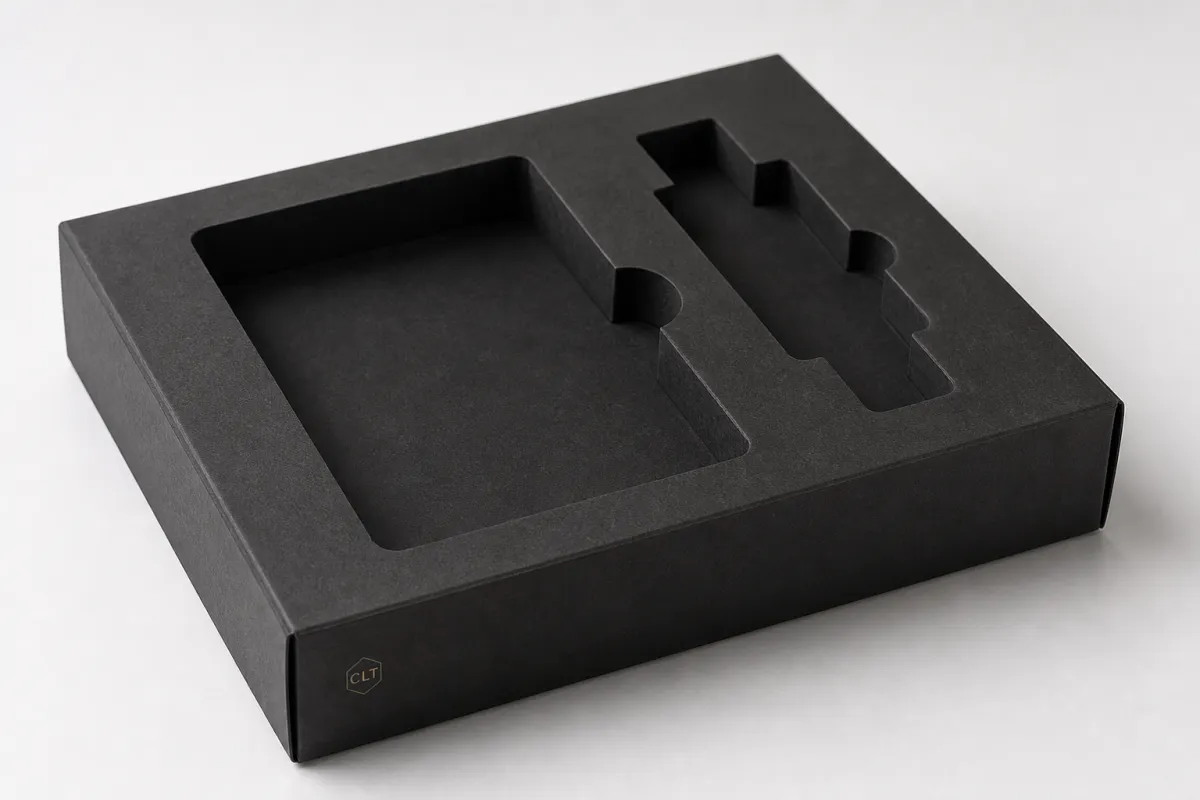
The most frustrating damage claim is the one where the carton arrives looking almost untouched. Corners are clean, graphics are intact, tape is holding, and the product inside still has a scuffed face or a cracked edge. That usually means the item moved just enough during handling for impact energy to transfer straight into the product. Custom protective inserts for boxes are built to stop that movement before it becomes a failure.
Parcel networks put boxes through a long chain of stress points. Cartons are sorted, set down, stacked, nudged, tilted, and vibrated for hours. Even without a dramatic drop, a shipment can take dozens of smaller shocks that slowly work the contents loose. Void fill can soften a hit, but it does not always hold the product in place. A true insert creates a defined pocket, cradle, or channel so the item stays where it belongs, and that repeatable retention is one reason custom protective inserts for boxes outperform generic filler for fragile or premium goods.
The difference shows up quickly with products that have sharp corners, polished surfaces, glass elements, painted finishes, lenses, screens, or protruding parts. Those items usually need more than kraft paper wads or loose air pillows. They need a controlled structure that keeps edges away from the carton walls and keeps one component from striking another. For that reason, many buyers choose custom protective inserts for boxes when the product is awkward, delicate, or expensive to replace.
If the product can rattle, it can fail. The carton may survive the trip, but the shipment still loses if the item inside arrives shifted, scratched, or cosmetically damaged.
There is another advantage that often gets overlooked. A consistent insert improves packout behavior. When the product lands in the same position every time, assembly gets faster, inspection gets easier, and errors become easier to spot. That matters on production lines where labor time is tight and the packout team needs a layout that behaves the same way on the first box and the ten-thousandth. In that sense, custom protective inserts for boxes are not only a protection tool; they are a process tool.
Good insert design also strengthens the unboxing experience. The product comes out centered, protected, and visually organized, which helps reinforce brand quality. That matters in package branding and retail packaging, where the insert may be the first thing a customer sees after opening the carton. When the interior feels thoughtful, the whole package feels more credible, and that credibility tends to stick.
How Custom Protective Inserts for Boxes Work Inside the Package
At a basic level, custom protective inserts for boxes work by controlling motion. They hold the product at key contact points, create clearance where the item is most vulnerable, and spread load so the outer carton does not press directly into fragile surfaces. A well-designed insert changes an empty box into a shaped transport environment instead of a loose container.
That protection comes from a few mechanical actions. First, the insert immobilizes the product so it cannot build momentum inside the package. Second, it spreads compression over a larger area, which lowers the chance that one corner or protrusion takes the full force. Third, it creates a buffer between the item and the carton walls, which matters during drops and stacking. When custom protective inserts for boxes are designed correctly, the work is not just about filling space; it is about managing force paths.
Different insert materials handle those forces in different ways. Foam can absorb shock very well and is often chosen for high-value or highly fragile products. Corrugated die-cuts can be surprisingly strong and are often used when cost control and recyclability matter. Molded pulp can provide structure and a clean, fiber-based story for brands focused on sustainability. Paperboard cradles are common for lighter items and can work well in retail packaging where the fit needs to feel precise and the visual presentation matters.
- Foam works well for impact-sensitive products, but it may add cost and can be harder to recycle depending on the resin.
- Corrugated is often a practical choice for repeatable runs, especially when the insert must fold, lock, or ship flat.
- Molded pulp supports a more fiber-forward story and can handle decent crush resistance, though the surface finish is usually more utilitarian.
- Paperboard fits lighter products and premium presentations, especially when the packout is meant to feel crisp and organized.
For shipping validation, many packaging teams use recognized test methods from ISTA to simulate distribution hazards like drops, vibration, and compression. That kind of testing matters because a polished drawing is not enough; the insert has to survive the lane the product will actually travel. If the item is tied to a fiber sourcing strategy, FSC can serve as a useful reference point for certified paper and board materials.
Support points matter just as much as material choice. A good insert holds the product at its strongest areas, not at the weakest surfaces. For a device with a screen, for example, the support should usually move away from the display face and toward the frame or base. For a bottle, the cradle may need to hold the shoulder and lower body while keeping the cap from taking side load. That is why custom protective inserts for boxes are usually built around the product itself rather than the carton alone.
Once the fit is right, packout repeatability becomes a real advantage. The team knows exactly how the item drops in, how the flap closes, and whether the insert is doing its job. That repeatability lowers labor friction, speeds inspection, and makes it easier to scale from a pilot run to a full production schedule. In that sense, custom protective inserts for boxes improve both protection and operating discipline.
Key Factors That Shape Fit, Protection, and Material Choice
Good custom protective inserts for boxes begin with product data, not with a box catalog. Weight, center of gravity, fragility, and surface finish all change how the insert should be built. A 2-pound cosmetic jar with a glossy label has very different needs from a 12-pound machined part with protruding corners. The first item may need finish protection, while the second may need load distribution and crush control.
Temperature sensitivity matters too. Some products become more brittle in cold conditions or more vulnerable to surface marking when heat and friction enter the picture. If the shipment is moving through a warm parcel stream, a hot warehouse, or a cold chain lane, the material choice may shift. Foam density, board caliper, and pulp wall thickness all behave differently under environmental change, so custom protective inserts for boxes should be matched to the shipping reality, not just the product drawing.
Shipping method changes the design as well. Parcel shipments usually need better drop resistance and vibration control than palletized freight. Mixed freight can add compression risk when other cartons are stacked on top. Automated sorting can introduce fast impacts at chute transitions. If the box will move through automation, the insert may need tighter retention and better edge control. That is one reason experienced buyers revisit custom protective inserts for boxes whenever the distribution method changes.
Fit starts with tolerances
In real production, exact dimensions are only the starting point. A product may measure 8.00 inches on the spec sheet, but actual samples might vary by a few hundredths, and those small differences matter when the insert is supposed to hold the item tightly without scuffing it. A smart design accounts for measured tolerance, coating thickness, label buildup, and any protrusions like tabs, switches, or caps. That is why sample review is so valuable when ordering custom protective inserts for boxes.
Another detail that changes everything is whether the product ships alone or with accessories. If cables, chargers, manuals, or adapters ride in the same box, the insert has to organize those parts so they do not collide. A flat tray that works beautifully for one product can fail the moment a second component is added. In those cases, custom protective inserts for boxes often become small systems instead of simple cushions.
Material tradeoffs are practical, not theoretical
Foam gives strong cushioning and can be cut to very tight shapes, but it is not always the first choice for a brand that wants a fiber-based story. Corrugated can be efficient, easy to die-cut, and suitable for flat-pack assembly. Molded pulp brings structure and a natural look that many teams prefer for sustainability messaging. Paperboard can elevate presentation and work well with custom printed boxes where the inside and outside need to feel coordinated. The right answer depends on the shipment, the brand, and the labor available to pack it.
For a buyer, the key question is not which material is best in the abstract. It is which material protects the product, fits the packout process, and lands at the right total cost. I have seen projects where a slightly heavier insert cut damage so much that the overall program became cheaper after returns were reduced. That is a common lesson with custom protective inserts for boxes: unit price matters, but damage prevention matters more.
If the design is headed toward retail packaging, the insert also has to respect the look and feel of the item. A rough-cut interior might be perfectly functional, but a premium launch may ask for cleaner edges, tighter fold lines, or a more refined reveal. The insert is part of the product packaging story, whether the team thinks of it that way or not. For that reason, custom protective inserts for boxes often sit right at the intersection of engineering and package branding.
One thing I always tell buyers: the best insert is rarely the one that sounds clever in a meeting. It is the one that survives a tired operator, a busy shift, and a rough sort lane without creating extra drama. That is the bar.
Process and Timeline: From Prototype to Production Run
Most custom protective inserts for boxes projects follow a familiar path. Discovery comes first: product photos, dimensions, weight, shipping method, and any known failure points. After that comes concept selection, where the team decides whether the insert should be foam, corrugated, molded pulp, paperboard, or a hybrid. Then comes the prototype, usually in CAD-driven cut samples, hand samples, or initial tooling depending on the material.
Fit testing is where the real value appears. A prototype should show whether the product slides in too easily, binds in the wrong place, or creates pressure marks on sensitive surfaces. It should also show how the lid closes, whether accessories stay where they belong, and whether the insert can be assembled without forcing the operator into a slow, awkward sequence. With custom protective inserts for boxes, a prototype is not only a sample; it is a check on the full packing behavior.
Timeline depends on complexity. Simple corrugated structures can sometimes move from concept to sample quickly, while molded pulp and tool-dependent formats usually need more setup time. If the final form requires cutting dies, molds, or multiple revision rounds, the lead time grows. For planning purposes, simple prototypes may take a few business days, while a production-ready insert program often lands in the 12-20 business day range after approval, depending on material availability and current workload. That is not a promise; it is the kind of range buyers often see with custom protective inserts for boxes.
Communication matters throughout the process. Clear photos of the product, especially from the top, side, and bottom, save time. So does a note about how the item should face inside the carton and whether the outer box is meant for direct ship, retail shelf use, or both. If a brand also wants the insert to support custom printed boxes or a coordinated branded packaging presentation, that should be stated early. A few extra details at the start can prevent several rounds of correction later.
One practical point stands out here: sample approval should happen with the actual product, not a dummy object of similar size. Weight distribution, surface friction, and small dimensional changes can all change the feel of the packout. A design that looks fine on paper may need a tighter pocket, a different score line, or a second retention point once the real product is in hand. That is why experienced teams treat custom protective inserts for boxes as a physical fit project, not just a graphic or procurement task.
Cost and Pricing: What Drives the Quote
Pricing for custom protective inserts for boxes is shaped by a handful of variables that are easy to miss if you only compare unit quotes. Material choice comes first, followed by size, geometry, number of components, and whether tooling is required. A simple folded corrugated insert is usually far less expensive to launch than a multi-piece foam or molded structure, but the cheaper option is only cheaper if it still protects the product and keeps labor under control.
Run length matters just as much. A small order may carry a higher unit cost because setup and handling are spread across fewer pieces. A larger order often lowers per-unit cost, especially when the insert can be nested, die-cut efficiently, or produced in stable volumes. For planning, a corrugated insert set might land around $0.18-$0.45 per unit on a moderate run, while molded pulp could sit around $0.22-$0.60 depending on tooling and finish. Foam can be lower or higher depending on density, cut complexity, and the board alternative. These are working ranges, but they help frame the conversation around custom protective inserts for boxes.
Labor is another hidden line item. A design that is cheap to make but slow to assemble can create a very real cost problem at packout. If a team has to fold multiple tabs, line up a confusing orientation, or wrestle the product into a tight pocket, the labor bill rises quickly. I have seen situations where a slightly more expensive insert paid for itself because assembly time dropped by a few seconds per box. That adds up fast at scale, and it is one reason buyers should look at total packout cost rather than material cost alone when comparing custom protective inserts for boxes.
Shipping weight can also affect the equation. A heavy insert may improve protection, but if it pushes the carton into a more expensive freight bracket, the savings can disappear. A very light insert that fails during transit creates returns, replacements, and brand damage, which are often far more expensive than the carton and insert themselves. The best quote is the one that holds up after damage risk, labor, and freight are considered together. That is the real financial test for custom protective inserts for boxes.
| Insert Type | Typical Use | Approx. Unit Cost Range | Best Strength | Main Tradeoff |
|---|---|---|---|---|
| Foam | Fragile, high-value, finish-sensitive items | $0.30-$1.20 | Strong cushioning and tight fit | Material perception and recycling concerns |
| Corrugated Die-Cut | Repeatable shipping packs, flat-pack assembly | $0.18-$0.45 | Cost control and good structural support | Less plush surface protection than foam |
| Molded Pulp | Fiber-based retail and shipping programs | $0.22-$0.60 | Structure with a more sustainable story | Tooling and surface finish limitations |
| Paperboard Cradle | Lightweight consumer goods and premium kits | $0.12-$0.35 | Clean presentation and low material weight | Less suitable for heavy or highly fragile items |
Material selection should also be viewed through the lens of compliance and sourcing. If your organization cares about fiber content, post-consumer recycled content, or forest certification, that should be part of the brief before quoting begins. A procurement team that asks the right questions early usually gets a cleaner result. That is especially true when custom protective inserts for boxes must support both performance and a sustainability narrative.
For brands building a broader packaging program, it can help to think of the insert as one part of a larger system that includes outer cartons, labeling, and marketing presentation. A clean packout can support package branding just as much as the printed exterior. When the insert, the carton, and the product all arrive in balance, the whole shipment feels more intentional, and that has real commercial value for custom packaging solutions used in e-commerce and retail packaging.
Common Mistakes When Ordering Protective Inserts
The biggest mistake is designing around the box alone. A carton can be the right size and still fail badly if the product moves inside it. The insert has to be built around the item, its weak points, and its orientation during shipping. If a buyer starts with outer dimensions and never studies the actual product shape, custom protective inserts for boxes often end up oversimplified and underperforming.
Another common error is underestimating compression and edge crush. A light-looking product can still need serious support if it rides in a heavier outer carton or gets stacked in mixed freight. I have seen thin board solutions fold where a buyer expected them to hold, simply because the product weight or shipping environment was not fully considered. Good custom protective inserts for boxes must be checked against the actual load, not just the visual impression of the item.
Overpackaging can be just as damaging as underpackaging. Some inserts protect extremely well, but they add bulk, slow down assembly, or increase freight cost so much that the operation suffers. A good design should be protective without becoming awkward. If the insert takes two people to assemble, blocks storage space, or creates a mountain of scrap, it may not be the right answer. That balance is one reason custom protective inserts for boxes benefit from testing with the production team, not just the engineering team.
There is also the problem of skipping real-world tests. A drawing can look excellent and still fail when the actual product is inserted, shaken, tilted, and dropped. Friction wear can show up where no one expected it. A lip may catch the product label. A tab may make insertion too tight. The packout has to be tested as a physical event, not as a flat file. That is where many custom protective inserts for boxes projects either prove themselves or reveal the need for a revision.
What buyers often miss
People often focus on the damage case and forget the assembly case. A packout that protects well but creates operator fatigue or confusion can cause problems of its own. The best insert should feel obvious in use, with clear orientation and minimal guesswork. If the packout team has to read a note every time to find the right fold or pocket, the design probably needs another pass. Strong custom protective inserts for boxes are usually simple to explain and simple to repeat.
Another overlooked point is communication between departments. Product teams may care most about presentation, operations may care most about speed, and procurement may care most about price. The insert has to satisfy all three to survive long term. That usually means the final decision should be based on product protection, run efficiency, and unit economics together, not in isolation. When those pieces align, custom protective inserts for boxes become a stable part of the packaging program rather than a recurring headache.
Expert Tips and Next Steps for Better Packouts
Start with a real sample of the product and take careful measurements in its true shipping condition. Include labels, caps, corner guards, cables, and any other details that change the outline. If you can, provide photos from multiple angles and note the way the item should face in the box. That one step alone can save time and reduce revision cycles on custom protective inserts for boxes.
Test the package the way it will travel. If the product ships by parcel, simulate drops and vibration. If it ships by freight, look at stacking and compression. If it passes through automated handling, make sure the insert does not deform or open during quick movement. The goal is not to make a package that looks sturdy. The goal is to prove the package performs under the conditions it will actually see. That is the standard that matters for custom protective inserts for boxes.
Review the insert from three angles at once: protection, assembly speed, and storage footprint. A solution that is easy to store but slow to pack may still be a problem. A solution that is fast to pack but wasteful in material may be a poor fit for a cost-sensitive program. The strongest choice usually sits in the middle, where the insert protects the product, keeps labor under control, and supports the brand story without excess. That is often the sweet spot for custom protective inserts for boxes in modern product packaging.
If sustainability is part of the brief, bring it into the design conversation early. Ask whether the insert needs to be fiber-based, whether recycled content is required, and whether the structure can be flattened or nested to reduce shipping volume. If the package must support a premium retail reveal, consider how the insert surface, color, and fold lines will look when the customer opens the carton. A good insert can support both practical shipping and the kind of branded packaging that makes the product feel finished. That is where custom protective inserts for boxes and smart packaging design meet.
From a buyer’s point of view, the next steps are straightforward: document the product spec, define the shipping method, request prototype options, test the packout with a real sample, and approve the final geometry before volume production begins. If the project also includes custom printed boxes or a coordinated retail packaging program, keep the insert review tied to the carton review so the two parts of the system are designed together. That is usually the cleanest path to durable, repeatable custom protective inserts for boxes.
When the fit is right, the operation gets easier, the product arrives safer, and the unboxing experience improves without adding unnecessary complexity. The practical takeaway is simple: define the product, test the real packout, and choose the insert that protects the item while keeping assembly honest. That is the real value of custom protective inserts for boxes in a packaging program that has to perform every single time.
FAQ
How do I know if custom protective inserts for boxes are better than void fill?
Choose custom protective inserts for boxes when the product shifts, scratches, or needs a repeatable presentation that loose filler cannot provide. Void fill can work for simple shapes, but inserts are usually stronger for fragile, premium, or multi-part products because they lock the item in place instead of only surrounding it.
What materials are most common for custom protective inserts for boxes?
Common options include foam, corrugated die-cuts, molded pulp, and paperboard cradles. The right choice depends on weight, fragility, sustainability goals, and how the product is shipped. In many programs, custom protective inserts for boxes are selected by balancing damage risk against cost and packout speed.
How long does the sample and approval process usually take?
Simple layouts can move quickly, while more complex designs may need several rounds of prototype testing. Timeline depends on material availability, tooling requirements, and how fast feedback is returned on the sample. For custom protective inserts for boxes, the best schedule is the one that leaves room for a real fit check before production starts.
What affects the pricing of custom protective inserts for boxes the most?
Material type, insert complexity, product size, order quantity, and whether custom tooling is required all affect price. Labor to assemble or pack the insert can also matter just as much as the raw material cost. With custom protective inserts for boxes, the cheapest material is not always the lowest-cost program once damage and handling time are included.
How can I test whether my insert fits correctly before production?
Use an actual product sample and test the final packout by moving, shaking, and handling the box as it will travel. Check for shifting, compression marks, difficult insertion, and any points where the product touches the outer carton. That is the most reliable way to confirm that custom protective inserts for boxes are ready for a production run.

