Buyer Fit Snapshot
| Best fit | Custom Recyclable Cartons with Lamination projects where brand print, material claims, artwork control, MOQ, and repeat-order consistency need to be specified before quoting. |
|---|---|
| Quote inputs | Share finished size, material target, print colors, finish, packing count, annual reorder estimate, ship-to region, and any compliance wording. |
| Proofing check | Approve dieline scale, logo placement, barcode or warning zones, color tolerance, closure strength, and carton packing before bulk production. |
| Main risk | Vague material claims, crowded artwork, missing packing details, or unclear freight terms can make a low unit price expensive after revisions. |
Fast answer: Custom Recyclable Cartons with Lamination: Board, Finish, Dieline, and Unit Cost should be specified like a repeatable production item. The safest quote records material, print method, finish, artwork proof, packing count, and reorder notes in one written spec.
Production checks before approval
Compare the actual filled-product size with the drawing, then confirm tolerance on folds, seals, hang holes, label areas, and retail display edges. Reserve space for logos, QR codes, warning copy, and material claims before decorative graphics fill the panel.
Quote comparison points
Review material grade, print process, finish, sampling route, tooling charges, carton quantity, and freight assumptions side by side. A quote is only useful when the supplier can repeat the same color, closure quality, and packing count on the next order.
Custom recyclable cartons with lamination sit in a narrow but very useful part of packaging. They have to look polished, hold up in transit, survive handling on a retail shelf, and still make sense within a recycling strategy that a buyer can explain without hand-waving. That balance is not automatic. The board, the coating or film, the adhesive, the artwork, and the converting method all have to pull in the same direction if the carton is going to be both attractive and credible.
Packaging buyers feel that tension quickly. Brand teams want stronger shelf presence and a cleaner story. Operations teams want cartons that arrive looking crisp, run well on the line, and do not scuff up after a few touches. Sustainability teams want a structure they can defend when someone asks what actually happens after the carton is used. Those priorities can line up, but only if the spec is built with care instead of assembled on autopilot.
In practice, the real question is not whether lamination sounds premium. It is whether the carton can survive print, die cutting, filling, shipping, and recycling without creating avoidable problems. That is where custom recyclable cartons with lamination either earn their place or start to fall apart.
What Are Custom Recyclable Cartons with Lamination?
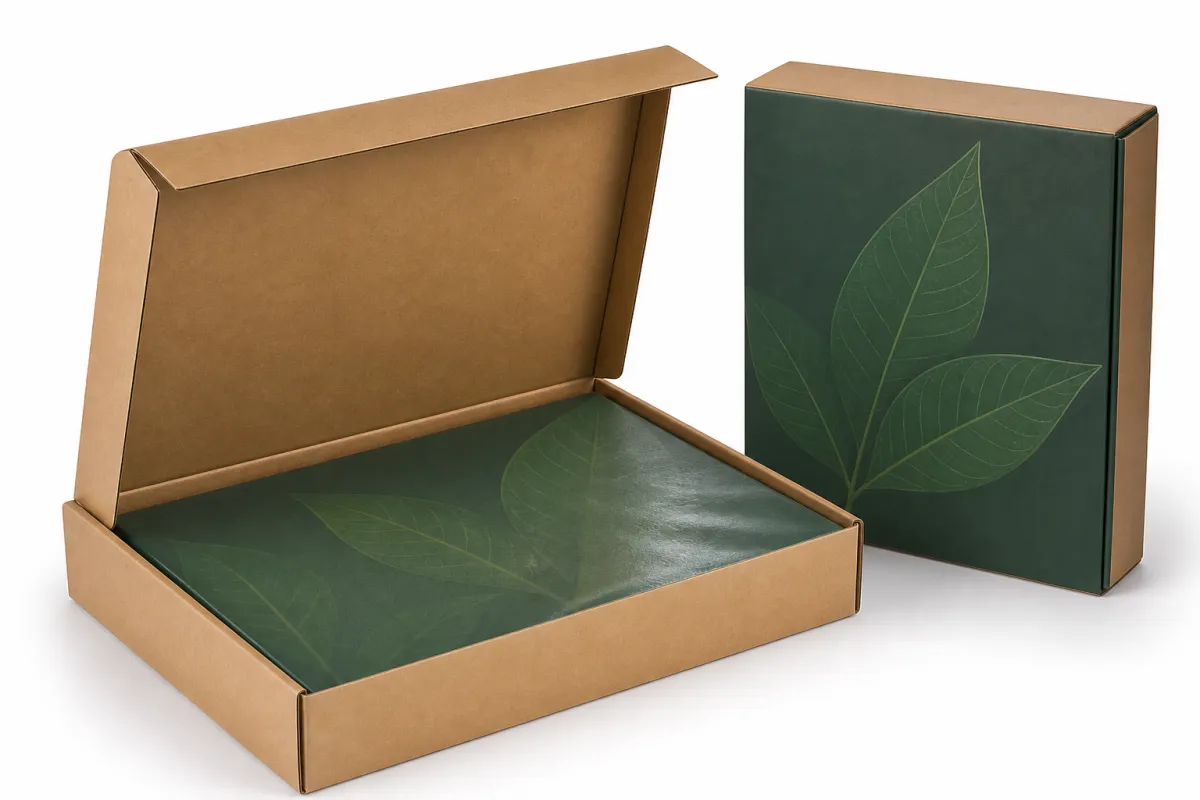
Custom recyclable cartons with lamination are paperboard cartons with a protective surface layer chosen to support both appearance and everyday performance. The word lamination does not automatically cancel recyclability. A carton can still be designed for paper recovery if the board, finish, and adhesive are selected with fiber recovery in mind. The trouble usually comes from the construction details, not the label itself.
Most of these cartons are used as folded paperboard product packaging in categories where the box carries part of the brand experience. Cosmetics, supplements, wellness products, specialty food, and subscription mailers are common examples. In those settings, the carton does more than protect the contents. It becomes part of the product story, which is why the surface matters so much.
The finish may add gloss, soften reflections, improve scratch resistance, or help the carton handle humidity, grease, and fingerprints. A carton used in a display tray may need more abrasion resistance than one tucked into a protective shipper. A carton sitting in a retail aisle may need a cleaner tactile feel than a carton used only inside a mailer. Custom recyclable cartons with lamination are common because they can deliver those benefits without pushing the brand into a plastic-heavy format.
Recyclability depends on the full structure. Board grade matters. Fiber source matters. Adhesive placement matters. Print density matters. A thick plastic film can make fiber separation harder, while a lighter coating or a recovery-friendly surface treatment can be much easier to process. Treating custom recyclable cartons with lamination as a system is the only honest way to judge them.
That is why the strongest use cases are the ones with a clear physical need. Skincare brands often want a carton that stays crisp after repeated handling. Supplement brands want a package that still looks fresh on warehouse shelves and in subscription shipments. Specialty food brands may need scuff protection and light moisture resistance. Custom recyclable cartons with lamination fit those jobs because they improve both durability and presentation without jumping straight to a plastic shell.
Not every carton needs the same level of protection. Some custom recyclable cartons with lamination are built for heavy retail handling. Others are closer to custom printed boxes with a light barrier finish. The best specification is the one that solves the actual failure point, not the one that simply sounds luxurious during a sample review.
A recyclable claim only holds if the whole carton supports it. A polished face layer means little when the board, glue, and finish work against each other in recovery.
The right frame is straightforward. Custom recyclable cartons with lamination can be a strong choice when they reduce scuffing, protect artwork, and help the carton last through the supply chain. They become a poor choice when teams assume every laminate behaves the same way. That is the difference between a carton that performs and a carton that only looks finished.
How Custom Recyclable Cartons with Lamination Work
Most projects begin with the board. A buyer may choose SBS, C1S, or recycled paperboard depending on stiffness, print quality, cost, and sourcing goals. Once the substrate is set, the carton is printed, laminated or coated, die cut, folded, and glued. Each step affects the result. A beautifully printed sheet can still become difficult to recover if the finish or adhesive is poorly matched to the board.
The production path looks simple from a distance and far more specific in the plant. Board comes first. Print follows, often through offset or digital methods depending on the run size. The surface treatment is applied next. Die cutting turns the sheet into a blank, and folding and gluing finish the carton. Custom recyclable cartons with lamination can move through that sequence efficiently when the finish is selected for the board and the product environment.
Gloss, matte, soft-touch, and aqueous coatings are the most familiar choices. Gloss often strengthens color and resists scuffing well. Matte brings a quieter look and reduces glare. Soft-touch creates a velvet-like feel that many premium brands want, yet that tactile effect can add complexity when the carton is evaluated for recycling. Aqueous coatings usually fit better with paper recycling guidance than heavier plastic films, though they do not always produce the same look or hand feel.
That tradeoff is central because custom recyclable cartons with lamination usually serve two jobs at once: visual appeal and physical protection. A carton in a humid warehouse may need moisture resistance. A carton packed tightly with other products may need better abrasion control. A carton shipped across long distances may need a finish that keeps the corners from looking tired before the consumer ever opens the box. The finish is never just decoration; it is part of the carton’s performance.
Once the carton enters the recycling stream, it is mixed with other paper and paperboard materials. In a favorable case, the coating or laminate separates well enough that fibers can be repulped with little contamination. In a less favorable case, the surface layer resists separation or fragments in ways that lower recovered fiber quality. Custom recyclable cartons with lamination should be judged against local recycling guidance, not against a supplier’s broad claim that the carton is recyclable in every setting.
When only moderate protection is needed, a lighter coating or a cleaner print strategy may be enough. Controlled ink coverage, a well-chosen varnish, or a simplified palette can reduce the need for a heavier surface layer. Some projects prove that custom recyclable cartons with lamination are the right fit. Other projects show that a more modest coating delivers the same result with less material complexity.
Decorative features deserve equal scrutiny. Embossing, spot foil, and textured finishes can strengthen package branding, yet they also add extra steps and extra material behavior to check. When those features sit on top of custom recyclable cartons with lamination, the spec should be reviewed with care. A carton can still be beautiful and responsible, though the extras should earn their place instead of being added by default.
For additional packaging context, the Paper and Paperboard Packaging Council at packaging.org offers a useful industry reference, and the EPA's consumer recycling guidance at epa.gov helps explain how paper-based items move through real recycling systems.
Key Factors That Affect Performance, Claims, and Recyclability
The board sets the baseline. If the substrate is weak, even a beautiful finish will struggle to compensate. Stiffness, basis weight, brightness, and fiber content all influence how custom recyclable cartons with lamination behave during production and use. Brands that want FSC-certified paperboard can usually specify it at the beginning, which helps with procurement records and sustainability communications. FSC and PEFC are not style preferences; they are sourcing and chain-of-custody signals.
Laminate chemistry matters as much as the word itself. A thin coating designed with fiber recovery in mind is very different from a thicker plastic film. Adhesive behavior matters too. A surface layer that separates cleanly is more likely to fit into paper recycling than one that clings tightly to the fibers. When a supplier says custom recyclable cartons with lamination are available, the buyer should ask what the surface layer is made of, how thick it is, and whether the adhesive has been tested for paper recovery.
Print coverage can shift the outcome more than many teams expect. Heavy ink density, metallic effects, and broad dark solids increase cost and can make recycling behavior less predictable. Spot treatments and specialty varnishes can look elegant, yet they should always be justified against the carton’s real function. In some projects, lighter artwork with better contrast outperforms a full flood of surface treatment. That is especially true for custom printed boxes, where visual sophistication does not need to depend on maximum finish coverage.
Regional recycling rules add another layer. A carton that is accepted in one collection program may be questioned in another. Some municipalities are comfortable with coated paperboard. Others are more cautious. Custom recyclable cartons with lamination need claim language that reflects the market where the carton will actually be used, not a broad assumption that all paperboard is treated the same way. If the packaging ships across several regions, the claim should be checked against the most restrictive likely market.
A practical way to think about the spec is to separate four goals: protection, appearance, recyclability, and line efficiency. Those goals compete for space. A carton with a tactile premium finish may score high on appearance while making recovery more complicated. A matte aqueous coating may support recyclability more cleanly while offering less visual drama. The decision should be measured rather than emotional. That is how packaging design avoids expensive corrections later.
| Finish Option | Typical Unit Impact | Appearance | Recycling Friendliness | Best Fit |
|---|---|---|---|---|
| No laminate / optimized varnish | $0.00-$0.03 add-on | Clean, restrained | Often strongest | Basic retail packaging, lower scuff risk |
| Aqueous coating | $0.02-$0.05 add-on | Matte or satin | Usually favorable | Custom recyclable cartons with lamination alternatives |
| Thin recyclable film laminate | $0.04-$0.10 add-on | Premium, durable | Depends on structure and market | Higher-touch branded packaging |
| Soft-touch laminate | $0.06-$0.14 add-on | Luxury tactile feel | Needs extra review | Premium cosmetics and specialty items |
Documentation matters just as much as the material choice. A supplier should be able to describe the substrate, finish, adhesive, and converting method in plain language. If that description is vague, slow the project down. Ask for the construction drawing. Ask for test notes. Ask what recycling stream the carton was designed for. Without that information, custom recyclable cartons with lamination become a hope-based purchase rather than an evidence-based one.
Die cutting and glue coverage can influence recovery more than many buyers expect. Excess adhesive on seams, layered inserts, or decorative windows can create mixed-material issues. That is one reason some custom recyclable cartons with lamination perform better in practice than others that look nearly identical. A carton is more than a sheet with a polished face.
Cost and Pricing: What Custom Recyclable Cartons with Lamination Really Cost
Pricing begins with the board, but it never ends there. Custom recyclable cartons with lamination are shaped by substrate grade, finish selection, tooling, print complexity, folding style, and freight. Minimum order quantity can shift the economics quickly. A carton that looks affordable at 10,000 units may feel expensive at 1,000 because setup and finishing effort are spread across fewer pieces. That part is kinda annoying, but it is how the math usually works.
For buyers comparing options, unit price matters only part of the time. Total value tells the fuller story. A carton that costs a little more but arrives with fewer scuffs, fewer returns, and less repacking can be cheaper in practice. That point becomes more obvious in Premium Product Packaging, where a damaged carton can quietly weaken the shelf impression long before anyone records a formal complaint.
Typical small-run pricing for custom recyclable cartons with lamination often lands around $0.18-$0.40 per unit, depending on size, board, and finish. Mid-volume orders can fall closer to $0.10-$0.22 per unit. Larger runs may go lower still, especially when the artwork is simple and the laminate is standardized. Those figures are broad ranges, not promises. Once embossing, foil, specialty windows, or complex structural features enter the mix, the cost rises quickly.
Hidden costs are where buyers tend to get surprised. Samples cost money. Prototypes cost money. Structural changes cost money. Press setup waste costs money. If the carton must support compliance review or specific recyclability language, that review time has value too. Finished inventory storage can also become a budget item when the rollout is staged. Custom recyclable cartons with lamination are not simply purchased; they are managed through the supply chain.
The table below offers a cleaner way to compare quotes. Ask suppliers to price the same structure in three versions, then compare like with like.
| Quote Scenario | What to Include | Typical Relative Cost | Why It Helps |
|---|---|---|---|
| Base carton | Board, print, standard finish | Lowest | Sets the benchmark |
| Custom recyclable cartons with lamination | Same carton plus recyclable-friendly finish | Moderate | Shows the cost of added protection |
| Premium finish version | Same carton plus soft-touch, foil, or extra embellishment | Highest | Reveals the tradeoff between appearance and budget |
That comparison matters because custom recyclable cartons with lamination should not be judged only at the purchase order stage. A more durable carton can reduce shrink-related waste, lower the chance of product rework, and protect package branding during transit. A cheaper carton that wears badly can end up costing more once damages and customer complaints show up.
A useful tactic is to compare the same dieline with and without lamination, then add a recyclable coating option as a third path. Procurement, marketing, and operations can then look at the same structure from different angles. That often makes it easier to decide whether custom recyclable cartons with lamination are worth the added spend for that SKU.
For brands already using Custom Packaging Products, the most efficient move is often to standardize the structure and vary only the finish where it is truly needed. A common base can simplify tooling and reduce lead times. A steadier specification usually outperforms a one-off carton that looks impressive but creates operational friction.
Step-by-Step Process and Timeline for Getting It Right
The fastest route to a clean project begins with a clear brief. Define the product dimensions, weight, shelf environment, shipping stress, brand goals, and recycling claim before artwork starts. If the carton must resist grease, say so. If it will sit near refrigerated product, say so. Custom recyclable cartons with lamination perform better when the failure mode is named early.
The structural phase follows. The team reviews dielines, closure style, board thickness, and finish options. That is the right moment to compare at least two or three surface treatments. One may resist scuffing better. Another may feel richer in the hand. A third may fit recycling guidance more cleanly. Custom recyclable cartons with lamination should be selected after that comparison, not before it.
Artwork approval is where many schedules drift. Ink coverage, color management, barcodes, legal copy, and sustainability claims all need review. If the carton includes a recycling statement, that statement should match the actual construction. Vague language creates avoidable problems. A well-built carton can still be undermined by careless claim wording.
A realistic timeline from concept to production often runs 12-15 business days after proof approval for simpler jobs. More complex custom recyclable cartons with lamination can take 3-5 weeks or longer if samples, revisions, or material sourcing slow the process. Testing or compliance sign-off extends that window. Lead times stay tighter when artwork is stable and the finish is standard. They stretch when the spec keeps changing after the first sample arrives.
Use a practical approval checklist to keep the project moving:
- Confirm the exact board grade and finish construction.
- Review a physical sample, not just a render.
- Check line compatibility if the carton will run on existing equipment.
- Verify recycling guidance for target markets.
- Lock artwork, claims, and barcode placement before production.
Custom recyclable cartons with lamination can also move faster when the team reuses tooling or standardizes on one family of structures. That matters for brands with multiple SKUs. Shared dimensions and a common finishing approach reduce complexity, which usually means fewer surprises, fewer delayed approvals, and less scrambling right before launch.
Companies that buy retail packaging at scale often underestimate how much time disappears into email loops. One department wants a more premium feel. Another wants lower cost. A third wants stronger recycling language. The best projects turn those competing needs into a single scorecard. If custom recyclable cartons with lamination still win after that review, the production path becomes much clearer.
Common Mistakes That Make Recyclable Cartons Fail
The biggest mistake is assuming any laminated carton is recyclable. That assumption causes trouble often enough to deserve real caution. Some films, coatings, and adhesives interfere with paper recovery, especially when they are thick, stubborn, or heavily applied. Custom recyclable cartons with lamination need evidence, not optimism.
Claim inflation causes a different kind of damage. Teams reach for words like eco-friendly or sustainable because they sound safe. They are not safe at all when they are vague. A carton should be described through its actual material structure and recycling path. If the board is recyclable under a specific program, say that. If the finish is compatible with paper streams under certain conditions, say that carefully. Good packaging design depends on precise language.
Decoration can also become expensive baggage. Too many teams add embossing, metallic effects, spot coatings, window patches, and layered inserts, then wonder why the price jumps and the sustainability review gets uncomfortable. Custom recyclable cartons with lamination can support premium branding, though every added element should earn its place. If a detail does not improve the customer experience or protect the product, it is probably consuming budget without enough return.
Testing is another weak spot. Some buyers approve a carton based on appearance alone. The carton then reaches the line and runs poorly, or it gets into distribution and shows edge wear after a short trip. Real-world testing matters. Local collection rules matter too. What looks fine in a controlled sample can behave very differently once humidity, friction, and ordinary handling enter the picture.
Supplier communication is often the last problem, and it may be the one that causes the most confusion. Vague specs produce vague cartons. A finish name by itself is not enough. Ask for the board name, laminate description, adhesive details, print method, and recycling notes. The more specific the request, the easier it is to compare custom recyclable cartons with lamination across suppliers. Specificity also makes internal approval easier because everyone is looking at the same information.
For teams working on custom printed boxes, the lesson is familiar: every attractive detail carries a technical cost. That does not make the detail wrong. It means the choice should be deliberate. A carton with a polished appearance and a clear recycling story is possible. It just does not happen by accident.
Expert Tips and Next Steps for Better Packaging Specs
Start with the failure point, not the finish. Is the carton scuffing, sweating, greasing up, or losing shelf presence? Once the actual problem is named, the finish selection becomes far more focused. In many cases, custom recyclable cartons with lamination are needed only because the carton has to survive one specific stress point. Solving that point without overbuilding the spec is the mark of a disciplined packaging buyer.
Ask suppliers for documentation a marketing team can actually use. That means a construction drawing, a material description, and a plain-language note on recyclability. If the brand needs to explain the carton to retail partners or internal sustainability reviewers, the paperwork has to be understandable. A carton can be technically sound and still be awkward to manage if the documents are confusing.
Compare two or three finish options on the same structure. One sample may feel better in hand. Another may resist scuffing more effectively. A third may create a cleaner claim story. Custom recyclable cartons with lamination are easier to approve when the team can see the tradeoffs side by side. Abstract debates move slowly and tend to cost more.
Run a pilot order or line trial before a full rollout whenever the carton will use existing equipment. That is especially true for tighter folds, heavier board, or a finish that changes slip or glue behavior. A small test can show whether the carton holds up under pressure. It can also reveal folding memory, glue adhesion, or pack-out speed issues before a full production run lands on the floor.
Brands that want stronger package branding should think in systems. The carton, the print, the closure, and the distribution path all work together. If custom recyclable cartons with lamination are chosen well, they can support the shelf story and the sustainability story at the same time. If they are chosen casually, they can create a nice sample and a messy rollout.
If you are starting from scratch, the next steps are direct:
- Audit the current carton and identify the real damage point.
- Define the recycling claim for each target market.
- Request samples for at least two finish options.
- Compare pricing on the same dieline and quantity.
- Run a small test before committing to full production.
For teams building out broader Custom Packaging Products, a disciplined carton spec can become the template for future SKUs. That shortens the next launch and keeps the sustainability conversation grounded in construction details rather than marketing shorthand.
Used well, custom recyclable cartons with lamination deliver something buyers rarely get in the same package: a carton that looks sharp, protects the product, and still fits within a recycling-oriented packaging strategy. The key is to keep the spec honest, keep the finish purposeful, and tie the carton to the product’s real performance needs instead of decoration for its own sake. Start with the failure point, choose the lightest finish that solves it, and do not approve the final structure until a physical sample has passed line testing and the recycling claim matches the actual construction.
FAQ
Are custom recyclable cartons with lamination actually recyclable?
Yes, sometimes. The answer depends on the board, laminate, adhesive, and the recycling system that receives the carton. Ask for the full construction details instead of relying on the word recyclable alone. Local collection rules still matter, so custom recyclable cartons with lamination may be accepted in one market and treated differently in another.
Which lamination type is best for recyclable cartons with lamination?
The most workable options are usually thinner, fiber-friendly surface treatments or recyclable coating systems rather than heavy plastic films. Soft-touch finishes can look premium, but they need extra scrutiny because they do not always separate as cleanly in paper recovery. The best choice is often the lightest finish that still protects the product.
How much do custom recyclable cartons with lamination cost?
Pricing depends on board grade, finish type, run size, tooling, and artwork complexity. Small runs often land higher on a per-unit basis because setup and finishing costs are spread across fewer cartons. For a realistic comparison, ask for three quote versions: base carton, custom recyclable cartons with lamination, and a premium finish option.
How long does the process take from sample to production?
The timeline depends on artwork approval, sample rounds, material availability, and whether testing or compliance review is needed. Simple projects can move quickly if the dieline and finish are already defined. More complex custom recyclable cartons with lamination often need extra time for revisions, proofing, and finish validation.
What should I send a supplier for an accurate quote?
Send carton dimensions, quantity, product weight, print coverage, finish preference, recycling requirements, and your target deadline. Include whether you need samples, line testing, or support with packaging claims. The more specific the brief, the more accurate the pricing and timeline will be for custom recyclable cartons with lamination.

