Buyer Fit Snapshot
| Best fit | Custom Recyclable Mailers for Ecommerce projects where brand print, material claims, artwork control, MOQ, and repeat-order consistency need to be specified before quoting. |
|---|---|
| Quote inputs | Share finished size, material target, print colors, finish, packing count, annual reorder estimate, ship-to region, and any compliance wording. |
| Proofing check | Approve dieline scale, logo placement, barcode or warning zones, color tolerance, closure strength, and carton packing before bulk production. |
| Main risk | Vague material claims, crowded artwork, missing packing details, or unclear freight terms can make a low unit price expensive after revisions. |
Fast answer: Custom Recyclable Mailers for Ecommerce: Film, Print, MOQ, and Carton Packing should be specified like a repeatable production item. The safest quote records material, print method, finish, artwork proof, packing count, and reorder notes in one written spec.
Production checks before approval
Compare the actual filled-product size with the drawing, then confirm tolerance on folds, seals, hang holes, label areas, and retail display edges. Reserve space for logos, QR codes, warning copy, and material claims before decorative graphics fill the panel.
Quote comparison points
Review material grade, print process, finish, sampling route, tooling charges, carton quantity, and freight assumptions side by side. A quote is only useful when the supplier can repeat the same color, closure quality, and packing count on the next order.
A flat mailer does a lot of quiet work. For the right SKU mix, custom recyclable Mailers for Ecommerce reduce material use, cut tape and void fill, and keep the pack line moving without turning every shipment into a tiny warehouse drama.
Good packaging does not need to make a speech. It needs to protect the item, move through fulfillment without headaches, and still create a clean brand moment when the parcel lands on the doorstep.
What Custom Recyclable Mailers for Ecommerce Really Are
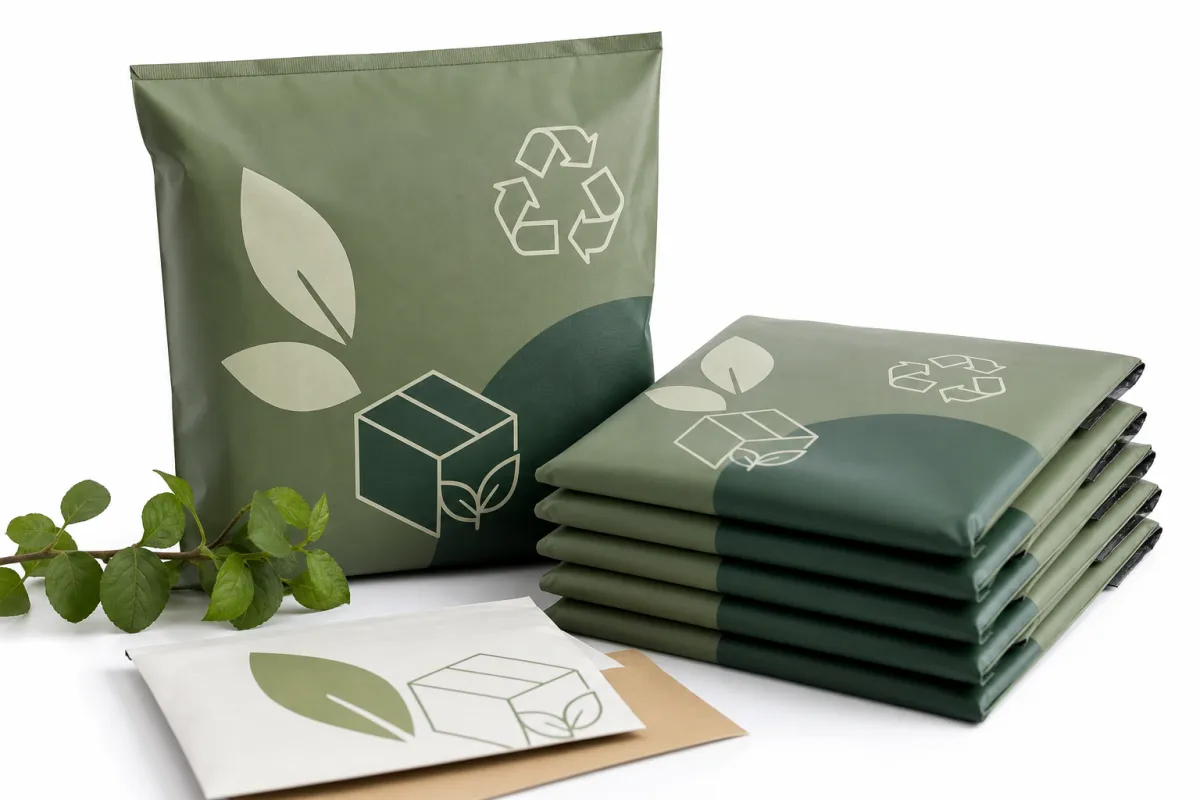
At the packing table, the difference shows up fast. A soft tee, a slim accessory, a stack of documents, or a folded insert usually does not need a full corrugated carton, which is why custom recyclable mailers for ecommerce have become such a practical option for many brands. The mailer replaces a bulkier box, removes extra touchpoints, and can eliminate void fill entirely when the product is sized correctly. That is not a theory deck claim. It is what happens on a line when the team seals one flat pack instead of building a box, loading dunnage, taping every side, and checking for empty corners.
Recyclable is a loaded word, so the details matter. Single-material construction is the cleanest path because the customer sees one primary material stream instead of a layered mix that can confuse sorting. Paper-based builds should use recycling-friendly coatings, keep ink coverage sensible, and, where possible, rely on fiber certified under programs like FSC. Poly-based options can also be recyclable if the structure is built for that stream and the local market accepts it. Custom recyclable mailers for ecommerce only deserve the claim when the end-of-life path is real, not just technically possible on a spec sheet.
Local rules complicate the picture, and plenty of teams underestimate that. A curbside recyclable structure in one region may be useless in another. Some municipalities still want customers to remove labels or take flexible packaging to store drop-off bins. Honest disposal language has to match the destination market, not a vague promise printed in tiny type. The EPA recycling guidance is a solid reminder that access and local rules shape the final claim more than a nice icon on the flap.
Custom recyclable mailers for ecommerce make the most sense for soft goods, flat items, low-fragility products, and merchandise that does not need heavy corner protection. Apparel, printed inserts, small accessories, beauty kits with secure primary packaging, and folded textiles are common fits. The business case is simple: less material, faster packing, fewer line items in the packaging room, lower dimensional weight on some shipments, and a cleaner unboxing story that still feels like branded packaging instead of generic shipping gear.
A recyclable claim only helps if the pack survives the lane, fits the product, and tells the customer exactly what to do after opening.
That is why custom recyclable mailers for ecommerce should be treated as both packaging and an operational tool. A well-chosen mailer does more than look nice in a mockup. It supports packaging design, protects the SKU through shipping, and keeps the brand presentation steady across channels. If a company already uses Custom Printed Boxes for some products, the mailer can still sit inside the same visual system with the same color logic, typography, and package branding rules. The surface is smaller, sure, but the standard should still feel deliberate.
- Best fit: flat apparel, soft goods, folded print pieces, and light accessories.
- Less ideal: sharp edges, fragile corners, loose components, or heavy glass.
- Buyer value: lower material use, faster packing, and simpler disposal messaging.
- Brand value: a cleaner unboxing story that still reads like retail packaging.
How Custom Recyclable Mailers for Ecommerce Work
Under the surface, custom recyclable mailers for ecommerce depend on a stack of small decisions that affect both recycling and performance. The substrate is the biggest one because it controls stiffness, tear behavior, print quality, and the disposal route. After that come the seal area, closures, tear strip, reinforcements, and any coatings or varnishes that influence how the package is handled and how easily it can be sorted after use. A mailer can look simple on a render and still behave very differently on a fulfillment line if the seam design or adhesive layout is off.
Paper mailers usually rely on a fiber base with a closure that does not introduce unnecessary mixed materials. Some use a peel-and-seal strip, others use fold-over designs, and some include a second adhesive for returns. Recyclable polyethylene mailers are popular for durability and moisture resistance, especially in climates where paper can pick up humidity during staging or transit. Hybrid fiber-based structures exist too, but those need more scrutiny because every extra layer raises the question of whether the customer can still recycle the finished piece cleanly.
The fulfillment flow sounds simple until the warehouse is actually doing it. The product is kitted, slipped into the mailer, sealed, labeled, and moved into the carrier network. If the mailer is undersized, operators fight the pack. If it is oversized, the brand pays for extra material and loses the dimension advantage it wanted in the first place. Custom recyclable mailers for ecommerce work best when the fit is disciplined enough that the mailer hugs the item without crushing it, bulging at the seams, or forcing the team to spend extra seconds adjusting every parcel by hand.
Performance matters more than perception. A mailer has to protect the product through the real shipping lane, not just look sustainable on a sales sheet. That means testing the closure under repeated handling, watching for corner abrasion, checking whether the graphics scuff, and confirming that the seam does not split under pressure. If you want to compare formats, review our Custom Packaging Products and, for a tougher film-based route, our Custom Poly Mailers before deciding which structure matches the product and the carrier path.
Paper-based options often lean on recycled content and source certification. Polymer options shift the conversation toward gauge, tear resistance, and the exact recycling stream the structure is built for. Either way, custom recyclable mailers for ecommerce should be validated with the same seriousness you would give a carton spec. A brand that cares about product packaging should care just as much here, because the mailer is doing real work even if it looks light and simple.
I have watched teams get seduced by a pretty sample and then discover the package was a pain at scale. It is kinda funny until the labor numbers show up. A mailer that adds three seconds per order can eat the savings from lighter materials faster than anyone expects.
Key Factors When Choosing Recyclable Mailers
Product fit comes first. Custom recyclable mailers for ecommerce should match the actual weight, surface finish, and breakage risk of the item, not a generic category label. A 6-ounce knit shirt and a 14-ounce boxed accessory do not need the same wall strength or closure profile. If the item has a little give, a lighter mailer may be enough. If it has a hard edge, a thicker structure or a different package format may be the smarter move. That is where packaging programs go sideways: they pick the material first and the SKU second.
Print coverage deserves more attention than it usually gets. Heavy ink loads, metallic accents, lamination, and layered decorative finishes can complicate recycling pathways, especially for fiber-based formats. A strong design can still look premium without covering every inch. Treat package branding the same way you would treat a storefront sign: clarity, contrast, and legibility matter more than flooding the surface with decoration. On some product packaging lines, a restrained graphic system actually feels more premium because the material itself stays visible.
Size architecture is another pressure point. A well-sized mailer often ships better, looks sharper, and saves more than a cheap oversized option ever will. Oversizing can raise freight cost, let the item slide around, and weaken the customer experience because the package feels improvised. Good packaging design gives the mailer just enough room for the product, any required insert, and the closure method, while still keeping the silhouette flat. That discipline is one reason custom recyclable mailers for ecommerce can lower costs across the system, not just on the material line.
Brand experience should not be treated like garnish. Customers notice how the mailer opens, whether the tear strip works cleanly, whether a return strip is obvious, and whether disposal instructions are easy to understand. If the pack arrives with the same visual order and care as your retail packaging, the customer reads that as confidence. If it feels like a generic envelope with a logo, it will not carry the same story. The best custom recyclable mailers for ecommerce make sustainability feel practical, not performative.
There is also a basic operational question: how many packaging SKUs does the warehouse want to manage? A brand can sometimes simplify around one or two mailer sizes and a few insert variations, which reduces mistakes and speeds up replenishment. That does not mean every order fits the same way, but it does mean the team can make the pack room less chaotic. For brands growing across channels, that consistency can matter as much as the material choice itself. It is one of the quieter benefits of custom recyclable mailers for ecommerce.
Before approving any spec, review these points together:
- Product weight: does the mailer hold the item without overbuilding the structure?
- Finish and fragility: will the surface scuff, crack, or crease in transit?
- Ink and coatings: are the print choices helping or complicating recyclability?
- Return path: does the design support a second use if the brand needs it?
- Warehouse fit: can operators pack it fast and consistently?
Custom Recyclable Mailers for Ecommerce: Cost and Pricing
Pricing starts with the material choice, but it does not stop there. Custom recyclable mailers for ecommerce are priced by substrate, thickness or gauge, print coverage, size, closure style, quantity, and whether the design uses recycled content or a more specialized construction. A simple one-color paper mailer ordered in volume may land very differently from a heavily printed, custom-sized structure with a return strip and multiple color passes. As a buyer, the real question is not just what the quote says, but what the mailer does to labor, shipping, and damage rates after it enters the operation.
That is why total landed cost is the better lens. A mailer that costs a little more per unit can still save money if it replaces void fill, trims pack time by 10 to 20 seconds per order, or reduces dimensional weight on enough shipments to matter. If the structure also cuts damage claims or replacement orders, the business case gets stronger fast. Custom recyclable mailers for ecommerce often look more expensive on a line-item basis than stock envelopes, but once packing labor and shipping efficiency are included, the math can tilt in their favor.
| Option | Typical Unit Cost | Best Use | Recyclability Notes |
|---|---|---|---|
| Paper-based custom mailer | $0.18-$0.32 at 5,000 units | Apparel, flat goods, printed inserts | Best with single-material fiber build, light ink coverage, and clear disposal language |
| Recyclable polyethylene mailer | $0.08-$0.18 at 10,000 units | Moisture-prone lanes, soft goods, light accessories | Often easier to keep durable, but local film recycling access varies widely |
| Fiber-based hybrid mailer | $0.22-$0.40 at 5,000 units | Brand-led product packaging with a premium feel | Needs careful structure review because mixed components can complicate disposal |
Minimum order quantities matter too. Larger runs usually reduce the per-unit price, while custom tooling, new artwork, or proofing can add upfront cost. A buyer who wants a highly specific size, a special tear strip, or a unique second-close feature should expect a higher setup burden than someone using a standard format. That is not a penalty so much as the normal cost of tailoring the package to the product. With custom recyclable mailers for ecommerce, the best buying decisions usually balance upfront tooling against the savings over the life of the program.
Storage and SKU count deserve a hard look as well. A warehouse carrying six mailer sizes may need more bin space, more labels, more replenishment checks, and more operator training than a warehouse carrying two. That is not just an inventory issue; it is a labor issue and a quality issue. If you are comparing structures, the right choice might sit between a recycled-content paper option and a poly option depending on line speed, product sensitivity, and the package branding standard you need to maintain. For some businesses, custom recyclable mailers for ecommerce are the first place they realize packaging simplification can save real operating time.
Here is the honest way to think about cost: compare the quote, then compare the system. If the mailer lets you remove a carton component, reduce filler, and ship a smaller parcel class, the total can look much better than the sticker price suggests. If the structure needs extra handling or creates returns because it fits poorly, the savings vanish. That is why custom recyclable mailers for ecommerce should always be priced in context, not in isolation.
One more thing: the lowest quote is not automatically the cheapest outcome. A mailer that tears at the seam or confuses customers on disposal can cost more later through returns and support tickets. That part is boring, but it is real.
Step-by-Step Rollout Process and Timeline
A good rollout starts with an SKU audit. The easiest candidates are the products that already ship flat, stay stable in transit, and do not need a lot of protective structure. Measure dimensions, weights, current damage points, and where the present package is wasting material or time. Custom recyclable mailers for ecommerce work best when the team knows exactly which items are most likely to benefit. A product that is already packed neatly in a large carton is usually a stronger candidate than something that barely fits inside a mailer today.
Sampling and fit testing come next. That is where the details show up: seal strength, ease of loading, how fast the operator can close the mailer, whether the print scuffs, and how the package behaves after a few drops and compression cycles. If the item is delicate, check abrasion points and whether a simple insert is enough to keep the surface clean. For many brands, a small pilot with two or three candidate structures reveals more than a week of spec-sheet comparisons. Custom recyclable mailers for ecommerce should earn their place with real-line performance, not just a polished mockup.
Timelines depend on artwork and structure complexity, but a straightforward project often moves through brief, sampling, proof approval, and production in a few weeks. If the mailer needs new tooling, special sizing, or a more involved print setup, build in extra time. Artwork approvals tend to be the slow step more often than the actual manufacturing run. That is especially true if the brand wants the mailer to match existing branded packaging rules, use the same tonal palette as custom printed boxes, or meet strict content and regulatory copy requirements.
Launch planning is where the project either feels smooth or turns into a mess. Train the warehouse team on loading and sealing, label the storage area clearly, and give customer service a simple explanation of disposal instructions in case questions come in after launch. A pilot on one high-volume SKU often makes more sense than a full conversion across every ecommerce channel. Once the pilot is stable, expand in stages and track damage rates, pack time, and customer response. That is the practical way custom recyclable mailers for ecommerce earn trust inside the operation.
For teams that like a test standard, ask for data tied to ISTA 3A or ASTM D4169 style thinking, even if the supplier uses different internal methods. The point is not to chase jargon; it is to verify how the pack behaves under handling and transit stress. Custom recyclable mailers for ecommerce do not need every possible laboratory condition, but they do need enough validation to show the product will survive the route you actually use. If the mailer is being asked to replace a carton, that evidence matters even more.
A workable launch sequence usually looks like this:
- Audit the best-fit SKUs and identify failure points in the current package.
- Request samples and compare two or three constructions side by side.
- Test pack speed, seal integrity, scuff resistance, and drop behavior.
- Approve artwork and disposal instructions only after the structure is validated.
- Run a short pilot before full conversion.
- Scale only after the damage rate and labor numbers hold steady.
Common Mistakes With Recyclable Mailers
The biggest mistake is choosing a mailer that is technically recyclable but wrong for the product. If the fit is loose, the item moves and gets damaged. If the fit is too tight, the seam can split or the operator may overwork the closure. Either way, the brand creates waste that the sustainability story was supposed to avoid. Custom recyclable mailers for ecommerce should be judged on the actual shipping lane, because a weak match between package and product can erase the gains from lighter material use very quickly.
Mixed-material constructions are another trap. A decorative window, a heavy lamination, a foil panel, or a layered tear strip can make a package look more premium while complicating the recycling path. That does not mean all embellishment is bad, but it does mean every added feature should earn its place. A clean surface with a thoughtful print system often performs better than a package loaded with extras the customer does not need. In package branding, restraint usually beats decoration, especially for custom recyclable mailers for ecommerce.
Vague disposal instructions cause confusion. Customers may not know whether a mailer goes curbside, to a drop-off bin, or into a specific flexible-film stream. Because local rules vary, brands should write disposal language in simple terms and place it where people will actually see it, such as the outside panel or a small insert. If the instructions are buried in a website footer, they will be missed. That is why many custom recyclable mailers for ecommerce programs fail at the communication stage even when the structure itself is fine.
Under-testing gets expensive fast. A weak seal, a thin gauge, a bad adhesive window, or a print setup that smears under abrasion can create failures that wipe out the environmental and financial benefits. I have seen teams focus so hard on material claims that they skip carrier testing, only to pay for replacements later. That is not a material problem. It is a validation problem. The fix is simple, but it takes discipline: test the mailer in conditions that reflect the real warehouse, the real route, and the real customer use case.
If your product mix includes both soft goods and more rigid items, it may make sense to separate the packaging strategy instead of forcing one format to do everything. A mailer for apparel and a carton for accessories with sharp edges can coexist inside the same brand system. That is often a better answer than trying to make one package do every job. The most practical custom recyclable mailers for ecommerce programs usually win because they are specific, not because they are universal.
Another common miss: marketing writes the claim, but operations has to live with it. If the disposal note is wrong for a major market, customer service ends up explaining the mess one ticket at a time. Nobody enjoys that.
Expert Tips and Next Steps for a Clean Launch
The cleanest decisions usually come from a short checklist. Before you sign off, confirm product fit, material compatibility, recycling access, print limits, and landed cost. If one of those five points is weak, the program is probably not ready. Custom recyclable mailers for ecommerce are most effective when the team looks at the whole system instead of arguing only about the unit price or the graphic proof. A package can be visually strong and still be the wrong operational fit, so keep the review grounded in the real pack flow.
Testing two or three candidate mailers in parallel is often the smartest move. Put them through the same pack speed trial, the same drop sequence, and the same customer feedback loop. Measure how often operators need to adjust the closure, how much time the pack takes, and whether the branding reads well after the parcel has been handled a few times. Custom recyclable mailers for ecommerce should be compared in real conditions, not in a controlled sample photo. The one that feels easiest on the line and safest in transit is usually the one that lasts.
Write disposal language in plain terms. Use the words your customers would actually use, keep it short, and place it where the instruction is impossible to miss. A small note on the outside panel or inside flap can do more than a long sustainability page buried online. If the language needs to change by market, adapt it by region instead of using a generic line that fits nowhere. That is one of the simplest ways to make custom recyclable mailers for ecommerce feel honest and useful at the same time.
From there, the next step is straightforward. Pick one high-volume SKU, request samples, run a short pilot, and measure damage rates, pack time, and customer feedback before scaling. If the pilot works, expand carefully and keep the packaging standard aligned with the rest of the brand. If you want a broader view of how mailers sit beside other formats, compare the options in our Custom Packaging Products range before locking the final spec. For brands that want lighter shipping, clearer disposal messaging, and a less chaotic pack room, custom recyclable mailers for ecommerce are often the right place to start.
Are custom recyclable mailers for ecommerce actually curbside recyclable?
Sometimes, but it depends on the material, coatings, inks, and the recycling rules in the destination market. Single-material paper or polyethylene structures are often easier to recycle than mixed-material builds, but local acceptance still matters. The safest approach is to pair custom recyclable mailers for ecommerce with clear disposal instructions so customers know whether to recycle curbside, use a drop-off stream, or remove components first.
What products are best suited for custom recyclable mailers for ecommerce?
Flat, lightweight, and low-fragility items usually fit best, including apparel, soft goods, documents, and select accessories. Products with sharp edges, heavy corners, or breakable parts may need extra protection, inserts, or a different package format. In practice, the best candidate is the one that ships safely in a mailer without requiring excessive filler or multiple packaging layers, which is exactly where custom recyclable mailers for ecommerce tend to create the most value.
How much do custom recyclable mailers for ecommerce cost?
Price depends on material, size, print coverage, order volume, and whether the design needs custom tooling or special features. The smartest comparison is total landed cost, not just the per-unit quote, because labor, storage, and shipping efficiency can change the math. Pilot pricing often looks higher on paper than standard stock mailers, but custom recyclable mailers for ecommerce can offset part of the difference through faster packing and fewer material components.
How long does it take to produce custom recyclable mailers for ecommerce?
Timeline usually depends on artwork approval, material availability, proofing, and the complexity of the structure. A straightforward project can move quickly once specs are locked, while more custom formats may need sampling and performance testing first. Build in time for a pilot run so the team can catch fit or print issues before placing a full production order, because custom recyclable mailers for ecommerce are much easier to approve when the sample has already been proven on the line.
What should I test before switching to custom recyclable mailers for ecommerce?
Test seal strength, package fit, abrasion resistance, and whether the product survives real carrier handling without damage. Check how the mailer performs on the packing line, including speed, ease of closing, and consistency across different operators. Verify disposal instructions and customer response so the sustainability message is clear and does not create confusion. If those pieces hold together, custom recyclable mailers for ecommerce are far more likely to succeed as both a packaging choice and a brand decision.

