Buyer Fit Snapshot
| Best fit | Custom Recyclable Product Boxes Order projects where brand print, material claims, artwork control, MOQ, and repeat-order consistency need to be specified before quoting. |
|---|---|
| Quote inputs | Share finished size, material target, print colors, finish, packing count, annual reorder estimate, ship-to region, and any compliance wording. |
| Proofing check | Approve dieline scale, logo placement, barcode or warning zones, color tolerance, closure strength, and carton packing before bulk production. |
| Main risk | Vague material claims, crowded artwork, missing packing details, or unclear freight terms can make a low unit price expensive after revisions. |
Fast answer: Custom Recyclable Product Boxes Order: Specs & Pricing should be specified like a repeatable production item. The safest quote records material, print method, finish, artwork proof, packing count, and reorder notes in one written spec.
Production checks before approval
Compare the actual filled-product size with the drawing, then confirm tolerance on folds, seals, hang holes, label areas, and retail display edges. Reserve space for logos, QR codes, warning copy, and material claims before decorative graphics fill the panel.
Quote comparison points
Review material grade, print process, finish, sampling route, tooling charges, carton quantity, and freight assumptions side by side. A quote is only useful when the supplier can repeat the same color, closure quality, and packing count on the next order.
A custom recyclable product boxes order is not a decorative extra. It is a practical call about damage control, freight efficiency, and how easily the buyer can recycle the package after the product is out of the box. A custom recyclable product boxes order that fits the item closely can reduce void fill, lower the chance of returns, and keep the brand presentation steady from warehouse to doorstep. Those gains can look small on paper, but in the real shipping flow they add up fast.
Why the right box reduces damage
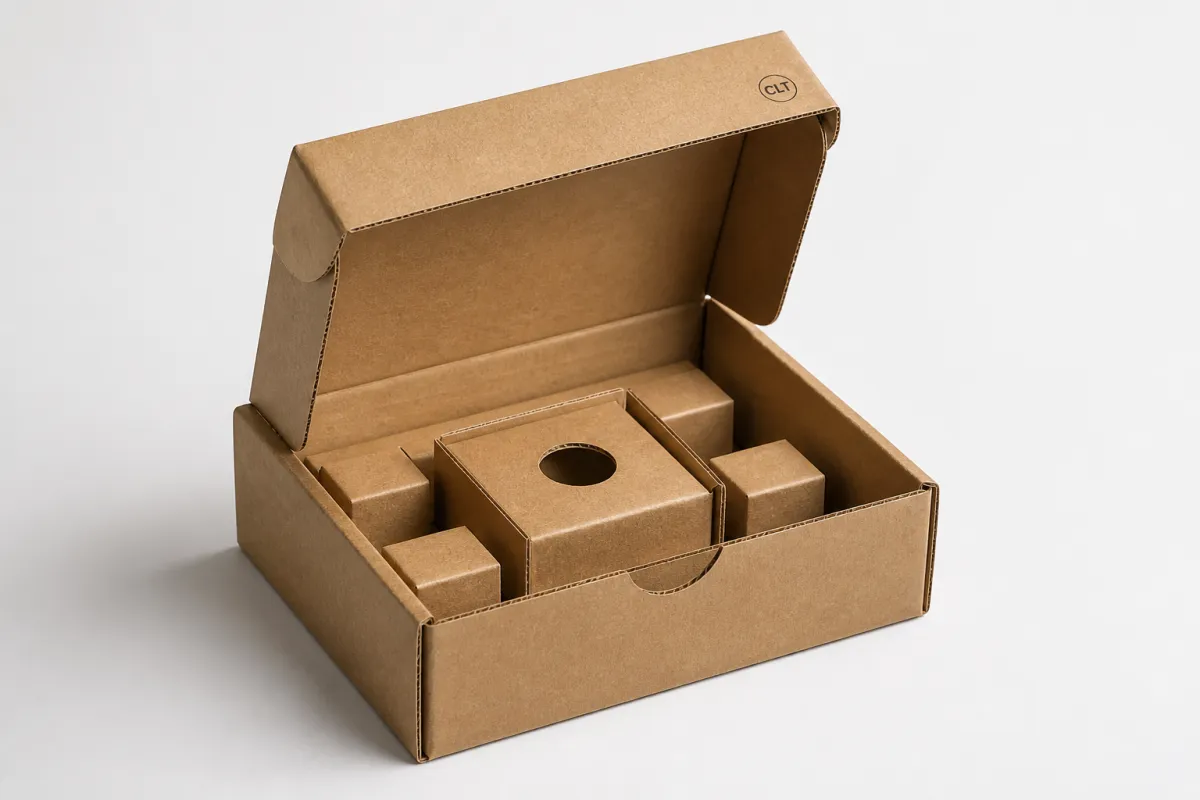
Fit is the first reason a custom recyclable product boxes order reduces damage. A carton that matches the product’s footprint and weight leaves less room for movement, which means fewer scuffs, fewer crushed corners, and less dependence on loose paper, bubble wrap, or other filler. Damage rarely comes from one weak point alone. It usually comes from a packaging system that was built without enough attention to how the item actually rides through transit. A custom recyclable product boxes order can address that full chain instead of only wrapping the product in a prettier shell.
There is a second layer that often gets overlooked during packaging planning. A custom recyclable product boxes order can reduce disposal confusion for customers, retail teams, and warehouse staff because paper-based structures are easier to sort than mixed-material packs with plastic windows, foil layers, or heavy laminate. That does not make every paper format automatically better, but it does make a clean recyclable structure easier to explain and easier to audit. For teams balancing packaging design, logistics, and buyer experience, that clarity carries real value.
A custom recyclable product boxes order also protects margin in a way that looks quiet on a spreadsheet and loud on a claims report. If the box keeps the product stable, the brand absorbs fewer replacements and spends less on service recovery. If it ships efficiently, dimensional weight may drop. If the package is easy to recycle, one more friction point disappears from the buyer experience. That is why I tend to treat a custom recyclable product boxes order as an operating decision first and an environmental decision second. Both matter, and neither should be reduced to vague marketing language.
"A box that fits well is usually cheaper than a box that tries to solve three jobs at once."
From a packaging buyer’s point of view, the right custom recyclable product boxes order should be judged by four measurable outcomes: fit, protection, recyclability, and predictable buying terms. Those are not soft metrics. They can be tied to carton dimensions, board grade, transit testing, and unit price. A brand selling cosmetics, supplements, electronics accessories, or food items may need different formats, yet the logic stays the same. A tighter structure generally means less damage, less filler, and less waste.
That is why the strongest custom recyclable product boxes order usually starts with the product itself, then moves to structure, then to cost, and only after that to print. Too many teams reverse that order and ask how the box should look before they know how the item ships. That almost always creates revisions later. A better brief keeps the focus on what the package has to survive, how it will be opened, and what the buyer is expected to do after unpacking it.
For buyers comparing suppliers, the difference shows up quickly. A vendor selling boxes only will talk about materials and dimensions in isolation. A packaging partner will ask about transit, storage, damage risk, and disposal instructions. That is the level of detail a custom recyclable product boxes order deserves.
Custom recyclable product boxes order options: materials and print
A custom recyclable product boxes order can use several structures, and the best choice depends on weight, retail setting, and shipping conditions. The most common options are mailer boxes, folding cartons, tuck-end boxes, and corrugated shippers. Mailer boxes work well for ecommerce and subscription kits. Folding cartons suit lighter retail items. Tuck-end cartons are common for cosmetics, supplements, and small consumer products. Corrugated shippers are better when strength matters more than shelf presence. If you need a place to compare formats across categories, the lineup on Custom Packaging Products is a useful starting point.
Material choice matters just as much as structure. Kraft paperboard gives a natural look and is easy to communicate as recyclable. Recycled-content SBS and other paperboard grades can support a cleaner retail finish. Corrugated board adds crush resistance and stack strength, which is useful for shipping-heavy programs. Water-based inks and aqueous coatings usually fit better than plastic-heavy finishes if recyclability is the priority. A custom recyclable product boxes order should not be weighed down by decorative layers that make disposal harder to explain.
Recyclable does not have to mean plain. A custom recyclable product boxes order can still carry strong package branding through full-color print, clean logo placement, inside print, embossing, debossing, and spot color. The better question is not whether the box can look premium. The better question is whether the finish supports the product without getting in the way of recycling. Many brands miss that point by assuming premium must mean glossy and layered. In practice, premium often comes from tight registration, steady typography, and a structure that feels intentional.
For retail packaging, print hierarchy matters. Product name, variant, barcode, claims, and recycling language should all be easy to read at a glance. For ecommerce, the outer face may stay restrained while the inside panel becomes the brand moment. Either way, the same rule applies: the box should make the product easier to handle, not harder. A custom recyclable product boxes order works best when design choices support both shelf appeal and warehouse practicality.
A useful way to think about this is by product weight and fragility. A lightweight cream jar does not need the same board profile as a glass bottle. A folded apparel pack does not need the same closure as a shipping box for a ceramic item. A custom recyclable product boxes order should reflect those differences instead of forcing every SKU into one generic template. That is where good packaging design saves money. It removes overbuilding, reduces filler, and keeps the format aligned with the item inside.
One more point: if a supplier cannot explain why a given board, flute, or coating was chosen, that is a warning sign. A custom recyclable product boxes order should be specified in practical terms, not just aesthetic terms. If the answers sound vague, ask for a side-by-side explanation of the tradeoffs. Good vendors can do that quickly. Better vendors do it before the quote turns into a revision cycle.
In packaging reviews, I have seen teams get fixated on a finish sample that looks beautiful in hand and then turns into a headache once the product is stacked, shipped, and opened fifty times in a row. That is exactly the kind of problem a careful spec check prevents. Fancy is fine, but it has to earn its place.
Specifications that shape fit, strength, and recyclability
Before a custom recyclable product boxes order goes to proof, lock the dimensions. Exact product length, width, height, and weight should be on the brief, along with the way the item is packed inside the carton. A box for a single unit behaves differently from a box holding a multi-pack, an insert tray, or a secondary shipper. The more precise the measurements, the less filler you need later. In a custom recyclable product boxes order, fit is not a nice-to-have; it is the starting point.
Board grade and caliper come next. A custom recyclable product boxes order may use 14pt, 16pt, or 18pt paperboard for lighter retail packs, while corrugated options may call for E-flute, B-flute, or a double-wall construction if the load is heavier. Closure style matters too. Tuck ends are efficient for display cartons. Auto-lock bottoms can help with quick packing. Roll-end mailers are strong enough for ecommerce presentation. If the product is fragile, the structure should be checked against transit stress, not just a tabletop sample.
Print specifications should be written in plain language. Note the number of colors, bleed requirements, inside-versus-outside print, barcode placement, and whether the artwork needs a white base on kraft stock. Those details affect both cost and readability. A custom recyclable product boxes order with dark kraft and high-coverage print can look excellent, but it may need different ink handling than a white board structure. Small mistakes here often become big mistakes on press, so the proof stage should be treated as a technical review rather than a design opinion round.
Performance requirements are just as important as appearance. A custom recyclable product boxes order should indicate whether the carton must survive stacking in a warehouse, humidity during transit, rough handling on parcel networks, or retail display pressure on a shelf. For ship-ready programs, teams often validate against ISTA transit methods or use ASTM-based compression and distribution checks. The right standard depends on the route, the product, and the damage risk. If you want a public reference point for recycling or material stewardship, the EPA recycling guidance is useful, and the FSC site helps when chain-of-custody or certified fiber matters.
Some design choices can hurt recyclability even when the base board is recyclable. Plastic windows, heavy lamination, metallized films, and adhesives that leave too much residue can all make recovery more complicated. That does not mean every special finish is off limits. It means the finish should earn its place. A custom recyclable product boxes order should use add-ons only when they solve a real problem, such as protection, compliance, or clear merchandising. Local recycling rules also vary, so a finish that is accepted in one market may not be accepted everywhere else.
Here is the short checklist I would want before approving a custom recyclable Product Boxes Order:
- Exact product dimensions and target pack-out method
- Product weight, especially if the item ships in multiples
- Board grade, caliper, or flute profile
- Closure style and whether tape is required
- Print colors, barcode placement, and copy deadlines
- Shipping environment, storage conditions, and stack height
- Any recycling language, compliance text, or retail display rule
That list looks basic, but it prevents expensive misunderstandings. A custom recyclable product boxes order usually fails when one of those items is assumed rather than confirmed. Clear specs keep the project moving and give the supplier room to quote accurately the first time.
Pricing & MOQ for a custom recyclable product boxes order
Pricing for a custom recyclable product boxes order starts with five variables: board grade, size, print coverage, finishing, and quantity. Structure complexity also matters. A simple straight-tuck carton is easier to produce than a heavily engineered mailer with inserts, windows, or custom locks. As a result, one project may look inexpensive on paper while another proves more cost-efficient over time because it reduces damage and labor. The right quote is not always the lowest quote.
A custom recyclable product boxes order with simple print and a standard dieline can be surprisingly competitive. A fully custom structure, by contrast, often needs more setup time, more prepress attention, and sometimes a custom die or revised dieline. That is normal. Buyers should expect the first quote to include not just unit cost but also tooling, setup, proofing, and freight assumptions. If those items are bundled without explanation, ask for them to be broken out. It makes comparison much easier.
MOQ is where many teams feel pressure. A lower MOQ helps cash flow and reduces inventory risk, but it usually pushes unit price upward. Larger runs lower the unit cost but demand more storage space and a higher upfront commitment. A custom recyclable product boxes order should be evaluated on the full business picture, not just the per-box number. If the box protects a premium item worth far more than the packaging itself, saving two cents on board while increasing damage is a poor trade.
It helps to ask for tiered pricing at multiple quantities. For example, a quote at 1,000, 5,000, and 10,000 pieces often shows the real cost curve better than a single number. That makes it easier to decide whether the larger run is worth the savings or whether a smaller run better matches your launch pace. For teams buying branded packaging across several SKUs, that kind of comparison is especially useful because it exposes where standardization can trim costs.
| Box style | Best use | Typical material | Planning price at 5,000 units | Notes |
|---|---|---|---|---|
| Folding carton | Light retail items, cosmetics, supplements | 14pt-18pt recycled paperboard | $0.18-$0.38 per unit | Lower board cost, strong shelf presentation, limited crush protection |
| Tuck-end carton | Small consumer goods and kit components | 16pt paperboard with water-based inks | $0.20-$0.42 per unit | Clean look, efficient for retail packaging, good for moderate handling |
| Mailer box | Ecommerce, subscription, direct-to-consumer shipping | E-flute corrugated board | $0.55-$0.95 per unit | Better for shipping, higher print and board cost, often supports inserts |
| Corrugated shipper | Fragile or heavier products, warehouse distribution | B-flute or E-flute corrugated board | $0.62-$1.15 per unit | More protection, more shipping strength, less premium shelf appearance |
Those numbers are planning ranges, not promises. A custom recyclable product boxes order can move outside them if the artwork coverage is heavy, if the box is oversized, if the finish is more decorative, or if the run is unusually small. Freight also shifts the final landed cost. That is why asking for freight-inclusive pricing before approval is smart. It keeps the quote honest and prevents surprises after the production slot is already reserved.
There are a few cost-control moves that buyers can make without weakening the box. Standardize dimensions where possible. Limit expensive finishing unless it has a clear purpose. Consolidate SKUs that share the same basic pack size. Reuse existing dielines if they are still valid. Those actions do not just lower the quote; they reduce revision risk. A custom recyclable product boxes order is easier to manage when the program is intentionally simple.
One practical lesson from the quoting side: the cheapest unit price is not always the cheapest landed cost. If a slightly thicker board reduces damage by even a small amount, the savings can show up later in fewer replacements and less customer service time. That is the kind of math that tends to get missed when teams are rushing.
Custom recyclable product boxes order process & timeline
A custom recyclable product boxes order usually moves through seven stages: brief, dieline, proof, approval, production, packing, and transit. That sequence sounds obvious, yet it helps buyers understand where time actually goes. Manufacturing is often the quickest part. Proofing and approvals are where schedules slip, especially if the first brief is missing measurements or the artwork files are not press-ready. A clear process makes the timeline less mysterious and easier to control.
- Brief: Send dimensions, weight, quantity, ship date, artwork files, and recycling requirements.
- Dieline: Review the structure and confirm folds, glue areas, and closure style.
- Proof: Check art placement, color expectations, barcodes, and compliance text.
- Approval: Sign off only after fit, print, and specs are all confirmed.
- Production: Run printing, cutting, folding, gluing, and finishing.
- Packing: Count, bundle, and carton the finished boxes for shipment.
- Transit: Add freight time separately from manufacturing lead time.
The quickest custom recyclable product boxes order briefs are the ones that remove ambiguity. A clean input package includes exact product dimensions, the target order quantity, the final artwork files, and the date the shipment must arrive. If you have a sample product, send it. A physical sample often reveals fit issues that a spreadsheet cannot catch. That extra step can save a lot of back-and-forth later.
Proofing is where most delays happen. A custom recyclable product boxes order may be fully scheduled on the press side, yet still stall because someone needs to correct barcode placement, update regulatory language, or fix artwork that does not match the die. Those issues are common, and they are fixable, but they cost time. The best way to avoid them is to treat the proof as a technical signoff, not a design mood board. If the box is going into retail packaging, make sure the legal and merchandising text is correct before approval.
Lead time and shipping time should never be treated as the same thing. A custom recyclable product boxes order may only need a relatively short production window, but ocean freight, cross-country trucking, or parcel delivery still adds transit time. That distinction matters when a launch date is fixed. Repeat orders are usually faster because the structure, board, and print setup are already approved. If the artwork stays unchanged, the second run can move much more efficiently than the first. That is one of the strongest arguments for keeping a stable packaging design once the format proves itself.
For buyers who want a broader commercial setup, wholesale purchasing can be useful when multiple SKUs share the same packaging family. The right scale can improve pricing and simplify replenishment. If that is part of your buying model, the Wholesale Programs page is worth reviewing alongside your box brief. The key is to align procurement with inventory reality so a custom recyclable product boxes order does not create more stock than the business can actually use.
If you have ever watched a schedule slip by a week because one panel needed a last-minute copy fix, you already know the pattern. A custom recyclable product boxes order is not delayed by the machine alone. It is delayed by the decisions made before the machine starts. That is why the cleanest timelines come from the calmest briefs.
Why choose us for sustainable packaging
A supplier handling a custom recyclable product boxes order should offer more than a quote. Buyers need accurate spec sheets, clear assumptions, realistic timelines, and prompt responses when something in the artwork or structure needs attention. That sounds simple, but it is not common enough. In practice, many sourcing problems come from vendors who can price a box but cannot explain how that box will behave in the real world.
That is where a packaging partner earns trust. A custom recyclable product boxes order should be reviewed line by line: the board choice, the print process, the finish, the closure, and the freight assumptions. If the supplier can explain why one structure protects the product better than another, they are helping you control return risk and production risk at the same time. That is much more useful than selling a pretty sample and hoping the logistics work themselves out.
For buyers comparing vendors, a custom recyclable product boxes order partner should speak in specs, not slogans. They should be able to discuss recyclable materials, recycled content options, and finish choices in a way that helps you defend the decision internally. They should also be able to show where the cost is coming from. That matters for finance, operations, and marketing. When the conversation is grounded in numbers, package branding becomes a business tool instead of a decorative expense.
Technical support matters too. Dieline review, preflight checks, and structural guidance can prevent avoidable errors before production starts. A vendor who catches a bleed issue, a barcode problem, or a weak closure before the run begins is worth more than one who merely confirms the order form. That is especially true for Custom Printed Boxes used across multiple channels, because the same packaging has to satisfy brand, warehouse, and customer expectations at once.
We also see the value of transparency around material options. Some buyers need a straightforward kraft carton. Others want recycled-content paperboard with a cleaner print face. Some need a more durable corrugated solution for ecommerce. The right supplier should present those choices clearly so the packaging strategy supports the product rather than forcing the product to adapt to the packaging. That approach is practical, measurable, and easier to defend than broad claims about sustainability.
If you want a simple test, ask three questions: What material are you using, why that material, and what tradeoff does it create? If the answers are direct, the supplier probably understands the job. If the answers drift into vague language, you may end up revising the custom recyclable product boxes order later than planned. And if a vendor cannot answer those three questions plainly, I would be wary.
Next steps for your custom recyclable product boxes order
Before you place a custom recyclable product boxes order, gather five inputs: product dimensions, product weight, quantity, artwork files, and the target delivery window. That is the minimum information needed for a useful quote. If you already know your retail or recycling requirements, add those too. The more complete the brief, the faster the supplier can respond with a number that reflects reality instead of guesswork.
A custom recyclable product boxes order is easier to approve when you compare two quote paths. One should be built for the lowest unit cost, and the other should include stronger board or a slightly more premium print finish. That comparison helps the team see value rather than only chasing the cheapest number. Many buyers discover that a modest upgrade in board grade or print quality pays back through fewer damages and better shelf performance. That is especially true for custom printed boxes used in branded packaging programs with repeat purchases.
Before signing off, check fit, barcode placement, recycling language, and the exact board or finish spec. Confirm freight terms in writing, ask whether a sample or preproduction proof is available, and note the production start date. Small details matter here. A custom recyclable product boxes order can move from quote to production quickly when everyone agrees on the assumptions, and it can stall just as quickly when one item is left vague. If you need help turning a rough idea into a usable brief, the FAQ page covers a few of the questions that come up most often.
There is no mystery in the process. A good custom recyclable product boxes order is built on tight specs, clear economics, and a box structure that reflects the product itself. Once those pieces are in place, the rest becomes execution. The practical takeaway is simple: define the product, define the route it takes, and define the recycling path before you approve the art. Do that, and the box will usually do its job without drama.
How do I start a custom recyclable product boxes order for my product?
Send exact product dimensions, weight, quantity, artwork files, and the ship date you are working toward. Ask for a written quote that separates tooling, unit cost, proofing, and freight so the numbers are easy to compare. Include any recyclability or retail-display requirements up front to avoid a second round of revisions. A custom recyclable product boxes order moves much faster when the brief is complete on day one.
What materials work best for custom recyclable product boxes?
Kraft paperboard and corrugated board are common choices when strength and recyclability both matter. Recycled-content paperboard works well for lighter retail packaging when you want a cleaner presentation. Water-based inks and aqueous coatings usually fit better than plastic-heavy finishes if recyclability is the priority. The right material for a custom recyclable product boxes order depends on weight, display needs, and how the box will be handled after shipment.
What MOQ should I expect for a custom recyclable product boxes order?
MOQ usually rises when the structure is fully custom, the print is complex, or special finishes are involved. Standard sizes and simpler print setups often make it easier to start at a lower quantity. Request tiered pricing at several quantities so you can see where the best unit-cost break actually starts. A custom recyclable product boxes order should be evaluated on the quantity curve, not just a single quote line.
How long does a custom recyclable product boxes order usually take?
The timeline includes proofing, approval, production, packing, and shipping, so each stage should be listed separately. Simple repeat orders are usually faster than new structures because the dieline and setup are already approved. Late artwork changes are one of the most common reasons a timeline slips, so lock files early. If you are planning a custom recyclable product boxes order for a launch, build in enough room for transit on top of manufacturing.
Can custom recyclable product boxes still look premium?
Yes. Clean structure, precise print registration, and a strong material choice can look premium without relying on plastic-heavy finishes. Embossing, debossing, and matte aqueous coatings can add a high-end feel while keeping the package more recyclable. Avoid add-ons that complicate recovery unless they are truly necessary for the product or brand. A well-built custom recyclable product boxes order can support both retail presence and practical recycling, which is the combination most buyers actually want.

