Buyer Fit Snapshot
| Best fit | Custom Recyclable Shipping Tubes projects where brand print, material claims, artwork control, MOQ, and repeat-order consistency need to be specified before quoting. |
|---|---|
| Quote inputs | Share finished size, material target, print colors, finish, packing count, annual reorder estimate, ship-to region, and any compliance wording. |
| Proofing check | Approve dieline scale, logo placement, barcode or warning zones, color tolerance, closure strength, and carton packing before bulk production. |
| Main risk | Vague material claims, crowded artwork, missing packing details, or unclear freight terms can make a low unit price expensive after revisions. |
Fast answer: Custom Recyclable Shipping Tubes: Board, Finish, Dieline, and Unit Cost should be specified like a repeatable production item. The safest quote records material, print method, finish, artwork proof, packing count, and reorder notes in one written spec.
Production checks before approval
Compare the actual filled-product size with the drawing, then confirm tolerance on folds, seals, hang holes, label areas, and retail display edges. Reserve space for logos, QR codes, warning copy, and material claims before decorative graphics fill the panel.
Quote comparison points
Review material grade, print process, finish, sampling route, tooling charges, carton quantity, and freight assumptions side by side. A quote is only useful when the supplier can repeat the same color, closure quality, and packing count on the next order.
A tube looks simple. It is not. In the right build, custom recyclable shipping tubes can protect posters, prints, textiles, and samples better than a flat carton because the cylindrical form resists crushing from the sides and corners, where transit damage usually starts. That pairing of protection and material discipline is a big reason more brands treat this format as both a shipping tool and a visible sustainability signal.
From a packaging buyer's point of view, the real question is rarely whether tubes look eco-friendly. It is whether the structure, board grade, closure, print method, and sizing all support the product, the fulfillment line, and the recycling stream. Get those details right and the tube feels intentional rather than generic. Miss them, and you end up with wasted board, product movement, or a claim that sounds greener than the package actually is.
There is another reason the format keeps showing up in sourcing meetings. A tube changes the way the product is handled. It encourages a tighter packout, reduces loose void fill, and gives the brand a clear shape to work with instead of a blank box that needs extra material to feel finished. For teams shipping flat goods in volume, that matters more than a glossy mockup ever will.
Custom Recyclable Shipping Tubes: What They Are and Why They Matter
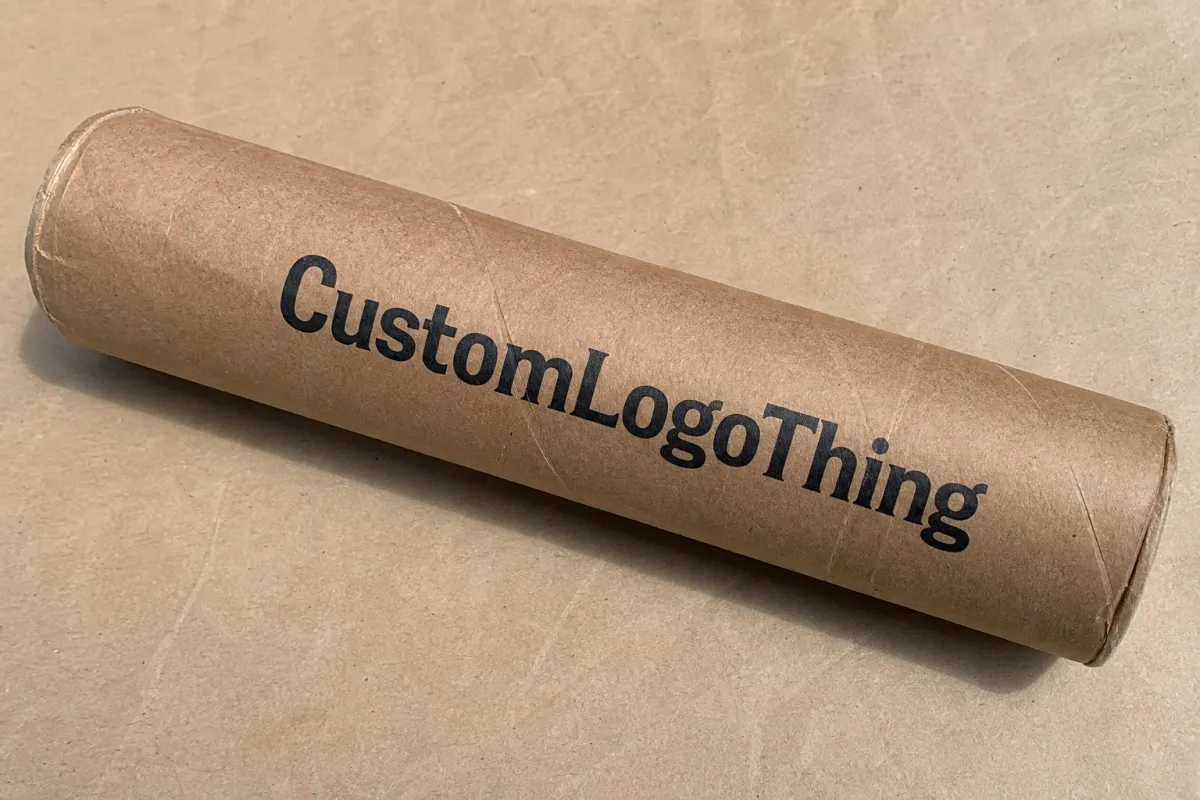
Custom recyclable shipping tubes are paper-based cylindrical mailers or containers designed to be recovered through paper recycling systems where local rules allow it. "Custom" means the dimensions, print, closures, and sometimes the board strength are tailored to a specific product or brand program. "Recyclable" means the packaging is intended to fit a paper recycling path, not simply that it contains recycled fiber. Those ideas overlap, but they are not the same.
That distinction matters more than many packaging teams expect. A tube can contain recycled content and still include a plastic window, metallized wrap, or laminated label that complicates recycling. The reverse also happens: a tube made from virgin kraft board may still be recyclable if it avoids problem components and uses compatible adhesives and coatings. Buyers often blur those two concepts, then discover the hard way that recycled content is not a substitute for recyclable design.
The format has another advantage that is easy to overlook. In unboxing terms, tubes have a clear visual logic. They feel direct. They also give brands room to communicate with simple, high-contrast branding, a short message, and a compact product story without excess inserts or oversized cartons. For some programs, that is exactly the right mix of branded packaging and sustainability. For others, the geometry is wrong from the start.
Think of the tube as a specialized tool, not a universal answer. It works especially well for long, rolled, or flat items that do not like bending: posters, blueprints, art prints, fabric swatches, wallpaper samples, branded collateral, and some retail packaging inserts. It is less suited to irregular products, heavy rigid goods, or anything that needs internal suspension to avoid pressure points. If the item can slide, crease, or snap, the tube may be the wrong shape unless the interior design is carefully engineered.
A well-specified tube can do three jobs at once: protect the product, reduce packaging complexity, and tell a sustainability story that does not feel bolted on.
For teams comparing formats, it helps to look at the broader system. A tube is not only competing with another tube. It is competing with Custom Shipping Boxes, flexible formats, and the way your Custom Packaging Products portfolio supports different order profiles. For lightweight flat goods, you may also compare the tube against Custom Poly Mailers, though the recycling path and brand effect are very different.
Interest in this format keeps growing for a reason. Brands want less waste, but they also want fewer damaged units, lower cube inefficiency in ecommerce shipping, and packaging that supports a cleaner customer perception. A recyclable tube can hit those goals if the specification is disciplined. If not, it becomes another promise with a nice logo on the outside.
In practical terms, the best tube programs are usually the ones that have a narrow use case. A subscription print seller, for example, may need a tube that ships the same size every month. A textile supplier may need a slightly wider body that accepts swatches without curling the edges. A museum store may need premium print decoration, but still wants a package that disappears cleanly into the paper recycling stream. The format works because it can be tuned to a very specific job.
How Custom Recyclable Shipping Tubes Work
A tube is only as good as its parts. The main structure is usually a spiral-wound or convolute-wound paperboard body made from kraft or similar fiber stock. Some designs use a paper seam along the length of the tube; others rely on layered winding and adhesive to build wall strength. End closures matter just as much as the body. They may be friction-fit paper ends, molded fiber caps, or paperboard caps designed to be removed before recycling. The more mixed the component set, the harder it becomes to tell a simple recycling story.
Most buyers focus on the exterior, but the interior configuration often decides performance. If the tube is too wide, the product rattles and edges fray or crease. If it is too narrow, loading becomes difficult and the item may scuff during insertion. For print and art programs, that can be the difference between a clean delivery and a return. A few millimeters matter more than most teams expect.
Materials are where sustainability becomes concrete. Kraft board is a common choice because it is widely understood in paper recovery systems and tends to signal an uncoated, recyclable look. Paperboard works for lighter-duty builds. Molded fiber ends can be a good option if they are kept simple and easy to separate. A recycled-content claim can support the story, but actual recyclability still depends on the full component mix and the local rules that govern curbside acceptance. The EPA recycling guidance is a useful reminder that local systems vary, and packaging has to be designed for that reality.
Print choices can help or hurt. Water-based inks, light coverage, and minimal coating systems are generally easier to align with paper recycling goals than heavy laminations or plasticized finishes. A matte varnish may still be acceptable in some cases, but once decoration becomes a functional barrier layer, you need to ask whether you have created a mixed-material package. Packaging design teams often want a premium tactile finish. The hard part is deciding whether that finish is worth the recycling compromise.
From a handling perspective, tubes are efficient. They are lightweight relative to many rigid alternatives, yet they create a structure that resists side impact well because the circular form spreads pressure around the wall. That is one reason tubes can be attractive for order fulfillment programs where cartons stack, slide, and compress in transit. Compared with a flat envelope, a tube often uses more board but less internal void fill, and that tradeoff can still favor lower waste and better damage prevention.
For shipping teams, testing is the bridge between theory and reality. Programs that move into larger volume often look at transit tests associated with ISTA methods or comparable internal drop and compression checks. You do not need a laboratory to learn something useful. Even a simple fit-and-shake test, plus a few simulated drops from conveyor height, can reveal whether the closure is too loose or the wall thickness is underbuilt.
If you are sourcing for a known customer lane, test for the worst part of the route rather than the average one. A tube that holds up on a short local parcel route may fail once it enters a broader network with repeated sorting, stacking, and temperature swings. Packaging failures often show up where the product spends the least time and the package sees the most handling.
Key Factors That Affect Performance and Sustainability
The first factor is fit. Tube size should match the product closely enough to control movement, but not so tightly that loading causes curl, abrasion, or damaged corners. This sounds obvious. In practice, many teams choose a diameter based on the artwork file or a legacy item size rather than the actual packed product. That leads to filler, wasted volume, and a package that no longer feels efficient. A well-fit tube often reduces the need for extra inserts, which helps both material use and presentation.
Strength follows fit. Wall thickness, seam quality, and end-cap retention all influence whether the package survives a cross-country trip or just a short parcel route. A tube used for local shipments may perform acceptably at one board grade, while the same design fails under heavier stacking in regional distribution. Crush resistance is not a decorative spec. It is a fulfillment spec. If your route includes automated sorting, mixed freight, or frequent parcel stacking, the wall construction deserves serious attention.
Moisture is the other big variable. Recyclable does not mean moisture-proof. Paper-based tubes can tolerate normal handling, but they do not like prolonged exposure to damp docks, wet van floors, or condensation inside a cold chain handoff. Some brands add coatings for splash resistance, yet the wrong coating can undermine recyclability. That tradeoff is especially important for retail packaging programs that need shelf appeal and shipping durability at the same time. If the package travels through humid environments, ask for the exact coating chemistry and whether it remains compatible with the intended recycling stream.
Branding is not just aesthetics; it is a structural decision. High print coverage can make a tube feel premium and reinforce package branding, but dense ink areas, foil accents, and laminated wraps may create a mixed-material build. A cleaner design with deliberate negative space often performs better visually and operationally. It can also cost less. That is one of the less obvious benefits of good packaging design: restraint often saves money while improving recyclability.
There is also a real tradeoff between overbuilding and right-sizing. Overbuilding adds cost, weight, and carbon impact. Right-sizing can reduce all three, but only if the tube still protects the product under realistic handling conditions. A packaging buyer's job often sits between two bad extremes: too fragile to survive and too heavy to justify. That balance is where custom work earns its keep.
For a buyer managing multiple SKUs, the smartest tube specification is often the one that supports the least dramatic product. If one item in the range is slightly wider or taller, teams sometimes oversize the entire program to avoid multiple SKUs. That can make inventory easier, but it can also introduce avoidable movement for the smaller items. The better choice depends on volume, damage risk, and how much complexity your warehouse can actually absorb.
| Tube Type | Typical Use | Approx. Unit Cost at 5,000 Pieces | Recyclability Notes |
|---|---|---|---|
| Plain kraft shipping tube | Posters, prints, documents, lightweight samples | $0.42-$0.78 | Usually the easiest to recycle if it uses paper ends and minimal coatings |
| Custom printed recyclable tube | Branded ecommerce shipping, retail collateral, premium mailers | $0.68-$1.20 | Still recyclable if inks and finishes stay paper-friendly |
| Heavy-duty tube with reinforced closure | Longer routes, heavier inserts, higher crush risk | $0.95-$1.65 | Performance improves, but component selection must stay simple to preserve recyclability |
| Tube with specialty finish | Premium gifting or retail packaging | $1.10-$2.10 | Finish choices can complicate recycling, so this needs close review |
The table above is a useful starting point, not a quote sheet. Real pricing depends on diameter, length, board grade, print coverage, closure style, and freight. A larger tube can cost surprisingly more because shipping itself becomes part of the package economics. A long, empty cylinder takes space in the truck even before a single unit is filled. Sustainability discussions should include logistics, not just material count.
That last point is often missed. A package can look lighter on paper and still carry a heavier footprint in transit if its dimensions force poor palletization or inefficient carton packing. In sourcing meetings, it helps to ask not only "How much board is used?" but also "How does the package move through the network?" That question changes the conversation fast.
Custom Recyclable Shipping Tubes: Process, Timeline, and Lead Time
The cleanest tube programs follow a predictable path. It starts with a brief that defines product dimensions, shipping method, expected weight, print needs, and any recycling target. From there, the supplier typically builds a dieline or specification sketch. That drawing should show the inner diameter, wall construction, closure type, and any print-safe zones so the artwork team knows exactly where to keep text and graphics.
Sampling usually comes next. This is where many projects gain or lose time. If the sample confirms the fit, closure tension, and print visibility, the job can move quickly. If not, the design loop starts over. A small change in diameter or cap depth may solve a problem, but only if the team has enough lead time to revisit the structure before production approval.
Artwork approvals are another common delay. Press-ready files help. So do clear rules on Pantone matching, barcode placement, and legal copy. If the team keeps revising claims or artwork after the proof is issued, the timeline stretches. The same is true when multiple internal stakeholders want to approve packaging, marketing, and sustainability copy separately. Process clarity matters as much as manufacturing speed because every extra loop creates rework.
For a typical run, many standard tube jobs move in roughly 12-15 business days after proof approval, with simpler constructions sometimes faster and more customized builds taking longer. Add time if the project requires special closures, structural testing, or a new print setup. If the tubes are for a seasonal launch or a campaign tied to order fulfillment peaks, build in a buffer. Rush orders are possible, but rush orders are also where mistakes hide.
You can shorten lead time by making a few decisions early:
- Lock the product dimensions before requesting a quote.
- Decide whether the tube needs premium print coverage or just a clean one-color mark.
- Choose the closure style early, especially if it affects recyclability.
- Send vector artwork and copy that is already approved internally.
- State your shipping lane, because domestic parcel and export freight are not the same test.
One more operational point: define the approval path before the order starts. If procurement, marketing, and sustainability all need separate sign-off at different moments, the job will move slowly no matter how efficient the factory is. A clear packet of specs saves time and often reduces waste because there are fewer revisions, fewer sample cycles, and fewer emergency changes late in the run.
Teams with mature sourcing processes also keep one person accountable for final pack approval. That sounds minor, but it prevents the classic late-stage problem where everyone approves the tube in principle and no one approves the actual fit. A single sign-off owner shortens the path from sample to production and protects the timeline from internal drift.
Custom Recyclable Shipping Tubes Cost, Pricing, and MOQ
Cost is usually the first question, and for good reason. Packaging is a line item that repeats on every shipment. The main drivers are diameter and length, board grade, print coverage, closure type, order volume, and any specialty finish. Once those variables are set, a quote becomes much easier to interpret. Before that, pricing can look arbitrary, even though it is usually built from straightforward material and labor inputs.
MOQ, or minimum order quantity, is where many teams adjust expectations. Smaller runs typically carry a higher unit price because setup costs are spread over fewer pieces. That does not mean small runs are bad. It means the economics are different. A 1,000-piece pilot may cost more per unit than a 10,000-piece production run, yet the pilot can save money overall if it prevents a weak design from scaling. In packaging, the cheapest unit is not always the cheapest project.
There is also a point where a larger order lowers total packaging spend without creating unreasonable inventory risk. If the tube is a standard size used across several SKUs, a larger commitment may reduce the per-unit cost enough to justify the storage. If the design is tied to a short campaign, a big run can become dead stock. Sourcing teams should compare landed cost, usage rate, and storage space together instead of looking at price alone.
Comparing tubes to other formats helps clarify the value. A recyclable tube can cost more than a basic poly mailer, but it may prevent damage that would otherwise trigger replacement shipments and customer frustration. Compared with Custom Printed Boxes, tubes sometimes use less material and less void fill, though they can be more expensive to store if the dimensions are long. The right answer depends on the item, not the category name.
Here is a practical comparison that many buyers find useful:
| Decision Factor | What Usually Lowers Cost | What Usually Raises Cost | What to Watch |
|---|---|---|---|
| Size | Shorter length, smaller diameter | Long tubes, oversized diameters | Longer tubes increase freight and storage costs |
| One- or two-color artwork | Full-coverage graphics, specialty inks | Heavy decoration can complicate recyclability | |
| Closure | Simple paper ends | Special molded parts or reinforced caps | More complex caps can improve performance but add cost |
| Order volume | Higher MOQ | Small pilot runs | Lower volume is useful for testing fit and demand |
| Artwork changes | Finalized files on first proof | Repeated revisions after proofing | Late changes add time and can create scrap |
For a quoting conversation, bring specific information. A good supplier will ask for product dimensions, product weight, destination, print specs, and target quantity. You should also tell them whether the tube is for direct-to-consumer ecommerce shipping, internal kit assembly, or retail packaging. Those channels have different risks. A tube that works beautifully in a branded mailer campaign may not survive a harsher parcel network without a stronger wall or tighter fit.
If you are comparing suppliers, ask whether the quote includes the actual closure hardware, not just the body. Some estimates make the tube body look inexpensive and then add the cap cost later. Others exclude freight or sample charges. A useful quote tells you what the final landed cost will feel like, not just what the printed shell costs before the rest of the job shows up.
Common Mistakes Brands Make With Recyclable Shipping Tubes
The first mistake is overcomplicating the build. Once a tube starts collecting plastic windows, laminated sleeves, glued inserts, and decorative parts, the recyclability story gets muddy fast. Teams often add these features because they want more visual interest or a premium feel. The irony is that a cleaner tube often looks more confident. It says the brand trusts the structure and does not need to disguise it.
The second mistake is picking the wrong diameter. If the tube is too wide, the product shifts, edges scuff, and filler creeps into the packout. If it is too tight, loading becomes awkward and the item may curl under pressure. This is one of the simplest errors to avoid, yet it still shows up often because people specify based on unrolled product size rather than packed dimensions. Measure the product as it will actually travel, not just as it exists on a flat table.
Another issue is vague sustainability language. A package can be called recyclable in one market and not in another if the closure or coating changes the recovery path. That is why claims should be tied to the actual construction and, where appropriate, to the relevant region. If a tube is recyclable only after removing a cap or separating a label, say so. Clear instructions are more credible than broad claims. They also help the customer do the right thing.
Appearance-first thinking causes its own damage. A tube can look premium in a mockup and still fail in transit. Scuffed ink, crushed ends, or opened closures quickly erase the benefit of a polished design. From a procurement standpoint, damage costs are part of packaging cost. So are returns, replacements, and the brand hit when a customer receives a bent poster or a warped insert. A good spec solves for the journey, not just the unboxing moment.
There is a final mistake that is easy to miss: assuming the same tube can support every product in a range. It may work for posters and short art prints, then fail for thicker samples or rolled fabric because the load pattern changes. Packaging is rarely wrong in abstract. It is wrong for a specific lane, a specific item, and a specific handling path. That is why serious teams test the edge cases, not only the ideal sample.
Here is a quick troubleshooting list sourcing teams can use before approval:
- Confirm the product does not rattle inside the tube.
- Check whether closures stay seated after drop testing.
- Review all inks, coatings, and labels for paper-stream compatibility.
- Ask for a sample photo after packing and after simulated transit.
- Verify whether the packaging claim should mention curbside recyclability or general recyclability only.
One more caution: do not assume your current supplier's eco language is enough. Ask for the actual material spec. Ask for the board grade, adhesive type, and end-cap construction. Ask how the design aligns with paper recovery systems and whether there are exceptions. That level of detail separates a serious sourcing conversation from a marketing brochure.
Expert Tips and Next Steps for Smarter Tube Sourcing
If you want better results, start with information, not with artwork. Ask for material specs, recyclability guidance, and sample photos before you compare quotes. The cheapest offer can become expensive if it ignores closure failure, freight, or reprint risk. In packaging, the real cost is the cost after the customer has opened the package, handled the product, and made a judgment about your brand.
A pilot run is worth serious consideration. Even a modest order can reveal whether the tube fits the product correctly, whether the print reads clearly, and whether the closure survives regular shipping abuse. It also gives your team a chance to observe how the package behaves in product packaging workflows, from kitting to final handoff. Those observations are difficult to replace with a spec sheet alone.
Create a one-page spec sheet before you go to market. Keep it tight. Include dimensions, artwork requirements, closure preference, target MOQ, product weight, sustainability goals, and any limits on coatings or mixed materials. That document becomes the common language between procurement, marketing, and operations. It also reduces revision churn, which is one of the hidden costs in packaging design.
Comparing total packaging cost is smarter than comparing unit price. Freight, storage, damage reduction, and brand perception all belong in the calculation. A tube that saves one replacement shipment out of every hundred may justify a slightly higher purchase price. A tube that costs less but triggers more damage is not a savings. That gets missed often because packaging is purchased by the piece instead of by the system.
If your team is still mapping the right format, test the tube against other options in your portfolio. Some products may fit better in Custom Packaging Products that include rigid mailers or box formats. Others may need a hybrid approach, where a tube handles the primary item and a separate mailer supports accessories. That is normal. Good packaging programs usually combine formats instead of forcing one solution to do every job.
Before launch, audit the current package against three questions:
- Does the structure protect the product through the actual shipping lane?
- Does the material make sense for the recycling stream you want to support?
- Does the design communicate value without relying on wasteful extras?
If the answer is yes, you are close. If the answer is no or "not sure," the next step is simple: request prototypes, refine the spec, and rerun the test. That process takes longer than guessing, but it usually costs less than a public packaging mistake.
Used well, custom recyclable shipping tubes are a disciplined answer to a very common shipping problem: how to protect flat or rolled goods without adding unnecessary material or weakening the brand experience. They are not magic. They are a format with clear strengths, clear limits, and a strong fit for teams that want practical sustainability rather than decorative claims. The practical takeaway is straightforward: specify the actual packed dimensions, keep the material mix paper-friendly, test the closure in the real shipping lane, and lock artwork only after the sample passes. That sequence solves more problems than any slogan ever will.
FAQ
Are custom recyclable shipping tubes actually curbside recyclable?
Often, yes, if they are built from a paper-based structure and avoid non-recyclable add-ons such as plastic laminations, mixed-material windows, or heavily bonded components. The exact answer still depends on local recycling rules, so it is smart to ask for component-by-component guidance before you make a claim on-pack. In some markets, the tube may be recyclable only if a closure or label is removed first.
What is the typical lead time for custom recyclable shipping tubes?
Lead time depends on sample approval, artwork readiness, and structural complexity, but straightforward projects often move faster than highly customized builds. A practical planning window is often 12-15 business days from proof approval for simpler runs, with extra time needed if you are changing dimensions, finishes, or closures. If the order supports a seasonal launch, plan for a buffer before the deadline.
How much do custom recyclable shipping tubes cost?
Pricing usually depends on size, board grade, print coverage, closure type, and order volume. Smaller MOQs tend to carry higher unit costs, while larger runs lower the per-unit price. For real budgeting, compare the purchase price with freight, storage, and potential damage reduction rather than looking at unit cost alone. A cheap tube that fails in transit costs more than a better-built one.
What products work best in recyclable shipping tubes?
Long, rolled, or flat products that need crush protection are the best fit, including posters, art prints, textile samples, wallpaper rolls, and branded collateral. Fragile or irregular items may need a different format or internal stabilization so they do not move inside the tube. If the product changes shape during travel, test the fit carefully before you approve production.
Can custom recyclable shipping tubes support premium branding?
Yes. Strong typography, clean color use, and disciplined print coverage can create a premium look without depending on wasteful embellishment. The best results usually come from packaging design that respects the tube's geometry instead of fighting it. For many brands, a restrained tube feels more confident than one overloaded with finishes.
Do recyclable tubes always use recycled content?
No. A tube can be recyclable without containing a high percentage of recycled fiber, and a tube with recycled content is not automatically recyclable in every market. Those are separate claims, and they should be treated separately in supplier conversations and on-pack language. The safest approach is to verify both the fiber source and the end-of-life path.

