Buyer Fit Snapshot
| Best fit | Custom Reusable Shopping Bags Branding Made Simple projects where brand print, material claims, artwork control, MOQ, and repeat-order consistency need to be specified before quoting. |
|---|---|
| Quote inputs | Share finished size, material target, print colors, finish, packing count, annual reorder estimate, ship-to region, and any compliance wording. |
| Proofing check | Approve dieline scale, logo placement, barcode or warning zones, color tolerance, closure strength, and carton packing before bulk production. |
| Main risk | Vague material claims, crowded artwork, missing packing details, or unclear freight terms can make a low unit price expensive after revisions. |
Fast answer: Custom Reusable Shopping Bags Branding Made Simple should be specified like a repeatable production item. The safest quote records material, print method, finish, artwork proof, packing count, and reorder notes in one written spec.
Production checks before approval
Compare the actual filled-product size with the drawing, then confirm tolerance on folds, seals, hang holes, label areas, and retail display edges. Reserve space for logos, QR codes, warning copy, and material claims before decorative graphics fill the panel.
Quote comparison points
Review material grade, print process, finish, sampling route, tooling charges, carton quantity, and freight assumptions side by side. A quote is only useful when the supplier can repeat the same color, closure quality, and packing count on the next order.
Custom Reusable Shopping Bags Branding Made Simple - custom reusable shopping bags branding works because the bag keeps moving. It rides on shoulders, hangs off carts, gets tossed into trunks, and turns up in checkout lines, office kitchens, and car back seats. That kind of repeat exposure beats a flyer by a mile. Flyers get glanced at and trashed. Bags stay in the wild.
Useful bags matter, though. A flimsy tote with a crooked print and awkward handles does not become brand magic just because the logo is large. People stop carrying it. Then the bag vanishes into a closet, and your branding goes with it. I have seen that happen more than once, and it is never the bag you thought would be the problem. Good custom reusable shopping bags branding means building something people actually want to use again.
"A reusable bag only advertises if someone keeps carrying it."
Custom reusable shopping bags branding: what it means
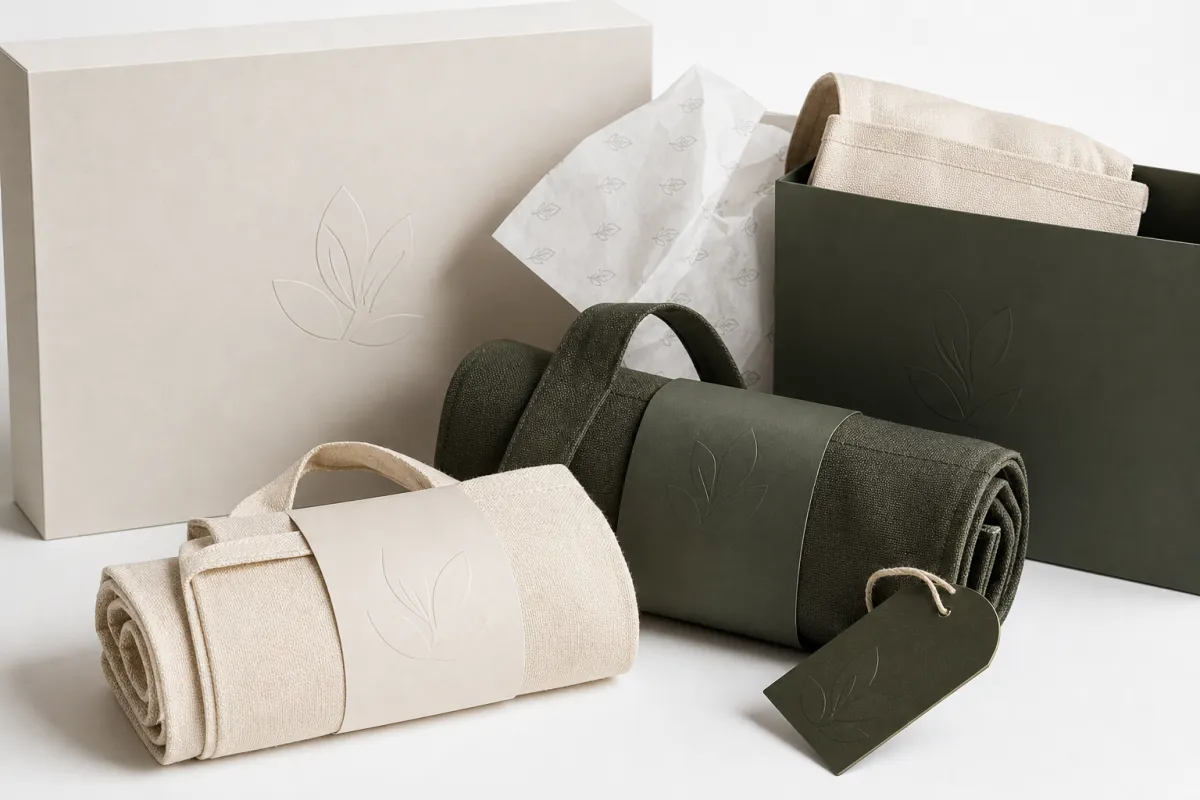
Custom reusable shopping bags branding is the practice of turning a carry bag into a long-running brand touchpoint. Not a logo slapped onto fabric. Not a color choice with a prayer attached. The whole object carries the message: material, size, handle style, print placement, finish, and how it feels once someone stuffs it with real purchases. That is why a good tote can do more for packaging branding than a pile of disposable handouts ever will.
From a packaging buyer's point of view, the appeal is easy to understand. A bag is practical, visible, and simple to hand out. Stores use it at checkout. Brands use it at events. Grocery programs use it as a repeat-use item. Membership clubs and loyalty campaigns use it as a perk that feels useful instead of like leftover conference swag. In branded packaging, usefulness keeps the logo moving.
There is a real difference between a bag that merely carries a logo and a bag that supports brand identity. A crisp color palette, the right scale for the artwork, and a clean shape can make the bag feel like part of the packaging system instead of a random promo item nobody asked for. If you already use custom printed boxes, tissue, stickers, or inserts, the bag should fit that same visual language. Otherwise the whole program starts looking like three different teams fought in a hallway.
People often think custom reusable shopping bags branding has one job: make the company name visible. Too narrow. The better goal is durable visibility with actual utility. The bag should be sturdy enough for groceries, polished enough for retail packaging, and clean enough that nobody feels awkward carrying it across town. If it does all three, it earns the next use.
That is the bar. The bag has to earn a second, third, and tenth outing. If it gets there, custom reusable shopping bags branding becomes a small asset instead of a one-time expense with a nice invoice.
How custom reusable shopping bags branding works
The workflow is straightforward on paper. Pick the bag material. Pick the decoration method. Prep the artwork. Review the proof. Approve the spec. Move into production. When the supplier knows what they are doing, the whole thing should feel boring in the best possible way. Boring is what you want before a print run.
Custom reusable shopping bags branding starts with the surface. Woven polypropylene behaves differently from cotton, canvas, or recycled PET. A smooth surface holds sharp ink better. A rough surface can blur fine lines. Stretchy or textured fabrics may need a decoration method that tolerates movement instead of one that expects the fabric to sit still and behave like paper. Material choice affects durability and how the logo lands.
Screen printing is usually the first method people compare. It works well for bold logos, solid spot colors, and medium-to-large runs. Heat transfer gives more flexibility for detailed art, gradients, or smaller orders, though it can feel less integrated depending on the fabric and finish. Embroidery can look polished on thicker bags, especially canvas or heavier cotton, but it is not a fit for every logo. Tiny text and crowded detail get muddy fast.
Placement matters too. A centered front print reads like a billboard. A small corner mark feels restrained. A repeating pattern turns the whole bag into a graphic object. None of those is automatically better. The right choice depends on the audience and the job. Custom reusable shopping bags branding for a grocery program usually wants immediate recognition. A boutique retail program may want something quieter and more refined.
For consistency, the bag has to match the way it is handed out. In stores, it should reinforce the same tone as the shelves, the checkout experience, and the rest of the Custom Packaging Products you already use. At events, it needs to read from a few feet away. For mailers or kits, it should sit comfortably beside the rest of the package branding instead of looking like an afterthought somebody found in a drawer.
Want to see how those choices change the final result? Our Case Studies page shows how different product decisions shift the impression, even when the same logo appears on every version.
Key factors in custom reusable shopping bags branding
Material comes first because it controls durability, print clarity, and the way the bag feels in hand. The cheapest bag on the quote sheet is not always the cheapest bag in real life. If it tears, sags, or feels embarrassing to carry, the branding loses value fast. Cotton and canvas sit higher on the perceived quality scale. Woven polypropylene and nonwoven RPET usually land in the budget-friendly middle. Each has tradeoffs, and custom reusable shopping bags branding works best when those tradeoffs match the audience.
The sustainability question can get messy if nobody defines the claim. Recycled content helps, but not all recycled materials are equal. If you want to back up a sourcing story, ask for certifications or documented chain-of-custody paperwork. The FSC explains how certified sourcing works for fiber-based materials, and the Packaging School has useful context on packaging performance and material selection. Neither one replaces a supplier spec sheet. They just give you a smarter starting point.
Size and shape are the next decisions that matter. Handle drop, gusset depth, and base width have more impact than most buyers expect. A narrow tote may look nice in a mockup and still be useless for a real grocery run. A deeper gusset adds capacity, but it also changes the print area and how the design sits on the bag. Custom reusable shopping bags branding should respect actual use, not just a pretty render.
Color strategy matters too. High contrast is the safe route: dark logo on a light bag, or light logo on a dark bag. It reads fast. Tonal designs can feel more premium, but they need tighter control over shade, finish, and print method. If the contrast is too weak, the branding disappears at a distance. That is not style. That is a visibility failure.
Logo complexity slows down a lot of orders. Tiny taglines, thin lines, and gradient-heavy artwork often need simplification. The same goes for badges, seals, and icons packed with too much internal detail. If the design must be reduced to fit a bag panel, clean it before production. That is basic packaging discipline. A strong mark on a bag usually beats a complicated mark that nobody can read.
Order quantity changes the math as well. Larger runs lower the unit cost, and they make screen printing or embroidery more practical. Smaller runs can still work for samples, pilot programs, or niche events, but setup costs get spread across fewer pieces. Custom reusable shopping bags branding tends to make the most financial sense once the run is large enough to justify the decoration method.
Here is a quick comparison of common bag options and typical pricing ranges. These are rough market ranges, not promises. Material, size, print coverage, quantity, and freight all move the number.
| Bag Type | Best For | Typical Decoration | Common Unit Range | Watch-Out |
|---|---|---|---|---|
| Woven polypropylene | Grocery, events, budget programs | Screen print, heat transfer | $0.55-$1.20 | Can feel less premium if the print or finish is too basic |
| Nonwoven RPET | Sustainability messaging, promotions | Screen print, heat transfer | $0.80-$1.80 | Recycled-content claims should be documented |
| Cotton tote | Retail giveaways, lifestyle brands | Screen print, heat transfer | $1.10-$2.80 | Wrinkles and shrinkage can affect appearance |
| Canvas tote | Boutiques, premium retail, member gifts | Screen print, embroidery | $2.00-$4.80 | Heavier hand feel is good, but shipping cost rises too |
For transit-heavy programs, ask whether the supplier checks packaging against a sensible drop or vibration standard. ISTA-style testing is common in the broader packaging world, and it is a useful benchmark when bags are shipped inside kits or master cartons. It is not the only test that matters, but it is better than shrugging and hoping the cartons survive.
Step-by-step guide to custom reusable shopping bags branding
Start with the job. That sounds obvious, yet plenty of orders begin with the wrong question. A retail resale bag, an employee welcome kit, an event giveaway, and a loyalty reward all want different things. Custom reusable shopping bags branding should be built around the use case first, because that decision affects size, material, print style, and budget.
Step one is defining what the bag actually needs to carry. A light promotional insert does not need the same structure as a grocery bag loaded with canned goods. If daily use is the goal, choose sturdier fabric, reinforced handles, and a shape with enough depth to sit flat. If the bag is mostly for handouts, you can save money with a lighter build as long as it still feels decent.
Step two is artwork prep. Use vector files whenever possible. Keep the logo clean. Remove tiny type that will disappear. Flatten unnecessary gradients. Pick ink colors that work with the bag material instead of hoping the printer can rescue a weak file. Good custom reusable shopping bags branding starts with print-ready artwork, not a fuzzy logo pasted into a PDF at the last minute.
Step three is proofing. Ask for a digital proof or a physical sample if the order is large enough to justify it. Check spelling, logo size, placement, contrast, and bag dimensions. Look at the proof the way a customer would, not the way a designer would. If the logo is too small to read from five feet away, it will not help you in the real world.
Step four is spec approval. This is where a lot of avoidable mistakes get locked in. Confirm fabric weight, bag dimensions, handle length, color references, decoration method, quantity, and shipping method before production starts. A small change after approval can turn into a large cost. Custom reusable shopping bags branding is easiest when the paperwork is painfully clear.
Step five is matching the bag to the rest of the brand system. If the order is part of a wider campaign, keep the same color logic across the bag, the inserts, the Custom Labels & Tags, and any custom printed boxes used in the program. That kind of coordination makes the whole package branding feel deliberate. It also improves the unboxing experience, which people notice even when they pretend not to.
For many brands, a simple rule keeps the process sane: one clear message, one strong logo treatment, one purpose. If the design tries to do too much, the bag turns into clutter. If it stays focused, custom reusable shopping bags branding does the job it was hired to do: keep the brand visible and useful.
Process and timeline for custom reusable shopping bags branding
The timeline usually starts with a quote request and ends with delivery. In between, there is artwork review, proofing, production, finishing, packing, and shipping. The actual length depends on bag type and order complexity, but a simple stocked-bag order often moves faster than a fully custom build. That is the practical difference most buyers care about.
For stocked inventory with standard print, the total lead time often falls into the 10-20 business day range after proof approval. Fully custom sizes, special colors, or extra decoration steps can push that into the 3-6 week range, sometimes longer if materials are tight. Rush orders are possible in some cases, but they usually shrink your material and print options. No supplier can make time appear from nowhere.
Custom reusable shopping bags branding slows down for the same reasons most print projects slow down: missing vector files, too many revision rounds, vague color instructions, and late-stage changes to size or placement. If the order is tied to a launch date, trade show, or store opening, build buffer time into the schedule. A week of cushion can save you from a very expensive headache.
Seasonal spikes matter too. Holiday retail, back-to-school, trade show season, and event-heavy months can fill production calendars fast. If the bags need to arrive on a fixed date, start earlier than your gut says. That is not pessimism. That is common sense. Custom reusable shopping bags branding is more reliable when the deadline is treated like a constraint, not a wish.
Here is a clean way to think about the workflow:
- Request pricing and confirm quantity, size, and use case.
- Send vector artwork and note print placement preferences.
- Review proof and verify all measurements and copy.
- Approve the final spec sheet.
- Produce, finish, pack, and ship.
If you are comparing bag programs against other branded packaging, keep the lead time in context. A simple bag can often move faster than complex custom printed boxes, but a custom textile program may still take longer than a basic label order. That is why program planning matters. Good custom reusable shopping bags branding is not just about the item. It is about fitting the item into the rest of the rollout.
One more practical note: ask the supplier for realistic timing, not optimistic timing. A supplier who gives a straight answer is more useful than one who says everything is easy. The honest answer usually protects the project.
Cost and pricing for custom reusable shopping bags branding
Pricing breaks into three buckets: bag cost, decoration Cost, and Setup or artwork fees. Sometimes freight is a fourth bucket if the shipment is large or time-sensitive. If you only look at the unit cost, you miss the real budget. Custom reusable shopping bags branding is cheap only when the full landed cost makes sense.
The biggest cost drivers are material, print colors, print size, and quantity. More colors usually mean more setup. Larger print areas use more ink and more production time. Rush timing can add fees. Premium materials, thicker fabrics, and stitched details raise the base cost. That is normal. The annoying part is when buyers try to save money in the wrong place and end up with a bag that feels weak or looks off-brand.
Small orders can be surprisingly expensive on a per-unit basis. A short run might land in the $1.80-$4.50 range depending on the bag style and decoration. Larger runs often push the unit price down, sometimes a lot, especially if the art is simple and the supplier can keep setup efficient. For many brands, a sweet spot shows up once the order volume justifies a clean, single-placement print instead of a more complicated layout.
It helps to compare low-cost and premium options honestly. The low-cost version may be fine for a one-day event or a mass handout. The premium version makes more sense for retail resale, employee gifts, or loyalty programs where the bag becomes part of the brand identity. Custom reusable shopping bags branding is not about picking the fanciest bag. It is about matching price to use.
Where do people overspend? Usually in three places. First, they overcomplicate the art and pay for decoration that does not improve visibility. Second, they choose a bag spec that is larger or heavier than the audience actually needs. Third, they order a premium finish for a program that will be treated like a throwaway. That is not smart procurement. That is expensive self-congratulation.
Where do people underspend? On the parts customers notice first. Thin handles. Poor stitch quality. Weak contrast. A bag that feels disposable undermines the whole job. If the goal is useful custom reusable shopping bags branding, a slightly better material and a cleaner print are usually better buys than an extra slogan nobody will read.
For a quick budgeting reference, assume the following on a mid-size run of 1,000-3,000 pieces:
- Budget program: simple woven polypropylene, one-color print, minimal setup.
- Mid-range program: cotton or RPET tote, one- to two-color print, stronger handles.
- Premium program: canvas or thicker cotton, larger print area, embroidery or refined screen print.
If the bag is part of a broader campaign, compare it against the rest of your spend. Sometimes a stronger bag and a simpler insert beat an expensive insert stuffed into a weak bag. That is how smart branded packaging decisions usually look: practical, not glamorous.
Common mistakes in custom reusable shopping bags branding
The most common mistake is unreadable artwork. Tiny type, thin lines, and low contrast kill brand impact fast. People may love the design on a screen and still fail to read it from across a counter. A bag is a moving object, not a poster pinned to a wall. Custom reusable shopping bags branding needs scale and simplicity, or it gets ignored.
Another mistake is material mismatch. A rough, heavily textured surface can wreck a delicate print method. A lightweight fabric can sag under real shopping loads. A premium decoration on a bargain-bin bag can look ridiculous in the worst way. The fix is simple: match decoration to surface, and match surface to use. Fancy is not a strategy by itself.
Bad sizing is another easy way to waste money. Too small, and the bag does not work for actual shopping. Too large, and the unit cost climbs without adding much value. Handle length matters here too. Short handles may look neat but feel awkward on the shoulder. Long handles can improve daily use, which increases the odds that custom reusable shopping bags branding stays visible outside the store.
Skipping proofs is a classic expensive mistake. Proof approval catches placement errors, spelling problems, color issues, and proportion mistakes before they become inventory. If the supplier sends a proof, review it line by line. Then review it again with a second set of eyes. That is cheap insurance.
Overbranding is the sneaky one. Too many messages, too many QR codes, too many slogans. The bag starts to look crowded and desperate. A cleaner design usually wins because it gives the eye room to land. If the audience cannot process the message in a second or two, the branding loses power. Yes, even if the campaign team loves every word on it.
Here is a quick checklist to keep the project out of trouble:
- Use strong contrast and readable type.
- Choose a fabric that fits the expected load.
- Keep the print count and placement intentional.
- Approve the proof before production starts.
- Do not turn one bag into a billboard for six different messages.
One more issue: treating the bag as an isolated item. It should fit with the rest of the brand system. If your packaging design on custom printed boxes is clean and refined, the bag should not suddenly look chaotic. Consistency matters. That is what makes package branding feel mature instead of random.
Expert tips and next steps for custom reusable shopping bags branding
Use one clear brand message and stop there. Seriously. The strongest custom reusable shopping bags branding usually depends on repetition, not clutter. A bag gets seen many times if people like using it. That means the design should be easy to process from a distance, on the move, and in bad lighting. Fancy is optional. Clear is not.
Match the bag to the use case, then test it against reality. Put sample products inside. Check the handle length on a real shoulder. See whether the bag stands up in a car trunk or folds flat in a cart. These boring little checks save you from ordering something that looks fine in a render and fails in the real world. Packaging buyers learn this quickly: mockups lie, samples tell the truth.
Ask for two or three quote variants. Compare material, print method, and minimum order side by side. A slightly better fabric may add only a small amount per unit, while a decoration change might cut your budget in half. You do not need to guess. You need to compare. That is how custom reusable shopping bags branding becomes a buying decision instead of a design argument.
If the audience or artwork is still being tested, launch with a small pilot run. That gives you room to learn before scaling. Maybe the bag needs a larger logo. Maybe the color is too dark. Maybe people prefer a different handle length. A pilot run gives you answers without locking the brand into a giant inventory mistake.
For broader programs, coordinate the tote with your other touchpoints. If the bag is part of a retail kit, keep it aligned with custom printed boxes, inserts, and other retail packaging pieces. If the program includes paperwork or hang tags, make sure the Custom Labels & Tags carry the same visual rules. That consistency strengthens brand identity and makes the whole package feel deliberate.
Here is the simplest next-step sequence:
- Define the use case.
- Pick the bag style and material.
- Simplify the artwork.
- Request samples or proofs.
- Lock the timing before the deadline gets tight.
If you want to see how these choices affect real programs, the Case Studies section is a useful place to start. It is easier to judge a bag when you can compare finished results instead of staring at a mockup and hoping for the best. Custom reusable shopping bags branding should feel practical, not theoretical.
Bottom line: custom reusable shopping bags branding works best when the bag is useful, the artwork is clean, and the spec is honest. Pick the right material, respect the print method, and keep the message focused. Do that well, and the bag becomes a durable piece of branded packaging that keeps doing its job long after the first handoff.
Custom reusable shopping bags branding FAQ
What is the best printing method for custom reusable shopping bags branding?
Screen print is usually the best value for bold logos and medium-to-large runs because it keeps setup simple and the print reads clearly. Heat transfer works better for more detailed artwork or smaller quantities. Embroidery can look premium on thicker bags, but it is not ideal for every material or every logo shape. For custom reusable shopping bags branding, the best method is the one that matches the fabric and the artwork, not the one with the fanciest name.
How many bags should I order for a first custom reusable shopping bags branding run?
Start with the number you can realistically hand out or sell in a short window. That keeps inventory risk under control and gives you room to learn what people actually respond to. A smaller pilot run is useful for testing durability, print clarity, and customer reaction before you commit to a bigger order. If the bags are tied to an event or launch, add a buffer so you do not run out early.
Which materials work best for branded reusable shopping bags?
Cotton and canvas feel more premium and usually suit retail or boutique branding. Woven polypropylene is often the budget-friendly workhorse for grocery and event use. Recycled fabrics help when sustainability messaging is part of the story, but print behavior still needs checking. In custom reusable shopping bags branding, the best material is the one that matches the audience, the load, and the price point.
How long does custom reusable shopping bags branding usually take?
Simple stocked-bag orders usually move faster than fully custom bags. Artwork approval and proof revisions are often the biggest timing variables. Rush orders can be possible in some cases, but they usually shrink your material and decoration choices. If the bags are tied to a launch, do not wait until the last minute and then act surprised when production takes time. That would be a very expensive way to learn calendar math.
How do I keep custom reusable shopping bags branding from looking cheap?
Use a clean logo layout with strong contrast and enough empty space. Choose a material that matches the brand position, not just the lowest price. Check sample quality before production so the finished bag does not feel flimsy or poorly printed. Clean, simple custom reusable shopping bags branding usually outperforms crowded art, weak fabric, and overdone messaging every time.
