A custom Ribbed Winter Hats bulk order is one of the more practical cold-weather purchases because it does three jobs at once: it keeps people warm, gives your brand a visible surface, and stays within a cost range that is easier to forecast than many seasonal buys. Ribbed knit has more give than flat-knit constructions, so it handles mixed head sizes better. That matters in employee programs, retail assortments, and event giveaways where sizing is not going to be measured one by one.
The other reason ribbed hats stay popular is simple. They get worn. On commutes, at job sites, on stadium seats, in parking lots, and in the background of a hundred phone photos, a good beanie has a longer useful life than a flyer or a sticker. A small logo can earn a lot of impressions without looking forced. That is why these hats work for onboarding kits, contractor uniforms, winter merch, and Holiday Promotions That need a practical item instead of a novelty.
Buyers usually get the best result when they treat the hat as part of a larger system rather than an isolated add-on. Material, cuff shape, decoration method, folding, carton counts, and delivery timing all affect whether the order feels polished or improvised. A custom Ribbed Winter Hats bulk order should be planned with the same discipline you would use for packaging or branded kits: clear spec, clear proof, clear deadline.
Why Ribbed Knit Wins
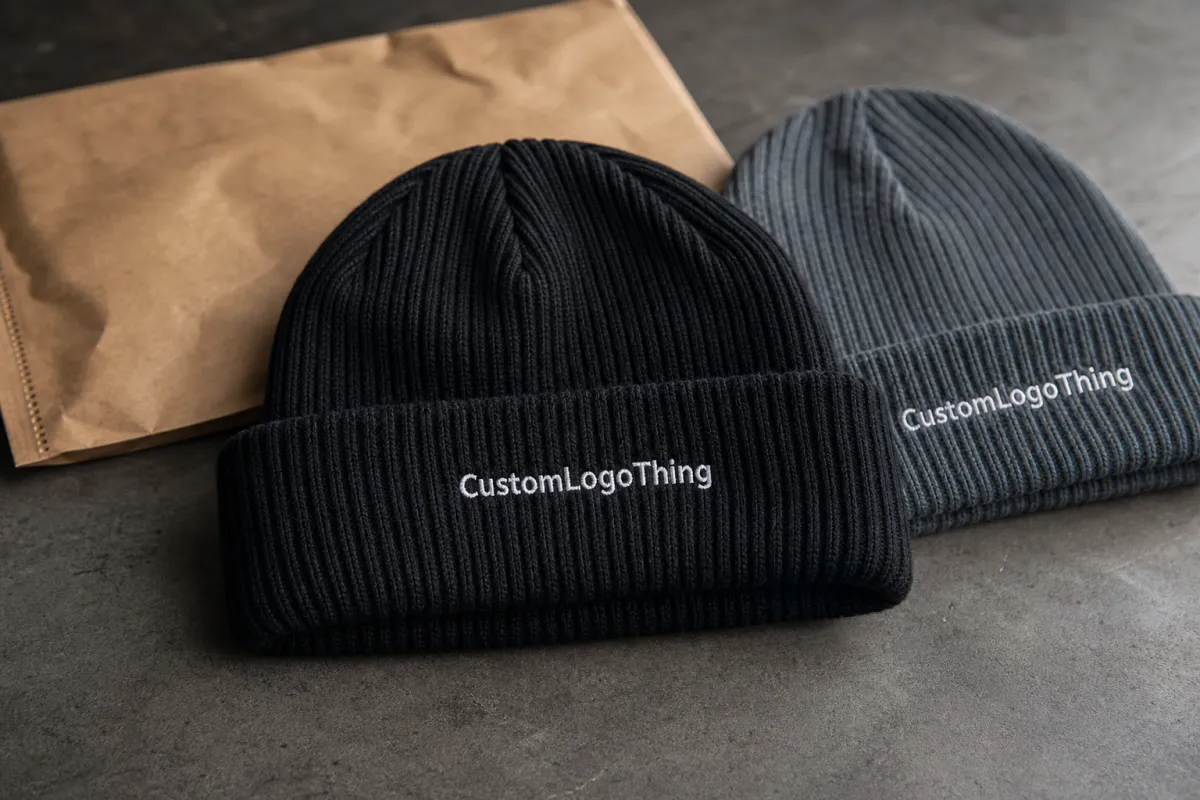
Ribbed knit gives you elasticity without making the hat look sloppy. The stretch absorbs small sizing differences, which lowers the risk of returns and complaints. In bulk, that matters more than most teams expect. A one-size-fits-most beanie sounds generic until you have to distribute 300 units to people with very different head sizes. Then it becomes the feature that keeps the order usable.
The texture also works in your favor visually. Ribbing adds depth, so the hat reads as a finished product even before the logo is added. That texture can hide minor wear better than a smooth knit, and it tends to photograph well. On a cuffed beanie, the logo sits in a clean zone while the body of the hat does the softer, winter-ready work.
Ribbed styles are especially useful when distribution needs to move fast. Common uses include:
- Employee gifts and onboarding kits
- Campus stores and alumni programs
- Retail checkout add-ons
- Contractor and field-team uniforms
- Holiday events and winter campaigns
That range is broader than many buyers expect. The same construction can look casual in one colorway and surprisingly retail-ready in another. Add a folded cuff and a clean woven label, and the hat moves away from giveaway territory quickly. Use a bold embroidery treatment and it becomes a dependable uniform piece. The knit is flexible enough to carry both roles.
A winter hat does not need oversized branding to work. It needs a stable fit, a cuff that holds decoration well, and a build that still looks decent after repeated wear.
Ribbed knit also keeps the buyer from overthinking fit. That sounds small, but it saves time. Instead of splitting an order across multiple sizes, most programs can use one measured spec and get on with the rest of the decision-making. For a seasonal item, that simplicity has real value.
Material, Knit, and Cuff Options That Change the Look
The material choice changes warmth, hand feel, and pricing more than many quote sheets make obvious. Single-layer ribbed hats are lighter and usually easier to price competitively. They work for promotional runs and milder climates. Double-layer versions add insulation and shape, which is worth the extra cost if the hats will be worn outdoors for long stretches or used as a true winter staple.
Yarn selection matters just as much. Acrylic is still the most common option because it keeps cost under control and handles volume well. Acrylic-poly blends can improve softness and recovery without pushing the item into a premium bracket. Wool blends feel more substantial and insulate better, but they also require a buyer who is comfortable with a higher price and a little more care in use and washing. None of these are universally right. The right call depends on climate, audience, and whether the hat needs to feel like merch or retail-quality product.
The cuff is not just a style detail. It creates the most reliable decoration area on the hat. A fold-over cuff makes embroidery easier to read, gives the logo a flatter surface, and helps the beanie sit more securely in wind. It also protects the decoration from looking stretched out when the hat is worn. That is one reason cuffed ribbed styles tend to outperform uncuffed versions in branded programs.
A few build choices can change the impression fast:
- Pom-poms make the hat feel more playful and retail-oriented.
- Woven labels keep the surface cleaner and work well for premium gifting.
- Faux leather patches create a sharper contrast on textured knit.
- Reflective details help when the hat is used for evening or roadside work.
- Custom stripes connect the piece to a campaign palette without overdecorating it.
If sustainability is part of the brief, ask direct questions about yarn content and packaging. Recycled yarn can be useful, but only if the supplier can state the content clearly and keep color consistency acceptable across the run. FSC-certified packaging is a useful benchmark for paper-based inserts or boxes, and the Forest Stewardship Council remains a straightforward reference point. For packaging waste and recycling context, the EPA recycling guidance is a practical starting place.
For buyers comparing packaging and apparel specs at the same time, the useful question is not which feature sounds best. It is which combination supports the program without driving up waste, labor, or cost. A ribbed hat paired with clean folding and simple labeling often performs better than a more elaborate build that slows down fulfillment.
Fit, Decoration Placement, and Brand Visibility
Fit is usually easier to manage than expected because ribbed knit already provides built-in tolerance. One-size-fits-most covers the majority of bulk orders. Youth sizing is worth considering only when the audience is clearly defined, such as school programs or junior retail. Slouchier silhouettes are more specialized and can work well for lifestyle brands, but they usually belong in a narrower product plan.
Decoration placement has a direct effect on how the hat reads in the real world. Centered cuff embroidery is the most common choice because it places the mark in the cleanest visual area. A side patch can look more fashion-forward and less promotional. A woven label on the cuff is more subdued, which can be useful when the goal is a retail finish instead of a loud logo.
The logo method should follow the artwork, not the other way around. Embroidery is durable and tactile, which makes it strong for short text and simple marks. Woven labels handle fine detail better. Patches can make a bold shape pop, especially on textured knit where embroidery would feel too small. If the logo includes thin strokes or tiny text, check legibility at actual cuff size. A mockup on a monitor is not enough.
Color strategy matters too. High-contrast combinations are easier to read in outdoor settings and team photos. Tonal branding can look premium, but it only works if the audience already knows the brand or if the product is meant to feel understated. A charcoal hat with black embroidery may look elegant in a product shot and nearly vanish on a crowded job site. That can be a smart choice or a weak one depending on the use case.
| Option | Typical Use | Visibility | Buyer Tradeoff |
|---|---|---|---|
| Center cuff embroidery | General promotions, uniforms | High | Best for simple logos and repeat wear |
| Woven label | Retail gifting, premium merch | Moderate | Cleaner finish, less texture than embroidery |
| Faux leather patch | Lifestyle brands, outdoor programs | Moderate to high | Sharp branding, but the patch has to fit the cuff |
| Tonal embroidery | Premium apparel, subtle branding | Lower at distance | Refined look, weaker visibility in photos |
Packaging and distribution deserve the same attention as the decoration itself. Polybagging, size stickers, carton counts, and fold standards can save real time when hats are headed straight to stores or event tables. If the order is being bundled with Custom Printed Boxes or other branded packaging, the folding and labeling should support that presentation instead of fighting it. Small mistakes here create avoidable labor later.
Pricing, MOQ, and Quote Variables
Price starts with a handful of variables: yarn type, knit weight, decoration method, color changes, packaging, and order quantity. Many buyers compare only the base hat price and miss the real number. The landed cost is the better measure because it includes freight, setup, digitizing, sampling, and any special packing or split-shipment charges.
MOQ follows a predictable pattern. Smaller orders carry a higher unit price because setup costs are spread across fewer hats. Larger orders usually improve the per-piece number, but only if the spec stays stable. A 100- or 250-piece run can still make sense for a pilot or a limited program. If the item is part of a recurring seasonal calendar, 500 or 1,000 pieces may hit a better break point.
Typical pricing moves in broad ranges like these:
| Quantity | Typical Unit Range | What Usually Changes |
|---|---|---|
| 100 | $7.50-$12.00 | Higher setup share, less pricing leverage |
| 250 | $5.50-$9.00 | Better spread on decoration and labor |
| 500 | $4.25-$7.50 | Often a strong value point for seasonal programs |
| 1,000 | $3.50-$6.50 | Lower unit cost if the spec stays simple |
Those figures are estimates, not fixed quotes. Wool content, double-layer construction, patch work, and packaging upgrades can move the total quickly. So can rush orders and split shipping. Embroidery digitizing is often a one-time fee, but not always if the design changes. Buyers who keep all of these pieces visible from the start usually avoid the last-minute budget surprise that slows approvals.
For teams that buy across multiple branded items, the same discipline used in custom packaging products should apply here. Confirm the spec before comparing price. It is easier to evaluate an order when the hat, the packaging, and the delivery destination are all part of the same quote. Hidden assumptions are where margin disappears.
The cleanest pricing conversations are usually the least dramatic ones: clear quantity, clear logo, clear decoration method, clear delivery window. That approach keeps a custom ribbed winter hats bulk order predictable instead of turning it into a chain of change requests.
Production Steps, Lead Time, and Delivery Windows
A buyer should be able to see the production path before signing off. The usual sequence is straightforward: request quote, review art, approve digital proof, confirm a sample if needed, move into production, inspect, then ship. If a supplier rushes past those steps, the same shortcuts tend to show up later in the process.
Lead time depends on complexity. Stock-style customization is usually faster than a fully custom knit development or a build that uses specialty patches and multiple color changes. A simple embroidered cuff order may fit into a shorter window. A custom pattern or a hat with unique finishing will take longer. The safest plan leaves room for at least one revision cycle and one shipping delay, because winter calendars do not absorb surprises gracefully.
Delays usually appear in the same places: logo approval, color confirmation, and late changes to decoration placement. More people in the approval chain usually means more back-and-forth. If speed matters, the buyer should ask for the proof turnaround time and the expected ship date before production starts. That single request often reveals how disciplined the supplier really is.
For seasonal campaigns, timing is part of the spec. A staff rollout, holiday giveaway, or retail floor change only works if the hats arrive with enough room for inspection and rework. A product that lands two days before an event has almost no margin for error. A product that lands three weeks early gives the buyer room to catch mistakes and still launch on time.
If the hats are moving alongside other branded goods, shipment handling should be considered too. The ISTA framework is useful for package handling expectations, especially when the order includes cartons, inserts, or mixed merchandise. It is not glamorous reading, but it helps keep fulfillment realistic.
How to Vet a Supplier
A good supplier can explain the differences among yarn types, decoration methods, and packing options without changing the quote every time a question comes up. That consistency matters because you are not just approving a hat. You are approving a process that has to hold together through proofing, production, packing, and shipment.
There are a few signs that usually separate the reliable vendors from the sloppy ones. Strong suppliers provide clear specs, show actual thread or yarn colors, and send proofs that match the promised build. They can discuss minimums, rush options, and carton packing without hiding behind vague phrasing. Weak suppliers often collapse everything into one number and hope nobody asks what is inside it.
Quality control should be visible before shipment. Check thread tension, logo placement, color consistency, and carton counts. If the hats are going into retail or gift programs, ask for folding instructions as well. One off-center patch on a sample is a correction. Twenty of them in a bulk run are a process problem.
Ask the same question twice if you need to. A trustworthy vendor gives the same answer both times. That matters more than polished sales language. A supplier that can hold the line on specs usually reduces revision cycles and makes final approval easier. A supplier that keeps moving the target is expensive, even if the unit price looks attractive.
This becomes especially important when the hat is part of a broader brand package alongside custom printed boxes or other branded packaging. The beanie should feel like it belongs in the same system, not like an afterthought dropped into a different workflow.
What to Send for a Fast Quote and Final Approval
Fast quotes come from complete inputs. Send the hat style, quantity, target budget, logo file, Pantone colors, and delivery zip code. If you already know whether the decoration should be embroidery, a woven label, or a patch, include that too. A brief that is specific from the start usually reduces proof changes later.
Decide on the decoration before asking for samples. A mockup is helpful for internal review, but it should not be treated as the final build if the art is still changing. For larger orders, a digital proof should come first, followed by a physical sample when the schedule allows it. That is the safest way to avoid discovering a problem after production has already started.
For faster approval, the sequence usually looks like this:
- Choose the hat build and quantity tier.
- Confirm logo size, placement, and color.
- Review the digital proof on the actual cuff area.
- Check carton and packaging requirements.
- Approve only after the hat reads correctly at wearable scale.
If the order has to land for a specific event or retail drop, treat the delivery date as part of the spec rather than a note at the end of the email. A custom ribbed winter hats bulk order works best when price, fit, and timing are all aligned before the order moves forward. That is the difference between a useful seasonal asset and a late shipment that still has to be managed.
For buyers comparing multiple programs, the same basic discipline that applies to packaging carries over here: lock the spec, verify the proof, and confirm the timeline before money moves. Do that, and the order is far more likely to arrive on time, look right, and hold up through the season.
What is the best material for a custom ribbed beanie bulk order?
Acrylic is usually the most budget-friendly option and works well for larger seasonal runs. Acrylic-poly blends add softness and better shape recovery without pushing the cost too high. Wool blends make more sense for colder regions or retail programs where warmth and texture matter more than the lowest price.
How much does a ribbed winter hat bulk order usually cost per piece?
Unit cost depends on quantity, yarn type, decoration method, and packaging requirements. The price usually drops at higher volume tiers because setup costs are spread across more hats. Freight, embroidery digitizing, and specialty labeling should be included when comparing landed cost.
What is the minimum order quantity for custom ribbed winter hats?
MOQ depends on whether the hat is stock, partially customized, or fully custom made. Smaller orders usually cost more per piece, but they can still make sense for pilot programs or limited campaigns. Ask for pricing at several quantities so you can see the point where value improves.
How long does production take for custom ribbed winter hats in bulk?
Production time depends on proof approval, decoration method, and whether the design uses standard or custom materials. Simple decoration usually moves faster than patch-heavy or fully custom knit orders. The safest schedule includes time for revisions, sample approval, production, inspection, and shipping.
Can I add embroidery or a woven label to ribbed winter hats?
Yes. Both are common on cuffed ribbed styles. Embroidery gives a durable, tactile finish, while woven labels create a cleaner retail look. The better choice depends on logo detail, budget, and how visible you want the branding to be.

