Buyer Fit Snapshot
| Best fit | Custom Rigid Gift Boxes with Logo projects where brand print, material claims, artwork control, MOQ, and repeat-order consistency need to be specified before quoting. |
|---|---|
| Quote inputs | Share finished size, material target, print colors, finish, packing count, annual reorder estimate, ship-to region, and any compliance wording. |
| Proofing check | Approve dieline scale, logo placement, barcode or warning zones, color tolerance, closure strength, and carton packing before bulk production. |
| Main risk | Vague material claims, crowded artwork, missing packing details, or unclear freight terms can make a low unit price expensive after revisions. |
Fast answer: Custom Rigid Gift Boxes with Logo: Board, Finish, Dieline, and Unit Cost should be specified like a repeatable production item. The safest quote records material, print method, finish, artwork proof, packing count, and reorder notes in one written spec.
Production checks before approval
Compare the actual filled-product size with the drawing, then confirm tolerance on folds, seals, hang holes, label areas, and retail display edges. Reserve space for logos, QR codes, warning copy, and material claims before decorative graphics fill the panel.
Quote comparison points
Review material grade, print process, finish, sampling route, tooling charges, carton quantity, and freight assumptions side by side. A quote is only useful when the supplier can repeat the same color, closure quality, and packing count on the next order.
Custom rigid gift Boxes with Logo change how a product feels before anyone touches the product itself. Same item. Different box. Different value signal. Put that item in a thin folding carton and it reads like stock packaging. Put it in a structured rigid box with a clean logo on the lid and it starts behaving like a gift, a premium retail piece, or a corporate set that somebody actually planned. That is not theater. That is packaging doing its job.
For brands buying branded packaging, the question is not whether rigid boxes look better. They do. The real question is whether the board, wrap, insert, finish, and order quantity fit the margin you actually have. Pretty packaging that wrecks the budget is just expensive disappointment with a nicer surface. That is usually the part people learn after the quote lands.
This guide covers how rigid boxes are built, what drives price, what affects lead time, and where projects go off the rails. It also gives you the practical stuff buyers need: fit, freight, sample timing, and the small details that separate a premium result from a box that only looks good in a render.
A rigid box fails quietly. If the fit is sloppy or the finish looks cheap, the product takes the blame.
Why custom rigid gift boxes with logo win attention on shelf
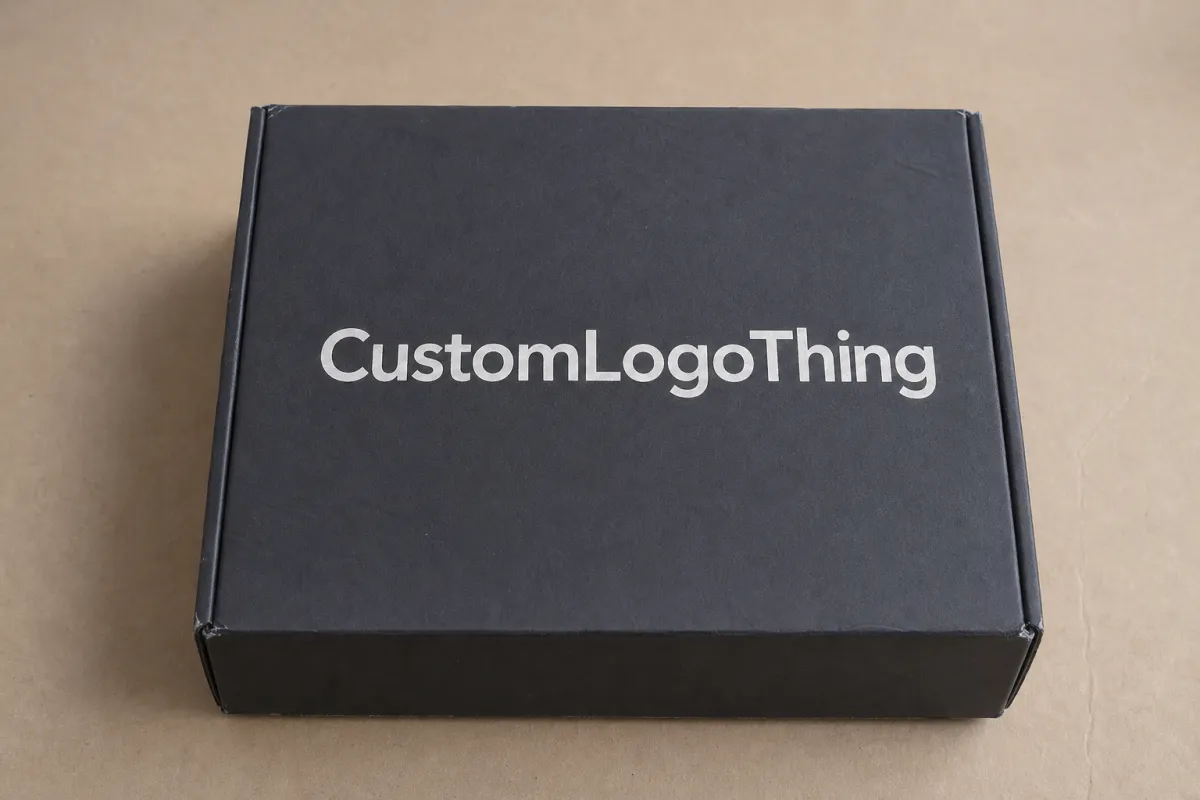
A plain product and the same product inside a rigid box do not read the same price to buyers. Not even close. Before someone opens the lid, they are already judging weight, structure, closure style, print quality, and the way the logo sits on the face. That first glance does a lot of work in retail packaging and gift packaging. Humans like to think presentation does not sway them. It absolutely does.
A rigid box, often called a set-up box, uses thick paperboard, usually 1.5mm to 3mm greyboard or chipboard, then gets wrapped in printed or specialty paper. It holds its shape. It does not collapse flat like a folding carton. That solid feel matters. Brands use it for cosmetics, electronics accessories, jewelry, premium food sets, influencer kits, and corporate gifts where presentation needs to pull its weight.
Packaging is part of the product story. A mid-priced item in a well-made rigid box can feel premium. An expensive item in a flimsy carton can feel cheap. Buyers notice that mismatch fast. That is the annoying truth of package branding: the container sets expectations before the product gets a chance to speak.
The unboxing moment matters too. A strong reveal can make a simple item feel worth more. A weak box can drag down a good product in seconds. That does not mean every surface needs foil, embossing, soft-touch lamination, and a parade of effects. It means the structure needs the right visual weight, the logo treatment needs to fit the brand, and the box should stop trying to impress people with too many tricks.
- Gift products need a box that feels worth keeping.
- Luxury retail needs structure, not just print.
- Electronics often need inserts that protect and present.
- Cosmetics benefit from clean surfaces and tight color control.
- Corporate sets need consistency across every component.
If you are comparing structures, it helps to look across a broader range of Custom Packaging Products before you lock in a box style. Some products fit a lid-and-base box. Some need a magnetic closure. Some work better as a drawer style or a foldable rigid option that saves freight and storage. The right answer depends on the product, the budget, and how much of the box stays visible on shelf.
Custom rigid gift boxes with logo: process and timeline
The cleanest projects follow a simple sequence. Brief first. Dimensions next. Structure after that. Artwork. Sample. Production. Packing. Shipping. Not glamorous. Still the best way to avoid dumb mistakes. People skip the boring steps, then act surprised when the box is too tight, the logo lands on a seam, or the magnet placement makes the lid sit crooked. Manufacturing does not reward optimism.
- Confirm the product dimensions. Measure length, width, height, weight, and any odd pieces like caps, handles, cords, sleeves, or accessories.
- Choose the structure. Decide whether the box should be lid-and-base, magnetic closure, drawer style, book-style, or a foldable rigid option.
- Lock the dieline or spec. One wrong measurement can ruin a run, so do not guess and hope.
- Prepare artwork. Logo files, color references, print areas, and no-print zones should be ready before proofing starts.
- Review a sample. Check fit, closure, surface finish, insert behavior, and whether the logo sits where it should.
- Approve production. Once the sample is right, the final run should match it closely.
- Inspect packing and shipment. Confirm carton counts, master pack size, and transit protection before goods leave the factory.
Sample timing is usually shorter than production, but it is where expensive mistakes get caught. A prototype or pre-production sample often takes 5-10 business days for a standard build. Production then takes another 12-25 business days after approval, depending on volume, finishes, and insert complexity. Add time for foil stamping, embossing, soft-touch lamination, window cutouts, or a custom insert. Fast is possible. Predictable is better.
Freight has its own schedule. Air shipping moves fast and costs plenty. Ocean shipping moves slower and usually makes sense for larger runs. Box design also changes the math because rigid boxes take more cubic space than folding cartons. Freight timing and storage should be discussed early, not after the pallet quote ruins somebody’s afternoon.
The fastest way to lose three weeks is to approve artwork before the dieline is final.
Delays usually come from the same cast of characters: artwork changes after proof approval, missing vector files, late sample sign-off, and freight congestion. If a supplier cannot tell you what they need on day one, that is a bad sign. Good communication is not about constant messages. It is about clear checkpoints: brief received, dieline approved, sample approved, production started, packed, shipped.
If you want to narrow structure choices before requesting quotes, the custom printed boxes range is useful for comparing what each style actually changes in cost and handling. A lot of buyers are really choosing between presentation, lead time, and freight volume. The box style just makes that tradeoff impossible to ignore.
Custom rigid gift boxes with logo pricing, MOQ, and quote basics
Rigid box pricing comes down to a handful of things that matter more than most buyers expect: box size, board thickness, wrap paper, print method, insert material, special finishes, and labor. A larger box does not just eat more material. It also takes more time to wrap, assemble, and pack. More surface area means more paper, more waste risk, and more sensitivity to print consistency.
MOQ, or minimum order quantity, exists because setup takes time. A simple rigid box might start around 300-500 units at some suppliers, but many factories prefer 500 to 1,000 units as a practical floor. Highly custom builds can push higher. Low-MOQ orders are useful for launches, seasonal runs, influencer drops, and limited editions, but the per-box price usually climbs because setup cost gets spread across fewer units. That is not a scam. It is arithmetic.
For buyers comparing product packaging options, the smartest move is to ask for two or three quote levels on the same spec sheet. One standard build. One upgraded build. One premium build. That makes the tradeoffs visible instead of hiding them inside a vague line item nobody can decode.
| Build type | Typical MOQ | Typical unit price at 1,000 pcs | Best fit | Main watch-out |
|---|---|---|---|---|
| Basic lid-and-base rigid box, printed wrap, simple insert | 300-500 | $1.20-$2.40 | Gift sets, skincare, small retail launches | Limited decoration and simpler presentation |
| Magnetic closure box with foil logo and paperboard insert | 500-1,000 | $2.20-$4.50 | Premium retail, tech accessories, corporate gifts | Magnets, assembly time, and higher freight volume |
| Drawer style with ribbon pull, soft-touch lamination, embossing | 500-1,000 | $2.80-$5.80 | Luxury cosmetics, jewelry, higher-end gifting | More labor and more spoilage during finishing |
| Multi-piece presentation set with custom insert and inside print | 1,000+ | $4.50-$9.00 | Corporate kits, bundled products, launch sets | Higher setup cost and more shipping cubic volume |
Those numbers are not universal. They move with print coverage, paper choice, box size, and market conditions. They still help keep a conversation honest. At 5,000 units, many projects drop 15% to 35% per box compared with a 1,000-unit run, but only if the spec stays the same. Change the insert, add another finish, or widen the box, and the math moves fast.
A useful quote should include more than a price. It should spell out the structure, board thickness, wrap paper, logo method, insert type, packaging method, master carton size, and freight terms. If one quote includes spot UV, soft-touch lamination, and a custom foam insert while another quote only includes printed wrap, those are not comparable numbers. They are different products wearing the same outfit.
Overspending usually shows up in a few predictable places: too many finishes, oversized boxes for small products, expensive inserts for light items, and artwork that tries to do too much at once. A cleaner design can look more premium than a box stuffed with effects. That is not theory. Buyers notice it. A strong logo, the right texture, and one good material choice can do more than four decorative tricks fighting each other for attention.
If you are still sorting options, ask for a price comparison against a few structures from our Custom Packaging Products page. You will learn more from comparing two or three real builds than from staring at one unit price and pretending it explains everything.
Key factors that decide quality, fit, and branding
A rigid box only feels premium if the structure is actually strong. That starts with the board. Greyboard or chipboard thickness usually falls between 1.5mm and 3mm. Thinner board can work for small, light products, but if the box is meant to feel substantial, flimsy board kills the effect. Hand feel matters. Corner strength matters too. A box that dents during transit does not care how nice the mockup looked.
The wrap paper matters just as much. Printed art paper, textured specialty paper, kraft options, and soft-touch laminated wraps all create different results. Some hold color better. Some hide minor handling marks better. Some feel warmer or more matte. If the logo color is brand-critical, the paper choice should be tested, not assumed. Bright white on one wrap can look a little gray on another. That is normal. Packaging is not a screen.
Logo decoration should match the brand, not the mood board. Foil stamping gives a sharp metallic hit that catches light well. Embossing adds raised texture. Debossing sinks the logo into the surface for a quieter look. Spot UV can make part of the design pop, but only when the substrate cooperates. A fully printed wrap gives more freedom for color-heavy branding, especially when you need gradients, photography, or more complex custom printed boxes. The right choice depends on whether you want visibility, texture, shine, or restraint.
- Foil stamping works well for logos that need presence without heavy ink coverage.
- Embossing suits brands that want texture and a more tactile reveal.
- Debossing is useful when the design should feel subtle and controlled.
- Spot UV can add contrast, but it should be used carefully on rigid wrap papers.
- Printed wraps give the most freedom for art-heavy branding.
Inserts are where fit and protection show up for real. Foam works for delicate items and irregular shapes, but it is not always the best answer if sustainability matters to your brand story. Molded pulp can be a better fit for some products, especially if you want a more recyclable solution. Paperboard trays are often the cleanest choice for lighter goods. Custom-fit inserts matter because the product should sit securely without being jammed in so tight that the customer feels punished for opening it.
Sustainability should be handled like a buying decision, not a slogan. If the wrap paper is recyclable, ask whether the coating or lamination changes that. If the insert is paper-based, ask whether it actually matches the disposal claim. If paper sourcing matters, ask for FSC chain-of-custody documentation from FSC. If the box needs shipping validation, talk about ISTA 3A or ASTM D4169 testing so you know whether the structure can survive distribution, not just sit nicely on a shelf.
For buyers and specifiers who want clearer packaging language, the resources at packaging.org are a solid way to cut through jargon. Terms like folding carton, set-up box, insert, laminate, and coating get used loosely all the time. Clear language saves time. It also makes quote comparisons less messy, which helps when you are buying retail packaging on a deadline.
Branding is not only the logo on top. It is the inside print, the opening reveal, the closure style, the ribbon pull, the tissue, the insert color, and the way the box closes without rattling. In premium categories, the inside of the box can matter just as much as the lid because that is what customers see at the reveal. That reveal is where Custom Rigid Gift Boxes with logo earn their keep.
Step-by-step guide to ordering custom rigid gift boxes with logo
Ordering gets easier when you stop thinking about the box first and start with the product. Measure the item you are packing. Measure the widest point, not just the main body. Include accessories, cords, tools, cards, tissue, or samples that need to fit inside. Note the weight. Fragility matters too. A glass bottle, a ceramic piece, and a metal accessory need different handling even when the dimensions are close.
Build a brief after that. Keep it short and specific. Tell the supplier the target audience, use case, budget range, and whether the box is for retail, gifting, or shipping. Say whether you want a glossy look, a matte look, a textured paper, or a soft-touch finish. If the brand already uses a color system, include Pantone references or approved print files. Good branded packaging starts with a brief that answers the obvious questions before somebody has to ask them.
- Measure the product and accessories. Include tolerance for easy removal. Too tight is annoying. Too loose looks cheap.
- Pick the box style. Match the structure to the product and the budget, not to whatever looked nicest in a folder.
- Prepare artwork properly. Vector logos are ideal. Image files should be high resolution. Leave safe margins around text and seams.
- Request a proof and sample. Check the dieline, logo placement, and finish on a physical sample if the order matters.
- Approve the exact spec in writing. Board thickness, wrap paper, insert material, carton count, and closure style should all be locked.
- Review the first shipment. Compare it with the approved sample before you scale the next order.
The artwork step is where plenty of good projects go sideways. Logos need to be placed with the seam in mind. Fine text can disappear if it is too close to a fold. Dark art on dark paper can flatten out. A printed logo that looks perfect on screen might look softer on a textured wrap. That is why proofing matters. The file is not the box. The sample is the box.
For buyers who want a clearer starting point, the rigid box options on the products page help separate the decisions that matter most: closure style, finish, insert type, and visible logo treatment. Once those are fixed, the quote conversation gets much easier. Before that, everyone is guessing politely.
One more practical point: lock the packing spec. Some brands need each box polybagged. Some need tissue wrap. Some need a divider or an outer carton with a certain count per shipper. If those details stay vague, you can end up with a beautiful box that is miserable to pack, store, or distribute. Product packaging should make operations easier, not just prettier.
Common mistakes that wreck custom rigid gift boxes with logo
The first mistake is measuring only the product and forgetting the insert, opening tolerance, or the hand feel needed for easy removal. A box that fits too tightly makes the customer fight the packaging. A box that is too loose lets the product rattle. Neither one helps. The best fit is usually snug with enough clearance for safe insertion and a clean reveal.
The second mistake is choosing expensive finishes before the structure is proven. Foil, embossing, and specialty paper look good, sure, but if the basic build is weak, the box still fails. Pretty packaging that bends, dents, or arrives scuffed is not premium. It is just a nicer-looking problem.
The third mistake is approving artwork before checking the dieline. That is how logos land too close to seams, text gets clipped, and a good design turns awkward. Seam placement matters more than most designers expect. A tiny shift can change the whole face of the box. That is not drama. That is manufacturing.
The fourth mistake is ignoring freight and storage. Rigid boxes take more space than folding cartons, so the unit price is only part of the story. A box that looks cheap on paper can become expensive once storage, pallet space, and shipping volume are included. For larger runs, the difference can be big enough to change the margin. A box that costs a few cents more to make can cost a lot more to move.
- Overdesigned artwork can create more production risk than brand value.
- Oversized packaging raises freight volume and makes the product feel smaller.
- Late approvals compress production and increase the chance of mistakes.
- Cheap quotes often hide assumptions about paper, insert, or finish.
- Unclear ownership between marketing and operations slows everything down.
The fifth mistake is underestimating lead time. That one shows up constantly because packaging feels like it should move faster than it does. Samples, approval, print setup, assembly, and freight all need buffer time. A last-minute launch and a custom rigid box order are not friends. One of them always gets annoyed.
The sixth mistake is taking the cheapest quote without asking what is missing. Was the insert included? Is the paper the same? Is the finish the same? Is the inner print included? Are shipping cartons included? If the answer to any of those is no, the quote is not cheaper. It is incomplete. Different thing entirely.
Expert tips and next steps for custom rigid gift boxes with logo
My first rule is simple: simplify the design where it does not matter. One strong logo placement usually beats four different effects fighting for attention. If the brand is premium, let the material, fit, and closure carry some of the weight. The box does not need to prove how hard it tried.
My second rule is to ask for a structural sample when the product is heavy, fragile, or oddly shaped. A pretty art proof is not enough in those cases. You need to know whether the insert holds the item, whether the lid closes properly, and whether the box survives handling. That extra step costs less than fixing a bad run.
My third rule is to compare quotes on the same spec sheet. Same board thickness. Same paper wrap. Same logo method. Same insert. Same carton count. Otherwise you are comparing apples to cardboard soup. A quote that looks cheaper may just be less complete.
If you are preparing for a launch, use this short checklist before you order:
- Product measurements confirmed with tolerance for fit.
- Finish choice selected based on brand, not just trend.
- Insert choice matched to product weight and fragility.
- Sample approval completed before production starts.
- Timeline padded for revisions, transit, and inspection.
- Freight method chosen with storage and delivery in mind.
A practical next step is to request two or three structured quotes, review one sample, and choose the version that balances fit, finish, and budget. That is the boring answer. It is also the one that usually works. Fancy packaging still has to survive production, packing, and delivery before it can impress anyone.
Done right, custom rigid gift boxes with logo should make the product easier to sell, easier to ship, and easier to remember. That is the point. If the box does those three things, it is working. If it only looks expensive, it is decoration with a shipping fee.
How much do custom rigid gift boxes with logo usually cost?
Pricing depends on size, board thickness, wrap paper, logo method, inserts, and order quantity. Simple rigid boxes with basic print cost less, while foil stamping, embossing, magnetic closures, and custom inserts raise the unit price quickly. Ask for a quote based on the exact spec, not a rough size guess, or the numbers will not tell you much.
What is the minimum order quantity for custom rigid gift boxes with logo?
MOQ varies by factory and structure, but rigid boxes usually need a higher minimum than folding cartons. Some suppliers can do 300-500 units for simple builds, while others prefer 1,000 or more. Low-MOQ runs are possible, but the per-box cost is usually higher because setup time gets spread across fewer units.
How long does it take to produce custom rigid gift boxes with logo?
Timelines depend on whether you need a sample, how many finishes you use, and how fast artwork gets approved. A standard sample often takes 5-10 business days. Production commonly takes 12-25 business days after approval, then shipping adds more time. Build in buffer time for revisions, freight, and any pre-launch inspection.
Which finish works best for a logo on rigid gift boxes?
Foil stamping works well when you want the logo to feel premium and catch light. Embossing or debossing is better when you want texture without too much shine. Printed logos are more flexible for color-heavy branding, but they should still be tested on the chosen paper wrap before you commit to a full run.
Are custom rigid gift boxes with logo worth it for small products?
Yes, if the product is premium, giftable, fragile, or meant to create a strong first impression. A small product in a rigid box can feel more valuable than a larger product in weak packaging. The key is right-sizing the box so you do not pay for excess material or oversized freight.
Bottom line: custom rigid gift boxes with logo are worth the spend when the spec matches the product, the logo treatment matches the brand, and the structure has been checked with a real sample. Measure carefully, quote the same build across suppliers, and confirm freight early. That combination keeps the packaging looking sharp without turning it into a budget leak.

