If you are sourcing a Custom Rubber Patches supplier bulk order, the first question is not whether a patch can be made. Most suppliers can mold a logo into rubber. The real test is whether that patch still looks sharp after abrasion, laundering, rain, folding, and repeated handling. On high-wear items, rubber usually outlasts many printed treatments because the color sits inside the molded structure rather than on top of the surface.
That durability matters in procurement terms. A patch that survives the full product life cycle reduces replacements, keeps the brand uniform across SKUs, and prevents the uneven look that comes from failing prints or cracked transfers. Bulk pricing helps, but the stronger value is consistency: the same shape, the same color blocks, the same finish from the first carton to the last.
Rubber patches are commonly used on workwear, outerwear, uniforms, backpacks, tactical gear, caps, and promotional apparel. They also work well on bags and pouches, where a raised logo gives more visibility than flat ink. If the patch needs to sit beside other branded elements, such as packaging or tags, the finish should feel intentional rather than added later as an afterthought.
“The cheapest decoration is not always the cheapest program. If the logo fails early, it often gets bought twice.”
That is why serious buyers compare durability, not only price. A supplier who understands volume production should talk about wear conditions, attachment method, and artwork limits before sending a quote.
Why Bulk Rubber Patches Outperform Printed Branding on Wear
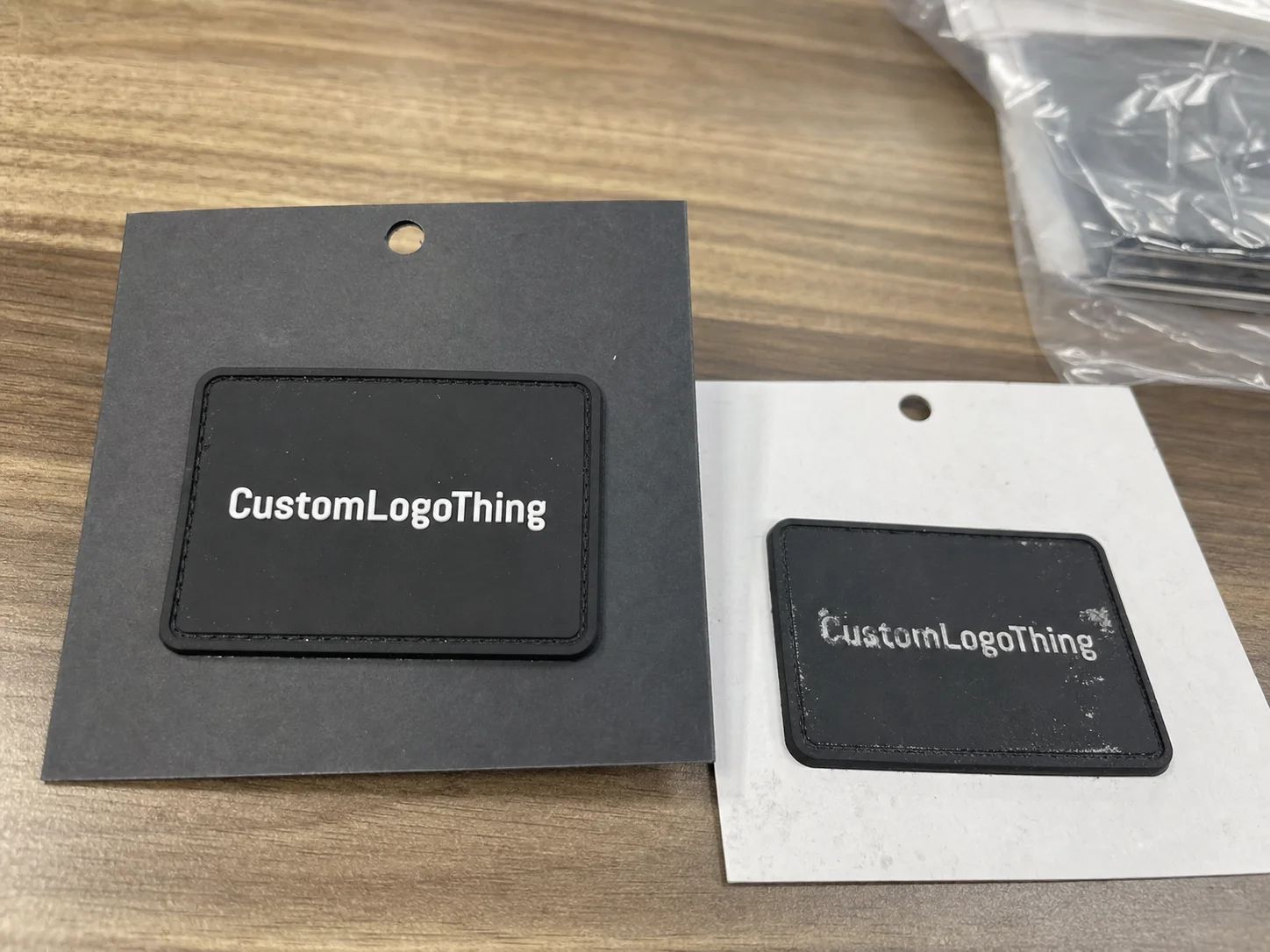
Printed logos still have a place. Embroidery does too. But on products that are scraped against desks, stuffed into bags, machine-washed, or exposed to outdoor use, rubber patches usually hold up better. The edges stay readable. The color separation stays cleaner. Fine detail survives longer than on many surface-printed options.
That makes them a practical choice for uniforms, jackets, backpacks, duffels, fleece, and technical apparel. A molded patch is also less likely to look tired after a few months of use, which matters when the same item is worn every week. The effect is small at first, then obvious: one item looks controlled and durable, another looks faded or cracked.
There is another advantage that buyers notice only after a few program cycles. Rubber patches are easier to standardize across different garment types. A shirt, vest, jacket, and bag can carry the same identity without relying on different print methods for each substrate. That reduces variation and simplifies reorders.
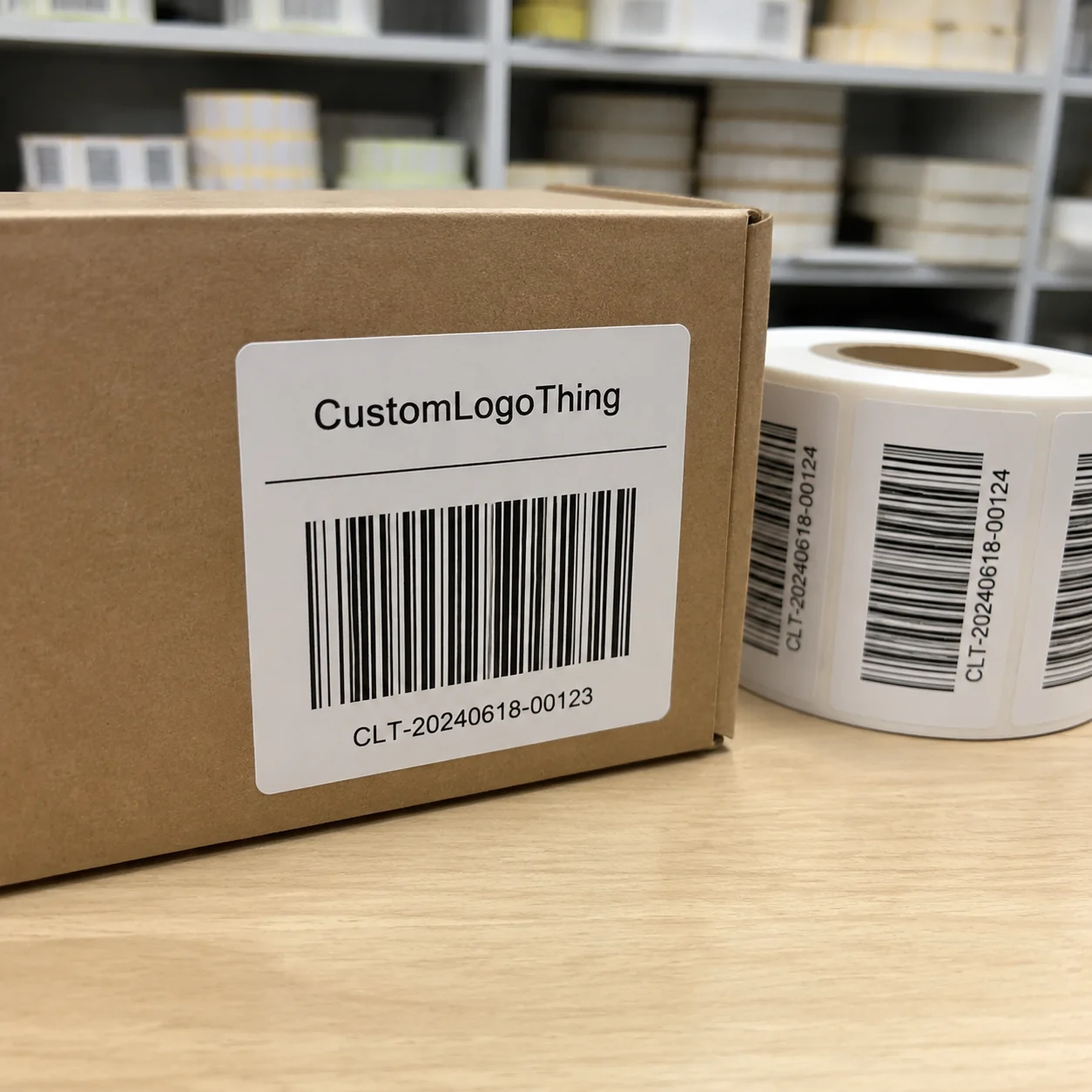
For programs that connect apparel with broader branded packaging, the visual language can stay aligned more easily. A molded patch pairs well with custom boxes, labels, or insert cards because it carries a clean, dimensional look. Flat ink can still work, but it often needs more frequent replacement on wear-heavy products.
Rubber Patch Styles, Backings, and Surface Finishes That Matter
Rubber patches are not one product. The construction changes the look, feel, and price. PVC patches are widely used because they hold color well and can reproduce crisp molded edges. Silicone patches usually feel softer and more premium, and they are often chosen for outdoor gear or apparel where a less rigid touch matters. 2D styles are flatter and cleaner. 3D styles add depth, but that depth works only when the design is simple enough to read clearly.
Surface finish changes the impression more than many buyers expect. Matte finishes look restrained and often fit technical apparel better. Gloss can appear bolder and more promotional. A shiny finish on a rugged jacket may feel out of place, while the same finish can suit a retail accessory or event item. The right choice depends on the product, not the decoration category alone.
Backing is a bigger decision than it first appears. Sew-on is the most permanent option and usually the safest choice for heavy wear. Heat seal can work well when the fabric supports bonding and the application process is controlled. Velcro is ideal for removable or interchangeable patches, especially in tactical, worksite, or event environments. Adhesive backing is usually the least durable and is better reserved for light-duty placement or temporary use.
Shape and edge treatment also affect performance. A die-cut custom outline can follow a logo closely, but very sharp points can wear faster on some garments. Rounded corners often look cleaner on small patches and may resist edge damage better. A stitched-edge look can add contrast, though molded borders already provide enough separation for many designs.
Color capability is strong, but there are limits. Most suppliers can match Pantone references closely, yet tiny lettering, thin outlines, and crowded details may lose clarity when molded. If the art includes gradients, textured shading, or narrow typography, ask for a mockup at actual size before approving production. Small logos often need simplification. That is not a design failure; it is a production constraint.
Specifications to Confirm Before You Approve Artwork
Before artwork is approved, the spec sheet should already be clear. Size, thickness, shape, backing, Pantone targets, and intended garment type all affect the final result. If those items are vague, the order usually becomes harder to quote and harder to reproduce later.
Vector artwork is the right starting point in most cases. AI, EPS, or an editable PDF gives the factory a clean file to work from. Raster files can help as references, but they are not ideal for molding. If the logo has very thin lines, tiny type, or layered details, expect some simplification. A supplier worth using will say that early instead of forcing the issue into production.
Durability requirements should be stated plainly. A patch for a rain jacket does not face the same conditions as one on a promotional cap. A patch for a uniform that goes through frequent laundering needs stronger attachment assumptions than one on a display item. If the item will see UV exposure, abrasion, or industrial washing, those conditions should be written into the brief.
The following checklist helps avoid rework:
| Spec Item | Why It Matters | Buyer Risk If Missed |
|---|---|---|
| Patch size | Determines legibility and placement | Logo looks too small or overwhelms the garment |
| Thickness | Changes feel, durability, and appearance | Patch feels bulky or flimsy |
| Backing | Controls attachment strength and use case | Patches fail in wear or need replacement |
| Pantone target | Protects brand consistency across batches | Color drift appears between reorders |
| Garment type | Determines compatibility with fabric and care cycle | Bonding failure or poor placement |
Common mistakes are predictable. Buyers approve the artwork before checking whether the patch has enough space for readable detail. They add too many colors to a small shape. They ignore seams, pockets, or curved surfaces. They skip a sample because the calendar is tight. Then the run starts, and the correction is more expensive than the patience would have been.
If the patch is part of a larger branded system, align the finish with packaging, labels, and inserts early. That keeps the visual presentation consistent and prevents one component from looking like it belongs to a different program.
Custom Rubber Patches Supplier Bulk Order: Cost, MOQ, and Unit Pricing
Pricing depends on a few concrete variables: size, color count, mold complexity, backing type, and total quantity. Quantity is the biggest lever because the setup cost is spread across more units. A Custom Rubber Patches supplier bulk order often looks expensive at 100 pieces and much more efficient at 1,000 or 5,000 pieces.
For simple bulk runs, unit pricing may fall roughly in the $0.20 to $0.60 range at higher volumes. Larger patches, multi-layer construction, specialty backings, and complex shapes usually sit higher. Small runs are not impossible, but they carry more cost per unit because the fixed work does not disappear: artwork preparation, mold setup, color matching, and proofing still have to happen.
MOQ is not just a sales rule. It reflects the time and material involved in calibration. Lower quantities can be produced, but the economics rarely favor them unless the order is a sample run or a very limited launch. For that reason, it is smarter to request tiered pricing than to ask for one number and stop there.
| Quantity | Typical Unit Price | What Usually Improves |
|---|---|---|
| 100-300 | Higher per unit | Small launches, testing, sample programs |
| 500-1,000 | Moderate | Better setup efficiency and freight balance |
| 2,500-5,000+ | Lowest per unit | Best economics for rollouts and uniform programs |
Hidden costs can change the real comparison between suppliers. Artwork revisions may add time and sometimes fees. Rush orders often carry a premium. Split shipments can increase logistics cost. Individual polybags, labeling, or special assortment packing can also change the quote. A clean quotation should separate tooling, production, and shipping so the numbers can be compared fairly.
Buyers sometimes focus too narrowly on the lowest unit price. That can be a mistake if the patch wears out early or if the supplier cannot repeat the same color and finish on the next run. The better question is total cost across the full use period. A slightly higher price can be justified if the patch lasts longer, reduces replacements, and protects the look of the brand.
Production Steps, Lead Time, and Approval Milestones
The standard workflow is usually inquiry, artwork review, digital proof, sample or mockup approval, production, inspection, and shipping. What affects the schedule is not the presence of those steps, but how quickly the buyer answers and how complete the artwork is at the start.
For standard orders, lead time often falls around 12 to 15 business days after proof approval. Larger volumes, mold changes, or more detailed constructions can extend that timeline. Rush production may be possible, but only when the design is already finalized and the supplier has the capacity to take it on. In practice, slow approvals delay more orders than machine time does.
Schedule buffers matter. Seasonal launches, staff uniform rollouts, and event merchandise all compress the timeline because multiple components have to arrive together. If the patch must coordinate with printed boxes, hang tags, or broader packaging, those items should be planned on the same calendar. A patch delivered early but stored for weeks may still be fine. A patch delivered late can stop a launch.
Buyers should ask for clear milestones: when proof approval is due, when tooling begins, when production starts, and when final inspection happens. If the order needs to ship to multiple locations, that should be organized early rather than added at the end. Split deliveries can help inventory flow, but they also need to be built into the logistics plan.
For broader shipment handling and packaging context, industry resources such as Packaging School / packaging.org can help teams understand packout and distribution pressure points. That matters more than people think, because a patch program is rarely isolated; it usually sits inside a larger merchandise schedule.
How a Reliable Bulk Supplier Protects Quality at Scale
Quality control separates dependable suppliers from risky ones. A good factory checks edge definition, color matching, mold consistency, and surface finish before shipping. It also pulls random units from across the run, not just the first few pieces off the line. That matters in bulk, where a small defect rate can become a large problem once the cartons are opened.
Responsiveness is part of quality, too. Clear quoting, realistic timelines, and quick artwork feedback all signal that the supplier understands volume work. If basic production questions take days to answer, the order may be fine on paper and weak in execution. Bulk programs move on deadlines, not theory.
Factory-direct pricing can be useful, but only if the supplier can reproduce the original order with consistency. Reorders should match the same mold, Pantone targets, thickness, and finish. If a patch program is tied to recurring uniforms or wholesale apparel, color drift between batches becomes obvious fast. One batch that leans warmer than the last can make the entire program look uneven.
One practical way to evaluate a supplier is to ask how they handle a reorder six months later. Can they reference the original proof? Can they reproduce the same shape and color? Do they keep notes on the mold and finish? Reliable suppliers answer those questions directly. That operational memory is more valuable than a polished sales page.
For buyers managing a larger sourcing workflow, it also helps to coordinate with Wholesale Programs and the packaging team so decoration, labeling, and presentation stay aligned. A patch is a small part of the order, but it still has to fit the broader product system.
Next Steps to Order the Right Patch for Your Program
Start with a short internal brief. List patch size, quantity range, attachment method, garment type, deadline, and any restrictions on color or finish. If the patch must be removable, permanent, or heat-applied, say so directly. That information saves time and reduces unnecessary revisions.
Send vector artwork and call out anything that may cause trouble: tiny text, thin outlines, gradients, or crowded details. Ask for tiered pricing at several quantities so the finance team can compare options cleanly. A quote that shows 300, 1,000, and 5,000 units is more useful than a single number because it shows where the price curve actually starts to flatten.
If the design is complex, request a digital mockup or sample before production. Check readability at actual size. Check how the patch sits on the garment. Check color against the rest of the brand system. If the order connects to custom printed boxes, tags, or other branded materials, make sure the visual treatment is still consistent.
Once the spec sheet is complete, the order becomes much easier to manage. That is the point where a Custom Rubber Patches Supplier bulk order stops being a quoting exercise and becomes a production plan. Good buyers do not just compare price; they compare repeatability, lead time, attachment method, and the cost of getting the details wrong.
The strongest outcome usually comes from a supplier that can keep the artwork clean, the price transparent, the timeline realistic, and the batch quality stable. If those four pieces line up, the patch does what it is supposed to do: it lasts, it reads clearly, and it makes the product look finished every time it is worn.
What is the minimum order for custom rubber patches supplier bulk order?
MOQ varies by factory, patch size, and design complexity. Smaller runs are possible, but unit cost usually rises because setup is spread across fewer pieces. Tiered pricing is the clearest way to compare options.
How much do custom rubber patches cost in bulk?
Pricing depends on size, color count, backing, molding complexity, and total quantity. Simpler high-volume patches can land around $0.20 to $0.60 per unit, while larger or more detailed builds usually cost more. Ask for quotes that separate tooling, production, and shipping.
What file format should I send for custom rubber patch artwork?
Vector files are best, including AI, EPS, or an editable PDF. Thin lines, tiny text, and crowded details may need simplification to mold cleanly. A good supplier will review the art and flag issues before production starts.
How long does production usually take for bulk rubber patch orders?
Lead time often runs about 12 to 15 business days after proof approval for standard orders. Complex builds, larger quantities, or mold changes can extend that schedule. Slow approvals usually delay orders more than production itself.
Which backing should I choose for apparel and uniforms?
Sew-on is best for permanent attachment and heavy use. Velcro works well for removable or interchangeable branding. Heat seal can be a good option if the fabric and care cycle support it; adhesive is usually better for light-duty or temporary placement.