Buyer Fit Snapshot
| Best fit | custom seal stickers for mailers branding sticks for packaging buyers comparing material specs, print proof, MOQ, unit cost, freight, and repeat-order risk where brand print, material, artwork control, and repeat-order consistency matter. |
|---|---|
| Quote inputs | Share finished size, material target, print colors, finish, packing count, annual reorder estimate, and delivery region. |
| Proofing check | Approve dieline scale, logo placement, barcode or warning zones, color tolerance, and any recyclable or compostable wording before bulk production. |
| Main risk | Vague material claims, crowded artwork, or missing packing details can create delays even when the unit price looks attractive. |
Fast answer: Custom Seal Stickers for Mailers Branding Sticks: Film, Closure, Print, and Fulfillment should be specified like a repeatable production item. The safest quote includes material, print method, finish, artwork proof, carton packing, and reorder notes in one written spec.
What to confirm before approving the packaging proof
Check the product dimensions against the actual filled item, not only the sales mockup. Ask for tolerance on folds, seals, hang holes, label areas, and retail display edges. If the package carries a logo, QR code, warning copy, or legal claim, reserve that space before decorative graphics fill the panel.
How to compare quotes without losing quality
Compare board or film grade, print process, finish, sampling route, tooling charges, carton quantity, and freight assumptions side by side. A lower quote is only useful if the supplier can repeat the same color, closure quality, and packing count on the next order.
Custom Seal Stickers for Mailers: Branding That Sticks
A plain mailer can disappear into a stack of deliveries in seconds. Add a clean seal across the flap and the package starts to feel chosen, not merely assembled. That tiny shift is why custom seal Stickers for Mailers matter so much: they close the package, sharpen the first impression, and turn shipping into part of the brand story instead of an afterthought.
Packaging buyers are often surprised by the economics. A seal that costs a few cents can influence perceived value more than a larger printed panel on a box. People make fast judgments from visual and tactile cues, and shipping packaging is crowded with those cues. A neat seal lands early, before the product ever appears, which gives it outsized influence for such a small piece of material.
Think of custom seal stickers for mailers as a hybrid tool. They hold the flap closed, hide the join, and add a tactile moment that says the order was handled with care. In practical packaging design, that matters because the package is usually the first physical interaction a customer has with a business. First contact does not need to be theatrical. It needs to feel deliberate.
These stickers also sit in a useful middle ground. They are simpler to adopt than custom printed boxes, more adaptable than fully printed mailers, and usually easier on the budget than reworking an entire product packaging system. Brands that ship in multiple mailer sizes, run seasonal campaigns, or refresh visuals often find that custom seal stickers for mailers solve the problem without forcing a full packaging overhaul.
The formula is straightforward: Choose the Right material, adhesive, size, and finish, then use custom seal stickers for mailers as a calculated branding move. A well-chosen seal can make packing faster, improve the customer’s read on your package branding, and keep the shipment looking finished before the mailer is even opened.
Custom Seal Stickers for Mailers: The Small Detail Buyers Notice
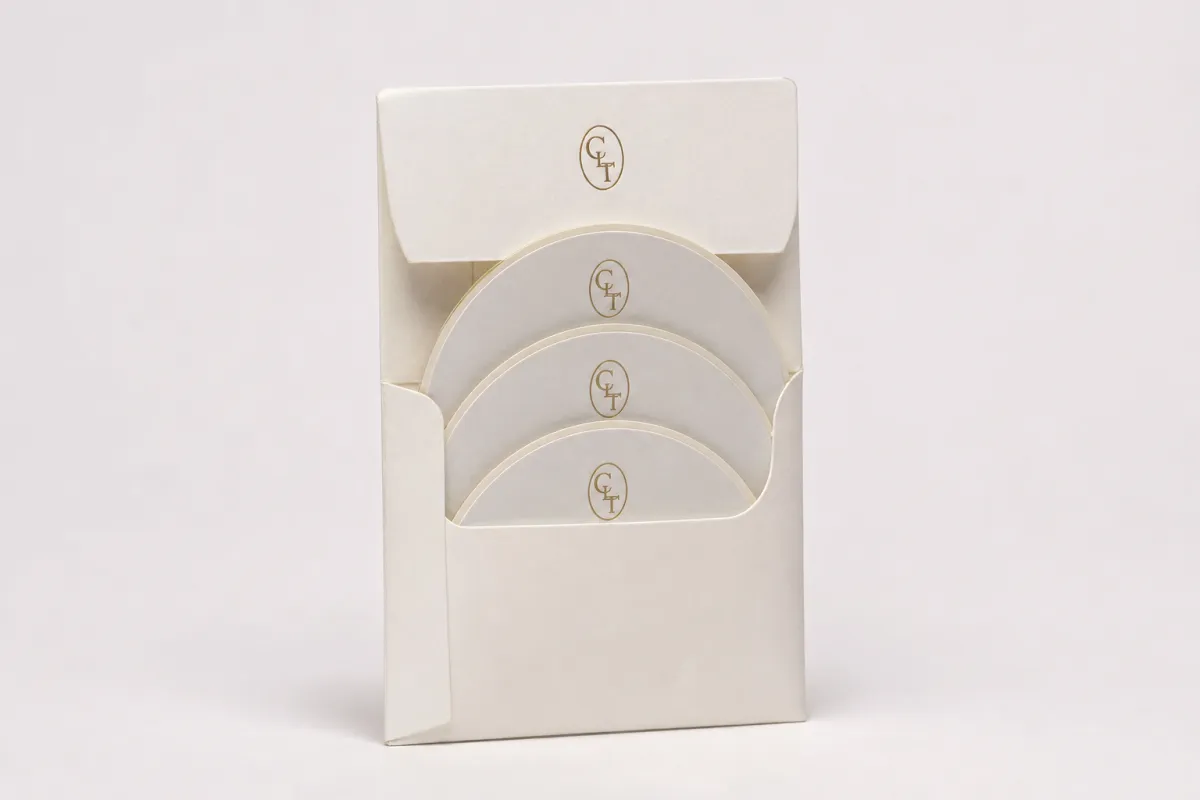
Open a plain kraft mailer and the experience may feel purely functional. Add custom seal stickers for mailers, and the same package can read as giftable, polished, and intentional. That difference is not cosmetic fluff. Packaging research keeps showing that early visual and tactile signals set expectations before the product is even in view, and shipping packaging is full of tiny signals.
From a packaging buyer’s perspective, the seal does three jobs at once. It closes the flap, marks ownership, and tells the recipient the order was packed with care. On a busy porch, at a front desk, or in a shared office, that extra signal can matter more than a large printed message that gets glanced at and forgotten.
There is a quiet trust effect at work too. Customers often connect a clean seal with care, and care with quality. A sticker will not fix weak fulfillment or flimsy mailers, but it can make a good operation look more polished than the budget suggests. Custom seal stickers for mailers are small enough to disappear into the workflow and visible enough to change the tone of the shipment.
One detail gets overlooked a lot: the sticker is not merely decoration. It is part of the package structure. If the mailer creases awkwardly, if the adhesive slips, or if the artwork sinks into the substrate, the seal works against the brand. Effective custom seal stickers for mailers solve the visual problem and the mechanical one.
"A mailer with a clean seal feels finished. A mailer without one can feel temporary, even if the product inside is excellent."
That pattern shows up across categories. Beauty brands use seals to make simple mailers feel giftable. Apparel brands use them to reinforce a consistent retail packaging system. Food, wellness, and accessories brands use them to bring order to a mixed shipping setup that would otherwise feel patched together. In each case, custom seal stickers for mailers do the same job: they make the shipment look prepared rather than improvised.
There is another advantage that does not get enough attention. The seal sits exactly where the customer’s hands land first, so it becomes part of the unboxing sequence. That placement makes it an efficient piece of package branding. Small, yes. Invisible, never. A modest graphic at the touchpoint often earns more attention than a bigger image placed farther away.
I have watched this play out in press checks and packing-room walk-throughs: the team will spend days debating outer graphics, then everyone notices the seal first once the sample hits the table. That is not a design accident. It is a human-hand interaction point, and it’s gonna get touched whether the brand plans for it or not.
How Custom Seal Stickers for Mailers Work
At the simplest level, custom seal stickers for mailers bridge the flap seam and keep the package closed. Fold the mailer correctly and the seal covers the opening, hides the join line, and creates a cleaner face. In transit, it can also discourage tampering because disturbed seals are easy to spot.
The real question is not whether a sticker sticks. It is where it sticks, what it sticks to, and how long the bond needs to last. A slick poly mailer behaves differently from a matte paper mailer. Recycled fibers behave differently again. The same artwork can look sharp on one surface and fail on another. Custom seal stickers for mailers need to be matched to the substrate, not just to the design file.
Placement changes the result more than most buyers expect. A round seal centered on the flap creates a tidy, symmetrical look. A rectangle or strip can span a wider join and help on larger mailers. Die-cut shapes can feel more custom, but they need enough interior space so the logo stays readable. The seal should make sense from arm’s length and still hold up in a quick glance.
Adhesion strength matters just as much. Permanent adhesive is usually the default for custom seal stickers for mailers because a seal that falls off defeats its own purpose. Not all permanent adhesives behave the same way, though. Some are built for smooth surfaces, others grip better on recycled or lightly textured materials. If the shipment may face cold storage, humidity, or rough handling, that use case should be specified before print approval.
For brands shipping in mixed formats, the seal becomes a useful standard. One company may use paper mailers for one line, poly mailers for another, and padded mailers for a third. One carefully planned sticker system can sit across all three, especially when the size and artwork are chosen with enough flexibility. That is one reason Custom Packaging Products often work better as a system than as isolated pieces.
There is also a pace benefit in the packing room. If a fulfillment team can close, press, and stack in one motion, the operation moves with less friction. Custom seal stickers for mailers support that kind of rhythm. They do not force the packing line into extra folds or elaborate wrapping, and they keep style from slowing the shipment down.
For transit expectations, many teams look to broader shipping standards. The International Safe Transit Association publishes test methods that help buyers think about compression, vibration, and handling. A seal is not a replacement for package testing, yet it lives inside that same reality: if the parcel takes a beating, the closure has to behave.
Materials, Adhesives, and Finish Options
Material choice is where many custom seal stickers for mailers either become quietly effective or start causing trouble. The stock affects the feel in hand, print clarity, edge durability, and how the seal survives shipping. There is no single best option. There are, though, much better matches for specific mailers.
Paper, BOPP, and texture
Paper label stock is the familiar route. It prints cleanly, feels natural on kraft mailers, and suits brands that want a softer, less glossy look. It is also a sensible fit for custom seal stickers for mailers used on paper-based packaging, where the seal should blend into the surface rather than dominate it.
BOPP, a polypropylene film, is the tougher choice. It resists moisture better, keeps color sharp, and usually stands up better to shipping abuse than standard paper. That makes it a strong candidate for poly mailers and any shipment likely to encounter damp conditions. If the package moves through multiple hands, BOPP can keep the seal looking cleaner for longer.
Textured or recycled stocks can look excellent, but they deserve a test run. Fibrous surfaces can weaken adhesive contact if the seal is too light, and some coatings change how inks sit on the face. Brands trying to balance sustainability with appearance should not just pick the prettiest stock and hope. The better move is to match the seal to the mailer, then test the grip on the actual substrate.
In one production review I sat through, a beautiful matte seal looked perfect on proof paper and then lifted at the corners on a recycled mailer after a single afternoon in a warm warehouse. Nobody was thrilled. That sort of issue is avoidable if the material is tested against the real packaging, not just against a sample swatch.
Adhesive and surface fit
On smooth poly mailers, a standard permanent acrylic adhesive usually performs well. On matte paper mailers, the same adhesive may still work, but the bond behavior can change depending on coating and application pressure. On rougher recycled stock, high-tack adhesive is often the safer route for custom seal stickers for mailers.
If the package will see temperature swings, ask for a stock that remains stable through cold and warm handling. For cold-chain or humid environments, the adhesive spec deserves as much attention as the artwork. A beautiful seal that peels at the seam is not branding. It is a defect with a logo on it.
A simple rule helps here: the smoother the surface, the wider your material choices; the rougher the surface, the more selective you need to be. It is not perfect, but it prevents a lot of mismatch. In practice, a short adhesion test on the actual mailer stock tells you more than a long debate over swatches.
Finish and legibility
Matte finishes tend to feel quieter and more premium on kraft or paper mailers. Gloss finishes deliver stronger color saturation and can make logos pop, especially for bold branding. Soft-touch finishes add a tactile layer that can work well for higher-end product packaging, though they usually make more sense for larger labels than for tiny seals.
Legibility is the real test. A finish should support the artwork, not compete with it. If small type disappears under sheen or a dark seal swallows the logo, the sticker has failed the simplest brand requirement: be seen and understood quickly. Many teams keep custom seal stickers for mailers visually restrained and reserve more detailed storytelling for inserts or outer panels.
Proportions matter too. A 1.5-inch round seal can look tidy on a small mailer and vanish on a larger one. A 2-inch or 2.5-inch size often gives logos and borders room to breathe. For a wide flap or a heavier mailer, a strip-style die cut may do the job better than a small circle because it covers more seam length and resists buckling.
For brands coordinating seal design with other assets, the sticker should sit comfortably beside any Custom Labels & Tags or other elements of branded packaging. Visual consistency matters whether the shipment is direct-to-consumer or part of a retail replenishment program.
One more procurement detail deserves mention. If paper sourcing matters, the FSC system is a widely recognized standard for responsibly managed forest products. A seal sticker is small, but the paper choice still belongs inside a larger sustainability conversation.
Cost, Pricing, and MOQ for Custom Seal Stickers for Mailers
Pricing for custom seal stickers for mailers usually comes down to five variables: size, quantity, stock, finish, and print complexity. Add die-cutting, specialty inks, or unusual roll configuration, and the quote can move fast. That does not mean the category is expensive. It means the economics react sharply to specification choices.
For small and mid-sized brands, the attraction is clear. Stickers often require less investment than switching to custom printed boxes or fully custom mailers. A brand can upgrade packaging presence without retooling the entire ordering system. That helps startups, seasonal launches, and companies that still need flexibility across different product lines.
MOQ changes the math. A shorter run can be convenient, but the per-unit price is usually higher because setup and production overhead are spread across fewer pieces. A slightly larger run often drops the unit cost enough to justify storage. With custom seal stickers for mailers, the right quantity is often the point where shelf space and cash flow meet.
A realistic way to think about it: low quantities bring higher unit pricing but minimal leftover inventory risk. Mid-sized quantities usually reduce cost enough to improve margin in a noticeable way. Larger runs can save more, but only if the design is stable and the brand does not expect another revision soon.
| Option | Typical Use | Indicative MOQ | Approx. Unit Cost | Notes |
|---|---|---|---|---|
| Paper, matte, simple print | Kraft mailers, eco-forward branding | 500-1,000 | $0.03-$0.07 | Good for clean visuals and lighter-duty use |
| BOPP, gloss, full color | Poly mailers, moisture-prone shipments | 500-1,000 | $0.04-$0.09 | Stronger surface durability and color punch |
| Soft-touch, premium finish | Higher-end unboxing and giftable orders | 1,000-2,000 | $0.07-$0.14 | More tactile, but usually not the cheapest path |
| Custom die-cut strip | Wide flap coverage or signature shapes | 1,000+ | $0.06-$0.15 | Can improve seam coverage and visual distinction |
Those ranges are directional, not a quote. They still help buyers compare proposals on equal footing. If one vendor offers a low sticker price but buries a high setup fee, costly freight, or a format that slows fulfillment, the total cost can erase the savings. Ask whether the quote is based on roll format or sheet format, whether proofing is included, and whether charges apply to multiple artwork versions.
Roll format often makes sense for higher-volume fulfillment because it speeds application. Sheet format can work better for low-volume teams or hand-packed orders. That operational difference matters. Two quotes can look similar and still behave very differently in the packing room.
A useful budgeting rule is to reserve premium finishes for cases where the customer will actually feel the difference. If the mailer is part of a high-touch, giftable shipment, the extra cost can be justified. If the package is a refill item or a high-frequency subscription order, a simpler seal may return more value. Custom seal stickers for mailers are a branding tool, not a place to overspend by default.
For brands comparing mailer upgrades, the sticker route usually beats a full print change because it gives a lower-risk entry point into package branding. A company can pair seals with Custom Poly Mailers later if the visual system proves itself. That staged approach is usually smarter than locking into a large print run before the design and demand are stable.
Process and Timeline: From Artwork to Delivery
The production path for custom seal stickers for mailers is simpler than a full packaging program, yet it still has enough steps to create delays if the handoff is sloppy. A clean workflow starts with a brief, then artwork prep, proofing, approval, printing, cutting, finishing, and shipping. Skip one stage and the job tends to slow down later.
- Brief the use case. State the mailer material, seal size range, finish preference, and whether the sticker must survive moisture, cold, or rough handling.
- Prepare artwork. Provide vector files when possible, keep small type readable, and keep logos centered in the safe area.
- Review proofing. Check color, cut line, bleed, and positioning before approving the production file.
- Confirm format. Decide whether the seals should ship in rolls or sheets based on your packing flow.
- Plan delivery. Build in shipping time so the order lands before launch, not after it.
Most delays come from the same few places. Missing dielines create art revisions. Low-resolution logos become fuzzy at seal size. Late color changes restart the proof cycle. If multiple stakeholders want a say, the approval chain becomes the bottleneck rather than the printer. Custom seal stickers for mailers reward planning far more than improvisation.
Timeline depends on complexity. A straightforward order with approved artwork and standard stock can move relatively quickly once the proof is signed off. More custom jobs take longer, especially if they use specialty materials, unusual die-cut shapes, or multiple versions for different mailer sizes. The more variables in play, the more useful it becomes to separate proofing time from actual manufacturing time.
As a practical benchmark, simple runs often sit in a tighter window, while premium or heavily customized jobs may take longer. The number that matters is not the fastest possible date. It is the dependable date that includes proof review, manufacturing, and freight. For seasonal launches or subscription drops, that distinction can prevent a lot of stress.
Good planning also means understanding the packaging calendar. If a team ships on a monthly cycle, the reorder should happen before inventory gets low, not after the stack becomes obvious on the packing table. If the brand launches new retail packaging or a product refresh, the seals should arrive alongside inserts, outer mailers, and any updated package branding assets. Otherwise the system looks out of step.
Quality control belongs in the schedule too. Ask for a proof that shows the exact size relationship between the logo and the edge. Confirm whether the final sticker will have a gloss, matte, or soft-touch surface. If the supplier allows it, request a sample against the actual mailer stock before committing to the full run. That one test often catches alignment or adhesion issues before they become expensive.
For broader manufacturing context, the Institute of Packaging Professionals offers useful guidance on how packaging decisions connect to performance and customer experience. That perspective helps because custom seal stickers for mailers should never be judged as artwork alone. They are one small piece of a larger fulfillment system.
Common Mistakes That Undercut Mailer Branding
The most common mistake with custom seal stickers for mailers is also the most predictable: artwork that looks fine on a screen and breaks down at seal size. Tiny lettering, dense patterns, and overly intricate shapes can all turn muddy once printed at 1.5 or 2 inches. A seal is not a billboard. It needs contrast, hierarchy, and enough breathing room to stay legible.
Wrong adhesive is another trap. A sticker that behaves well on a smooth poly mailer may underperform on recycled paper with a rougher surface. Oversized seals can also buckle across the flap if the fold is too tight. The package then looks less premium, not more. A clean closure beats an ambitious one that wrinkles.
Color contrast deserves special attention. Dark ink on dark kraft can disappear. Pale ink on glossy white poly can look weak if the type is too thin. Custom seal stickers for mailers work best when the logo remains obvious from arm’s length and still readable under poor lighting, which is exactly how most customers encounter them.
Another common issue is forgetting how the package is handled in real life. A sticker that gets touched during packing needs enough surface area to press cleanly. If the artwork sits too close to the edge, trimming may clip it. If the seal is too small, it may fail to bridge the seam. If it is too large, it may wrinkle or catch on other items in the carton.
Style can also outrun function. A beautiful seal that does not align with the opening point can be annoying for both packers and customers. That is one reason so many effective custom seal stickers for mailers keep the graphic language simple and let the closure do the real work. The package should feel thoughtful, not overworked.
Prepress discipline matters more than people like to admit. Check bleed, cut line, and proof scale every time. If the design includes a border, it needs enough tolerance so slight shifts do not look crooked. If the art uses a fine line or small icon, test how it reproduces in the final size before approving the run. That small step can prevent a batch of disappointing seals.
The final error is strategic. Some brands use stickers as a substitute for a coherent packaging system, then wonder why the result still feels messy. A seal is strongest when it fits inside a larger visual plan that may also include mailers, inserts, tags, or matching labels. If the goal is a unified shipment, custom seal stickers for mailers should echo the same visual logic as the rest of the package.
Expert Tips and Next Steps Before You Order
Start with the substrate, not the artwork. That is the cleanest decision path for custom seal stickers for mailers. Identify the mailer material first. Choose the seal size next. Pick the finish after that. Finalize the design only once those choices are settled. The sequence sounds almost too simple, yet it avoids most expensive surprises.
Test on the actual packaging whenever possible. A sample that looks sharp on a desk can behave differently once it meets a rough kraft mailer, a glossy poly surface, or a padded flap. Apply the seal the way a packer would, then inspect the result after a few minutes and again after a day. Adhesion, curl, and visual fit are easier to judge in real conditions than in a proof email.
If a broader packaging program is taking shape, think in layers. The outer mailer, the seal, the insert, and any tag or label should work together. That is where branded packaging becomes memorable. A simple seal can support a larger system without adding complexity to the fulfillment line. In that sense, custom seal stickers for mailers are one of the most efficient package branding tools available to smaller and mid-sized brands.
It also helps to define one sentence before requesting quotes: what should the seal do? Make the package feel premium? Improve tamper visibility? Match a seasonal campaign? Support faster packing? That sentence narrows the material and finish discussion fast, and it keeps the conversation tied to outcomes rather than opinions.
For brands that need matching components, the seal can sit beside other items without competing with them. Custom Labels & Tags can handle product-specific messaging, while the seal handles closure and first impression. If mailer upgrades are part of the plan, Custom Poly Mailers can complement the system later. That stepwise approach is often the most cost-efficient way to build consistency across product packaging.
Here is a compact checklist that tends to keep projects on track:
- Confirm mailer type and surface texture before choosing adhesive.
- Keep the logo large enough to read at seal size.
- Ask for a proof that shows the exact cut shape and bleed.
- Compare roll format and sheet format in the quote.
- Plan enough lead time for proofing, production, and transit.
- Order a small test run if the mailer material is new.
That checklist is not flashy, but it saves money. It also prevents the common mistake of treating a sticker as a throwaway item. In mailers, the seal is doing structural, visual, and psychological work at the same time. Thoughtful custom seal stickers for mailers can change the tone of a shipment without changing the whole packaging system.
Custom seal stickers for mailers are small, but they are not minor. They can make plain shipping feel prepared, help a brand look more established, and bring consistency to a growing fulfillment process. Choose the Right stock, match the adhesive to the mailer, and keep the design clean, and custom seal stickers for mailers become one of the simplest ways to improve package branding without overcomplicating operations.
The practical takeaway is simple: decide the mailer first, match the seal material to that surface, and test one sample on the real package before placing the full order. That one pass catches most of the problems that show up later, and it keeps the final seal doing what it should do - closing the mailer, not creating a new headache.
Frequently Asked Questions
What size works best for custom seal stickers for mailers?
The best size depends on the flap width and the visual scale of the mailer. Small mailers often look right with a compact round or square seal, while larger mailers can handle a wider die-cut shape that bridges more of the seam. A common starting point is 1.5 to 2.5 inches, but the final choice should be tested on the real mailer stock. For custom seal stickers for mailers, proportion matters as much as adhesive strength.
Are custom seal stickers for mailers cheaper than printed mailers?
Usually, yes. Custom seal stickers for mailers are often the lower-cost branding option because they upgrade plain packaging without requiring a fully printed mailer run. They also tend to have lower minimums and less storage waste than custom-printed mailers. That makes them especially useful for brands that ship in several mailer sizes or want to test package branding before committing to a larger packaging change.
How long do custom seal stickers for mailers usually take?
Timeline depends on artwork readiness, proof approval, stock choice, and print complexity. Straightforward runs can move quickly once the proof is approved, while specialty materials, die-cut shapes, or multiple versions add time. For custom seal stickers for mailers, ask for a schedule that separates proofing, production, and shipping so launch dates can be planned accurately.
Which adhesive is best for custom seal stickers for mailers?
For smooth poly mailers, a standard permanent adhesive often works well. For recycled or textured paper mailers, a stronger grip or a stock designed for uneven surfaces is usually the safer choice. If the shipment may face humidity, cold storage, or temperature swings, mention that before ordering. The right adhesive keeps custom seal stickers for mailers functional, not just decorative.
Do custom seal stickers for mailers help with branding beyond decoration?
Yes. They act as a closure point, a brand signature, and a trust cue all at once. They can make unboxing feel more deliberate, which helps smaller brands look more established. They also reinforce memory because the seal appears on every shipment. That repeated exposure is one reason custom seal stickers for mailers are so effective in branded packaging.

