Buyer Fit Snapshot
| Best fit | Custom Set Up Boxes Quote projects where brand print, material claims, artwork control, MOQ, and repeat-order consistency need to be specified before quoting. |
|---|---|
| Quote inputs | Share finished size, material target, print colors, finish, packing count, annual reorder estimate, ship-to region, and any compliance wording. |
| Proofing check | Approve dieline scale, logo placement, barcode or warning zones, color tolerance, closure strength, and carton packing before bulk production. |
| Main risk | Vague material claims, crowded artwork, missing packing details, or unclear freight terms can make a low unit price expensive after revisions. |
Fast answer: Custom Set Up Boxes Quote: Pricing, Specs, Process should be specified like a repeatable production item. The safest quote records material, print method, finish, artwork proof, packing count, and reorder notes in one written spec.
Production checks before approval
Compare the actual filled-product size with the drawing, then confirm tolerance on folds, seals, hang holes, label areas, and retail display edges. Reserve space for logos, QR codes, warning copy, and material claims before decorative graphics fill the panel.
Quote comparison points
Review material grade, print process, finish, sampling route, tooling charges, carton quantity, and freight assumptions side by side. A quote is only useful when the supplier can repeat the same color, closure quality, and packing count on the next order.
Custom Set Up Boxes Quote: Pricing, Specs, Process
A reliable Custom Set Up Boxes quote usually has very little to do with artwork alone. In rigid packaging, the board grade, wrap choice, closure style, and insert design tend to move the number faster than the graphics do. That catches some buyers off guard, though the logic is straightforward: a set up box is structure, presentation, and protection in a single build. If the box has to sell the product before the customer even opens it, the quote needs to reflect more than ink coverage.
Custom Set Up Boxes Quote: Why the Price Moves Fast
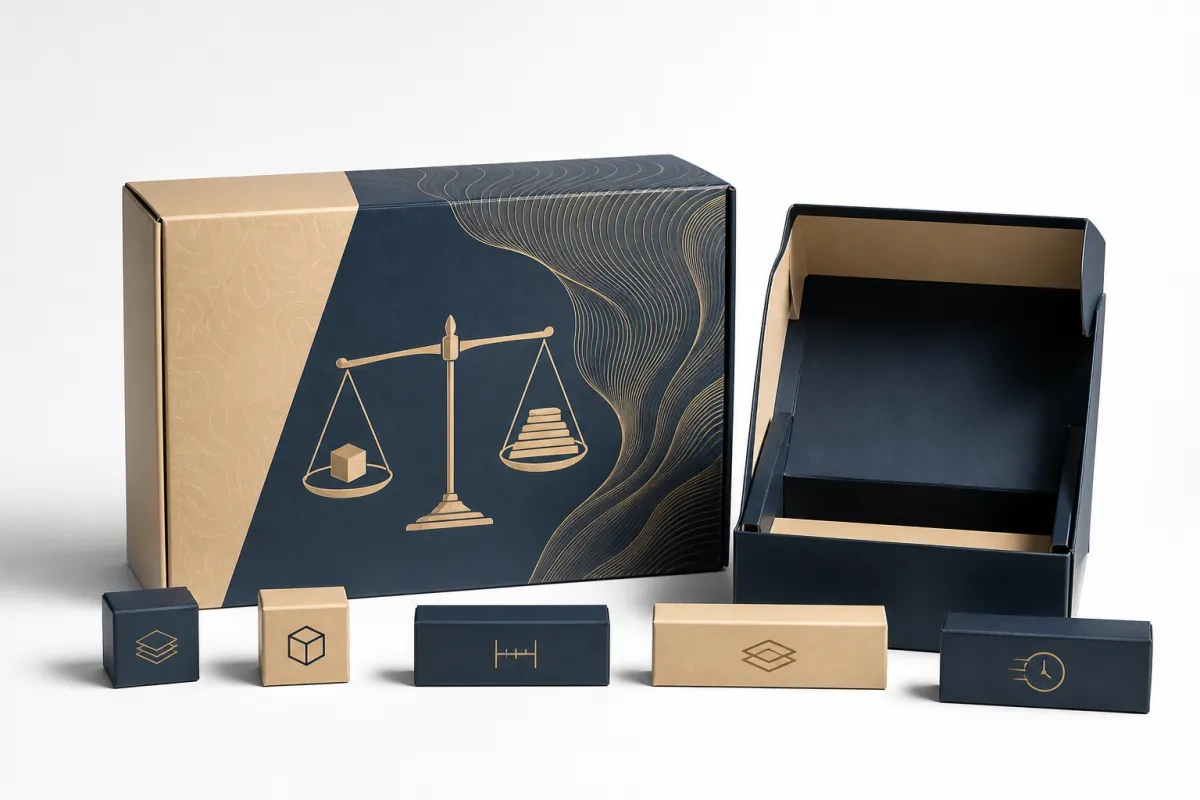
For a buyer comparing suppliers, the hardest part is rarely the price itself. It is the way the price arrives. A custom set up boxes quote can swing widely depending on whether the structure is a simple wrapped rigid box or a more elaborate presentation pack with inserts, closures, and specialty finishing. Two boxes that look nearly identical from a distance can differ sharply in board thickness, labor time, and material waste. That is how one supplier can look low on a line-item basis and still end up more expensive once the full scope is counted.
Rigid packaging works differently from folding cartons. Folding cartons are scored, shipped flat, and assembled later. A set up box is built to hold its shape from the start. That permanence changes the math. A custom set up boxes quote has to account for chipboard cutting, wrapping, glue application, corner finishing, and often a more exact quality check. The result is clear in hand: a sturdier, more premium piece of retail packaging that gives the product a stronger first impression on shelf or during unboxing.
There is a commercial side that often gets missed. Better presentation can raise perceived value, reduce damage, and support a higher shelf price. Buyers sometimes focus only on unit cost and overlook the larger equation. If the box lowers return risk or makes the product giftable without adding an extra sleeve, the packaging may earn back its cost faster than a cheaper but flimsy alternative. That is why a custom set up boxes quote should be read as a business decision, not only as a print estimate.
From a packaging buyer's point of view, the fastest quote is usually the one with the most detail. Internal dimensions, product weight, insert needs, artwork status, finish preferences, and target quantity give a supplier enough information to build a meaningful estimate. A one-line request can still start the conversation, but it rarely produces the kind of custom set up boxes quote that supports a real comparison. Clear specs cut revisions, and fewer revisions usually mean cleaner pricing.
Premium packaging also reaches beyond luxury labels. Cosmetics, candles, electronics, apparel accessories, and gift sets all use set up structures because the box combines protection with branded packaging. In many of those categories, the box is the product's first touchpoint. That is why a smart custom set up boxes quote often begins with the question, "What should this box do for the product and the shelf?" rather than "How much does it cost?"
Product Details: What Custom Set Up Boxes Include
A set up box is a rigid box made from chipboard or a similar paperboard and then wrapped in printed or specialty paper. Unlike mailers, sleeves, or tuck-end cartons, it is not designed to flatten for storage after production. The structure is built to stay formed. That makes it a strong fit for product packaging that needs to feel substantial in hand. In a custom set up boxes quote, that structural difference is one of the first things that affects price, lead time, and sample needs.
The use cases are broad, yet the logic stays the same. Cosmetics often need polished presentation with a tight fit and a controlled reveal. Candles need protection against chips and shipping abrasion. Apparel accessories benefit from a box that looks gift-ready without complicating the packout. Electronics and premium retail kits may need inserts, trays, or dividers to keep components in place. A well-built custom set up boxes quote should reflect that the box is doing more than covering the product; it is organizing the customer experience.
Common construction choices include:
- Rigid chipboard for the base structure and corner strength.
- Lift-off lids for a clean unboxing reveal and easy retail access.
- Magnetic closures for a more premium feel and repeated opening.
- Shoulder neck styles when the brand wants a layered, high-end presentation.
- Wrapped paperboard for printed branding, specialty textures, or soft-touch finishes.
That structure gives packaging designers a lot of room to shape the final experience. It also gives the quote room to move. A basic wrapped shell is one thing; a magnetic closure with foil stamping, embossing, and a custom insert is another. When buyers ask for a custom set up boxes quote, they are often really asking for a comparison between presentation levels. A good supplier should be able to show where the dollars are going.
Finishing options are where package branding starts to feel tactile. Foil can highlight logos or borders. Embossing and debossing add dimension. Soft-touch lamination changes the feel in the hand. Spot UV creates contrast on a matte wrap. Interior printing turns the inside of the box into a branding surface instead of dead space. None of these choices are automatically required, but each one influences the final custom set up boxes quote because each one adds material, setup, or handling time.
Inserts, dividers, and trays deserve special attention. They are not merely add-ons. A fragile product without protection can shift in transit and arrive scuffed, cracked, or loose inside the box. In that case, the packaging has already failed before the sale is complete. If the insert prevents returns or lets the product sit more cleanly for display, the extra cost often makes sense. That is why a thoughtful custom set up boxes quote should spell out insert materials and tolerances rather than bury them in a generic "assembly" line.
Brands that need a wider packaging mix can also review Custom Packaging Products to compare rigid, printed, and retail-ready formats before they request a final estimate.
Specifications That Shape a Custom Set Up Boxes Quote
If a buyer wants accuracy, the spec sheet has to carry more of the load. The most useful starting point is the internal size, not the outer dimension. Product length, width, and height should be measured with clearance for any wrap, tray, or insert. Weight matters too. A heavier item can call for a stronger board grade or a different closure. A custom set up boxes quote becomes much more dependable when the supplier knows the exact product load instead of guessing from a photo.
Board thickness is another direct cost driver. A thinner structure may be fine for lightweight accessories, but premium boxes for candles, cosmetics, or gift sets often need thicker chipboard to hold shape and protect corners. Wrap material matters as well. Standard printed paper is usually less expensive than textured stock, specialty coated paper, or paper with heavy coverage. If the brand wants a refined look, the price generally reflects it. That is why a custom set up boxes quote can shift even when the box dimensions stay the same.
Fit tolerances deserve more attention than many first-time buyers give them. A box that is too tight can crush the product or damage a lid flap. A box that is too loose can cause movement, rattling, or a cheap feel. The best packaging design work is often invisible: the product slides in with purpose, rests securely, and closes without force. A well-prepared custom set up boxes quote should acknowledge that fit is not a cosmetic detail; it is part of product performance.
Artwork setup affects the estimate too. The number of colors, whether the design uses full coverage or a lighter brand mark, and whether the artwork needs special registration all influence prepress time. A foil stamp requires tooling. An embossed mark may need a die. Spot UV may need separate plate handling. If the buyer sends a clean dieline-ready file, the quote tends to stay close to reality. If the artwork is rough or incomplete, a supplier may need to pad the custom set up boxes quote to cover revision work.
Sample type changes the economics as well. A digital mockup is useful for layout checks and quick sign-off. A white sample helps confirm size and structure without print. A physical prototype is worth the cost when a product is delicate, premium, or unusually shaped. In many projects, the sample is the cheapest insurance on the entire order. It is much less expensive to catch a closure issue or insert gap before production than after 2,000 boxes are already built. That is why a disciplined custom set up boxes quote should list sample options clearly.
For projects tied to shipping performance, many teams also reference ISTA procedures or similar transportation tests. The box does not need to pass every standard for every channel, but the right method should match the distribution path. The International Safe Transit Association publishes useful references at ISTA. For paper sourcing, FSC certification matters if a brand wants traceable fiber and a clearer sustainability story. You can review that at FSC. Both can influence how a buyer frames the custom set up boxes quote, especially for regulated or sustainability-focused brands.
Cost, Pricing, and MOQ: Reading a Custom Set Up Boxes Quote Line by Line
A lot of confusion starts because buyers read a quote as a single number. A better approach is to break it into parts. Most estimates include structural setup, print or wrap production, lamination or coating, finishing, inserts, freight, and sometimes tooling. If a supplier leaves those pieces unstated, the custom set up boxes quote may look attractive at first and then grow later through add-ons. The clearest quotes explain assumptions in plain language.
MOQ matters more with rigid packaging than with simple cartons because the production setup is more involved. There are more materials to cut, wrap, and finish, and the labor does not shrink much just because the order is small. That means a low quantity often carries a noticeably higher unit price. For a buyer, the question is not only "What is the custom set up boxes quote?" It is "What quantity gives me the best balance between inventory risk and unit cost?"
| Configuration | Typical MOQ | Approx. Unit Range | What Drives the Price |
|---|---|---|---|
| Basic wrapped rigid box | 300-500 units | $1.85-$3.40 | Board thickness, wrap coverage, standard print |
| Rigid box with insert | 500-1,000 units | $2.40-$4.90 | Insert material, fit precision, assembly labor |
| Magnetic closure presentation box | 500-1,000 units | $3.10-$6.50 | Closure hardware, wrap finish, corner wrap time |
| Premium finish package | 1,000+ units | $4.20-$8.00 | Foil, embossing, spot UV, specialty paper, tooling |
Those numbers are not fixed, and they should not be treated as promises. Size, artwork coverage, carton count, and shipping destination can move them in either direction. Still, the pattern holds: the more intricate the build, the more a custom set up boxes quote depends on labor, setup, and finishing. In practice, the most expensive quote is not always the one with the highest unit price. It can also be the quote that hides packing prep, prototype fees, or freight in separate lines.
Buyers should watch for hidden cost drivers. A custom insert can be worth it, but it should be quoted as its own item. An unusual shape may require more complex tooling. Specialty paper can raise the material cost fast. Rush production often adds a premium because it compresses the schedule and can affect line availability. If the supplier cannot explain why the custom set up boxes quote is higher, that is a signal to ask more questions before placing the order.
A useful comparison mindset is to look past the lowest number. If Supplier A quotes less but excludes samples, does not include freight, and assumes a standard wrap with no insert tolerance review, the apparent savings may vanish quickly. Supplier B may present a higher custom set up boxes quote but include sampling, file checks, and a clearer approval trail. For a packaging buyer, the second option can be cheaper in real terms because it lowers the risk of rework and missed launch dates.
For brands that need support on both the quotation and the artwork side, a direct conversation through Contact Us often gets the spec questions resolved faster than email alone. That usually leads to a tighter custom set up boxes quote with fewer assumptions.
Process and Timeline: From Artwork to Delivery
The most efficient workflow is simple, but only if each stage is clear. It usually starts with a request, moves to spec review, then estimate, proof approval, sampling, production, and shipment. That sequence sounds ordinary until a project stalls because dimensions are missing or the artwork is still being revised after the quote is issued. A solid custom set up boxes quote should make the process visible from the start so the buyer knows where the schedule can flex and where it cannot.
Delays usually come from three places. First, the dimensions were never measured on the actual product. Second, the buyer changed a finish or closure choice after the estimate. Third, the artwork files were not print-ready and needed a full prepress cleanup. Any one of those can shift the lead time by days. If a launch date is fixed, the best move is to plan backward from delivery. The custom set up boxes quote is only useful if it fits the calendar as well as the budget.
Proof approval is another pressure point. A buyer may see the proof as a formality, but it is the last chance to catch alignment issues, logo scaling problems, and insert mismatches before production runs. For most projects, a 24- to 72-hour review window is reasonable if the files are clean and the decision-maker is available. If the box has premium finishes, a physical sample may take longer, but that delay is usually cheaper than correcting a fully produced order. A careful custom set up boxes quote should set those expectations in writing.
"The cheapest box is the one that arrives right the first time."
That line is blunt, though it reflects the reality of packaging operations. A custom set up box that misses the fit or shipping requirement can absorb time in rework, storage, and customer service. For shipping-sensitive programs, teams often align the design with test methods from ISTA or with internal drop and vibration requirements. For retail packaging, the focus may shift toward shelf impact and display consistency. Either way, the custom set up boxes quote should be built around the actual use case, not a generic packaging assumption.
Lead time depends on the structure and finish complexity, but a practical window for many rigid projects is often 12-15 business days from proof approval once materials are in hand. More complex builds, specialty papers, or insert-heavy kits can extend that. If a supplier says every project has the same turnaround, the estimate is probably too broad to trust. A better partner will tell you whether the custom set up boxes quote assumes stock materials, custom sourcing, or a full print-and-build cycle.
There is also a difference between a production timeline and a brand timeline. The production team may be ready as soon as files are approved, but the brand may still need internal sign-off, regulatory review, or retail buyer approval. That is why a realistic custom set up boxes quote should be paired with a schedule that shows file deadlines, proof windows, and ship dates. A launch usually fails on missed handoffs, not on the press run itself.
Why Choose Us for a Custom Set Up Boxes Quote
What buyers usually want is not a sales pitch. They want clarity. A strong custom set up boxes quote should state what is included, what is optional, and what assumptions are being used to price the job. That reduces surprises later. It also makes it easier to compare one supplier to another without trying to decode two different quoting styles.
Precision matters because rigid packaging is unforgiving. If the board size is off by even a small amount, the product may not sit correctly. If the wrap spec is incomplete, the color or texture may not match the brand's expectations. If the insert is underquoted, the box may arrive with too much movement inside. Our approach is to ask the practical questions early, then translate those answers into a custom set up boxes quote that is specific enough to be useful and flexible enough to survive production realities.
That matters even more for repeat orders. Brands that sell through retail packaging programs need the same fit, color, and presentation across multiple runs. When one batch shifts and another batch does not, the shelf looks inconsistent. For package branding, consistency is not a luxury. It is part of the product promise. A reliable custom set up boxes quote should preserve the same structure and finishing logic across reorders so the packaging does not drift over time.
Compared with generic suppliers, a better quoting process usually means fewer revisions and a cleaner handoff into production. That does not just save time. It lowers the chance of misread specifications. Good quoting also supports stronger packaging design choices because the team can see how each finish or material choice affects the final number. That is especially helpful when a buyer is balancing cost against presentation on custom printed boxes or premium gift packaging.
We also look at the project through the lens of risk. If a product is fragile, the box needs to protect it. If the brand is launch-sensitive, the schedule needs margin. If the order is a repeat run, the specs need to be locked. Preflight checks, sample support, and a clear approval trail are not extras; they are part of professional packaging operations. That is how a custom set up boxes quote becomes a production plan instead of a guess.
If you are still comparing formats, materials, or finishing levels, the best next step is to review the box style options, then ask for a quote only after the product and launch details are set. That usually produces better numbers and fewer follow-up emails. A well-structured custom set up boxes quote should feel like a working document, not a sales form.
Next Steps: What to Send Before You Request a Quote
The fastest way to get a useful estimate is to send a small but complete quote packet. Start with internal dimensions, product weight, quantity, target delivery date, and the style of box you want. Add artwork files if they are ready, or send a rough sketch if they are not. Note any finish preferences, insert requirements, and whether the packaging will be used for shelf display, gifting, or shipping. A custom set up boxes quote becomes more accurate as soon as the supplier can see the real constraints.
Photos help more than many buyers expect. A picture of the product tells the production team how much clearance is needed and whether corners, caps, or fragile surfaces need extra room. If the item is oddly shaped, sending a sample is even better. In that case, the supplier can evaluate the fit instead of estimating by description alone. That is one of the simplest ways to improve a custom set up boxes quote without adding time to the back-and-forth.
It also helps to split your requirements into two groups: must-haves and nice-to-haves. If foil stamping, embossing, and a magnetic closure are all non-negotiable, say so. If one of those features is optional, say that too. That distinction lets the quoting team give you a realistic base estimate and a premium version side by side. In practice, that is often the clearest way to compare a custom set up boxes quote against your budget.
Do not forget shipping destination and channel requirements. A box destined for a retail shelf may prioritize visual impact. A box that must survive parcel transit may need more structure or a different insert. If the order needs palletization, stacked storage, or a certain carton count per ship case, that should be included early. Those details can change both cost and lead time. They also help the supplier avoid assumptions that would weaken the custom set up boxes quote.
Here is the practical version of the request checklist:
- Internal box dimensions and product weight
- Quantity and reorder expectations
- Artwork files, logo usage, and color targets
- Finish preferences such as foil, embossing, or soft-touch lamination
- Insert, divider, or tray requirements
- Shipping destination and launch date
- Product photos or a sample, if available
If you send those details up front, the custom set up boxes quote process gets much sharper. That is the real advantage. You are not just asking for a number; you are creating the conditions for a number you can actually use. And if you want help turning those details into a production-ready estimate, reach out through Contact Us with the spec sheet, artwork status, and target timeline.
For teams building a full packaging line, it can also help to compare the rigid box against other Custom Packaging Products before locking the spec. That gives you a cleaner read on whether the box is doing enough for the product and whether the custom set up boxes quote aligns with the market position you are targeting.
What do I need to request a custom set up boxes quote?
Provide internal box dimensions, product weight, order quantity, and any insert or divider requirements. Include artwork files, finish preferences, and your target delivery date so the estimate is accurate from the start. The more complete the brief, the less a custom set up boxes quote has to rely on assumptions.
What affects a custom set up boxes quote the most?
Size, board thickness, print coverage, specialty finishes, and insert complexity usually move the price fastest. Low quantities also raise unit cost because setup and production are spread across fewer boxes. If you want a tighter custom set up boxes quote, start by clarifying the structure and the finish package.
What is a typical MOQ for set up boxes?
MOQ varies by structure and finish, but rigid boxes usually require a higher minimum than simple folding cartons. If you need a smaller run, ask whether a simplified structure or reduced finish package can lower the entry point. That conversation often improves the custom set up boxes quote without changing the product story too much.
How long does production take after I approve the quote?
Timeline depends on sampling, material availability, and decoration complexity, so confirm lead time before approval. Rush orders may be possible, but they usually require simpler specs and earlier file approval. A realistic custom set up boxes quote should include both the production window and the sample schedule.
Can I get samples before placing a full order?
Yes, ask for a digital mockup, white sample, or physical prototype depending on how critical fit and finish are. A sample is worth the cost when the box must protect a fragile product or support a premium retail presentation. In those cases, the sample often protects the value of the entire custom set up boxes quote and reduces the risk of expensive rework.
To get a quote that holds up in production, send the internal dimensions, product photos or a sample, finish priorities, and the exact quantity together instead of one detail at a time. That kind of brief gives the supplier enough real-world context to price the structure honestly, spot weak points early, and return a custom set up boxes quote you can actually build from without a bunch of guesswork.

