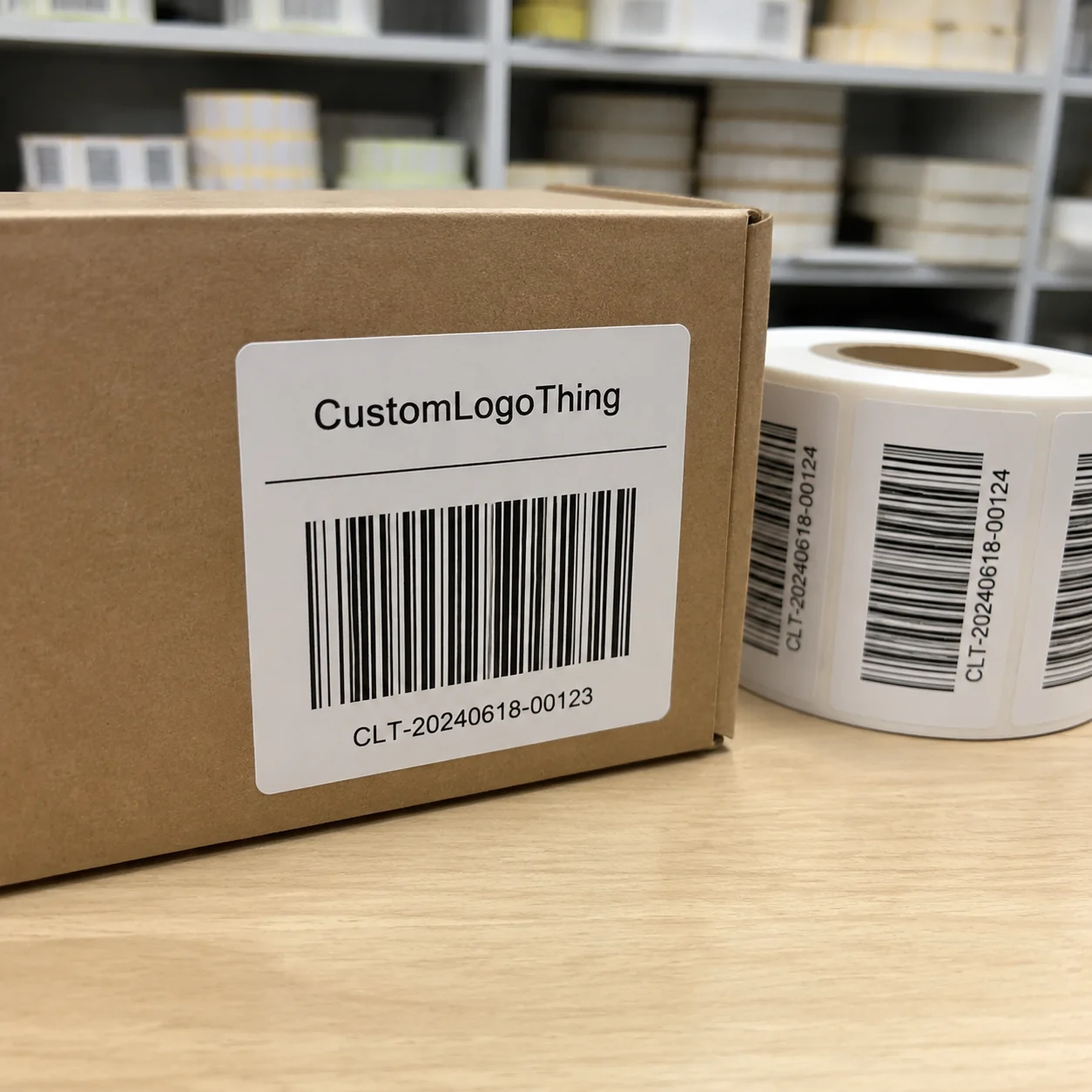
For apparel brands, accessories lines, and private-label programs, Custom Sewing Labels Wholesale china factory sourcing is rarely about the label alone. It is about preventing rework, keeping trims consistent, and making sure a garment that looks approved in sampling still looks right when the same SKU is reordered months later.
Labels are a tiny part of the bill of materials. The risk around them is not tiny. A mislabeled neck label, care text that is hard to read after washing, or a color mismatch between production lots can trigger returns, chargebacks, or a line of customer complaints that costs far more than the trim ever did. Serious buyers treat labeling as part of product packaging and package branding, not as something to sort out at the end.
From a buyer's point of view, the best sourcing decision is the one with the lowest landed cost after sampling, approvals, shipping, and installation. If your trim program also includes hang tags or carton inserts, it helps to align those pieces with broader sourcing through Custom Labels & Tags, Wholesale Programs, and Custom Packaging Products.
Why custom sewing labels wholesale china factory sourcing lowers trim costs fast
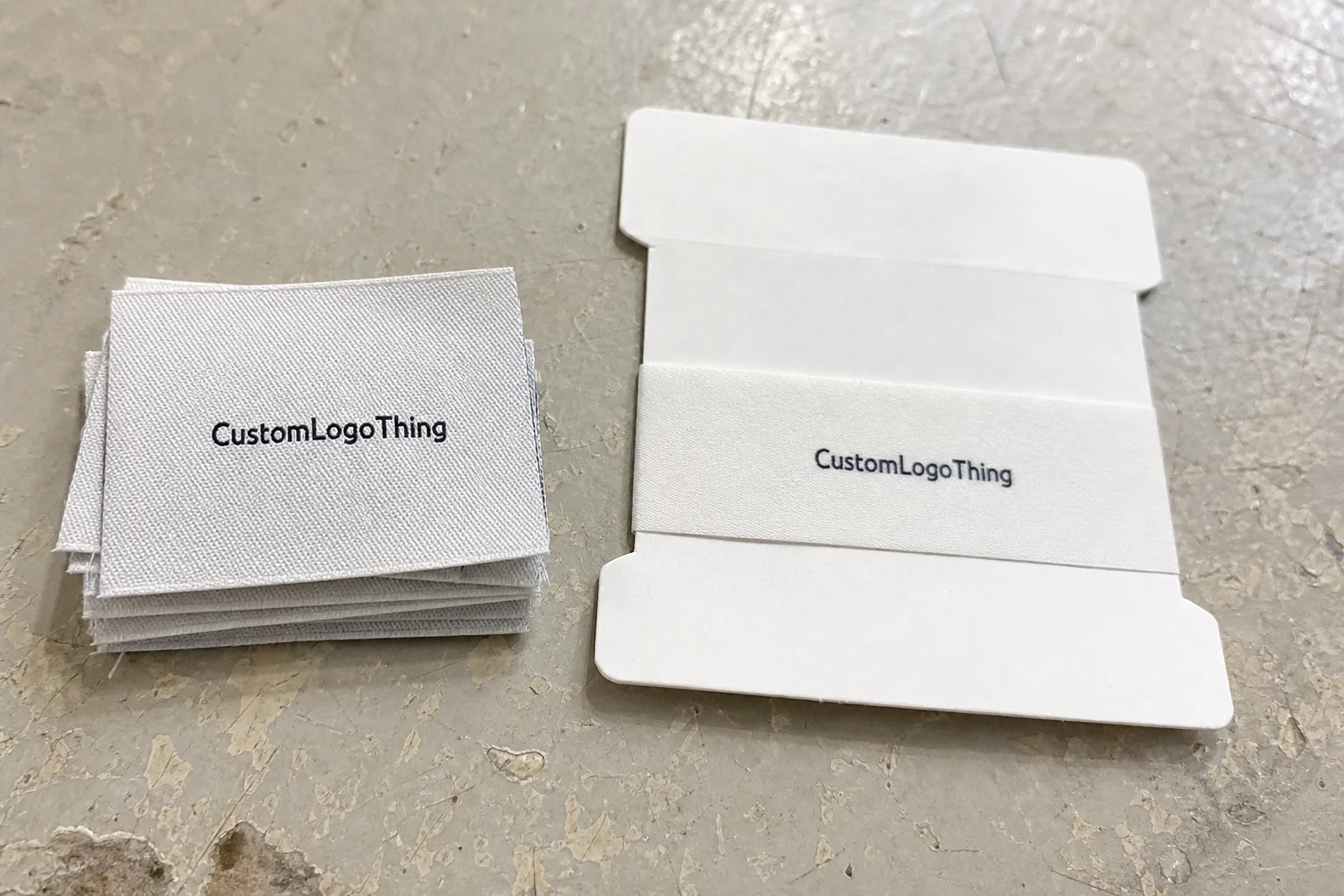
A label is small, but its effect is outsized. On a boutique hoodie, a woven neck label may cost only a few cents, yet if the fold is wrong or the color shifts, the whole run looks uneven. That matters in apparel, accessories, uniforms, and gift products where retail packaging and finishing cues shape perceived value before the customer even checks fabric weight.
Wholesale sourcing matters because the factory controls the input mix: yarn, ink, satin base, backing, and fold method. Removing intermediaries usually gives the buyer better control over the spec. Once order volume climbs, price breaks start to appear, especially when the factory can keep the same loom setup, print plate, or cutting pattern across repeat runs. That is where factory-direct sourcing usually beats a broker model.
There is also a planning benefit. If the label spec is documented cleanly, reordering becomes easier. A buyer can keep the same dimensions, Pantone references, stitch allowance, and packing method across seasons, which reduces the chance of color drift or size mismatch. That consistency matters for brands that already care about branded packaging and coordinated packaging design.
"The cheapest label is not always the lowest-cost label. If it creates one rework cycle, the savings disappear quickly."
That is the key shift. The goal is not to buy the least expensive sew-in label on paper. The goal is to source the right label at the right scale, with the fewest surprises. Buyers who think this way usually end up with steadier reorder performance and fewer complaints tied to trim inconsistency.
One practical reason China factories stay relevant in this category is production range. Many can handle woven, printed, satin, cotton, heat-transfer, and mixed-pack orders under one roof or within a coordinated supply chain. That can reduce handoffs, but only if the buyer keeps the specification tight. Loose instructions tend to get expensive later, especially when the order moves from sampling into mass production.
Custom woven, printed, satin, and care label options
Most buyers narrow their choices to four practical constructions: woven damask, printed polyester, satin, and care-content labels. Each has a different cost profile and a different feel against the skin. A premium fashion brand usually favors woven damask for the main logo label because it has a dense, clean look. A sportswear line may prefer printed polyester because fine text stays readable and the material handles repeated washing well. Satin works when softness matters most. Care labels exist for compliance and should remain legible after laundering.
There is no universal best choice. A high-end knit sweater and a kids' garment do not need the same trim logic. Satin can feel smoother, but if the garment is washed often, printed polyester may hold up better. Woven labels can look richer, yet if the logo includes very small type, a print method may preserve the artwork more accurately. That is the sort of decision a custom sewing labels Wholesale China Factory should help sort out early, before the quote is locked.
| Label type | Best use | Typical MOQ | Typical unit price at 5,000 | Buyer note |
|---|---|---|---|---|
| Woven damask | Premium apparel branding | 1,000 to 3,000 pcs | $0.04 to $0.12 | Strong visual depth, good for logos with cleaner edges |
| Printed polyester | Fine text, care data, utility labels | 500 to 2,000 pcs | $0.02 to $0.07 | Useful when small copy must stay readable |
| Satin | Soft-touch apparel and lingerie | 1,000 to 3,000 pcs | $0.03 to $0.09 | Feels smooth, but the right print method matters |
| Cotton or care label | Compliance text and natural-fiber positioning | 1,000 pcs and up | $0.03 to $0.08 | Best when the garment story supports a softer, more natural finish |
Buyers also need to think about format, not only base material. Fold types such as center fold, end fold, loop fold, and straight cut change how the label sits in the garment. Neck labels, side-seam labels, size tabs, and mixed branding packs can all come from the same production family if the factory has solid setup discipline. For paper-based brand inserts or hang cards that sit beside sewn trims, certification can matter too. If you need paper components, check FSC certification for responsibly sourced material options.
For brands building a larger product launch, these trim choices should sit alongside the rest of the presentation system. A woven label, a hang tag, and the carton art should all feel like one message. That is where the intersection between sewing labels and product packaging becomes obvious. When the label style supports the garment category, the whole item feels more deliberate and more expensive.
Key specifications buyers must confirm before ordering
A clean quote starts with a clean brief. If a supplier has to guess the size, the label construction, or the placement, the quote may look low at first and then climb once the details are corrected. The minimum spec set should include label width and height, material, weave or print method, fold style, order quantity, and the exact location where the label will be sewn.
Artwork matters just as much. The factory should receive vector artwork where possible, plus Pantone references if color matching is important. If the logo includes thin lines, small type, or legal copy, state the minimum readable size. Screens can hide problems that production does not forgive. What looks sharp on a laptop can become cluttered once the design is woven into 10 mm of fabric.
Color control is another weak spot for inexperienced buyers. Thread matching is never identical to what a monitor shows. Printed labels have tolerance ranges too. If a brand expects exact tone matching, that needs to be stated before sample approval. The same applies to skin contact. Some customers want a soft handfeel, while others care more about abrasion resistance or wash durability. If the label will sit near the neck, softness and edge finishing matter more than many buyers expect.
- Size: Confirm finished dimensions, not rough estimates.
- Material: Woven, printed polyester, satin, cotton, or heat transfer.
- Fold: Center fold, end fold, straight cut, loop fold, or custom cut.
- Artwork: Vector file, logo spacing, text hierarchy, and Pantone values.
- Use case: Neck label, side seam label, size tab, or care label.
- Packing: Bulk packed, rolled, counted, barcoded, or bagged by SKU.
If your label order is part of a larger launch, keep the trim spec aligned with the rest of the line. That means matching the label to the garment finish, the brand card, and the shipping presentation. For buyers balancing sewn trims with carton graphics and inserts, the same discipline that applies to custom printed boxes should apply here: every component needs a documented spec sheet. For market trend context and packaging standards, the Packaging School and packaging industry resources are useful references.
Buyers who skip these details usually pay for it later. A missed stitch allowance can change how the label sits. A loose tolerance can affect logo placement. A vague order note can turn a simple reorder into a new sampling cycle. That is avoidable work, and it adds no value.
One more practical issue is compliance. If a garment is sold in multiple markets, content rules can differ by country or channel. Fiber content, country-of-origin statements, and care symbols may need different language or formatting. A factory can print the label, but the buyer still has to confirm the legal text before production begins. That is not a cosmetic detail; it is a shipment risk.
Cost, pricing, MOQ, and quote factors
Price on sewing labels is driven by a handful of variables, and most are easy to understand once named. Size, material, number of colors, fold type, and finishing complexity all move the quote. Quantity does too, because setup time gets spread over more pieces. That is why a 10,000-piece order can price very differently from a 1,000-piece test run even when the design is identical.
MOQ is usually tied to machine setup, dye setup, or loom time. Woven labels often carry a different minimum than printed labels. Heat Transfer Labels have their own threshold because the production equipment and backing materials change. If a factory offers unusually low MOQ pricing, ask whether the setup cost is hidden in the unit price or in a separate sample and plate charge. There is nothing wrong with either model, but the buyer should see the whole picture before comparing quotes.
For planning purposes, these ranges are common for wholesale label orders:
- Sampling: $15 to $60 depending on structure and artwork revisions.
- Small runs: roughly $0.06 to $0.20 per unit for 1,000 pieces, depending on label type.
- Mid-volume runs: roughly $0.03 to $0.12 per unit at 5,000 pieces.
- High-volume runs: lower still, if the spec stays unchanged and repeat orders are documented cleanly.
That said, a quote is only useful if the buyer compares the right lines. Sampling fees, freight, rush production, special adhesives, folded edge finishing, and rework for artwork changes can all alter the real cost. The smarter comparison is total landed cost, not the first number on the spreadsheet. Ask for tiered pricing at 1,000, 3,000, 5,000, and 10,000 pieces. That usually exposes the factory's real scale curve faster than any sales pitch.
Another practical point: if the order is part of a broader private-label launch, trim pricing should be viewed next to the rest of the program, including branded packaging and product packaging costs. A label that saves a few cents can still be the right choice if it reduces inspection time and speeds inbound sorting. Sometimes the least expensive piece is the one that fits the production line with the fewest exceptions.
Factories also vary in how they charge for repeat work. Some keep tooling on file and only bill for changes. Others treat any modification as a fresh order. Buyers should ask how long artwork and die files remain archived, whether the previous shade reference is still active, and whether old specifications can be reused without a new sample. Those details matter more than a small difference in the first quote.
Production steps, sample approval, and lead time
The production path should be simple enough to audit. Inquiry, artwork review, quote, sample, approval, mass production, inspection, packing, and shipment. If a supplier cannot describe those steps clearly, the buyer is taking on more process risk than necessary. A good factory will show where the handoffs happen and who signs off at each stage.
Sampling is not a formality. It is the point where texture, color, fold accuracy, and text clarity get confirmed in the real material. A sample tells you whether the logo density is correct, whether the edges feel rough, and whether the size is legible once stitched into the garment. For many buyers, a sample is the difference between a controlled production run and an expensive correction later.
Lead time depends on both setup and factory workload. Sample lead time is often shorter than production, but artwork revisions, color changes, or peak season congestion can add days. In practical terms, sampling may take 3 to 7 business days. Production commonly runs 12 to 20 business days after approval, though larger orders or specialty finishes can extend that. The faster the buyer approves the sample, the faster the factory can move. That sounds obvious, but in buying operations it is one of the biggest controllable variables.
There are also quality checkpoints worth asking about. A disciplined factory should have first-article checks before the run opens up, mid-run inspections to catch drift, and final packing review before cartons leave the floor. For buyers who care about transit integrity as well as label quality, shipment testing standards from groups such as ISTA can be useful when the order includes cartons or packaged kits that must survive handling without damage.
"The best production teams do not just make the labels. They document the spec well enough that the next reorder looks the same."
That level of control matters if the label is tied to a larger assortment. If the product line includes accessories, inserts, and retail-ready cartons, the trim program needs to behave like one system. It is the same mindset that keeps a packaging launch consistent across SKUs.
Timing also depends on seasonality. Before major retail windows, factories can get backed up with repeat orders, and even a simple label can sit behind higher-priority programs if the buyer has not locked the order early. A one-week delay in approval can become a two-week delay in shipment once the calendar is crowded. That is one reason experienced buyers build a margin into the schedule instead of planning to the hour.
How a China factory supports repeat apparel programs
Repeat business is where factory-direct sourcing earns its keep. Once the spec is documented correctly, the artwork does not need to be rebuilt from scratch each season. That saves time, but it also protects consistency. A good factory keeps the old measurements, fold type, material code, and color reference on file so a reorder can move faster and with less uncertainty.
This matters in apparel because the label often appears across multiple SKUs. A T-shirt, a fleece hoodie, and a tote bag may use the same logo family even if the materials differ. The factory's job is to keep the brand recognizable while adjusting the technical details for each product type. That is easier when the buyer gives clear stitch allowances and placement instructions from the beginning.
Export experience helps too. A factory that routinely handles wholesale apparel labels should know how to pack by SKU, how to label cartons, and how to coordinate with freight forwarders. Buyers do not want to discover documentation problems after production is finished. A team that understands the rhythm of international wholesale programs will usually be faster when a split shipment or reorder is needed.
Responsiveness also improves when the buyer works directly with production. A minor spec adjustment, such as changing the fold or softening the backing, can be resolved faster when the factory has direct visibility. That is one reason many brands prefer factory-direct sourcing for trims: fewer handoffs, fewer assumptions, less waiting.
If the label program is part of a wider sourcing plan, there is a useful crossover with wholesale packaging and package branding. The trim, the carton, and the outer presentation should reinforce one another. That is the part many brands miss. They design beautiful garments and still let a weak label or mismatched insert dilute the finish.
There is also a capacity advantage for repeat programs. Once a factory knows the spec, it can reserve the same machine settings or production line pattern more efficiently. That does not mean every reorder is identical, because fiber availability and seasonal workload still vary, but it often shortens the path from PO to shipment. For buyers managing a stable core collection, that predictability can be worth more than a slightly lower quote from an unfamiliar supplier.
Next steps to place a wholesale label order
Start with the basics: logo file, finished size, material preference, fold type, quantity target, and where the label will be sewn. If the order needs to match an existing label, send a photo and, if possible, a physical sample. That gives the factory a better shot at matching texture, density, and edge behavior.
Ask for a tiered quote and sample lead time in the same message. If you only ask for price, you may get a number that is technically valid but operationally useless. The same order should include packing preference, shipping destination, and the delivery window you actually need. That is how a quote becomes useful for planning.
If the project includes multiple trims or packaging elements, keep the scope broad enough to avoid repeating the same coordination work. A single supplier conversation can cover sewn labels, hang tags, and carton inserts if the buyer is organized. That is also where Custom Labels & Tags and Custom Packaging Products fit naturally into the order flow.
Review the sample carefully, then approve a production spec sheet that leaves no open questions. Only after that should the mass order be released. This is the point where a buyer protects margin. The difference between a clean run and a messy one is often a single missing detail in the approval stage.
If your team wants a straightforward way to source Custom Sewing Labels wholesale china factory orders without losing control of quality, treat the label as a core branding component, not a spare part. That approach produces better repeatability, cleaner reorders, and a more consistent final product across every season.
FAQ
What should I prepare before requesting a quote?
Prepare logo artwork, finished size, material preference, fold style, quantity, and garment placement. If color matters, include Pantone references or a physical sample. State whether the label must be soft, wash-resistant, or compliant with care-text requirements.
How is MOQ usually set?
MOQ depends on label type, setup method, and how much machine time the order requires. Woven labels and printed labels often have different minimums. Larger quantities usually lower unit cost because setup gets spread over more pieces.
What affects pricing the most?
Material choice, label size, number of colors, fold style, and finish complexity drive most of the price. Sampling, rush service, and special packing can add cost. The best comparison is total landed cost, not just the first quote number.
How long does production usually take after sample approval?
Lead time depends on order size, label type, and factory workload. Sample approval speeds production because the factory can move directly into mass manufacturing. Artwork changes and peak shipping periods can extend the timeline.
Can a China factory match my existing clothing label exactly?
Yes, if you provide clear measurements, photos, material details, and a physical sample when possible. Color and texture matching improve when the factory has a reference label in hand. A sample approval step is the safest way to confirm the final result before bulk order release.