Buyer Fit Snapshot
| Best fit | Custom Shelf Ready Cartons projects where brand print, material claims, artwork control, MOQ, and repeat-order consistency need to be specified before quoting. |
|---|---|
| Quote inputs | Share finished size, material target, print colors, finish, packing count, annual reorder estimate, ship-to region, and any compliance wording. |
| Proofing check | Approve dieline scale, logo placement, barcode or warning zones, color tolerance, closure strength, and carton packing before bulk production. |
| Main risk | Vague material claims, crowded artwork, missing packing details, or unclear freight terms can make a low unit price expensive after revisions. |
Fast answer: Custom Shelf Ready Cartons: Board, Finish, Dieline, and Unit Cost should be specified like a repeatable production item. The safest quote records material, print method, finish, artwork proof, packing count, and reorder notes in one written spec.
Production checks before approval
Compare the actual filled-product size with the drawing, then confirm tolerance on folds, seals, hang holes, label areas, and retail display edges. Reserve space for logos, QR codes, warning copy, and material claims before decorative graphics fill the panel.
Quote comparison points
Review material grade, print process, finish, sampling route, tooling charges, carton quantity, and freight assumptions side by side. A quote is only useful when the supplier can repeat the same color, closure quality, and packing count on the next order.
Custom Shelf Ready cartons solve a practical retail problem: product has to survive a rough distribution chain and still arrive ready to sit neatly on a shelf. A carton designed well protects the contents in transit, then opens into a clean retail presentation with very little handling. A store associate can remove a panel, set the unit in place, and keep moving. That sounds small. In a store that handles hundreds of cases a day, it is not small at all.
These cartons sit at the overlap of product packaging, retail packaging, and warehouse efficiency. They have to resist crush during shipment, survive pallet movement, and still look intentional once they are opened on shelf. They also carry brand weight. The printed face, the tear-away structure, and the shelf footprint all affect how a shopper reads the product. In that sense, custom shelf ready cartons do more than protect goods; they shape the first impression at the shelf edge.
Brands planning a launch, a line extension, or a retail reset often discover that carton choice affects far more than box cost. Better fit means less back-room handling. Better opening design means fewer damaged goods. Better shelf presentation means cleaner facings and fewer adjustments during replenishment. That is the practical value of custom shelf ready cartons: they behave like a tool, not just packaging.
The strongest shelf-ready carton is the one that disappears into the work. It opens cleanly, fits the fixture, survives the route, and gives store staff one less thing to fix.
What custom shelf ready cartons are and why retailers use them
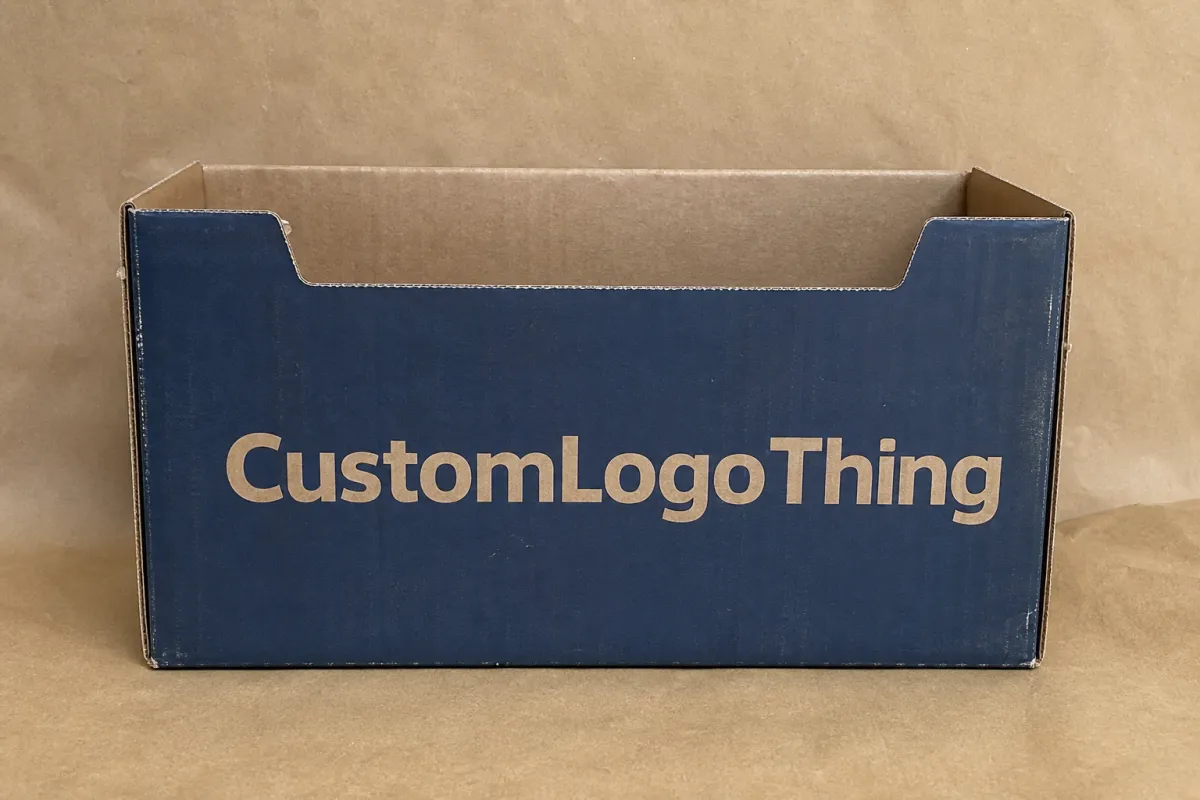
At base, custom shelf ready cartons are corrugated cases built to move from shipping to shelf with minimal extra work. They typically arrive full or nearly full, then convert into a retail-facing display when the top, front, or side section is removed along a score line, tear strip, or perforated panel. The objective is simple and practical: keep the product protected while it travels, then make it easy to shop once it reaches the store.
That double duty separates the format from a standard RSC shipping carton. A regular shipping case is judged mostly on strength, stacking, and transport efficiency. A shelf ready carton has another job. It must present a tidy front edge, support merchandising, and keep the product visible in a way that looks deliberate rather than improvised. In many programs, the carton is designed so the product face remains readable without separate trays or hand-stacked units.
Retailers favor the format because it cuts labor at the shelf. Instead of opening a case, breaking it down, and stocking each item individually, the store team can place a ready-to-sell carton in position and move on to the next task. That matters in grocery, mass retail, club channels, and any environment where labor minutes are watched closely. Even a modest reduction in handling can matter when the same task repeats thousands of times across a chain.
There is also a merchandising payoff. A well-executed shelf-ready carton creates a straighter shelf line and a more orderly block of product. The print can reinforce recognition from a distance. The structure can keep items upright and facing forward. For repeat-purchase categories, that combination supports both visibility and confidence. Shoppers do not need to decode the shelf. They can read it quickly.
It helps to think of the format as the middle ground between a shipping carton and a display tray. A club pack usually leans into bulk value and warehouse visibility. A display tray often favors open presentation above all else. A custom shelf ready carton tries to balance both: it needs transit strength, but it also needs a controlled opening that aligns with the shelf and the planogram.
- Standard shipping carton: built for transport, not always built for shelf image.
- Club pack: designed for bulk appeal and warehouse display, often with less shelf precision.
- Display tray: open and visible, though sometimes weaker in transit unless reinforced.
- Custom shelf ready carton: protects, opens cleanly, and stocks efficiently in one motion.
For a packaging buyer, the format matters because the opening style, footprint, and print all affect the in-store experience. A carton that tears unevenly can make the shelf look careless. A carton that is too deep can hide product faces. A carton that is too tight can distort the fill or make packing frustrating. Good packaging design is the work of managing those tradeoffs before they become problems on the floor.
How custom shelf ready cartons work on the shelf
The process starts on the packing line. Product is loaded in the correct orientation, usually in a count that matches the retail facing plan or the shipping requirement. The case is sealed, palletized, and sent into standard distribution. Once it reaches the store, the worker opens the carton along a predetermined score or tear strip, removes the top or front panel, and places the remaining structure on the shelf. The carton itself becomes the display support.
That workflow is straightforward on paper, yet the details decide whether the carton behaves well in the real world. Perforations need enough strength to survive shipping, but not so much that a knife is required at shelf. Tear strips should release in a straight line. The bottom may call for a crash-lock, glued base, or reinforced fold depending on weight and fill method. Side walls need enough height to secure the product without hiding the front label.
Visibility is often underestimated. On a crowded shelf, the edge of the carton becomes part of the brand image. A straight cut line and a clean front removal make the product look planned. A ragged edge or bent flap makes the whole section feel temporary. That difference can matter as much as the graphics. When the shelf is dense and shoppers are scanning fast, a neat carton front creates a clearer block of product and helps the brand hold its space.
Pack count and shelf footprint should be developed together. A carton that packs efficiently but claims the wrong depth on shelf can create trouble during a reset. The same problem appears if the opening hides a row of products or forces staff to rotate units by hand. Good shelf-ready planning starts with the planogram, then works backward into dimensions, product orientation, and case count.
Labor savings remain one of the biggest draws. If a store does not need to reach for a knife, trim loose flaps, or handle each unit one by one, replenishment becomes faster and safer. Fewer cuts reduce the chance of broken seals and damaged stock. That matters for fragile goods, coated surfaces, printed cartons that scuff easily, and products that need to arrive looking untouched.
Retail and warehouse coordination
Retail and warehouse teams need the same drawing, the same pack count, and the same shelf-facing goal. If those groups are not aligned, the carton may be engineered for warehouse convenience while the store team struggles with the opening. The opposite problem happens too: the display may look great in a sample room and fit badly in the actual shelf bay. Early coordination prevents the kind of late redesigns that chew through schedule and budget.
That becomes even more important for seasonal promotions and planogram resets. If the carton is part of a broader merchandising change, the shelf-ready structure should be checked against fixture dimensions, pallet pattern, and replenishment method before production starts. A few millimeters can separate a carton that slots in naturally from one that creates daily friction in the store.
Key factors that shape shelf ready carton design
The product sets the first boundary. Weight, fragility, shape, and fill stability all influence the structure. Bottles need different restraint than pouches. Glass needs more protection than blister-packed items. Lightweight packs may work in a single-wall carton, while heavier or taller loads often call for stronger board, better corner support, or internal dividers to stop movement. If the product shifts during transit, the shelf-ready format can lose both appearance and function.
Board grade and flute selection are central structural decisions. For many programs, single-wall B-flute or E-flute works well for lighter retail packs, especially when print quality matters and the load is modest. Heavier cases may need 44 ECT board or even double-wall construction, depending on stacked load, pallet pattern, and route length. Adhesive choice matters too. Weak glue can compromise the tear-open area or let panels separate under compression.
Graphics should support the retail job, not compete with it. The carton may need branding, a UPC or barcode, shelf callouts, product count messaging, or simple orientation cues for store staff. Some programs keep print light to control cost. Others use richer branded packaging to build a stronger shelf block. Ink coverage should be matched to board finish, since dark solids and heavy flood coats can show texture or rub during handling if the material choice is off.
Retail requirements can be stricter than the packaging team expects. Shelf depth, facing count, club-store formats, and case orientation all shape the design. A carton that behaves like a tray may work in a shallow shelf bay. A wrap-style or partial-case opening may be better for a taller presentation. If the carton sits on a shelf lip, the front edge needs to stay stable and clean. If it is meant for a pallet display, the structural priorities shift again.
Operational constraints deserve equal attention. Pack speed, fill method, adhesive cure time, and pallet pattern affect performance on the line and in transit. Cold storage, high humidity, and long distribution cycles can change how board behaves. Corrugated material can soften in damp conditions, and print adhesion can suffer when temperature swings are severe. Those conditions do not always rule a design out, but they belong in the original spec.
Testing before launch
Testing is where the design meets reality. Compression testing shows whether the carton can support stacked load. Drop testing reveals whether the opening structure survives transit shocks. Store-handling checks matter just as much, because a carton that passes the lab can still frustrate staff if the tear line is awkward or the front panel bends back into the product. Ask for testing against the expected distribution profile, not only a visual approval.
If the shipment is moving through parcel or mixed freight, standards like ISTA test methods can help structure the trial. For compression performance, ASTM D642 is commonly used in corrugated packaging programs. If fiber sourcing matters to the buyer, FSC-certified materials may be part of the qualification. Standards do not guarantee success, but they give the team a shared technical language.
One practical rule saves time: test the carton with real product, not just a dummy load. Weight distribution, product corners, closure style, and flexible packaging all change how the case behaves. A shelf-ready design that looks perfect when empty can act very differently once packed, stacked, and opened on the sales floor.
Production process, timeline, and lead time planning
Most custom shelf-ready projects move through a similar sequence: intake, measurement, concepting, prototype development, approval, prepress, production, and shipment. The exact path depends on how much engineering is needed, how complex the artwork is, and whether the product or shelf has unusual constraints. The cleaner the brief, the smoother the route.
Custom shelf ready cartons usually take longer than stock cases because the structure and the retail opening need to be engineered together. A standard shipping carton can be produced quickly once dimensions are known. A shelf-ready carton has to account for tear-away features, shelf fit, product presentation, and print placement at the same time. The dieline, sample, and artwork all have to agree before the run is approved.
A realistic lead time often looks like this: one to three business days for discovery and spec review, three to seven business days for concepting and sample creation, several more days for revisions and approval, then prepress and production after sign-off. Simpler projects can move faster, especially when the structure is straightforward and print is minimal. More complex runs, or jobs with multiple revision rounds, take longer. For many custom corrugated jobs, 12-15 business days from proof approval is a useful working estimate for uncomplicated structures, with more involved retail-ready builds running beyond that.
Delays usually start with missing information. If the supplier does not have product samples, structural fit becomes guesswork. If artwork arrives late, prepress stalls. If retail requirements are vague, the carton may need revision after the first sample. Tooling changes can also add time if the tear line or die-cut needs refinement after testing.
Seasonal launches and promotions need their own schedule. A shelf-ready carton tied to a holiday reset, a new flavor release, or a price event should not be treated like a routine packaging order. Production should be planned backward from the in-store date, with time for sample approval, transit, and an unexpected fix. Packaging becomes the bottleneck only when it is left until the last minute.
Approval checkpoints
Two checkpoints matter most: the structural sample and the print proof. The sample confirms that the carton opens properly, protects the product, and fits the shelf or display footprint. The proof confirms color, copy, barcode placement, and legal text. Buyers sometimes try to rush past one of those steps, and that usually creates rework downstream. A solid approval process checks form and finish before mass production begins.
If the structure is new, ask for a plain sample first. That makes it easier to see whether the tear line behaves and whether the carton supports the load. Once the structure is approved, move to a printed sample or proof review. That sequence is often faster than trying to solve structural and graphics problems in the same pass.
Teams coordinating multiple SKUs should lock the carton family early. Shared panel heights, repeatable print zones, and common die lines make later runs easier to manage. They also reduce the amount of redesign needed for line extensions. That is one of the quieter advantages of disciplined packaging design.
Cost and pricing factors for custom shelf ready cartons
Pricing for custom shelf ready cartons comes down to five main variables: size, board grade, print coverage, cut complexity, and order volume. Larger cartons consume more material. Stronger board costs more. More colors or broader print coverage increase prepress and press time. Tear-away features, special folds, and inserts raise die-cut complexity. Volume matters because setup costs get spread across more units in a larger run.
Tooling and sample development can change the first quote too. A straightforward case with a single die line and basic print may be easy to sample and repeat. A new retail-ready design with custom perforations, reinforced openings, or insert components may need extra development before the line is stable. That does not automatically make the project expensive. It does mean the first run may carry more setup work than a buyer expects.
MOQ expectations vary by supplier, yet smaller quantities usually have a higher unit price because setup costs are spread over fewer cartons. Larger runs generally improve the per-unit cost, especially once the design is settled. For many corrugated projects, pricing often improves noticeably around 1,000-3,000 units and becomes more efficient at 5,000 units or above, depending on size and structural detail.
There is also a real difference between a plain brown shelf-ready carton and a fully printed retail-ready version. The brown case may be enough if the carton is mostly hidden on shelf or the brand only needs a clean cut opening. If the box is part of the merchandising story, printed surfaces and cleaner graphics can add value. In that case, the carton is doing work that a label, tray, or secondary sign might otherwise need to handle.
| Option | Typical use | Illustrative unit price at 5,000 pieces | Notes |
|---|---|---|---|
| Plain brown shelf-ready carton | Functional retail stocking, minimal branding | $0.45-$0.85 | Best when shelf appearance is secondary and structural reliability is the main goal. |
| Single-color printed carton | Basic branded packaging with simple retail messaging | $0.70-$1.20 | Good balance of cost and shelf presentation for many everyday categories. |
| Fully printed retail-ready carton | Higher-impact merchandising and stronger package branding | $1.10-$2.25 | More print coverage, tighter tolerances, and often more sample work. |
| Special structure with inserts or reinforced panels | Fragile products, heavy loads, or unusual shelf requirements | $1.40-$2.80+ | Use when product protection and shelf presentation both require custom engineering. |
Those numbers are illustrative, not universal. A compact carton for lightweight pouches will not price the same as a larger case for glass jars or bottles, and freight can shift the landed cost more than a buyer expects. Pallet efficiency matters too. If the carton nests poorly on a pallet, shipping expense can rise even when the unit price looks acceptable on paper.
How to request a clean quote
The clearest quotes come from complete specs. Send product dimensions, weight, pack count, shelf or display requirements, print goals, target volume, and any handling conditions such as cold storage or high humidity. If artwork is ready, include it. If a physical sample exists, send that too. The more complete the information, the tighter the pricing and the fewer revisions later.
If you are comparing options, ask for at least two structures. One should be the lowest-cost version that still protects the product. The second should reflect the ideal retail presentation. That gives you a real comparison between spend and shelf impact, which is more useful than a single quote that hides the tradeoffs.
For teams ordering through Custom Packaging Products, the right quote is the one that shows how the carton will perform in production, in distribution, and on shelf, not just the one with the lowest sticker price.
Common mistakes when specifying custom shelf ready cartons
Designing from the outside first is one of the most common mistakes. A carton can look excellent in a mockup and still fail in use if the product does not pack cleanly, the opening is awkward, or the shelf footprint is off by a small but important amount. The order matters: product fit first, structure second, graphics third.
Measurement errors create a second wave of problems. Buyers sometimes forget to allow clearance for flaps, closures, dividers, or product bulge after filling. Flexible packs settle differently than rigid packs. Glass or jars may need more room at the corners. Even a few millimeters can decide whether the case sits flat or tips when opened. Good product packaging starts with realistic inside dimensions, not just a target outside size.
Another issue is overprinting. Heavy graphics can make a carton attractive, but if the print clashes with shelf labels, price strips, or required product information, the result is clutter. The carton should support the shelf, not fight the store environment. A restrained design with a clear brand mark and a strong product callout can outperform a fully covered surface.
Skipping retailer requirements is expensive. Some chains have strict rules for case height, tear-open method, or front display depth. If those requirements are not checked early, the cartons may be rejected or require store staff to modify them by hand. That adds labor, can damage product, and may create compliance problems during a reset.
Tear-line testing deserves special attention. A line that is too weak can open during transit. A line that is too strong can force workers to use a knife, which raises the risk of broken edges and damaged contents. The goal is a clean, repeatable opening that behaves the same way every time. If the front panel collapses after removal, the carton has not really solved the retail problem.
If the opening needs a tool, part of the value is already gone. The best shelf-ready carton opens predictably, holds its shape, and does not ask the store team to improvise.
What to verify before ordering
A short checklist can prevent a long troubleshooting cycle:
- Product sample: verify the real pack, not just dimensions on paper.
- Retail shelf size: confirm width, depth, and available facing height.
- Fill method: know whether the line loads from the top, side, or end.
- Case weight: confirm the packed load and the expected compression demand.
- Handling conditions: note humidity, cold chain exposure, and transit length.
That checklist looks simple, but it catches the failure points that most often cost time later. In packaging programs, a few extra minutes of verification can save days of rework and a second round of samples.
Expert tips and next steps for better shelf ready results
Start with a real product sample and the exact shelf dimensions. Not an estimate. Not a rough sketch. The physical pack tells you how the carton has to breathe, how much clearance it needs, and whether the product face will present evenly after opening. Shelf-ready packaging is far easier to design once the final retail environment has been measured before the die line is drawn.
Bring operations and merchandising into the same conversation early. Operations cares about pack speed, line efficiency, and damage control. Merchandising cares about shelf impact, facings, and the appearance of the opening. The best shelf-ready design usually sits between those priorities and does both jobs well enough to stay in production without creating daily complaints.
Ask for three versions of the solution if possible: a plain structural sample, a printed sample, and a comparison of at least two production options. One may be the low-cost case with basic print. Another may be a cleaner retail presentation with stronger structure. Seeing those options side by side makes the business case clearer, especially when the team needs to weigh cost against shelf performance.
Evaluate the carton from three angles. First, shipping durability: will it survive stacking, vibration, and normal distribution? Second, line efficiency: can it be packed without slowing the process or frustrating operators? Third, shelf behavior: does it look neat, stay upright, and support the brand once it is opened? If all three hold up, the project is usually in good shape.
Build a concise spec sheet before you request quotes. Include dimensions, pack count, target material, artwork goals, retail requirements, and expected volume. If the product may grow into additional SKUs, mention that too. A shared structure family can save time later and keep the line consistent as the assortment expands.
If you are still deciding on the right format, compare two or three approaches rather than settling too early. A slightly stronger board, a different tear-away front, or a cleaner print treatment may improve the result more than a small price difference would suggest. That is where packaging design proves its value: not by adding clutter, but by removing friction.
For brands that want the carton to carry utility and visual weight, custom shelf ready cartons can be an efficient answer. The right version protects the product, speeds stocking, and helps the shelf look organized. That is the job, and it is a demanding one. The best results come from measuring the product, checking the shelf, testing the opening, and locking the spec before production starts.
FAQ
What are custom shelf ready cartons used for?
They move product from the warehouse to the retail shelf with less handling and faster stocking. The carton protects the goods in transit, then opens into a cleaner display format once it reaches the store. They are common in grocery, club, mass retail, and other channels where labor savings matter.
How do I know if my product is a good fit for shelf ready cartons?
Products that pack consistently, stack neatly, and benefit from fast replenishment are usually strong candidates. Fragile items may need inserts or stronger board to keep movement under control. The shelf footprint, pack count, and opening style should all match the retail environment, not just the shipping requirement.
What affects the cost of custom shelf ready cartons the most?
Size, board grade, print complexity, tear-away features, and order volume have the biggest impact. Samples, tooling, and special structures can raise upfront costs, especially on a first run. Freight and pallet efficiency matter too because they change the total landed cost, not just the unit price.
How long does production usually take for shelf ready cartons?
Timeline depends on how quickly specs, samples, and artwork are approved. Simpler designs can move faster, while more complex retail-ready structures usually need more testing and revision. Lead time should always be planned around launches, promotions, and store reset dates so packaging does not become the bottleneck.
What should I send when requesting a quote for custom shelf ready cartons?
Provide product dimensions, weight, pack count, shipping needs, and any retail shelf requirements. Include print goals, artwork files if available, and the expected order volume. The more complete the spec, the more accurate the quote will be and the fewer surprises you will have later.

