Buyer Fit Snapshot
| Best fit | Custom Shelf Ready Boxes Supplier projects where brand print, material claims, artwork control, MOQ, and repeat-order consistency need to be specified before quoting. |
|---|---|
| Quote inputs | Share finished size, material target, print colors, finish, packing count, annual reorder estimate, ship-to region, and any compliance wording. |
| Proofing check | Approve dieline scale, logo placement, barcode or warning zones, color tolerance, closure strength, and carton packing before bulk production. |
| Main risk | Vague material claims, crowded artwork, missing packing details, or unclear freight terms can make a low unit price expensive after revisions. |
Fast answer: Custom Shelf Ready Boxes Supplier: Board, Finish, Dieline, and Unit Cost should be specified like a repeatable production item. The safest quote records material, print method, finish, artwork proof, packing count, and reorder notes in one written spec.
Production checks before approval
Compare the actual filled-product size with the drawing, then confirm tolerance on folds, seals, hang holes, label areas, and retail display edges. Reserve space for logos, QR codes, warning copy, and material claims before decorative graphics fill the panel.
Quote comparison points
Review material grade, print process, finish, sampling route, tooling charges, carton quantity, and freight assumptions side by side. A quote is only useful when the supplier can repeat the same color, closure quality, and packing count on the next order.
Custom Shelf Ready Boxes Supplier: Smart Sourcing Guide
Need a custom shelf ready boxes supplier? That usually means the first hard lesson is already behind you: a carton can survive a truck ride and still fail in store. It lands intact, then the front tears unevenly, the print looks flat under fluorescent lighting, or the stock team burns extra minutes fighting the pack open. Shelf-ready packaging has one job beyond protection: it must convert from shipping case to shelf display without turning retail labor into a small emergency.
If you want better store execution, fewer damaged units, and less time wasted on packaging at the shelf, the supplier matters as much as the box structure. A strong custom shelf ready boxes supplier is not simply printing a carton. They are balancing board grade, opening method, retail presentation, case pack efficiency, and pallet performance so the pack works in real conditions, not only in a mockup file.
That distinction is bigger than it sounds. Shelf-ready packaging is not a shipping box with a nicer print layer. It is retail packaging built to survive distribution, open cleanly, hold shape, and still look deliberate after the front panel is removed. A serious supplier asks about the product, the retailer, the warehouse flow, and the shelf-facing requirements before they price anything. Skip those questions and you usually get a number, not a solution.
What a custom shelf ready boxes supplier actually solves
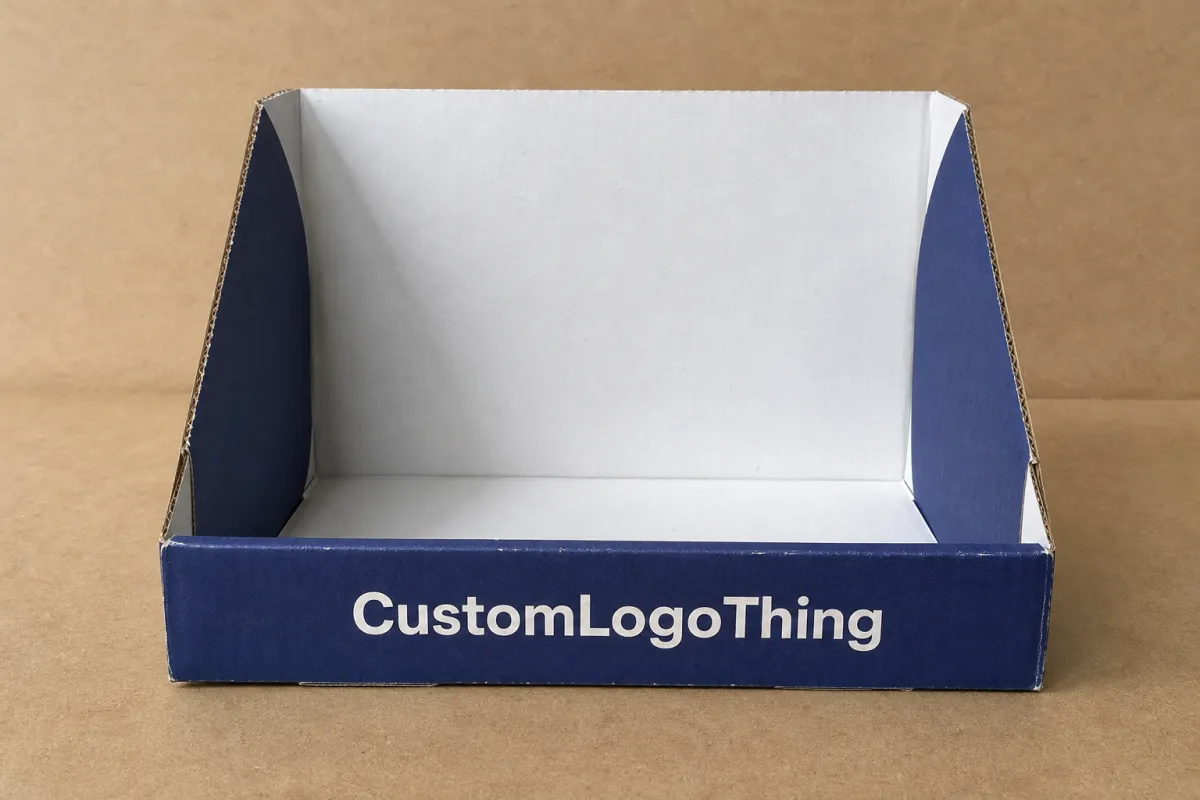
The failure pattern is easy to spot. The carton arrives in good condition, then the store team tears the front panel too far, the graphics end up shredded, or the pack is awkward to stock because nobody wants to stop and figure out how it opens. The product is fine. The packaging is the weak link. That is the point where a custom shelf ready boxes supplier proves whether they understand retail or just corrugate.
In practice, shelf-ready boxes do three jobs at once. They protect the product in transit. They convert into a display-ready unit with minimal handling. They present the brand well enough that the box helps sell instead of looking like leftover freight. That combination sits between packaging design, merchandising, and distribution, which is why weak specs show up fast.
From a buyer’s point of view, the value is easy to measure:
- Fewer labor steps in the store.
- Cleaner shelf presentation and more consistent branding.
- Lower risk of crushed corners, exposed product, and torn display fronts.
- Less time spent fixing packaging at the retail level.
That last line gets ignored until a chain buyer complains or store labor costs show up in the wrong place. A retail-ready pack can save more money in execution than it costs in upgraded board or print. Not always, but often enough that the comparison deserves real attention.
There is a structural detail buyers miss all the time. A shelf-ready pack affects case count, opening method, print placement, and pallet efficiency at the same time. Change one piece without checking the others and the box may still “work,” but badly. Experienced suppliers treat shelf-ready packaging as a system, not a carton style.
For brands building branded packaging into a retail program, the shelf-ready box becomes part of package branding. It is visible in the aisle, in the back room, and sometimes in the customer’s hand. That visibility makes sloppy specs expensive. A cartoned display that looks cheap can drag down perceived product quality even when the product itself is excellent.
There is another comparison worth making. A shelf-ready carton can do the same job as a standard shipper only when it is designed for both jobs. A plain corrugated case protects well and presents poorly. A shelf-ready format adds complexity, yet that complexity can return value in fewer handling steps and better shelf face consistency. That trade is usually invisible until a retailer starts tracking execution.
A good custom shelf ready boxes supplier also knows where the risk sits. Retailers dislike variance. If the opening cut drifts by a few millimeters, the shelf face starts to look inconsistent. If the board flutes are wrong for the load, the pack bows in transit. If the graphics are placed without accounting for the tear path, the brand panel gets sacrificed in the very step meant to reveal it. These are small errors on paper. On a shelf, they are obvious.
Process, timeline, and lead time: from dieline to dock
A good supply process starts with a boring document: the brief. That brief should include product dimensions, unit weight, pack count, retail channel, shelf requirements, and any fixed constraints such as pallet limits or warehouse handling rules. Without that, the discussion drifts into vague promises and optimistic timelines. Those rarely help anyone.
The typical path looks like this:
- Discovery brief — product details, retailer requirements, target quantity, and goals.
- Structural concept — the supplier develops a carton style, opening method, and display behavior.
- Dieline creation — the exact cut and fold pattern is built for the pack.
- Artwork setup — branding, regulatory text, barcode placement, and print-safe layout.
- Sampling — prototype or white sample for fit, function, and shelf behavior.
- Revisions and approval — one or more rounds of changes before sign-off.
- Production — printing, converting, gluing, finishing, and packing.
- Freight booking — shipping plan, destination timing, and pallet requirements.
Where do projects get squeezed? The same places almost every time. Late artwork changes are the classic one. Missing product measurements is another. Slow sample approvals can burn a week before anyone notices. If the retailer has a strict pack-out or shelf spec, discovering that after the design is approved can send the project back to square one. Retail packaging likes precision more than optimism.
Sampling and mass production are not the same thing, and suppliers that blur the distinction create trouble. A prototype may take a few business days to a couple of weeks depending on complexity. Full production often lands in the 12-20 business day range after proof approval for standard runs, while more complex shelf-ready structures, special coatings, or larger quantities can push longer. Freight adds another clock. Ocean shipments, predictably, do not care about launch dates.
If the program is new, a pilot run is smart. That might mean a small production batch to validate shelf fit and packing speed before you commit to a larger rollout. For recurring retail programs, a supplier should be able to forecast repeat lead times more accurately once the structure is locked. The first order is usually the slowest because every decision is being made for the first time.
“A shelf-ready box can be technically correct and still fail in the store if the opening method is awkward or the front panel tears badly. The sample has to be tested like it will actually be used, not admired on a desk.”
One more point: a supplier that understands pallet patterns is usually worth more than one that only talks about print. If cartons do not nest properly, or the pallet layer count creates weak compression points, the program becomes fragile before it reaches the shelf. Good suppliers flag that early. Weak ones wait until the damage is obvious and expensive.
Lead time also depends on how many decisions are still open. A project with fixed dimensions, approved artwork, and a known board spec moves faster than a “flexible” project where everyone wants to see samples before they commit. That flexibility sounds useful until it starts adding days to each approval round. Procurement teams know the difference.
Custom shelf ready boxes pricing, MOQ, and quote drivers
Pricing for shelf-ready cartons is not random, though it can feel that way if the quote request is vague. The biggest cost drivers stay consistent: board grade, print coverage, finishing, structural complexity, and whether the box includes tear-away features or integrated display fronts. More labor and more material precision mean a higher unit cost. That is not mysterious. It is manufacturing.
For a rough planning range, simple shelf-ready corrugated cartons in medium volumes might land around $0.45-$1.10 per unit, depending on size, board spec, and print requirements. More complex retail-ready structures, heavier board, or higher-end graphics can move into the $1.25-$2.50+ range per unit. Small runs can cost more than that because setup costs are spread across fewer boxes. Those numbers are only directional, but they are still more useful than “competitive pricing,” which is usually code for “please do not ask me for math.”
MOQ is tied to the production method, board choice, and converting setup. On smaller orders, the supplier still has to pay for plates or digital setup, die cutting, testing, and machine time. That means the price per unit tends to fall as quantity rises. Buyers often see breakpoints at 500, 1,000, 2,500, and 5,000 units, though every factory is different. The useful question is not “What is the MOQ?” The useful question is “At what quantity does the unit cost start behaving like a real run instead of a prototype?”
A quote becomes useful only when it rests on real inputs. Send the supplier this list, at minimum:
- Carton dimensions and product dimensions.
- Unit weight and case pack count.
- Print method and artwork coverage.
- Retail requirements, including tear strip or display-front needs.
- Shipping destination and delivery window.
- Whether you need samples or structural development.
There are always tradeoffs. Paying a bit more for stronger board or a cleaner opening feature can reduce damage, speed up store stocking, and improve sell-through. That can be cheaper than chasing the lowest unit cost and then paying for rework, returns, or awkward labor at the shelf. Buyers who only compare carton price miss the total landed cost. That is how cheap packaging turns into expensive packaging, a tradition the industry seems unwilling to retire.
When a team compares options, ask for two versions of the quote: a cost-focused version and a retail-performance version. That makes the tradeoff visible. You can see what stronger board, better print coverage, or a cleaner display front actually costs instead of guessing. It also helps internal teams explain why the “slightly nicer box” is not a branding indulgence. It is operational insurance.
One useful comparison is between the cost of the carton and the cost of failure. If a damaged pack creates even a small percentage of spoilage, replacement, or store labor, the original quote starts to look irrelevant. A 3 percent damage rate on a high-volume program can erase the savings from a cheaper box very quickly. That is why the right custom shelf ready boxes supplier should speak in landed cost terms, not only unit price.
| Option | Typical Use | Approx. Unit Cost | Best For | Tradeoff |
|---|---|---|---|---|
| Basic corrugated shelf-ready carton | Simple product lines, limited print | $0.45-$0.85 | Budget-sensitive programs | Less brand impact and fewer display features |
| Printed retail-ready case | Mid-volume retail packaging | $0.75-$1.50 | Balanced cost and presentation | Requires better artwork control and structure testing |
| Premium custom shelf ready box | High-visibility aisles, stronger branding | $1.25-$2.50+ | Brands that need polished shelf presence | Higher unit cost and more development time |
If your buyer team is also sourcing broader packaging support, compare these boxes against other Custom Packaging Products so you can see where shelf-ready structure is actually worth the extra spend. Not every SKU needs a premium display format. Some need a practical shipping case that opens cleanly. Context matters more than habit.
The key factors that make or break shelf-ready packaging
Structure comes first. If the box cannot survive stacking, compression, and opening without distortion, the rest is decorative. A shelf-ready pack needs enough case strength to handle transit and enough control in the front panel to tear or remove cleanly. Weak board or poorly placed scores can lead to collapsed edges, ragged display fronts, and product exposed to handling damage.
There are several structural details worth checking closely:
- Case strength — especially if cartons will be palletized high or shipped long distances.
- Opening style — tear strip, perforation, die-cut front removal, or perforated side access.
- Stacking stability — the box should not bow, lean, or crush under load.
- Front-panel design — it should come off cleanly without damaging graphics.
- Product retention — the contents must stay organized after the case opens.
Merchandising matters just as much. The box has to do more than open. It has to look deliberate once it is on the shelf. That means the front-facing panel, logo placement, typography, and color blocking all need to be planned with the retail view in mind. In good custom printed boxes, the brand message is visible from a few feet away and still readable under store lighting. In bad ones, the artwork gets chopped up by cuts, flaps, and labels.
Visibility is another trap. Some shelf-ready packs hide the product too much. Others expose it too much. A balanced design gives shoppers enough product visibility to trust what they are buying, while still keeping the brand identity front and center. That balance is part art, part math, and part ruthless editing. Too much copy on a retail-facing carton is usually wasted space. Nobody reads a paragraph in aisle seven.
Operations form the third layer. The pack must be easy to load at the factory, easy to palletize, and easy for store teams to open without tools. If the opening process is fiddly, stockers improvise, and improvisation is not a quality control strategy. A supplier with real shelf-ready experience thinks about how the pack behaves in the warehouse and on the sales floor, not just on a design screen.
Compliance is the part everybody wants to postpone until it becomes urgent. Barcode placement, retailer carton labels, warning icons, recycled content claims, and chain-specific pack standards can all affect approval. If you are selling into major retailers, ask early whether they require specific outer-case labeling or approved carton formats. A supplier familiar with retail packaging will ask that question before the box is built, not after someone in procurement notices the mismatch.
For sustainability-minded programs, check whether the board carries an FSC claim or whether recycled content targets matter to your retailer. Organizations like the Forest Stewardship Council provide recognized forestry certification standards, and that can matter in category reviews or brand reporting. If distribution testing is a concern, the International Safe Transit Association is a useful reference point for transit test methods and packaging performance. Standards do not rescue bad design, but they do reduce guesswork.
One practical note: if your brand cares about package branding, shelf-ready boxes should be reviewed under actual store lighting and at a realistic viewing distance. Print that looks rich on a monitor can flatten badly on corrugated board. A clean render can mislead you. Paperboard knows the truth, and so does the aisle.
Retailers also notice repeatability. The first hundred boxes might look great, but if the opening cut drifts or the print registration shifts on later runs, the shelf face begins to look inconsistent. That is the kind of detail a good custom shelf ready boxes supplier catches during sample approval and production setup, not after the rollout has already started.
There is a final technical point that often separates competent suppliers from merely attractive ones: compression direction. Corrugated board is not indifferent to grain direction, flute choice, or score placement. If the load path fights the board structure, the box may survive in the warehouse but deform as soon as it is opened and placed on shelf. That is why experienced packaging teams care about more than dimensions. They care about how the carton wants to behave.
Step-by-step guide to sourcing the right supplier
The sourcing process gets easier when you stop asking for “a quote” and start asking for a fit-tested solution. Begin with a sourcing brief that includes the product size, weight, pack count, retail channel, shipping destination, and the exact shelf-ready behavior you need. Do you want a tear-away front? A display tray? A removable face panel? Say it plainly.
Next, shortlist suppliers by capability. General box printers are not always shelf-ready specialists. You want a partner who can handle structural development, print consistency, and retail-facing details. Ask direct questions:
- Have you built shelf-ready or retail-ready cartons before?
- Can you provide dielines and sample options?
- How do you test opening performance and product fit?
- What tolerances do you hold on key dimensions?
- How do you manage artwork approval and revisions?
Then request samples and compare them like a buyer, not like a tourist. Hold the sample, tear it open, look at the front edge, check the shelf presentation, and see how the carton behaves after handling. Does it still look clean after opening? Does the product sit properly? Is the board strong enough, or does it feel flimsy the second you pick it up? These are not picky questions. They separate packaging that works from packaging that gets quietly disliked by retail staff.
Here is a simple approval checklist you can use before placing an order:
- Dimensions match the product and case pack.
- Board specification is confirmed in writing.
- Artwork is approved with barcode and legal copy placement.
- Opening method has been tested physically.
- Sample standard is agreed before production.
- Delivery terms and timing are documented.
That final sign-off matters more than people think. If tolerances, delivery terms, or change rules are vague, small problems become big ones later. A good supplier will document how modifications are handled after approval. That protects both sides. It also keeps the production schedule from being held hostage by one more “small change” that turns out not to be small at all.
If you are comparing several vendors, look at how clearly they explain structure, price, and lead time. Clarity is a signal. Suppliers that make the process legible usually manage production better, too. The ones that dodge specifics tend to do the same thing once money changes hands. Convenient, that.
You can also use your broader packaging budget to benchmark options across the rest of your line. The team at Custom Packaging Products may already have structures that can be adapted for retail programs, mailer projects, or standard product packaging. That helps you decide whether shelf-ready is needed for every SKU or only for the high-visibility ones.
A useful final test is simple: ask the supplier what they would change if the same pack had to run through a different retailer, a different case pack, or a different warehouse setup. Strong suppliers answer with specifics. Weak ones repeat the same line, no matter the channel. That tells you plenty before a purchase order ever exists.
If a supplier can describe how they would adjust score depth, board grade, or display front geometry for a different retailer, they are thinking like a packaging partner. If they cannot, they are probably thinking like a printer. The difference matters most when your rollout hits a chain with strict shelf rules and very little patience for trial and error.
Common mistakes buyers make with shelf-ready boxes
The biggest mistake is treating shelf-ready packaging like a normal shipping carton with a prettier surface. That mindset creates problems because shelf-ready performance depends on opening behavior, display presentation, and retail handling. If you only specify dimensions and print, you are leaving out half the job.
Another common issue is incomplete specs. Buyers sometimes send a product photo, a rough quantity, and a vague note about needing something “easy to open.” That is not enough. It leads to pricing swings, sample revisions, and avoidable redesigns. If the supplier has to guess at weight, fill volume, or shelf format, the quote will be fuzzy at best and misleading at worst.
The third mistake is ignoring the store team. A box can be technically sound and still annoying to open, stock, or display. If the pack needs a knife, complicated unfolding, or a very specific tear sequence, store execution suffers. That can mean slower replenishment and a worse shelf face, which defeats the purpose of the format.
The fourth mistake is chasing the lowest unit cost without checking the hidden ones. Damage in transit, rework, cube inefficiency, and poor shelf conversion all cost money. A box that saves two cents but increases breakage or store labor is not a bargain. It is a sneaky expense with slightly better branding.
There is also a timing mistake. Some teams wait until artwork is final before checking structure. That can be backwards. If the box format or opening method changes after artwork is designed, the layout may need a redesign. It is better to lock the structure first, then build the graphics around it. This is one of those dull sequencing rules that quietly saves a lot of money.
And yes, one more: some buyers assume all suppliers understand retail specs. They do not. Plenty of box vendors can print a nice carton and still miss the logic of shelf-ready packaging. Ask about retail display experience directly. If they can talk through pallet patterns, tear strips, shelf-facing control, and stock handling, you are in better shape. If they only talk about “high quality” and “fast turnaround,” keep looking.
A related mistake is treating the first sample as a formality. It is not. A sample reveals score quality, tear behavior, graphic placement, and how much force the front panel really needs. One bad edge or awkward fold can ripple into thousands of units. The sample is the place to be fussy. Production is not the place to discover that the front panel rips sideways.
There is also a buyer habit that looks efficient but usually is not: approving the quote before the structure has been tested. Price is important, of course. Yet a lower number on an untested design can hide a later correction, and correction costs are rarely smaller than the original savings. The better sequence is design, sample, adjust, approve, then price into volume.
Expert Tips and Next Steps Before You Place an Order
Before you place the order, keep the approval process simple and specific. You do not need a heroic document. You need a clean checklist that covers dimensions, weight, case count, board spec, print method, sample standard, and target delivery date. If those items are locked, the rest of the process becomes much easier to manage.
If the project allows it, ask for two options. One should be the lowest-cost structure that still functions. The other should be the stronger retail-ready version with better shelf performance or stronger visual impact. That side-by-side comparison helps stakeholders understand the tradeoff between price and execution. It also stops the conversation from getting trapped in a false choice between “cheap” and “fancy.”
For a new shelf-ready program, pilot one SKU or one retailer first. That is usually the smartest move. You get real data on shelf performance, opening speed, and packing behavior without betting the whole line on a single assumption. Once the pack proves itself, you can scale with more confidence.
Here is a practical next-step sequence:
- Shortlist a custom shelf ready boxes supplier with proven retail-ready experience.
- Request a quote with complete specs, not just a product photo.
- Review a physical sample and test opening, shelf fit, and board strength.
- Confirm artwork, tolerances, and delivery timing in writing.
- Place the production order only after the structure and retail behavior are approved.
One useful buying habit: keep notes on what actually happened after launch. Did store teams open the carton cleanly? Did the front panel tear as planned? Did the shelf face stay presentable after a few days on display? That feedback is gold. It tells you whether the structure is worth repeating or whether the next run needs adjustment.
And if you are still comparing formats, review your broader Custom Packaging Products options so you can match the box style to the product, channel, and retail goal instead of forcing one structure to do everything. Shelf-ready is excellent when it is justified. It is wasteful when it is not.
Used well, a shelf-ready box improves operations, strengthens retail packaging, and supports the brand at the point of sale. Used badly, it becomes an expensive shipping carton with extra cuts. That is why Choosing the Right custom shelf ready boxes supplier matters so much. The supplier should understand the product, the shelf, the labor flow, and the way the carton will behave after a long trip through the supply chain. The real takeaway is simple: lock the structure before artwork, test the opening in the same way store staff will use it, and choose the supplier who can explain the tradeoffs without hiding behind vague promises. That is how shelf-ready packaging earns its keep.
FAQ
How do I choose a custom shelf ready boxes supplier?
Look for real retail-ready packaging experience, not just general carton printing. Ask for samples, dielines, and examples of similar shelf-ready projects. The best supplier will explain structure, price, lead time, and approval steps clearly, without hiding behind vague sales language.
What affects custom shelf ready boxes pricing the most?
Board thickness, print coverage, cut complexity, and finishing drive most of the cost. MOQ also matters because setup and waste are spread across fewer units on small runs. Retail features like tear strips and display fronts add cost, but they also add function, which is the whole point.
What lead time should I expect for shelf ready boxes?
Sampling usually moves faster than full production, but revisions can add days or weeks. Artwork approval, structure changes, and freight planning are common delay points. A realistic supplier will separate prototype timing from full-run production timing instead of bundling everything into one optimistic promise.
What MOQ is normal for a shelf ready boxes supplier?
MOQ varies by board type, print method, and finishing, so there is no universal number. Smaller MOQs usually cost more per unit because setup and waste are spread over fewer boxes. Ask whether the supplier can quote tiered quantities so you can compare breakpoints and see where the economics improve.
What should I send to get an accurate quote from a supplier?
Send product dimensions, weight, pack count, artwork needs, retail requirements, destination, target quantity, and any pallet or warehouse constraints. The more complete the brief, the less likely you are to get a quote that changes later. A clean quote starts with clean information.
What is the best first test for a shelf-ready prototype?
Open it by hand, exactly as a store associate would, then place it on a shelf or table at eye level and step back. Check the tear line, the front edge, the product alignment, and whether the graphics still read clearly after the opening. If it looks awkward in a simple test, it will usually look worse under store pressure.

