Buyer Fit Snapshot
| Best fit | Custom Shipping Bags for Dropshippers projects where brand print, material claims, artwork control, MOQ, and repeat-order consistency need to be specified before quoting. |
|---|---|
| Quote inputs | Share finished size, material target, print colors, finish, packing count, annual reorder estimate, ship-to region, and any compliance wording. |
| Proofing check | Approve dieline scale, logo placement, barcode or warning zones, color tolerance, closure strength, and carton packing before bulk production. |
| Main risk | Vague material claims, crowded artwork, missing packing details, or unclear freight terms can make a low unit price expensive after revisions. |
Fast answer: Custom Shipping Bags for Dropshippers: Film, Print, MOQ, and Carton Packing should be specified like a repeatable production item. The safest quote records material, print method, finish, artwork proof, packing count, and reorder notes in one written spec.
Production checks before approval
Compare the actual filled-product size with the drawing, then confirm tolerance on folds, seals, hang holes, label areas, and retail display edges. Reserve space for logos, QR codes, warning copy, and material claims before decorative graphics fill the panel.
Quote comparison points
Review material grade, print process, finish, sampling route, tooling charges, carton quantity, and freight assumptions side by side. A quote is only useful when the supplier can repeat the same color, closure quality, and packing count on the next order.
Custom Shipping Bags for Dropshippers: Smart Poly Mailers matter because the shipping bag is often the first physical piece of packaging a customer touches, and custom shipping bags for dropshippers have to do three jobs at once: protect the product, support the brand, and keep fulfillment costs under control. If the parcel arrives clean, sized correctly, and visibly intentional, the buyer starts the unboxing with confidence instead of doubt.
Poly mailers earned their place in ecommerce because they solve a problem that sounds simple and turns expensive fast. They are light, compact, quick to seal, and far easier to store than cartons. That matters when inventory sits across suppliers, prep centers, and fulfillment partners that all measure space in different ways. A mailer can also narrow the gap between a generic drop-ship transaction and a branded purchase. The customer may never see the warehouse shelf, but the bag still speaks on behalf of the store.
There is a hard tradeoff sitting inside that convenience. The bag has to look deliberate, yet it also has to survive handling, moisture, compression, and the occasional rough conveyor. Branded packaging only earns its keep when it does both. For many stores, the question is not whether custom packaging belongs in the plan. The real decision is which film, size, print method, and order quantity fit the business without trapping too much cash in inventory.
"A mailer earns its keep when it protects the product, reads as part of the brand, and disappears into the workflow without slowing fulfillment."
Custom shipping bags for dropshippers: why they matter
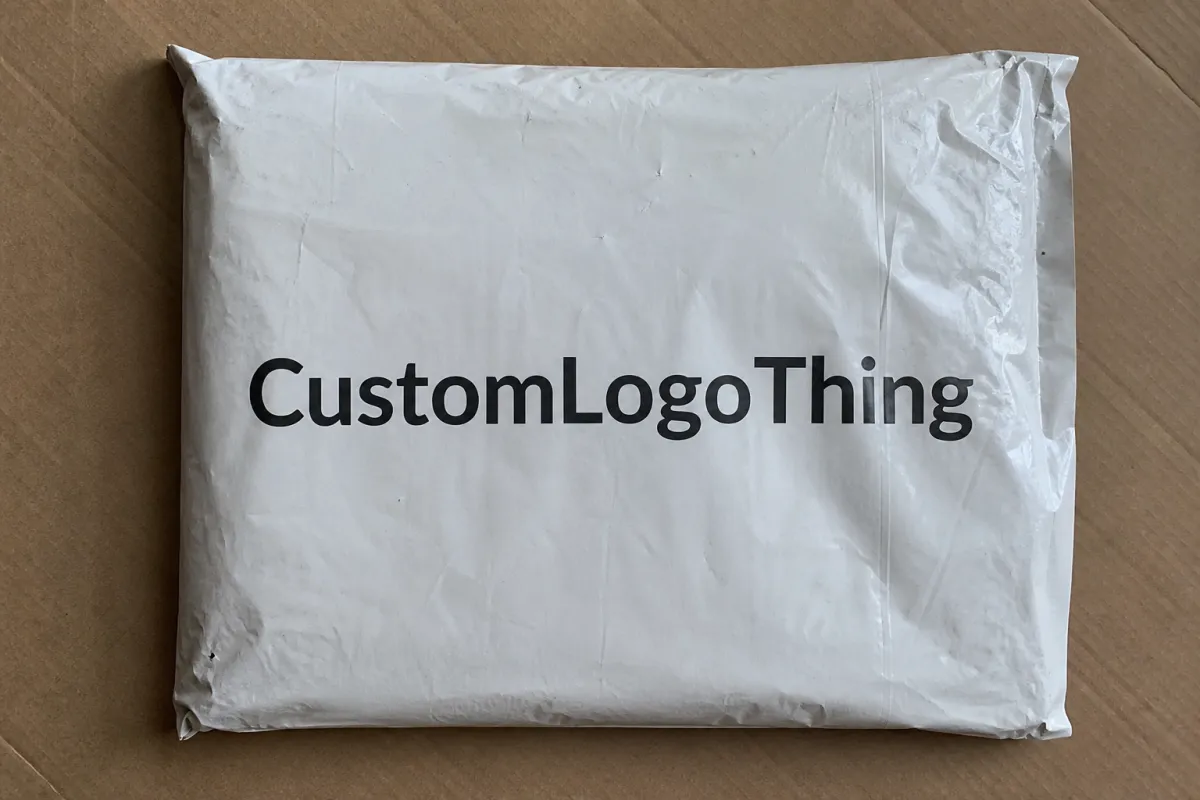
The shipping bag is not just a container. It shapes the first impression, absorbs part of the damage-prevention job, and sits inside the margin math that keeps an order profitable. A plain white or gray mailer can move product. It can do very little for package branding. A custom-printed mailer turns a routine delivery into a branded moment, even if the customer never sees the packing table, storage rack, or fulfillment crew that handled the shipment.
Dropshipping makes that distinction sharper. One supplier may stock the product, another may pick and pack it, and another may manage returns or replacements. The buyer still expects one coherent brand. Custom shipping bags for dropshippers create that continuity by placing the seller's visual identity on the outside of the parcel, where it works before the product is touched.
Protection is part of the argument too. Good poly mailers resist scuffs, light punctures, and moisture far better than a thin uncoated bag. They hold up well for apparel, soft accessories, and other low-crush-risk items. That gives sellers more control than a generic fulfillment sack without forcing them into Custom Printed Boxes for every order. A rigid, fragile, or unusually heavy item may still belong in a box. Soft goods usually do not need that level of structure.
Buyers tend to judge the bag by three things: how it feels in hand, how it seals, and how it arrives. Hand feel hints at film thickness and overall quality. Seal strength tells you whether the adhesive can be trusted under load and transit stress. Appearance tells you whether the brand looks disciplined or improvised. Those details are small by themselves. Put them together, and they decide whether the parcel feels like a considered product package or just another shipment.
If you are building a broader packaging program, it helps to compare the mailer against other formats in the line, including Custom Poly Mailers for soft goods and Custom Shipping Boxes for items that need more structure. Many stores also start assembling a fuller mix of Custom Packaging Products once they see how much the outer shipper influences customer perception.
How custom shipping bags for dropshippers work
A poly mailer looks simple from the outside, and the better versions hide several decisions inside the film. Most ecommerce mailers use co-extruded polyethylene film, often in multiple layers that improve opacity, puncture resistance, and print stability. The outer layer carries the graphics. The inner layer supports seal integrity and handling. The adhesive closure closes the bag fast enough for high-volume packing. When the spec is right, the mailer slips into the fulfillment flow without adding labor.
Material layers and closure
Film thickness is usually the first detail buyers need to sort out. A lighter mailer can work for a folded T-shirt or a soft accessory. A heavier-gauge bag is a better fit for products with sharp edges, denser bundles, or longer carrier routes. Common options often land around 2.5 mil to 3 mil for standard apparel use, with thicker builds closer to 4 mil for tougher shipments. That is not a universal rule. It is a practical starting point when most orders are soft goods.
Closure quality matters just as much as film thickness. A weak adhesive strip can peel in transit, and that creates a customer-service problem that costs more than the difference between two bag quotes. Many buyers want a strong permanent seal for outbound shipments. Some ask for dual-seal or return-seal options if the category sees a higher return rate. An inconsistent adhesive can ruin the experience no matter how polished the print looks.
Artwork, print, and converting
Production starts with artwork setup and size confirmation. The supplier checks flat dimensions, bleed, print-safe area, and whether the logo sits cleanly across the bag body or near the flap. Proofing follows, usually with a Pantone reference or a clear CMYK target. Vector artwork tends to print cleaner because small type and line work hold their shape at scale. That is one reason packaging teams prefer press-ready files for branded packaging instead of screenshots or low-resolution exports.
Once the proof is approved, the job moves into printing and converting. Converting is easy to overlook, though it decides whether the printed film becomes a usable mailer. The flat web still has to be folded, cut, sealed on the sides, and fitted with adhesive closure. Registration, edge alignment, and seal width all get locked in here. A mailer can have strong ink coverage and still fail if the seal area is sloppy or the width varies too much from one batch to the next.
Stock mailers with a logo printed on them are not the same thing as fully custom shipping bags for dropshippers. Stock options may let a seller print a small mark or label, but they usually limit color, layout, messaging, and exact sizing. True custom work gives the brand control over where the identity appears, how bold it is, and how closely the mailer fits the actual product mix. That control matters in ecommerce shipping, where first impressions are short and compressed into a few seconds.
For buyers who want a broader sense of material terminology and supply-chain language, packaging.org is a useful reference point. For transit testing and performance conversations, ISTA gives a useful framework for thinking beyond appearance and into real shipment behavior.
The bag is only one part of the shipping system. Label placement, how the item is inserted, how the seal is pressed, and how the carrier sorts the parcel all shape the final result. A bag that looks perfect on a table can still perform poorly if the label overlaps the seam or the product is packed too tightly and stretches the film.
Cost, pricing, and MOQ for custom shipping bags
Price is usually the first question buyers ask, and the pressure makes sense. Custom packaging has to fit the margin model, not just the brand mood board. With custom shipping bags for dropshippers, the main pricing drivers are bag size, film thickness, print coverage, number of colors, finishing detail, and total order quantity. A one-color logo on a standard-size bag usually costs far less than a full-coverage design that wraps the entire surface in dense artwork.
MOQ, or minimum order quantity, affects the unit price directly. Higher quantities typically lower the per-bag cost because setup, plates, labor, and freight are spread across more pieces. The catch is cash flow. A larger MOQ may save pennies or fractions of a dollar per bag, yet it also asks the business to prepay more inventory and store more packaging on site or at a prep center. For smaller brands, storage can matter as much as the purchase price.
Dimensions influence cost in ways that are easy to miss. Oversized bags waste film, raise print area, and can make the package look loose or underfilled. Undersized bags force the product to be compressed, double-packaged, or moved into a different format, and that extra labor often costs more than the bag savings ever did. Fit is not just a sizing issue. It is a cost-control decision.
Freight and landed cost deserve the same attention. A factory quote that looks attractive on paper can rise fast once international shipping, duties, inland handling, and last-mile transfer charges are included. The true cost is landed cost per bag, not the ex-factory number. Buyers who skip that step sometimes discover that a supposedly cheap run becomes an expensive inventory commitment once the cartons land.
| Mailer option | Typical MOQ | Approx. unit price | Best use | Main tradeoff |
|---|---|---|---|---|
| Stock poly mailer | 1,000-5,000 | $0.06-$0.14 | Lowest-cost soft goods shipping | Very limited branding control |
| One-color custom logo mailer | 3,000-10,000 | $0.12-$0.22 | Apparel, socks, accessories | Print setup and proofing required |
| Full-coverage printed mailer | 5,000-20,000 | $0.18-$0.40 | Strong package branding | Higher freight and art costs |
| Recycled-content custom mailer | 3,000-10,000 | $0.14-$0.30 | Lower-waste packaging programs | Availability varies by spec |
That table is a planning range, not a quote. Actual pricing shifts with material source, film width, print method, shipping lane, and how much ink covers the bag. Even so, it gives a useful sense of the decision. A generic mailer may be cheaper upfront, but a custom one can raise perceived value, reinforce package branding, and make the order feel more intentional without the added weight and cube of boxes.
The comparison against custom printed boxes is straightforward. Boxes offer crush protection and a different kind of unboxing drama, but they are heavier, bulkier, and often more expensive to ship. For soft-goods orders, a mailer usually wins on total delivered cost. For fragile products or bundled kits, the box may still be the better option.
Cheap packaging is only cheap until it creates re-shipments, refunds, or a brand experience that looks off from the first delivery.
Production process and timeline: from proof to delivery
The production timeline for custom shipping bags usually follows a predictable sequence, though it stretches quickly when artwork is incomplete or the spec changes midstream. The cleanest path begins with size selection, then artwork setup, then digital proofing, then approval, then printing, converting, inspection, and shipment. Clear steps reduce surprises. Vague ones multiply them.
What slows a run down
Most delays happen before the press starts. A file with missing bleed, low-resolution text, or unclear color references forces the supplier to ask questions, and every round of clarification adds time. Pantone ambiguity is another common stall point. If the brand wants a specific shade of black, blue, or metallic accent, that should be stated clearly before proof approval. Once production starts, changes become much more expensive.
Sampling can extend the timeline, but it often pays for itself. A pre-production sample or strike-off can reveal whether the logo sits too close to the edge, whether the seal strip is strong enough, or whether the surface finish looks too glossy or too dull under real light. A one-week delay up front is usually cheaper than a full reprint after 10,000 bags are already in motion. That is especially true for branded packaging that has to match other product packaging in the line.
What a realistic schedule looks like
For many first-time runs, a buyer should expect roughly 12-20 business days from proof approval to shipment, depending on factory workload, print complexity, and whether the order needs a sample step. Repeat orders can move faster, sometimes around 7-15 business days, because the spec is already locked and the supplier can return to a proven setup. International transit adds its own clock, so total door-to-door time is longer than production time alone.
Seasonal planning matters too. If a store is preparing for a product launch, influencer push, or holiday rush, the packaging order should be placed early enough that the bags are already in hand before the campaign starts. A late mailer delivery creates a bottleneck that can slow fulfillment even when inventory is ready. A buffer of one to two extra weeks is often smart for new programs.
Buyers building a wider packaging system can also align the mailer run with related inserts, labels, and shipper materials from Custom Packaging Products. The advantage is consistency. The brand gets the same color story, the same logo treatment, and the same operational logic across the whole order flow instead of stitching things together piecemeal.
For transit-minded teams, ISTA is worth checking because it frames shipping performance as a system, not a guess. That mindset keeps the conversation grounded in how packages behave under pressure, stacking, vibration, compression, and humidity changes.
Choosing the right poly mailer spec for your orders
The right poly mailer spec starts with the product, not the artwork. A good fit means the packed item slides in cleanly, the seal closes without strain, and the final parcel looks deliberate rather than overstuffed. For dropshipping businesses, that often means measuring the top-selling SKUs first and building the bag around the most common packed dimensions instead of guessing from catalog sizes.
Soft apparel tends to pack well into sizes like 10 x 13 inches for folded tees and small accessories, 12 x 15.5 inches for hoodies or thicker garments, and 14.5 x 19 inches for bulkier bundles or multi-item orders. Those are not fixed standards. They are useful reference points when comparing suppliers. The bag should leave enough room for a clean insert and seal without leaving so much empty film that the parcel looks sloppy or flaps around in transit.
Film thickness is the next decision. A lighter gauge lowers cost, but it belongs only with low-risk product profiles. A heavier film improves puncture resistance and gives the bag a firmer hand feel, which many buyers read as better quality. For products with sharp corners, metal hardware, or rigid edges, the stronger film often pays for itself by avoiding damage claims. If the item is fragile enough that a soft bag feels wrong, compare against Custom Shipping Boxes instead of forcing the mailer to do a box's job.
Opacity and finish deserve attention too. A mailer that shows the silhouette of the contents can undermine a polished look, especially if the product is colorful or irregularly shaped. Better opacity helps the parcel feel private and tidy. A matte or soft-gloss finish can look more premium than a thin shiny film, though that choice should still be balanced against scuff resistance and print coverage.
Closure details matter here as well. A strong adhesive strip is the minimum. A better spec may include a tamper-evident seal, a peel-and-seal strip for easy returns, or a wider flap for better hold through sorting and temperature swings. Some sellers also ask for a tear strip to improve the customer opening experience. That detail seems small until someone tries to open the bag with scissors and risks cutting the product inside.
Sustainability can be part of the spec without becoming theater. Recycled content, downgauged film, and right-sized packaging all reduce waste in practical ways. For brands that use paper inserts, thank-you cards, or tissue inside the parcel, FSC guidance at fsc.org can help with sourcing paper-based components responsibly. The main goal is to reduce material without weakening protection. Eco claims only matter if the package still performs in real shipping conditions.
Common mistakes dropshippers make with shipping bags
The most common mistake is shopping on price alone. A bag that looks inexpensive can be expensive in disguise if the film is too thin, the seal is weak, or the dimensions are wrong for the packed product. A slightly better spec often saves money over time because it reduces re-packs, damage claims, and customer complaints. Cheap packaging is not the same thing as efficient packaging.
Another frequent problem is ignoring product mix. A mailer that works beautifully for a T-shirt may fail for a cosmetic bundle, a boxed accessory, or a product with hard corners. Dropshippers often carry enough SKU variety that one bag size cannot handle everything. Mapping the top three or four order patterns before placing the first run usually gives a far better result than guessing from one hero product. The best size is the one that fits the real mix, not the one that looks good in a catalog.
Artwork mistakes are just as damaging. Tiny logos disappear on the porch. Low-contrast colors flatten out. Too much text creates clutter, and clutter is brutal on a parcel that gets seen for only a second or two. Good package branding uses a clear visual hierarchy: logo first, brand message second, secondary copy only if it truly adds value. The bag is not the place for a long mission statement.
Skipping test shipments is another expensive shortcut. A bag can look fine on a table and still fail once it goes through conveyor belts, sorting bins, truck vibration, and temperature changes. That is why a pilot batch should always include real shipment tests, not just desk checks. Send a few units through normal ecommerce shipping, then review the seal, corner wear, print rub, and arrival condition. The difference between "looks good" and "survives shipping" is often larger than people expect.
The biggest operational mistake is treating the mailer as an afterthought. Packaging belongs in the workflow, the budget, and the brand plan from the beginning. If it is bolted on late, the team usually ends up with a size mismatch, a rushed proof, or a reorder cycle that repeats the same flaws. Good order fulfillment is built from small decisions that all point in the same direction.
One practical way to reduce those mistakes is to compare the proposed mailer with other formats before committing. A lighter apparel line may be perfect for a mailer, while a premium bundle might deserve a box, a printed insert, or a more structured retail packaging setup. Better to make that judgment early than to discover after launch that the packaging does not match the merchandise.
Expert tips and next steps for custom shipping bags
Start with a pilot order. It is the safest way to learn how the bag behaves with your actual products, your actual sealing method, and your actual carriers. Test the mailer with the most common SKUs first, then check whether the print stays clean, the adhesive holds, and the bag still looks good after handling. A pilot run of a few hundred to a few thousand pieces is often enough to expose fit problems before they become expensive habits.
A simple spec sheet also saves time. It should list the product dimensions, target mailer size, artwork files, color references, seal requirements, and any fulfillment notes that matter to the packout team. If the bags need to work with a certain label size or automated packing process, that should be written down too. Clear documentation makes the supplier's job easier and gives your operations team a single reference when reordering later.
Ask for a landed-cost comparison before approving the job. That means unit price, freight, duties if applicable, and any receiving or handling charges that affect the total. A bag that is cheap at the factory may not be cheap once it lands at the warehouse. The best quote is the one that shows the real number the business will pay per piece, not just the headline price.
Review one actual packed sample for every major product type. Flat proofs are useful, but they cannot show how the bag closes around a real item, how the print reads in the hand, or how the surface reacts to light. A physical sample often reveals better sizing, stronger material needs, or better logo placement than a proof ever could. In packaging design, the sample is where theory meets the warehouse floor.
Use the first reorder cycle to refine the system. Maybe the first mailer is the right width but a little too long. Maybe the print should sit lower on the face of the bag. Maybe the film can be downgraded without hurting performance. That is normal. The goal is not a perfect first guess; the goal is a repeatable spec that improves fulfillment and supports the brand over time. Once that happens, custom shipping bags for dropshippers stop feeling like a one-off purchase and start acting like a dependable part of the operation.
For brands building a broader packaging program, this is also the moment to compare mailers, boxes, inserts, and labels together instead of buying each item separately. A coordinated product packaging setup usually packs faster, looks cleaner, and costs less to manage than a pile of unrelated materials.
What size custom shipping bags for dropshippers should I order?
Choose the smallest bag that fits the packed product with enough room for a clean insert and seal. Then test your top-selling SKUs first and adjust for thicker items, bundles, or products with rigid edges. A fit that is too tight causes sealing problems, while a bag that is too large wastes film and looks untidy.
Are custom shipping bags for dropshippers cheaper than boxes?
In many apparel and soft-goods categories, poly mailers cost less than cartons because they use less material and weigh less in transit. The real comparison should include freight, packing labor, and whether the product needs the extra crush protection that boxes provide. For fragile or structured products, a box may still be the smarter choice even if the mailer is cheaper on paper.
How does MOQ affect custom shipping bags for dropshippers?
A higher MOQ usually lowers the unit price, but it also increases upfront spend and the amount of packaging you need to store. For smaller brands, a moderate MOQ is often the safer balance because it keeps cash tied up at a manageable level while still giving you the branding lift of a custom bag. The best MOQ is the one your operations team can actually support.
What artwork file should I send for custom printed poly mailers?
Vector files are usually the best starting point because they keep logos and text sharp at print scale. Include clear color references, note any Pantone targets if you have them, and add placement instructions so the print team can position the graphics accurately on the bag. A clean file package reduces proofing delays and helps avoid avoidable color mismatches.
How long does it take to produce custom shipping bags for dropshippers?
First-time orders usually take longer because they require proofing, approvals, and sometimes sampling before production begins. Reorders are often faster, especially when the size, material, and artwork are already finalized and can go back into the schedule without extra setup. If the bags are tied to a launch or promotion, leave a buffer so production and transit do not collide with your sales calendar.
For a lot of stores, the smartest move is not oversized branding or elaborate inserts; it is a well-sized, well-printed mailer that protects the product, keeps order fulfillment quick, and reinforces package branding every time it lands on a doorstep. That is the real job of custom shipping bags for dropshippers.
The clearest next step is practical, not flashy: define the top three packed SKU sizes, set a target mailer gauge and closure style, request a landed-cost quote, and test one pilot shipment before approving a full run. That sequence turns custom shipping bags for dropshippers from a branding idea into an operational decision with measurable results.

