Buy Custom Shipping Boxes for Clothing That Fit Right
Why Apparel Shipping Boxes Matter More Than Most Brands Think
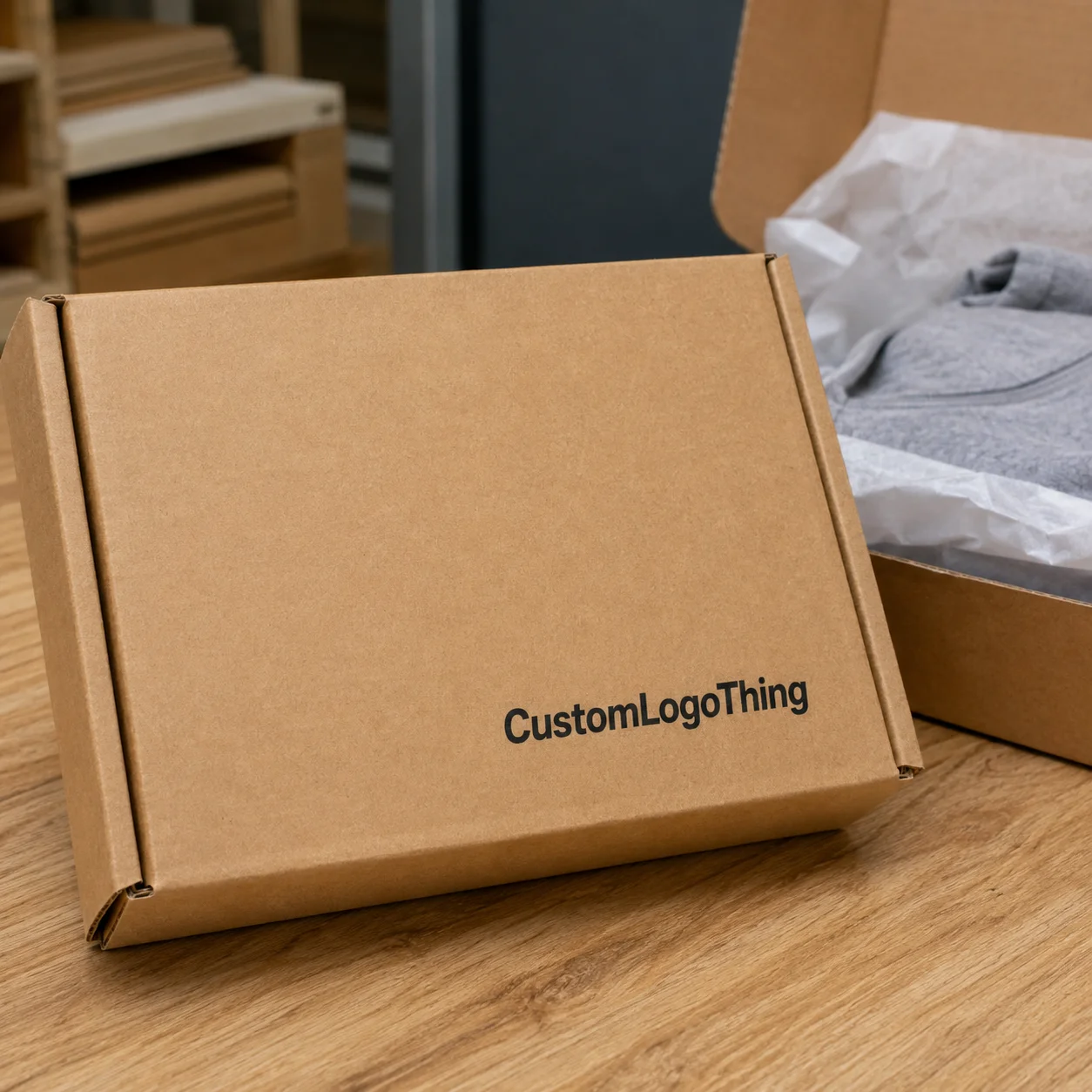
A soft hoodie in a giant carton is a sad little production. It slides around, arrives crushed in one corner, and somehow looks cheap before the customer touches the fabric. Custom shipping boxes for clothing solve more than presentation; they affect damage rates, shipping charges, packing speed, returns, storage, and how expensive the order feels.
Apparel seems forgiving because it does not shatter like glass. That assumption gets expensive. Carriers price many parcels by dimensional weight, so the space a box occupies can matter as much as the actual weight. Air is apparently a premium product now. A 2 lb sweatshirt in an oversized 14 x 12 x 6 inch box may rate higher than the same sweatshirt in a tighter 12 x 9 x 4 inch mailer box, especially across longer zones.
Clothing shipping boxes include corrugated mailer boxes, tuck-top boxes, roll-end mailers, regular slotted cartons, subscription-style boxes, and branded ecommerce shippers built around folded garments. For buyers comparing options, Custom Shipping Boxes usually make sense for premium apparel, bundles, gift orders, influencer kits, fragile add-ons, retail-ready sets, or orders that need to come back in the same package.
Poly mailers still have a job. A single basic tee often ships cheaper in a mailer than in a box. Boxes win when structure matters: folded sets, branded tissue, return labels, product cards, hang-tag protection, or any order where the customer experience needs to feel deliberate instead of “we had a bag nearby.”
Practical rule: if the product price, order value, or unboxing moment needs to feel above basic, test a box before defaulting to the cheapest mailer.
The buying decision should start with three questions. What is the folded size of the product? How much abuse will the parcel face before delivery? How much can the packaging add to cost before the margin stops making sense? Those answers shape nearly every choice that follows.
How Apparel Shipping Boxes Work From Fold to Front Door
Most apparel boxes begin as flat corrugated sheets. The supplier prints the sheets, cuts the dieline, scores the fold lines, glues panels if the structure requires it, packs the boxes flat, and ships them to your warehouse or fulfillment partner. Your team folds them, adds garments, seals the package, applies the label, and hands it to the carrier.
Simple process. Plenty of places to mess it up.
The common styles are easy to separate. Roll-end tuck-front mailers are the ecommerce favorite because they fold into a clean, sturdy shipper without tape on every edge. Regular slotted cartons work better for wholesale, bulk inventory, or large apparel shipments. Rigid boxes with magnetic closures fit luxury sets, but they usually need an outer shipper. Subscription boxes are built for repeat drops, where the same size and branding repeat monthly, quarterly, or seasonally.
Garments do not usually break. They wrinkle, shift, snag, absorb moisture, collect lint, and lose their neat folded shape when the box is wrong. A thin dress in a tall carton can slump. Denim can crush tissue. Hoodies can create a bulge that pops a weak tuck tab. None of that sounds dramatic until it happens across 2,000 orders.
Good package branding does not require a circus-level print job. A one-color exterior logo, inside-lid print, branded tissue, return-card slot, or clean repeat pattern can create a better unboxing experience than full-coverage artwork nobody sees because the shipping label covers half of it.
Fulfillment matters as much as the design file. Boxes should fold in roughly 10 to 20 seconds once the packing team knows the structure. They should stack cleanly on standard packing tables, accept 4 x 6 inch shipping labels, fit shelving, and avoid awkward lock tabs that tear under pressure. Pretty packaging that slows the warehouse is not a branding upgrade. It is payroll with a logo.
Sustainability starts with right-sizing. Smaller boxes reduce void fill, paper waste, truck space, and storage pressure. Recycled corrugated options are common, and some suppliers offer water-based or soy-based inks depending on print method. For broader material guidance, the EPA waste management hierarchy is a useful reference. FSC-certified paperboard may also be available for brands that need documented sourcing through FSC.
Box Size, Material, and Print Specs That Affect Performance
Start with the folded garment, not the size chart. Measure length, width, and packed height after the item is folded the way the customer should receive it. Then add practical clearance for tissue, insert cards, labels, and a packer’s hands. Usually that means adding about 0.25 to 0.5 inch to length and width, plus enough height so the box closes without compressing the product into a brick.
One box size rarely works for every apparel order. T-shirts compress flat. Hoodies fight back. Denim is dense. Dresses can wrinkle if forced into a shallow mailer. Babywear sets may need bands, tissue folds, or compartments to keep tiny pieces from wandering. A brand selling tees, sweatshirts, and bundles often needs two sizes: one shallow mailer for small orders and one deeper box for bulky or multi-item shipments.
Corrugated board choice changes performance and feel:
- E-flute: thin, smooth, and popular for ecommerce mailers; often around 1/16 inch thick.
- B-flute: thicker with better cushioning; useful for heavier apparel or boxes needing more crush resistance.
- C-flute: common for shipping cartons; strong, practical, and less sleek for premium unboxing.
- Double-wall: excessive for most single apparel orders, useful for wholesale cartons or heavy mixed shipments.
Strength specs matter if boxes stack in storage, travel through parcel networks, or sit under other packages on a truck. Edge Crush Test ratings measure stacking strength. Burst strength measures resistance to puncture or rupture. A light E-flute mailer may be fine for a 1 lb tee order, while a 12 lb wholesale carton of denim needs a stronger board grade. ASTM and ISTA testing protocols are often used for transport performance; the International Safe Transit Association publishes packaging test procedures that serious shippers should know exist, even if they do not run formal lab testing for every box.
Print method affects cost, color, and minimum order quantity. One-color flexo is usually the budget-friendly choice for custom printed corrugated boxes. Digital print works well for lower quantities or detailed artwork because setup is lighter. Offset print gives crisp premium results at higher volume, especially for retail packaging, coated liners, or full-color graphics.
Finishes add personality and pain. Matte lamination feels clean but costs more and can affect recyclability depending on the material. Gloss looks bright but shows scuffs. Aqueous coating is common for basic surface protection. Soft-touch feels premium and fingerprints like it has a hobby. Foil stamping, embossing, and spot UV can look excellent on high-margin packaging, but they often add tooling, time, and higher minimums.
Before requesting quotes, build a simple spec sheet. Include dimensions, box style, board type, print coverage, colors, quantity, finish, destination ZIP or country, packing method, and whether the package needs to survive returns. Suppliers quote faster when they are not forced to decode a vague “small branded box for clothes” request. Imagine that.
Cost, Pricing, MOQ, and Unit Cost Tradeoffs for Clothing Boxes
Pricing depends on box size, board grade, print method, number of colors, inside printing, finish, quantity, tooling, freight, and how the boxes are packed for delivery. Custom sizes often need a die. Flexo jobs may need plates. Premium finishes may require separate setup. Freight can surprise buyers because flat boxes are light but bulky.
As a rough buying range, small digital runs of Printed Mailer Boxes may land around $1.50 to $4.00 per unit at low quantities, depending on size and coverage. Mid-size runs can move closer to $0.70 to $1.80 per unit. Larger production runs may drop below $0.60 for simple one-color corrugated mailers, but that depends heavily on dimensions, board, print, and freight. Treat those numbers as guardrails, not guarantees.
| Packaging Option | Best Use | Typical Cost Behavior | Tradeoff |
|---|---|---|---|
| Custom corrugated mailer | Premium ecommerce shipping, bundles, gifts | Moderate unit cost; improves with higher volume | More structure, higher freight volume than mailers |
| Poly mailer | Single tees, lightweight basics | Low unit cost and low shipping weight | Less protection and weaker unboxing impact |
| Rigid gift box plus shipper | Luxury apparel sets and influencer kits | High unit cost; often higher MOQ | Great presentation, expensive to store and ship |
| Regular slotted carton | Wholesale, bulk orders, warehouse transfers | Efficient for volume shipments | Not ideal for direct-to-consumer presentation |
MOQ realities are not personal. Digital print may support 50, 100, or 250 units depending on supplier. Flexo, offset, specialty finishes, and custom dielines often make more sense at 500, 1,000, 2,500, or 5,000 units because setup costs need somewhere to go. Spreading a $250 plate charge over 100 boxes hurts. Spreading it over 5,000 boxes barely moves the needle.
Hidden costs deserve a hard look: die charges, plate fees, proof fees, sample fees, shipping cartons, pallet freight, storage, rush fees, and artwork changes on reorders. A low unit cost can become less attractive if the brand has to rent storage space or tie up cash in eight months of packaging inventory.
Premium presentation can also increase carrier cost. A thicker, larger box may photograph better, but if it pushes a shipment into a higher dimensional-weight bracket, the extra $0.40 of packaging can create $2.00 more in freight. That is not luxury. That is arithmetic wearing a nice coat.
Cost control is usually boring and effective. Use one box for several SKUs only if the fit still works. Limit ink coverage. Choose standard board when possible. Skip foil unless customers will actually notice it. Order enough to reduce unit cost, but not so much that inventory eats cash flow. Compare quotes apples-to-apples: same dimensions, material, print coverage, finish, quantity, proofing process, freight terms, and lead time.
Process and Timeline From Box Concept to Delivered Inventory
The clean process looks like this: confirm product dimensions, choose a box style, build the dieline, prepare artwork, review the proof, approve a sample if needed, produce the order, pack the boxes flat, ship them, and receive inventory. Skip steps and the box will remind you later.
Simple digital jobs can sometimes move from proof approval to production in about 5 to 10 business days, with transit added after that. Custom-size corrugated mailers often run closer to 12 to 20 business days after approval. Specialty finishes, inside printing, rigid boxes, high-volume runs, and freight scheduling can push timelines longer. Supplier capacity, material availability, revisions, and shipping distance all matter.
Buyers often mix up design time, proofing time, production time, and transit time. Design might take 2 days or 2 weeks depending on decision-making. Proofing can take 1 to 5 business days, longer if artwork needs fixing. Production starts after approval, not after the first email. Transit may be 2 days by parcel or 1 to 3 weeks by freight or ocean import. Buyers forget transit, which is charming until launch week.
Proof types are different. A digital proof confirms artwork placement, colors, panels, and safe zones. A physical sample confirms structure and fit. A pre-production sample confirms the actual production method before the full run, which matters for expensive launches or complex packaging design.
Request a sample for first orders, new garment sizes, premium launches, subscription boxes, influencer kits, or boxes with inserts and specialty finishes. For a plain reorder of a proven box, a digital proof may be enough. Not always, but often.
Artwork handoff should include vector logo files, dieline-safe layout, CMYK colors, bleed, safe zones, barcode placement, label zones, and notes for inside printing. Keep critical artwork away from fold lines, tuck flaps, and edges. If the shipping label goes on top, design the top panel with a label zone instead of pretending the carrier will respect the art direction.
Build a reorder buffer. For custom shipping boxes for clothing with a custom die, printed interior, or seasonal deadline, reorder before inventory hits zero. A practical trigger is 6 to 8 weeks of packaging inventory for domestic production and more for imported or complex jobs. This buffer is not glamorous, but it prevents the emergency switch to blank cartons two days before a campaign ships.
Step-by-Step Guide to Choosing the Right Apparel Shipping Box
- List every common order type. Include single-item orders, two-item orders, bundles, gift sets, return shipments, and wholesale cartons. The best-selling order combination matters more than the full catalog.
- Fold and measure real garments. Measure the packed product as the customer should receive it. A hoodie folded for photography is not the same as a hoodie packed 300 times on a Monday.
- Choose the box style. Use mailer boxes for ecommerce shipping, cartons for wholesale, rigid boxes for premium gifting, and subscription boxes for recurring apparel drops.
- Select board strength. Base it on total weight, stacking, carrier handling, and return shipping needs. If customers reuse the same box for returns, the first trip cannot destroy it.
- Decide the branding level. Options include exterior logo only, interior print, full-color artwork, insert card, tissue wrap, sticker seal, or premium finish. Spend where customers actually look.
- Estimate quantity carefully. Use monthly sales, storage space, cash flow, and reorder timing. A 5,000-unit price break is not helpful if the brand needs 700 boxes and has no place to store the rest.
- Request tiered quotes. Ask for pricing at 250, 500, 1,000, 2,500, and 5,000 units if those quantities fit the sales pattern. Price breaks become obvious when the numbers sit side by side.
- Test before committing. Pack real garments, shake the box, apply a 4 x 6 inch label, stack it, and ship one to yourself. If the unboxing feels messy at your own door, customers will not grade on effort.
For brands still comparing boxes and mailers, review both Custom Packaging Products and Custom Poly Mailers. Many apparel brands use both: boxes for higher-value orders and mailers for simple, low-risk shipments.
A useful testing routine is to pack three samples: one tight, one ideal, and one intentionally overfilled. That shows how the structure handles the real order range. If the overfilled sample bulges badly or pops open, adjust the size or create a second box for bulkier orders.
Check closure strength during the same test. Tuck tabs that feel secure on an empty sample can loosen once a fleece set presses against the lid. If the box needs tape to stay closed, decide whether that is acceptable for the brand, the fulfillment team, and the customer opening experience.
Common Mistakes, Expert Tips, and Pre-Order Checks
The first mistake is choosing a box that is too large because it feels safer. It usually is not safer. The clothing slides, tissue collapses, void fill increases, and dimensional weight can rise. A better box fits the folded product with modest clearance and enough height for fast packing.
The second mistake is designing artwork before confirming the dieline. That leads to stretched logos, cut-off patterns, and the classic last-minute panic email. Confirm the dieline first, then design around panels, folds, glue areas, tuck tabs, and label placement.
The third mistake is ignoring shipping labels, tape zones, and barcodes. Carriers will cover beautiful artwork with stickers because carriers are not the creative department. Leave a clean label area on the largest flat panel, usually at least 4 x 6 inches, and avoid putting critical branding where tape, labels, or return stickers will land.
The fourth mistake is buying only on lowest unit cost. A cheap box that crushes, stores poorly, slows packing, or increases freight is not cheap. It is just quiet at the quote stage.
Test several garment folds before finalizing dimensions. A different fold can reduce box height by 0.5 inch, which may improve both presentation and freight efficiency. Keep returns in mind too. If customers need to send items back in the same box, the board and closure need to survive a second trip.
Use inserts sparingly. A thank-you card, return instruction card, or discount insert can work well, but five loose pieces create clutter. Upgrade print only where customers notice it: inside lid, top panel, tissue sticker, or one strong exterior mark. Strong product packaging does not need to shout from every flap.
Run a final quality-control check before approving production. Confirm inside dimensions, folded fit, board grade, print colors, dieline orientation, barcode readability, label space, closure strength, pallet or carton count, and delivery address. Ask how the boxes will be bundled or packed on arrival; warped, crushed, or loosely strapped blanks create problems before the first order ships.
The sensible pre-order list is short: measure the top three order types, pick one primary box and one backup size, define the print level, choose realistic quantity tiers, and test a sample with actual garments. Custom shipping boxes for clothing work best when buyers treat them as a shipping, branding, and cost-control tool at the same time.
FAQs
What size custom apparel shipping box should I order for shirts or hoodies?
Measure the garment after folding, not flat on a table, then add enough clearance for tissue, insert cards, and easy packing. T-shirts usually need shallower mailer boxes, while hoodies and sweatshirts need more height because they compress unevenly. Test at least two real orders before approving a production size: one single-item order and one common bundle.
Are custom shipping boxes for clothing better than poly mailers?
Boxes are better for premium apparel, multi-item orders, gift packaging, subscription shipments, and products that need structured presentation. Poly mailers are usually cheaper and lighter for basic single garments, but they offer less protection and less unboxing impact. Many brands use both: mailers for simple orders and boxes for higher-value or branded shipments.
How much do printed clothing shipping boxes cost?
Pricing depends on size, material, print method, quantity, finish, tooling, and freight. Small digital runs may cost several dollars per unit, while larger simple corrugated runs can drop substantially as setup costs spread across more boxes. Ask for quote tiers at different quantities so you can compare cash flow, storage, and unit savings instead of guessing.
What is the usual lead time for custom clothing boxes?
Lead time depends on artwork approval, sampling, print method, production complexity, and shipping distance. Simple printed mailer boxes can move faster than boxes with custom dies, inside printing, foil, embossing, or specialty coatings. Build in extra time for first orders because dielines, samples, and proof revisions can add days before production starts.
What should I send to get an accurate quote for apparel shipping boxes?
Send box dimensions, style, quantity, material preference, print coverage, finish, shipping destination, and whether samples are needed. Include logo or artwork files if available, preferably in vector format. Share what clothing items will go inside so the supplier can flag sizing, strength, or fulfillment issues before production.