Buyer Fit Snapshot
| Best fit | Custom Shipping Envelopes with Logo projects where brand print, material claims, artwork control, MOQ, and repeat-order consistency need to be specified before quoting. |
|---|---|
| Quote inputs | Share finished size, material target, print colors, finish, packing count, annual reorder estimate, ship-to region, and any compliance wording. |
| Proofing check | Approve dieline scale, logo placement, barcode or warning zones, color tolerance, closure strength, and carton packing before bulk production. |
| Main risk | Vague material claims, crowded artwork, missing packing details, or unclear freight terms can make a low unit price expensive after revisions. |
Fast answer: Custom Shipping Envelopes with Logo: Material, Print, Proofing, and Reorder Risk should be specified like a repeatable production item. The safest quote records material, print method, finish, artwork proof, packing count, and reorder notes in one written spec.
Production checks before approval
Compare the actual filled-product size with the drawing, then confirm tolerance on folds, seals, hang holes, label areas, and retail display edges. Reserve space for logos, QR codes, warning copy, and material claims before decorative graphics fill the panel.
Quote comparison points
Review material grade, print process, finish, sampling route, tooling charges, carton quantity, and freight assumptions side by side. A quote is only useful when the supplier can repeat the same color, closure quality, and packing count on the next order.
Custom Shipping Envelopes with logo look modest on a purchase order and oversized on a customer’s table. They are one of those packaging choices that quietly do three jobs at once: they protect the contents, carry the brand, and shape shipping cost. Not many formats pull that off without asking for a bigger budget or a more complicated packing line.
The appeal is easy to miss because envelopes feel ordinary. But custom Shipping Envelopes with Logo can turn a shipment from improvised to intentional in one move. They can also trim wasted board, reduce void fill, and lower dimensional weight when the item fits a flatter format. That matters when postage keeps climbing, labor is stretched thin, and every extra inch has a price tag attached.
The strongest versions do not behave like decorated stock mailers. They are built around the product, printed for the route, and chosen with the packing bench in mind. That is a very different mindset from buying “something branded.” It is a packaging decision, and a practical one at that.
Custom shipping envelopes with logo: why small mailers matter
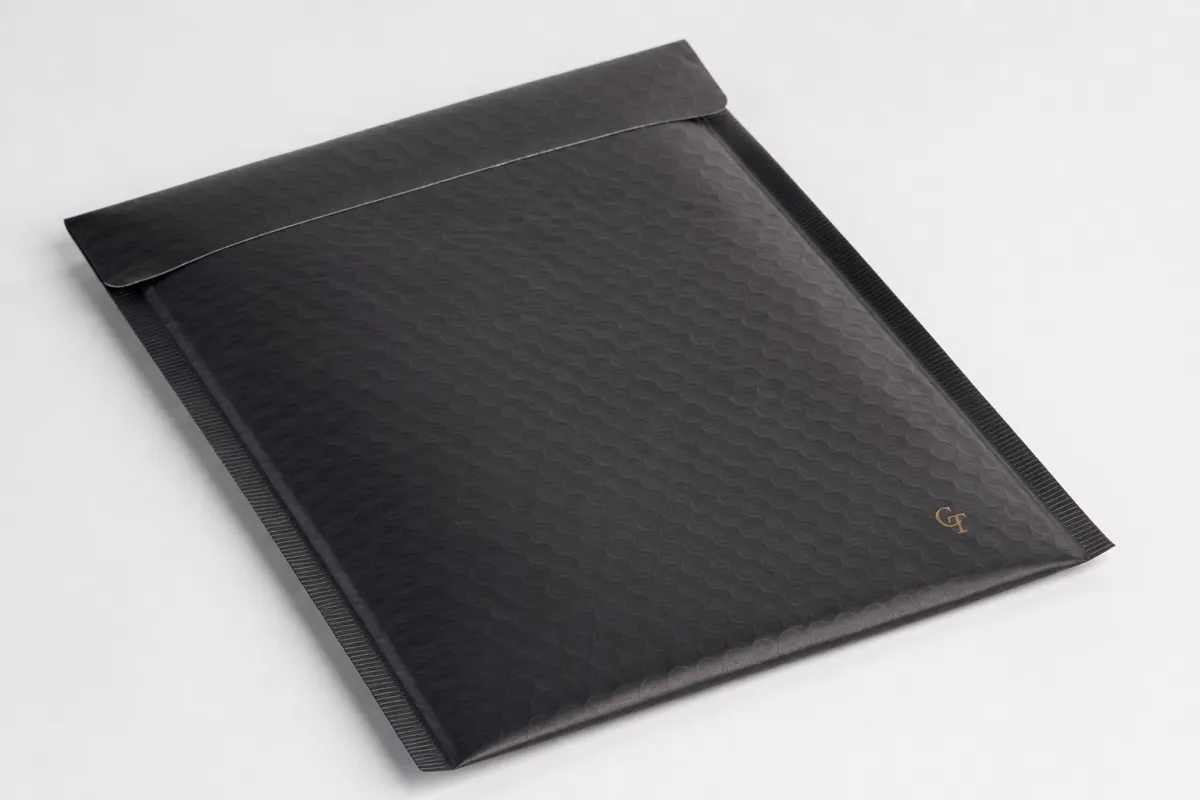
Custom shipping envelopes with logo matter because flat goods do not need box-level structure. Apparel, documents, subscription inserts, media kits, samples, and thin accessories often travel better in a lighter envelope than in a carton. That sounds like a small shift, but the ripple effects are real: postage, line speed, material use, and the customer’s first impression all move together.
At the packing table, a small mailer is easier to stage, easier to seal, and easier to stack. A good fit also reduces waste, which is why custom shipping envelopes with logo are attractive to ecommerce teams trying to tighten fulfillment without making the package feel cheap. If the closure is solid and the envelope stays flat, a packer can usually move faster than with a box that needs tape, inserts, and a few extra handling steps.
That speed compounds quickly. Cut 15 seconds from an order and a 1,000-order day gives back more than four hours of labor. Over a week, that is not pocket change. For brands shipping 500 to 2,000 orders a day, packaging format can influence labor as much as appearance. Custom shipping envelopes with logo earn their place when they reduce touch time while keeping the presentation sharp.
Brand perception is the other half of the equation. A plain envelope can look temporary even when the product inside is not. A branded mailer suggests intent. It tells the customer someone thought through the package, not just the item inside it. That difference is subtle, but it shows up in repeat purchases and in how people describe the unboxing to someone else.
If you are comparing formats, it helps to think in categories rather than product names. Custom Packaging Products cover a wide range of options, but not every shipment needs the structure of Custom Shipping Boxes. Thin, flexible items may fit better in Custom Poly Mailers. The right answer depends on fragility, route risk, and how much brand theater you actually want in the package.
A good mailer has to do three things at once: protect the contents, present the brand, and fit the shipping model without slowing the line.
That is the part buyers sometimes overlook. Custom shipping envelopes with logo are not just a branding line item. They are a small-format packaging choice with measurable operational effects. The strongest purchases treat them that way from the start.
How custom shipping envelopes with logo work from file to mailer
The build process for custom shipping envelopes with logo usually starts with five decisions: size, substrate, closure, print coverage, and optional features. Size comes first because every other choice has to wrap around the packed product. A mailer that runs too small creates sealing trouble and a cramped finish. A mailer that runs too large can look sloppy and push postage up in ways buyers do not expect.
Substrate choice changes both the feel and the risk profile. Paperboard gives a stiffer, more retail-minded result. Kraft reads natural and practical. Poly resists moisture and tearing better than paper-based options. Some brands want recycled content or FSC-certified fiber, which makes sense as long as the claim is real and documented. For a neutral reference on responsible sourcing, FSC is a useful place to check.
Custom shipping envelopes with logo are commonly printed with digital, flexographic, or offset methods. Digital printing works well for short runs, multiple versions, and fast proofing because setup is lighter and revisions are cheaper. Flexographic printing makes sense at higher volumes when the artwork is simpler and plate cost can be spread across more pieces. Offset can deliver strong color control and sharp imagery, but it needs enough volume to justify the setup math.
MOQ follows the print method for a reason. A buyer asking for 500 pieces with full-coverage art will usually see a very different price curve than a buyer ordering 10,000 units with a single-color logo. Same envelope. Different economics. That gap is not a supplier trick; it is how setup cost, plates, and conversion time work in the real world.
Artwork prep deserves more attention than it gets. For custom shipping envelopes with logo, the logo should be supplied in vector format when possible, with brand color references, bleed, and a safe zone that keeps important text away from seams, folds, and closure edges. Flaps, tear strips, and windows need to be mapped before the final layout is signed off. A design that looks balanced in a flat mockup can shift once it meets a real structure. I have watched more than one “perfect” layout turn awkward once the fold line showed up in the wrong place. That is the kind of thing nobody wants to discover after print.
A digital proof is useful, but it is not the same as handling the actual piece. A screen file can confirm placement and color direction. It cannot show stiffness, adhesive behavior, print bite, or how the mailer opens after transit. For custom shipping envelopes with logo, the sample stage is where many avoidable failures surface. A physical test reveals whether the seal grabs cleanly, whether the logo stays visible after handling, and whether the contents fit without bulging.
For tougher distribution channels, buyers sometimes ask whether the mailer should be tested against transport protocols such as ISTA methods or other distribution-style testing. That is not necessary for every order. It starts to matter when shipments are high-value, multi-touch, or likely to see rough carrier handling.
Custom shipping envelopes with logo can look simple from across a room. Up close, they depend on a chain of choices that either protect the shipment or expose the weak point. File, substrate, print method, and sample all have to agree.
Custom shipping envelopes with logo: cost, pricing, MOQ, and unit economics
Pricing for custom shipping envelopes with logo is driven by a small set of inputs buyers can actually control. Dimensions come first because a larger envelope uses more material and may require a different converting setup. Material thickness comes next. Heavier paperboard or more durable poly usually costs more than a thin stock, but it can also reduce damage claims and customer complaints. Print coverage matters too: a small logo on one panel is not the same as a full-bleed branded background.
Finishing adds another layer. Tear strips, security seals, windows, matte coatings, soft-touch coatings, and specialty adhesives all change cost. None of them is free. Each one adds a little more complexity to the production run. In most quotes, custom shipping envelopes with logo are priced as material cost, printing cost, converting cost, and finishing cost, with freight and setup stacked on top.
Budget questions usually come down to volume. Lower quantities carry more setup cost per unit. Larger quantities spread that setup across more pieces and tend to push the per-piece price down. That is why MOQ is not just a supplier preference. It is part of the economics of custom shipping envelopes with logo.
| Mailer type | Typical use | Indicative unit range at 5,000 pieces | Cost drivers |
|---|---|---|---|
| Kraft paper mailer | Light apparel, inserts, documents | $0.18-$0.30 | Paper weight, one- vs two-color print, closure style |
| Paperboard envelope | Flat retail kits, stationery, media packets | $0.22-$0.40 | Board caliper, full coverage graphics, die complexity |
| Poly mailer | Moisture-sensitive, lightweight ecommerce items | $0.15-$0.28 | Film thickness, print method, security seal, recyclability claims |
| Padded mailer | Small items needing light cushioning | $0.28-$0.55 | Inner cushioning, outer print coverage, closure and tear strip |
Those ranges are directional, not fixed. A short run with heavy ink coverage can cost more than a larger order with simple art. Freight can move landed cost in a way that surprises buyers, especially when cartons are bulky or the destination is far from the converting site. A quote for custom shipping envelopes with logo should separate unit price, tooling, sampling, and freight. Once those items are bundled, comparison gets fuzzy fast.
Labor is the hidden cost that matters at the packing bench. A mailer that opens cleanly, stays flat, and seals in one motion can save seconds on every order. A mailer that curls, jams, or needs a second seal may look cheaper on paper and cost more in the workflow. For fast-moving ecommerce shipping, labor savings can beat a small difference in unit price. That is the piece people miss when they only compare sample photos.
That is why branded and plain options should be compared as total system cost, not just print cost. A plain stock envelope might save a few cents. If custom shipping envelopes with logo cut packing time, improve presentation, and remove the need for extra inserts, the branded version may be the better buy. The math only works when the full process is counted.
If you want a cleaner quote, ask for quantity tiers and a spec sheet breakdown. A supplier should be able to show how dimensions, color count, closure style, and material affect the final number. That level of transparency matters more than a low headline price.
Process, timeline, and production steps for custom envelope orders
The production path for custom shipping envelopes with logo usually follows a familiar sequence: discovery call, specs gathering, artwork preparation, proof approval, sampling, production, quality check, and shipment. The labels change from vendor to vendor. The logic stays the same. First you define what the mailer has to do. Then you make sure the art and structure can actually do it.
Discovery tends to surface the useful details people skip when they are in a hurry. What does the product measure after packing? How thick is it with inserts? Is the shipment moving by parcel carrier, postal service, or a mixed network? Does the brand want a recycled look, a premium retail finish, or a more secure enclosure? Those answers shape the order far more than a vague request for something “nice.”
Timeline is a mix of production speed and approval speed. A straightforward custom shipping envelopes with logo order using standard materials and clean artwork may move from proof approval to shipment in roughly 12 to 15 business days, though that changes with volume and plant capacity. More complex projects can run longer if the supplier needs plates, custom tooling, specialty film, or extra color matching. Sampling adds days. Freight adds more. If a launch depends on the order, buffer time is part of the plan, not a luxury.
Schedules slip when buyers underestimate how many approval loops happen before production starts. The first digital proof checks size, layout, and overall positioning. A second proof may address color density or copy edits. A physical sample, if ordered, can catch fit issues that no screen will show. With custom shipping envelopes with logo, each round matters because a tiny mistake on a flat mailer repeats across every unit in the run.
Here is the sequence in plain terms:
- Specs locked - size, material, closure, and quantity are confirmed.
- Artwork prepared - the logo, colors, and bleed are set for print.
- Proof approved - flat art and dieline are checked together.
- Sample reviewed - a physical piece is tested if the project warrants it.
- Production runs - conversion, printing, and finishing take place.
- Quality check and freight - cartons are inspected before shipping.
Busy seasons compress schedules in strange ways. I have seen simple custom shipping envelopes with logo orders move fast when the buyer had clean art and quick approvals. I have also seen a one-week delay turn into a month because nobody confirmed the final closure direction until proofing was already underway. Materials do not care about urgency. The schedule only works when decisions do. That sounds obvious, but in packaging it is the difference between a smooth launch and a mildly expensive scramble.
Key factors that change performance and print quality
Performance starts with the substrate. Paperboard feels more rigid and premium. Kraft reads natural and practical. Poly offers stronger moisture and tear resistance. Recycled options can perform well too, but the buyer should confirm whether the recycled content changes brightness, print sharpness, or fold memory. For custom shipping envelopes with logo, the wrong substrate can make strong artwork look tired.
Ink behavior matters just as much. Dark backgrounds can look dramatic, but they also make registration errors and scuffs easier to spot. Fine text may disappear on textured kraft or low-contrast surfaces. Thin reverse type can look elegant on a screen and fragile on press. Custom shipping envelopes with logo usually work best when the artwork is designed for the material, not forced onto it.
Closure and security features deserve scrutiny because envelopes are handled more than people think. Weak adhesive can open in a tote, on a packing bench, or under vibration in transit. Tear strips help the customer open the package cleanly. Tamper-evident seals add confidence when contents are sensitive. If the shipment contains documents or product samples, those details stop being decorative and start being functional.
Carrier route changes the risk profile. A mailer traveling through a short local network has a different exposure than one crossing the country in mixed parcel handling. Weather, stack pressure, and repeated sortation all increase the value of moisture resistance and seam integrity. Custom shipping envelopes with logo need to fit that reality, not just the brand deck.
Print quality is a mix of technical and visual choices. Large logos reproduce cleanly most of the time. Small copy, hairline rules, and dense gradients need more care. If the design depends on subtle tonal shifts, ask how the chosen method handles them. Flexographic printing is strong for bold brand marks, but it may not reproduce photographic detail as cleanly as offset or high-quality digital. That tradeoff is normal. It just needs to be understood before the order is placed.
Sustainability claims bring their own set of checks. A buyer may want recycled fiber, post-consumer content, or lower-plastic options. Good. The claim should still be backed up, and the mailer still needs to work. The EPA’s packaging and recycling guidance is a useful reference point; a practical starting place is EPA recycling resources. For custom shipping envelopes with logo, the environmental claim should match the route, disposal stream, and material structure.
The best envelope is not always the one that looks richest in a render. It is the one that ships cleanly, resists failure, and keeps the brand visible without adding work to the packing line. That is the line between decoration and useful packaging.
Common mistakes buyers make when ordering branded envelopes
The most common mistake is sizing the envelope to the product instead of the packed product. That difference sounds small. It changes everything. If the mailer is too tight, sealing gets messy and the contents may buckle. If it is too loose, the package slides around and looks underfilled. Custom shipping envelopes with logo should fit the packed stack, not the SKU by itself.
Skipping a real-world test causes trouble next. A proof can tell you the logo is centered and the color is close. It cannot tell you whether the envelope opens cleanly at the bench, whether the adhesive grabs on the first pass, or whether the mailer fits into the current packing flow. For custom shipping envelopes with logo, a sample packed with the actual product is worth far more than a screen image.
Underbuying and overbuying both hurt. A small order keeps unit cost high and can force a rushed reorder. A large order can leave you stuck with inventory that no longer fits a new offer, a new logo, or a new shipping strategy. That is a packaging design mistake I see often: treating the mailer as a one-time print decision instead of a living piece of the product packaging system. Custom shipping envelopes with logo work best when the business has a stable volume forecast or, at minimum, a sensible reorder plan.
Postal and carrier rules create another weak spot. Not every filled envelope behaves the same in mail sortation. Thickness, rigidity, and seal placement can change how a piece moves through the network or whether it qualifies for a certain postage class. If the final packed thickness shifts the item into a less efficient category, the rate can jump. Custom shipping envelopes with logo should be checked against the final packed dimensions, not the empty-envelope spec.
Overdesign shows up surprisingly often. Too many colors, too much copy, and too many claims can make a simple mailer feel cluttered. A cleaner layout often works better. A strong logo, a readable return address, and one or two supporting brand elements can create more confidence than a crowded panel. That point matters in retail packaging and ecommerce shipping, where the customer has only a few seconds to form an impression. A tidy panel usually beats a loud one, even if the loud one looked better on a mood board.
Choosing on unit price alone is the last trap. A slightly cheaper custom shipping envelopes with logo order can cost more in freight, more in labor, or more in poor presentation than a better-specified option. A fair comparison should include landed cost, packing speed, and the customer-facing result.
When I look at a project, I watch for four warning signs: the spec is vague, the sample plan is missing, the quantity is guessed instead of forecasted, and carrier requirements were never tested. If two or more show up, the order needs more work before it goes out.
Expert tips and next steps for a smarter purchase
Start with a spec sheet that is boring in the best possible way. List the packed product dimensions, the target ship method, the annual or quarterly volume, the brand colors, the acceptable material range, and any sustainability or security requirement. That single page makes custom shipping envelopes with logo much easier to quote accurately. It also cuts the back-and-forth that slows projects down.
Ask for samples in the exact size range you expect to use. Do not evaluate the mailer in isolation. Pack the real product, add inserts if needed, seal it, label it, and ship-test it through your normal carrier. If the envelope is meant to replace a box, compare the full workflow, not just the look. The results often surprise buyers, especially when the product is light enough that custom shipping envelopes with logo beat printed boxes on shipping weight and labor.
A scorecard helps when you are comparing suppliers. Price matters. Lead time matters. Print quality matters. MOQ matters. Response speed matters too, along with whether the vendor asks the right questions. A supplier who pushes back on a bad spec is often more useful than one who says yes to everything. In packaging, the cheapest quote is rarely the safest one.
Here is a simple buying checklist:
- Measure the packed product - include inserts, paperwork, and any return materials.
- Define the route - parcel, postal, or mixed shipping changes the spec.
- Match the substrate - kraft, paperboard, poly, or recycled content should fit the use case.
- Review the proof - check logo placement, bleed, and closure alignment.
- Test a sample - use a real item and a real carrier.
If you are balancing branded packaging across several formats, custom shipping envelopes with logo may be the most efficient place to start before expanding into broader retail packaging programs. A well-chosen mailer can support the brand while keeping the operation lean. If your product mix includes flat goods alongside rigid items, it can make sense to use envelopes for one line and Custom Shipping Boxes for another instead of forcing one format to do everything.
From a materials standpoint, ask whether the claim you want is supported by the structure you are buying. If recycled fiber or certified sourcing matters to your brand, verify the paperwork and make sure the product spec matches the claim. Trusted references such as FSC help keep packaging design grounded in evidence instead of wishful thinking. A little paperwork up front is a lot cheaper than cleaning up a claim that does not hold water later.
Custom shipping envelopes with logo work best when size, material, timing, and cost all fit the shipment. Measure the packed product, request a quote, and order samples before committing to volume. Do those three things first, and the rest of the project gets easier fast. That is the practical path, and it is the one that saves the most grief.
What products work best in custom shipping envelopes with logo?
They are best for flat or low-profile items such as apparel, documents, stationery, inserts, and subscription materials. They work well when the product does not need heavy cushioning or rigid crush protection. If the item flexes, breaks, or needs void fill, a box may be the safer choice.
How much do custom shipping envelopes with logo cost per unit?
Unit cost depends on size, material, print coverage, quantity, and any special finishes or closures. Higher volumes usually reduce the per-piece price because setup and tooling are spread across more units. Ask for a quote that includes freight and setup so you can compare the true landed cost.
How long does a custom shipping envelope with logo order take?
Timeline usually includes proofing, sampling, production, and shipping, so the full process is longer than the print run alone. Complex artwork, special materials, or tight MOQ requirements can extend lead time. Build in extra time if the envelopes are tied to a launch date, promotion, or seasonal peak.
What size should branded shipping envelopes be for my products?
Choose the smallest size that fits the packed product without forcing the seal or crushing the contents. Test the full packed stack, not just the product alone, especially if you include inserts or return materials. A small size mismatch can create folding issues, poor presentation, or higher shipping costs.
Are custom shipping envelopes with logo better than boxes for flat items?
For thin, flexible, or lightweight items, envelopes are often more efficient and cheaper to ship than boxes. Boxes are better when the product needs crush resistance, cushioning, or space for fragile components. The best choice depends on the product, the carrier, and the brand experience you want to create.

