Custom Snapbacks for Retail drops have to do more than carry a logo. They need to look intentional on a shelf, survive shipping without losing shape, and still leave room for margin after freight, duties, labels, and fulfillment. A cap can look strong in a mockup and still fail in production if the art is too fine, the colors are vague, or the pack-out arrives crushed.
Isn't that the problem with most first rounds? The best buying decisions are rarely about a single "nice" sample. Buyers usually need to compare specs, minimums, decoration methods, and timing before they commit.
The cap should fit the release, the price point, and the retail environment, not just the mood board.
A snapback on a shelf is part product, part display, and part proof that the brand knows what it is doing.
What Custom Snapbacks Mean for a Retail Drop
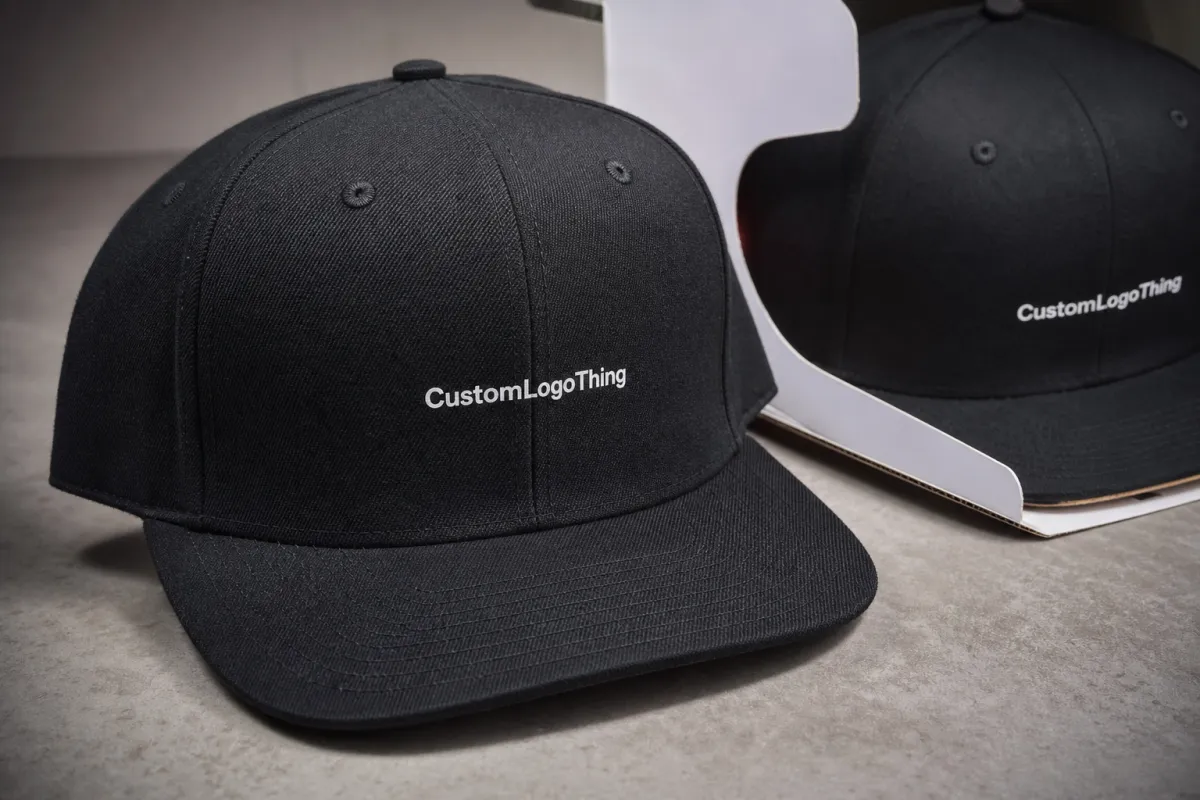
Retail drops are built to catch attention fast, so the cap has to read well from a distance and still hold up when handled in-store. That usually means a cleaner silhouette, more disciplined decoration, and packaging that helps the product arrive ready to sell. A team order can get by with a looser spec. A retail release usually cannot.
The front panel matters, but so do the details around it. Crown shape, stitch quality, inner labeling, hangtags, and carton markings all change how polished the item feels. Buyers notice whether the logo sits centered, whether the brim comes in clean, and whether the packaging makes stocking easier.
Those details do not create excitement by themselves, but they often decide whether the product feels premium or unfinished. Think of the cap as part apparel item, part package component. A good snapback can support a capsule next to tees, hoodies, and accessories because it is easy to display and easy to price.
If the release also needs mailers, inserts, or shelf-ready cartons, keep the cap tied to the broader packaging plan instead of treating it like a one-off add-on. Coordinating with Custom Packaging Products or other branded packaging options can help the collection feel consistent from warehouse to retail wall.
Process and Timeline: From Art File to Arrival
The production path is usually straightforward on paper: brief, proof, sample, bulk run, inspection, and shipping. In practice, most delays happen when the artwork needs cleanup or the spec changes after approval. Logos made for print often need adjustment for embroidery or patch work. Thin lines can disappear, and small type may need to be enlarged before production starts.
Color is another common problem. "Black" is not a production spec. Neither is "off-white" if fabric, thread, and underbrim all need to match across a collection. Good ordering documents use actual references, not vague adjectives, because the factory needs something measurable before sewing begins.
Lead time depends on location and decoration complexity. Simple domestic runs may finish in about 10 to 15 business days after approval. Offshore runs are more often 4 to 8 weeks before transit, and shipping can add more time depending on route and congestion.
If the drop has a fixed launch date, build backward from the in-hand date, not the ship date. Shipping method changes both cost and timing. Air freight gets inventory in faster, but it can pressure margin. Ocean freight lowers per-unit shipping cost on larger runs, but booking windows and customs review can stretch the calendar.
If the caps are going direct to retail or fulfillment, transit protection should be planned early and tested against handling expectations. A crushed brim is a bad first impression, even when the sewing was solid.
Cost, Pricing, and MOQ for Retail Drops
The factory quote is only part of the cost. Landed price also includes setup, sampling, freight, duties, labels, and any retail packaging. Two orders that look similar can end up far apart once those details are counted.
A basic embroidered cap will not price like a premium style with a woven patch, custom seam tape, inner labeling, and a hangtag set. As a rough guide, a simple retail snapback at 100 to 300 units often lands around $6.50 to $11.00 per unit before freight. More detailed builds often sit closer to $8.00 to $15.00.
At 500 to 1,000 units, unit cost usually improves, but only if the spec stays controlled. Setup fees may run $35 to $150 depending on the decoration method, while sample charges often fall between $25 and $80. MOQ changes quickly when the order adds colorways, logo placements, specialty closures, or extra trims.
Three colorways at 150 units each can cost more than 450 units of one color because each variation adds setup and production complexity. If the goal is to test demand, fewer variables usually makes more sense than trying to launch every version at once.
Here is a practical comparison buyers can use when reviewing quotes:
| Option | Typical MOQ | Typical Unit Cost | Best Fit | Main Watch-Out |
|---|---|---|---|---|
| Simple embroidered front logo | 100-300 | $6.50-$11.00 | Testing a new drop | Thin lettering can lose clarity |
| Patch with woven label and hangtag | 300-500 | $7.50-$13.00 | Retail capsules and collabs | Patch edge finish changes the look |
| Premium materials with custom trim | 500-1,000 | $8.50-$15.00 | Higher-ticket launches | Each extra detail extends lead time |
| Retail-ready pack-out with custom printed boxes | 300-1,000 | $10.00-$18.00 | DTC drops and giftable sets | Packaging can lift landed cost fast |
To compare quotes properly, match the cap style, decoration area, sampling expectation, packaging spec, and freight assumption. A quote that looks cheaper can end up more expensive once cartons, labels, duty class, and receiving costs are included. That is especially true when the cap is sold as part of a branded packaging program rather than as a standalone accessory.
The Specs That Change Fit, Feel, and Sell-Through
Structure is one of the first decisions that changes how a snapback performs in retail. A structured cap holds the front panel up and usually photographs better. It also reads more cleanly on a crowded wall or shelf. An unstructured version feels softer and more casual, which can work for lifestyle collections, but it often loses presence in display.
Crown height matters too. A higher crown gives a classic streetwear profile. A lower crown feels cleaner and less oversized. Panel count and brim shape also affect the final look. Six-panel caps are standard, while five-panel styles create a wider front surface that can help when the art needs room.
Flat brims keep the silhouette sharp; curved brims feel more relaxed but need stronger presentation to avoid looking generic. Material choice changes both price and perceived value. Cotton twill in the 280gsm to 350gsm range is dependable. Corduroy adds texture and a more premium tactile read. Wool blends suggest heritage and can support a higher ticket.
Nylon and polyester options are lighter and lean sporty. Buyers usually get in trouble when they pick a fabric because it sounds premium instead of because it fits the product story. Decoration quality is often where retail orders win or lose.
Stitch density affects legibility, and tiny lettering may look fine in a proof while breaking down in embroidery. Heavy fill on a curved front panel can cause puckering. Woven patches handle detail better than direct embroidery in some cases, while direct embroidery can feel cleaner for simple marks.
The right choice depends on the logo, not the trend. Retail details matter just as much. Inner labels can carry size, fiber content, and care instructions. Hangtags can support pricing and brand story.
Barcode placement should be planned early so it does not collide with the front-panel art or the seam layout.

