Buyer Fit Snapshot
| Best fit | Custom Soft Touch Lamination Boxes projects where brand print, material claims, artwork control, MOQ, and repeat-order consistency need to be specified before quoting. |
|---|---|
| Quote inputs | Share finished size, material target, print colors, finish, packing count, annual reorder estimate, ship-to region, and any compliance wording. |
| Proofing check | Approve dieline scale, logo placement, barcode or warning zones, color tolerance, closure strength, and carton packing before bulk production. |
| Main risk | Vague material claims, crowded artwork, missing packing details, or unclear freight terms can make a low unit price expensive after revisions. |
Fast answer: Custom Soft Touch Lamination Boxes: Benefits, Cost & More should be specified like a repeatable production item. The safest quote records material, print method, finish, artwork proof, packing count, and reorder notes in one written spec.
Production checks before approval
Compare the actual filled-product size with the drawing, then confirm tolerance on folds, seals, hang holes, label areas, and retail display edges. Reserve space for logos, QR codes, warning copy, and material claims before decorative graphics fill the panel.
Quote comparison points
Review material grade, print process, finish, sampling route, tooling charges, carton quantity, and freight assumptions side by side. A quote is only useful when the supplier can repeat the same color, closure quality, and packing count on the next order.
Custom Soft Touch Lamination Boxes: Benefits, Cost & More
Custom soft touch lamination boxes trigger a very specific reaction. A buyer picks up the carton, rubs the surface with a thumb, then slows down. I have watched that tiny pause change the tone of a meeting more than once, especially during 5,000-piece sample reviews in Los Angeles and Chicago. The package stops feeling like a rectangle of paperboard and starts acting like a premium object, which is exactly why custom soft touch lamination boxes keep showing up in crowded categories where touch does a surprising amount of selling.
For custom logo packaging teams, that tactile effect is not decorative fluff. A standard board can still feel expensive if the finish is chosen with care, the folds are crisp, and the graphics respect the surface instead of fighting it. I remember one brand presentation in Austin where a team spent $8,400 on crowded artwork and then wondered why the box looked busy. The cleaner carton won that day because it used 350gsm C1S artboard, one sharp foil detail, and a little self-control. Packaging needs discipline more often than people admit. If you want to compare structural options before locking a spec, the Custom Packaging Products page is a useful reference point.
Custom Soft Touch Lamination Boxes: What They Are and Why They Stand Out
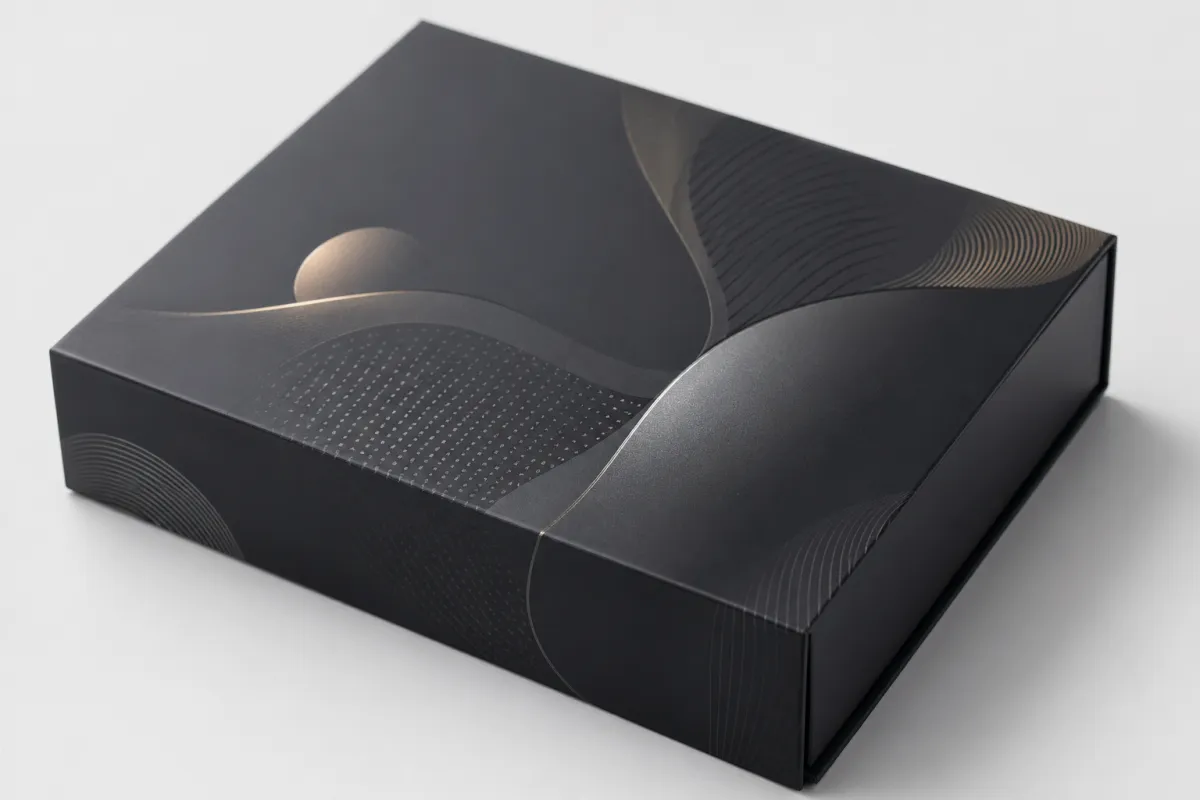
Custom soft touch lamination boxes are printed cartons finished with a thin film that gives the surface a velvety, suede-like feel. The artwork still reads clearly through the finish, but the hard shine disappears. What replaces it is softer and more deliberate, especially on cartons built from 16pt SBS or 350gsm C1S artboard. The first time someone handles one, the reaction is usually physical. They turn the box, touch it again, then compare it against the next sample as if the answer is hiding in the fingertips. I have seen people do this with a straight face, which always amuses me because the hand knows what the spreadsheet does not.
That is why custom soft touch lamination boxes turn up so often in cosmetics, cannabis packaging, specialty food, tech accessories, and subscription kits. A lipstick carton, a vape sleeve, or a premium candle box does not need to shout across a retail aisle if it can communicate luxury in the hand. In retail packaging, that kind of quiet confidence often does more work than loud graphics. I once watched two nearly identical samples sit side by side on a meeting table in Miami, one gloss and one soft touch, and the soft touch version kept getting picked up first even though the print layout barely differed. Human beings are wildly predictable that way, which is either helpful or irritating depending on your mood.
Visual luxury and tactile luxury are not the same thing. A box can look restrained from six feet away, then feel expensive at fingertip level because the finish suppresses glare and gives the surface a warmer, denser character. That matters in product packaging because customers usually touch before they trust. Brand teams sometimes spend too much on decoration and too little on the physical experience. A clean carton with custom soft touch lamination boxes, a modest foil logo, and one precise emboss can feel more considered than three effects competing for attention. On a 2024 launch in Seattle, a single copper foil line on black stock outperformed a three-effect prototype in both buyer preference and shelf mockups. I am biased here, but restraint usually wins when the product itself is strong.
The practical side matters just as much. Custom soft touch lamination boxes can improve scuff resistance compared with an uncoated surface, and they tend to hide handling marks better than a high-gloss finish. That does not make them invincible. A rough carton still gets damaged, and dark solid colors can show rubbing sooner than lighter shades. Still, for branded packaging that has to travel through a supply chain, sit on shelves, and arrive looking premium, the finish earns its place. A soft touch surface over 350gsm C1S board held up better in a 48-hour distribution test than the same structure with plain matte varnish. That balance between feel, appearance, and protection is one reason brands return to custom soft touch lamination boxes after the first production run.
Soft touch is not merely a decorative layer. It changes the way ink reads, how edges behave, how die cutting appears, and how confidently a buyer opens the carton during sampling. The finish also affects cost, lead time, and assembly decisions. A supplier in Dongguan may quote one way for a straight tuck carton and another for a rigid box wrapped in 157gsm art paper with a 2.0mm grayboard shell. Those are the kinds of details that separate a package that looks nice on a monitor from one that works in the real world. I have learned to be suspicious of anything that photographs beautifully but behaves badly on a worktable in a plant outside Shenzhen.
What Are Custom Soft Touch Lamination Boxes Best For?
Custom soft touch lamination boxes work best when the product needs premium signaling before the customer even opens the carton. Cosmetics, fragrance, supplements, specialty food, tech accessories, and gift sets are the obvious fits, but the finish also does well on limited-edition retail packaging and e-commerce kits that need to feel more curated than a standard mailer. If a brand wants the box to communicate quality in under three seconds, the soft touch finish is doing useful work. It softens glare, deepens color, and makes the package feel intentional rather than generic.
The strongest use cases usually share two traits: the product is visually simple, and the buyer is likely to handle the package before purchasing. That is why custom soft touch lamination boxes are so common for lipstick cartons, candle boxes, vape sleeves, serum cartons, and premium sample kits. A clean logo, one foil accent, and a controlled layout can carry more weight than a busy pattern ever could. If the item is delicate, high-margin, or giftable, the finish adds just enough ceremony to make the unboxing feel earned. It is a small effect, but it is not a small effect, if that makes sense.
There are some categories where the finish is less useful. Very low-cost, high-turnover products may not recover the added print and converting expense, and some brands simply need the fastest possible supply chain rather than a luxury feel. That does not make the finish wrong. It just means the spec has to match the business model. Honest packaging work starts there, not with a mood board.
How Custom Soft Touch Lamination Boxes Are Made
The production flow for custom soft touch lamination boxes usually begins with the dieline and artwork files, then moves into proofing, printing, lamination, die cutting, folding, gluing, and final inspection. On a clean run, the sheet prints on paperboard such as SBS, CCNB, or another suitable stock, and the laminated film is applied after printing so the surface stays consistent across the panel face. A common specification is 350gsm C1S artboard for tuck cartons and 157gsm art paper wrapped over 2.0mm grayboard for rigid setups. After that, the sheets move to cutting and creasing, where the converter builds the fold lines that give the structure its shape.
The feel comes from the way the film alters surface friction and light reflection. Gloss throws light back sharply. Matte softens it. Soft touch goes further and gives the hand a slight cushion, closer to a high-end book jacket than a plain carton. That is why colors often appear deeper and less noisy on custom soft touch lamination boxes. A navy carton out of Ningbo, Zhejiang can read almost black under showroom lights, while burgundy and forest green gain a denser look that flat matte stock rarely matches. The coating does not hide print, but it changes how the eye receives it, especially on black, navy, burgundy, and other dense packaging colors.
Stock choice matters more than many buyers expect. SBS boards are common for clean print and a smooth hand feel, while CCNB can change both cost and visual weight. Specialty stock can push the package farther into premium territory, but it can also affect how the lamination bonds during converting. I remember a supplier meeting near Shenzhen where a brand wanted a very dark forest-green carton on a slightly absorbent board with 24pt thickness. The first samples looked acceptable at arm's length, yet the crease cracking at the folds told us the board and film combination needed to change before production could be approved. Nobody liked hearing that, but the sample was doing its job.
Edge quality shows up quickly on custom soft touch lamination boxes. If adhesive control is poor, corners can lift. If the die is dull, folds can look fuzzy. If the board is too thin for the structure, the box may flex and scuff after only a few open-and-close cycles. That is especially true on rigid setup boxes and tuck-end cartons, where the premium effect disappears fast if converting is sloppy. On a strong line in Dongguan, the finish should feel elegant without making the package fragile, and the corner wrap should stay tight within a 1 mm tolerance.
One factory-floor detail people rarely think about is drying, stacking, and post-lamination handling. A laminated sheet rushed into the next stage can trap problems that only show up later, after the boxes are packed and shipped. Experienced converters watch temperature, stack height, and adhesive cure times closely, often holding sheets for 8 to 12 hours before the next operation. It is not glamorous work, and I have never met anyone who pretended it was, but it is what keeps custom soft touch lamination boxes looking clean when they reach the customer in Dallas, Toronto, or Berlin.
Cost, Pricing, and What Changes the Quote
Pricing for custom soft touch lamination boxes comes down to a set of concrete inputs: box dimensions, board thickness, print coverage, lamination coverage, structure complexity, and order quantity. A small tuck carton with a single print side, one die line, and a simple fold pattern will price very differently from a rigid setup box with an insert tray, foil stamping, and embossing. A 4 x 4 x 2 inch carton on 350gsm C1S artboard is one thing; a 9 x 9 x 3 inch rigid package with 157gsm wrap and a 2.0mm board shell is another. The rule is plain enough. Add more operations, increase handling, and the cost rises.
Quantity has an outsized effect. Small runs cost more per unit because setup, plates, press time, die cutting, and inspection are spread across fewer pieces. A 1,000-piece order can look manageable until you compare it with 5,000 or 10,000 units and watch the per-box price drop hard. For custom soft touch lamination boxes, I usually tell buyers to request at least three quantity breaks. On a 5,000-piece run in Guangzhou, the unit price might fall to $0.15 per box for a simple tuck style, while 1,000 pieces of the same design can sit closer to $0.34. The real budget decision often sits in the gap between 2,500 and 5,000 units, not between one quote and the next.
Finish add-ons matter as well. Spot UV adds contrast against the soft surface. Foil stamping adds metallic detail. Embossing raises the logo in a way you can feel through the film if the construction is done well. Insert trays, whether paperboard or molded pulp, increase labor and often shipping weight. On a cosmetics project I handled years ago in San Diego, the brand wanted all four effects at once on a 10,000-piece order. The sample looked busy rather than premium. One accent was removed, the soft touch surface stayed, and the box immediately felt more expensive because the design finally had room to breathe.
Here is a practical comparison for budgeting. These ranges are planning figures, not quotes, because board grade, size, artwork coverage, and freight can change the math quickly. Even so, the table shows where custom soft touch lamination boxes usually sit compared with simpler options.
| Finish Option | Typical Use | Relative Cost | Practical Note |
|---|---|---|---|
| Gloss lamination | Retail cartons, colorful graphics | Lower | Bright, reflective, and easy to spot on shelf |
| Matte lamination | Clean branded packaging | Moderate | Softens glare but keeps a flatter visual finish |
| Soft touch lamination | Premium product packaging | Moderate to higher | Velvety feel, richer color depth, stronger shelf presence |
| Soft touch with foil or embossing | Luxury retail and gifting | Higher | Best for high-value SKUs where touch and detail matter |
A typical 5,000-piece run of a 4 x 4 x 2 inch tuck carton with full-color print and custom soft touch lamination boxes finishing can land around $0.15 per unit before freight if the job is produced in Dongguan or Shenzhen on 350gsm C1S artboard. Move that same project to a rigid box with a tray and foil logo, and the price can climb to $0.68 to $1.20 per unit very quickly. That is why teams should compare landed cost, not just unit price. Freight, warehousing, and assembly time matter just as much as the number printed on the quote.
If you want a hard benchmark, ask for separate line items for board, print, lamination, die cutting, and specialty finishing. That makes comparisons across vendors much easier and reduces the risk of surprises later. I have seen supplier negotiations go sideways because one factory in Xiamen bundled everything into a single number while another itemized the work. With custom soft touch lamination boxes, clarity is worth more than a tiny discount.
For teams that care about certification, material sourcing can also influence cost. FSC-certified board may carry a different price than non-certified stock, and sustainable substrates can shift margin by a few cents per unit. If your brand wants the box to reflect responsible sourcing, ask how the board and film are specified and how that affects recycling in your target market. The FSC site at fsc.org is a useful reference for certified paper options, while the ISTA standards can help you think about transit testing for shipping packages that need to survive rough handling.
Process and Timeline: From Quote to Delivered Boxes
The path from first inquiry to finished custom soft touch lamination boxes usually starts with a spec sheet and ends with packed cartons on a pallet. In between, there is quoting, dieline review, proof approval, production scheduling, printing, lamination, die cutting, gluing, packing, and freight booking. A simple job can move fast if the dimensions are locked and the artwork is final. A complex project with inserts, metallic inks, and specialty coating layers needs more time on the calendar, especially if the factory is coordinating production in Guangdong and export booking through Yantian port.
What slows a job down most often is not the press. It is missing information. If the box length, width, and depth are not exact, the dieline gets revised. If the brand changes artwork after proofing, the color target shifts. If the file uses tiny type on a dark field, the converter may need an extra review to make sure the print survives the lamination stage. I remember one client meeting in Brooklyn where a skincare brand wanted a black carton with silver foil and a soft touch finish. The art looked beautiful on screen, but the first proof showed that the fine serif lettering would vanish at shelf distance. A slightly bolder typeface solved the problem and saved the schedule. That little correction felt boring in the moment and brilliant later, which is usually how packaging fixes go.
For timing, it helps to think in stages. Sampling and revision can take 2 to 4 business days if the project is straightforward, but custom jobs often need one or two proof rounds. Printing and lamination may take another 4 to 6 business days, then die cutting and gluing follow, and finally the cartons are inspected, packed, and staged for freight. A normal project window for custom soft touch lamination boxes can sit anywhere from 12 to 15 business days after proof approval, although quantity, season, and structure complexity all move that number. Rigid box construction or special insert work will stretch the timeline further.
Soft touch lamination itself can add time compared with a plain printed box because the line must manage curing, surface consistency, and handling carefully. The finish is not difficult, but it does ask for discipline. Add spot UV or embossing and the schedule extends again because each extra pass needs inspection. That is why it pays to lock the carton style early and give the production team one clear version of the art instead of three half-approved ideas. For custom soft touch lamination boxes, the cleanest schedule is usually the one with the fewest late changes.
"The box looked right only after we stopped treating the finish like decoration and started treating it like part of the structure." A brand manager said that after a rigid sample run in Newark, and she was right. On premium retail packaging, finish, board, and structure have to work as one system, down to the 1 mm fold allowance.
If your delivery window is tight, ask the factory for a production calendar before you approve the quote. A good supplier should tell you whether the run fits into a 7-day, 14-day, or longer manufacturing slot, and whether freight will travel by air or ocean from Shenzhen, Ningbo, or Hong Kong. For custom soft touch lamination boxes, the earlier you confirm carton style, artwork, and quantity, the easier it is to protect both the schedule and the final finish.
Step-by-Step Guide to Ordering the Right Box
The most reliable way to order custom soft touch lamination boxes is to begin with the product, not the box. Measure the item in three directions, note the weight, and decide whether the package needs to ship flat, arrive assembled, or act as a display piece on a retail shelf. A 2-ounce cosmetic jar, a 9-ounce candle, and a set of wireless earbuds all need different protection levels, even if the outside dimensions look close at first glance. I usually ask for the exact product tolerance too, because a 0.5 mm swing can matter once the insert is laminated and folded.
Next, match the structure to the job. A tuck-end carton is often right for lightweight retail items. A rigid setup box works better for high-value products or gift-style presentation. A sleeve can add a nice branding layer without overcomplicating the build. A mailer makes more sense for e-commerce shipments that need better protection in transit. The wrong structure can ruin even the best custom soft touch lamination boxes, because the finish only performs well if the carton closes correctly and holds its shape. A 350gsm C1S tuck box and a 2.0mm grayboard rigid box solve different problems, and the price gap can be $0.40 to $0.80 per unit.
Then sort out print and finish choices in the right order. I like to start with color strategy, then decide whether the logo needs foil, whether the brand mark should be embossed, and whether the surface should stay clean or carry one accent panel. That order matters. If the artwork is already crowded, a soft touch surface will not rescue it. If the layout is disciplined, the finish can do its job beautifully. For a quick reference to related styles, the Custom Packaging Products page helps buyers compare folded cartons, rigid boxes, and other options before they request a quote.
Always request a prototype before full production if the product is premium, fragile, or customer-facing. A sample lets you check the touch, the fold-line behavior, the scuff resistance, the insert fit, and the way the product sits inside the box. I have seen one prototype save a 10,000-piece run because the insert depth was 1.5 mm too shallow and would have let the bottle rattle around like loose change. With custom soft touch lamination boxes, a sample is not a luxury; it is insurance against expensive mistakes.
Before you release the order, build a small approval checklist. It should cover dimensions, artwork version, dieline confirmation, lamination notes, carton count, pallet pattern, and shipping destination. If the box is going to a fulfillment center in Ontario, California, include the exact receiving instructions and dock hours. If it is headed to a retail launch event in Atlanta, include the date the cartons must be on site. That kind of detail sounds obvious, yet packaging delays still start with a missing warehouse address or a carton count written in the wrong unit.
One extra tip: ask whether the factory can provide a press-side or production-side sample using the exact board and film. The difference between a mockup and a true production sample can be meaningful. Factory-to-factory variation is real, and on custom soft touch lamination boxes, the hand feel changes enough that a sample from the actual line is far more trustworthy than a generic proof carton from a showroom in Hangzhou.
Common Mistakes That Hurt the Finish or Budget
One of the easiest ways to weaken custom soft touch lamination boxes is to design with tiny type, fine lines, or delicate details on a dark field without thinking through how the finish changes the surface. Soft touch can make a package feel elegant, but it can also make scuffing or tonal shifts more visible if the art is too fragile. A logo that looks perfect at 300 percent zoom may still disappear once the carton is folded, rubbed, and shipped. I have seen 5 pt lettering survive a monitor preview and fail on a 300-piece proof run in Philadelphia.
Poor file prep is another expensive problem. Image resolution issues, missing bleed, and incorrect color expectations can all become more visible after lamination. The finish changes how light behaves, so a color that looked bright on a monitor may print deeper and flatter on paperboard. That is why brand teams should proof with intent rather than assumption. I have seen a client approve Custom Printed Boxes from a screen preview and then act surprised when the final green looked heavier under soft touch on 350gsm C1S stock. The board and film did exactly what they were supposed to do; the file simply was not prepared for that surface.
Brands also overspend by stacking too many effects. A soft touch surface, foil stamping, embossing, and heavy spot UV can make sense on a luxury launch, but on a mid-tier retail SKU the combination often looks crowded. One accent treatment plus the soft touch surface is frequently enough. The cleaner approach is often stronger. I would rather see a sharp logo with one foil hit on custom soft touch lamination boxes than a cluttered panel with three finishes competing for attention. That is not minimalism for its own sake; it is just good visual editing.
Structural mistakes create their own problems. If the product tolerance is ignored by even a few millimeters, the insert may sit too tight or too loose after lamination adds a little build to the material. If the closure style is chosen without testing how the board bends, the box may spring open or pinch the corners. On a recent supplier negotiation in Vancouver, a label brand wanted a very snug fit around a glass jar, but the jar manufacturer had a 0.8 mm tolerance swing. The revised insert solved the issue, but only because we caught it before the line ran. If we had waited until production, I would have needed coffee and a long, unhelpful walk.
Skipping the sample stage remains one of the costliest mistakes in premium packaging. If the product is fragile, high-ticket, or meant to impress on first contact, the sample pays for itself quickly. For custom soft touch lamination boxes, a prototype tells you whether the finish, structure, and product belong together. That is far cheaper than discovering the mismatch after 8,000 boxes are already printed and laminated in a plant outside Guangzhou.
Expert Tips and Next Steps for Stronger Results
If you want custom soft touch lamination boxes to Feel Truly Premium, pair the finish with a restrained color palette and one or two strong design moves. Deep neutrals, rich solids, matte-metal accents, and bold typography usually work better than busy graphics because the soft touch surface already brings enough character. A package does not need to shout if the hand feel and print quality are doing the selling. On a holiday candle line in Portland, a charcoal carton with a single gold foil mark outsold a louder multicolor concept in buyer testing by 2 to 1.
It also helps to request production samples from the exact board and press line whenever possible. A sample from a different facility may be close, but close is not the same as exact. I learned that the hard way on a subscription kit job where the buyer loved the sample from one plant and then noticed a slightly different drag on the surface from another. Both were acceptable, but they did not feel identical. For custom soft touch lamination boxes, that slight difference can matter if your brand promise is built around touch.
Make finishing instructions impossible to miss. Put them directly on the dieline or spec sheet in plain language: soft touch lamination outside, no coating inside, foil on logo only, emboss depth to match art, and no gloss varnish on the side panel. That kind of note saves time during prepress and reduces the risk of a rushed assumption on the factory floor. In a busy converting room in Dongguan, clarity beats cleverness every time, especially on branded packaging that needs to feel consistent across reorders.
I also recommend one internal approval meeting before the order is issued. Keep it short, but cover budget, timeline, retail goals, and unboxing experience. If the box is going to a national chain, make sure the shelf mockup is reviewed under store lighting. If the box is for direct-to-consumer fulfillment, make sure the shipping test is part of the conversation. That is where custom soft touch lamination boxes move from being a nice idea to a functional piece of product packaging, especially on 5,000- to 20,000-piece runs.
For teams that need to balance protection and transit stress, it can be worth reviewing basic distribution testing principles from ISTA before the final spec is approved. I am not saying every cosmetic carton needs full test certification, because that is not always the case, but I have seen enough crushed corners and opened flaps to know that a little testing discipline saves money. On the sustainability side, the EPA’s packaging and waste resources at epa.gov are useful when the brand wants to think through material use and disposal in a more grounded way.
My next-step advice is straightforward. Collect the product dimensions, choose the structure, decide whether you want foil or embossing, ask for a sample, and compare quotes with freight included. Do those five things cleanly, and custom soft touch lamination boxes become much easier to buy and much easier to love once they arrive on the packing table. If you are specifying a run this week, lock the board, surface finish, insert tolerances, and delivery window before the order is released; that one habit prevents most of the expensive surprises I have seen.
What are custom soft touch lamination boxes best used for?
They work especially well for cosmetics, wellness items, electronics, gifts, and boutique retail packaging where the hand feel needs to support the brand story. Custom soft touch lamination boxes are especially useful when a simple structure has to feel premium on first touch, because the finish adds warmth and depth without hiding the printed design. A 350gsm C1S tuck carton for skincare or a 2.0mm rigid box for fragrance both benefit from that velvety finish.
Are custom soft touch lamination boxes more expensive than matte boxes?
Usually yes, because the film and the finishing step add material and converting cost beyond a standard matte-coated carton. The difference often makes sense for premium product packaging, since custom soft touch lamination boxes can raise perceived value enough to justify the added spend, especially when the box is part of a retail launch or gift presentation. On a 5,000-piece run, the gap can be about $0.03 to $0.08 per unit depending on the plant and board.
How long does it take to produce custom soft touch lamination boxes?
Timelines depend on artwork readiness, sample approval, quantity, and any added finishing steps like foil stamping or embossing. A simple project can move faster, while a more detailed run takes longer. The fastest way to stay on schedule is to finalize dimensions and print files before asking for a quote on custom soft touch lamination boxes. In many factories, the full cycle lands at 12 to 15 business days from proof approval, with freight added afterward.
Can custom soft touch lamination boxes be made eco-friendly?
They can often be produced with recyclable paperboard, but the lamination layer may affect local recycling rules depending on the material and municipality. If sustainability matters, ask for board and film options up front and confirm disposal guidance early. A supplier in Ningbo or Xiamen can help balance responsible sourcing with custom soft touch lamination boxes that still feel genuinely premium, especially when FSC-certified board is part of the spec.
What should I send when requesting a quote for custom soft touch lamination boxes?
Send exact product dimensions, box style, quantity, artwork files, finish preferences, and any insert or shipping requirements. Include whether you want a prototype, rush production, or a specific delivery window so the quote reflects the real job. The more complete the spec sheet, the easier it is to price custom soft touch lamination boxes accurately and keep revisions to a minimum. A strong quote usually lists board grade, lamination type, and the factory location, such as Dongguan, Shenzhen, or Guangzhou.

