Custom Stand Up pouch bags are flexible packages built to stand upright on shelf while still delivering the protection, print area, and shipping efficiency buyers need. The format is simple on paper, but the commercial value comes from the details: film structure, seal quality, barrier performance, and whether the finished pack actually works on the filling line.
For procurement teams, the main advantage is not just appearance. A well-specified pouch can reduce freight cube, improve merchandising, and give more usable panel space than many jars, tubs, or cartons. That is why buyers usually start by comparing formats through Custom Packaging Products, then narrow the decision by product needs, cost, and production fit.
The key point is that the printed bag is only the outer layer. The real performance comes from the laminate, the closure, and the inspection standards behind it.
What custom stand up pouch bags are, and why they often beat rigid packaging
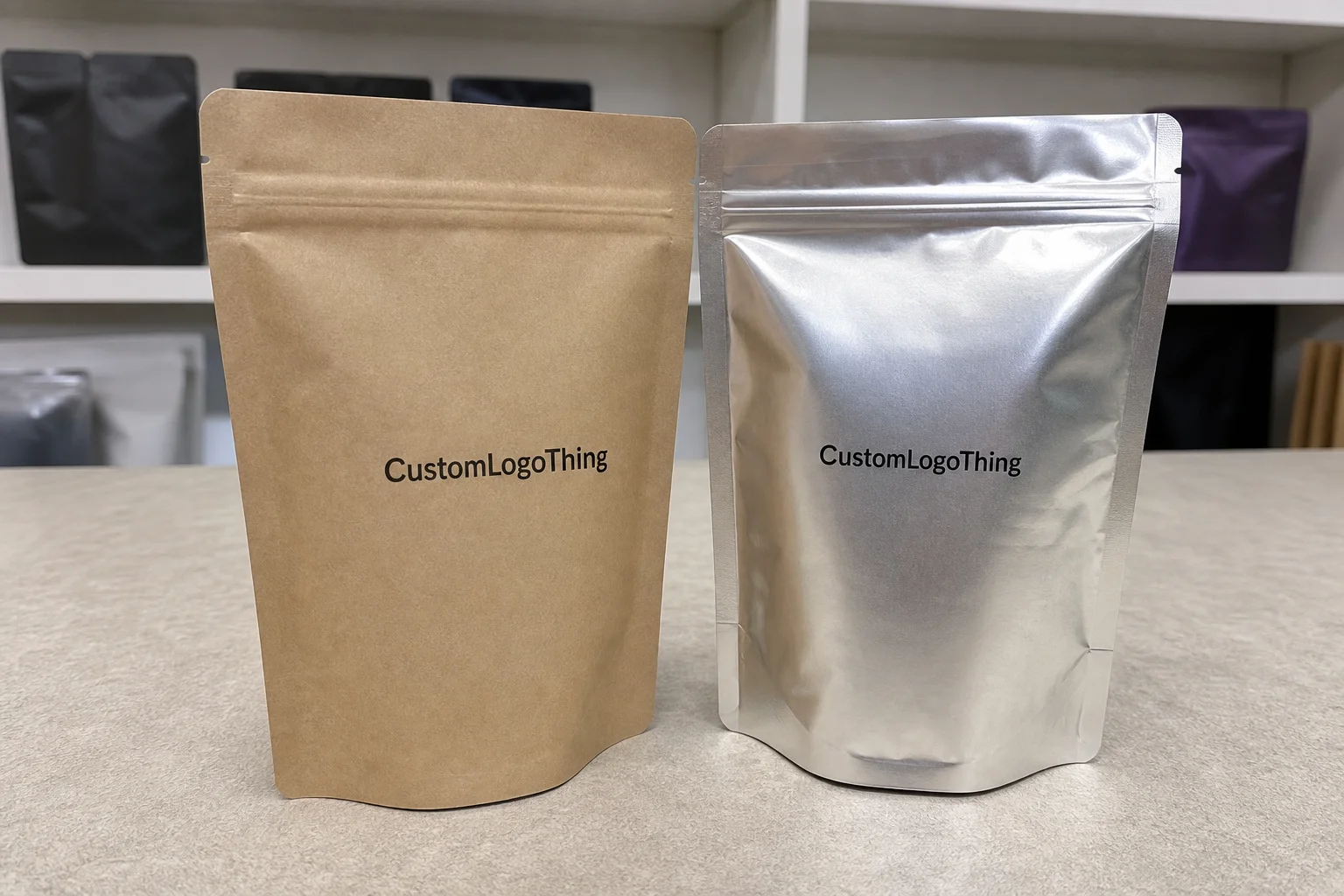
A stand-up pouch is a flexible package with side seals and a bottom gusset that expands enough to let the bag sit upright once filled. That upright shape gives it retail presence without the weight and freight penalties of a rigid container. In many distribution models, that matters more than unit price alone because shipping and storage costs can add up fast.
The format also gives brand teams more control over layout. Front panel, back panel, and gusset can each serve a different purpose: brand storytelling, ingredients, compliance text, or usage instructions. For products with a lot of required copy, that is often more practical than forcing everything onto a small label or carton panel.
Buyers commonly use the format for:
- Whole bean and ground coffee
- Snack mixes, jerky, dried fruit, and confectionery
- Pet treats and portioned pet food
- Protein powders, drink mixes, and baking blends
- Frozen vegetables and freezer-ready portions
- Sample packs and trial sizes
It tends to win when a product needs both shelf appeal and efficient logistics. That only holds if the barrier, seal, and fill specs are matched to the product. A good-looking pouch with the wrong structure is still a bad pack.
“The unit price was never the whole story. Once the product hit distribution, freight, shelf footprint, and seal consistency mattered more than the quote headline.”
How the structure works: seals, gussets, barriers, and closures
Most stand-up pouches are built from a front panel, back panel, side seals, a bottom gusset, and a top seal. The gusset creates the standing shape. The side seals provide structure and leak resistance. The top seal is the final barrier before the pack reaches the consumer, so it has to work cleanly with the filling process and the product itself.
Barrier choice is where many buying decisions narrow down. Moisture-sensitive goods need low water vapor transmission. Aroma-rich products need oxygen control. Oily products need films that resist migration and seal contamination. Light-sensitive items may require foil or metalized layers, while some brands prefer a clear window to show the product. Each option affects shelf life, appearance, and price.
Closures are just as important as the film. Common options include:
- Heat seal for maximum protection and tamper resistance
- Press-to-close zipper for repeat opening and reseal value
- Tear notch for easier first open
- Spout for liquids, sauces, or pourable concentrates
- Hang hole for peg display
- Tamper-evident feature for added consumer confidence
Each choice has a tradeoff. A zipper improves convenience, but it adds another sealing element that has to be formed properly. A spout improves dispensing, but it raises cost and can require different filling equipment. If the product needs a strong oxygen or moisture barrier, a weak reseal can shorten shelf life faster than better graphics can compensate.
For validation, many teams rely on ISTA shipment simulation and seal-strength checks such as ASTM F88. If the build includes paper components and sustainability claims matter, FSC chain-of-custody verification is worth confirming where applicable. Those standards do not choose the pouch for you, but they reduce avoidable risk.
Key specs buyers should lock down before they request quotes
The most common quoting mistake is starting with artwork before the product requirements are defined. A supplier cannot recommend a sensible size without knowing fill weight, product density, target dimensions, and the headspace needed for sealing. A 12-ounce roasted nut fill behaves differently from a 12-ounce powder, and that changes pouch height, width, and gusset depth.
Material choice comes next. Oily or aromatic products generally need stronger barrier layers than dry snacks. Fragile products may need better puncture resistance. Frozen products need films and seals that tolerate low-temperature handling without cracking. If the product will move through ambient storage, chilled distribution, frozen logistics, or humid retail back rooms, say so early. That can change the recommendation more than the artwork will.
These are the specs worth locking before quote requests go out:
- Fill weight and product density
- Target pouch dimensions and gusset depth
- Barrier requirement: moisture, oxygen, light, or odor control
- Closure type: zipper, heat seal, tear notch, spout, or hang hole
- Print coverage and finish: matte, gloss, or spot accent
- Window area, if any
- Compliance text, warnings, and language requirements
- Shipping destination and storage conditions
That list also helps if you are comparing pouches against custom printed boxes or another packaging format. A low quote is not a real savings if the structure fails shelf life, causes returns, or interrupts production.
Appearance decisions deserve the same discipline. Matte finishes usually feel more premium under warm retail lighting. Gloss can improve color pop and legibility for small type. A clear window can help if the product itself sells the pack, but it can also reveal settling or fill variation, which is useful only when the product quality supports it.
Cost, pricing, and MOQ: what changes the quote
Price is usually driven by five variables: size, structure, print coverage, finishing, and quantity. Larger pouches use more film. High-barrier laminates cost more. Heavy ink coverage increases print cost. Matte soft-touch finishes and specialty zippers add more. And when the order size is small, setup costs are spread across fewer units.
For broad planning, many buyers see low-MOQ digitally printed runs starting around $0.15 to $0.35 per unit for simpler builds at a few thousand pieces. Higher-barrier or feature-rich packs often move into the $0.30 to $0.70 range or above, depending on quantity and structure. Those are market ranges, not guarantees. A foil laminate with a zipper, window, and tight color matching will price differently from a plain printed pouch with heat seal only.
Typical pricing drivers are easier to read side by side:
| Option | Cost Impact | Buyer Tradeoff |
|---|---|---|
| Simple printed laminate | Lower | Good for dry goods and moderate shelf life |
| Foil or metalized barrier | Medium to higher | Better oxygen and light protection |
| Matte soft-touch finish | Medium | Premium shelf feel, higher unit cost |
| Press-to-close zipper | Medium | Improves reuse, adds sealing complexity |
| Window or custom shape | Medium to higher | Stronger shelf appeal, less standardization |
MOQ matters because it changes how much setup cost is absorbed by each pack. A quote at 10,000 pieces may be materially better than a quote at 1,000 pieces because artwork, prepress, and converting setup are spread more efficiently. That does not make the larger run the right choice for every launch. If the SKU is still unproven, inventory risk can outweigh the unit savings.
Separate one-time costs from recurring costs in every quote review. Plates, cylinders, prepress, and proofing belong in setup. Film, printing, lamination, converting, and packing belong in the per-unit bucket. If those are mixed together, a quote can look cheaper than it is.
For teams managing several SKUs, it helps to ask for a pouch quote and a second quote for Custom Packaging Products in a comparable format or finish. That makes the cost comparison cleaner and shows whether the pouch is genuinely the better fit or just the more familiar option.
Production process and lead time: from artwork to shipment
The production flow is predictable, but schedules slip in the same places. A normal job moves through brief intake, artwork review, proofing, print approval, lamination, curing, converting, inspection, and packing. If the structure is simple and the files are clean, the timeline stays manageable. If the dieline is wrong or the approval chain is slow, the calendar stretches quickly.
Sample lead time and production lead time are different. A sample may be available in a few business days if the supplier is using digital output or an existing structure. Full production takes longer because printing, curing, and converting each add time. For many custom printed pouches, 12 to 20 business days after proof approval is a reasonable planning window. More complex builds, imported materials, or crowded production calendars can extend that.
The delays are usually ordinary, not mysterious:
- Artwork arrives without a confirmed dieline
- Fonts are not outlined or linked files are missing
- Bleed and safe zones are ignored
- Compliance text changes after proofing starts
- The closure spec changes after sampling
That is why the file handoff matters. A buyer who sends final copy, artwork, dimensions, and shipping details up front usually gets a faster and more accurate response than one who sends a logo and asks the supplier to fill in the gaps. If you are comparing vendors, ask who owns prepress review and what happens when artwork needs correction. The answer affects both timing and cost.
Rush orders are possible, but they come with tradeoffs. Freight costs can rise, review cycles shrink, and there is less room to catch problems before the run starts. If the pouch is tied to a launch date, build in enough time for fill testing and transit testing instead of betting the release on a compressed schedule.
Common mistakes that make custom stand up pouch bags expensive
The first mistake is over-specifying the pack. Some buyers ask for the strongest barrier, the most premium finish, a zipper, a window, and a custom shape even when the product is dry and stable. That raises cost without adding useful protection. The best build is the one matched to the product, not the one with the most features.
The second mistake is skipping fill testing. A pouch that looks right on a spec sheet may stand awkwardly if the product settles differently than expected. Too much headspace makes the top look soft and underfilled. Too little headspace creates sealing risk. The difference between a strong shelf face and a weak one can be only a few millimeters.
The third mistake is treating artwork as a late-stage detail. If the dieline is not confirmed, prepress fixes can slow the job and increase reprint risk. Bad bleed, low-resolution images, and late copy changes are not cosmetic errors; they are production errors. Every correction ripples into setup and approval time.
The fourth mistake is forgetting the filling line. A pouch that looks excellent in a presentation can fail at the sealer if the jaws are not set up for that film or if powder, oil, or dust contaminates the seal area. Packaging and operations cannot be separated cleanly. The retail pack still has to run.
If the product cannot seal consistently on the line, shelf presentation will expose the problem faster than the artwork can hide it.
There is also a testing gap some teams overlook. A pouch can look fine in inspection and still fail under transit stress. If the product is fragile or sold through ecommerce, ask for tests aligned with the shipment profile, including drop, vibration, or compression checks as appropriate. A small test budget is cheaper than replacing damaged inventory.
Expert tips for choosing the right pouch and next steps
Start with product behavior, not trend. Moisture, oil, aroma, brittleness, and puncture risk should drive the spec. A coffee pouch and a protein powder pouch may look similar from the front, but their barrier priorities are different. So are their closure needs. So is the acceptable failure rate.
Then make the quotes comparable. Every supplier should get the same size, structure, print count, quantity, finish, closure type, and destination. Without that, you are not comparing pricing; you are comparing assumptions. The lowest quote often excludes a feature you thought was included.
A practical sample plan usually includes:
- Fill the pouch with the actual product, not a surrogate if possible
- Check whether it stands level on shelf or in carton
- Run the seal through the intended pack line
- Test drop, compression, and reseal performance
- Store samples under expected heat or humidity for observation
If the product is going to retail, judge it from three feet away, not only from a design file. A clean front panel, readable flavor hierarchy, and strong contrast between product name and variant color matter more than a decorative finish in the wrong place. Good branded packaging is legible, credible, and easy to replenish.
For teams choosing between pouches, cartons, or another flexible format, the decision is usually straightforward once the variables are lined up: protection, freight, shelf display, and production fit. Pick the format that loses least on the factors that matter most. If the pouch wins on unit economics but fails on protection, it is the wrong pack. If it wins on both, the case is clear.
How do I choose the right size for custom stand up pouch bags?
Start with fill weight and product density, not just volume. A dense snack mix needs different dimensions than a fluffy powder even when both weigh the same. Leave enough headspace for sealing and for the pouch to stand properly, then confirm the size with a sample fill before approving production.
Are custom stand up pouch bags cheaper than boxes or jars?
Often, yes, at the landed-cost level, but not always on a unit-price-only basis. Pouches usually reduce shipping cube and can lower freight cost, while jars and boxes may use more material and occupy more space. The lower-cost option depends on product protection, shelf display, and the full supply chain cost.
What affects the price of custom stand up pouch bags the most?
Material structure, size, quantity, and print coverage are the biggest drivers. Specialty zippers, foil layers, windows, matte finishes, and custom shapes raise cost quickly. Low-MOQ orders usually carry a higher unit price because setup cost is spread across fewer bags.
How long does production usually take for custom stand up pouch bags?
Timeline depends on artwork readiness, proof approval, and material availability. Samples and first-article checks can add days or weeks before mass production starts. Freight method and rush scheduling can shorten delivery, but they do not remove approval bottlenecks.
What should I send to get an accurate quote for custom stand up pouch bags?
Send the product type, fill weight, target dimensions, quantity, barrier requirement, print count, finish preference, closure type, and any compliance text that must appear on pack. If possible, include artwork, dieline files, and the shipping destination so the quote reflects real production conditions.


