Buyer Fit Snapshot
| Best fit | Custom Standup Pouches with Window projects where brand print, material claims, artwork control, MOQ, and repeat-order consistency need to be specified before quoting. |
|---|---|
| Quote inputs | Share finished size, material target, print colors, finish, packing count, annual reorder estimate, ship-to region, and any compliance wording. |
| Proofing check | Approve dieline scale, logo placement, barcode or warning zones, color tolerance, closure strength, and carton packing before bulk production. |
| Main risk | Vague material claims, crowded artwork, missing packing details, or unclear freight terms can make a low unit price expensive after revisions. |
Fast answer: Custom Standup Pouches with Window: Film, Print, MOQ, and Carton Packing should be specified like a repeatable production item. The safest quote records material, print method, finish, artwork proof, packing count, and reorder notes in one written spec.
Production checks before approval
Compare the actual filled-product size with the drawing, then confirm tolerance on folds, seals, hang holes, label areas, and retail display edges. Reserve space for logos, QR codes, warning copy, and material claims before decorative graphics fill the panel.
Quote comparison points
Review material grade, print process, finish, sampling route, tooling charges, carton quantity, and freight assumptions side by side. A quote is only useful when the supplier can repeat the same color, closure quality, and packing count on the next order.
Custom standup pouches with window earn attention quickly because they let shoppers verify the product before they buy it. That small bit of visibility can carry more weight than a long claims panel on a crowded shelf, especially when freshness, texture, shape, or fill quality is part of the decision. A clean window can sell trust before anyone reads a single line of copy.
I have seen packaging teams spend weeks polishing a front panel, only to realize the product itself was doing half the work. That is not a bad thing. It just means the window has to be planned as part of the package, not tacked on as decoration. If the build is thoughtful, custom standup pouches with window look deliberate and premium. If the build is careless, the bag starts to feel improvised, even if the print is crisp.
Brands use this format for snacks, tea, coffee, bath salts, pet treats, powdered mixes, dried fruit, and sample kits because the contents can carry part of the story. When the product looks clean and consistent, the window gives it credibility. When the fill is uneven or messy, the window exposes the problem immediately. That is not a flaw in the format; it is part of the deal with custom standup pouches with window.
For teams building retail packaging or e-commerce-ready product packaging, the value is easy to see. Visibility builds confidence, and confidence helps conversion. For brands managing package branding across more than one format, custom standup pouches with window can sit naturally beside Custom Packaging Products, custom printed boxes, and related branded packaging without feeling like they came from a different system.
The practical side matters as much as the visual side. A smart buying process looks at the build, the cost drivers, the lead time, and the decisions that should be locked before artwork is approved. Those are the parts That Save Money, keep timelines from drifting, and prevent the kind of reprint that eats both margin and patience when ordering custom standup pouches with window. Getting that right is not fancy; it is just good packaging discipline.
Custom standup pouches with window: why the window matters first
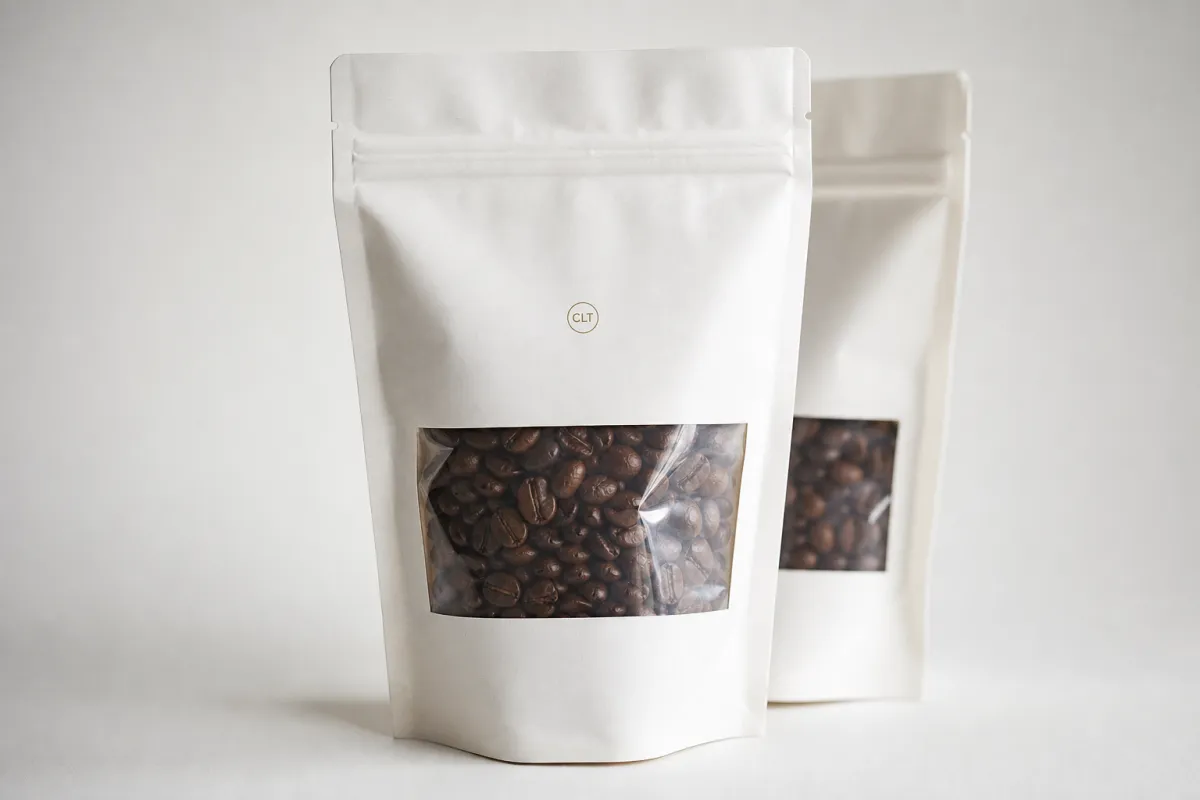
Shoppers trust what they can verify with their own eyes. A clear window gives them that verification in a glance, which matters on shelves where decisions happen quickly and attention is scarce. Most buyers are not reading a wall of product language and weighing every promise. They are looking for freshness, consistency, and a package that feels honest.
Custom standup pouches with window are gusseted flexible pouches that stand upright and include a transparent viewing area. That window can take the form of a die-cut opening with a clear patch sealed into place, or it can be built into the pouch as a clear panel. The mechanics vary, but the purpose stays the same: let the product be seen while keeping the benefits of flexible packaging.
For snacks, tea, coffee, dry goods, powders, pet treats, bath salts, and sample kits, the window gives the contents a voice. A good granola blend looks different from a generic one. A specialty coffee blend can show bean size and roast tone. Pet treats can reveal shape and consistency. That is one reason custom standup pouches with window often outperform opaque pouches in categories where visible proof matters.
Decorative windows and functional windows are not the same thing. A decorative window adds style. A functional window helps the product sell by letting the buyer inspect color, texture, and quantity. That inspection builds confidence, and confidence is what turns a pouch into a purchase. For custom standup pouches with window, that distinction is central.
A clear window sells confidence, but only when the fill looks clean, the seal looks tight, and the artwork gives the product enough room to breathe.
Some brands treat the window as a styling device. That approach usually falls apart in production. The window belongs to the selling system, not just the visual system. Product presentation has to be clean, pouch proportions have to make sense, and the graphic layout needs to frame the view rather than crowd it. Good custom standup pouches with window make the contents feel intentional instead of accidental.
Retail packaging benefits from that honesty. Buyers can see what they are getting, which reduces hesitation and makes the package easier to trust. That is why custom standup pouches with window remain a strong option for brands that need practical performance and solid package branding in the same format.
There is also a psychological detail that people sometimes miss. The visible product gives a shopper a fast sense of value, even before they understand the full ingredient story or brand positioning. That little visual proof can shorten the decision cycle, which is why window placement matters so much. If the window is hidden by shelf strips, stickers, or crowded copy, the pouch loses one of its main selling tools.
How custom standup pouches with window work
The structure is straightforward, which is exactly why it gets underestimated. Most custom standup pouches with window use layered film: an outer print surface, a barrier layer, a sealant layer, and a bottom gusset that lets the pouch stand upright. Add a zipper, tear notch, or hang hole, and the package moves from simple flexible packaging into a shelf-ready retail format.
The window usually comes in one of two ways. One approach uses a die-cut opening with a clear patch that is laminated or sealed into place. The other uses a transparent film section built directly into the pouch structure. The first route can create more visual impact. The second can be easier to handle on certain production lines. For custom standup pouches with window, the right choice depends on the product, the print method, and the supplier's converting setup.
Barrier performance changes once a window is introduced, and buyers often underestimate that shift. Moisture-sensitive, oxygen-sensitive, and aroma-sensitive products need more than good looks. The pouch still has to protect freshness and shelf life. A beautiful bag that fails at preservation is not premium packaging. It is an expensive mistake with a nice face.
Film options usually include matte, gloss, kraft-look, foil, and opaque structures. Matte gives a softer, more restrained finish. Gloss pushes color harder and gives the package more shine. Kraft-look supports natural or earthy positioning. Foil can add shelf presence and light protection. Opaque materials help focus attention on the design while making the window feel more purposeful. For custom standup pouches with window, the finish should support the product story instead of competing with it.
The bottom gusset gives the pouch its standing shape. Gusset depth, fill weight, and seal quality work together to determine how steady the bag looks on shelf. Too little fill, and the pouch slumps. Too much fill, and the top distorts. Weak seals or flimsy material can make the front panel wrinkle or lean. None of that helps retail presentation.
A useful rule: the more product the shopper can see, the more the package has to behave like a display piece. Clean seals, trimmed edges, and enough stiffness to hold the face panel flat all matter. Good custom standup pouches with window handle protection, presentation, and shelf behavior at the same time.
One detail worth checking early is how the pouch is filled. Some products settle after filling, which can change how the window reads once the package is upright and sitting for a few hours. If the product shrinks, shifts, or leaves headspace, the window can start to look less full than the mockup suggested. That is not a defect, but it is something the packaging team should account for before production starts.
Cost, pricing, MOQ, and quote basics
Pricing for custom standup pouches with window depends on size, film structure, print method, zipper type, finish, and the way the window is built. Larger pouches use more material. Multi-layer barrier films cost more than basic structures. Special finishes add cost. A matte soft-touch effect or a metalized look usually moves the number up. A custom-shaped window or a zipper with a heavier feel can do the same.
MOQ matters because setup costs get spread across the run. Smaller quantities usually cost more per unit, and there is no shortcut around that. A 1,000-piece order and a 10,000-piece order are not the same job, even if the artwork is identical. For custom standup pouches with window, smaller runs make sense for launches, but the unit price usually drops once volume moves into the mid-thousands.
A realistic way to think about it: many standard-sized custom standup pouches with window may land in the rough range of $0.18 to $0.45 per unit at 5,000 pieces, depending on structure and print coverage. More complex builds, heavier barrier layers, and specialty finishes can raise that. If the run is much smaller, unit cost typically rises quickly. That is normal packaging math, not a hidden trick.
Unit cost is only part of the picture. The quote should show, or at least separate, printing, setup, proofing, freight, and any special tooling. If the pouch needs plates or custom dies, that affects the total. If freight is international, shipping can change the final number enough to matter. Comparing two quotes for custom standup pouches with window without checking those details is how people end up with the wrong package on paper and the wrong package in reality.
Side-by-side spec matching keeps the comparison honest. Match pouch size, material thickness, barrier level, window style, zipper type, finish, quantity, and delivery terms. That is the only fair way to compare suppliers. A cheaper quote can hide a thinner film, a weaker barrier, or a longer production window. For custom standup pouches with window, apples-to-apples review is not optional.
| Option | Typical Use | Approx. Unit Cost at 5,000 | Strengths | Tradeoffs |
|---|---|---|---|---|
| Basic printed pouch with clear patch | Dry snacks, samples, low-moisture goods | $0.18-$0.28 | Lower cost, simple shelf appeal, fast to spec | Less barrier headroom, fewer finish options |
| Barrier pouch with zipper and matte finish | Coffee, tea, pet treats, premium dry foods | $0.26-$0.42 | Better freshness, stronger branding, premium feel | Higher MOQ pressure, more setup variables |
| Foil or high-barrier pouch with custom window layout | Fragile, aromatic, or longer-shelf-life products | $0.34-$0.62 | Better protection, stronger presentation, better shelf pop | Higher cost, longer lead time, tighter proofing needed |
Most suppliers can quote sample packs, prototype runs, and production tiers as well. Ask for pricing at two or three quantities. That shows where the cost actually drops. A supplier who can explain those breakpoints clearly is usually easier to work with than one who treats the numbers like secret code. For custom standup pouches with window, straightforward quoting is a good sign.
Also ask whether the window treatment changes the quoted material waste. Some layouts require more trim than others, and that can affect the final cost more than buyers expect. A quote that looks low on paper but hides extra waste or separate tooling charges is not really low; it is just incomplete.
Production process and timeline: from artwork to delivery
Production starts with a useful brief. Vague requests slow everything down. A strong brief names the product type, fill weight, barrier needs, closure style, target finish, and the exact role the window has to play. From there, the supplier checks or prepares the dieline, and the artwork team confirms safe zones, bleed, and the final window position. That is the point where custom standup pouches with window either move smoothly or begin collecting avoidable delays.
The usual sequence is brief, artwork prep, dieline review, proof approval, printing, lamination, curing, converting, packing, and shipment. Each step can take a day or several, depending on complexity and workload. Delays tend to show up during proof approval or after a late design change. If the window moves after signoff, the supplier may need to revise tooling or recheck alignment. That is normal custom packaging work, not a crisis.
Typical turnaround for custom standup pouches with window often falls around 12 to 20 business days after proof approval, depending on complexity and supplier capacity. Faster jobs are possible. Once the structure includes specialty finishes, unusual sizes, or a more complex window, the schedule usually stretches. Shipping time sits outside that production window. Domestic freight may take a few days. International freight can take longer, and customs can add a layer of waiting no one asked for.
Ask exactly what the quote includes. Is it production only, or production plus freight? Is the lead time counted from artwork submission or from proof approval? Are samples available before the production run? Those are basic questions, but they prevent more trouble than most buyers expect. With custom standup pouches with window, timing often depends less on the factory than on how clearly the buyer makes decisions.
Rush orders cost more because they compress a lot of moving parts. The supplier may need to fit the job into a tighter print schedule, fast-track quality checks, or use more expensive shipping. Sometimes that is worth it. Sometimes it is simply a poor plan wearing a deadline. If the launch date is not fixed, there is little sense in paying for speed that only matters because the timeline was not set earlier.
Brands that also manage custom printed boxes or other branded packaging items should coordinate the pouch timeline with the rest of the launch package. Packaging should arrive in the order the launch actually needs. A well-made pouch that shows up after the campaign has started is just a late design file with shipping costs attached.
A practical habit that saves a lot of back-and-forth is to confirm one final approval packet with the supplier. Include the artwork file, dieline version, print notes, closure choice, and the approved window placement in a single place. That kind of housekeeping sounds boring, but it keeps teams from approving the right art on the wrong layout. And yes, that happens more often than anyone wants to admit.
Key factors to choose before you order
Start with the product itself. That sounds plain, but it gets skipped all the time. Dry snacks behave differently from oily nuts. Coffee behaves differently from tea. Aromatic products need stronger barrier protection than a cosmetic sample kit. The right custom standup pouches with window for a crunchy trail mix will not automatically suit a powder blend or a premium pet treat.
Window size and placement deserve more attention than they usually get. Make the window too large, and the package loses branding space and starts to feel thin. Make it too small, and the window becomes decoration instead of a selling tool. The strongest custom standup pouches with window usually show enough product to prove quality while preserving enough face space to support the brand.
Closure features change the way the pouch is used. Zippers make sense when reseal use and shelf appeal matter. Tear notches help with first opening. Hang holes suit peg display. Spouts can work for certain liquids or finer use cases, though they are not the answer for every product. For custom standup pouches with window, the closure should match how customers actually open, store, and use the contents.
Design strategy matters more than decoration. Use the window as part of the layout. Frame it. Balance it with type, negative space, and the product name. Do not bury it under a wall of claims. If the window is the hero, let it stay the hero. That approach creates cleaner retail packaging and helps the product speak for itself. A well-composed layout can make custom standup pouches with window feel expensive without wasting ink or crowding the face panel.
Compliance and testing deserve a place in the conversation too. If the pouch is for food contact, ask for material guidance that fits the product category. If the bag needs to run on a filling line, check machine compatibility before approval. If transit will be rough, ask about shipping tests such as ISTA protocols. The International Safe Transit Association outlines common transit test methods at ista.org, which is useful when packaging has to survive more than a gentle handoff. For FSC-related paper questions, the standards and certification information at fsc.org can help if your brand cares about responsibly sourced paper components.
If a broader packaging reference would help, packaging.org is a useful place to compare terminology and practical packaging guidance. It will not choose the pouch for you, but it does make supplier conversations sharper. That usually leads to better decisions.
Checklist before approval:
- Product type and sensitivity: moisture, oxygen, aroma, or oil exposure
- Target fill weight and finished pouch size
- Window size, position, and whether it is die-cut or clear-panel based
- Closure type: zipper, tear notch, hang hole, or spout
- Finish: matte, gloss, kraft-look, foil, or opaque
- MOQ, unit cost at multiple tiers, and landed cost
- Lead time, sample schedule, and freight method
That checklist is plain, but it saves expensive mistakes. For custom standup pouches with window, most production headaches show up when one of these choices gets made too late or not at all.
Before you approve anything, place a filled sample on a shelf or table and step back a few feet. That quick check often reveals what a mockup hid: the window may sit too low, the logo may compete with the product view, or the finish may reflect light in a way that hurts readability. Small observations like that are the kind that save a run.
Common mistakes with custom standup pouches with window
The first mistake is making the window too large. Bigger does not always mean better. A huge window can make the pouch look cheap, reduce room for branding, and expose product that was never meant to be displayed in that way. Strong custom standup pouches with window keep visibility and design discipline in balance.
The second mistake is ignoring what the window reveals. If the product pieces are inconsistent, dusty, broken, or unevenly filled, the window turns into a liability. It stops being an asset and becomes proof that the product was not packed carefully. That is a hard lesson, and it shows why custom standup pouches with window are as much about product presentation as they are about printing.
The third mistake is underbuilding the barrier. A pouch can look attractive and still fail at preservation. Moisture-sensitive products, coffee, tea, powders, and aromatic goods all need the right film structure. Skip that part, and the package may arrive looking fine while the product inside declines quietly. That is not a design issue. It is a product loss issue. With custom standup pouches with window, barrier protection is part of the design, not a separate detail.
The fourth mistake is approving artwork before the dieline is confirmed. Bleed can shift, the gusset can take more space than expected, and the window can land closer to a logo than planned. The fix is simple: confirm the dieline, confirm the window position, then finish the design. That order feels slower, but it is still cheaper than reprinting custom standup pouches with window that missed the layout.
The fifth mistake is choosing on price alone. The lowest number is rarely the best answer. Cheap can mean weak communication, delayed production, a thinner film, or a pouch that looks fine in a quote and disappointing in hand. A better approach is comparing specs line by line and deciding which version of custom standup pouches with window actually supports the product, the shelf, and the brand.
One more mistake shows up during launches: the pouch is tested only as a digital mockup. That is risky. Screen renders do not show how stiff the bag feels, how clear the window actually is, or whether the zipper is pleasant to use. A physical sample catches those issues early. For custom standup pouches with window, tactile judgment matters more than a polished render.
There is also a quiet operational mistake: forgetting that the window changes how sales samples, photo shoots, and retail teams talk about the product. Once the contents are visible, everyone starts judging what they can see. That can be an advantage if the fill is strong and consistent. If not, the package becomes harder to defend, which is exactly why the filling step deserves as much attention as the art file.
Expert tips and next steps for custom standup pouches with window
Start with one hero SKU. A launch with too many sizes and finishes makes it harder to learn anything useful from the first run. A focused test gives real feedback on standability, fill appearance, zipper behavior, and how the window reads under store lighting. That matters with custom standup pouches with window, because the shelf result is often stronger or weaker than the render suggests.
Ask for physical samples, not just pictures. A sample lets you check window clarity, seal stiffness, and how the pouch behaves when filled to the target weight. If the product is going through retail packaging review, this is the point where anything awkward or fragile becomes obvious. Good custom standup pouches with window should feel sturdy and controlled, not flimsy or overworked.
Compare two spec directions side by side. One should favor lower unit cost. The other should favor shelf impact and barrier strength. That comparison usually makes the tradeoff clear. The cheaper version might save a few cents but feel less premium. The better-looking version may cost a little more and still deliver better conversion. That is a far better conversation than staring at one quote for custom standup pouches with window and pretending it answers everything.
Build a simple packaging checklist before requesting quotes. Include product type, fill weight, window size, closure, finish, MOQ, target delivery date, and whether you need branded packaging support across other items like Custom Packaging Products. Once those pieces are set, quotes become easier to compare and harder to misread.
The shortest practical path forward looks like this:
- Pick the product and define the shelf problem the pouch needs to solve.
- Request a quote with exact size, structure, and window placement.
- Ask for a sample or proof before final approval.
- Confirm the lead time from proof approval, not from the first email.
- Order a small test run of custom standup pouches with window before scaling the format.
If you are building package branding across multiple lines, keep the design system consistent. The pouch should feel related to the rest of the product packaging, even when the formats differ. A strong brand can move between flexible pouches, labels, and custom printed boxes without looking fragmented. That continuity carries more weight than most teams admit.
The practical truth is simple. Custom standup pouches with window work best when the product is worth seeing, the structure protects what is inside, and the artwork is built around reality instead of wishful thinking. Get those three pieces right and the pouch earns its place on shelf. Miss them, and you are paying for a bag with a hole in the conversation.
If you are ready to move from concept to production, the next smart step is to lock the product spec, choose the window size based on what the shopper should actually see, and request a sample that is filled to the real target weight. Do that before any final artwork approval, and the rest of the process gets a lot less messy.
Frequently asked questions
What products work best in custom standup pouches with window?
Products that benefit from visible texture, shape, or freshness cues usually perform well, including snacks, tea, coffee, pet treats, and bath items. Dry goods and shelf-stable products are the easiest fit, although barrier requirements still need to match the product's sensitivity. If the contents look inconsistent or messy, custom standup pouches with window can hurt sales instead of helping them, so fill quality matters.
How do custom standup pouches with window affect shelf life?
The window can reduce barrier performance if the structure is not designed correctly, so material selection matters. Good pouch specs balance visibility with moisture, oxygen, and aroma protection based on the product's needs. For sensitive products, ask for barrier testing or a material recommendation before approving the final build. That is especially true for custom standup pouches with window used for coffee, tea, or other aroma-sensitive items.
What is the usual MOQ for custom standup pouches with window?
MOQ varies by supplier, print method, and pouch size, so there is no universal number that actually helps anyone. Smaller runs usually carry a higher unit cost because setup is spread across fewer pouches. Ask for pricing at multiple volume tiers so you can see where the cost drops meaningfully for custom standup pouches with window.
How long does production usually take for custom standup pouches with window?
Timeline depends on artwork approval, material availability, printing method, and shipping distance. A simple job moves faster than a complex pouch with specialty finishes or a unique window shape. The fastest way to lose time is to keep changing specs after proof approval, which is a common reason custom standup pouches with window slip past the original schedule.
How should I compare quotes for custom standup pouches with window?
Match the specs exactly: size, film structure, window style, zipper type, finish, quantity, and shipping terms. A lower quote may hide setup charges, weaker materials, or a longer lead time. Compare total landed cost, not just the per-unit number, or you will buy the cheapest mistake in the room. That rule applies to custom standup pouches with window more often than people like to admit.

