Custom Stickers Dallas: Buy the Right Print Run Fast
A Dallas coffee brand orders beautiful iced cup stickers. Two hours later, half of them are curling at the edges because nobody asked about condensation. Cute design. Bad specs. That is the kind of mistake buyers make constantly, and yes, it is avoidable.
Custom stickers are printed adhesive pieces used for packaging, promotions, retail products, shipping inserts, event handouts, window displays, school programs, restaurant launches, real estate promos, and brand giveaways. Simple product, right? Not really. A sticker is only simple after the material, adhesive, surface, finish, temperature, moisture exposure, and application method have already been handled.
The goal is not to buy the cheapest sticker. Cheap can be fine. Wrong is expensive. A dry paper sticker on a bakery box may perform beautifully. Put that same sticker on a cold juice bottle, and it may fail before the customer reaches the parking lot. Brilliant.
What Custom Stickers Dallas Buyers Actually Need to Know
Most sticker problems start with vague buying. “I need 1,000 logo stickers” is not a spec. It is a wish. A better request sounds like this: “I need 1,000 2.5-inch matte white BOPP stickers for refrigerated glass bottles, hand-applied, needed in 10 business days.” That gives a printer something useful to quote, proof, and produce.
There are a few buyer-friendly terms worth separating. Stickers are often individual pieces, kiss-cut sheets, or handouts. Labels usually go on product packaging at scale, often on rolls for faster application. Decals are typically built for longer wear, such as windows, vehicles, laptops, or outdoor surfaces. Roll labels are made for speed, spacing consistency, and applicator compatibility.
Custom stickers Dallas buyers often need speed because local campaigns move fast. Pop-ups get approved late. Restaurant openings shift. Trade show freight deadlines sneak up. Retail restocks happen right after the first batch sells faster than expected. A local or regional print path can help with hands-on support, delivery coordination, and practical problem solving across Dallas, Fort Worth, Plano, Irving, Arlington, and nearby markets.
Practical rule: Choose the sticker around the surface and environment first, then worry about the finish. Pretty is not a performance spec.
For branded packaging, custom stickers can be a smart bridge before moving into fully printed cartons, sleeves, or Custom Labels & Tags. They let new brands test designs, change seasonal messages, and keep inventory risk lower. That flexibility matters when the product line is still moving, the ingredient panel may change, or a retailer has not yet committed to a full packaging run.
How Local Sticker Printing Works From File to Finished Piece
A normal sticker order follows a predictable path: quote request, size confirmation, quantity selection, material choice, artwork review, proof, print, cutting, finishing, quality check, packing, and shipping or pickup. Skip one of those steps and the risk moves somewhere else. Usually onto your invoice.
Digital printing is common for short and medium runs because setup is efficient, variable designs are easier, and quantities from roughly 100 to 2,500 pieces can often make sense. Flexographic printing is better for high-volume roll labels, especially if the same label runs by the tens of thousands. Specialty processes cover metallic stock, clear film, textured material, foil accents, holographic effects, and premium finishes used in retail packaging.
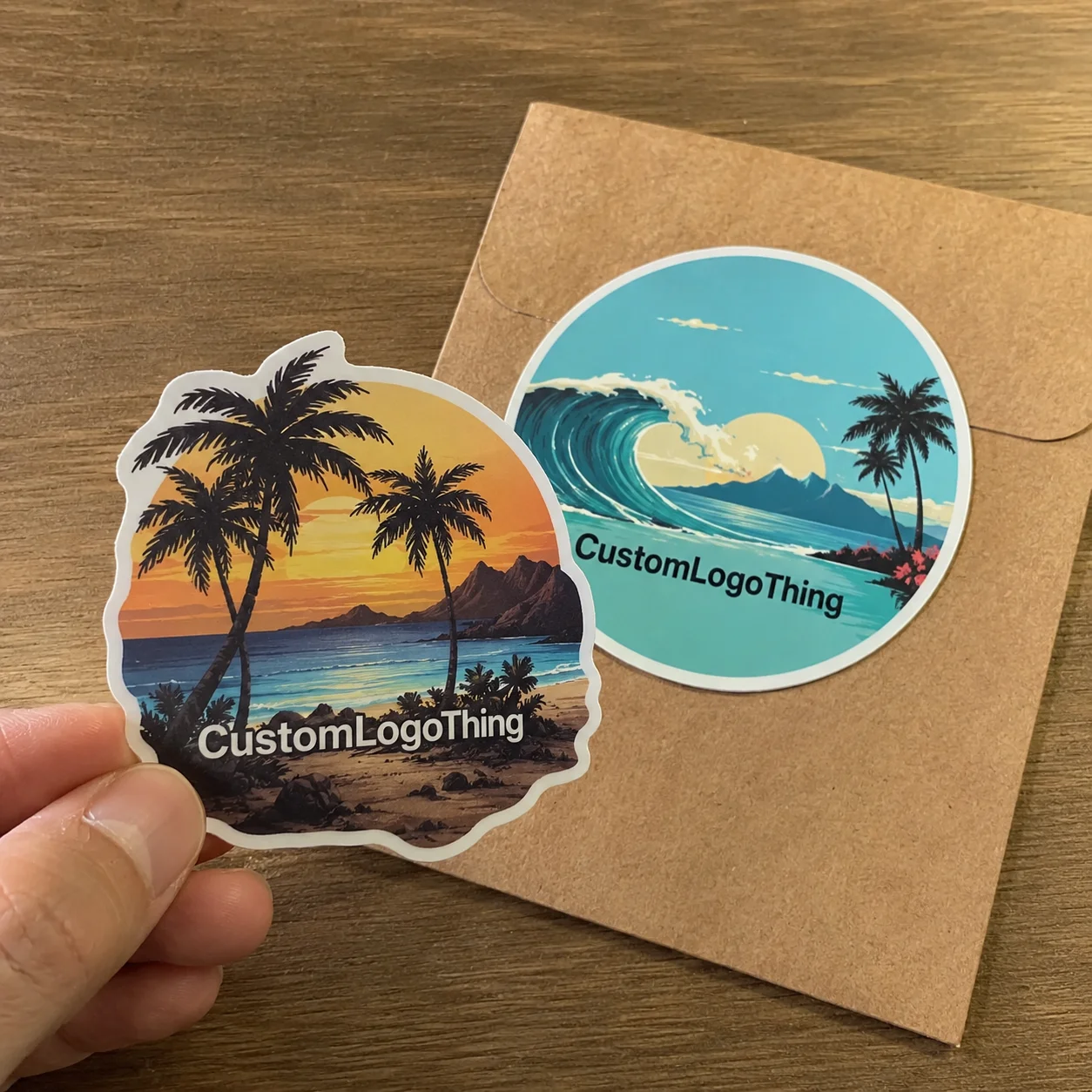
Cut style changes how the sticker feels in hand. Kiss-cut stickers are cut through the sticker layer but not the backing, so they peel easily. Die-cut stickers follow the final shape and look polished for giveaways or product packaging. Sheet stickers group several designs on one sheet, which is handy for promo packs. Roll stickers are built for fast peeling, consistent spacing, and hand or machine application.
Artwork matters more than buyers want to admit. Vector files such as AI, EPS, and clean PDF files are best for logos, text, and cut lines. High-resolution PNG, TIFF, or PSD files can work for photo-heavy designs if they are sized correctly at 300 dpi. Low-resolution screenshots are where good print jobs go to die. Tiny JPEG logos pulled from a website are not production art, no matter how confidently someone attached them to an email.
A proof is the final checkpoint before production. It confirms size, spelling, bleed, safe area, cut line, color placement, material, finish, and quantity. It does not guarantee that every screen color will match print exactly, because monitors lie for a living. For tighter color control, ask about Pantone matching, printed samples, or a press proof if the budget and timeline allow it.
For buyers comparing suppliers, local support can help when the job has a real deadline, a tricky container, or a delivery point that cannot miss. The same logic applies across other Custom Packaging Products, especially if stickers need to match boxes, hang tags, sleeves, or inserts in one package branding system.
Sticker Materials, Adhesives, and Finishes That Matter
Material selection is where the order either becomes reliable or quietly sets itself on fire. Paper works for dry indoor packaging, mailer seals, thank-you inserts, bakery bags, and short-term promotions. White BOPP is a strong choice for durable product labels because it resists moisture better than paper and holds clean print. Clear BOPP is useful for transparent jars, bottles, and minimal-label designs. Vinyl is better for outdoor stickers, laptops, water bottles, helmets, and heavy-use decals.
Adhesive has to match the job. Permanent adhesive works for most packaging. Removable adhesive fits temporary promos, price marks, and surfaces that should not be damaged. Freezer-grade adhesive supports cold-chain products, ice cream packs, refrigerated beverages, and frozen meals. Aggressive adhesive helps on rough cardboard, textured paper, plastic pails, or curved containers where standard adhesive may struggle.
Finish is not just decoration. Matte feels quiet and retail-friendly. Gloss adds color pop. Soft-touch gives a premium feel, especially on candle tins, cosmetics, and boutique product packaging. UV coating adds scuff resistance. Lamination improves durability and protects ink from rubbing, moisture, and repeated handling. Foil or holographic effects can add impact, but they also add cost, proofing scrutiny, and sometimes extra production time.
| Sticker Type | Best Use | Typical Strength | Watchout |
|---|---|---|---|
| Paper | Dry boxes, inserts, bags, event stickers | Lower cost and clean print | Not built for moisture or heavy handling |
| White BOPP | Jars, bottles, cosmetics, food packaging | Moisture resistance and durability | Costs more than basic paper |
| Clear BOPP | Glass, clear plastic, minimal label designs | No-label look | Requires smart white ink planning |
| Vinyl | Laptops, water bottles, windows, outdoor use | Longer wear and weather resistance | Overkill for basic indoor packaging |
Waterproof and weatherproof are not the same thing. A splash-resistant sticker may survive a wet hand or refrigerated shelf. That does not mean it can handle Texas sun, rain, car windows, and months of abrasion. Outdoor performance needs the right film, ink system, adhesive, and laminate. Testing beats assumptions every time.
If the sticker touches moisture, oil, cold storage, curved glass, textured paper, or products customers handle repeatedly, ask for material samples. Better yet, apply samples to the actual surface for 24 to 72 hours. Rub them. Chill them. Bend the container. Put one in the real use condition, not the fantasy version from the design mockup.
Surface energy matters too. Smooth glass usually behaves differently from recycled paperboard, powder-coated metal, or soft-touch plastic. Curves add tension. Small-diameter bottles are especially unforgiving because the label wants to spring back. If the container is textured, oily, dusty, waxed, or recently filled and cold, the adhesive has less help than the mockup suggests.
Custom Sticker Pricing, MOQ, and Unit Cost Drivers
Sticker pricing is driven by size, quantity, material, adhesive, finish, number of designs, cut type, proofing complexity, packing, and shipping. A 2-inch circle and a 4-inch circle are not close in material usage. The 4-inch circle has four times the area. Math, annoyingly, still applies.
Small digital sticker runs often start around 100 to 250 pieces, depending on material and cut style. Better unit pricing usually appears around 500, 1,000, and 2,500 pieces. For planning only, a basic 2-inch paper sticker might land around $0.12 to $0.35 per piece at moderate quantities, while a laminated vinyl die-cut sticker could sit closer to $0.35 to $1.20 per piece depending on size and volume. Those are not universal prices. Specs change everything.
MOQ is a tradeoff. A low minimum order quantity reduces risk for a new product, event test, or seasonal campaign. The unit cost is higher because proofing, setup, cutting, packing, and admin still take real labor. Ordering more can reduce unit cost, but only if you Will Actually Use the inventory before the design, ingredient list, QR code, promotion, or branding changes.
Finish premiums add up. Foil, clear stock, white ink underprinting, lamination, specialty adhesive, variable artwork, multiple SKUs, custom shapes, and tight registration can all increase cost. Sometimes the premium is worth it. If the sticker is the front-facing part of the package, it carries brand perception. If it is a shipping carton seal that gets ripped open in three seconds, maybe spend the money somewhere smarter.
Ask for quantity breaks. A good quote request might ask for 250, 500, 1,000, and 2,500 pieces with the same spec. That gives you real comparison points instead of guessing whether a larger order is smarter. Custom stickers Dallas orders for retail launches often hit the best balance around the point where unit cost drops but inventory risk stays controlled.
Process, Timeline, and Turnaround for a Sticker Order
A realistic order timeline starts with spec confirmation, then artwork review, proof creation, proof approval, production, finishing, quality check, packing, and delivery. The production clock usually starts after proof approval, not when someone sends a half-finished logo file and says, “Can you make this work?” Printers can work miracles. They cannot print approved intent.
Simple digital sticker runs can often move faster than specialty labels. A basic paper or BOPP sticker with clean artwork may fit into a shorter production window, especially at 250 to 1,000 pieces. Roll labels, foil, lamination, custom dies, clear stock with white ink, specialty adhesives, or larger quantities need more lead time. If the job needs freight coordination or multiple delivery points, add buffer.
Common blockers are painfully predictable: missing bleed, unclear cut lines, low-resolution art, fonts not outlined, delayed proof approvals, last-minute size changes, unavailable materials, and shipping constraints. Bleed is usually around 0.0625 to 0.125 inch beyond the cut line, depending on printer requirements. Safe margins are often at least 0.0625 inch inside the cut line. QR codes should usually be at least 0.8 inch wide for practical scanning, and larger if the surface curves.
Rush orders may be possible, but rush work narrows choices. You may lose access to certain materials, finishes, batching efficiencies, or custom tooling options. The rush fee is not a printer being dramatic. It covers schedule disruption, overtime, separate handling, and the fact that your emergency now has to cut in front of someone else’s planned job.
Build the schedule backward from the in-hands date. For Dallas events, restaurant openings, trade shows, local retail resets, school programs, and seasonal promos, give yourself time for one proof revision and one shipping hiccup. If everything goes perfectly, lovely. If not, you are not begging for a miracle at 4:45 p.m. on a Friday.
Standards can help frame performance expectations. For shipping and distribution testing, ISTA provides packaging test protocols that matter when labels or stickers are part of a packed product system. For paper-based sustainability claims, FSC certification is relevant when buyers want responsibly sourced paper materials. Do not toss these acronyms into marketing unless your supplier and material chain actually support the claim.
Common Ordering Mistakes That Make Stickers Fail
The biggest mistake is choosing the cheapest sticker without matching it to the surface, environment, and handling conditions. Cheap is fine. Wrong is expensive. A paper seal on a matte bakery box is sensible. A paper seal on an oily bath scrub jar is asking for complaints.
Another mistake is approving proofs too fast. Spelling errors, wrong dimensions, off-center cut lines, missing bleed, incorrect quantities, and mismatched finishes are far cheaper to catch before printing. Read the proof at actual size. Print it on office paper if needed and place it on the product. If the logo looks tiny on the jar now, it will not become majestic after production.
Do not use one sticker spec for every job. A bakery box seal, laptop giveaway, bath product label, outdoor decal, candle warning label, and direct mail sticker should not automatically use the same material. Different surfaces need different adhesives. Different lifespans need different films. Different application methods need different formats.
Application method matters. Hand-applied stickers need forgiving formats and easy peeling. Machine-applied roll labels need exact unwind direction, core size, gap, liner type, roll outside diameter, and orientation. If an applicator needs a 3-inch core and right-edge-leading orientation, a pretty roll wound the wrong way is not “almost right.” It is a production delay.
- Tiny text: Anything under 5 to 6 pt can become hard to read, especially on textured stock.
- Weak contrast: Pale gray type on clear film may disappear on the final container.
- Thin borders: Slight cutting variation can make narrow borders look uneven.
- Small QR codes: Curved bottles and glossy finishes can reduce scan reliability.
- Intricate die cuts: Fine points may tear during peeling or snag in packing.
Color expectations also cause trouble. CMYK printing cannot reproduce every neon, metallic, or backlit screen color. Clear films can shift color because the product or container shows through. Kraft paper dulls bright ink. Gloss coatings make colors feel sharper; matte finishes soften them. None of this is mysterious, but it has to be discussed before the file reaches the press.
Test before committing to a large custom stickers Dallas run, especially for textured containers, cold products, oily surfaces, curved packaging, and anything handled repeatedly. A 50-piece pilot can save a 5,000-piece mistake. Not glamorous. Very effective.
Next Steps Before You Request a Sticker Quote
Before requesting pricing, collect the basics: size, shape, quantity, material preference, finish, adhesive needs, indoor or outdoor use, application surface, expected lifespan, in-hands date, and delivery location. If you do not know the material yet, describe the use case clearly. A good printer can recommend options from there.
Gather artwork before asking for final pricing. Vector logo files are best. Include brand colors, outlined fonts, dielines if available, and photos or specs for the final container. If your sticker needs to match custom printed boxes, tissue, sleeves, or other product packaging, say that upfront. Package branding works better when every piece is planned together instead of patched together after the fact.
For a product launch, subscription box, retail packaging system, cold-storage product, outdoor promotion, or anything exposed to moisture and heavy handling, order samples or a short pilot run first. The pilot should use the intended material and adhesive, not a random placeholder. A beautiful sample on the wrong stock proves almost nothing.
Ask for quote tiers at 250, 500, 1,000, and 2,500 pieces. The smarter order is often the one where unit cost and inventory risk balance out. If a design may change in six weeks, do not buy 10,000 pieces just because the unit cost looks cute. Inventory that expires in a storage closet is not savings.
Write a one-sentence use case in your quote request: “This sticker goes on a refrigerated 12-ounce glass bottle, will be hand-applied, and needs to last at least 30 days through condensation.” That sentence does more work than five paragraphs about your brand vibe.
If you are comparing custom stickers Dallas options, send specs, artwork, timeline, delivery location, and surface details before choosing materials or approving production. The right print run starts with the boring details. Conveniently, those are the same details that keep stickers stuck.
FAQ
How much do custom stickers in Dallas usually cost?
Cost depends on size, quantity, material, finish, adhesive, and cut style, so pricing can vary widely. Small short-run orders usually have a higher unit cost because setup, proofing, cutting, and packing are spread across fewer pieces. Ask for quantity breaks at 250, 500, 1,000, and 2,500 pieces to see where the unit cost becomes more efficient.
What is the best material for custom printed stickers near Dallas?
Paper works for dry indoor uses like packaging seals, inserts, and short-term promotions. BOPP or vinyl is better for moisture, oils, refrigeration, outdoor exposure, or products customers handle often. The best material depends on the surface, environment, expected lifespan, and whether the sticker needs lamination.
How fast can Dallas custom sticker printing be completed?
Simple digital sticker runs can often be produced faster than specialty roll labels or premium finishes. Turnaround usually begins after proof approval, not after the first quote request. Rush orders may be possible, but they can reduce material options, limit finishing choices, and increase cost.
Should I order die-cut stickers or kiss-cut stickers?
Die-cut stickers follow the final shape and look more polished for giveaways, packaging, and retail branding. Kiss-cut stickers are easier to peel because the backing stays larger than the sticker shape. For complex shapes, kiss-cut can reduce peeling frustration and protect fine design details.
What files do I need for custom sticker printing in Dallas?
Vector files such as AI, EPS, or PDF are best for logos, cut lines, and clean text. High-resolution PNG, TIFF, or PSD files may work for image-based designs if they are sized correctly. Include bleed, safe margins, outlined fonts, brand colors, and any dieline or cut-line instructions.