Custom Stickers for Hershey Kisses That Actually Fit
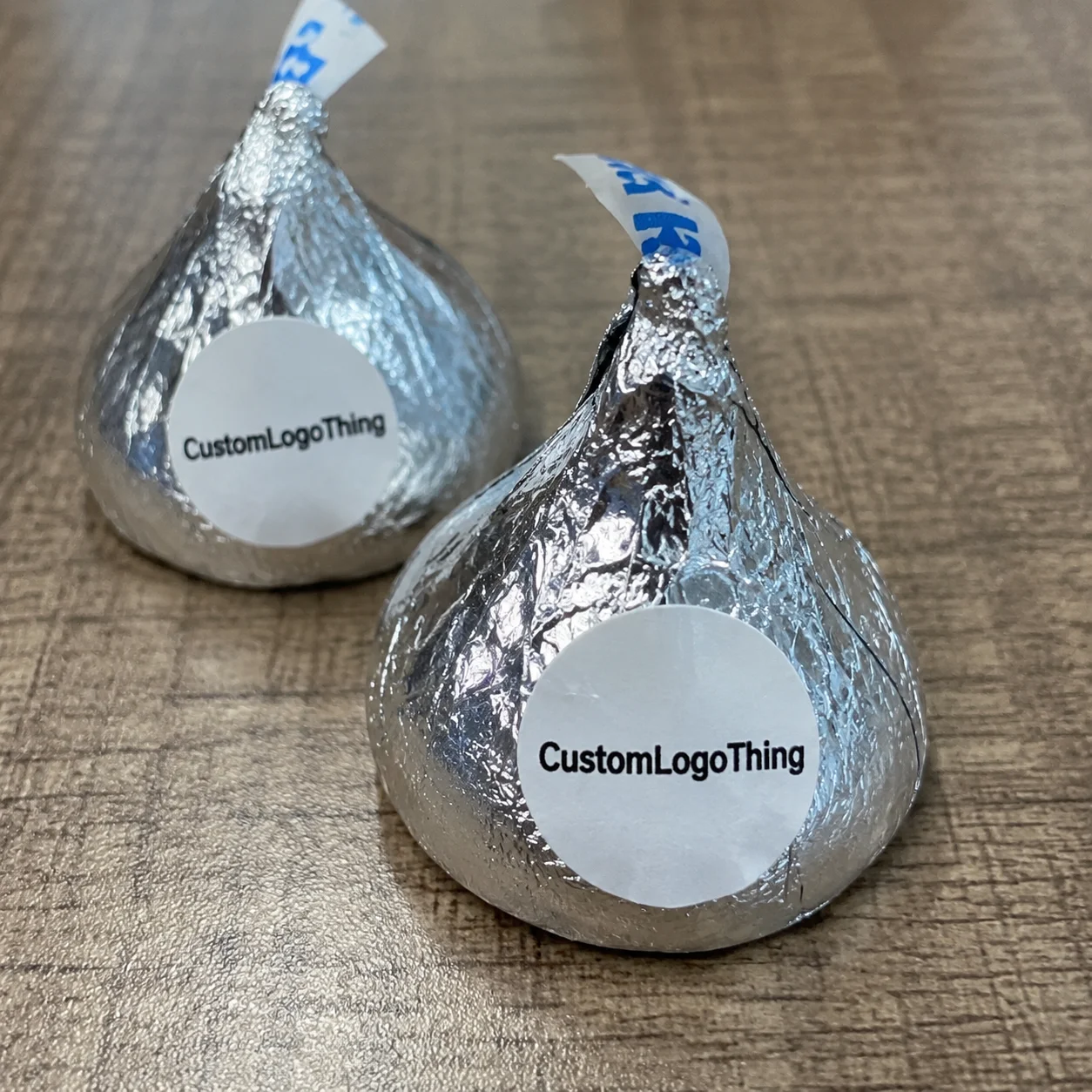
Open a party favor bag and the tiny chocolate bottoms often do more branding work than the centerpiece. That is the odd little power of custom stickers for hershey kisses: they turn a familiar, low-cost candy into something intentional, coordinated, and personal.
These are usually small round labels applied to the flat bottom of foil-wrapped Hershey Kisses. Weddings use them for initials and dates. Baby showers use names, colors, and little icons. Corporate events use logos, campaign marks, product launch graphics, or sponsor branding. Fundraisers, school events, birthdays, and holiday gift bags use them because the cost per piece can stay low while the perceived effort looks higher than it is. Packaging does that. It quietly changes the math.
The standard project is not a replacement wrapper. It is a printed label added to the outside of intact foil. That distinction affects sticker diameter, adhesive choice, food-contact assumptions, application speed, and how aggressively the label can conform to wrinkles. A label touching foil is a different job from anything touching exposed food.
Most kiss stickers start around 0.75 inch round. Some buyers go slightly smaller for a cleaner edge; others want a fuller printed look that nearly fills the base. The right answer depends on the candy version, foil texture, and amount of design detail. Tiny labels are unforgiving. A logo that looks polished on a business card can become a blurry postage stamp here. Physics remains rude, even around candy favors.
Use this as a practical buying guide: sizing, artwork, pricing, timing, common mistakes, and order decisions. Guessing is expensive. Especially when someone has to hand-apply 900 labels two nights before an event.
How Hershey Kiss Labels Work From Artwork to Application
A kiss label is a printed pressure-sensitive sticker, usually round, kiss-cut on sheets or supplied on rolls. After printing and cutting, each label is peeled and placed by hand on the bottom of a wrapped chocolate. That last step is not glamorous. It is also where otherwise good labels get ruined by crooked, rushed application.
Most suppliers print the labels only. The buyer, event planner, venue staff, or fulfillment crew applies them. Some favor companies sell fully assembled candy, but packaging manufacturers usually focus on the custom printed sticker component. If you are shopping through Custom Labels & Tags, assume you are ordering labels unless assembly is clearly stated in the quote.
Material choice starts with the event environment. White paper labels are common and budget-friendly. Gloss paper gives brighter color and a more promotional finish. Matte paper feels softer, which works well for weddings, showers, and premium-looking favor tables. Vinyl or film labels resist moisture better, but they are often excessive for a one-day indoor event unless the favors will sit in humidity, coolers, or heavy handling.
The adhesive should stick to foil, not chocolate. A standard permanent adhesive usually works on clean, intact wrappers, but low-grade labels can lift on crinkled foil, warm candy, or humid transport routes. If the event is outdoors, inside a tent, in a warm reception hall, or packed into favor bags days ahead of time, ask for a material recommendation before buying the cheapest paper label available. Hope is not an adhesive spec.
Digital printing is typical for short runs and full-color designs because setup is lighter and variable artwork is easier. Flexographic or offset-style production can make sense for very large quantities, especially if the design repeats and color control matters, but setup costs and minimums are usually higher. For most event favors, digital labels are the practical lane.
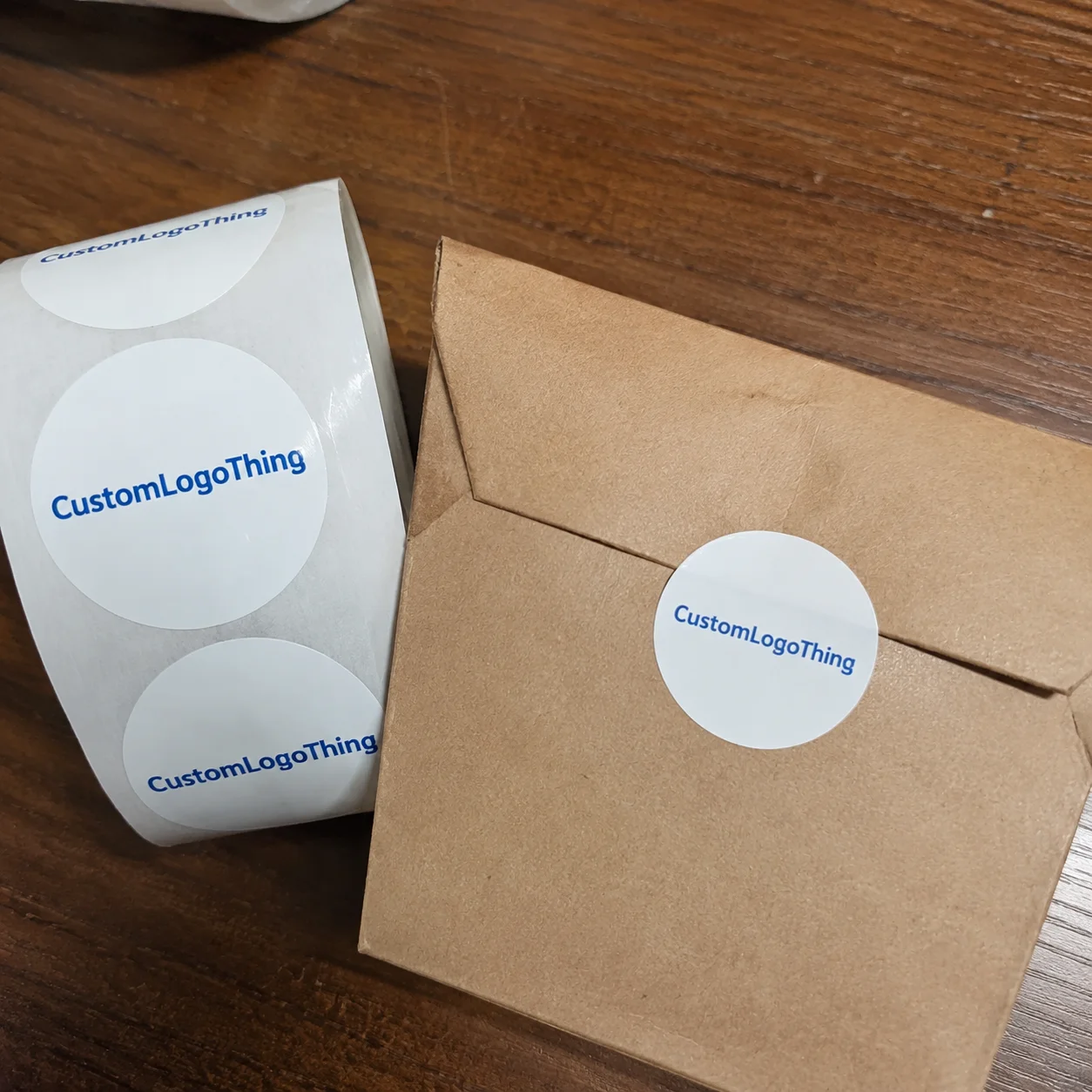
Sheet format is easier for small DIY jobs. Rolls can be faster for higher-volume crews, but only if roll direction, spacing, and core size match the application workflow. A roll designed for a label dispenser is different from a roll that merely looks tidy in a shipping box.
The finished result depends on two things: print quality and application discipline. Crooked stickers read as rushed, even if the artwork is expensive. Nobody wants a favor table that whispers “assembled during a power outage.”
Sticker Size, Shape, Materials, and Artwork Specs
The most important physical spec is diameter. A 0.75 inch round label is the usual starting point because it fits the flat base of many Hershey Kisses without wrapping too far up the sides. Too small, and it looks timid. Too large, and the edge rides up the foil and starts lifting.
Round is standard because the candy base is round. Hearts, stars, scallops, and custom shapes can work, but they cost more, take longer to cut, and are harder to center quickly. If 20 pieces are being made for a small dinner, fine. If 2,000 pieces are being assembled for a company event, round labels save time and sanity.
- Standard paper: best for indoor events, short-term favors, and tight budgets.
- Gloss paper: brighter colors, stronger shine, and a more promotional finish.
- Matte paper: softer appearance for weddings, showers, and upscale packaging design.
- Film labels: better resistance to humidity, handling, and longer storage, with a higher unit cost.
Artwork has hard limits. Short names, initials, dates, tiny icons, simple monograms, and stripped-down logos usually print well. QR codes should be tested at final size; many become decorative little squares of disappointment. A paragraph of text on a 0.75 inch sticker is not branding. It is punishment.
Keep important text away from the edge. A practical safe area is roughly 0.06 to 0.08 inch inside the cut line on a small circle, though each printer may set its own template. Background color should extend beyond the cut line as bleed, often around 0.0625 inch. Avoid hairline borders unless the printer confirms tight registration. A slightly off-center border on a tiny round label looks more obvious than people expect.
Color matters because the foil becomes part of the design. Black text on white is safer than pale gold on blush if readability matters. Silver foil can make cool colors feel colder. Gold foil warms cream, ivory, and soft pink. Red and seasonal foils can fight delicate artwork unless the sticker has enough contrast to hold its own.
Send vector artwork for logos whenever possible: AI, EPS, SVG, or press-ready PDF. A high-resolution PNG may work for simple designs, but editable files reduce back-and-forth when scaling needs adjustment. If all you have is a screenshot, say so early. Printers can often rebuild simple art, but that is design time, not fairy dust.
For brand teams, one more check matters: compare the tiny label proof against other event pieces. A kiss sticker does not need to carry the full brand system, but it should not introduce a rogue font, off-brand blue, or logo version retired three years ago. Small does not mean invisible.
Pricing, MOQ, and Unit Cost for Kiss Stickers
Pricing for custom stickers for hershey kisses depends on quantity, size, material, finish, number of designs, proofing, cutting method, and whether labels ship on sheets or rolls. The sticker is tiny. The job still needs file checks, setup, printing, cutting, packing, and admin. Magic is not included, sadly.
Small DIY quantities may land anywhere from a few cents to more than 20 cents per sticker, depending on supplier and finish. Larger runs often drop sharply because setup and proofing get spread across more pieces. A 250-piece glossy paper order can feel expensive per unit, while a 5,000-piece run of the same 0.75 inch round label may be far more efficient.
| Order Type | Typical Quantity | Common Format | Practical Cost Notes |
|---|---|---|---|
| Small DIY event | 100–500 labels | Sheets | Higher unit cost; useful for birthdays, showers, and small parties. |
| Wedding or fundraiser | 500–2,500 labels | Sheets or rolls | Better price breaks; proofing and artwork cleanup matter more. |
| Corporate event | 2,500–10,000+ labels | Rolls | Lower unit cost; workflow, roll direction, and deadline planning become critical. |
| Premium finish | Varies | Sheets or rolls | Metallic effects, film materials, or custom shapes can raise setup and production cost. |
MOQ means minimum order quantity. Some digital printers accept low minimums. Custom packaging suppliers may prefer several hundred or several thousand labels because tiny custom jobs still consume production time. If you need only 60 stickers, a simple digital sheet order may be the cleanest answer. If you need branded consistency across favors, bags, cards, and Custom Packaging Products, a packaging supplier can keep the overall look tighter.
Multiple designs raise cost because they add file handling and proofing time. Five names, ten flavors, separate table numbers, or different sponsor marks may keep the total sticker count the same but still increase labor. Hidden costs can include rush fees, design cleanup, metallic effects, custom dies, premium film, shipping, and staff time to apply thousands of stickers by hand.
Buying rule: if the event is small and casual, prioritize readable digital labels. If it is branded, photographed, sponsored, or client-facing, pay for cleaner artwork prep and proper proofing.
Order 5–10% extra. Application mistakes happen. Foil wrinkles happen. Candy gets damaged. A cousin suddenly needs twelve favors. Reprinting 43 tiny labels later is exactly as annoying as it sounds.
Process and Timeline: From Quote to Favor Table
The process is straightforward if the buyer provides clean information. Confirm candy type and quantity. Choose sticker size and material. Submit artwork. Review the proof. Approve the proof. The supplier prints and cuts the labels, ships them, and then someone applies them to the chocolates.
The artwork proof is not decoration. It is the buyer’s chance to catch spelling errors, date mistakes, weak contrast, bad logo scaling, and text that becomes microscopic at final size. Read the proof at 100% scale if possible. Better yet, print a paper mockup at actual size and place it on a wrapped candy. If it looks cramped on paper, it will not improve after printing.
Simple digital sticker orders may take a few business days after proof approval, plus shipping. Larger quantities, custom shapes, film materials, metallic finishes, or busy seasonal periods can take longer. Shipping adds its own chaos tax. Weather, carrier delays, wrong addresses, and receiving docks with mysterious lunch breaks all exist.
Production clocks usually start after proof approval, not after the buyer sends a blurry screenshot and says, “Can you use this?” A printer can only move as fast as the information provided. If the event date is fixed, build the schedule backward: shipping time, candy purchase, label application, bagging or boxing, final venue delivery, and one emergency buffer.
Application time is the sneaky part. A careful person might apply a few hundred stickers in an evening. Thousands require a team, a clean table, room-temperature candy, trays for finished pieces, and snacks. Preferably not the inventory snacks.
Quality control does not need to be elaborate. Check the first 10–20 applied pieces before the group settles into a rhythm. Are the labels centered? Are edges lifting? Is the foil clean? Is the artwork readable under the room lighting where the favors will be displayed? Tiny defects multiply quickly when the same mistake is repeated across every piece.
Packaging buyers can borrow discipline from broader product packaging and transport planning. Standards bodies such as ISTA focus on testing packaged products through distribution, and while candy favor stickers are not freight pallets, the mindset is useful: plan for handling, temperature, timing, and human error before the job is already late.
Step-by-Step Ordering Guide for First-Time Buyers
- Count the chocolates. Multiply guests by pieces per favor, then add extras. If 120 guests each receive five kisses, the base count is 600 before overage.
- Choose the format. For most events, use a 0.75 inch round label on sheets. For higher-volume brand teams or fulfillment crews, ask whether rolls will speed up application.
- Decide the message. Keep it short: initials, date, event name, tiny icon, company mark, or a short phrase. The smaller the sticker, the less room there is for an entire brand manifesto. Tragic, but true.
- Select material and finish. Indoor, short-term favors can use paper. Gloss adds shine. Matte feels calmer and more upscale. Film labels help if humidity, handling, or durability matter.
- Prepare artwork. Send vector logos when possible, list exact text, confirm colors, and ask for a scaled proof. If design help is available, use it before the proof becomes a revision marathon.
- Approve carefully. Check spelling, dates, contrast, size, quantity, and delivery address. Then plan an application session with clean hands and flat trays.
- Store finished favors well. Keep them away from heat, moisture, and direct sun so the foil and stickers stay clean until the event.
Corporate buyers should think beyond the label alone. A kiss sticker can match favor bags, inserts, table cards, mailer kits, Custom Printed Boxes, or retail packaging for a product launch. That level of package branding does not require a giant budget, but it does require consistent colors, file formats, and approval control.
If sustainability claims are part of the event or brand message, keep them modest and documented. Paper labels may sound greener than film, but adhesive, liner waste, ink coverage, and disposal context all matter. The Forest Stewardship Council is a useful reference point for responsibly sourced paper materials, and suppliers can confirm whether FSC-certified options are available for a specific label construction.
Common Mistakes That Make Tiny Candy Labels Look Cheap
Mistake one: using artwork with too much detail. Thin scripts, full addresses, busy crests, and complex logos often collapse at kiss-label size. Simplify before printing, not after 1,000 labels arrive.
Mistake two: choosing low-contrast colors. Pale gray on white, gold on cream, and blush on champagne may look elegant on a mood board and invisible on a candy base. Readability beats theoretical elegance.
Mistake three: ignoring the foil color. Silver, gold, pink, red, and seasonal foils all change the finished look. The label should complement the foil instead of fighting it. If the candy foil is bright red, a soft blush sticker may look accidental.
Mistake four: ordering the exact quantity. Application errors happen. Foil wrinkles happen. Guests appear from nowhere. Always order extras because under-ordering custom stickers for hershey kisses can turn a simple favor project into a last-minute reprint chase.
Mistake five: waiting too long. Rush production plus rush shipping plus manual application is a bad little triangle. One delay and someone is labeling candy at midnight before the event. That person will not be grateful.
Mistake six: assuming all Hershey Kisses are identical. Seasonal versions, specialty flavors, and non-standard chocolate kisses may have slightly different bases, foil textures, or bottom shapes. Test sizing if using anything outside the classic version.
Mistake seven: skipping the proof review. Most print disasters start with someone approving too fast. Check the boring details. The boring details are where the money leaks out.
Mistake eight: storing finished candy badly. Heat softens chocolate and can change how the foil sits. Moisture can dull paper labels or encourage edge lift. Direct sun can punish both candy and ink. Finished favors need a cool, dry holding area, not the trunk of a car.
Next Steps Before You Request a Sticker Quote
Start with the actual event math. Write down guest count, kisses per favor, total labels needed, and an overage of at least 5–10%. This prevents under-ordering and makes quote comparison cleaner. A buyer asking for “some stickers for favors” will get slower answers than a buyer asking for “750 round paper labels, 0.75 inch diameter, gloss finish, delivered on sheets.” Specific beats vague every time.
Pick one preferred size and one backup size. For most buyers, the default is a 0.75 inch round sticker, but a backup helps if the printer recommends a slightly different fit based on material, die availability, or artwork. If the design has a border, ask whether registration tolerance will keep it looking centered. Tiny circles make tiny shifts very visible.
Prepare a simple design brief: event type, names or message, date if needed, preferred colors, foil color, quantity, deadline, shipping location, and whether labels should arrive on sheets or rolls. Send artwork in the best format available. Vector files are ideal. If all you have is a logo pulled from a social profile, say that upfront so the supplier can price cleanup instead of pretending pixel soup is a production file.
Ask quote questions that affect the real project: final unit cost, MOQ, proof timing, production lead time, shipping method, material recommendation, finish options, and whether extra labels are included or need to be added manually. If the stickers are part of broader branded packaging, ask how the label colors can coordinate with boxes, bags, inserts, and other printed pieces.
Before approving, print a paper mockup at actual size if possible. If you cannot read it on your desk, guests will not read it on chocolate while holding a drink and pretending to network. Gather the count, artwork, deadline, and material preference, then Request a Quote for custom stickers for hershey kisses with enough lead time to proof, print, ship, and apply them without panic.
FAQ
What size are custom Hershey Kiss stickers usually?
The common starting size is a 0.75 inch round sticker because it fits the flat bottom of many Hershey Kisses. Confirm against the exact candy type, especially for seasonal or specialty versions. Keep important text inside the safe area so it does not get clipped or curve up the foil.
How much do custom stickers for chocolate kisses cost?
Pricing can range from a few cents per sticker on larger runs to 20+ cents each for small, specialty, or premium-finish orders. Quantity, material, finish, artwork cleanup, rush timing, and shipping all affect the final quote. Order extra labels up front because tiny reprints are rarely cost-efficient.
Can I put a logo on Hershey Kiss favor stickers?
Yes, but the logo must be simplified enough to read at about 0.75 inch diameter. Vector artwork gives the printer the best chance of producing a clean, sharp result. Avoid tiny taglines, thin outlines, and detailed icons unless the printer confirms they hold up at final size.
How long does it take to get custom kiss labels printed?
Simple digital sticker orders may take a few business days after proof approval, plus shipping time. Larger quantities, special materials, custom shapes, and rush seasons can extend the timeline. Production usually starts after proof approval, so fast feedback matters.
Are Hershey Kiss stickers food safe?
The sticker is normally applied to the outside foil, not directly to the chocolate. Buyers should avoid placing labels on exposed food or damaged wrappers. For corporate, retail, or regulated uses, ask the supplier about material documentation and intended-use guidance.