A brand approves 5,000 logo stickers from a clean screen proof. The color looks right. The die line looks tidy. The unit price seems sensible. Then the first cold drink bottles go into a cooler, condensation forms, and the adhesive starts lifting at the edges.
That is the kind of expensive, avoidable problem a custom stickers free sample offer can catch before money moves into a bulk run.
Free sticker offers can be useful. They can also be vague. A supplier may mean free artwork review, a no-cost digital proof, a generic material sample kit, a small promotional quantity, or setup waived after a larger order. Those are not interchangeable. For a packaging buyer, the real test is not whether a sticker looks attractive on a monitor. It is whether it performs on the intended surface, under the intended handling conditions, at the quoted production specification.
Custom Stickers Free: What Buyers Usually Mean
Most buyers searching for custom stickers free are not expecting a warehouse full of finished labels at no charge. Usually, they want proof before commitment. Fair. Stickers may look simple, but they carry branding, product information, tamper cues, promotional messaging, and sometimes barcode or compliance details. A bad sticker can make otherwise solid Custom Packaging Products look cheap in seconds.
There are three common meanings behind free sticker offers.
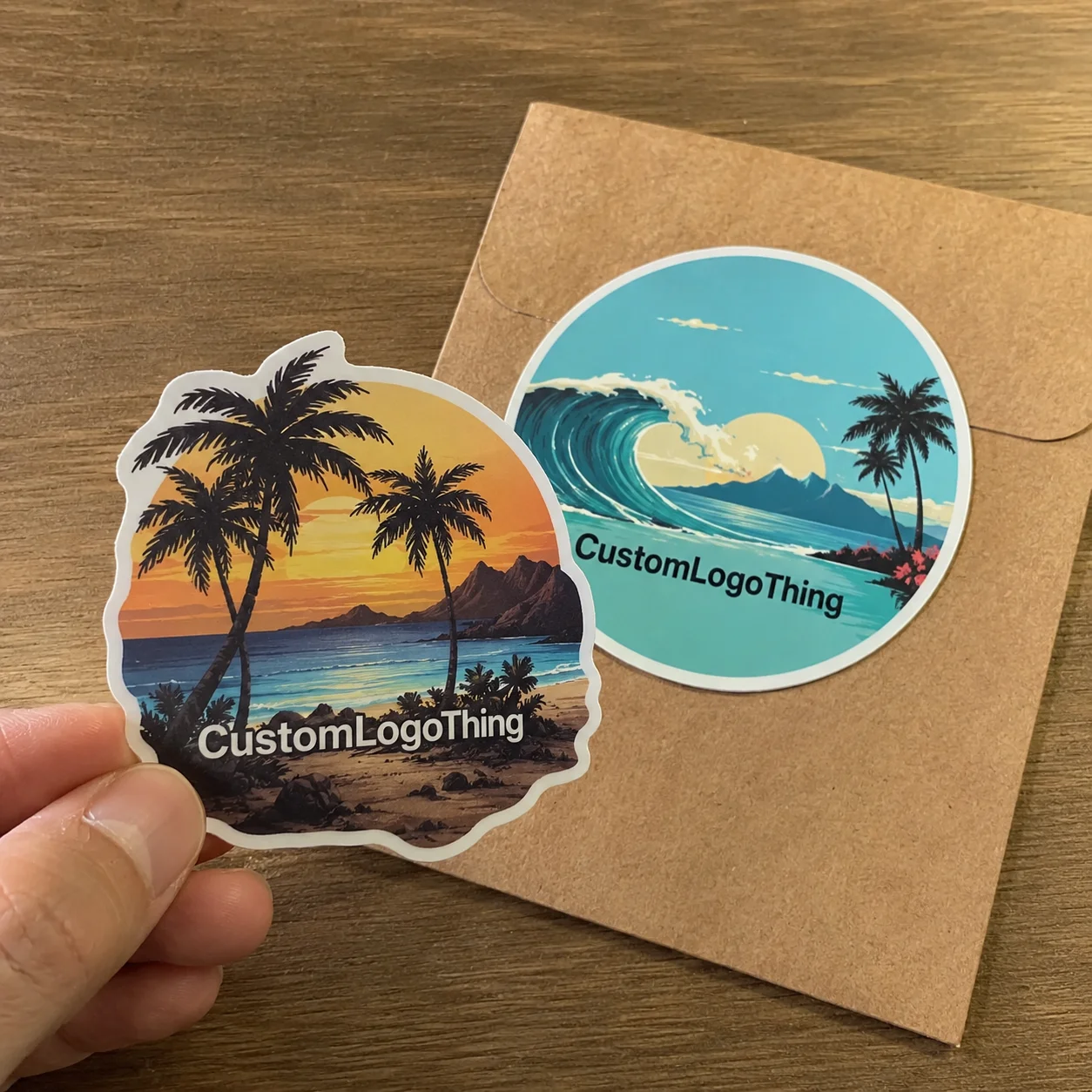
The first is a generic sample kit. This might include stock examples of gloss vinyl, matte paper, clear polypropylene, kraft paper, holographic film, removable adhesive labels, or freezer-grade stock. It helps you feel thickness, compare finishes, and test adhesion broadly. It will not show your exact logo, ink density, white underprint, or cut shape.
The second is a digital proof. That is usually a PDF or image showing artwork placement, trim line, bleed, size, and color intent. It is essential, but limited. A digital proof cannot tell you whether a 2-inch circle sticker curls on a textured mailer, whether a matte laminate scuffs in a fulfillment bin, or whether small type stays readable after printing.
The third is a custom physical sample. This is the closest preview of the final order. It may be free only after a deposit, tied to a minimum order quantity, or credited back against the bulk purchase. That is not automatically a warning sign. It simply means the buyer should understand the commercial terms before approving the sample.
Buyer rule: “Free” is useful only if the sample reflects the real material, adhesive, finish, size, and print method planned for the bulk order.
Manufacturers offer these services because sampling reduces hesitation and catches errors early. A sample kit proves print and material quality. A free proof catches file problems. A custom sample gives small brands confidence before ordering 1,000, 5,000, or 20,000 pieces. The supplier is betting that a low-cost preview will lead to recurring work across product packaging, retail packaging, mailers, inserts, and package branding.
That makes the offer commercial, not charitable. There is nothing wrong with that. The useful question is whether the offer helps you make a better production decision.
How Free Sticker Offers Work Behind the Scenes
Even a “free” sticker has a cost somewhere. Material is pulled. Ink or toner is used. A printer is scheduled. Cutting equipment runs. Someone checks registration, weeds waste if needed, packs the sample, and ships it. If lamination is involved, there is another process step. If the sticker uses a custom contour, the cut file has to be prepared and tested.
Digital printing has made short runs easier than older plate-based methods. A supplier can often produce 10 or 25 Custom Stickers Without making a traditional printing plate. Still, short runs are not magic. Adhesive testing, lamination, contour cutting, color checking, and packing take real production time. That is why free offers usually include limits.
- Free sample book: pre-made material swatches and printed examples, usually fast to ship.
- Free stock-shape stickers: simple circles, squares, or rectangles using house materials.
- Free design proof: a digital layout review before production begins.
- Free custom sample with deposit: a physical sample credited against a bulk order.
- Free extras: bonus quantities added to a paid production run, often 5% to 10% overage.
Suppliers control cost by limiting size, quantity, materials, finish options, and revision rounds. A free 2-inch paper sticker is very different from a 4-inch waterproof vinyl decal with gloss lamination, white ink underprint, and custom die-cut edges. One may fit into spare production capacity. The other needs scheduling.
The proof type matters. A digital proof checks layout, spelling, cut line, bleed, and approximate color intent. A physical proof checks scale, texture, opacity, edge quality, finish, and adhesion in the real application. If the sticker will be used on bottles, corrugated cartons, jars, flexible pouches, coated retail boxes, or textured kraft mailers, the physical test is often the more revealing one.
There is also a difference between a pretty sample and a production-representative sample. A sample printed on one digital press may not exactly match a bulk run printed on another line. A hand-trimmed prototype may not reveal the same edge quality as a die-cut production order. If color, cut tolerance, or durability matters, ask whether the sample is made using the same process planned for the full quantity.
For broader packaging decisions, organizations such as the International Safe Transit Association publish test procedures that show how packaging performs through distribution. Stickers are not always tested under full transit protocols, but the logic is similar: the package must survive the environment, not just the approval meeting.
Cost and Pricing Details Hidden in “Free” Sticker Deals
The sticker may be free. The surrounding costs may not be. Ask about shipping, artwork cleanup, rush fees, specialty materials, metallic foil, white ink, custom die creation, and minimum order commitments. A “free sample” that forces a vague 10,000-piece order at inflated pricing is not a bargain. It is a soft lock-in.
Sticker pricing drops sharply as quantity rises because setup time gets spread across more units. Material waste also improves. A 500-piece run may carry a meaningful share of file prep, setup, cutting calibration, and inspection time. At 5,000 pieces, those fixed steps are diluted. At 50,000, material yield, roll handling, and finishing efficiency can change the math again.
| Sticker Option | Typical Use | Common Cost Range | Watch For |
|---|---|---|---|
| Matte paper sticker | Dry retail packaging, inserts, short-term promotions | $0.04-$0.12 each at 5,000 pieces | Poor moisture resistance and edge wear |
| Gloss vinyl sticker | Bottles, laptops, outdoor giveaways, durable branding | $0.10-$0.28 each at 5,000 pieces | Adhesive type, lamination, and surface energy |
| Clear polypropylene sticker | Jars, cosmetics, clear boxes, minimalist labels | $0.08-$0.24 each at 5,000 pieces | White ink backing and visibility on dark surfaces |
| Custom die-cut decal | Logo giveaways, package seals, branded merch | $0.12-$0.35 each at 5,000 pieces | Fine cut details, weeding waste, and minimum line thickness |
| Foil or specialty finish sticker | Premium retail packaging and limited product drops | $0.18-$0.50 each at 5,000 pieces | Setup fees, longer lead time, and scuff resistance |
These ranges are broad because specifications drive price. A 1.5-inch paper circle and a 3-inch laminated vinyl contour sticker do not belong in the same quote column. Kiss-cut stickers are usually easier to peel from a backing sheet. Die-cut singles look polished for giveaways but may cost more to cut, count, and pack. Standard shapes reduce cutting complexity. Custom contours improve brand presence but can expose tiny design flaws.
Adhesive is another hidden cost driver. Permanent adhesive suits shipping box branding or security-style seals. Removable adhesive works for temporary promotions. Freezer-grade adhesive may be needed for refrigerated or frozen products. Repositionable adhesive can help with hand application, but it may not deliver the same final bond as a permanent option. Not always, but often enough to test.
Surface energy matters too. Glass, metal, PET, coated board, kraft paper, and low-energy plastics do not accept adhesive in the same way. A sticker that bonds cleanly to a glass jar may struggle on a textured mailer. A label that looks crisp on white board may lose contrast on brown kraft. These failures rarely show up in a screen proof.
If a supplier promotes custom stickers free, ask for an itemized quote beside the offer. It should list finished size, material, finish, adhesive, cut style, quantity, artwork or setup fees, proofing, shipping, and reorder pricing. That last line matters. A cheap first run followed by expensive reorders can distort your true packaging budget.
Process, Timeline, and Lead Time for Sample Stickers
A practical sample process usually follows a predictable path: submit artwork, confirm size and shape, choose material and finish, receive a digital proof, approve revisions, produce the sample, inspect it, then ship. For a generic sample pack, shipment may happen within 1-3 business days because the pieces already exist. A true custom sample often takes 5-10 business days before transit, depending on the queue and finish.
Bulk production usually runs longer. Many custom sticker orders land around 7-15 business days after proof approval. Specialty foil, spot UV, layered white ink, complex contour cutting, or weather-resistant construction can push that out. Freight distance adds more uncertainty. A buyer planning a product launch, trade show, subscription box drop, or retail reset should build sample review into the calendar early.
Several variables stretch lead time. Incomplete artwork is a big one. Missing bleed, low-resolution raster logos, unclear cut lines, and unconverted fonts can trigger another proofing round. Color matching also takes time. If you need a close Pantone match, say so upfront, and understand that digital CMYK output may approximate rather than perfectly reproduce a spot color.
There are smart ways to save time without sacrificing quality. Provide vector artwork, preferably AI, EPS, or print-ready PDF. Include the intended finished size, not just “small logo sticker.” Tell the supplier where the sticker will be applied: coated paperboard, glass, PET bottle, aluminum can, kraft mailer, corrugated shipper, or flexible pouch. Mention exposure conditions too. Indoor shelf use is different from outdoor rain, cold storage, freezer storage, or oily cosmetic containers.
Quality checks should happen before the sample leaves production. Useful checks include registration, color consistency, cut alignment, laminate coverage, edge lifting, surface defects, and count accuracy. For roll labels, unwind direction and core size may also matter. For hand-applied stickers, peelability matters more than many buyers expect; a beautiful sticker that slows packing staff is a production problem wearing a design hat.
For packaging design teams, sticker sampling should sit beside carton samples, label proofs, and insert reviews. If your brand is also evaluating Custom Labels & Tags, the same decision logic applies: substrate, adhesive, finish, color, and handling all affect the final impression.
Step-by-Step Guide to Requesting Free Sticker Samples
The best sample requests are specific. Vague requests create vague quotes. Start with the intended use: product label, package seal, event giveaway, laptop sticker, bottle sticker, shipping box logo, retail tag closure, or promotional insert. A sticker made for a laptop can prioritize durability and finish. A sticker used as a package seal may need clean application, reliable tack, and controlled tearing.
- Define the job. State where the sticker will be used and how long it needs to last.
- Set the size. Give width and height in inches or millimeters, plus shape preference.
- Name the surface. Glass, plastic, kraft paper, coated board, corrugated, metal, or flexible film all behave differently.
- Choose exposure conditions. Indoor, outdoor, refrigerated, wet, oily, handled daily, or shipped in cartons.
- Upload clean artwork. Vector files are best; 300 dpi raster files may work for simple designs.
- Ask what is free. Confirm whether the offer covers a digital proof, sample pack, custom sample, shipping, setup, or only artwork review.
- Request the bulk quote. Compare the sample against real pricing for 500, 1,000, 5,000, or 10,000 units.
Testing should be physical. Apply the sample to actual packaging, not just a desk or notebook. Rub the surface with your thumb 20-30 times. Bend the packaging if it will flex in use. Chill the bottle if it will sit in a refrigerator. Add moisture if condensation is likely. Check the edges after 24 hours, then again after 72 hours if launch timing allows.
Readability deserves its own test. A logo that looks strong on a 4-inch proof can become cramped at 1 inch. Fine scripts, thin strokes below roughly 0.25 mm, and reversed type on dark backgrounds can break down depending on print method and substrate. If the sticker includes a barcode or QR code, test scanning with several phones or scanners after application.
Also check how the sticker behaves during application. Does it release cleanly from the liner? Does it trap bubbles? Does the liner split? Does the adhesive grab so aggressively that staff cannot reposition it by hand? These details sound small until someone has to apply 3,000 stickers before a shipment deadline.
Here is where most people get it wrong: they treat custom stickers free as a way to collect samples, not as a way to reduce risk. The useful question is not “How many free stickers can I get?” It is “Which sample tells me whether the bulk order will work?” That mindset saves more money than chasing the biggest free pack.
Common Mistakes That Turn Free Samples Into Bad Orders
The first mistake is approving by screen color alone. Monitors emit light. Ink reflects it. Coatings, laminates, and substrates shift the perceived color. Matte finishes can mute dark tones. Gloss can increase contrast and glare. Kraft paper warms everything. Clear film may disappear on one surface and look cloudy on another if white ink is not specified.
The second mistake is choosing the cheapest material without matching the surface. Paper stickers can be perfectly fine for dry inserts, hang tags, and short-term retail packaging. Put them on condensation-prone bottles, rough corrugated mailers, or handled cosmetic jars, and performance may fall apart. Vinyl or polypropylene costs more, but the lower failure rate can justify the difference.
The third mistake is ignoring adhesive behavior. Permanent, removable, freezer-grade, high-tack, low-tack, and repositionable adhesives solve different problems. A low-tack removable sticker may peel beautifully from a sample card, then fail on a textured kraft mailer. A high-tack adhesive may hold well but tear fibers if the customer tries to remove it. Neither is universally “better.”
The fourth mistake is forgetting scale. Small stickers punish clutter. A one-inch logo seal has limited room for taglines, URLs, icons, and decorative borders. For custom printed boxes or package branding, the sticker often works best as one clear visual cue rather than a miniature billboard.
The fifth mistake is comparing the sample to the wrong final specification. If your sample is printed on premium laminated vinyl, it does not represent a later order switched to economy paper. If the sample uses gloss lamination, it does not prove matte scuff resistance. If the sample is kiss-cut on a sheet, it does not show the handout feel of die-cut singles.
The sixth mistake is treating free samples as a substitute for planning. Samples work best after the buyer defines quantity, deadline, surface, application method, and reorder expectations. A supplier can only recommend well if the use case is clear.
Practical check: Keep one approved sample, the final quote, and the digital proof together. If a later shipment looks different, those three records make the conversation factual instead of emotional.
One more caution: do not approve a sample under perfect office conditions if the sticker will live in rough conditions. Heat, cold, moisture, abrasion, oily residue, and curved surfaces change the result. A candle jar, a lip balm tube, a freezer pouch, and a corrugated shipper ask different things from the same square inch of adhesive.
Next Steps Before You Place a Bulk Sticker Order
Before placing the bulk order, create a short decision checklist. Final size. Artwork file. Material. Adhesive. Finish. Cut style. Quantity. Shipping deadline. Application surface. Internal approver. It sounds basic because it is. Basic controls prevent expensive packaging surprises.
Narrow your choices to two or three material and finish combinations. Asking for every possible option slows quoting and makes comparison harder. A better shortlist might be matte paper for dry cartons, gloss vinyl for moisture exposure, and clear polypropylene for premium product packaging. That gives you useful contrast without turning sampling into a research project that never ends.
Ask the supplier to confirm in writing that the bulk order will match the approved sample in material, finish, adhesive, print method, and cut style. If any substitution is possible due to stock availability, ask how you will be notified. For paper-based options, buyers who care about responsible sourcing can also ask about FSC-certified materials; the Forest Stewardship Council explains certification and chain-of-custody basics in more detail.
Run a small internal test. Apply samples to real packaging. Photograph them under store lighting, event lighting, and daylight if relevant. Check glare, peeling, scuffing, color contrast, and readability from normal customer distance. If the sticker seals a box or bag, open the package and see whether the tear behavior matches the brand experience you want.
Then compare total cost, not just the sample offer. Include unit price, setup, shipping, overruns, reorder pricing, and lead time. If two quotes are close, the better specification usually wins. I would rather pay a few cents more for the sticker that survives handling than save $80 on a run that makes 5,000 packages look tired before they reach the shelf.
If you want custom stickers free as part of a smarter buying process, use the offer to validate specs, compare total cost, and prevent a bulk-order surprise. Free is only valuable when it helps you Buy the Right sticker the first time.
FAQ
Are custom stickers free from most suppliers?
Not usually as unlimited finished products. Suppliers may offer free digital proofs, sample kits, artwork checks, or a limited custom sample tied to a future order. Always confirm whether shipping, setup, specialty finishes, or custom die-cutting are included before assuming the offer has no cost.
What is the difference between a free sticker sample and a free proof?
A free proof is usually a digital layout showing size, artwork placement, cut lines, and color intent. A physical sticker sample lets you test material, adhesive, finish, thickness, opacity, and real-world appearance on your packaging.
Can I get free custom vinyl stickers before ordering in bulk?
Some manufacturers provide vinyl samples, but true custom vinyl samples may require a deposit, shipping fee, or minimum bulk-order commitment. Ask whether the vinyl sample uses the same adhesive, lamination, and print method planned for the final order.
How long do free custom sticker samples take to arrive?
Generic sample packs can often ship within a few business days because they are already made. Custom samples need artwork review, proof approval, printing, cutting, quality control, and shipping. File readiness, finish complexity, quantity, shipping distance, and rush availability all affect timing.
What should I check before approving custom stickers for production?
Check size, spelling, cut line, color, finish, adhesive strength, surface compatibility, barcode readability if relevant, and edge lifting after application. Compare the approved sample against the written quote to make sure the final order uses the same material, finish, adhesive, print method, and cut style.