Custom Suncatcher Stickers: Design and Ordering Tips
A small clear decal can throw a rainbow across a wall and suddenly feel more expensive than it has any right to feel. That is the quiet commercial power of custom suncatcher stickers: low weight, low cube, high “keep me” value. They turn up in launch kits, boutique displays, gift-with-purchase promos, stationery drops, candle packaging, and branded mailers because they do something a normal insert cannot. They move with the light.
They are not basic labels with a prettier name. Suncatcher decals depend on film choice, print density, white ink, adhesive, cut shape, and placement. Treat them like full-coverage vinyl stickers and the result often looks flat. Sometimes worse: a dark little blob on a window, technically custom, emotionally disappointing.
What Custom Suncatcher Stickers Are—and Why They Sell
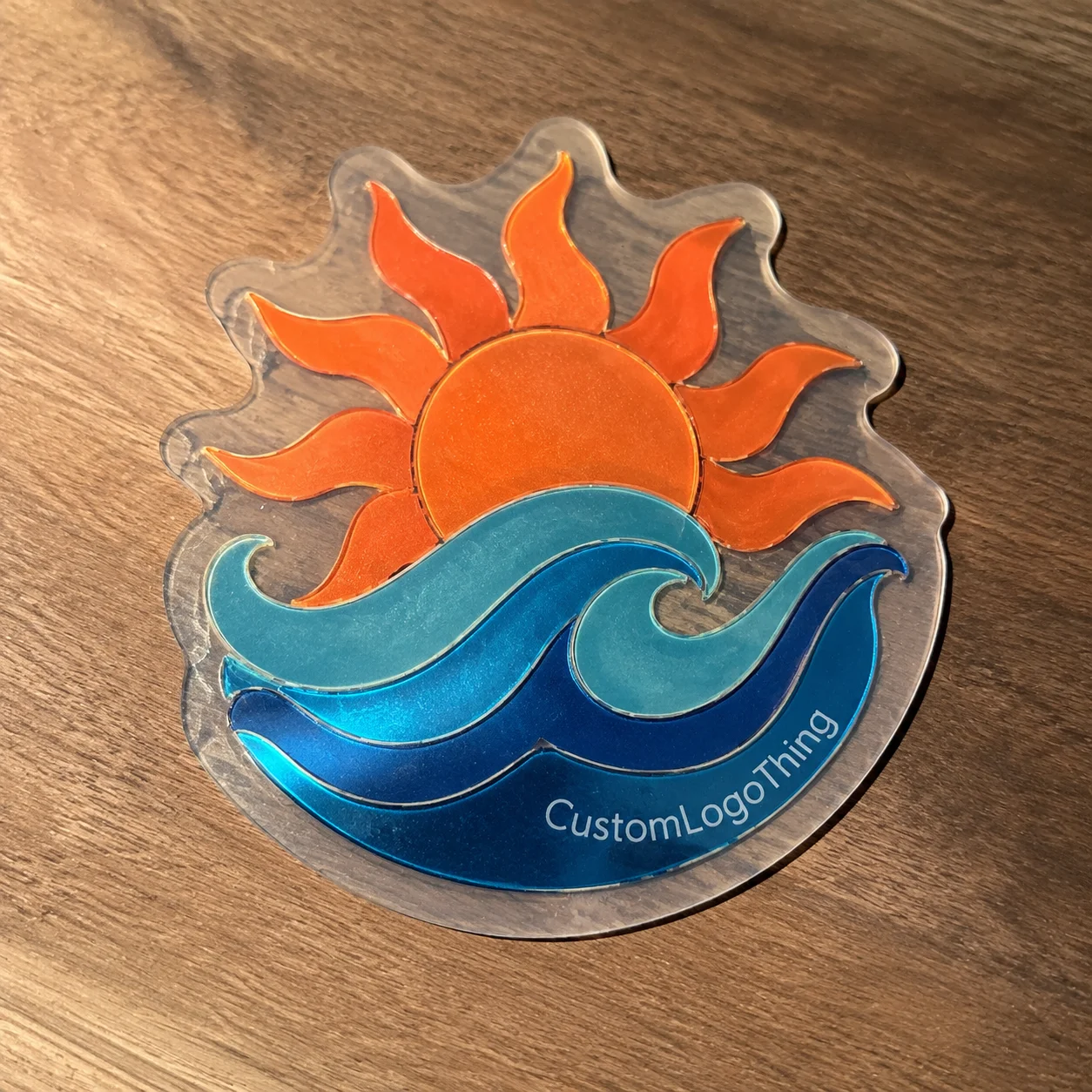
Custom suncatcher stickers are transparent or translucent decals printed on specialty light-refracting film. When sunlight passes through the film, it bends and separates into colored patterns on nearby walls, floors, shelves, or packaging displays. The interaction feels surprisingly tactile for something that has no batteries, scent, sound chip, or QR code pleading for attention.
For packaging buyers, the appeal is practical. A 3-inch decal can slip inside a PR mailer, sit behind a candle jar, ride along with a stationery order, or hang on a boutique rack as a small retail item. It adds perceived value without taking over the package. Better still, customers may keep it after the box is recycled.
Not every shiny sticker qualifies. Decorative window stickers are usually printed vinyl or PET meant to look good on glass. Holographic stickers reflect light from the surface, often with a rainbow foil effect. Static clings grip glass without adhesive, which can be useful for temporary displays. True suncatcher-style decals use light-transmitting film that creates prism-like color as light passes through it. Nobody needs a polymer lecture to buy one correctly, but that distinction matters.
The best surfaces are smooth and clean: glass windows, mirrors, acrylic displays, storefront glass, car windows, candle jars, beauty counters, plant shop windows, and stationery packaging. Textured glass, oily acrylic, dusty retail windows, and tight curved surfaces are less cooperative. Physics is not sentimental about your launch date.
Most orders fall into four use cases: a memorable unboxing insert, a collectible retail product, a shelf-display accent, or a branded freebie that does not immediately become trash. That last point is underrated. Promotional products are often landfill with a logo. A well-designed suncatcher has a better chance of making it to the customer’s window.
How Sun-Catching Window Decals Turn Light Into Color
The mechanics are simple enough: specialty film bends light as it passes through, splitting it into color bands. Strong direct sunlight produces the clearest effect. Bright indirect light may still create shimmer, but the result is softer and less dramatic.
Placement has more influence than many first-time buyers expect. South-facing windows often produce stronger color for longer periods. Shaded corners, heavy screens, UV tint, condensation, and grime all reduce the effect. Even a well-made decal can look underwhelming on a dusty window. Packaging cannot fix dirty glass.
Adhesive choice changes both performance and customer experience. Permanent adhesive offers the strongest long-term hold and suits products meant to stay displayed. Removable adhesive works better for seasonal promotions, temporary retail windows, and renters who flinch at the word permanent. Static cling is easiest to reposition, but it can be less reliable on curved glass, dusty surfaces, or humid storefronts.
Clear areas, negative space, and simple silhouettes usually outperform dense full-color artwork. Light needs room to pass through the film. If the design covers every inch with dark ink, the rainbow effect gets muted. The art may still look attractive, but it will behave more like a regular window sticker wearing expensive shoes.
Print layers matter. Full-color printing builds the visible design. Spot white ink can sit behind logos, text, QR codes, or illustrated details so they remain readable. Clear windows preserve the light-catching effect. Kiss-cut shapes add polish without forcing the customer to peel fragile interior pieces.
Practical rule: if the rainbow effect is the selling point, leave roughly 40% to 60% of the decal open, clear, or lightly printed. Heavy ink coverage turns a light-catching product into a normal decal with better marketing.
Artwork Specs That Make Rainbow Decals Look Sharp
Good artwork saves money, time, and several tense proofing emails. Vector files are best for logos, type, icons, and cut lines because they scale cleanly. Adobe Illustrator files, EPS files, and editable PDFs are common production formats. High-resolution raster artwork can work for illustrations, but keep it at 300 dpi at final print size. A 900-pixel social graphic stretched into a 5-inch decal will not become premium through optimism.
Set up margins and bleed correctly. Keep important details at least 0.08 to 0.125 inches inside the cut line. Extend background art 0.0625 to 0.125 inches beyond the cut line if the design prints to the edge. Avoid hairline type, ultra-thin strokes, tiny reverse text, and fussy micro-details. Transparent film, sunlight, and glass reflections already create visual noise.
Designs that tend to work well include bold celestial shapes, moons, suns, stars, florals, crystals, pets, brand mascots, clean icons, minimal logos, and simple line art. Organic silhouettes are forgiving. Thin spikes and tiny interior cutouts are not. A custom die shape should look intentional, not like the cutting plotter lost an argument with a fern.
White ink deserves special attention. Use it behind logos, QR codes, key text, or small product icons that must stay legible. Leave decorative sections clear or translucent so light can do the interesting work. For branded packaging, the balance is delicate: customers should recognize the brand, but the piece still needs enough magic to earn a spot on the window.
Size affects both visual payoff and cost. Small inserts around 2 to 3 inches suit mailers, thank-you cards, and lower-cost promotional pieces. Retail-ready decals around 3 to 5 inches offer stronger shelf presence and a better rainbow throw. Statement pieces around 5 to 8 inches can work for storefronts and premium bundles, but they increase material use, spoilage allowance, backing protection, and freight considerations.
- Mini inserts: 2 to 3 inches, best for promotional add-ons and controlled unit costs.
- Retail singles: 3 to 5 inches, best for boutiques, stationery shops, gift stores, and subscription boxes.
- Statement decals: 5 to 8 inches, best for window displays, launch kits, and premium packaging programs.
For a clean handoff, send CMYK artwork, outlined fonts, a separate dieline layer, Pantone references if color matching matters, and notes showing which areas should stay transparent. If the decal needs a backing card, include that layout as a separate artboard with trim, bleed, and safe zones. Related hang tags, belly bands, and printed inserts can be planned through Custom Labels & Tags so the full packaging system feels intentional rather than assembled at the last minute.
Cost and Pricing Factors That Move Your Unit Cost
Pricing for custom suncatcher stickers usually depends on size, quantity, material, adhesive type, ink coverage, white ink layers, cut complexity, packaging, proofing needs, and shipping speed. Small simple shapes at higher quantities bring the best unit cost. Large custom shapes with heavy ink, printed backing cards, and individual sleeves cost more. Labor has a habit of appearing on invoices.
Specialty films often carry higher minimums than basic paper stickers because sourcing, calibration, spoilage, and setup waste are less forgiving. A supplier may need extra material for print testing, color checks, lamination compatibility, and cutting setup. That waste is real. It does not vanish because the finished decal is cute.
Setup costs may be folded into unit pricing or listed separately. Common setup areas include dieline prep, digital proofing, white ink setup, material testing, machine calibration, and sample pulls. Ask how the quote is structured before comparing vendors. One quote may look cheaper until backing cards, sleeves, and freight are added later.
| Option | Best Use | Typical Cost Impact | Buyer Tradeoff |
|---|---|---|---|
| Bulk-packed decals | Mailer inserts, event giveaways, gift-with-purchase promos | Lowest labor cost | Less retail-ready presentation |
| Printed backing cards | Boutiques, stationery shops, influencer kits | Moderate added cost | Better instructions and stronger shelf appeal |
| Glassine or cello sleeves | Retail singles, subscription boxes, premium kits | Higher labor and material cost | Better protection, more packaging waste unless specified carefully |
| Custom shape kiss-cut | Brand mascots, florals, celestial art, product icons | Moderate to high depending on complexity | More visual polish, slower cutting if details are fussy |
As a broad buying guide, a simple 3-inch decal in a reasonable production quantity may cost far less per unit than a 6-inch decal with white ink, a printed backing card, and a sleeve. The difference comes from square inches, setup time, finishing labor, spoilage allowance, and freight weight. For smaller runs, setup dominates. For larger runs, material yield and packing speed become bigger factors.
If you need a tighter quote, send complete specs: finished size, order quantity, shape, artwork file, adhesive preference, packaging preference, delivery deadline, and whether the rainbow effect or printed design is the top priority. Maximum color throw and maximum ink coverage are not close friends.
Process, Timeline, and Turnaround From Artwork to Delivery
The ordering process usually follows a steady sequence: submit specs, review artwork, confirm material and adhesive, receive a digital proof, approve production, print, cut, pack, and ship. Simple enough. Unless the file arrives with missing fonts, no dieline, six possible sizes, and a deadline selected by a chaos committee.
A useful proof should show finished size, cut line, print areas, transparent zones, white ink placement, and any backing card or sleeve layout. Do not approve a proof that only shows a pretty mockup floating on a white background. You need production information, not sticker fan art.
Standard production moves faster when artwork is clean, quantities are modest, and material is in stock. Many custom sticker jobs can move through proofing and production in roughly 7 to 15 business days after proof approval, though specialty films, retail packaging, large quantities, or freight constraints can stretch that window. Rush jobs get risky when the film has to be sourced or the cut path is complex.
Sampling depends on risk. Digital proofs are fastest and usually enough for small promotional runs. Pre-production samples are more accurate because they show the actual film, ink density, white ink behavior, and light effect. Physical sampling is worth considering for retail products, subscription boxes, product launches, and larger branded packaging programs where the decal must match a broader campaign.
Delays usually come from familiar suspects: unclear dielines, tiny type, missing fonts, late approvals, last-minute size changes, and freight problems. Build in time for at least one proof revision if the launch date is fixed. Overnight freight does not repair an art file that was wrong three days earlier.
For larger mailer or retail programs, coordinate the sticker with the rest of the packaging early. If the decal pairs with Custom Packaging Products, custom printed boxes, inserts, or tissue, confirm dimensions before production so the decal and backing card fit inside the pack without bending.
Packaging standards can matter if the final kit ships through parcel networks. For larger kits, especially anything fragile, transit-test thinking from organizations such as ISTA is useful. You may not need a full lab test for every sticker insert, but the principle still applies: protect the product through the full trip, not just on the packing table.
Common Mistakes That Make Suncatcher Designs Disappointing
The biggest mistake is treating suncatcher film like normal sticker stock. Buyers approve a dense full-color design, cover the entire surface with dark art, then wonder why the rainbow effect is weak. The light has nowhere to go.
Overcomplicated shapes are another problem. Thin cutouts, sharp fragile points, and tiny interior details can lift, tear, or slow production. A detailed butterfly wing may look beautiful on screen, but cutting blades have limits. So do human fingers peeling the decal from the liner.
Tiny type is a poor bet on transparent specialty film. Glass adds reflections. Sunlight adds glare. Interior shadows shift during the day. If the decal will be viewed from 2 to 5 feet away, use larger type and stronger contrast. For QR codes, test the printed size before production; many need at least 0.8 to 1 inch of clean code area, plus quiet space, to scan reliably.
Adhesive mismatch creates avoidable complaints. Removable adhesive is smart for temporary campaigns, seasonal retail windows, and rental-friendly use. Permanent adhesive is safer for long-term display or collectible products customers are meant to keep. Static cling is convenient, but it can be fussy on dirty glass, curved surfaces, or humid windows.
Surface prep gets ignored because it sounds boring. Clean glass with no dust, oil, condensation, or fingerprints gives better adhesion and a cleaner look. Textured glass and rough acrylic are risky. If you sell suncatcher decals as retail products, add a short instruction line on the backing card. Customers should not need detective skills to use a sticker.
Ordering too small is another classic trap. A 1.5-inch suncatcher may be adorable, but it often lacks enough surface area to create the dramatic rainbow effect buyers expect. Around 3 inches is usually a safer starting point for inserts. Larger pieces throw more visible color, but they cost more and need sturdier protection.
Finally, protect the film. Shipping loose decals without adequate backing can scratch, bend, or scuff the surface. That is a fast way to flatten the premium feeling. Use sturdy liners, backing cards, sleeves, or tight bulk packing with dividers when quantities are large.
Expert Tips for Ordering Better Light-Catching Stickers
Choose the effect first, then design around it. Decide whether the priority is maximum rainbow throw, readable branding, collectible art, retail shelf presence, or a low-cost promotional insert. One decal can do several jobs, but it cannot do all of them equally well.
Use white ink sparingly behind logos, QR codes, and key text. Keep decorative areas more open so the film can bend light. If the brand mark must be highly visible, place it in one controlled zone and let the rest of the design breathe. This approach works especially well for beauty brands, plant shops, candle makers, stationery businesses, and wellness products that rely on soft visual cues.
Order multiple sizes only with a real use case. Mini freebies, retail singles, and larger window decals can make sense as a coordinated product line. Making every size because it sounded fun in a meeting is how inventory piles up in a corner. Cute inventory is still inventory.
Backing cards are worth considering for retail sales, influencer mailers, boutique displays, and gift sets. A printed card can explain placement, protect the decal, carry package branding, and improve shelf presentation. Add a plain instruction line such as: “Apply to clean glass and place in direct sunlight for best rainbow effect.” Simple beats clever here.
Ask for material photos or short videos in sunlight when possible. Flat digital mockups do not show the effect well. Pixels are useful liars. A quick video can reveal how strong the rainbow effect looks, how readable the print is, and whether the film feels premium enough for the product.
If sustainability claims matter, be precise. Specialty plastic films are not the same as FSC-certified paperboard, and pretending otherwise invites trouble. For paper components such as backing cards or cartons, suppliers may be able to use responsibly sourced board aligned with programs from FSC. For films, ask about material type, recyclability guidance, reduced packaging options, and whether sleeves are actually necessary for the use case.
Next Steps Before You Request a Sticker Quote
Before requesting pricing for custom suncatcher stickers, confirm the basics: target size, order quantity, adhesive type, artwork style, cut shape, packaging format, and deadline. A complete request gets a cleaner quote and fewer “just one more question” emails.
If the design direction is not settled, prepare two versions. Make one with stronger branding and one with more open transparent space. Compare each against the campaign goal. A retail product may need stronger shelf presence. A mailer insert may benefit from more open film and a stronger rainbow payoff.
Define the use case in one sentence before sending the job out. For example: “This is a 3-inch gift-with-purchase decal for candle orders,” or “This is a retail window decal sold on a backing card in boutiques.” That sentence helps the supplier recommend adhesive, size, packing method, and proofing level.
Collect inspiration photos, but do not copy them directly. Nice designs travel fast on the internet, and legal departments have hobbies too. Use references to explain mood, opacity, shape, and light effect. Build original artwork around your brand assets, campaign theme, and packaging system.
Ask for proof details that include the cut line, white ink, transparent zones, finished size, and packaging layout if applicable. If color matching is critical, provide Pantone references and expect some perceived color shift on transparent materials. Glass, sunlight, wall color, and background all influence how the print reads.
Custom suncatcher stickers work best when the design, material, quote specs, and timeline are planned together rather than treated like a standard sticker order. Give the light room to work. Protect the film. Choose the adhesive for the actual surface. Quote the full package upfront. That is how a small window decal becomes a keeper instead of another piece of branded clutter.
FAQ
What are custom suncatcher stickers used for?
They are used for window decals, retail products, promotional inserts, PR mailers, gift-with-purchase items, stationery products, and branded packaging extras. They work best when the goal is visual impact, collectibility, or a memorable unboxing detail rather than basic label function.
Do custom rainbow window stickers need direct sunlight to work?
Direct sunlight gives the strongest rainbow effect, but bright indirect light can still create a softer shimmer depending on the film and placement. Tinted, frosted, dirty, or shaded windows reduce the effect, so placement instructions are worth adding to retail packaging.
How much do custom suncatcher decals cost?
Cost depends on size, quantity, specialty film, adhesive type, ink coverage, white ink, cut shape, packaging, and turnaround speed. For a more accurate quote, provide finished size, quantity, artwork, adhesive preference, packaging style, and delivery deadline upfront.
What file format is best for ordering custom light-catching stickers?
Vector files such as AI, EPS, or editable PDF are best for logos, text, and dielines. High-resolution PNG or PSD files can work for detailed artwork. The file should include separate layers or notes for the cut line, transparent areas, white ink, and any backing card design.
Can custom suncatcher stickers be removable?
Yes, removable adhesive or static cling options may be available depending on the material and supplier. Permanent adhesive usually holds better for long-term display, while removable options are better for seasonal promos, events, or temporary window campaigns.