Buyer Fit Snapshot
| Best fit | Custom Supplement Labels MOQ projects where brand print, material claims, artwork control, MOQ, and repeat-order consistency need to be specified before quoting. |
|---|---|
| Quote inputs | Share finished size, material target, print colors, finish, packing count, annual reorder estimate, ship-to region, and any compliance wording. |
| Proofing check | Approve dieline scale, logo placement, barcode or warning zones, color tolerance, closure strength, and carton packing before bulk production. |
| Main risk | Vague material claims, crowded artwork, missing packing details, or unclear freight terms can make a low unit price expensive after revisions. |
Fast answer: Custom Supplement Labels MOQ: Pricing, Specs & Lead Times should be specified like a repeatable production item. The safest quote records material, print method, finish, artwork proof, packing count, and reorder notes in one written spec.
Production checks before approval
Compare the actual filled-product size with the drawing, then confirm tolerance on folds, seals, hang holes, label areas, and retail display edges. Reserve space for logos, QR codes, warning copy, and material claims before decorative graphics fill the panel.
Quote comparison points
Review material grade, print process, finish, sampling route, tooling charges, carton quantity, and freight assumptions side by side. A quote is only useful when the supplier can repeat the same color, closure quality, and packing count on the next order.
Custom Supplement Labels MOQ: Pricing, Specs & Lead Times
A supplement launch can stall for a simple reason: the formula is ready, the packaging plan is mapped out, and the label minimum lands far above what the first run can comfortably support. That is why custom supplement labels MOQ is not a small vendor detail; it shapes the launch budget, the inventory plan, and the amount of cash tied up before a single bottle ships. For a new brand, the real question is not just how many labels can be printed. It is whether the order supports compliance, unit cost, and storage without forcing the team into a bigger commitment than the market can justify.
From a packaging buyer’s point of view, the label sits inside the full launch equation. The wrong custom supplement labels MOQ can push a brand into overbuying before demand is proven, while the right one preserves working capital for advertising, fulfillment, and the next reorder. That pressure only grows when the label budget has to compete with bottles, jars, pouches, and custom printed boxes that all pull from the same spend. I have seen more than one good launch get pinched simply because the team treated the label minimum as an afterthought, and that gets expensive fast.
Many teams miss the real cost trap on short runs. Setup, proofing, file prep, and press calibration often matter more than the ink itself, especially when the run is small and the artwork is still being finalized. A low unit price can still create the wrong order if it leaves you with dead stock, a compliance mismatch, or labels that no longer fit after a container change. A smart custom supplement labels MOQ gives room to test the market without locking too much money into inventory, which is kind of the whole point of a first run.
Lower, better-tuned minimums also make launch planning less rigid. They let brands test three flavors, two bottle sizes, or a pilot line for a new product extension without treating each variation as a major risk. In retail packaging, that flexibility matters because sell-through usually reveals the truth faster than a planning spreadsheet. A buyer can see whether the design, the claim structure, and the package branding are pulling their weight before committing to a larger run.
The cheapest quote is not always the best packaging decision. If the MOQ is larger than your first sell-through window, you are paying for storage, risk, and rework, not just labels.
Keep that frame in mind through the rest of the order. custom supplement labels MOQ should support launch speed, compliance discipline, and margin control at the same time. If one of those breaks, the order is not efficient, no matter how attractive the quote looks on paper.
Product details for custom supplement labels MOQ orders
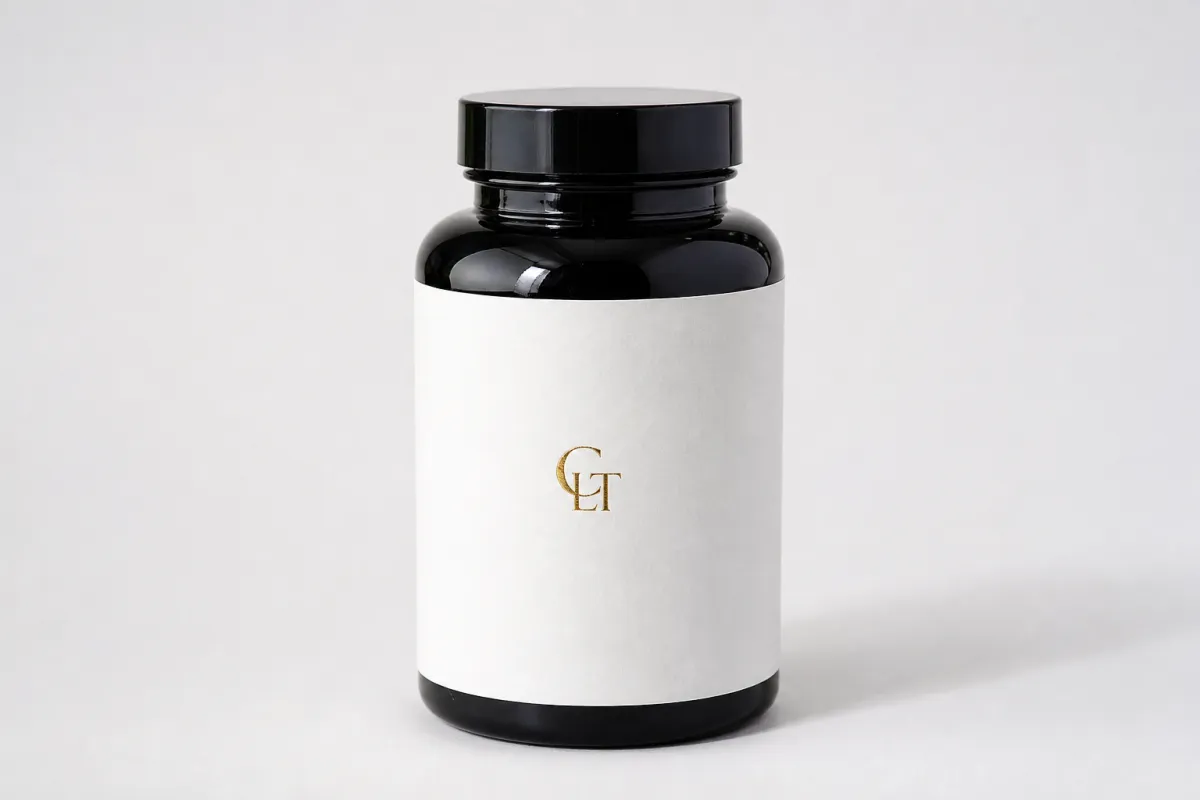
Buyers usually compare three label formats first: roll labels, sheet labels, and cut labels. Each one changes the way custom supplement labels MOQ behaves in production. Roll labels are the most common choice for automated application because they feed cleanly through a machine and store well in bulk. Sheet labels fit hand application at smaller scale and can be practical when a team needs several designs in a short production window. Cut labels can work for sample packs, niche items, or runs that stay modest and stay manual.
The format should match the filling line, not habit. If a brand plans to bottle 5,000 units in a day, roll labels with the right core size, unwind direction, and spacing will usually beat a sheet format on speed and consistency. If the team is still packing by hand, a sheet can be easier to manage and less expensive to launch. That is the kind of detail that changes custom supplement labels MOQ more than most first-time buyers expect.
Material choice matters just as much. White BOPP is common in supplements because it handles moisture, warehouse swings, and humid environments better than basic paper. Paper can fit lower-cost short runs and often works well when the package lives in a dry setting and the branding does not need a film-based finish. Clear film and metallic film can create a premium effect, but they perform best when the artwork is built for them from the start. Without that planning, contrast drops and readability suffers.
Finish choices change both appearance and cost. Matte gives a quieter, more clinical feel. Gloss adds brightness and helps graphics stand out on shelf. Soft-touch shows up often in higher-end retail packaging, though it adds cost and is not always necessary for a product that needs clear dosage and warning text. Foil accents can lift a hero SKU, but they are usually a poor fit if the brand needs to keep custom supplement labels MOQ lean.
Compliance content is functional, not decorative. Supplement Facts panels, directions, warnings, lot codes, expiration dates, and barcodes need space, contrast, and a layout that survives handling in the warehouse, on the line, and at retail. A label can look polished and still fail the basic job of being readable. That is why packaging design and regulatory structure should be built together instead of one after the other. If the label has to squeeze in later, the results are usually awkward.
For a practical starting point on materials and package construction, the education resources at packaging.org are worth a look. If the product will move through distribution with repeated handling, it also helps to think about transport durability the same way a buyer would think about shipment testing. The ISTA testing community at ISTA is a useful reference for that mindset.
| Label format | Typical MOQ behavior | Typical unit cost at 5,000 pcs | Best use case | Main tradeoff |
|---|---|---|---|---|
| Roll labels | Often lower risk for repeat SKUs and machine application | $0.08-$0.22 | Automated bottling, higher volume, repeat reorders | Requires the correct equipment setup |
| Sheet labels | Useful for short runs and hand application | $0.10-$0.26 | Small batches, mixed labels, startup launches | Slower application speed |
| Cut labels | Can support limited runs and sample packs | $0.12-$0.30 | Manual labeling, special shapes, niche products | Less efficient for larger fills |
For many buyers, the real comparison is not format versus format. It is whether the chosen format fits the package, the line speed, and the order volume without pushing custom supplement labels MOQ beyond what the launch can absorb. That is a packaging decision, not a guess.
Specifications that change custom supplement labels MOQ and fit
Dimensions affect price more than many buyers realize. A label that is one inch wider may create more waste on the web or sheet, especially if the print layout no longer nests efficiently. That extra waste can raise the quote and shift the practical custom supplement labels MOQ upward because the supplier needs to recover more material and setup cost across the run. Small dimensional changes are not small in production terms.
Adhesive selection should be treated as a packaging decision, not a generic line item. Glass, PET, and HDPE behave differently. Cold storage, freezer storage, condensation, and curved bottle shoulders all affect how a label sits after application. If the adhesive is too aggressive, the stock may wrinkle or flag during application. If it is too weak, the edge can lift after a few days in distribution. Those failures create waste, and waste gets expensive fast when custom supplement labels MOQ is tight.
For supplements, the line between machine application and hand application matters. A roll label can be built for a specific unwind direction, core size, and gap spacing so it feeds cleanly on equipment. Change those details and the label may still print fine, but the production team may fight it on the line. Hand-applied labels give more freedom, yet the result is usually slower and more variable. The production method should be confirmed before the quote is finalized.
Print technology changes the order structure as well. Digital printing is usually a better fit for flexible short runs, artwork changes, and multiple SKUs. Flexographic printing is often more efficient at larger volumes where the setup is spread across more units. White ink, spot colors, metallic effects, and variable data can all move the economics around. If the project needs a lot number or expiration date in a fixed position, that should be part of the spec from the start. Each detail influences custom supplement labels MOQ in a different way.
There is a material angle too, especially if the brand wants paper-based packaging for certain SKUs. FSC-certified paper can support documented sourcing claims on the broader package, but only use that language if the chain of custody and usage actually line up. If sustainability messaging matters, the supply chain needs to back it up. A clean material choice usually works better than scattering mixed claims across the label, carton, and outer pack. That is where branded packaging starts to look credible instead of decorative.
One useful rule: the more custom the label structure becomes, the harder it is to keep custom supplement labels MOQ low. Complex diecuts, heavy coverage, metallic substrates, and multi-panel layouts all add pressure to the minimum. If the goal is a launch run that can be repeated without rethinking the package, standardizing the shape and finish usually saves more than trying to save a few cents on the first quote.
Custom supplement labels MOQ pricing: what drives the quote
Price is usually built from six things: size, material, finish, quantity, number of SKUs, and proofing or artwork complexity. Buyers often focus on unit price because it is the easiest number to compare, but the better question is total landed cost. A lower per-label quote can hide a larger freight charge, a higher setup fee, or a minimum that is too large for the first sell-through window. That is where custom supplement labels MOQ becomes a business constraint rather than a print spec.
MOQ can also be counted in different ways. Some suppliers count it per design. Others count it per size, per material, or per production run. A 5,000-label minimum on one artwork file is very different from a 5,000-label minimum that can be split across two flavors using the same substrate and finish. Before comparing quotes, ask the supplier exactly how the minimum is measured. That one question removes a lot of pricing confusion around custom supplement labels MOQ.
The tradeoff is straightforward: smaller runs reduce inventory risk, but they usually raise unit cost because setup is spread across fewer labels. Larger runs lower unit cost, but they tie up cash and create more exposure if the formula changes, the supplement facts panel is revised, or the bottle size shifts. From a packaging buyer’s point of view, the right order is the one that matches current demand and leaves room for the next batch.
Here is a practical comparison that many supplement brands use as a starting point.
| Order strategy | Estimated unit cost | Inventory risk | Best fit |
|---|---|---|---|
| Smallest practical MOQ | $0.14-$0.32 | Low to moderate | First launch, testing, limited cash flow |
| Balanced reorder | $0.08-$0.20 | Moderate | Stable SKU with visible demand |
| Higher-volume production | $0.05-$0.14 | Higher | Established line with predictable sell-through |
There are also practical ways to lower cost without creating packaging risk. Standardize label sizes across flavors where the format allows it. Limit finishes to one or two. Use a common stock for the whole line. Keep the artwork consistent so reorders stay simple. Those moves often do more to improve unit cost than chasing a slightly cheaper material that causes application trouble later. The goal is not the cheapest label. It is the best custom supplement labels MOQ for the current stage of the business.
One more point: if the supplement line also uses custom printed boxes or other retail packaging components, compare the label order against the rest of the packaging budget. A brand can overbuy labels while starving the carton or shipper budget, or the reverse. The better strategy is to look at the full packaging stack and set the custom supplement labels MOQ in context.
Production process and timeline for custom supplement labels
The fastest orders usually start with clean information. A typical workflow looks like this: inquiry, spec intake, artwork review, proof approval, production, finishing, inspection, packing, and shipment. Every step matters, but the schedule usually slips at the proof stage. Missing dielines, incomplete copy, barcode issues, or last-minute regulatory edits can push the order back more than the actual print run. For a buyer managing custom supplement labels MOQ, that is where time gets lost.
Approval speed matters because print time is often not the bottleneck. The bottleneck is usually the back-and-forth before the press starts. If the supplier has to chase final ingredient text, a warning line, or the correct net contents statement, the clock keeps moving. A clean file with a final layout can often cut days off the process. For many standard supplement label jobs, production often lands in the 12-15 business day range after proof approval, though that still depends on size, finish, quantity, and scheduling load. Rush work is possible sometimes, but only when the details are final and the material is already available.
Quality control should not be treated as a box-ticking exercise. Color consistency matters if the brand has multiple flavors or SKUs. Barcode readability matters if the labels will be scanned through inventory or retail systems. Adhesive testing matters if the bottle shape is unusual or the pack sees temperature swings. Trim accuracy matters because a small error can throw off application on the bottling line. Those checks are basic, but they are what keep custom supplement labels MOQ from turning into a production delay.
Here is the useful way to think about timeline variables:
- Rush options: useful only when the artwork is final and the material is in stock.
- SKU complexity: more sizes, flavors, or finishes usually mean more handling time.
- Special materials: clear film, foil, or unusual adhesives may extend lead time.
- Ship distance: freight can add days even if print time is on target.
- File quality: clean vector art and final copy usually move fastest.
Packaging professionals often talk about speed as if it were a machine setting. It is not. It comes from preparation. A well-organized order with a clear spec sheet almost always beats a rushed order with a vague brief. That is especially true when custom supplement labels MOQ is low, because there is less room to absorb mistakes through inventory depth.
If the labels are part of a broader product packaging launch, keep the carton, label, and fill timeline aligned. A delay in the label can stall the whole line, even if the supplement formula and bottles are already ready. Ordering labels in the same planning window as the rest of the branded packaging is usually the safer move.
Why choose us for custom supplement labels MOQ orders
For supplement brands, the value is not just printing. It is clarity. A supplier should be able to explain the minimum, the material, the finish, the application method, and the reorder path without making the buyer decode the process. That matters when custom supplement labels MOQ has to fit a launch budget, a compliance review, and a production deadline at the same time.
Multiple-SKU brands feel that pressure most. A flavor swap, a dosage change, or a seasonal promotion can turn a simple reorder into a small packaging project. The right supplier keeps size, stock, and finish choices organized so the team does not have to relearn the order every time. That is especially useful when one brand also manages Custom Labels & Tags for other product lines or uses Custom Packaging Products to coordinate the rest of the shelf set.
Reorder consistency is another reason the relationship matters. Once a supplement label is approved, the next run should match the first in color, Fit, and Finish. If the second order shifts by even a little, someone on the operations side has to inspect every roll or sheet, and that eats time. Strong process control protects the brand and keeps custom supplement labels MOQ from becoming a recurring headache.
There is also a commercial reason buyers prefer straightforward specs. Transparent minimums make it easier to compare suppliers on real numbers instead of assumptions. A clean quote should show the substrate, label size, quantity, finish, and shipping setup clearly enough that the buyer can compare it against other options and against broader package branding costs. That kind of clarity helps the brand avoid over-ordering labels while underinvesting in the rest of the packaging system.
Practical buying lesson: the best custom supplement labels MOQ supports launch speed, margin control, and compliance together. If one of those breaks, the order is not truly efficient. A low minimum that causes quality problems is not a win. A cheap unit price that locks up too much cash is not a win either.
Supplement buyers often ask how this fits with other packaging channels. The answer is simple: labels should match the broader product packaging strategy, not fight it. If the brand is aiming for a premium shelf presence, the label needs to support the retail packaging story. If the brand is early stage, the label should be clean, legible, and economical. Either way, the MOQ should be set to protect the business, not just fill a press sheet.
For brands that want a reliable launch path, the best custom supplement labels MOQ orders are usually standardized, repeatable, and ready to scale. That is the kind of order that keeps the next reorder simple instead of turning it into another round of troubleshooting.
What to send for a fast quote and first order
The fastest quote starts with the right inputs. Send bottle or jar dimensions, the label area, quantity per SKU, substrate preference, finish preference, and whether the labels will be hand applied or machine applied. If any of those are missing, the supplier has to guess, and guessing is how custom supplement labels MOQ gets quoted too high or too low.
Artwork matters just as much as measurements. Send the cleanest file you have, plus a photo of the current package if this is a replacement label. If the copy is still moving, say so. A good buyer does not pretend the compliance text is final when it is not. That honesty protects the schedule and gives the proofing process room to do its job.
It often helps to ask for two pricing paths. One should be optimized for the lowest total spend. The other should be optimized for the smallest practical MOQ. That side-by-side view makes the tradeoff visible instead of hiding it inside a single number. For many brands, the comparison is enough to show whether the first run should stay lean or whether a slightly larger order creates a better unit cost without overloading cash flow.
Use this simple checklist before you request the quote:
- Confirm the container size and label placement.
- Decide on roll, sheet, or cut format.
- Choose the substrate and finish.
- Identify any compliance text, barcode, or lot code requirements.
- State the target ship date and the reason the order is being placed.
That last point helps because it gives the supplier context. A reorder for a steady SKU is not the same as a label order blocking a launch. If the project is holding up fill, say that. If it is a test run, say that too. The clearer the business goal, the more accurately the supplier can shape custom supplement labels MOQ around the actual need instead of a generic production assumption.
If you want a broader view of what can be paired with the label order, our FAQ covers common ordering questions, and our Custom Packaging Products page is useful if the label is only one part of the package stack. The strongest orders tend to come from teams that think about the whole launch, not just one line item.
For brands trying to move quickly without buying excess inventory, the right custom supplement labels MOQ is the one that supports the launch plan, keeps compliance intact, and leaves room for the next order. That is the real metric.
Custom supplement labels MOQ should never be treated as a random vendor threshold. It is a production strategy, a cash-flow safeguard, and a packaging decision all at once. Choose the minimum that fits the real launch, not the most optimistic forecast, and the label order becomes easier to manage from first proof to reorder.
What is the typical custom supplement labels MOQ for a new brand?
The minimum usually depends on material, print method, size, and whether the MOQ is counted per design or per run. Standard materials and common label sizes often support lower minimums than specialty finishes or complex diecuts, so ask for the number in writing before you commit to a launch plan.
Can I combine multiple supplement label designs under one MOQ?
Sometimes, yes, if the supplier allows shared stock, size, and finish across the designs. If each SKU has different dimensions or materials, the MOQ may be separate for each version. Combining designs is often the easiest way to keep custom supplement labels MOQ manageable without increasing inventory risk.
What do you need to quote custom supplement labels MOQ accurately?
Provide package dimensions, label size, quantity, material, finish, and whether the labels are for roll or sheet application. Include the artwork file or a current label photo, plus any required compliance text or barcode details. The more complete the spec sheet, the closer the quote will be to the final order.
How does custom supplement labels MOQ affect turnaround time?
The biggest schedule delays usually come from proof approval and missing artwork details, not from the print run itself. Larger or more complex orders can take longer if they require special materials, multiple SKUs, or extra quality checks. Finalized copy and a clean dieline usually shorten the path to production and keep the custom supplement labels MOQ process moving.
How can I reduce unit cost without ordering too many labels?
Use standard sizes, keep finishes simple, and avoid unnecessary material upgrades unless they serve the package. Order multiple SKUs together if they can share the same stock or production setup. Plan reorders early so you can compare a slightly larger run against the cost of carrying excess inventory, which is often the most practical way to improve unit cost.
Actionable takeaway: start with the smallest custom supplement labels MOQ that covers the first sell-through window, then standardize size, stock, and finish so the next order prints faster and costs less. That keeps the launch flexible without letting inventory run ahead of demand.

