Custom tags and labels do a lot more than identify a garment. They influence how a buyer reads quality in the first few seconds, before the fabric is handled and long before stitching is inspected. A sharp hang tag, clean print, and correct attachment make a shirt feel retail-ready. A weak one can make a good product look unfinished.
Brands often treat these pieces as an afterthought, then wonder why the line feels inconsistent. In practice, they sit inside the larger system of product packaging, package branding, and retail presentation. If a line includes Custom Packaging Products or bundles with Custom Labels & Tags, the presentation has to match across the board. Otherwise the collection looks assembled from mismatched parts instead of designed as one system.
The keyword here is not decoration. It is consistency. Good tags and labels reduce rework, support compliance, help with warehouse handling, and keep different SKUs visually aligned. That matters whether you are launching a small private label line or scaling an established apparel brand.
Why Labels Change the Way Clothing Sells
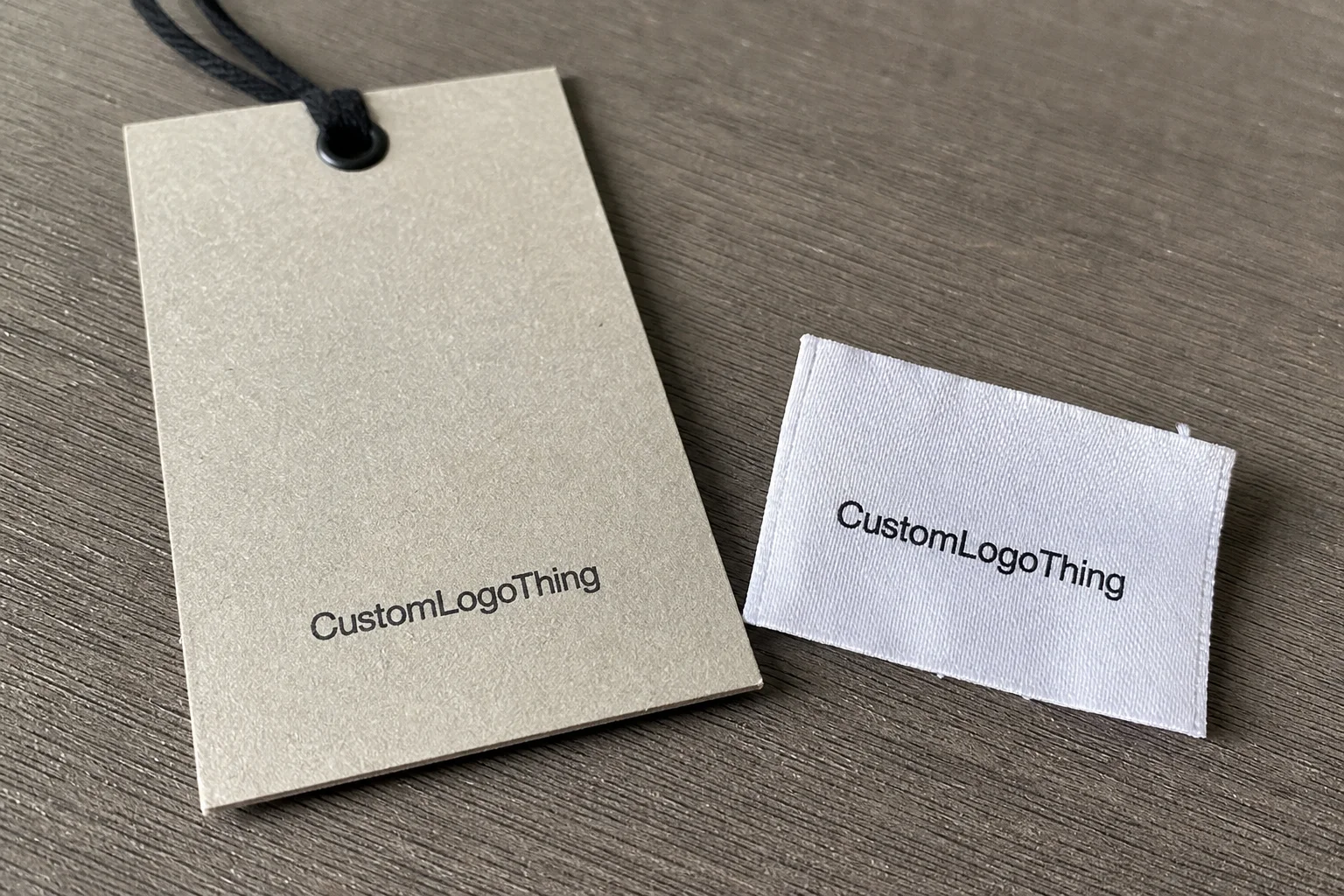
A buyer sorts a rack quickly. Sometimes too quickly. In that short window, the hang tag, neck label, care label, and finishing details do more selling than a product page ever will. Paper weight, print density, fold quality, and the way the tag hangs from the garment all signal whether the item belongs in a discount bin or on a retail wall.
That is especially true for newer brands. When there is no name recognition to carry the sale, the physical presentation has to do more work. A flimsy tag or a crooked label creates doubt. A cleaner build makes the product feel more deliberate, even when the garment itself is simple. This is one reason custom tags and labels often have a larger impact on perceived value than the raw unit cost suggests.
There is also a pricing signal built into the tag. A premium tee with a weak hang tag undercuts its own price point. A rugged workwear piece with a soft, delicate label system sends the wrong message. The same logic applies to the rest of the shelf or mailer experience: a brand that gets the labels right usually gets the retail packaging right too, from insert cards to custom printed boxes.
A cheap tag is expensive. It can trigger reprints, slow packing, create retail friction, and make an otherwise strong product look unfinished.
Better specs also reduce operational problems. When the size tab, care copy, barcode, and brand mark are all built into one coherent system, the line is easier to pack and easier to restock. Cohesion matters more than most buyers expect. A collection feels more expensive when the tags, labels, and packaging all speak the same design language.
That does not mean everything needs to be ornate. In fact, overdesign is one of the fastest ways to make an apparel item look less credible. The right level of finish depends on price tier, fabric type, season, and how the product will be sold. A basic tee does not need theatrical packaging. A premium capsule does not benefit from a rushed, generic label set.
What Custom Tags and Labels Actually Include
Buyers often use the terminology loosely, which is where orders go wrong. Custom tags and labels usually refers to a mix of visible, functional, and compliance-driven pieces. A complete order may include hang tags, Woven Neck Labels, printed care labels, size tabs, barcode stickers, and insert cards. Some components are there to sell the brand. Some are there to satisfy regulations. Some exist purely to help the warehouse or retail team move faster.
Here is the practical breakdown:
- Hang tags sit outside the garment and carry the main visual story, price, SKU, size, and sometimes a promo message.
- Woven neck labels are sewn into the garment and usually show brand identity, size, or both.
- Printed care labels explain washing instructions, fiber content, and origin details where required.
- Size tabs help retail staff and fulfillment teams sort inventory quickly.
- Barcode or SKU stickers support scanning, binning, and stock control.
- Insert cards and packaging slips provide storytelling, assembly guidance, or a simple brand message.
Material choice changes both the look and the job. Coated paper offers a smoother print surface and sharper color. Uncoated stock feels more natural and less polished. Kraft creates a warmer, earthier impression. Woven polyester is durable and common for everyday apparel. Satin is smoother against the skin and often used where comfort matters inside the collar. Cotton can suit softer or heritage-driven branding. Heat-transfer or printed labels are useful when you want to reduce bulk or avoid scratchiness inside the garment.
Attachment is not a minor detail. String, safety pin, plastic loop, adhesive backing, sewn-in label, and heat seal all affect cost, speed, and how the garment feels once it reaches the customer. A label that irritates the skin creates complaints even if the rest of the product is solid. A tag that tears too easily can cause trouble on a sales floor. A barcode sticker that falls off during packing is pure waste. None of that is theoretical; it shows up in returns, delays, and rework.
It helps to think of the order as a system rather than a single item. A brand might say it needs labels, but what it really needs is a coordinated kit with different parts serving different functions. If the hang tag communicates one tone, the care label another, and the packaging a third, the result feels fragmented. The customer usually cannot name the problem. They only know it feels off.
Cost, MOQ, and Unit Price Drivers
Pricing depends on quantity, stock, print method, finishing, and the number of components in the order. A single paper hang tag is straightforward. A coordinated set that includes tag, neck label, care label, size tab, barcode sticker, and insert card is a different job entirely. The unit price rises because setup, handling, and quality control all increase.
For reference, these are common rough ranges at mid-level quantities. Exact pricing still depends on art, size, and packing method, so these should be treated as working numbers rather than fixed rates.
| Option | Typical Material | Typical Unit Price | Usual MOQ | Typical Lead Time |
|---|---|---|---|---|
| Basic paper hang tag | 300-350gsm coated or uncoated stock | $0.06-$0.18 | 250-500 pcs | 5-10 business days |
| Woven neck label | Damask or satin weave | $0.08-$0.30 | 1,000-3,000 pcs | 10-18 business days |
| Printed care label | Polyester, satin, or cotton tape | $0.04-$0.12 | 500-1,000 pcs | 7-14 business days |
| Premium mixed kit | Multiple components with finishing | $0.18-$0.60 | 500-1,000 sets | 12-20 business days |
Premium features move the price quickly. Soft-touch coating, foil stamping, embossing, die-cut shapes, stitched edges, woven construction, and specialty packing all add labor or tooling. Mixed kits cost more because the supplier has to coordinate multiple parts and verify that everything matches. If the order must be packed by SKU, sorted by size, or delivered in retail-ready bundles, expect extra handling charges.
MOQ is not random. Digital paper runs can stay flexible because setup is light. Woven or specialty items often need higher minimums because loom time, plates, or tooling have to be recovered. If one quote is dramatically cheaper than the others, something is missing. Usually it is finishing, proofing, packing, or the fact that the spec was never fully locked.
When comparing bids, make sure the specs match exactly:
- Same size and shape
- Same stock or weave
- Same print count and color method
- Same finish
- Same attachment method
- Same packing format
- Same shipping terms
If you are also buying broader retail packaging, compare that quote structure the same way. A low number only means something when the spec is identical.
There is a practical budgeting rule many teams ignore: build in a cushion for samples, spoilage, and last-minute freight changes. A tight quote can still become a messy purchase if the shipment needs repacking, the proof requires revision, or the launch date moves closer and air freight replaces ground. Cheap on paper is not the same as cheap in operations.
Production Steps and Turnaround
The cleanest production flow is predictable. First comes the brief. Then artwork setup. Then proofing. If the project needs it, sample approval follows. After that comes production, quality check, packing, and shipment. Skip one of those steps and the order usually pays for it later with delays or reprints.
Simple printed tags can move quickly. Woven labels, special finishes, or mixed-component kits take longer because there are more opportunities for a detail to go sideways. A realistic timeline for a basic printed tag order might be 5-10 business days after proof approval. A woven label run may land closer to 10-18 business days. Complex kits can push beyond that, especially if the order has to be sorted by size or SKU.
The most common delay points are predictable:
- Missing dielines or wrong dimensions
- Artwork sent in the wrong file format
- No final color reference
- Late care-copy or compliance text
- Quantity changes after proofing
- Shipping details that are not confirmed until the last minute
That last item causes more damage than buyers expect. A production team can finish the goods and still lose days if the delivery address, freight method, or carton count is unclear. For broader packaging and retail presentation, the standards used by the Institute of Packaging Professionals are a useful reference point for teams trying to keep specs disciplined. It is not exciting reading. It does, however, save money.
Artwork prep is where a lot of hidden risk sits. A file that looks fine on screen may fail in print because the font is too small, the contrast is too low, or the punch hole lands on top of a logo element. Proofing should not be a skim. Check the front and back, verify the cut line, confirm the copy, and review the placement of the string hole, barcode, or sewing allowance. If the order includes multiple SKUs, each one needs its own check.
If turnaround matters, the fastest improvement is not pressure. It is clarity. Finalize the art before placing the order. Lock dimensions early. Give one person internal approval authority. Confirm the shipping destination before production starts. If a launch date depends on labels, treat that timeline like any other production milestone.
Choosing Materials, Finishes, and Attachment Methods
Material choice should follow the product, not the trend. Luxury basics need a different feel than activewear. Kidswear has different durability and comfort needs than workwear. A soft jersey tee can tolerate a delicate woven label. A heavy overshirt or utility piece may need a tougher tag and a more durable attachment. There is no universal best option.
Finish changes how the piece reads in the hand. Matte feels controlled and restrained. Gloss reads louder. Foil catches light and signals premium. Embossing adds tactile depth. Soft-touch coating changes the surface feel in a way buyers notice immediately, even if they cannot explain why. That reaction matters because packaging works partly through instinct. People decide before they articulate the reason.
Attachment deserves the same attention. The wrong pin, loop, or sew-in style can damage garments, slow packing, or annoy retail staff who have to remove it later. If the label sits against skin, comfort matters. If it will be washed, fade resistance matters. If it sits inside the neck, scratchiness matters. These are basic checks, and brands still miss them.
For paper-based parts, environmentally certified stock can be worth the modest price increase. If sustainability claims are part of the pitch, look at FSC-certified paper and keep the sourcing language accurate. False green language is a fast way to lose trust. It is better to specify the real material plainly than to pad the copy with vague claims.
One material choice that often gets overlooked is label backer and adhesive quality. For barcode stickers and size labels, poor adhesive can create scanning problems or leave residue on packaging. For sewn labels, thread choice affects both durability and appearance. For heat-applied pieces, the application temperature must match the fabric or the bond fails. Those are not glamorous details, but they are exactly where production quality becomes visible.
The cleanest rule is simple: match the spec to the customer experience. If the garment is supposed to feel rugged, delicate presentation will look off. If it is supposed to feel premium, flimsy tags will kill the impression. The label is not just attached to the product. It is part of the product.
Keep the system aligned with the rest of the line as well. If the garments are boxed, folded, and shipped with insert cards, the tags should echo the same tone as the package branding. A coordinated set of tags, labels, and product packaging usually looks more expensive than scattered upgrades across the order.
Common Mistakes That Create Waste or Rework
The repeat offenders are easy to spot once you have seen enough orders. Too much copy on a small tag. Font sizes that look fine on a screen and disappear in print. Forgotten care symbols. Barcode issues. Artwork that ignores bleed or punch placement. All of these are small until they are not.
Compliance errors are the expensive ones. Missing fiber content, country-of-origin details, or wash instructions can force a reprint after the garments are already packed. That is a painful way to learn the value of proofing. The printer will not assume your regulations. They will print what you approve.
Spec drift between teams creates another kind of waste. Design wants something beautiful. Operations wants something quick to assemble. Sourcing wants the lowest number on the page. Those goals can coexist, but only if the final spec is locked before production begins. Once the order is open, every last-minute “small change” becomes a cost change.
Approved proofs deserve a real review, not a quick glance. Check color, spelling, icon placement, finish, hole location, and the back side. If the item is double-sided, inspect both sides. If the kit includes multiple parts, review all of them. Production does not care that one line of copy was missed. It will print anyway.
The hidden waste problem is quantity. Order too few and you scramble for a second run. Order too many and dead stock sits in a drawer while the next launch needs a different version. That is why experienced buyers plan custom tags and labels around the product lifecycle, not just the order sheet. They think in variants, replenishment risk, and the likelihood of a style update.
If the labels are wrong, the whole order feels wrong. That is true even when the garment itself is fine.
Another common mistake is treating every SKU as if it will have the same use case. A flagship item may deserve heavier stock, foil, or a stitched edge. A seasonal colorway may only need a lighter run with the same visual system. Matching the finish to the sales role is one of the simplest ways to avoid waste without cheapening the brand.
Expert Tips and Next Steps for a Cleaner Order
Start with a one-page spec sheet. Include quantity, dimensions, material, finish, attachment method, print details, packing format, and the delivery date you actually need. That one page will save more time than ten back-and-forth emails. It also makes quotes easier to compare, which is half the battle.
Get three quotes using the same spec. Same stock, same size, same finish, same attachment, same shipping terms. If you do not standardize the request, you are not comparing suppliers. You are comparing guesses. That is how buyers end up choosing the cheapest number and then spending the rest of the week cleaning up the fallout.
If the product is new, ask for a sample or a small pilot run. A few hundred pieces are cheap insurance compared with fixing a thousand tags after print. The goal is to catch layout problems, color drift, material issues, or attachment failures before they become inventory.
Organize the order around the garment lifecycle:
- Launch: What the buyer sees first
- Retail display: What the shelf or hanger needs to do
- Packing: What speeds assembly and keeps SKU control clean
- Wash care: What must survive use and laundering
- Restock: What can repeat without confusion
That sequence makes the spec easier to defend. If a tag does not serve one of those stages, it is probably decoration. Decoration is fine, but it should be intentional and priced accordingly.
For brands that also buy packaging components, keep the label order aligned with any mailers, inserts, or Custom Labels & Tags used across the line. A tighter system usually means fewer SKUs, fewer mistakes, and less waste. If the labels, inserts, and boxes all feel like they belong together, the customer notices. If they do not, they notice that too.
One more practical habit helps a lot: keep a master file of approved label specs. Once a design works, save the exact dimensions, materials, finish, and vendor notes. That prevents silent drift between seasons and protects the brand from small errors that become expensive over time. A six-month gap is enough for someone to “improve” the wrong detail.
Once the spec is locked, place the custom tags and labels order with final artwork, final counts, and a realistic lead-time buffer. That is the boring advice. It is also the advice that keeps a launch on schedule.
Frequently Asked Questions
What is the difference between custom tags and labels for clothing?
Tags usually sit outside the garment and help sell the product, while labels are sewn, printed, or attached inside the garment for identification, sizing, care, and compliance. Most brands need both. One supports presentation. The other supports regulation and day-to-day use.
How much do custom tags and labels usually cost?
Pricing depends on quantity, material, print method, finishes, and whether you are ordering a single item or a full kit. Simple paper tags can be inexpensive at scale, often in the low cents per unit. Woven labels, specialty finishes, and small runs raise the price quickly.
What information should be on clothing labels?
At minimum, include size, fiber content where required, care instructions, and country of origin if your market expects it. If the product is sold through retail, add any barcode, style code, or internal inventory detail the buyer needs.
How long does production usually take for custom tags and labels?
Simple printed items can move quickly, but woven labels, specialty finishes, and mixed kits usually need more time for proofing and production. The fastest way to lose time is to submit incomplete files or keep changing details after the proof stage.
What should I send when requesting a quote for custom tags and labels?
Send quantity, dimensions, material preference, finish, attachment method, print details, and the delivery date you actually need. If possible, include a reference image or previous sample so the supplier can quote the same spec instead of guessing.
Should I order labels before or after final garment approval?
After final garment approval is safer. Minor fit or fabric changes can affect label placement, care text, and even the right attachment method. Locking the garment first reduces the odds of reprinting a finished label set.