Buyer Fit Snapshot
| Best fit | Custom Tamper Evident Mailers projects where brand print, material claims, artwork control, MOQ, and repeat-order consistency need to be specified before quoting. |
|---|---|
| Quote inputs | Share finished size, material target, print colors, finish, packing count, annual reorder estimate, ship-to region, and any compliance wording. |
| Proofing check | Approve dieline scale, logo placement, barcode or warning zones, color tolerance, closure strength, and carton packing before bulk production. |
| Main risk | Vague material claims, crowded artwork, missing packing details, or unclear freight terms can make a low unit price expensive after revisions. |
Fast answer: Custom Tamper Evident Mailers: How They Protect Shipments should be specified like a repeatable production item. The safest quote records material, print method, finish, artwork proof, packing count, and reorder notes in one written spec.
Production checks before approval
Compare the actual filled-product size with the drawing, then confirm tolerance on folds, seals, hang holes, label areas, and retail display edges. Reserve space for logos, QR codes, warning copy, and material claims before decorative graphics fill the panel.
Quote comparison points
Review material grade, print process, finish, sampling route, tooling charges, carton quantity, and freight assumptions side by side. A quote is only useful when the supplier can repeat the same color, closure quality, and packing count on the next order.
Custom Tamper Evident Mailers: how they protect shipments sounds like a narrow buying decision until one broken seal turns into a refund, a support ticket, and a trust problem before the parcel is even scanned. A well-specified mailer makes tampering visible, speeds up intake decisions, and gives the brand something a standard poly bag or carton cannot: a clear signal that first opening actually matters.
Custom Tamper Evident Mailers: Why a Tiny Tear Can Matter
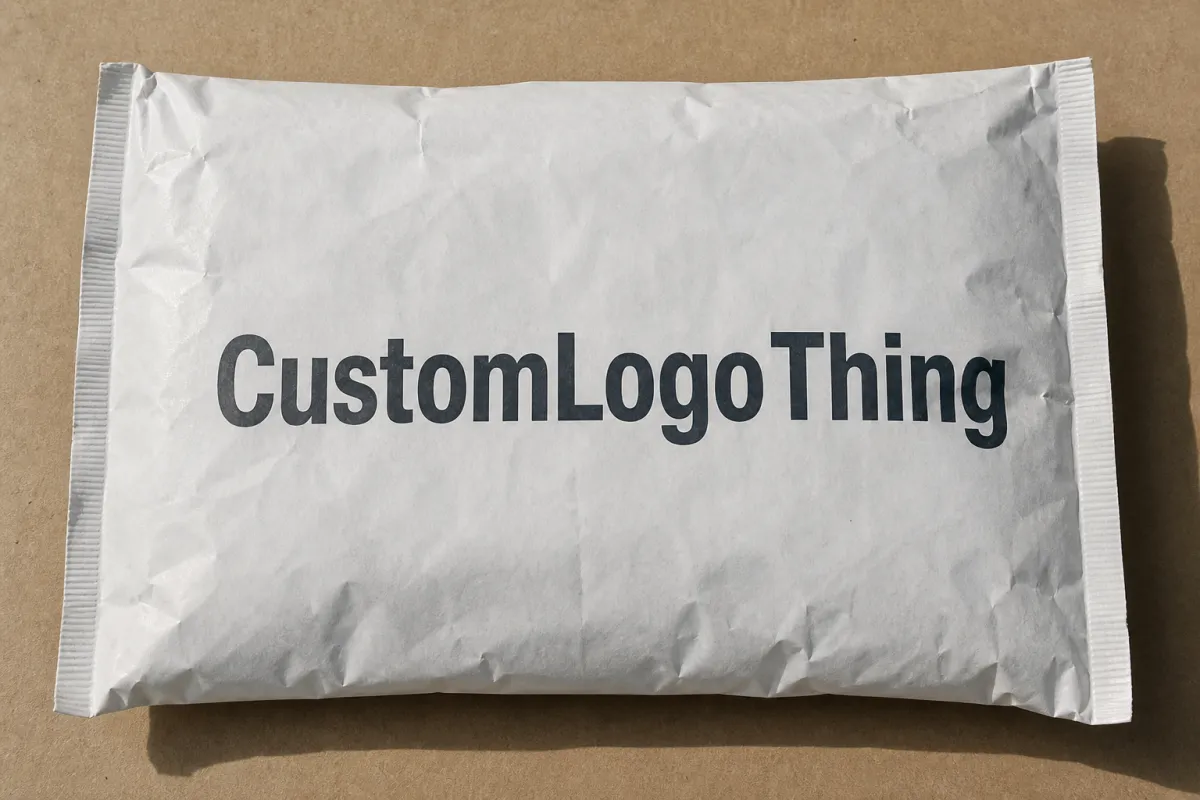
A tiny tear can create an outsized problem. If a receiver sees a split seal, a missing strip, or a void message where none should be, the shipment changes status immediately. It may still be physically present, but operationally it is no longer a clean delivery. That is why custom tamper evident mailers matter for brands that cannot afford ambiguity. A broken indicator can trigger a claim, a replacement, or a quarantine check before the package even gets into the hands of the intended recipient.
From a packaging buyer's point of view, the core value is not just protection. It is visible accountability. Standard poly mailers handle dirt, scuffing, and light moisture. Cartons add crush protection and stack strength. Neither one tells the customer, warehouse, or carrier whether the contents were opened and resealed somewhere in transit. Custom tamper evident mailers are built to make that question easier to answer. They do not need to stop every intrusion attempt. They only need to make interference obvious enough that no one has to guess.
There is a practical limit here, and buyers should be honest about it. Tamper evidence is not the same thing as tamper proof. A determined person can still damage, open, or replace a parcel if they have time and tools. The real value is in visibility, faster triage, and fewer gray-area disputes. For high-trust shipments, that is enough to matter.
That distinction shows up across a wide range of product packaging programs. Apparel brands use tamper-evident packaging when returns, swaps, or fraud claims need cleaner controls. Supplement and beauty companies care because product purity and package branding both affect trust. Subscription kits, documents, replacement parts, electronics accessories, and regulated items all benefit when the outer package gives a simple first-opening signal. In some cases, the mailer is the only visible layer before the customer reaches the product.
There is always a tradeoff. Security, speed, branding, and cost rarely improve together unless the mailer is chosen deliberately. A thicker film may resist puncture better, but it can also raise cost and reduce flexibility on a fast packing line. A bold printed surface can strengthen package branding, but too much graphics coverage can bury the warning language or confuse the opening cue. The best custom tamper evident mailers solve for the actual shipping lane, not for a spec sheet in isolation.
If the packer has to pause and wonder whether the seal is right, the design is already too complicated. The goal is instant visual confirmation: sealed, unsealed, or compromised.
For brands balancing branded packaging and operational discipline, the real question is simple: does the outer package help people make the right decision faster? In practice, that is what separates a decorative mailer from a protective one. The mailer should not just look like retail packaging. It should communicate that the shipment has a defined opening point, a known seal line, and a clear tamper signal if something goes wrong.
How Custom Tamper Evident Mailers Work
Most custom tamper evident mailers rely on one or more mechanisms that leave irreversible evidence when the package is opened. The most common are pressure-sensitive adhesive closures that tear or delaminate once lifted, tear strips that split the film cleanly, void patterns that appear when a seal is disturbed, and destructible seals that fragment rather than peel. The objective is not mystery. It is readability. A receiver should be able to tell at a glance whether the package was opened, attempted, or left untouched.
The difference between tamper-evident and tamper-resistant is worth keeping clear. Tamper-resistant packaging makes opening harder. Tamper-evident packaging makes opening visible. In many shipping environments, that is the better business decision. A fully resistant design can slow packing, frustrate customers, and add cost without guaranteeing safety. Evidence, by contrast, supports faster triage. If the seal is compromised, the team can isolate the parcel, document it, and decide whether to inspect, replace, or reject it.
Custom printing adds another layer. A mailer can carry warning text, serial marks, QR codes, brand colors, and opening instructions that reinforce authenticity. That matters in branded packaging because the package itself becomes part of the proof system. A clean print panel can show the expected graphics, the correct return address zone, and the tamper indicator in one view. If the design is thoughtful, the customer does not have to decode the structure. They can simply see whether the seal is intact.
Material selection drives how well the indicators hold up. A co-extruded polyethylene film in the 2.5-4 mil range is common for lightweight mailers that need decent puncture resistance. Multilayer laminates can improve stiffness and barrier performance, while paper-based constructions offer a different visual signal and can fit more sustainable product packaging programs. Paper, though, reacts differently to moisture and abrasion. That is why the best choice depends on the lane, not just the marketing goal.
Some custom tamper evident mailers also integrate opening features that support returns. For example, a dual-seal design may include a first-use closure and a second closure for the return journey. That can simplify reverse logistics, but only if the return workflow is clear. If the customer is expected to reseal the same mailer, the initial tear indicator must be unmistakable without making the return path clumsy. A well-designed system protects the outbound shipment and reduces confusion later.
Compatibility is another practical issue. Mailers that use dark graphics or patterned print fields still need clean zones for barcodes, routing labels, and pack slips. If the adhesive area overlaps with a print-and-apply label, scanning can fail. If the closure crosses a seam used by automation, the line may slow down. If the tamper indicator sits too close to a fold, the packer may accidentally activate it during packing. These are not theoretical problems. They show up in fulfillment centers the first week the new pack style goes live.
For reference, many teams benchmark their packaging tests against the International Safe Transit Association's published methods and related transport checks. A useful starting point is the ISTA testing framework for transit packaging, especially when a mailer must survive compression, vibration, and drop events without false tamper signals. That kind of testing does not guarantee perfection, but it gives the buying team a common language for risk.
Key Factors That Shape Security, Durability, and Branding
Size and fit come first because a poor fit creates problems that look like security failures. If a mailer leaves too much headspace, the product shifts, scrapes the inside wall, and can work against the seal. Excess movement also makes a package look under-packed, which is not a confidence booster for retail packaging or direct-to-consumer shipments. If the mailer is too small, the closure has to stretch harder than intended, which can create split seams or premature adhesive failure. A tight but realistic fit is usually the sweet spot.
Material performance comes next. Puncture resistance matters when products have corners, zipper pulls, hard cases, or other sharp points. Moisture resistance matters for long lanes, wet climates, and parcels that may sit on a dock. Flexibility matters because a rigid film can crack under folding stress, while an overly soft film can wrinkle and weaken around the seal. In practical terms, many teams compare film gauge, seal type, and surface finish in side-by-side samples before settling on a final spec. That comparison is often more useful than a supplier brochure.
Seal design affects both security and usability. A strong closure is valuable only if it can be applied consistently at line speed. A tear strip gives clear evidence but may require better alignment. Void messaging can be excellent for visibility, but the print must remain legible after handling. If your operation packs hundreds or thousands of parcels per shift, the closure should be intuitive enough that new staff can learn it in minutes rather than days. The best design is the one people actually use correctly.
Brand visibility is not just about color. It is about how the mailer supports package branding without undermining the evidence function. Full-coverage graphics can create a polished look, but they should leave enough contrast for warning text, seal markers, and handling instructions. In some programs, the mailer becomes the dominant branded packaging touchpoint because the customer never sees a box at all. That makes the print treatment more important, not less. A good mailer should feel deliberate, but it should never disguise the tamper cue.
Transit conditions can override assumptions from the sample table. Summer heat can soften adhesive behavior. Cold can make films brittle or reduce peel performance. Humidity can change how labels stick and how paper-based constructions behave. Long lanes, consolidation hubs, and mixed-carrier networks introduce extra handling, and each handoff adds a chance for abrasion or compression. A design that performs beautifully in a controlled room may still disappoint after 48 hours in a hot trailer and a rough sortation cycle.
It helps to compare options in a structured way before moving into production. The table below reflects typical tradeoffs for brands evaluating custom tamper evident mailers alongside other shipping formats. The numbers are directional, not promises. Film grade, print coverage, order size, freight, and current material pricing all move the final cost.
| Option | Best Use Case | Typical Unit Cost at 5,000+ Pieces | Security Signal | Main Tradeoff |
|---|---|---|---|---|
| Standard poly mailer | Low-risk apparel, soft goods, general ecommerce | $0.06-$0.12 | Low | No clear evidence of opening |
| Custom poly mailer with tear strip | Subscription kits, apparel, lightweight accessories | $0.12-$0.24 | Medium | Good visibility, but not always enough for higher-risk lanes |
| Custom tamper evident mailers | Beauty, supplements, documents, regulated or trust-sensitive shipments | $0.18-$0.40 | High | Higher setup and material cost, usually more planning required |
| Paper-based tamper-evident mailer | Fiber-forward programs and sustainability-focused product packaging | $0.22-$0.45 | Medium to high | Moisture and abrasion sensitivity can be higher than film |
If sustainability is part of the brief, the material discussion should be specific. Paper-based options may align better with fiber recovery goals, while film-based designs may offer better moisture resistance. For programs that want verified sourcing, look for FSC-certified paper and fiber standards rather than assuming all paper-based packaging is equal. That is the sort of detail that separates credible claims from vague marketing language.
There is no universal winner. The right choice depends on product packaging weight, route length, customer expectations, and whether the package is being treated as a simple shipper or as an extension of the brand. For a fashion subscription, print and ease of use may matter most. For a regulated supplement, first-opening evidence and lot traceability may matter more. For a premium electronics accessory, the package may need to do all of it at once.
Process and Timeline: From Artwork to Delivery
Good outcomes start before artwork. The discovery stage should define product dimensions, insertion method, shipping environment, risk profile, order volume, and any brand rules that affect color, copy, or panel layout. If a supplier is asked to quote without those inputs, the result is usually a fuzzy estimate that looks affordable until revisions start. A proper brief reduces surprises later. It also helps the team compare Custom Printed Boxes, mailers, and hybrid formats on equal footing.
Artwork and dieline approval can take longer than buyers expect because the seal placement, warning language, and print safe zones all interact. A tamper indicator cannot be placed wherever it looks nice. It has to sit where packers will actually close the mailer, and it must remain visible after folding and labeling. If the design includes serial marks or batch tracking, that should be built into the file early. A late change to the seal area can force another proof cycle, which adds days and sometimes weeks.
Sampling is where most hidden problems show up. A flat proof may look perfect, but a physical sample reveals whether the closure peels cleanly, whether the print cracks at the fold, and whether the item shifts once inserted. Good teams test the sample in real conditions: with the real product, the real label, the real tape or void seal, and the real packer. If a mailer is supposed to support e-commerce fulfillment at speed, it should be tested by the people who will actually touch it on the line.
There are a few tests worth requesting before full production:
- Drop tests to see whether the mailer stays closed and whether damage creates false tamper evidence.
- Compression checks to confirm the product and seal hold up under stack pressure.
- Temperature and humidity checks to see how the adhesive and film behave under hot, cold, dry, and damp conditions.
- Packer usability tests to measure how long it takes to seal, label, and inspect each unit.
If the program is shipping into difficult lanes, ask the supplier how the closure behaves under realistic transit conditions rather than asking for a generic claim of strength. A specification sheet is useful. A sample that survives a mixed-condition test is better.
Production usually follows a straightforward sequence: printing, converting, closure application, inspection, and packing. The exact steps vary by material and whether the mailer has a single-use or dual-use closure, but the logic is similar. After proof approval, many custom programs land in the 12-20 business day range, though larger orders, complex print coverage, specialty seals, or added testing can push that longer. If a launch date is fixed, the team should plan backward from it and leave room for sample approval, freight transit, and a possible second prototype.
That schedule discipline matters because packaging is rarely the last thing to go wrong. It is usually the first thing customers notice. A rushed mailer can slow the entire dispatch process, and the line cost of rework is often higher than the unit cost difference between one design and another.
Cost, Pricing, and MOQ Considerations for Custom Orders
Unit price is only one piece of the math. Material grade, print coverage, seal technology, size, and any special tooling all affect cost. A two-color design on a standard film is one thing. A full-coverage, high-opacity print on a thicker multilayer construction with a destructible seal is another. If the program also needs batch tracking, special tear behavior, or a return-ready second closure, the price moves again. In most cases, the mailer price reflects both the material and the complexity of getting the evidence function right.
MOQ, or minimum order quantity, deserves careful attention because it changes both the per-unit price and the inventory risk. Higher MOQs usually lower cost per unit by spreading setup across more pieces. That sounds attractive until the brand is left with several months of stock that no longer matches a new logo, a revised warning statement, or a changed pack size. For a fast-moving product line, an order that is too large can become a liability. The ideal MOQ is not the biggest one. It is the smallest one that still produces a sensible landed cost.
Hidden costs can be easy to miss in the quoting stage. Setup charges, plate or die costs, sampling fees, freight, and rush production fees all affect the real budget. Some suppliers bundle these neatly. Others separate them, which makes the first quote look better than the true landed cost. Buyers should ask for a total scenario: production price, freight estimate, sample charge, and any reprint fee if the proof changes after approval. That is especially important when comparing custom tamper evident mailers against stock items or against Custom Poly Mailers that may use simpler closures.
Here is a practical way to think about cost by volume and function:
- Low volume, high sensitivity: unit price may be higher, but the package protects trust and reduces manual checks.
- Mid-volume subscription programs: customization can pay back through lower damage claims and a better opening experience.
- High-volume, low-risk lanes: simpler custom print or stock mailers may be enough if the contents are not trust-sensitive.
There is also a behavioral cost to consider. If the mailer is awkward to pack, the line may slow by a few seconds per unit. That sounds minor until a team ships thousands of parcels a day. A three-second slowdown across 2,000 units is more than 1.5 hours of labor. A higher unit price may still be justified if the closure saves time and cuts rework, but the reverse can be true as well. Cheap packaging that causes stoppages is rarely cheap for long.
For teams building out broader branded packaging systems, it can help to compare the mailer against other formats in the same sourcing cycle. Sometimes the real choice is not mailer versus mailer. It is mailer versus a small carton, or mailer versus a more protective outer shipper paired with internal cushioning. That is where Custom Packaging Products becomes a useful menu rather than a single-item purchase. The best answer is the one that fits the actual order profile.
From a purchasing standpoint, the business case improves when the mailer reduces claims, replacement shipments, manual inspection time, or customer service escalations. Even a modest drop in fraud or damage can offset a higher upfront price. That is not always the case, and the math should be checked line by line. For trust-sensitive shipments, the return often comes from the problems that never reach the queue.
Common Mistakes That Undermine Tamper Evidence
The most common error is choosing the wrong adhesive or closure for the shipping lane. A closure that performs well in a controlled warehouse may fail in cold weather, humid freight, or high-dwell distribution. A mailer that needs a stronger seal should not be specified based on a short sample run in one climate. If the package is traveling across regions, the closure should be tested where the extremes are real, not theoretical.
Overstuffing is another predictable failure point. When the contents exceed the intended fill volume, the seam has to work harder, the opening path gets distorted, and the tamper feature may start looking like normal transit damage. The result is messy because no one can tell whether the tear came from opening or from strain. A right-sized mailer, by contrast, gives the seal room to perform as designed. This is one reason that size discipline is as important as print quality.
Branding can also get in the way. If the design uses too much dark coverage, the tamper indicator may disappear into the artwork. If the logo overwhelms the warning zone, packers and recipients lose the visual cue that matters most. Strong package branding should support the evidence function, not hide it. I have seen more than one attractive design turn into a support issue because the opening instruction was too small, too low contrast, or placed in the wrong part of the panel.
Another mistake is skipping real-world testing. A sample that looks fine on a table does not answer the important questions. Does the adhesive fail in heat? Does the tear strip leave a clean indicator or a ragged edge? Does the label still scan after the closure is pressed? Can the packer work fast enough without activating the tamper feature early? These are small questions individually, but together they determine whether the design can survive daily use.
It also helps to test against accepted transit methods rather than ad hoc handling. Many teams use standard drop, vibration, and compression references such as ASTM test methods and ISTA package testing routines before they approve a production run. That kind of structure catches weak points earlier, and it prevents the team from learning about them only after the first wave of shipments.
The return path is often forgotten until it causes confusion. If the mailer will be reused, inspected, or received by a different team, the return instructions must be obvious. A customer may not know which flap to reseal, whether the package is still valid after opening, or how the tamper indicator should look after the first use. If there is any ambiguity, service calls rise. The fix is usually simple: clearer graphics, a second closure, or a separate return label zone.
One more caution: do not assume that a mailer that looks premium is automatically better. In product packaging, premium cues and protective functions sometimes point in different directions. A glossy, highly printed surface may feel more upscale, but a matte finish may show tamper marks more clearly. A film that looks stronger may actually crease in a way that makes the evidence less obvious. The correct answer is the one that works in the hands of the fulfillment team and the customer.
Expert Tips and Next Steps for Better Shipping Security
Start with a pilot run. One product line, one fulfillment center, or one shipping lane is usually enough to reveal most of the practical issues. Measure claim rate, customer complaints, pack time, and rework. If the new mailer lowers inspection time by even a few seconds per unit, that can be meaningful at volume. If it creates confusion, it is better to discover that on 500 units than on 50,000.
Ask suppliers for more than a price. Request samples, closure data, lead-time scenarios, and proof of how the mailer is built. A serious supplier should be able to explain the film structure, print method, closure type, and recommended storage conditions. If the program has sustainability goals, ask for documentation on recycled content, recyclability limits, or fiber sourcing. If the program is more security-driven, ask for test results and failure modes. The strongest quotes come with enough detail to make a proper comparison.
Create a simple internal checklist for packers. It does not need to be elaborate. It just needs to answer four questions quickly: Is the product fully inserted? Is the seal aligned? Is the tamper indicator visible? Is the label zone clear? That small checklist can prevent the most expensive mistakes, especially during shift changes or peak season hiring. The first week of a new packaging format is where discipline matters most.
Coordinate procurement, operations, and customer service before launch. Procurement wants cost control. Operations wants speed. Customer service wants fewer disputes. Those goals do not always point to the same spec, so the team should agree on what success looks like before the first order ships. A single page with target unit cost, acceptable pack time, and expected claim handling can save a lot of friction later.
When the team is deciding between formats, use the data instead of the packaging mood board. Compare the mailer against alternate product packaging choices, including small cartons, padded mailers, and other custom printed boxes if the contents justify the extra structure. The right packaging design is the one that protects the shipment, supports the brand, and still fits the workflow. Anything else is decoration.
For brands building a broader packaging system, custom tamper evident mailers can become a useful standard rather than a special case. They are especially effective when the business wants better visible security, lower handling ambiguity, and more disciplined branded packaging without a major slowdown in dispatch. The practical takeaway is straightforward: define the risk, test the closure in real transit conditions, and choose the design that your packers can apply correctly every time. That is how the mailer earns its keep.
FAQ
What products work best in custom tamper evident mailers?
They work well for documents, apparel, supplements, small electronics, beauty items, subscription kits, and return shipments that need visible opening evidence. The strongest candidates are lightweight items that are sensitive to interference, contamination, or trust concerns. Heavier or more fragile goods may still need a box or padded system, but the mailer can often protect the outer shipment layer and add a clear tamper signal.
How do custom tamper-evident mailers show if a package has been opened?
Most use closures that leave irreversible damage, such as torn film, broken adhesive, void messaging, or a split tear strip. The point is not to stop every opening attempt. It is to make the attempt obvious at a glance. That visible proof helps receivers, fulfillment teams, and customer service identify possible interference without arguing over whether the parcel was touched.
Are custom tamper evident mailers more expensive than standard mailers?
Usually yes on a unit-price basis, because custom printing, seals, and setup add cost. The total cost can still be lower if the mailer reduces refunds, replacements, chargebacks, or manual inspection time. Price usually shifts with material thickness, print coverage, order quantity, and the type of tamper-evident closure used.
What should I test before placing a bulk order for custom tamper evident mailers?
Test seal performance under heat, cold, and humidity so the closure behaves the same across shipping conditions. Run drop and compression tests to see whether the package fails cleanly or gives false tamper signals. Have real packers and a few customers or internal users open samples to check usability, clarity, and label adhesion before you commit to production.
How do I choose the right size and closure for custom tamper evident mailers?
Start with the product dimensions, then leave only the minimum space needed for safe packing and closure strength. Match the closure to the product risk: stronger seals for higher-value shipments, clearer tear evidence for customer-facing deliveries. If your team packs at high speed, choose a closure that is easy to apply consistently without slowing the line.

