Buyer Fit Snapshot
| Best fit | Custom Tamper Seal Stickers projects where brand print, material claims, artwork control, MOQ, and repeat-order consistency need to be specified before quoting. |
|---|---|
| Quote inputs | Share finished size, material target, print colors, finish, packing count, annual reorder estimate, ship-to region, and any compliance wording. |
| Proofing check | Approve dieline scale, logo placement, barcode or warning zones, color tolerance, closure strength, and carton packing before bulk production. |
| Main risk | Vague material claims, crowded artwork, missing packing details, or unclear freight terms can make a low unit price expensive after revisions. |
Fast answer: Custom Tamper Seal Stickers: How They Work and Pricing should be specified like a repeatable production item. The safest quote records material, print method, finish, artwork proof, packing count, and reorder notes in one written spec.
Production checks before approval
Compare the actual filled-product size with the drawing, then confirm tolerance on folds, seals, hang holes, label areas, and retail display edges. Reserve space for logos, QR codes, warning copy, and material claims before decorative graphics fill the panel.
Quote comparison points
Review material grade, print process, finish, sampling route, tooling charges, carton quantity, and freight assumptions side by side. A quote is only useful when the supplier can repeat the same color, closure quality, and packing count on the next order.
A shipping carton can look perfect on the outside and still leave everybody guessing about what happened inside. That is exactly why Custom Tamper Seal stickers matter: they create a visible, immediate signal when a box, jar, pouch, or carton has been opened before it reaches the customer, and that simple signal can save time, reduce disputes, and strengthen trust in the package.
From a packaging buyer's point of view, the best security feature is the one people understand at a glance. custom tamper seal stickers do that well because they are both functional and branded, which means they can support product packaging, retail packaging, and the unboxing moment without making the package feel like a warning label with no personality.
For many brands, these seals sit right at the meeting point of branded packaging and practical risk control. They are not just another decorative label; they are part of the package system, much like Custom Printed Boxes, closure tapes, and inspection controls, and they need to be chosen with the same care.
What Are Custom Tamper Seal Stickers?
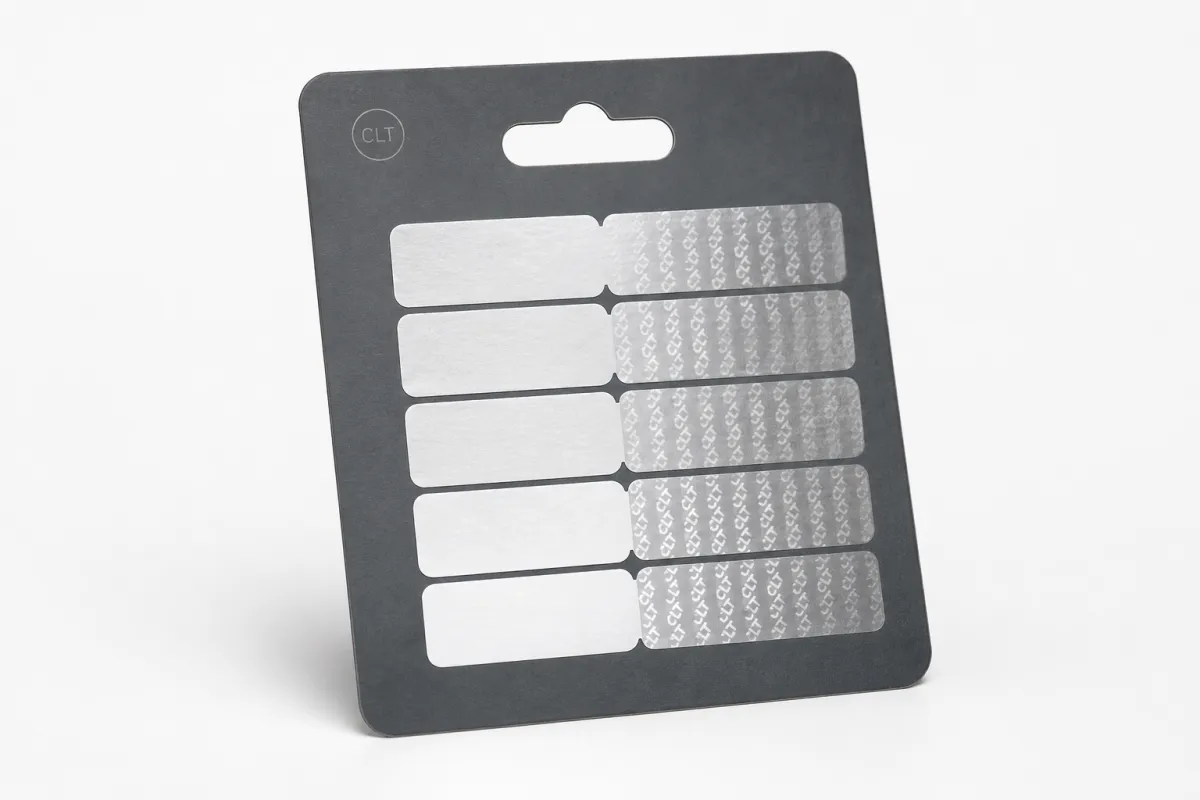
custom tamper seal stickers are pressure-sensitive labels, seals, or adhesive tapes designed to show clear evidence if a package has been opened, disturbed, or resealed. In plain language, they tell the customer, warehouse team, or inspector that the closure was intact at one point and then changed. That can mean a box flap was lifted, a jar lid was twisted, a pouch was pulled apart, or a carton was opened and reclosed with an attempt to hide it.
Picture a shipping carton arriving with a torn seal. Without a proper tamper-evident label, the issue stays murky. Did the carton get crushed in transit, or did someone open it after delivery? custom tamper seal stickers help answer that question. They create first-opening evidence, and in packaging operations, that clarity matters more than people often expect.
These products show up in a wide range of industries. E-commerce brands use them to secure subscription kits and premium mailers. Food and supplement companies rely on them for lids, cartons, and shrink-sealed sleeves. Cosmetic brands often place them on tubes, jars, and folding cartons. Electronics sellers use them to show whether a device box has been opened. Some retail packaging programs also use them as part of compliance or anti-tamper labeling, especially where the contents need visible protection before purchase.
There is also a trust benefit that is easy to underestimate. A good seal says, quietly but clearly, that the brand took the trouble to protect the contents. That does not just help in a claims dispute. It can improve the perceived quality of the entire package, especially when custom tamper seal stickers are integrated neatly into the overall package branding instead of looking like a rushed afterthought.
In practice, the strongest versions are not generic off-the-shelf stickers with a logo slapped on top. They are matched to the container, the closure style, the handling environment, and the customer journey. That is the real value of custom tamper seal stickers: they can be designed around how the package actually moves through production, shipping, and opening.
A tamper seal only works if the evidence is obvious. If a customer has to squint, guess, or read fine print to understand whether the package was opened, the seal is not doing enough.
For brands building a broader packaging system, seals can fit alongside Custom Labels & Tags and Custom Packaging Products so the whole experience feels coordinated. That matters because product packaging is rarely judged one piece at a time; customers read the package as a complete set of signals.
How Custom Tamper Seal Stickers Work on Packages
custom tamper seal stickers work by turning removal into a visible event. There are a few common constructions, and each one behaves differently. Some use a destructible face stock that breaks apart if someone tries to remove it. Others use a void pattern or hidden message that remains on the package surface after lifting. Some rely on brittle adhesives or layered films that split, tear, or leave residue when disturbed.
The exact effect depends on the construction. A label printed with VOID or OPENED may reveal that word when peeled. A fragile film may fracture into pieces. A residue-transfer label may leave behind a pattern that clearly shows the seal was removed. Those differences are not cosmetic. They are the mechanism that makes custom tamper seal stickers actually useful.
Placement matters just as much as material. The label should cross a seam, flap, lid edge, or closure line so any opening attempt has to disturb it. If the seal sits entirely on one flat panel, someone can often lift the package opening without touching the sticker. That is a common mistake, and it weakens the whole idea. On boxes, the seal often spans the top flaps. On bottles and jars, it may bridge the lid to the body. On pouches, it may cover the tear zone or fold line.
Surface type changes the result too. Corrugated board, coated cartons, glossy plastic, glass, and flexible film all present different adhesion challenges. A seal that performs well on a matte shipping carton may behave very differently on a slick cosmetic jar. That is why good custom tamper seal stickers are selected with the actual container in mind, not just the artwork.
It also helps to think about what the user needs to read. Some seals communicate with a big VOID pattern. Others use a short word such as BROKEN or OPENED. A few rely on a dramatic visual change, like a film splitting into layers. Whatever the system, the end user should not have to interpret it like a puzzle. Good custom tamper seal stickers make the message immediate.
Security and decoration are not the same thing. A seal can look polished and still fail if the adhesive is wrong or the application point is poor. The best designs bring both sides together: a clean branded appearance and a visible tamper cue that survives the journey from packing bench to customer hands.
Key Materials and Performance Factors to Compare
Material choice affects how custom tamper seal stickers look, how they tear, and how well they stay put. Paper face stock is common for economical runs and usually prints cleanly, which makes it a good fit for many carton applications. Polyester and other synthetic films offer more durability against abrasion, moisture, and handling. Destructible film is often used where the label needs to tear apart rather than peel cleanly. Each option has a place, and none of them is automatically best.
Adhesive selection is just as important. A permanent adhesive is a common choice for corrugated boxes because the board is porous and slightly uneven. High-tack formulas help on tricky surfaces or in colder conditions. In some cases, a freezer-grade adhesive is needed for chilled or frozen goods. A removable-safe adhesive can make sense for temporary seals in controlled programs, but that is not the norm for tamper evidence. The wrong adhesive can make custom tamper seal stickers lift at the edges, and once that happens, confidence drops fast.
Environmental exposure should guide the spec sheet. Ask whether the package will see condensation, warehouse dust, rough conveyor handling, UV exposure, or long transit times. A supplement bottle stored in a humid stock room needs something different from a dry retail display carton. A label that performs perfectly in the print room may still fail after two days in a cold chain environment. This is where small test runs pay off.
Finish affects both readability and brand appearance. Matte finishes reduce glare and usually make warning text easier to read under warehouse lights. Gloss can help with visual pop, especially if the seal is part of a polished package branding system. Transparent materials can create a cleaner look on custom printed boxes or colored jars, although they still need the right opacity and adhesive response to show tamper evidence clearly.
If sustainability matters to the brand, paper sourcing and recycling claims need attention too. The Forest Stewardship Council has useful guidance on sourcing and chain of custody at fsc.org. For transit testing and shipping durability, the International Safe Transit Association is a strong reference point at ista.org. Those resources do not choose the label for you, but they help frame the performance questions better.
For most buyers, the best way to compare custom tamper seal stickers is to ask five plain questions:
- Will this adhere to the actual package surface?
- Will it leave a clear tamper signal after removal?
- Will it survive the storage and shipping environment?
- Will the warning text remain readable after printing and finishing?
- Will the material support the look of the broader branded packaging system?
Those five checks do more to prevent mistakes than a glossy spec sheet ever will. In packaging design, the real test is not how a sample looks on a desk, but how it behaves on a moving line and in the customer's hands.
Process and Timeline: From Artwork to Delivery
Ordering custom tamper seal stickers usually follows a simple path, but each step matters. First, define the use case. Is the seal for a box, a jar, a pouch, a bottle cap, or a carton flap? Next, confirm the surface. Smooth plastic, textured board, and coated paper all behave differently. Then choose the construction, review the artwork, approve the proof, and move into production. It sounds straightforward, yet a lot of problems appear before the press even starts.
Buyers should prepare a few details early. Dimensions come first, because the seal must fit the closure zone cleanly. Application method comes next, because hand-applied labels behave differently from machine-applied ones. Brand elements, warning language, and any compliance text should also be ready before proofing. If the label needs a barcode, a lot code area, or a serial number region, those should be planned into the layout from the beginning. With custom tamper seal stickers, changing the size late in the process can affect both function and appearance.
Proofing is where many headaches get avoided. A good proof should confirm the dieline, artwork placement, spelling, colors, and any hidden security message. It should also confirm the material and adhesive choice so the buyer knows what is being produced. If the label is meant to show VOID after removal, the proof should show where that message appears. If the package is curved or flexible, the proof should reflect that reality rather than a flat idealization.
Production usually moves through prepress, file setup, printing, finishing, slitting or die-cutting, inspection, and packing. A simple one-color label on paper stock may move quickly. A multi-color security label on synthetic stock with special finishing can take longer because more setup and inspection are involved. For many runs, a practical lead time is often 10-15 business days after proof approval, though specialty materials, revisions, or heavy print coverage can stretch that. Build in extra time if the project depends on samples or cross-functional approval.
That buffer is not a luxury. It protects launch dates. A brand can have the perfect retail packaging design and still miss the ship window if the seal arrives late. The same is true for seasonal product packaging, subscription kits, or any launch tied to a retail calendar. If the seals support a broader packaging rollout, coordinate them alongside artwork for custom tamper seal stickers, cartons, inserts, and any other printed components.
Here is a practical ordering flow many buyers use:
- Define the package surface and closure point.
- Select the tamper signal needed, such as VOID, split film, or destructible stock.
- Choose size, shape, and finish.
- Review artwork and proof details carefully.
- Approve a sample or test run if the application is sensitive.
- Release production only after the package and seal are aligned.
That workflow keeps the project grounded. It also helps separate a security seal from a basic sticker purchase, which is important because custom tamper seal stickers are part label, part risk-control tool, and part brand touchpoint.
Custom Tamper Seal Stickers Cost: Pricing, MOQ, and Quote Basics
Pricing for custom tamper seal stickers depends on a handful of clear factors: size, quantity, material, print colors, finishing, adhesive strength, and whether the design includes special security features. A small seal with a simple one-color logo is much easier to produce than a large, multi-color, destructible-film label with a hidden VOID message and a specialty adhesive. That difference shows up directly in the quote.
Minimum order quantity, or MOQ, has a strong effect on unit price. Smaller runs usually cost more per piece because setup, file preparation, and press time are spread across fewer labels. Larger runs lower the unit cost, but they also create more inventory and tie up more cash. For many buyers, the sweet spot is not the absolute lowest unit price; it is the quantity that matches actual usage without leaving boxes of unused seals in storage.
A quote should be clear enough to compare apples to apples. If one vendor includes artwork support, proofs, setup, and freight while another lists only print cost, the numbers are not truly comparable. Ask what is included and what is not. For custom tamper seal stickers, the main quote line items are usually print, material, finishing, die-cutting, proofing, and shipping. Optional items may include sequential numbering, variable data, or specialty security treatments.
Feature changes can move pricing quickly. Switching from paper to synthetic stock may raise the cost, especially if the label has to survive moisture or abrasion. Moving from one-color black print to full color will also affect the price. Increasing the size does the same thing, because larger seals use more material and often create more waste on the press sheet or roll.
Below is a simple comparison many buyers find useful when budgeting custom tamper seal stickers for a first run. These ranges are illustrative, not fixed, but they are realistic enough to guide planning for a 5,000-piece order.
| Option | Typical Use | Approx. Unit Price | Best Fit |
|---|---|---|---|
| Paper tamper seal with permanent adhesive | Corrugated boxes, cartons, lighter handling | $0.09-$0.18 each | Budget-conscious runs where basic first-opening evidence is enough |
| Synthetic tamper seal with stronger finish | Plastic jars, bottles, humid storage, rough transit | $0.14-$0.26 each | Brands needing better durability and cleaner shelf presentation |
| Destructible security seal with VOID or fracture effect | Higher scrutiny packages, premium product packaging | $0.18-$0.38 each | More visible tamper evidence and stronger brand protection |
| Custom die-cut seal with special print or numbering | Compliance programs, tracking, controlled access | $0.22-$0.45 each | Projects needing traceability, added control, or premium look |
Those ranges can move up or down depending on dimensions and order size. A tiny seal on a carton flap will cost less than a large wraparound seal on a bottle cap. A plain one-color warning label is usually cheaper than a fully branded, full-color design. If you need custom tamper seal stickers for a launch, it is smart to request three quote versions: standard, premium, and high-security. That gives you a cleaner budget conversation with marketing, operations, and finance.
Another useful habit is asking for the price at several quantities, such as 1,000, 5,000, and 10,000 pieces. The answer often reveals where the real savings begin. Sometimes 5,000 is the practical point where setup cost starts to spread out well. Sometimes 10,000 is too much for the first order, especially if the package or artwork may still change.
For teams managing broader branded packaging purchases, seals should be evaluated together with inserts, mailers, and cartons so the total program cost is visible. That keeps the label from being judged in isolation when it is really one small part of the full packaging system.
Common Mistakes When Ordering Tamper Seal Labels
The biggest mistake with custom tamper seal stickers is choosing on appearance first and security second. A seal can look polished in a mockup and still fail in the field if the adhesive is too weak, the stock is wrong, or the label does not cross the correct seam. I see that problem most often when buyers start with the art concept and only later ask how the package is actually opened.
Another common issue is measuring the visible face of the package and forgetting the closure movement. Box flaps shift, lids rotate, pouches flex, and curved surfaces create stress points that a flat design does not show. If you place the seal in the wrong spot, the package can open without disturbing it. That is not just a packaging error; it defeats the whole purpose of custom tamper seal stickers.
Proof approval deserves more attention than it sometimes gets. If the seal includes a warning message, barcode, batch area, or logo, the proof must show that those items remain readable after production. Small text that looks fine on screen can disappear once printed at actual size. Thin lines can fill in. Dark backgrounds can reduce contrast. A few extra minutes in proofing can prevent a reprint.
Environmental exposure gets underestimated as well. Condensation can lift edges. Cold storage can stiffen the adhesive. Dust in a warehouse can weaken the bond. Rough shipping can scuff the face stock. If the package is going through retail packaging channels, distribution centers, or long transit lanes, the seal should be tested in that same environment. That is especially true for custom tamper seal stickers used on food, supplements, and beauty products.
Ordering too late causes its own chain of problems. When the deadline is tight, teams may settle for the wrong material, reduce the quantity, or choose the fastest shipping method even if it strains the budget. A better approach is to lock the seal spec early, confirm the application point, and allow enough time for sample review. That is especially important if the same launch also involves custom printed boxes or a new retail packaging design.
Here are the errors most worth avoiding:
- Placing the seal where it does not actually prove opening.
- Choosing a stock that cannot survive the real shipping environment.
- Ignoring how the package changes shape during use.
- Approving artwork before checking the actual print size.
- Waiting until the last minute to order custom tamper seal stickers.
Those mistakes are common because they are easy to make, not because they are complicated. A buyer who handles them early usually ends up with a better seal, a cleaner order, and fewer surprises on the production floor.
Expert Tips and Next Steps for Better Packaging Security
The most practical tip I can give is simple: test a small batch on the real package before you commit to a full run. Flat samples tell part of the story, but the real carton, bottle, or pouch often reveals details that the sample cannot. Maybe the adhesive bonds well but the seal is too small for gloved hands. Maybe the artwork looks clean on paper but disappears against a busy package design. A trial run keeps those lessons cheap.
It also helps to match the seal to the customer journey. If the package will be picked in a warehouse, stacked in transit, displayed in retail, and opened at home, the label has to stay effective through every one of those stages. custom tamper seal stickers should not be chosen only for the last moment of opening. They have to survive the whole trip.
Design coordination matters more than many teams expect. A seal can support package branding without cluttering it. Use contrast well. Keep the security message readable. Give the logo enough breathing room. If the brand already has strong graphics on the box or pouch, the seal can stay more restrained. If the outer package is plain, the seal can carry more of the visual personality. That balance is part of good packaging design, not just label design.
Internal application standards are a smart move too. A short written guide that says where the seal goes, how much pressure to apply, and what to inspect afterward can improve consistency immediately. That matters on busy lines where different operators may be applying the same label across multiple shifts. A seal that is applied correctly every time performs better and looks better.
If the package team can apply the same seal the same way every time, the brand gets cleaner security, fewer rejects, and a more professional finish on every shipment.
For teams building out a broader packaging program, seals should be considered alongside inserts, boxes, and protective materials so the whole package system stays aligned. That is where custom tamper seal stickers earn their keep: not as a standalone accessory, but as a practical part of product packaging that improves trust, clarity, and control.
The next step is straightforward: define the package surface, request a sample or test build, compare a few quote options so you can balance budget and performance, and then choose the version that fits the real handling conditions, not just the mockup. If you keep that order, custom tamper seal stickers stop being an afterthought and start doing real work for the package.
What materials are best for custom tamper seal stickers on corrugated boxes?
Strong permanent adhesives usually perform best on corrugated board because the surface is porous and slightly uneven. Paper or synthetic face stocks can both work, but the choice should match whether the labels need extra durability or a more economical run. If the boxes face cold, damp, or rough shipping conditions, ask for a material test on the actual carton before ordering full quantity of custom tamper seal stickers.
How do custom tamper seal stickers show that a package was opened?
They may leave a VOID pattern, split a fragile film, tear destructively, or stay attached while showing visible disturbance. The best design places the label across a seam or closure so removal leaves unmistakable evidence. The tamper signal should be easy for warehouse staff and end customers to recognize at a glance.
What affects custom tamper seal stickers pricing the most?
Quantity, material type, and print complexity usually have the biggest impact on unit cost. Special adhesives, security features, and finishing steps can raise pricing, especially on small runs. A quote is easiest to compare when the dimensions, surface type, and desired tamper effect are clearly defined for custom tamper seal stickers.
How long does it take to produce custom tamper seal stickers?
Simple jobs can move quickly, but proof approval, material selection, and print complexity all affect turnaround. If the project needs samples, revisions, or specialty stock, build in extra time before launch. Shipping time should be included in the schedule so the labels arrive before packaging starts.
Can custom tamper seal stickers be used on plastic jars, bottles, and pouches?
Yes, but the adhesive and face stock need to match the surface energy and shape of the container. Curved, glossy, or flexible packages may need a different construction than flat cartons. Testing on the real package is the safest way to confirm adhesion and tamper visibility, especially for custom tamper seal stickers used in product packaging programs.

