Buyer Fit Snapshot
| Best fit | tea box sleeves with logo for packaging buyers comparing material specs, print proof, MOQ, unit cost, freight, and repeat-order risk where brand print, material, artwork control, and repeat-order consistency matter. |
|---|---|
| Quote inputs | Share finished size, material target, print colors, finish, packing count, annual reorder estimate, and delivery region. |
| Proofing check | Approve dieline scale, logo placement, barcode or warning zones, color tolerance, and any recyclable or compostable wording before bulk production. |
| Main risk | Vague material claims, crowded artwork, or missing packing details can create delays even when the unit price looks attractive. |
Fast answer: Tea Box Sleeves with Logo: Board Stock, Aroma-Safe Finish, and Batch Runs should be specified like a repeatable production item. The safest quote includes material, print method, finish, artwork proof, carton packing, and reorder notes in one written spec.
What to confirm before approving the packaging proof
Check the product dimensions against the actual filled item, not only the sales mockup. Ask for tolerance on folds, seals, hang holes, label areas, and retail display edges. If the package carries a logo, QR code, warning copy, or legal claim, reserve that space before decorative graphics fill the panel.
How to compare quotes without losing quality
Compare board or film grade, print process, finish, sampling route, tooling charges, carton quantity, and freight assumptions side by side. A lower quote is only useful if the supplier can repeat the same color, closure quality, and packing count on the next order.
Buyer Fit Snapshot
Use this page when tea brands need printed sleeves that protect shelf presentation without overwhelming the primary carton.
| Decision point | What to specify before quoting |
|---|---|
| Material and construction | Substrate, thickness, coating, print coverage, finish, and tolerance requirements. |
| Order economics | MOQ, unit tiers, sample run, lead time, packing method, and freight assumptions. |
| Production control | Dieline, artwork proof, barcode or warning copy, QC checks, carton marks, and reorder plan. |
Custom tea box sleeves do more than wrap a carton. Used well, they sharpen brand presentation, protect printed surfaces from scuffs, and give a tea line a more deliberate presence on shelf without forcing the whole package into a heavier build. That matters for loose-leaf blends, sampler sets, gift packs, and seasonal runs, where the box has to look refined and still work hard in production.
From a packaging buyer's angle, the logic is practical. A sleeve gives you a broad, high-visibility branding zone while the base carton carries the structure. That split matters in product packaging because it lets a brand update flavor names, origin claims, or holiday artwork without rebuilding the whole box each time. It can also support sustainability goals, since custom tea box sleeves often use less board than a fully printed outer carton and may be easier to route into familiar paper recycling streams when the material choice stays simple.
I have seen that flexibility save a launch more than once. On one tea project, the team changed the flavor lineup twice before the retailer reset date, and the sleeve format let them swap artwork without scrapping the carton tooling. That kind of change would have been a headache with a fully custom box. It also would have been expensive, which is usually the part people notice first.
That is one reason custom tea box sleeves have settled into such a steady role for tea brands of many sizes. They sit between plain retail packaging and expensive Custom Printed Boxes, yet they still scale across multiple blends, pilot runs, and gift assortments. Brands that want packaging to look clean, efficient, and easy to refresh often land here for good reason.
What custom tea box sleeves are and why they stand out
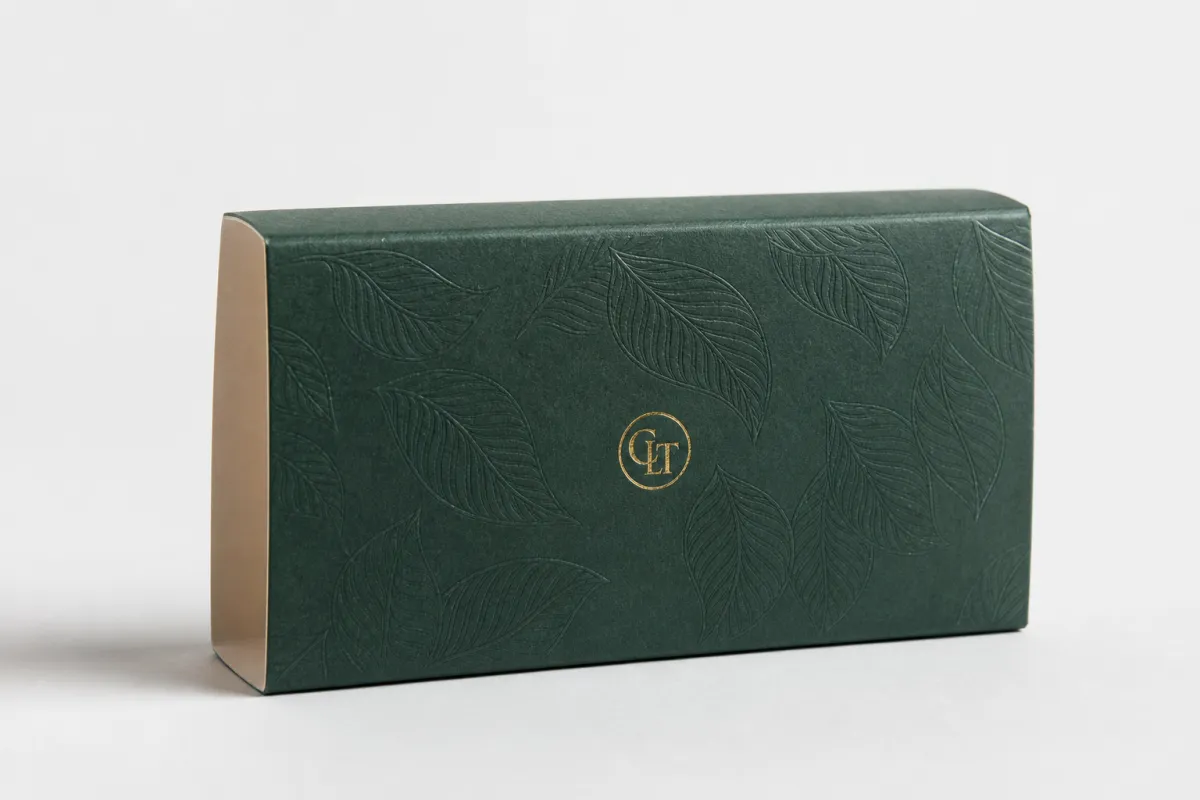
Custom tea box sleeves are printed wraps that slide over a primary tea carton. The carton underneath might be a tuck-end box, a folding carton, or a small shelf-ready pack, while the sleeve carries the visible branding and most of the narrative. In practice, the sleeve becomes the first thing a shopper sees, and the base box stays focused on holding the tea securely and cleanly.
On a crowded shelf, that extra layer changes how the pack reads at a glance. A plain tea carton can look functional, but custom tea box sleeves add a frame, a hierarchy, and a giftable feel with very little extra material. For premium herbs, black tea, green tea, matcha blends, and wellness-focused infusions, that framing effect can move a pack from "generic" to "worth picking up."
Custom tea box sleeves also handle variation efficiently. Five blends or twelve seasonal flavors do not require a new carton structure every time the artwork changes. One carton style can stay in place while the sleeve shifts with the range. That is especially useful for small brands that want package branding consistency without paying for a new structural die for every SKU.
One detail gets missed often: custom tea box sleeves are not only decorative. They can carry essential information in a compact format. Depending on the layout, the sleeve may hold:
- Front-panel branding for the tea name, logo, and variant code.
- Side-panel details such as steeping time, origin notes, or ingredients.
- Back-panel compliance copy for weight, barcode, recycling guidance, and regulatory text.
- Seasonal messaging for limited editions, gift sets, or retailer exclusives.
That mix of form and function is why custom tea box sleeves occupy such a useful middle ground between simple labels and fully custom printed boxes. They are more substantial than a sticker, but lighter and faster to update than a new carton every season. Brands that care about shelf appeal and material discipline usually find that combination hard to ignore.
A sleeve should earn its keep. If it looks attractive but adds confusion, extra waste, or awkward handling, it is not doing its job. The best custom tea box sleeves are easy to assemble, easy to read, and easy to recycle when the stock and finish are chosen with care.
That is also why custom tea box sleeves show up so often in retail packaging programs where the line needs to feel premium without becoming fussy. A sleeve can soften a plain carton, introduce matte or uncoated texture, and create a more thoughtful unboxing moment without making the pack bulky.
How custom tea box sleeves work in retail and shipping
The structure is usually simple enough to explain, though fit matters more than it looks. A custom tea box sleeves design is scored, folded, and wrapped around the primary carton with a friction fit, an open-ended format, or a small glued seam depending on the box style and production method. The fit has to be deliberate. Too loose, and the sleeve slides. Too tight, and it wrinkles, splits at the score, or bows at the seam in a way that looks careless on shelf.
Retail is where the sleeve earns most of its value. Tea cartons have limited panel space, especially on small formats, so custom tea box sleeves create a broad communication surface. The front panel can carry the hero branding, the side panel can handle flavor notes, and the back can handle ingredients, brewing instructions, and sustainability claims. That division keeps the information hierarchy cleaner, which matters because a shopper usually gives a tea pack only a few seconds of attention.
Shipping brings a different set of pressures. The sleeve is not a structural substitute for a strong carton, but it can help keep multipacks organized, reduce scuffing on printed surfaces, and maintain a more orderly presentation through handling. If the cartons go into a display shipper or an outer case, custom tea box sleeves help keep each SKU visually distinct even before the retailer opens the case.
Limits still apply. Sleeves work well for light branding, scuff resistance, and shelf presentation, but they do not replace a carton that needs real compression strength. If the pack must survive long distribution chains, heavy stacking, or rough warehouse handling, the base structure still needs to be designed correctly. For transit validation, many teams rely on ISTA methods, especially when vibration, drop, or compression testing is part of the process.
From a retail packaging standpoint, custom tea box sleeves help in three common ways:
- They organize the shelf by giving each blend a consistent visual frame.
- They speed up line changes because the same carton can support multiple sleeve artworks.
- They improve brand recognition when your logo, color system, and typography stay consistent across the range.
The second point matters more than many teams expect. If a tea line uses custom printed boxes for every flavor, each new blend can turn into a new structural item. With custom tea box sleeves, the base pack stays stable while the visible graphics can shift for a harvest blend, a holiday format, or a limited retailer exclusive. Production stays more manageable, and the shelf does not have to look repetitive.
There is also a perceptual effect at work. A sleeve adds depth, and depth reads as care. Even when the carton underneath is simple, the finished package feels more deliberate because the print layers signal that choices were made on purpose. In branded packaging, that quiet sense of intention often separates a passable product packaging setup from one that feels finished.
One packaging line I reviewed used the same carton for six tea blends, but the sleeve changed the entire read. The base box was plain enough to vanish in a warehouse photo; the sleeve pulled the brand forward in a way the buyer could recognize from across the aisle. That is a small shift on paper, and a big one in the store.
Key factors that shape custom tea box sleeves
The first decision is board choice. Custom tea box sleeves are commonly printed on uncoated kraft, white SBS, recycled paperboard, or textured specialty stocks. Each one changes the look and the handling. Kraft gives a more natural and earthy feel, white SBS gives cleaner color and sharper type, recycled board can support an honest sustainability message, and textured stocks add a tactile cue that suits herbal or artisan tea lines.
Material selection also affects print quality. Dark solid areas can look richer on coated white stocks, while natural fiber stocks may mute color slightly and create a softer, more organic appearance. That is not a flaw. For many tea brands, a little print softness fits the product story better than a high-gloss retail finish would. If the goal is a calm, botanical look, the paper choice matters as much as the artwork.
For sustainability messaging, a clean and verifiable fiber story helps. A sleeve made from paperboard with minimal finish is easier to position as recyclable than a sleeve built with mixed plastics, heavy lamination, or decorative layers that complicate recovery. If your team wants a neutral reference point for material sourcing and fiber claims, the Sustainable Packaging Coalition at packaging.org and FSC guidance at fsc.org are both useful places to check terminology and expectations.
Sizing is the next major factor. Custom tea box sleeves depend on a precise dieline, and the dieline has to match the carton closely. Sleeve depth, overlap, score placement, and seam position all matter. A mismatch of even a few millimeters can produce a loose fit, a crushed corner, or a seam that lands in the wrong visual spot. I have seen a 3 mm error turn into a reprint because the seam landed on the front face instead of the back. In packaging design, that kind of miss shows up immediately because the eye notices symmetry before it notices typography.
Print method is another practical variable. Digital printing can make sense for shorter runs and frequent artwork changes, offset is often a stronger choice for consistent color and sharper detail on larger runs, and flexographic printing can fit certain efficient production setups, especially when the design uses fewer colors. The right choice depends on quantity, image complexity, and the type of board. For custom tea box sleeves, small type and dense legal copy often push teams toward a method that reproduces fine detail reliably.
Finish is where many tea brands make either a smart choice or an expensive one. Aqueous coating is common because it can protect against scuffing without turning the sleeve into a plastic-heavy format. Soft-touch coatings can feel luxurious, though they should be weighed carefully if recyclability is a major claim. Foil, embossing, and spot varnish can raise perceived value, but they also add cost and production steps. If the pack is meant for mass retail, a restrained finish often ages better than a crowded one.
A good rule holds up here: choose one or two points of emphasis and let the rest breathe. For custom tea box sleeves, that might mean a strong paper texture plus one elegant foil mark, or a simple matte background with bold typography and no extra decoration. Tea is a product people associate with calm, ritual, and balance. The packaging should carry that same rhythm. If the finish starts competing with the brand, it has already gone too far.
If you are comparing formats, it helps to think of the sleeve as part of a larger product packaging system rather than a standalone print job. That is where Custom Packaging Products becomes useful as a planning step, because the carton, the sleeve, and any insert all need to work together rather than compete for attention.
Process and turnaround for custom tea box sleeves
The cleanest projects start with measurements, not artwork. Before custom tea box sleeves move into layout, the team needs the exact carton dimensions, a physical sample if possible, and a clear answer on how the sleeve should sit. Should it cover all four faces? Leave a window? Stop short of the top flap? Those questions sound minor, yet they shape the dieline and often save several rounds of revision later.
A normal workflow usually looks like this:
- Brief and measurements - collect the carton size, target quantity, and required copy.
- Structural dieline - confirm scores, seam placement, and folding direction.
- Artwork proofing - place logo, regulatory text, and panel content onto the dieline.
- Sample review - check fit, print color, and panel alignment before volume production.
- Final run - print, finish, cut, and pack for shipment.
That process sounds routine, but small decisions can slow it down. Unclear carton dimensions are the biggest problem because a sleeve can only fit what it is built for. Last-minute design changes create extra proof cycles. Specialty finishes add dry time. Legal copy for ingredients, claims, or barcode placement can hold up approval if no one locked it early.
Turnaround depends mostly on complexity and quantity. Simple custom tea box sleeves on digital equipment can move quickly once the dieline and artwork are approved. Larger quantities, heavier board, more intricate finishing, or special coatings usually need more time for setup, drying, trimming, and quality checks. A buyer planning a seasonal tea launch should treat the sleeve timeline as part of the launch timeline, not a side task that can be squeezed in later.
For many tea brands, the safest schedule is to start the sleeve spec earlier than feels necessary. That leaves room for fit testing, design polish, and any legal or barcode review. If the pack will ship through e-commerce or club fulfillment, the finished custom tea box sleeves should be checked under real handling conditions, not only on a screen. A sleeve that looks perfect in a proof can still catch on a flap, scuff at the seam, or feel too tight once the carton stock varies slightly in production.
One practical detail is easy to overlook: sample approval is not a paperwork step. It is a physical check. Fold the sleeve. Slide it over the box. Hold it under store lighting. Look at the contrast from three feet away and again from arm's length. That is where custom tea box sleeves either prove themselves or show you exactly where the design needs another round of tuning.
Good packaging is usually built by removing friction. If the sleeve fits well, reads clearly, and does not complicate packing line work, it saves time later even when it took more care up front.
That last point matters because a sleeve that slows the packing table is not really premium; it is just inconvenient. The best tea sleeves feel almost boring in production, and that is a compliment. Boring means predictable. Predictable means fewer surprises at scale.
Cost and pricing for custom tea box sleeves
Pricing for custom tea box sleeves is shaped by size, board choice, print coverage, finishing, and quantity. A sleeve that wraps a compact tea carton with one-color print is very different from a full-coverage sleeve with foil, embossing, and a specialty board. The farther the job moves from standard paperboard production, the more the cost rises.
Short runs carry more setup burden per piece. That is true for almost all packaging, and custom tea box sleeves are no exception. Prepress, die cutting, press setup, proofing, and trim adjustments all have to happen whether you order 500 sleeves or 20,000. As quantity rises, the unit cost usually falls because those fixed steps are spread over more pieces. Larger stable SKUs often benefit from this more than brands expect.
For a practical planning range, a simple sleeve might land around $0.18-$0.28 per unit at 5,000 pieces depending on board and print coverage, while a more finished sleeve with specialty stock or decorative effects can move higher. Smaller runs can sit above that because the setup burden is heavier. That is normal. The key is to compare apples to apples, not a plain digital sleeve against a foil-stamped premium version and assume the pricing gap is artificial.
| Option | Typical Use | Approx. Unit Cost at 5,000 | Notes |
|---|---|---|---|
| Uncoated kraft sleeve | Natural tea lines, botanical blends, eco-focused branding | $0.18-$0.24 | Good tactile feel, lighter finish, simpler recycling story |
| White SBS sleeve | Bright color work, sharper logos, retail-heavy lines | $0.20-$0.28 | Better for crisp graphics and small type |
| Recycled paperboard sleeve | Earthy branding, value-conscious sustainable packaging | $0.19-$0.27 | Can vary more in surface look, which may suit some brands |
| Specialty finish sleeve | Gift sets, holiday editions, premium retail packaging | $0.28-$0.45+ | Foil, embossing, soft-touch, or heavier finishing adds cost |
MOQ matters too. Smaller tea brands often want a lower minimum order quantity because they are testing blends, retailer response, or seasonal graphics. That makes sense. A lower MOQ reduces risk, especially if the line is still changing. Larger orders usually make more sense once the SKU is stable, the carton dimensions are fixed, and the design is likely to stay in market for more than one cycle.
There are several strong ways to keep cost under control without making the pack feel cheap:
- Standardize sleeve sizes across multiple flavors whenever the carton size allows it.
- Limit the ink count if the design can carry the brand with two or three well-chosen colors.
- Reserve premium finishes for hero products, gift sets, or seasonal releases.
- Use one strong structural format so you are not paying for multiple dies and multiple setup cycles.
That last point is where packaging design can save real money. If your tea line shares one base carton and one sleeve family, custom tea box sleeves can deliver brand variety without turning the whole program into a collection of one-off jobs. Reorders also get easier because the structure stays familiar for the printer, the converter, and the packing team.
If you are comparing custom tea box sleeves against other retail packaging options, think in terms of total package value, not just the sleeve price. The visual lift, shelf clarity, and material reduction may justify a slightly higher print cost if the alternative is a larger box or a more complex custom printed box build. Good packaging buyers look at that tradeoff across the whole program, not only the quote line.
Common mistakes with custom tea box sleeves
The biggest fit mistake is designing the sleeve before the carton is finalized. It happens more often than people admit. The artwork gets approved, the dimensions get guessed, and then the sleeve lands too loose or too tight once the actual carton stock arrives. With custom tea box sleeves, even small dimensional drift can show up as a crooked seam, corner crush, or awkward fold. The fix is simple in theory: lock the carton first, then build the sleeve around it.
Another common problem is over-design. Tea has a calm, familiar brand language in many markets, and too much text or too many finishes can make the pack feel busy. Crowded panels reduce readability, and when shoppers have to work to find the tea name or steeping guidance, the package is not doing its job. A clean sleeve with one clear message often performs better than a crowded one with four different attention-grabbing effects.
Sustainability mistakes can be more damaging because they affect both perception and material recovery. A paper sleeve covered in unnecessary plastic lamination may still look premium, but it weakens the recycling story. Heavy board can also be overkill if the sleeve only needs light presentation duty. If the material mix does not match the sustainability claim, the package can create doubt instead of trust. That is a poor trade in tea, where many buyers care deeply about origin, sourcing, and environmental signals.
Operations mistakes are just as costly. A barcode placed too close to a seam may scan poorly. A design that ignores quiet zones can fail retail compliance. A sleeve that looks beautiful in the studio may not behave well when it passes through a carton erector, a hand pack station, or a cold, humid warehouse. Custom tea box sleeves should be tested under the conditions they will actually see, not only under ideal lighting on a mockup table.
There is also a branding mistake that shows up in multi-SKU programs. If every flavor gets a different layout language, the shelf can start to feel fragmented. You want enough variation to help shoppers tell the blends apart, but enough consistency that the range reads as one family. That is where package branding and retail packaging strategy need to work together. A sleeve is not a poster; it is part of a system.
Before you commit, check these details carefully:
- Carton dimensions - measured from the actual production sample, not a guess.
- Barcode placement - with enough clear space for reliable scanning.
- Seam direction - so the graphics do not land in an awkward spot.
- Finish compatibility - so the material mix still supports your recycling or sourcing claims.
- Shipping handling - so the sleeve survives rubbing, stacking, and temperature swings.
Those are simple checks, but they prevent most of the expensive surprises. Custom tea box sleeves usually fail because of fit, finish, or information clutter, not because the idea itself is weak.
Expert tips and next steps for custom tea box sleeves
Start with the carton and the shelf view, not just the artwork. A good sleeve should look intentional from one foot away and still communicate clearly when stacked, photographed, or pulled from a case pack. That means the front panel needs a strong focal point, the side panels need disciplined copy, and the back needs enough structure to handle the technical details without feeling cramped. Custom tea box sleeves work best when the layout is calm and the information is well paced.
Use the sleeve to tell one focused story. If the tea is floral, say that cleanly. If it is sourced from a known region, present that fact with restraint and confidence. If the product is built around a functional benefit like relaxation or digestion support, make sure the claim is properly supported and handled according to your market's rules. Too many claims on one sleeve can muddy the message, while one strong promise often lands better.
The best custom tea box sleeves usually leave some air in the design. White space is not wasted space. It gives the eye room to rest and helps the tea line feel premium rather than crowded. That is especially true for brands that want an upscale but approachable tone. Heavy decoration can work for festive packs, but everyday tea packaging often benefits from a more measured approach.
Ask for a physical sample before you commit to volume. This is where the real answers show up. Does the sleeve slide smoothly? Does it catch on the corner? Does the paper still feel right under store lighting? Does the color shift under warm bulbs? These are the kinds of questions that only a real sample can answer, and they are the questions that determine whether custom tea box sleeves feel polished or merely acceptable.
If you are working through a new program, the simplest next steps are practical ones:
- Measure the current tea carton carefully and confirm the finished dimensions.
- List every item that must appear on the sleeve, from brand name to barcode to legal copy.
- Choose the quantity band you actually need for launch, not the quantity you hope you might sell someday.
- Decide whether the sleeve should feel natural, premium, or seasonal before the design starts.
- Request a quote and a sample pack so you can compare fit, finish, and price side by side.
If you are comparing custom tea box sleeves against a full carton refresh, remember the real advantage: you can improve the presentation without starting over. That makes custom tea box sleeves a steady option for brands that want sustainable packaging discipline, a clear retail presence, and a package that can adapt as the tea line changes. For many buyers, that is the sweet spot.
My practical advice is to treat custom tea box sleeves as a small but important piece of the larger packaging system. If the carton is sound, the sleeve fit is clean, and the graphics are disciplined, the whole product feels more trustworthy. That is true whether the pack sits in a farm shop, a specialty grocery aisle, or a gift set display. Done right, custom tea box sleeves help the tea look like it belongs exactly where it is. If you need one clear rule to follow, use this: lock the carton, approve the sleeve sample in hand, and only then sign off on volume. That sequence keeps the launch honest and the packaging looking like it was built by people who actually know the line.
What are custom tea box sleeves used for in packaging?
They wrap around an existing tea carton to add branding, flavor separation, and product information without changing the base box structure. They are especially useful for seasonal teas, sampler sets, and retail packaging that needs a more premium look with less material than a fully custom carton.
Are custom tea box sleeves recyclable?
They can be recyclable when made from a compatible paperboard or kraft stock and finished with recyclable-friendly coatings. To keep them recyclable, avoid unnecessary plastic lamination and make sure the final material mix matches local recycling guidance for your market.
How much do custom tea box sleeves usually cost?
Cost depends on size, stock, print coverage, finishing, and quantity, with short runs carrying higher unit cost because setup is spread across fewer pieces. A standard one-color or small-run sleeve is typically cheaper than a heavily finished sleeve with foil, embossing, or specialty board.
What information should be printed on custom tea box sleeves?
At minimum, include brand name, tea name, blend or origin details, net weight, barcode, and any required regulatory copy. You can also add brewing instructions, tasting notes, sustainability claims, and a short brand story if the layout still stays readable.
How long does it take to produce custom tea box sleeves?
Simple sleeves can move quickly once the dieline and artwork are approved, while custom materials or premium finishes add more time to the schedule. The best way to avoid delays is to finalize measurements early, approve samples fast, and keep the artwork and compliance copy locked before production starts.


