Book Embroidered Beanies Material Samples With Confidence - a sample is not just a smaller version of the finished order. It is a test of how knit structure, logo size, stitch density, and wearability behave together. The same artwork can look sharp on one blank and strained on another, which is why the sample stage deserves more attention than a quick approval email.
For buyers, that matters because a beanie is judged in motion. It stretches over a head, folds at the cuff, rubs against hair and jackets, and still has to keep the embroidery readable. A flat photo can hide flaws that show up in hand within seconds. The practical value of a book Embroidered Beanies Material Sample guide is simple: it helps you catch those flaws before they become stock, returns, or reorders.
Why the sample can surprise you
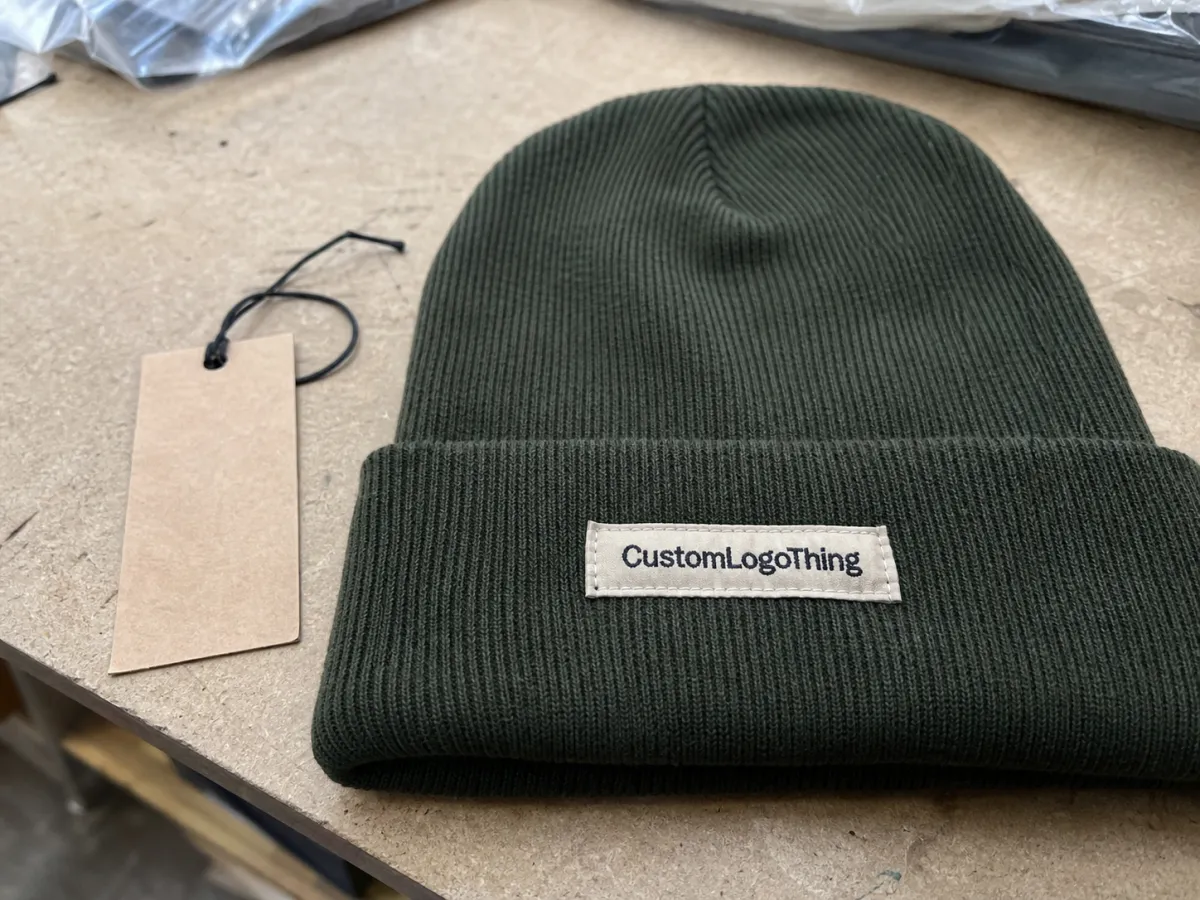
Most surprises come from the gap between art and fabric. A logo that looks balanced in a mockup may sit too heavy on a softer knit, especially if the stitch count climbs or the artwork has narrow lines. On a dense 12-gauge beanie, the embroidery may hold its edges. On a looser rib knit, the same design can tunnel, pull, or lean once the fabric stretches.
That is why approval should never stop at the digital proof. The sample has to answer a more demanding question: does the decoration still look correct after the beanie is worn? If the answer changes between flat and on-head inspection, the sample has done its job by exposing the problem early.
A good-looking flat sample can still fail in use. Stretch, recovery, and stitch tension decide whether the logo stays crisp after the beanie is worn.
The fastest way to judge a sample is to ask three questions in order: does it fit well, does the embroidery read cleanly, and does it recover after stretch? If those answers are consistent, the sample is probably strong enough to move forward. If one answer changes after wear or movement, keep testing.
Placement can also change the result. A logo near the crown seam or too close to the cuff edge may look fine in the mockup but sit unevenly once the fabric is pulled into shape. The sample should show whether the design belongs where it was placed, not just whether the artwork itself was digitized correctly.
How to book the right sample and read the stitch test
The cleanest sample process starts before anyone touches a needle. Send the logo file in its cleanest form, confirm the beanie style, lock the placement, and ask for a stitched Test Before Bulk production begins. If the artwork needs digitizing, that is not a side note. It is the step that turns design into machine-readable stitch paths, and it affects the final look more than many buyers expect.
- Send vector artwork or the highest-quality source file available, with clear color references.
- Confirm the exact beanie style, including cuffed or uncuffed construction and knit gauge.
- Lock logo size and placement in inches so "centered" does not become a vague instruction.
- Request a sew-out or sample photo of the digitized file before the full embroidery run.
- Review the physical sample in daylight, in hand, and on a head form or real wearer.
The stitch test is where technical issues show themselves. Check centering, stitch pull, backing thickness, crown distortion, and the edge of the embroidery. If the design sits close to a seam, inspect whether the fabric is being forced out of shape. If the thread is pulling into the knit, the logo may still look acceptable in a photo but fail once it is handled repeatedly.
Do not ignore the back side of the embroidery. Scratchy backing is more than a comfort issue. If the beanie is meant for staff uniforms, retail, or giveaway programs, rough contact can decide whether it gets worn or left behind. Buyers often focus on the front because that is what the camera sees, but the inside finish is what the user feels.
It helps to review the sample against the final use case. Retail merchandise can tolerate a slightly stronger mark if the branding needs visual presence. A staff beanie, worn daily, needs softer backing and fewer sharp stitch edges. Event stock and promotional giveaways usually sit in the middle, where budget, speed, and first impression all matter at once.
Material choices that change comfort and embroidery quality
Material affects more than warmth. It changes the hand feel, how the logo sits on the surface, and how much support the stitches have while the hat is stretched. Acrylic is the most common baseline because it is easy to source, cost-stable, and predictable in production. Wool blends can feel richer and often recover well, but they usually cost more and may require more careful handling. Recycled yarns are increasingly used for buyers who want a sustainability story without giving up too much softness or consistency.
Knit gauge matters just as much as fiber content. A tighter knit gives embroidery more structure to grab, which usually helps fine detail and small text. A looser knit can feel softer or more relaxed, but it also raises the risk of distortion, especially with dense fills or long narrow strokes. If the logo is small, text-heavy, or highly detailed, the fabric itself becomes part of the design constraint.
Construction changes the outcome too. Cuffed beanies usually give you a steadier embroidery zone and make placement easier. Uncuffed styles can look more casual, but they reduce the area where a logo can sit cleanly. Seam placement matters as well. If the embroidery lands too close to a seam or crown join, the design can tilt, ride unevenly, or create a bulge that shows up after wear.
- Acrylic: lower cost, consistent supply, good for broad distribution.
- Wool blend: stronger perceived value, better hand feel, usually higher cost.
- Recycled yarn: useful for sustainability-led programs, sometimes with narrower color availability.
- Tight knit: better for fine detail and cleaner edges.
- Loose knit: softer drape, but higher risk of pull and logo distortion.
The best material is rarely the warmest or the cheapest. It is the one that fits the job. If the beanies are meant for commuter wear, softness and recovery may matter more than visual stiffness. If they are meant for retail shelves or structured gift packs, a cleaner surface and sharper embroidery may be worth the extra cost.
Cost, MOQ, and quote factors that change sample price
Sample pricing looks straightforward until the line items are separated. A one-off sample can include digitizing, blank cost, embroidery labor, setup, and shipping. If the first sew-out needs revision, there may also be a rerun or edit fee. Production pricing is different because those fixed costs are spread across volume, which is why two quotes that look close can end up very different once the order is placed.
| Quote item | Typical range | What moves it | Buyer check |
|---|---|---|---|
| Digitizing | $20-$60 one time | Artwork cleanup, stitch complexity, number of elements | Ask for the editable file after approval |
| Blank beanie | $1.20-$4.50 each | Acrylic, wool blend, recycled yarn, knit gauge | Confirm exact style and cuff type |
| Embroidery | $0.90-$2.50 each | Stitch count, logo size, thread color changes | Request a stitch count estimate |
| Sample shipping | $8-$25 domestic | Service level, packaging, distance | Check whether protective packing is included |
| Revision or rerun | $15-$40 | Changes after first sew-out | Clarify how many revisions are included |
MOQ changes the math too. Lower minimums often come with less pricing leverage, so the unit price can sit noticeably higher than a larger run. As volume rises, the per-piece cost usually improves, but the spec control gets tighter because small changes repeated across hundreds of units become expensive very quickly.
The most useful question is not "What is the lowest price?" It is "What is the landed cost, and what does it include?" Ask whether digitizing is credited back on the bulk order, whether the sample fee rolls into production, and whether revision charges apply if the first approval misses the mark. Those details keep the beanie sample process grounded in real numbers rather than optimistic guesses.
A quote that separates blank cost, embroidery, setup, and freight is easier to manage than a bundled number that hides the real drivers. That breakdown also makes it easier to compare materials, because the price difference between two beanies may come from knit quality rather than decoration alone.
Process and timeline from approval to production
Delays usually start with missing information. The smoother route is simple: define the brief, confirm the artwork, choose the material, produce the sample, review any revisions, and issue final approval. The people who move quickly are rarely the ones who rush. They are the ones who make the first round of decisions clearly.
Timeline depends on five things: digitizing queue, blank inventory, seasonality, shipping method, and whether you need one sample or several variants. If the blank style is in stock and the art file is clean, the project can move fast. If the design needs cleanup, the color palette is still open, or the preferred style is out of stock, the schedule stretches.
A realistic approval window helps everyone. If the sample arrives on Friday, review it that day or by Monday at the latest. Waiting a week can create avoidable friction because inventory shifts, pricing changes, and seasonal demand can tighten availability. That pressure is more obvious in colder months, when core colors and common fits sell first.
For shipping and packout, it helps to think about transit stress. A sample sent in a plain mailer might arrive perfectly fine, but a final order that is retail-facing or moved through multiple touchpoints needs better protection. That can mean corrugated cardboard, kraft paper wrap, or a simple insert system that keeps the beanie from crushing in transit. If the packaging needs formal sourcing documentation, ISTA is useful for transport thinking and FSC helps with chain-of-custody and certified board references.
For programs that emphasize recycled materials, the final packout can include FSC certified board, post-consumer waste content, and biodegradable packaging where the product and shipping method justify it. That does not replace good embroidery, but it does keep the presentation consistent with the rest of the spec.
Common mistakes that create reorders
The easiest mistake is approving from photos only. Lighting shifts color. Screen calibration changes contrast. A stitched logo can look flatter, smaller, or cleaner in a photo than it does in hand. If remote approval is unavoidable, ask for daylight photos, close-up stitch shots, and a short video of the beanie on a head form.
Stretch testing gets skipped more often than it should. If the beanie is not worn and checked after movement, the logo may distort once the fabric pulls in real use. A sample should be bent, stretched, and worn long enough to expose weak spots around the embroidery edge, especially when the design is large or placed near the cuff.
Another quiet problem is failing to lock final specs after approval. A buyer signs off on a sample, but the next order uses a slightly different thread, a different blank, or a shifted placement because the notes were never captured in one place. That is how reorders drift. The sample may have been good; the instruction set was not.
Wash and abrasion checks help here, even for a simple program. A quick wash cycle and a rub test against a cotton shirt can show whether darker threads fuzz, whether backing loosens, or whether the embroidery surface breaks down too quickly. For daily wear, that small test can prevent a lot of complaints later.
Next steps for locking the final beanie order
Once the sample is approved, turn it into a spec sheet that someone else can follow without guessing. Include the blank style, color code, stitch count, thread colors, placement notes, and photo references. If that is done well, the next order becomes repeatable instead of interpretive.
If you are still deciding between warmth, feel, and budget, ask for two or three material variants before you commit. Side-by-side comparison is often faster than a long email thread. One sample may prove that a softer knit feels better in hand. Another may show that a tighter knit keeps the logo sharper.
Set a firm sign-off date and send final approval in writing. That keeps the project from drifting while production capacity, thread inventory, or seasonal demand shifts. If you have a purchase order, attach the approved sample photos and notes so the next run does not depend on memory.
Keep the sample record with the order file and any packaging spec as well. If the final shipment needs FSC certified inserts, recycled materials, or biodegradable packaging, write that into the same set of instructions. Future runs should match the approved sample, not an assumption someone made later.
What should I check in an embroidered beanie material sample?
Start with fabric feel, stretch, and recovery because those traits change how the logo sits once the beanie is worn. Then inspect stitch density, thread tension, and backing texture up close so you can spot puckering or rough contact points. Review the sample in daylight and on a head, not just flat on a table, to see the real fit and balance.
How many samples should I request before approving bulk beanies?
Start with one baseline sample and one alternate if you are comparing materials, colors, or blank styles. Request a second sample when the logo is large, multicolor, or unusually detailed, because those designs are more sensitive to fabric changes. Use the extra sample to compare comfort and unit cost so the final choice reflects both wearability and budget.
Does beanie embroidery cost change with the material choice?
Yes, because thicker or softer materials can require different stabilization, slower stitching, or extra handling. The biggest price swings usually come from stitch count, logo size, and thread changes, but fabric choice can still affect labor. Ask for a quote that separates blank cost, setup, and decoration so you can see what changes between sample and bulk pricing.
How long does the sample and approval process usually take?
Allow time for digitizing, sample production, shipping, and at least one review cycle before you promise a launch date. Lead time can stretch when blank inventory is tight or when the project needs several revisions. If timing is tight, ask for standard blanks and fewer thread changes to keep the process moving.
Can I approve a beanie sample from photos only?
Photos help, but they do not replace touch, stretch testing, or an in-hand color check. If remote approval is unavoidable, request daylight photos, close-up stitch shots, and a video of the beanie on a head form. Physical approval is still safer when color matching, fabric feel, or logo sharpness is critical.


