Buyer Fit Snapshot
| Best fit | Custom Vacuum-Sealed Food Bags Wholesale for Brands projects where brand print, material claims, artwork control, MOQ, and repeat-order consistency need to be specified before quoting. |
|---|---|
| Quote inputs | Share finished size, material target, print colors, finish, packing count, annual reorder estimate, ship-to region, and any compliance wording. |
| Proofing check | Approve dieline scale, logo placement, barcode or warning zones, color tolerance, closure strength, and carton packing before bulk production. |
| Main risk | Vague material claims, crowded artwork, missing packing details, or unclear freight terms can make a low unit price expensive after revisions. |
Fast answer: Custom Vacuum-Sealed Food Bags Wholesale for Brands should be specified like a repeatable production item. The safest quote records material, print method, finish, artwork proof, packing count, and reorder notes in one written spec.
Production checks before approval
Compare the actual filled-product size with the drawing, then confirm tolerance on folds, seals, hang holes, label areas, and retail display edges. Reserve space for logos, QR codes, warning copy, and material claims before decorative graphics fill the panel.
Quote comparison points
Review material grade, print process, finish, sampling route, tooling charges, carton quantity, and freight assumptions side by side. A quote is only useful when the supplier can repeat the same color, closure quality, and packing count on the next order.
Custom vacuum-sealed food bags wholesale can look like a simple purchasing decision at first glance, but it ends up affecting spoilage rates, product appearance, packing speed, and freight damage in ways that show up very quickly once the order hits the line. Two bags may look almost identical in a sample kit, then one holds oxygen out far better, survives freezing without cracking, and keeps a cleaner seal after a long trip through distribution. Buyers who source custom vacuum-sealed food bags wholesale usually pay close attention to film structure, thickness, and print quality for exactly that reason; the smallest material choice often decides whether the bag protects the product or just covers it.
For meat, cheese, seafood, nuts, coffee, and prepared foods, the bag has to do a lot more than close around the contents. It needs to slow freezer burn, reduce grease migration, keep the product looking fresh, and stay compatible with the sealing equipment already on the floor. In practical terms, custom vacuum-sealed food bags wholesale can lower returns, reduce write-offs, and make cold-chain shipping less exposed to failure, especially when the product moves through more than one temperature zone before it reaches the buyer.
The branding side matters too, though it should never crowd out the functional side. A well-built bag supports branded packaging while staying out of the way of the food itself. The right format can carry a clean logo, a readable nutrition panel, or a restrained matte finish that matches the rest of the package branding across cartons, labels, and overwrap. That matters whether a business is building premium retail packaging or trying to make its product packaging easier to move through a busy packing room.
Why Custom Vacuum-Sealed Food Bags Wholesale Cuts Waste
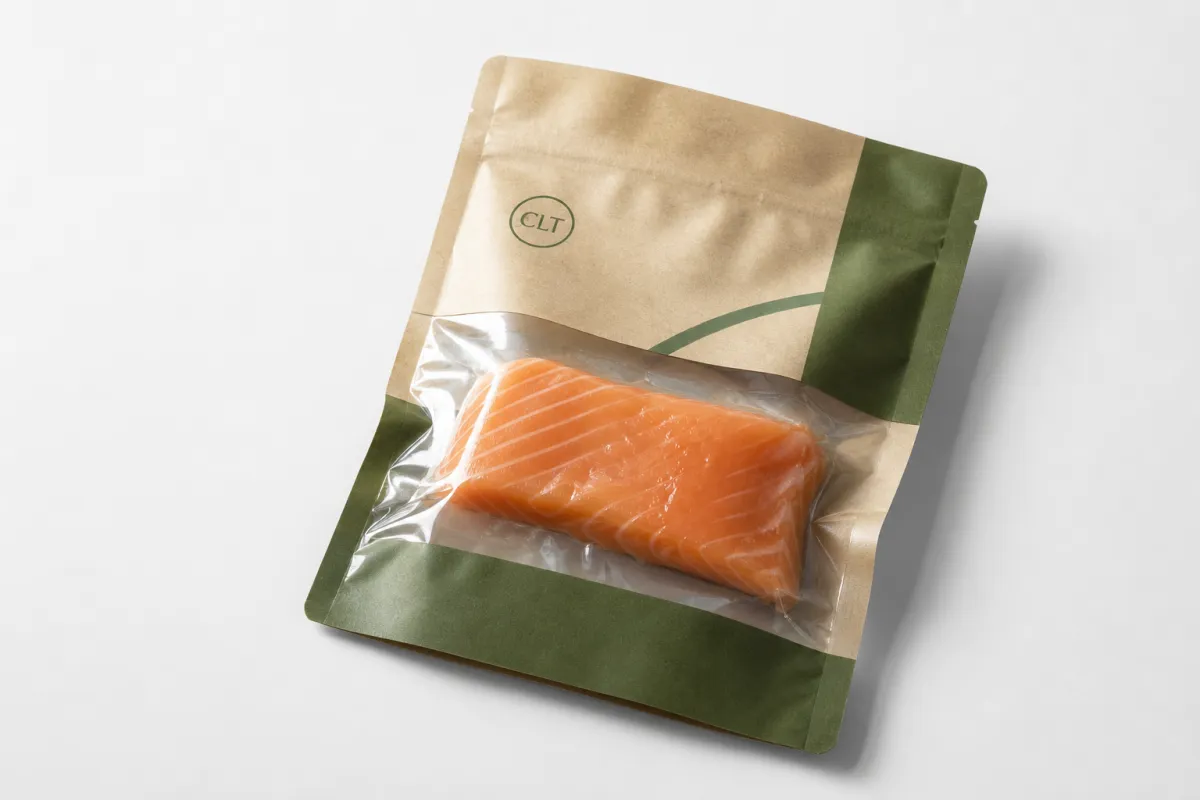
Custom vacuum-sealed food bags wholesale cuts waste first by reducing oxygen exposure, and oxygen is the quiet culprit behind a large share of weekly spoilage. Fresh protein, sliced cheese, roasted nuts, ground coffee, and marinated prepared foods all behave differently, yet the pattern stays familiar: once air enters the package, flavor drops, color shifts, and shelf life shortens. A bag that seals reliably and stays sealed is not flashy, though it often protects more margin than an expensive outer carton ever could.
There is another layer to the savings. Custom vacuum-sealed food bags wholesale can improve freezer performance by limiting ice crystal formation and the dry, papery texture that shows up when food loses moisture in storage. Frozen meats, seafood portions, and prepared meals packed ahead of demand benefit from that kind of protection. A tighter seal also keeps grease from creeping into the closure area, which helps with seal integrity on oily items like cheese blends, sauced proteins, and seasoned snack mixes.
On the packing floor, the bag can save time as well. When a bag opens consistently, seals cleanly, and fits the product without excess slack, workers spend less time fighting alignment or reworking bad closures. That may sound minor, but those minutes stack up fast on a high-volume line. Custom vacuum-sealed food bags wholesale becomes a labor decision as much as a packaging choice, because fewer retries usually mean steadier throughput and fewer rejected packs.
Appearance carries weight too. A product that arrives at retail or at the customer’s door looking compact, uniform, and protected tends to feel more dependable. In custom printed boxes and outer shippers, the visual work may be shared across multiple components, but vacuum bags still matter because they shape the product itself. A neat seal line, clear film, and logo positioned with care make the package look deliberate rather than patched together.
Practical note: not every food calls for the highest barrier film on the market. I have seen buyers overspend on structure when a standard PA/PE build would have handled the job, and I have also seen the opposite mistake, where a low-cost film failed because the product had sharp edges or needed long freezer storage. Custom vacuum-sealed food bags wholesale works best when the material choice matches the food, the machine, and the actual handling conditions rather than a generic idea of strength. If a spec sounds overbuilt for the job, it probably is, and that kind of waste shows up pretty fast.
Buyers who want a broader picture of materials and source reduction can find helpful background from the EPA at epa.gov. That context matters because custom vacuum-sealed food bags wholesale is not only about what looks efficient on a spreadsheet; it is about what keeps damaged product from leaving the facility in the first place.
Custom Vacuum-Sealed Food Bags Wholesale Product Details
Custom vacuum-sealed food bags wholesale usually falls into three broad product groups: vacuum pouches for general food packing, chamber bags for chamber vacuum sealers, and custom-printed food-safe bags built to support both machine performance and retail presentation. The right format depends on how the product is packed, whether the line uses external suction or a chamber system, and how much shelf appeal the finished pack needs. The bag has to fit the process before it can support the brand.
Customization options are broader than many first-time buyers expect. Custom vacuum-sealed food bags wholesale can be specified by size, gusset style, thickness, print coverage, clear window placement, matte or gloss finish, and edge construction. When the product needs extra headspace or a cleaner stand-up profile, gusseted formats can help. If the brand wants the food visible, a partial clear panel may be the right fit. When the goal is a more refined look, a soft matte print can create a quieter, more controlled finish than high-gloss film.
For food businesses, the real question is not whether the bag can be customized, but which details help the product perform. A bag for coffee needs aroma retention and a clean seal. A bag for frozen seafood needs toughness, low leak risk, and dependable performance after temperature swings. A bag for ready-to-eat cheese often needs a balance of barrier and presentation, because shelf appearance still matters. Custom vacuum-sealed food bags wholesale gives the buyer room to tune those factors instead of forcing the product into a generic form.
The strongest wholesale programs support function and brand consistency at the same time. A bag should help the machine run smoothly, yet it should also fit the look of the broader packaging system. If a business already uses branded labels, sleeves, or custom printed boxes, the vacuum bag should work with those assets rather than competing with them. It should sit naturally inside the packaging design and reinforce the same quality signal the buyer wants customers to notice first.
A bag that seals well but looks inconsistent on shelf still causes trouble. In food packaging, performance and presentation move together.
When brands expand their packaging line, it often helps to review the broader Custom Packaging Products catalog so the bag, carton, label, and shipper feel like pieces of one system. That approach works especially well for businesses building a more unified package branding strategy across retail packaging and shipping packaging, because the customer sees one experience rather than separate components.
Common use cases for custom vacuum-sealed food bags wholesale include:
- Protein portions that need freezer protection and lower purge loss.
- Cheese and dairy items that benefit from clean seal integrity and better shelf appearance.
- Seafood packs that need puncture resistance and cold-chain stability.
- Nuts, coffee, and dry snacks that need aroma retention and less oxygen exposure.
- Prepared foods with sauces or oils that can challenge the seal area if the structure is too weak.
That list is not exhaustive, and it will not look identical from one facility to the next. Even so, it covers the buyers who usually gain the most from custom vacuum-sealed food bags wholesale, because those categories tend to be sensitive to both barrier performance and handling damage.
Material, Barrier, and Seal Specifications
Material choice is where custom vacuum-sealed food bags wholesale becomes technical, and that technical side matters because the film structure determines how well the package resists oxygen, moisture, puncture, and freezer damage. A common starting point is PA/PE, which gives a useful balance of toughness and sealability. PET/PE is also widely used, especially when print quality and stiffness matter more. For products that need higher barrier performance, buyers may move toward multi-layer structures with added oxygen or moisture protection.
For most buyers, three specifications deserve attention first: oxygen transmission rate, puncture resistance, and seal strength. Oxygen transmission rate shows how quickly air can move through the film, which affects freshness and oxidation. Puncture resistance matters whenever the product has bone ends, sharp edges, or irregular corners. Seal strength matters because a bag that looks fine but opens under pressure is not a successful package. Custom vacuum-sealed food bags wholesale should be chosen around those real conditions rather than around a vague idea of being strong enough.
Thickness is another practical lever. Many vacuum food applications land somewhere around 70 to 125 microns, though higher-risk products may need more. In mil terms, buyers often hear ranges like 3 mil, 4 mil, or 5 mil depending on the market and the sealing system. If the item is sharp, heavy, or likely to get compressed during distribution, choosing a thinner film just to save a fraction of a cent can create a much larger cost later through rejects and leakage. That tradeoff deserves testing, not guessing.
Seal width and seal cleanliness matter just as much. A wider seal zone can offer more tolerance, but only if the machine settings and film structure support it. Many custom vacuum-sealed food bags wholesale projects work well with a seal width in the general range of 8 to 12 mm, though equipment and bag style can change that. Print-safe areas should stay away from the seal zone, since ink too close to the closure can create weak spots, especially when the packaging sees heat, pressure, or repeated cold storage.
Food-contact-safe inks, adhesives, and lamination layers are not optional details. They are part of the compliance story. Buyers should ask for documentation that fits their market and product category, especially when they sell across borders or into regulated channels. For shipping validation, some brands also use distribution testing methods aligned with ISTA procedures so they can see how the package behaves under vibration, drops, and compression before a full launch.
Here is a straightforward comparison of common film directions used in custom vacuum-sealed food bags wholesale:
| Material Structure | Best Fit | Benefits | Watch-Outs | Typical Cost Impact |
|---|---|---|---|---|
| PA/PE | General vacuum food packs, frozen proteins, cheese | Good toughness, dependable sealing, broad availability | May not cover very high oxygen control needs | Usually the most economical starting point |
| PET/PE | Printed retail packs, flatter products, premium presentation | Better stiffness, strong print surface, solid seal layer | Needs careful matching for sharp or heavy foods | Moderate increase over basic structures |
| Barrier-enhanced multi-layer film | Coffee, high-value protein, longer shelf-life targets | Lower oxygen transfer, better freshness retention | Higher minimums and higher unit cost | Noticeable premium, especially at lower volumes |
| Textured chamber bag | Chamber vacuum sealers, production kitchens, meat processing | Reliable vacuum draw, strong machine compatibility | Less suited for high-end graphics or retail display | Usually efficient for functional packing |
That table is a starting map, not a fixed rulebook. Custom vacuum-sealed food bags wholesale should always be matched to the product’s sharpness, fat content, temperature exposure, and expected shelf life. A dry snack and a greasy prepared entrée place different demands on film, and a frozen item behaves differently from a dry pantry item once it hits cold storage.
For buyers who need to talk through specs with a packaging partner, the conversation should begin with product behavior rather than print decoration. Once the structure is right, the branding follows more naturally. That is the part many teams miss when they focus only on package branding and forget that the package still has to do the real work.
Custom Vacuum-Sealed Food Bags Wholesale Pricing, MOQ, and Quote Factors
Pricing for custom vacuum-sealed food bags wholesale depends on several variables that add up quickly: size, film structure, print coverage, quantity, finishing, and any special performance requirement such as higher barrier or extra puncture resistance. A simple clear pouch with one-color branding usually costs less than a full-coverage printed bag with a premium finish, and a barrier-enhanced film with tight tolerances will cost more than a basic PA/PE build. That is normal. The key is making sure every quote uses the same assumptions.
MOQ is one of the biggest differences between plain and printed custom vacuum-sealed food bags wholesale orders. Plain bags or lightly customized builds may begin at relatively modest quantities, often around 1,000 to 3,000 pieces depending on the style and supplier. Custom-printed projects usually push higher because print setup, color management, and approval steps add overhead. It is common to see printed MOQs starting around 5,000 pieces or more, and some projects rise higher when the artwork or structure is more complex.
Unit price can shift more than buyers expect as order size changes. A run of 5,000 units may have a very different landed cost than 20,000 units, even if the bag itself stays the same, because setup and production efficiency spread across more pieces. That is why custom vacuum-sealed food bags wholesale should always be priced as a tiered conversation rather than as a single number pulled from a general list. A careful quote will show where the cost drops, where it stays flat, and where freight changes the final landed price.
The cleanest way to compare suppliers is to compare the same build on every line. Check the material structure, thickness, bag dimensions, print method, finish, closure type, and delivery terms. If one quote uses a lighter gauge or leaves out freight, it may look cheaper while still costing more once the bags arrive. Experienced buyers ask for tiered pricing, sample costs, and shipping estimates up front before they commit to custom vacuum-sealed food bags wholesale.
Below is a practical pricing framework buyers often use as a starting reference. Actual numbers will vary by film, size, and print coverage, but the pattern is useful:
| Order Type | Typical Quantity | Typical Unit Range | Notes |
|---|---|---|---|
| Plain custom-size vacuum bag | 1,000-3,000 pcs | $0.08-$0.18 | Good for testing fit and pack flow |
| Printed vacuum bag with simple logo | 5,000-10,000 pcs | $0.16-$0.32 | Most common branded packaging entry point |
| High-barrier printed bag | 10,000+ pcs | $0.22-$0.45 | Used for longer shelf life or higher-value food |
| Special finish or premium structure | Varies by project | $0.30+ | Matte, soft-touch, metallized, or unusual construction |
These ranges are not promises, and they should never replace a real quote. Still, they help buyers avoid the mistake of assuming all custom vacuum-sealed food Bags Wholesale Pricing is driven only by size. In practice, print coverage, film structure, and barrier requirements can shift the number just as much as dimensions do.
If a project also includes secondary packaging, such as cartons or retail sleeves, it helps to keep the packaging design conversation open across the whole pack system. That is where product packaging planning becomes more efficient, because the vacuum bag, label, and shipper can all support the same shelf and fulfillment goals instead of working against each other.
A strong quote should also separate sample charges from production charges. Samples may be free, partially credited, or billed separately depending on the project. Freight should be itemized whenever possible, because a low unit cost with high shipping can produce a worse landed result than a slightly higher production price with cleaner logistics. That kind of practical detail saves money in custom vacuum-sealed food bags wholesale work.
Process, Timeline, and Production Steps for Approval
The production flow for custom vacuum-sealed food bags wholesale usually starts with a quote request, then moves into artwork review, dieline or size confirmation, proof approval, sample production if needed, manufacturing, quality checks, and final shipment. Buyers sometimes want to jump straight to price, but the quote is only as good as the information behind it. If dimensions are vague or the machine type is unknown, the risk of rework rises quickly.
Artwork review is where many projects gain or lose time. Custom vacuum-sealed food bags wholesale needs clean files, print-safe zones, and enough space around seals, edges, and functional areas. If the artwork sits too close to a seal line or the copy calls for a full-bleed look the structure cannot support, the proof cycle gets longer. Those decisions are easier to settle early than after tooling or press setup has started.
Lead time depends on the structure and the order size. A straightforward custom vacuum-sealed food bags wholesale project with approved artwork may move through proofing in a few days and production in roughly 12 to 20 business days, though the exact timing changes with quantity, print method, and freight method. More complex barrier builds, color-matched printing, or unusual dimensions can extend that timeline. If the buyer needs export freight or a split shipment, the logistics window may stretch further.
The fastest jobs are the ones where the buyer sends complete technical information before the quote is finalized. Exact bag dimensions, product type, fill weight, machine type, and intended storage conditions all matter. If the item is frozen, oily, sharp, or likely to be handled roughly, say so early. That helps the supplier recommend a structure that fits the actual pack environment rather than the ideal one.
Timeline framework:
- Day 1-3: Quote review, spec clarification, and artwork intake for custom vacuum-sealed food bags wholesale.
- Day 3-7: Proof, mockup, or sample alignment, depending on the print method and complexity.
- Day 8-20: Manufacturing, in-line checks, seal verification, and pack-out.
- Final stage: Freight booking, shipment, and delivery confirmation.
That framework is not fixed, yet it helps with inventory planning. A launch date, a trade show, or a seasonal food push can slip if the buyer assumes every custom vacuum-sealed food bags wholesale project moves at the same speed. They do not. The artwork approval window can matter just as much as the factory schedule.
Quality control is another place where a good supplier proves its value. Dimensional checks, seal testing, print consistency, and packing verification should happen before shipment. For shipments that are especially sensitive, some buyers also ask for transit validation aligned with ISTA-style distribution testing so the bag’s performance is checked against real shipping conditions. That extra diligence is often worth it for frozen foods, heavier packs, and long-distance export runs.
Why Choose Us for Wholesale Food Packaging
For buyers comparing suppliers, the real difference is usually not who can name the most film layers. It is who understands how the film, the seal, and the machine have to work together on a real production floor. That is why custom vacuum-sealed food bags wholesale should be handled by a packaging partner that can talk plainly about gauge, barrier, seal width, print placement, and logistics without hiding behind vague promises.
Custom Logo Things focuses on wholesale packaging support that feels practical rather than theatrical. In a wholesale setting, that means clear answers about custom vacuum-sealed food bags wholesale specifications, realistic timing, and whether a given structure is actually the right one for the product. A buyer should know if a bag is better for chamber sealing, if the film suits a frozen program, and whether the print coverage will affect performance or simply change the look.
Quality control sits at the center of that approach. Buyers need repeatable dimensions, dependable seals, and print consistency from order to order. If a bag is supposed to fit an existing sealer, the production run has to hold that fit. If a logo sits near a gusset or window, print alignment has to stay stable. If the order is a reorder, the goal is to match the prior spec without forcing the customer to adjust line settings again. That is what makes custom vacuum-sealed food bags wholesale valuable over the long term.
Our Wholesale Programs page is a good place to start if you want to discuss volume levels, recurring demand, or a packaging program that needs more than a one-off print job. Wholesale supply works best when the specs stay stable, because stable specs lower the odds of line stoppages, packing confusion, and accidental mismatch between batches.
The strongest wholesale packaging does not call attention to itself by failing. It disappears into the process, protects the product, and keeps the brand looking consistent.
That philosophy matters especially for buyers coordinating custom vacuum-sealed food bags wholesale with other components such as labels, sleeves, or cartons. If the overall presentation includes branded packaging and retail packaging elements, the bag should support the same tone and quality level. A sharp package system does not need to be loud; it needs to be coherent.
In many food programs, the cheapest bag on paper is not the least expensive bag in practice. A slightly better film structure can reduce leakage, protect against puncture, and cut down on line rejects. That is where experience matters, because the right answer is usually the one that protects the product without paying for performance you do not need. Honest guidance on that balance is one of the main reasons buyers return to custom vacuum-sealed food bags wholesale once they have a spec that works.
What to Send Next for a Fast Custom Bag Quote
If you want a quick and accurate custom vacuum-sealed food bags wholesale quote, send the essentials first: product type, fill weight, bag dimensions, sealing equipment, preferred finish, artwork files, quantity, and target delivery date. Those seven details remove most of the back-and-forth that slows quoting down. They also help the supplier recommend a structure that fits the food rather than guessing at it.
If you already use a bag, send a sample or a photo with measurements. Physical examples are especially useful because they show seal width, film feel, stiffness, and handling behavior in ways a description cannot. That matters when custom vacuum-sealed food bags wholesale must match an existing pack or replace a bag that already runs well on the line. A sample also helps catch small things like gusset depth, corner radius, or artwork placement that can slip past a simple spec sheet.
It is also wise to request tiered pricing and a realistic production window in the same conversation. That lets you compare options on a true landed-cost basis instead of only looking at the first number you receive. If the order may grow later, ask about reorder pricing too. A clear quote should show how custom vacuum-sealed food bags wholesale changes at different quantities so you can plan purchases without guesswork.
Here is the cleanest way to move the project forward:
- Confirm the food, the pack weight, and the storage condition.
- Share the bag size, machine type, and any seal width constraints.
- Provide print files or a rough layout if the artwork is not final yet.
- Ask for sample options, tiered pricing, and freight estimates.
- Review the proof, approve the sample, and release the order only after the spec matches your line requirements.
That process sounds basic, but it prevents a lot of expensive mistakes. A bag that looks fine in a PDF can behave very differently in production if the fill weight is off, the seal zone is too narrow, or the material is too light for the product. The more precise the information, the better custom vacuum-sealed food bags wholesale can serve both the packaging line and the customer experience.
For teams building a broader packaging system, the quote stage is also a smart moment to think about future product families. If the vacuum bag will need to coordinate with carton graphics, shipping packs, or other product packaging elements, that is worth saying upfront. Consistent package branding is easier to preserve when the packaging partner understands the full picture from the start.
Send the specs, compare the quote, approve the sample, and move ahead with custom vacuum-sealed food bags wholesale once the numbers and timing make sense. The best outcome is a bag that runs cleanly on your line, protects the food through its real storage conditions, and gives you a repeatable packaging spec you can keep using without surprise changes.
What material is best for custom vacuum-sealed food bags wholesale?
PA/PE is a common choice for custom vacuum-sealed food bags wholesale because it gives dependable seal performance and solid toughness for many food applications. If the product needs better oxygen control, longer freshness retention, or stronger freezer protection, a higher-barrier structure may fit better. The right answer depends on the food itself, since a dry snack, a frozen protein, and an oily prepared food stress the bag in different ways.
How do I choose the right thickness for vacuum-sealed food bags wholesale orders?
Start with the product’s sharp edges, weight, and handling conditions, since puncture risk usually drives thickness first in custom vacuum-sealed food bags wholesale. Heavier or more abrasive foods often need a stronger build so the seal area stays intact during packing and transport. If you are unsure, ask for samples or a comparison quote at different gauges so you can balance protection and unit cost with real data instead of guesswork.
What is a typical MOQ for custom vacuum-sealed food bags wholesale?
MOQ for Custom vacuum-sealed food bags wholesale depends on whether the order is plain or custom printed, because printed work usually involves more setup and approval steps. Smaller runs may be possible for sampling or limited launches, but larger quantities generally bring the unit price down more effectively. A clear supplier should give tiered quantities so you can see exactly where pricing improves.
How long does production take for custom vacuum-sealed food bags wholesale?
Lead time for custom vacuum-sealed food bags wholesale usually depends on artwork approval, bag structure, print method, and the total order size. The fastest projects are the ones where dimensions, product details, and machine specs are confirmed before quoting, because that reduces proof changes later. Ask for a timeline that separates proof approval, production, and shipping so there are no surprises once the order is released.
Can I request samples before ordering custom vacuum-sealed food bags wholesale?
Yes, samples are one of the best ways to verify fit, seal performance, print quality, and handling before a full custom vacuum-sealed food bags wholesale run. If possible, send a current bag or product sample so the new spec can be matched more accurately. Sampling is especially useful when the food is sensitive to oxygen, puncture, or freezer conditions, because those problems are much easier to catch before production than after shipment.

